 Today’s word is “tonterias” meaning nonsense or rubbish. I’m sure there are more amusing slang alternatives but I’m still a beginner in Mexican Spanish street talk. Just to the West of Centro Historico is the Alameda district, a little less frantic but still much to see.
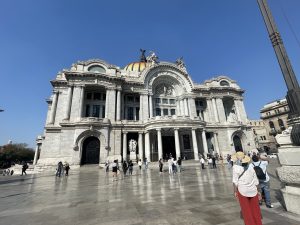
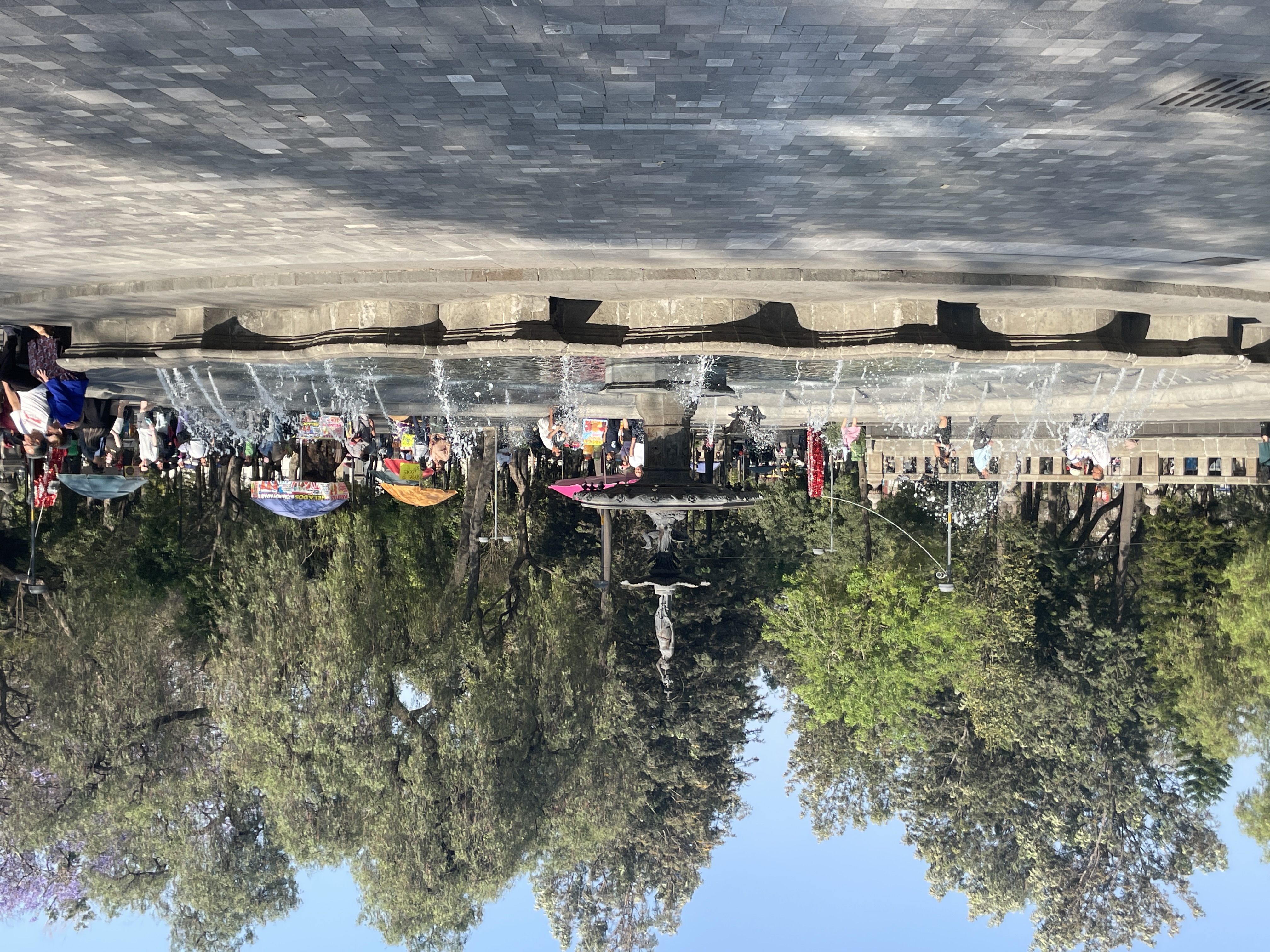 Check out the Monument to the Revolution, Diego Rivera’s giant mural of the Alameda Central, the Palacio de Bellas Artes y mucho mas. The Central is a park dating back to 1592, built on an Aztec marketplace and, later, the site of the El Quemadero (The Burning Place) where witches and others convicted by the Inquisitors were burned at the stake. On a more positive note, when President Santa Anna rode triumphantly into Mexico City at the end of the war of Mexican Independence, he ordered the fountains in the park to be filled with alcohol. (Thank you Wikipedia). By the way “Alameda” comes from the Spanish word álamo, which means poplar tree.
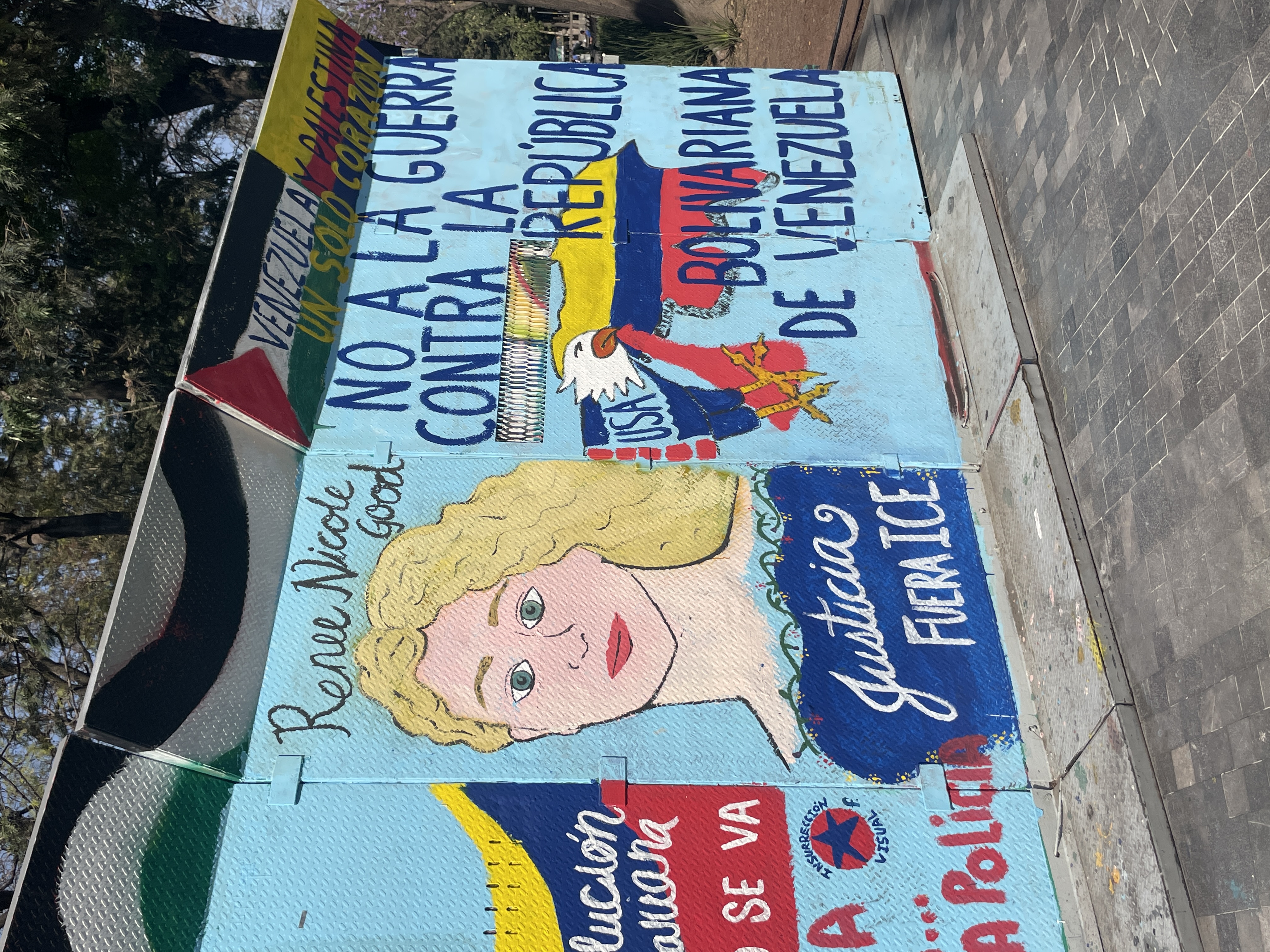 Before we make it to the Palacio, along the Alameda Central and in front of Bellas Artes you’ll find an explosion of street life possibly unmatched in CDMX. Great people watching plus you can, certainly, learn about Mexican street politics, meaning the US and Israeli governments are not popular here. Unlike in the US and elsewhere, populism here still leans hard to the left and the Communist folks are out in numbers. They’re promoting the idealistic version put forward by Marx and Lenin, and who knows what practical system they might propose, as is always the problem, but with the current slow motion train wreck of late-stage capitalism and tech driven authoritarianism it’s easy for me to understand why these people are out on the streets drumming up business.
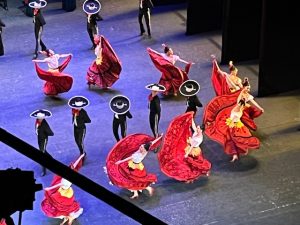 Meanwhile, back to the travel blog: We ponied up to see the Ballet Folkloric at the Bellas Artes, and it was well worth going with the show spanning pre-Hispanic times through the Spanish conquest, the Mexican-US war, the Mexican revolution and into modern times. If you’re not comfortable with heights don’t get seats high up in the Galeria as the gradient is super steep and there’s not much preventing you from making a fast and unhealthy arrival in the stalls below. Even the gringos in the audience recognized a number of the tunes as the production didn’t hesitate to include chestnuts like Cielito Linda, La Bamba and, unfortunately, La Cucuracha.
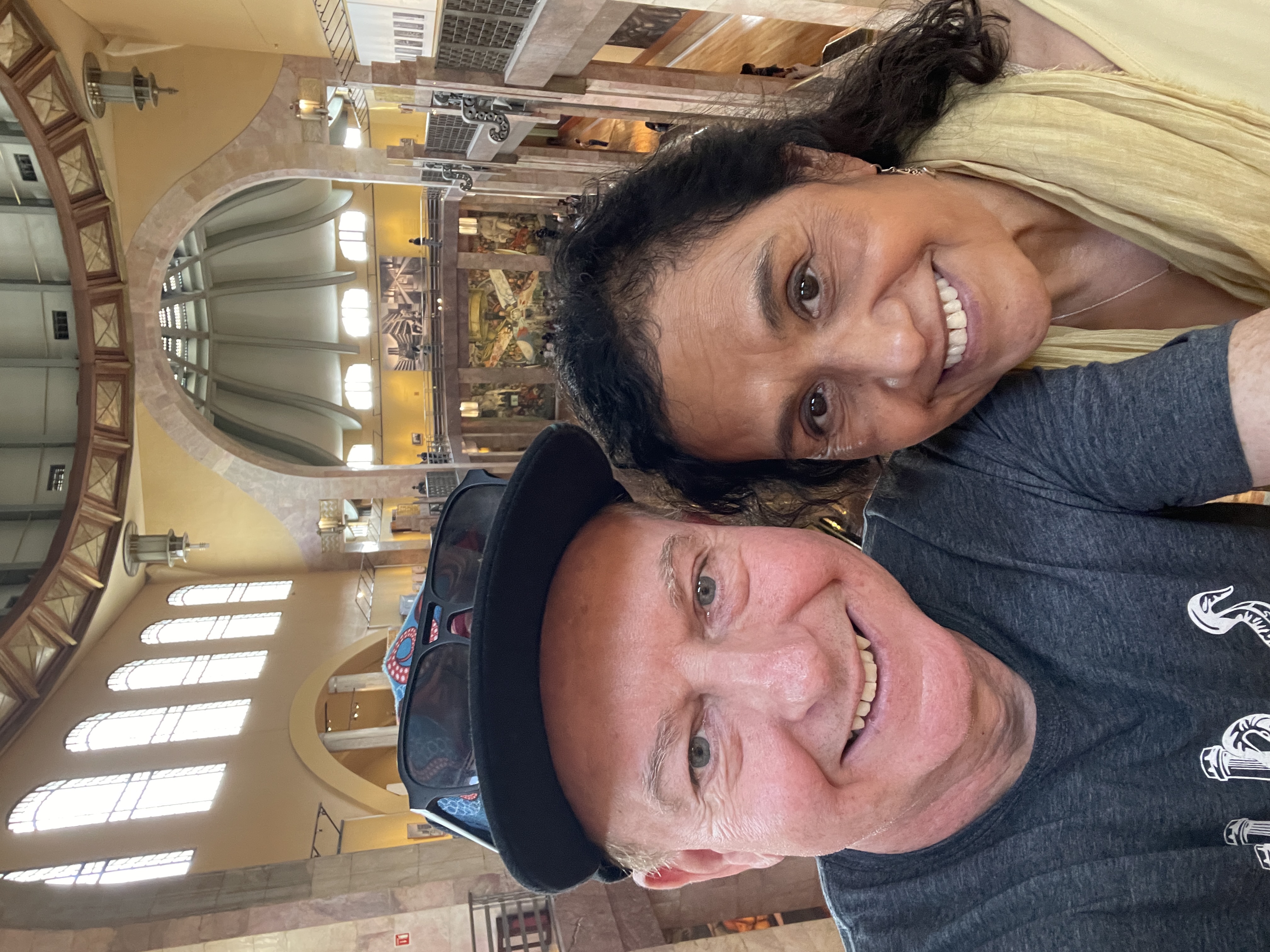
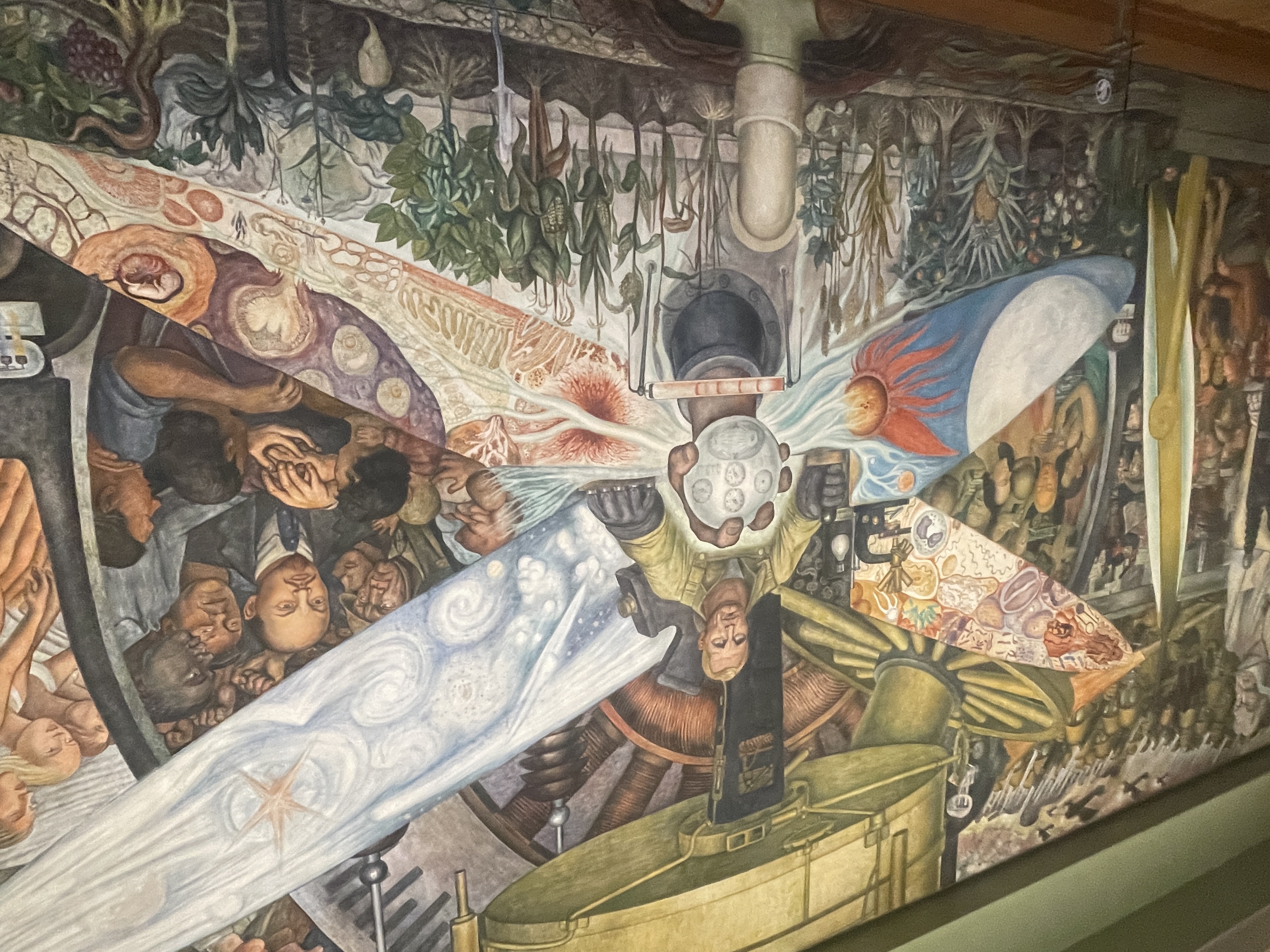 The Bellas Artes building is a destination in itself, art nouveau and neoclassical on the outside, art deco inside. The auditorium has an awesome fireproof stained glass stage curtain by Tiffany (25 tons, one million pieces of glass featuring Popocatepetl and Iztaccihuati the two volcanoes of the Valley of Mexico) and the open interior quadrangle has huge murals on all sides, including works by Diego Rivera, Siquerios and Clemente Orozco.
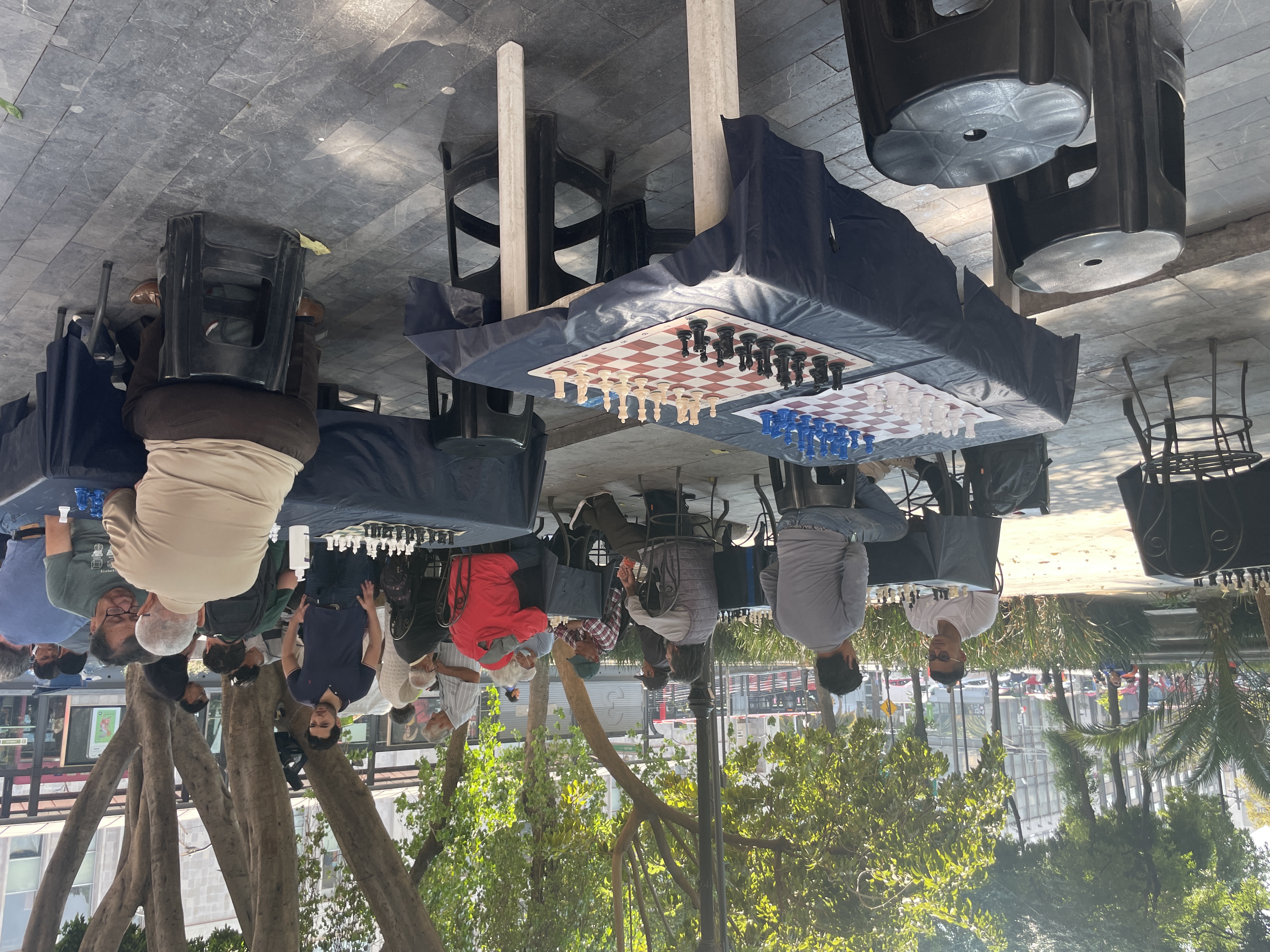 Part of what makes CDMX so colorful and crowded are the street vendors. From well established taco stalls equivalent to a low-end US food truck to seat of the pants operations, just about everything is for sale on the sidewalk. Some of these look like successful businesses providing a decent living, while others are barely above panhandling, but everyone is hustling to get by, seemingly working 6 days a week. There is Government funded support, as can be seen from the crowds of people lined up outside the employment and social services offices, but it is clearly not enough so people are making ends meet however they can. Sounds familiar and similar to the US but the difference here is that everything positive and negative is on the street and in your face: The workings of the system are not partially hidden as they are at home and I feel that this openness promotes a feeling of being part of a community, plus the ingrained skepticism about government that is the default in the US is toned down here. In this respect it feels more like Europe than the USA, at least until the EU became infected with fashionable neo-fascism. However, when we’ve spoken with middle class locals about the government, they are not so enthusiastic so, as usual, things are complicated.
 The capture and death of El Mencho upset the apple cart here for a few days and, if you were in Puerto Vallarta or Guadalajara your vacation was, for sure, disrupted, but there was little to no impact in CDMX other than an obvious ramp up in national guard and military presence near potential targets. There is no getting around the fact that the drug cartels are a significant factor in much of the country and, in evaluating potential places to live, you have to take that into account. The Mexican president Claudia Sheinbaum has taken a more aggressive approach to the cartels, likely with the US government pushing for a high profile “win” prior to the upcoming World Cup, but it’s not at all clear whether taking out the cartel kingpins will make things better or worse. Still, I’m not in a position to have a meaningful opinion at this stage but, rather, need to continue to evaluate how this situation affects our potential living arrangements. As Captain Obvious has often said “Most places, the US absolutely included, have significant upsides and downsides to be considered”.


Leave a Reply