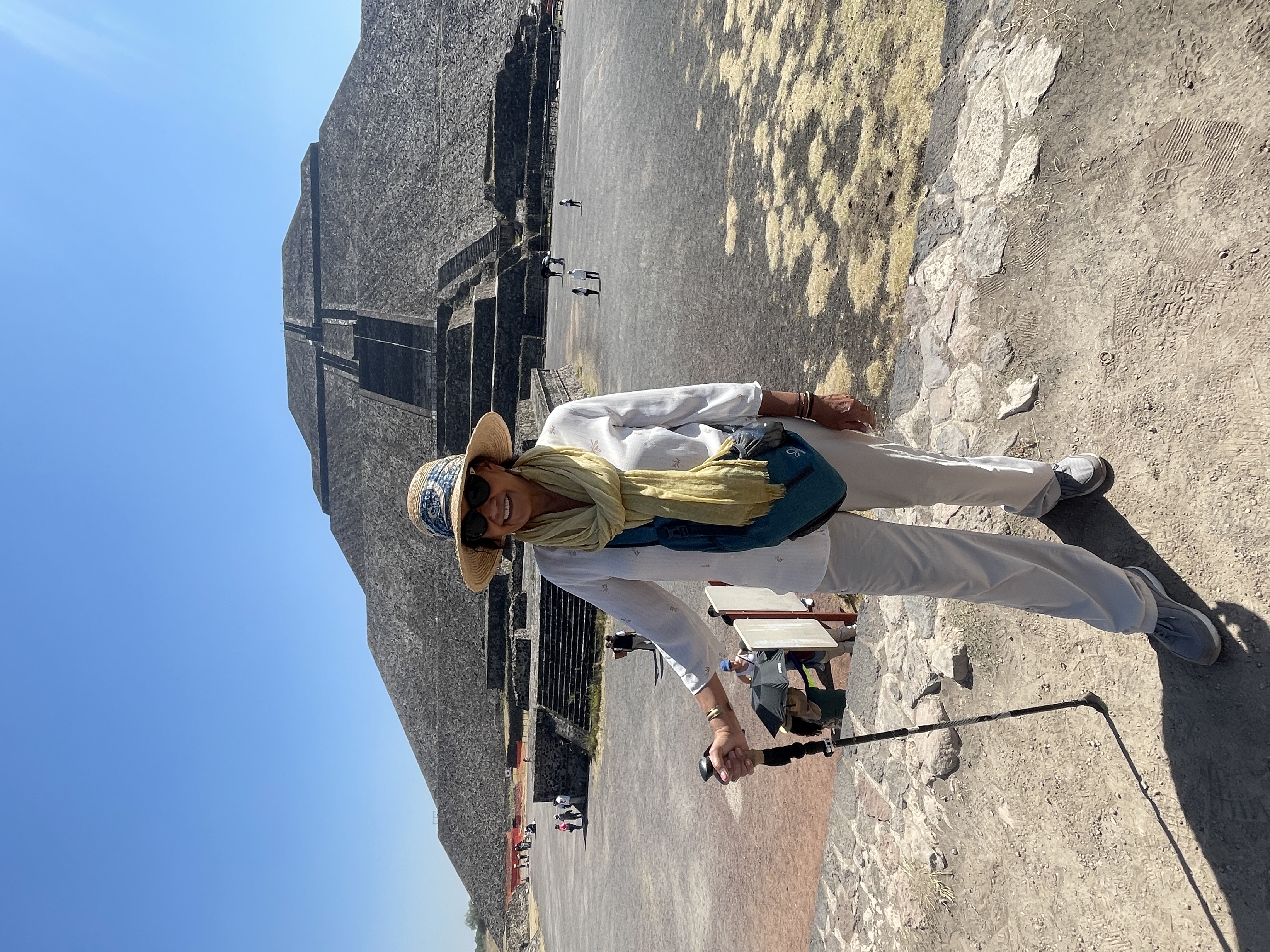
 We haven’t been outside of the city so far, there’s a lot to see in town and we don’t have a car, but a day trip to Teotihuacan is a must-do. We’ve already talked about the Aztecs and their temples in Central CDMX, but those people were Johnny come latelies compared to the residents of Teotihuacán, who were there over two thousand years ago. Still, no one knows exactly who they were, but we do have some idea of what they were doing.
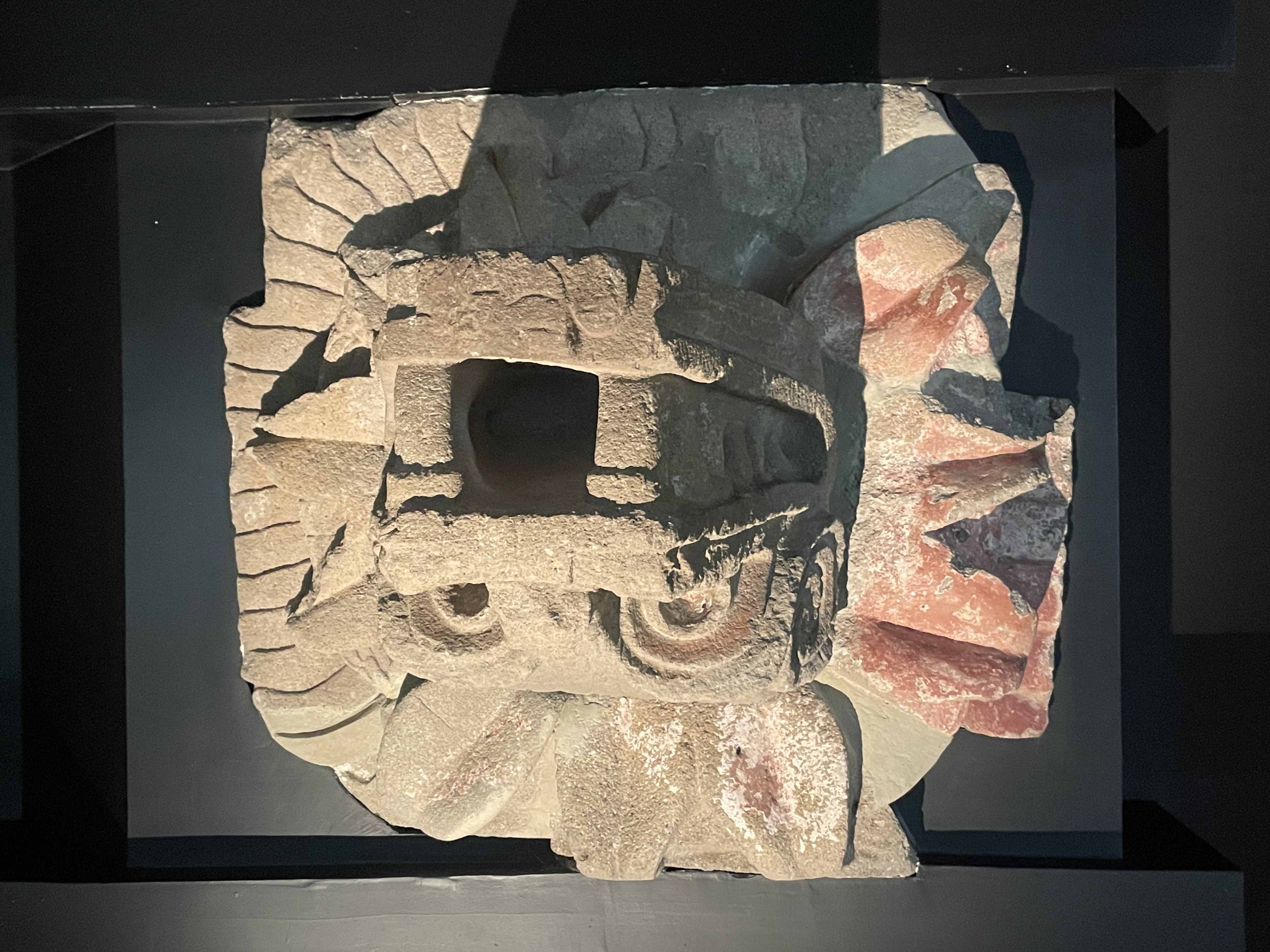 The early Mesoamerican culture was down South in the jungle lowlands of southern Mexico, Guatemala and Honduras but, eventually, “civilization” made its way North to the central, high elevation plain of Mexico. As far as we know, it was a multi-cultural society of Totonacs, Otomis and Nahuas. Whoever they were, they were very industrious and, between 100BC and 250AD they built a kick-ass metropolis, home to up to 200,00 people, the remains of which we’re traveling to see.
 The first step in getting there is to arrive at the Northern Central bus terminal: There is no national rail system in Mexico, so most people are very dependent on inter-city buses. Thankfully, at least based on what we saw in CDMX, they have their act together as Central de Norte is a large, well organized and, actually, kinda flashy transportation hub i.e. this is not a Greyhound station. Still, you’d better double check your updated departure time as things change without notice and don’t expect the staff to tell you what’s going on. This is only an hour or so ride, so we’re not on an Inter-City behemoth bus, but it’s clean and roomy, and it gets us to Teotihuacan without a fuss. Abby gets a 50% discount from the entry fee to the archeological site for being a “permanent resident”, membership has its benefits, but I have to pay the full wack as I’m still a “temporary”.
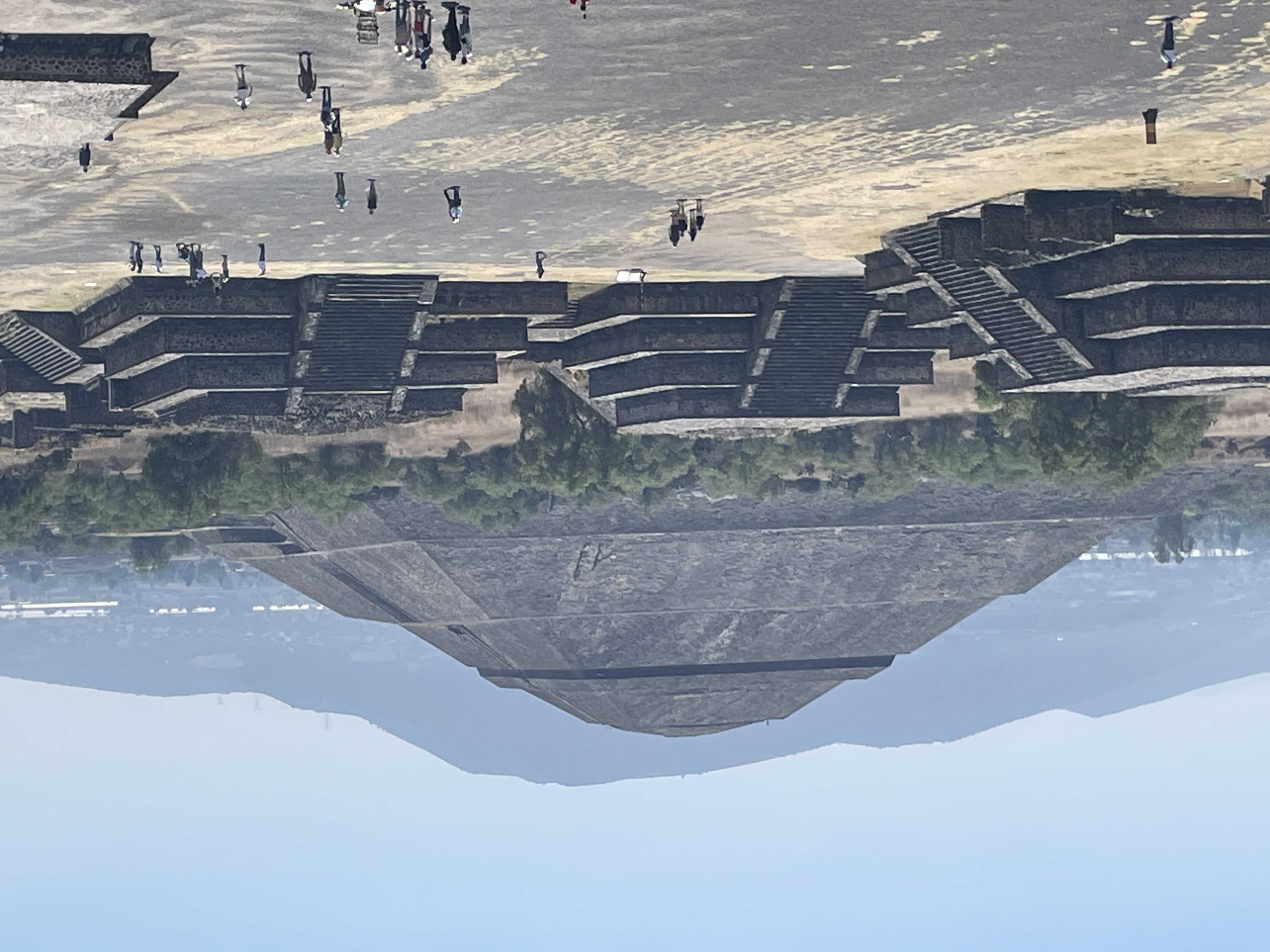 OK, this is not Giza but it’s quite a big deal. We have been lucky enough to go to most of the Mayan sites in the Yucatán, including Chichen Itza, and this is close in magnitude to the latter. The big difference is that Chichen Itza is in the jungle and Teotihuacan is fully exposed in a, virtually, treeless high desert. As Chris Farley frequently said, it’s awesome. On arrival, the Pyramid of the Sun is right in your face: You can walk around it but not up it due to preservation (and safety?) requirements. Its footprint is as large as the Great Pyramid of Kufu in Giza but is only half the height. The Giza pyramids were burial sites but Teotihuacan‘s pyramids were temples and, so, this was a living city and there is physical evidence of this throughout the site.
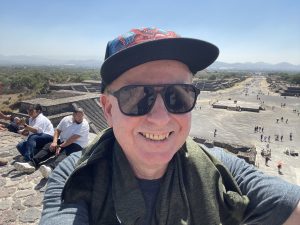 I’ll spare you further touristic details, you should visit if you get the chance, but be aware that it’s super hot and dry and with it being at 7,000 ft, it’s best to get there as soon as they open up in the morning, which we did not do. At the Pyramid of the Moon some climbing is allowed to an intermediate point, and I foolishly take the macho bait, and I do make it to the top, but while sucking air like I was trying to hit an all time best in a half marathon.
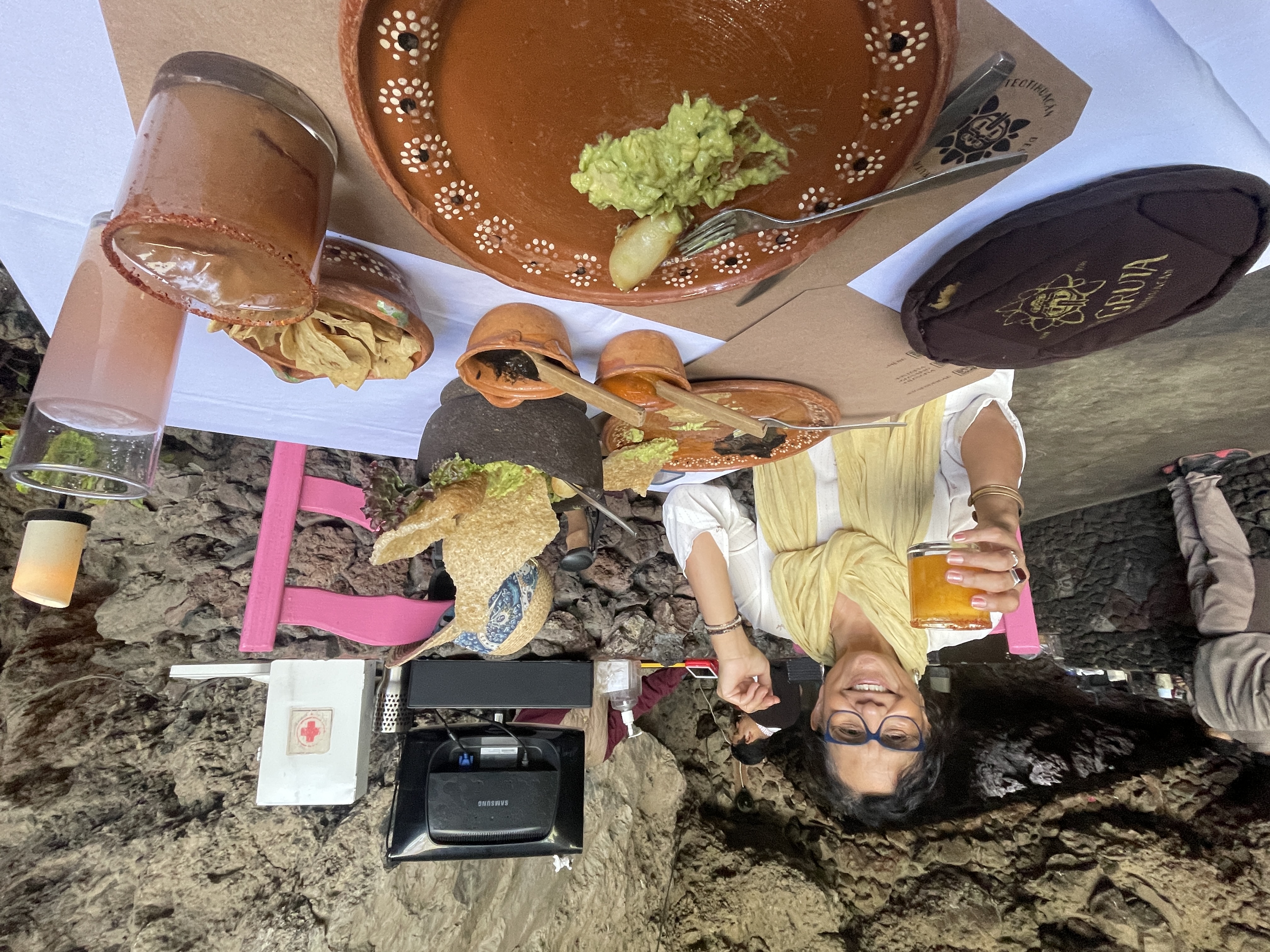
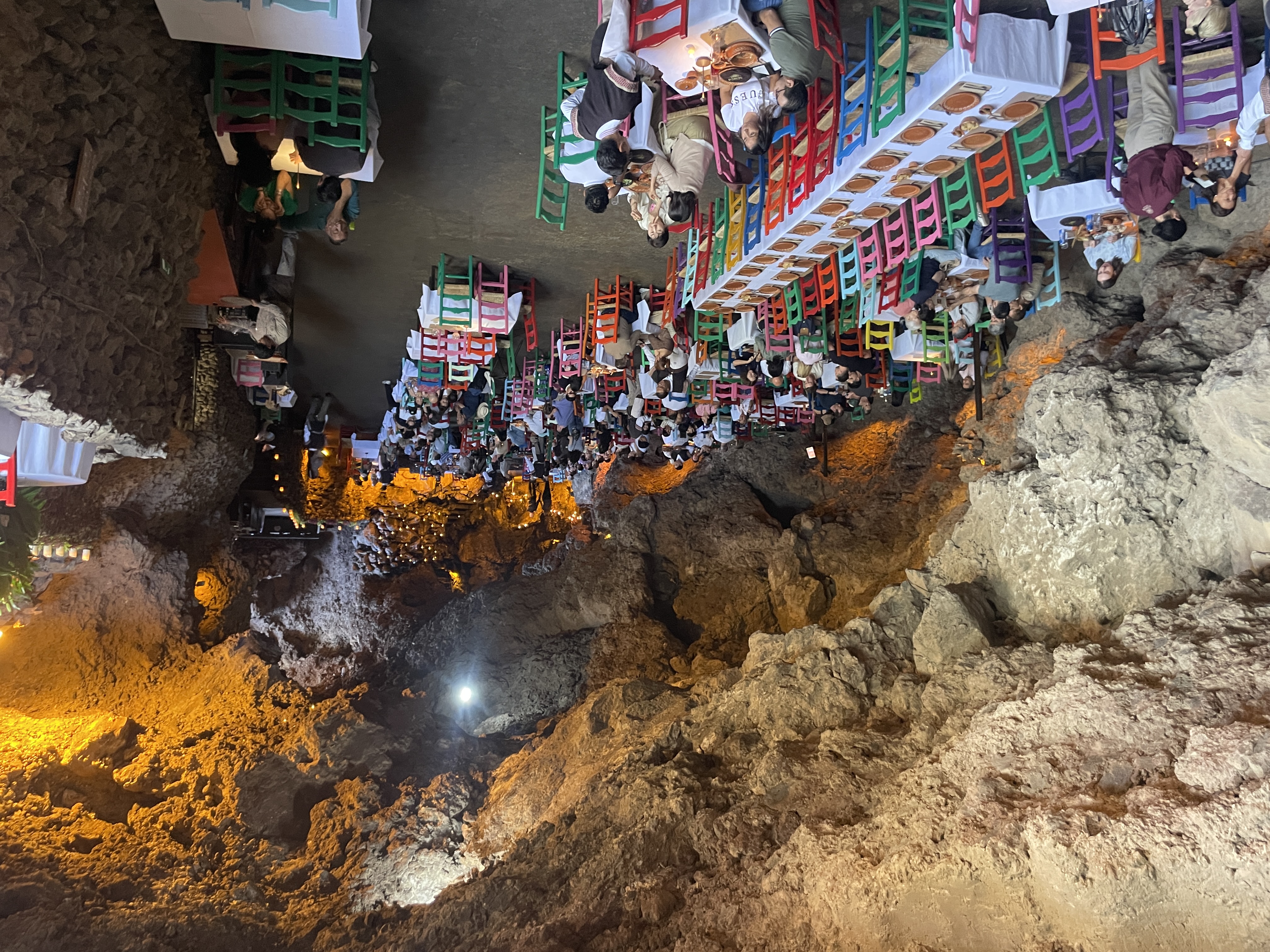 Wilting in the heat walking up and down the monumental Avenue of the Dead we make an escape to the nearby La Gruta restaurant, built in volcanic caverns. This a tourist spot par excellence, and correspondingly expensive, but it’s a remarkable and atmospheric spot and the food and drinks are not too shabby either. If you make it this far, you gotta go.
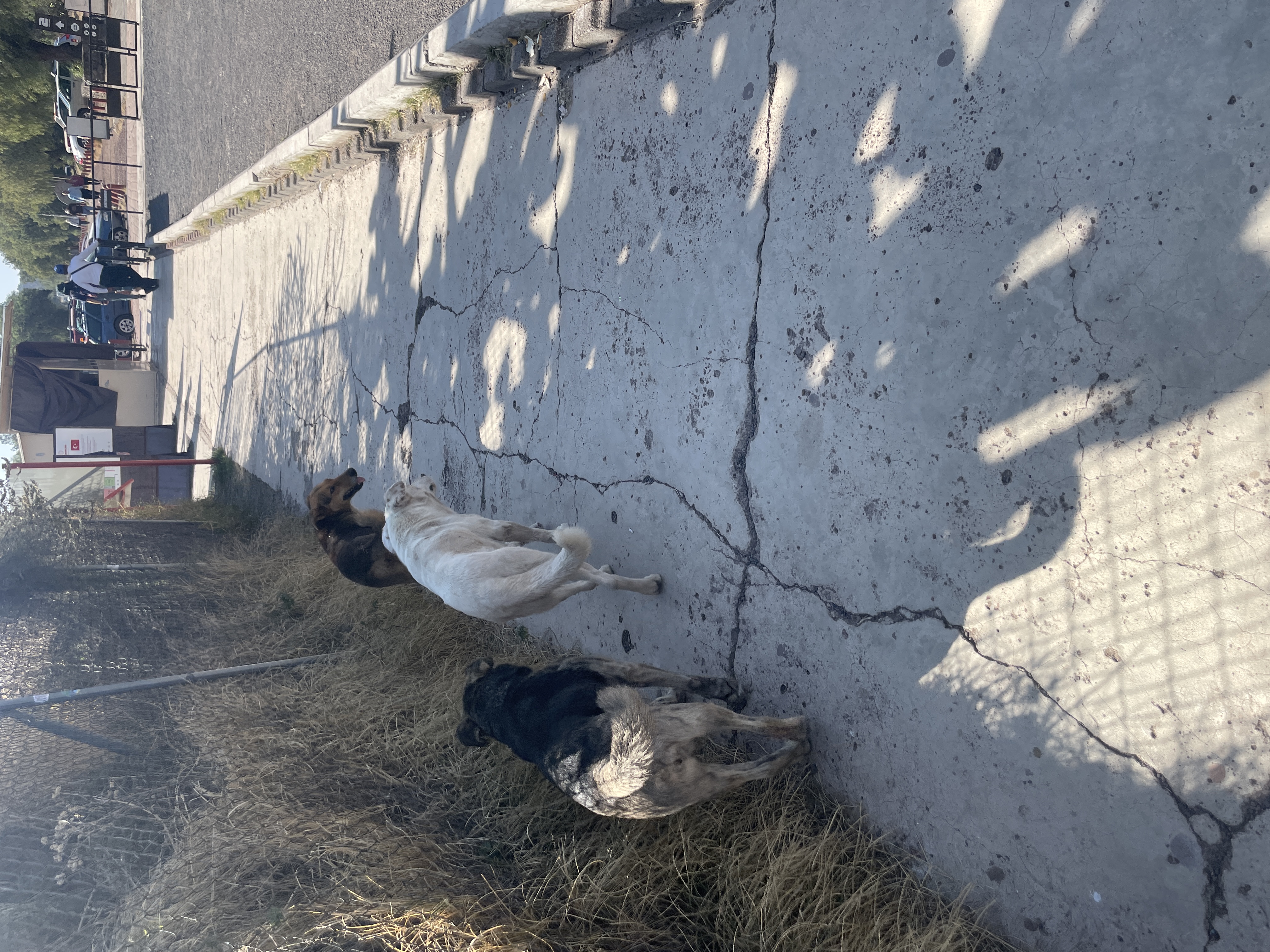 If you’re better prepared than we were, you can hit up several museums and related attractions on site and make a long day of it. We limped home to rehydrate and rest our barking dogs. I forgot, parasol and/or bandanas definitely recommended, and a large volume of drinking water essential.
Leave a Reply