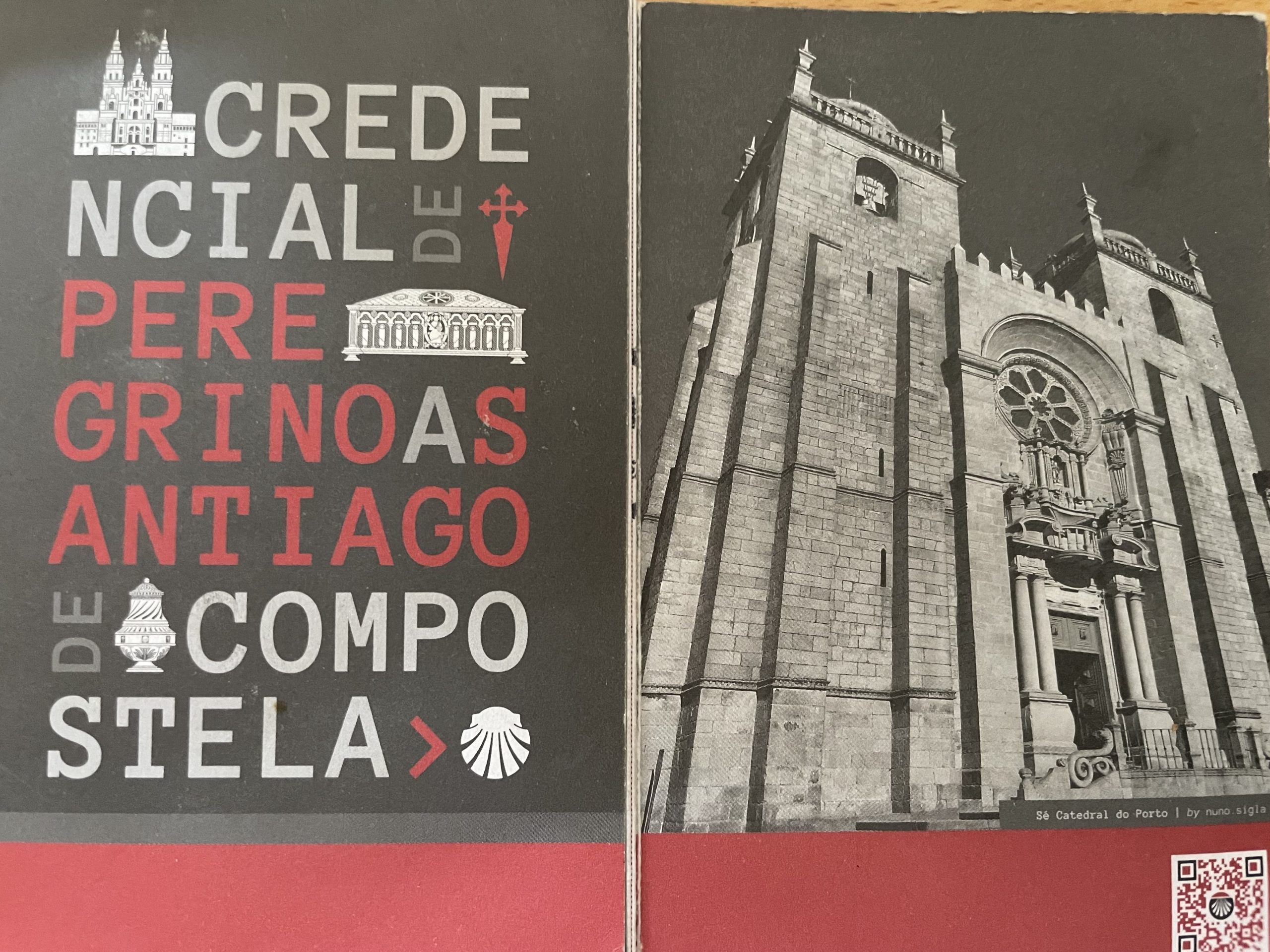
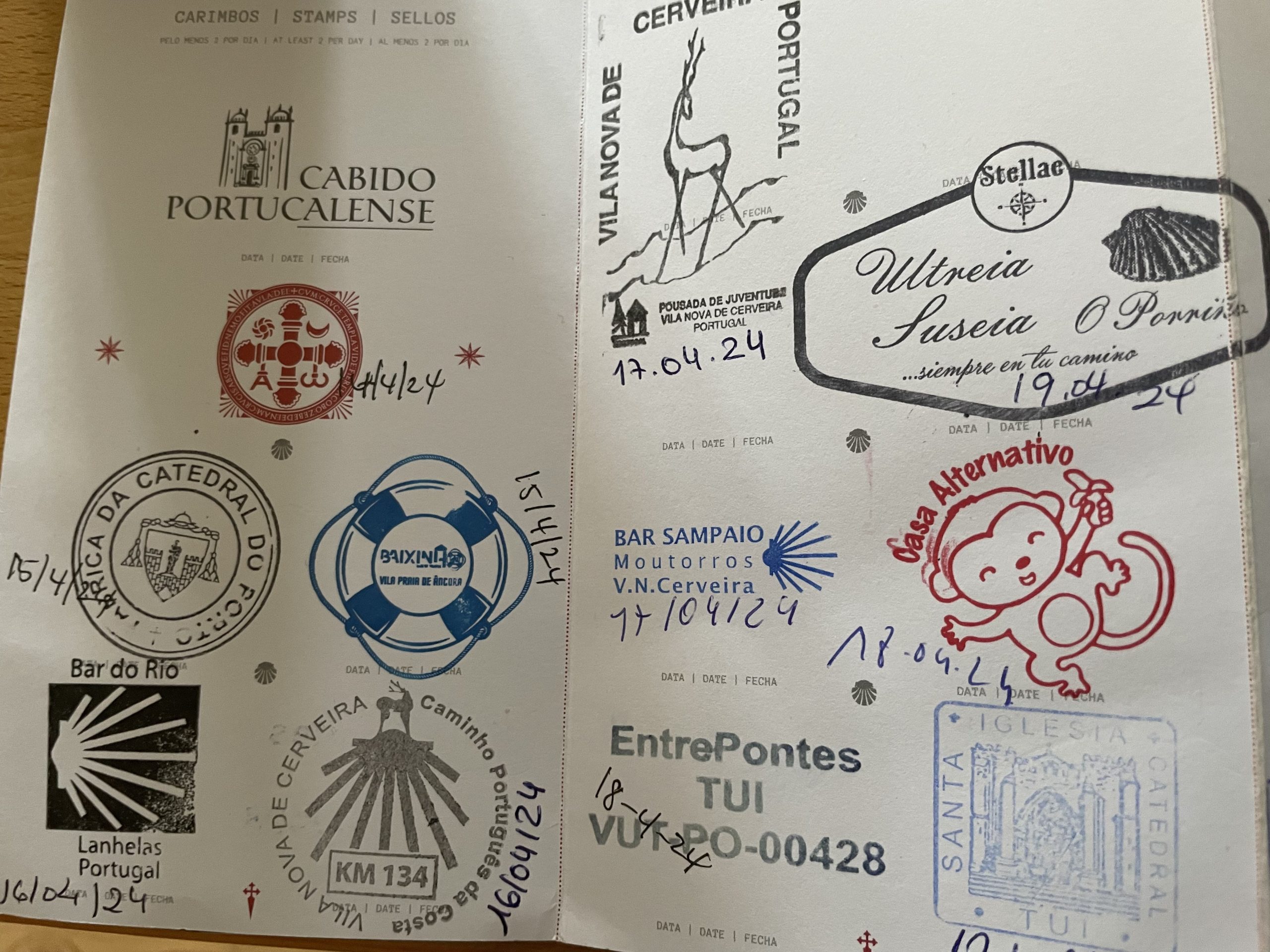
 At Porto Cathedral we picked up our Credential de Peregrinoas, a little fold out booklet in which we collect ink stamps, aka sellos or timbres, at stops along the way to document our progress. Could be at your accommodation, at a church, tourist office or, even, at a trail side café. They’re all different, so there are a crazy number of them out there, and some pilgrims go nuts trying to collect as many as possible.
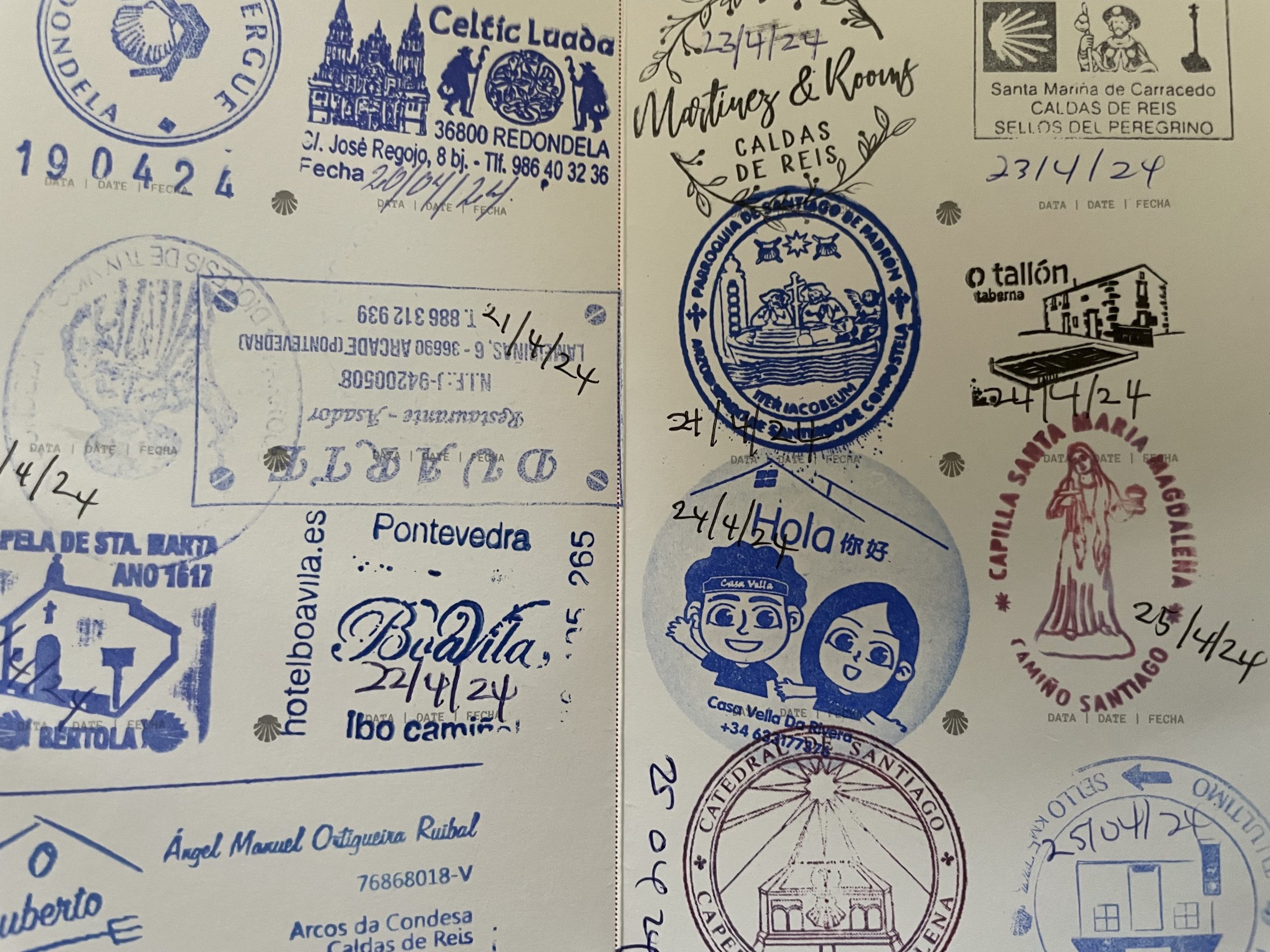 We’re, initially, more lackadaisical about it, but get our act together around the town of Tui or, maybe, Porrino as those are the last starting points for a legitimately recognized Portuguese Camino by the Powers That Be, which may even include St James. The bottom line is, for the last 100 kilometers you have to show two stamps per day all the way to Santiago or you won’t get your “Compostela”, a fancy certificate. Given we don’t know if we’ll be back this way again, we sure as heck want our Compostela, so we focus and comply.
 Into Galicia, Spain now, we’re getting into classic Camino territory as we’ve joined the central variant of the (originating in Portugal) Portuguese route, and the number of pilgrims and the associated rigamarole expands drastically. No problem now finding a café with strong coffee, a bocadillo sandwich, bathrooms and even a beer. That’s handy, but the solitude of the early days is rapidly eroded. From here on in, we’re meandering from village to village, up and down rolling hills, some of them formidable, in the sporadic company of a stream of peregrinos. Aside from the hills, carrying our gear on our back turns out to be a good idea as those using a baggage transfer service have to leave them off by 8am, resulting in a swarm of “day trippers”, leaving town around 8:30am in a decidedly non-meditative caravan. Hey, we’re suffering for our Camino more than you, so you lightweights just take off, eh?
 Our leisurely late rising and private room itinerary worked for us but, then again, just have your own Camino, man. Just watch out for the “clickers”: Head down, face grimaced, clicking away with dual metal hiking sticks in a desperate road race. Occasionally, we run into a pod of dudes, stripped down to minimal spandex, going for the land speed record of whatever sporting Camino they think they’re on. We potter along at 2.4 miles/hour and, given we’re capping the day around 14 miles, we get to our destination soon enough. Not to give a misleading impression though as, roughly, 70% of the pilgrims are near, or above, retirement age. We come across the occasional elder regretting their decisions in life but, generally, the seniors are tearing it up and we don’t get to pass many of them during a typical day.
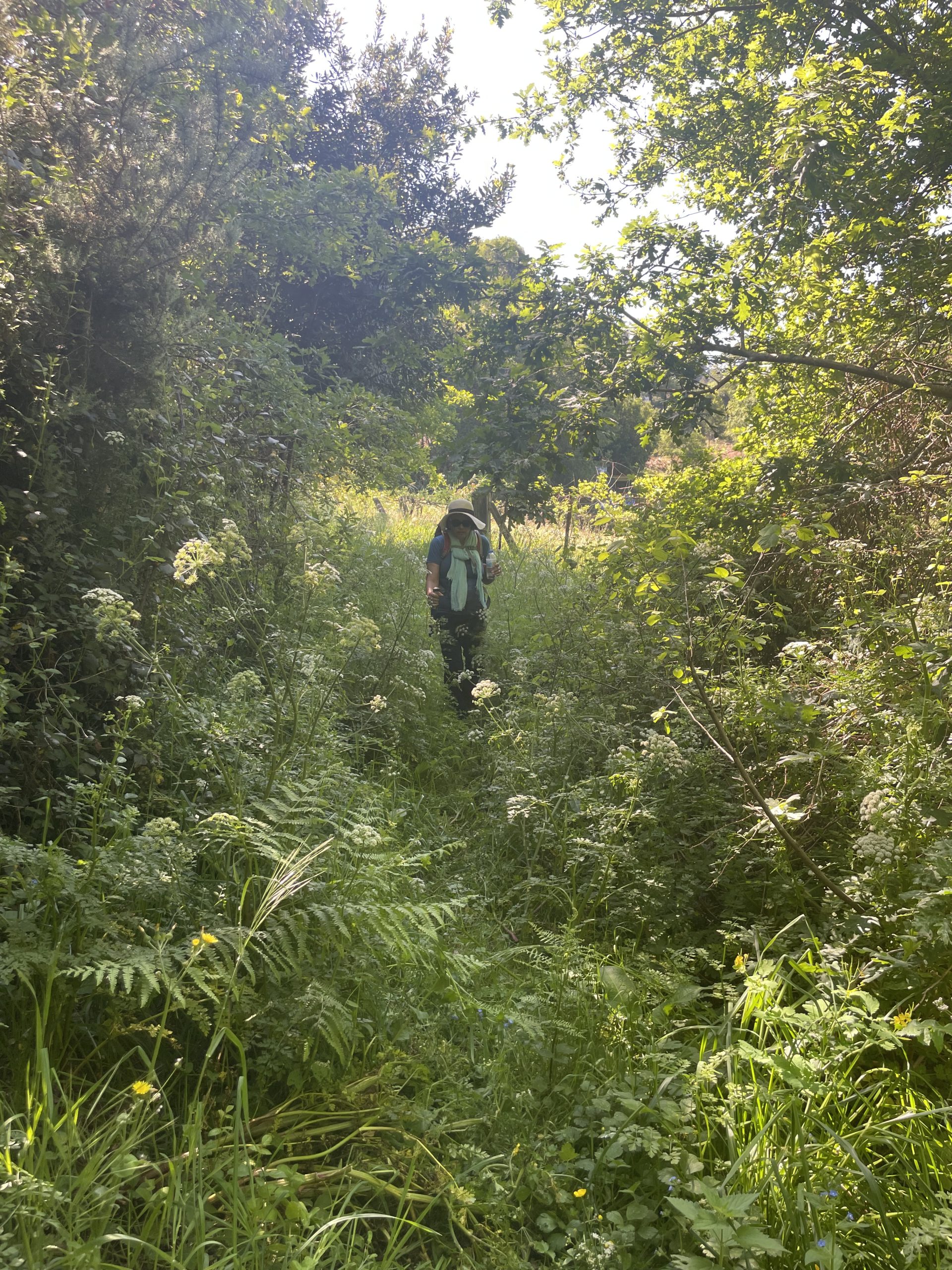 The weather has been perfect so far with zero rain, but we do run into a couple of hot days while taking, in retrospect, some ill-advised scenic alternative routes (i.e. we got lost), so it’s not a piece of cake for us. If you’re gonna Camino you’ve gotta get lost once in while or you’re just not trying. Still, as we pass the villages and their farming plots, we see so many folks in their 70s and 80s working their land and they’re not just planting annuals and pulling weeds, they’re tilling, ploughing and sowing. Suck it up, buttercup and on we go with renewed determination.
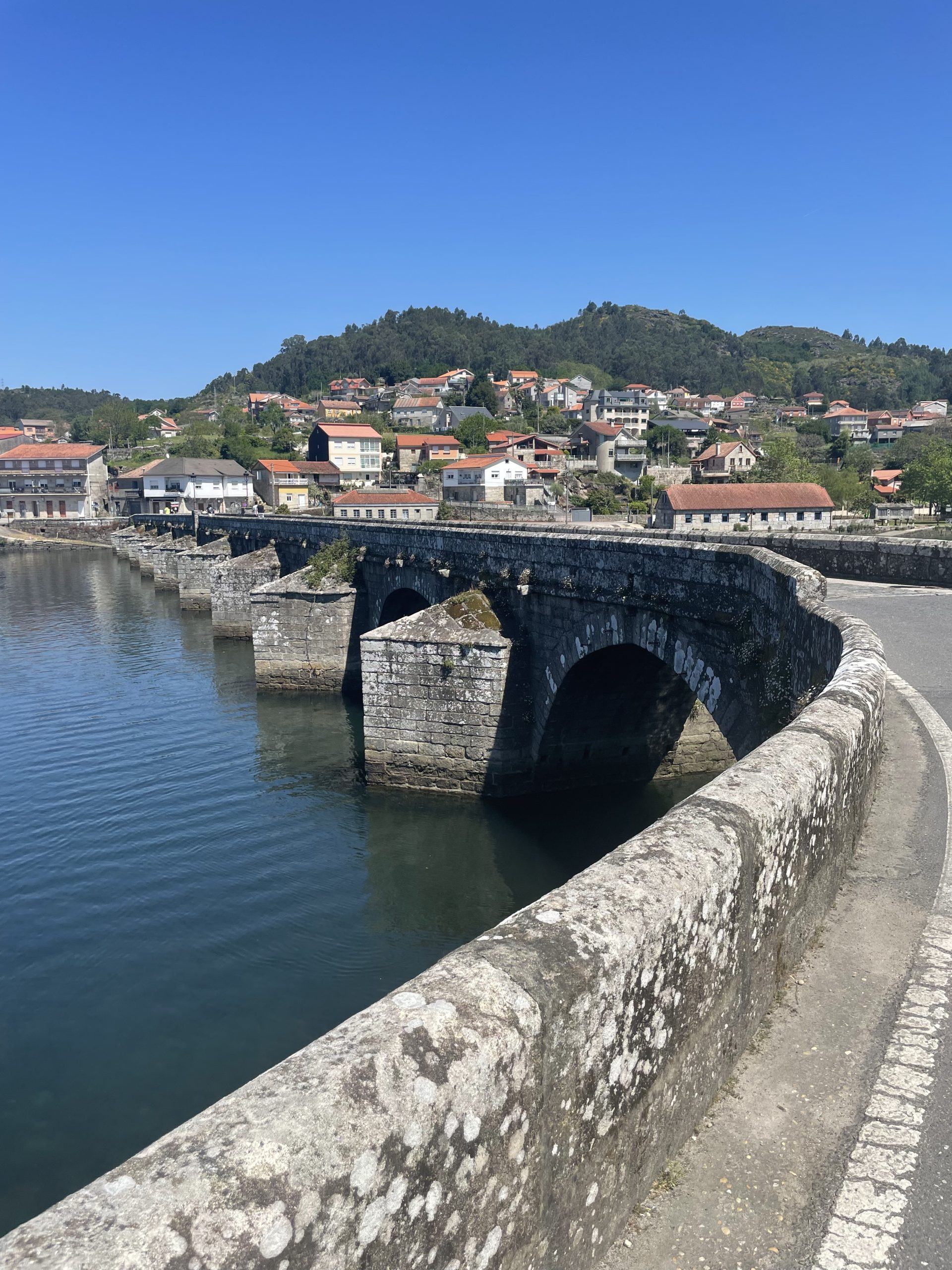
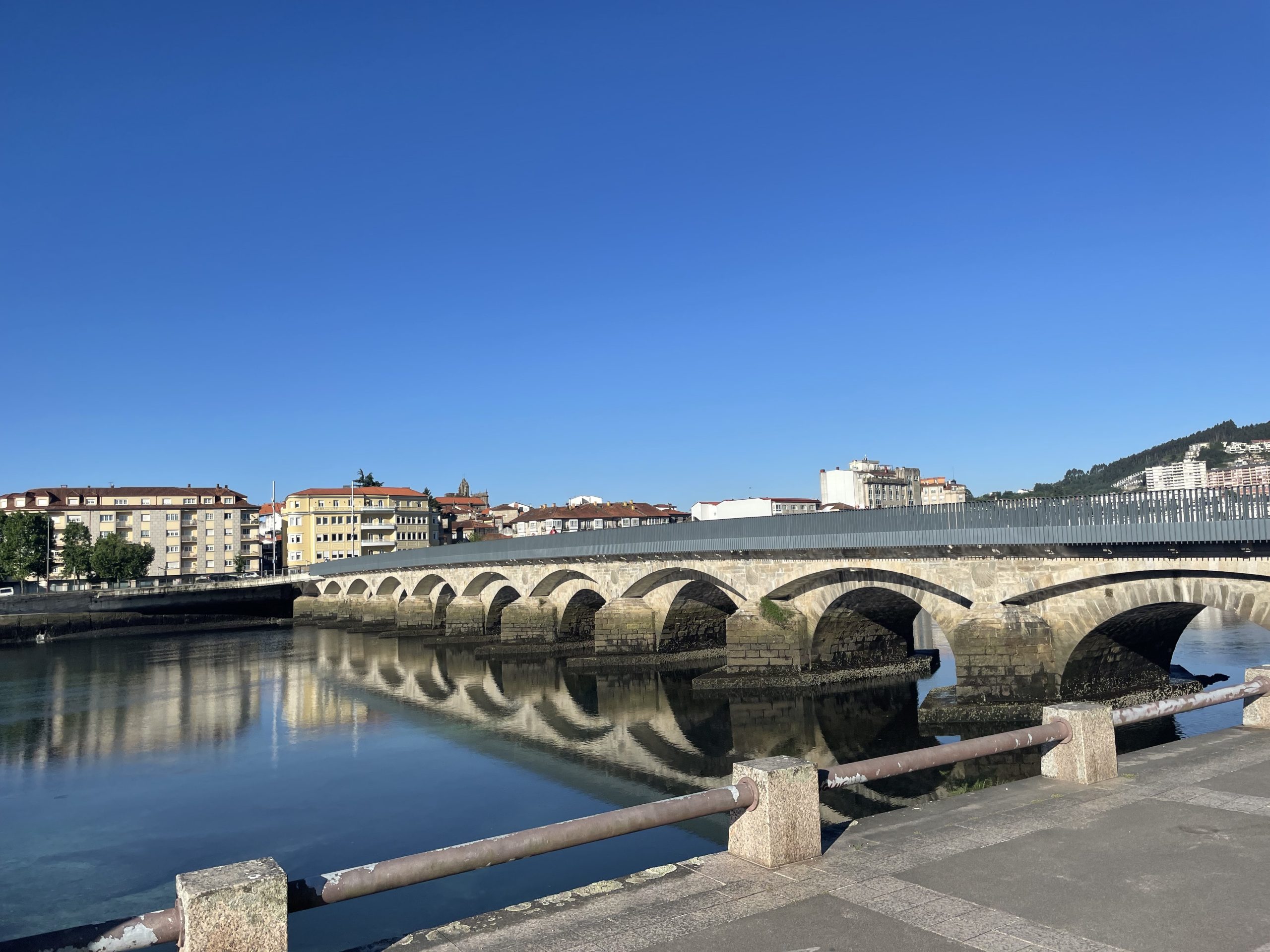
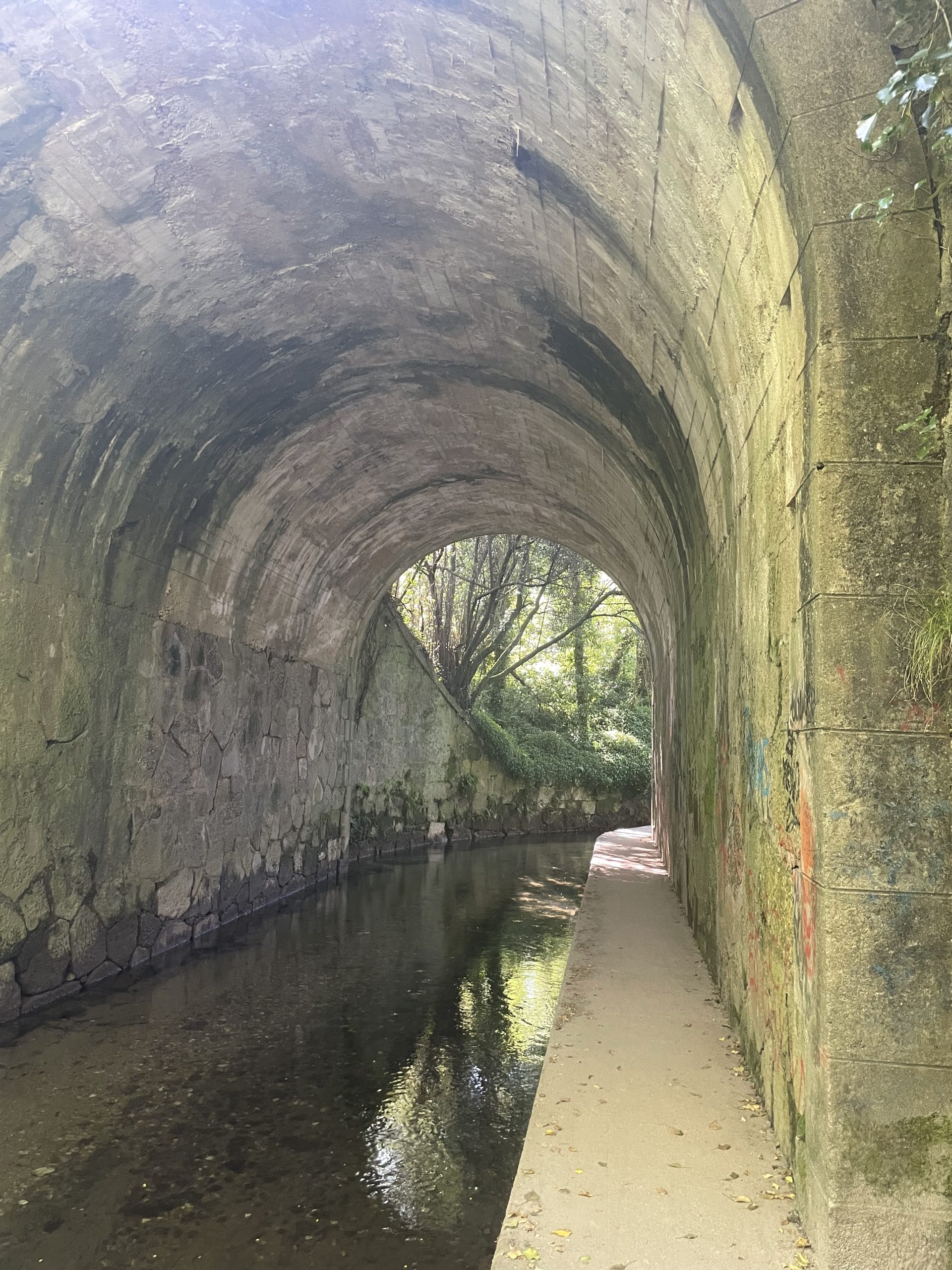
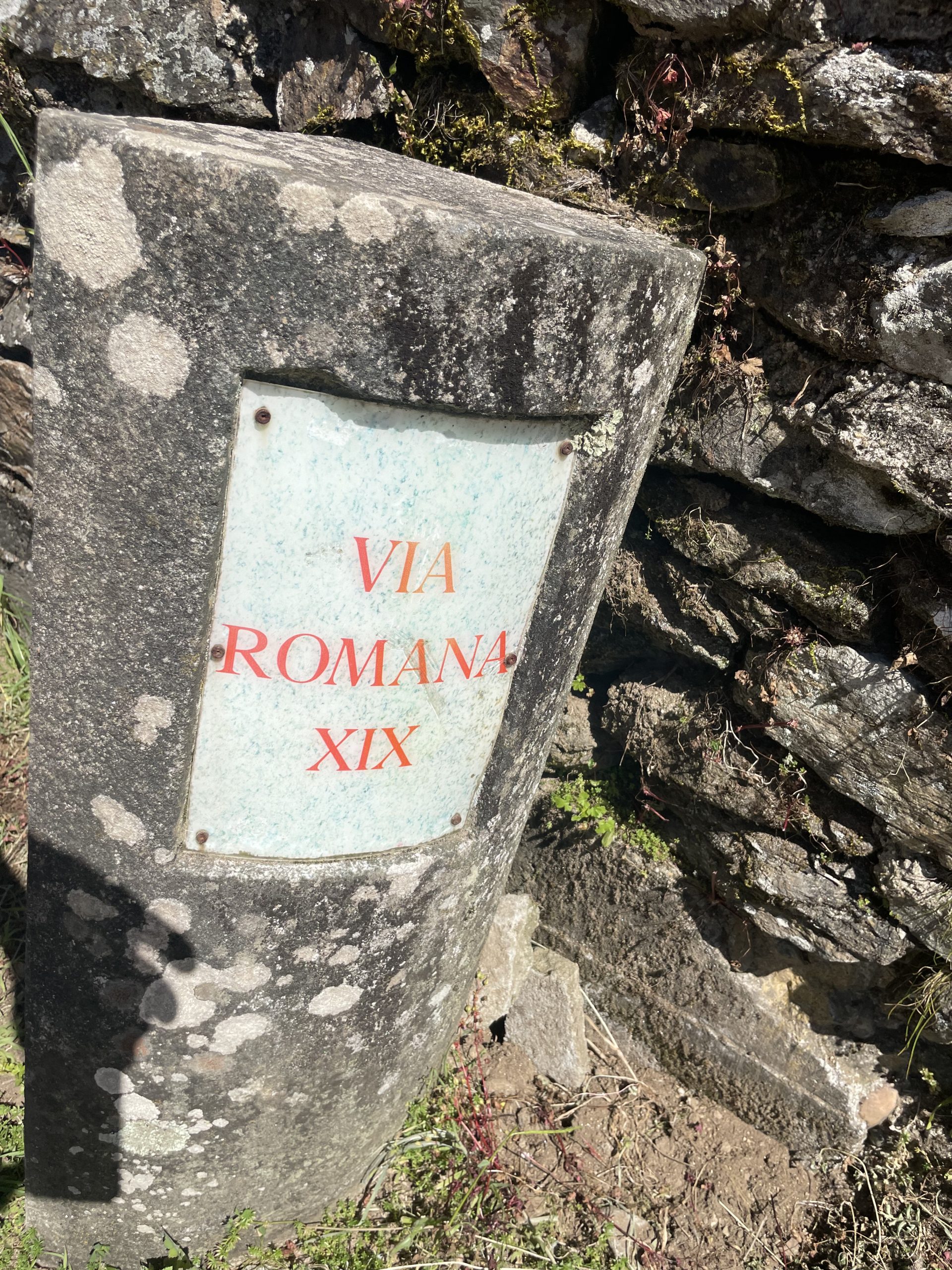
 This Camino follows much of the Via Romana XIX (Roman Road 19) which, originally, went from Braga in Portugal to Lugo in Spain, and there is obvious evidence of this with the road surface itself, engraved stones, walls, bridges and other water management features. Those Romans certainly knew how to impress with their skills at organizing a far-flung empire, until the wheels came off in the 5th century, that is. Still, it makes for a thoughtful and atmospheric walk – Which will be the next empire to fall?
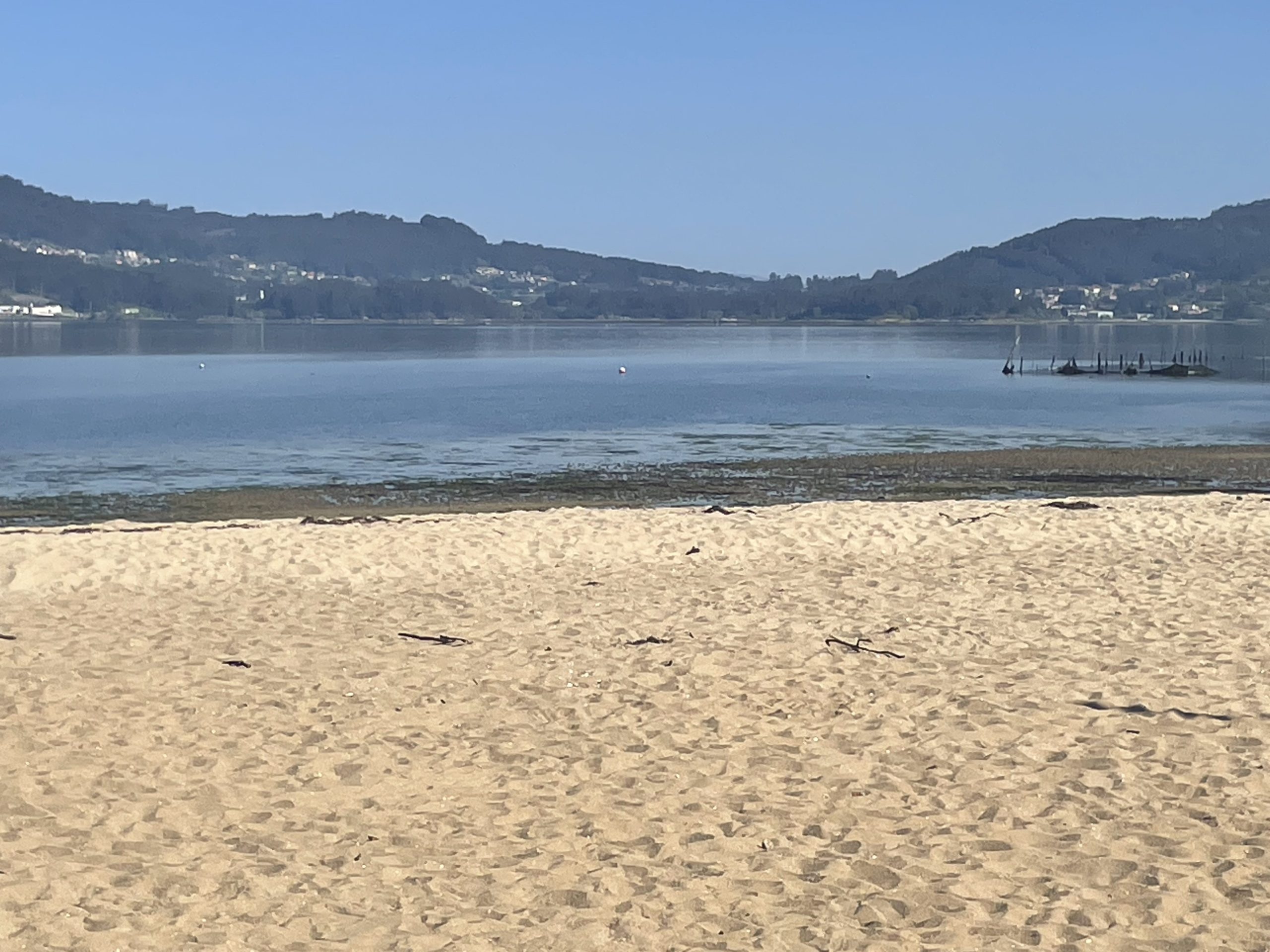
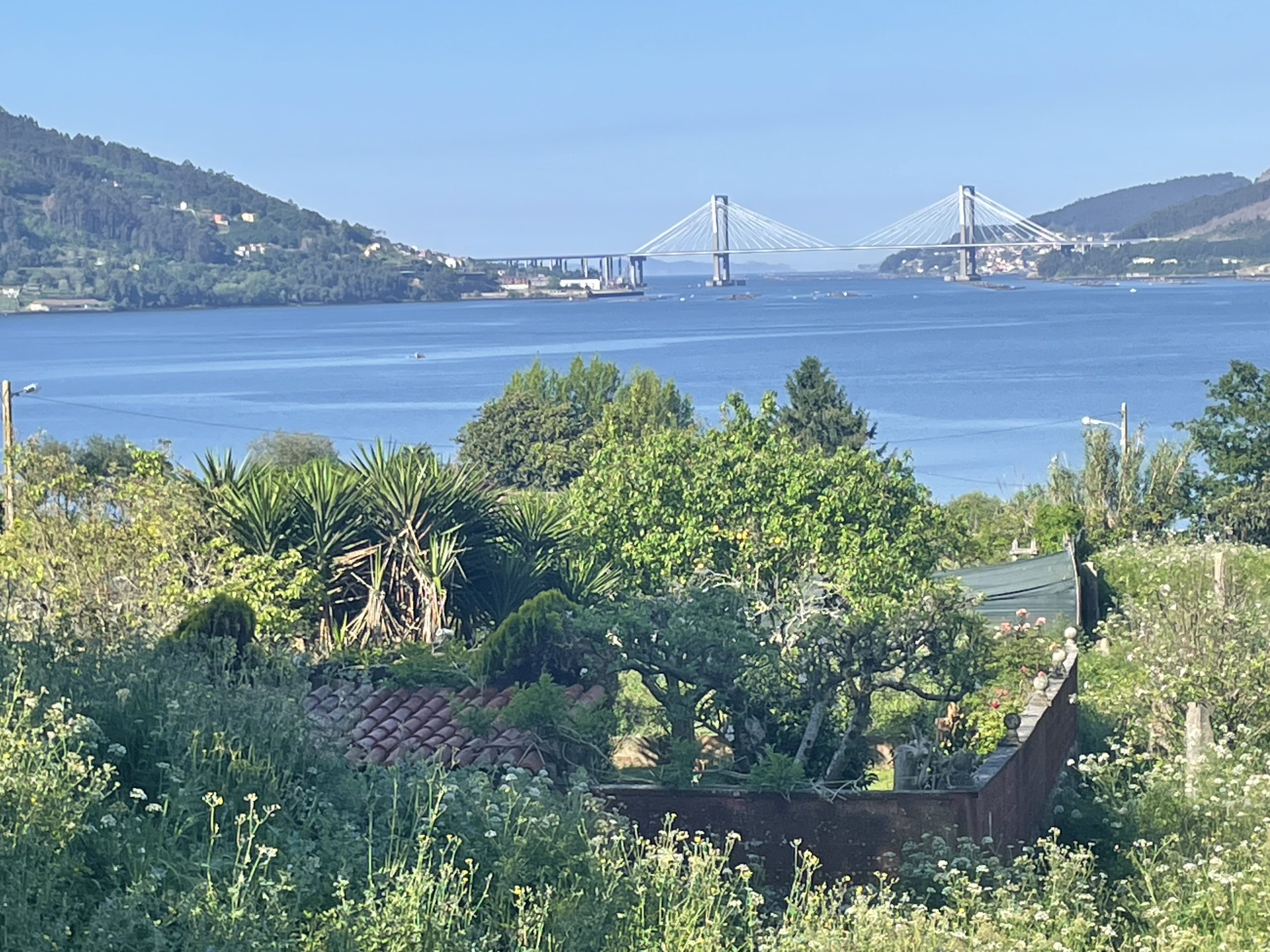 Five days in and we get a planned rest day at Redondela which will suit Abby’s aching feet and my aching back just fine. This is also where we will get back to the water as this town is just off the Ria de Vigo, which is a large inlet, one of the four estuarine inlets that make up the “Rias Baixas” of Galicia. Very scenic and we’d like to return – We didn’t even get a chance to visit the city of Vigo, close by on the water, that many folks talk up a great deal. We’re just passing through, focused on what’s hurting now, what plants, animals and waterways are in our immediate vicinity and how far the next café is.
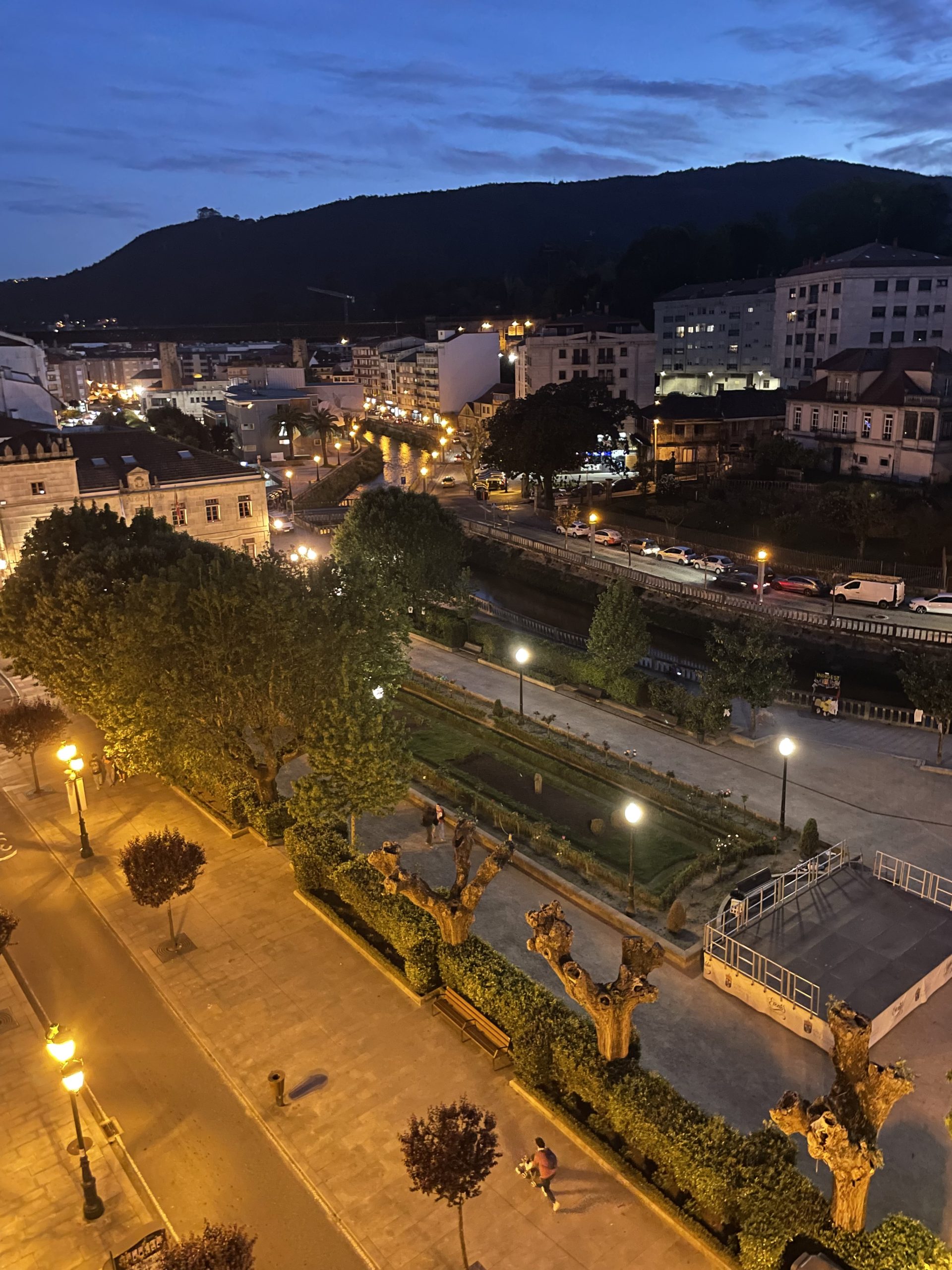 The stopover in Redondela is in an old school 4th floor apartment with some real character, with a sunroom overlooking the Rio Rondela which runs through the center of town. The older couple renting the apartment are delighted that Abby speaks Spanish but, in fact, the vast majority of people we interact with on our way are happy to see us. Did I mention how good and cheap the wine is? We’re not talking Chateau Lafite Rothschild Yadda Yadda here, but it beats what we get at home for half the price or even less. It’s not helping the alcohol moderation program, and neither is this entire trip but, hopefully, the mileage walked burns up most of the downside of the booze. Speaking of alcohol, weekends in Spain are lively, even in a small town. I thought the bars were meant to close at 2am but the party continues, directly outside our bedroom window, until the sun comes up.
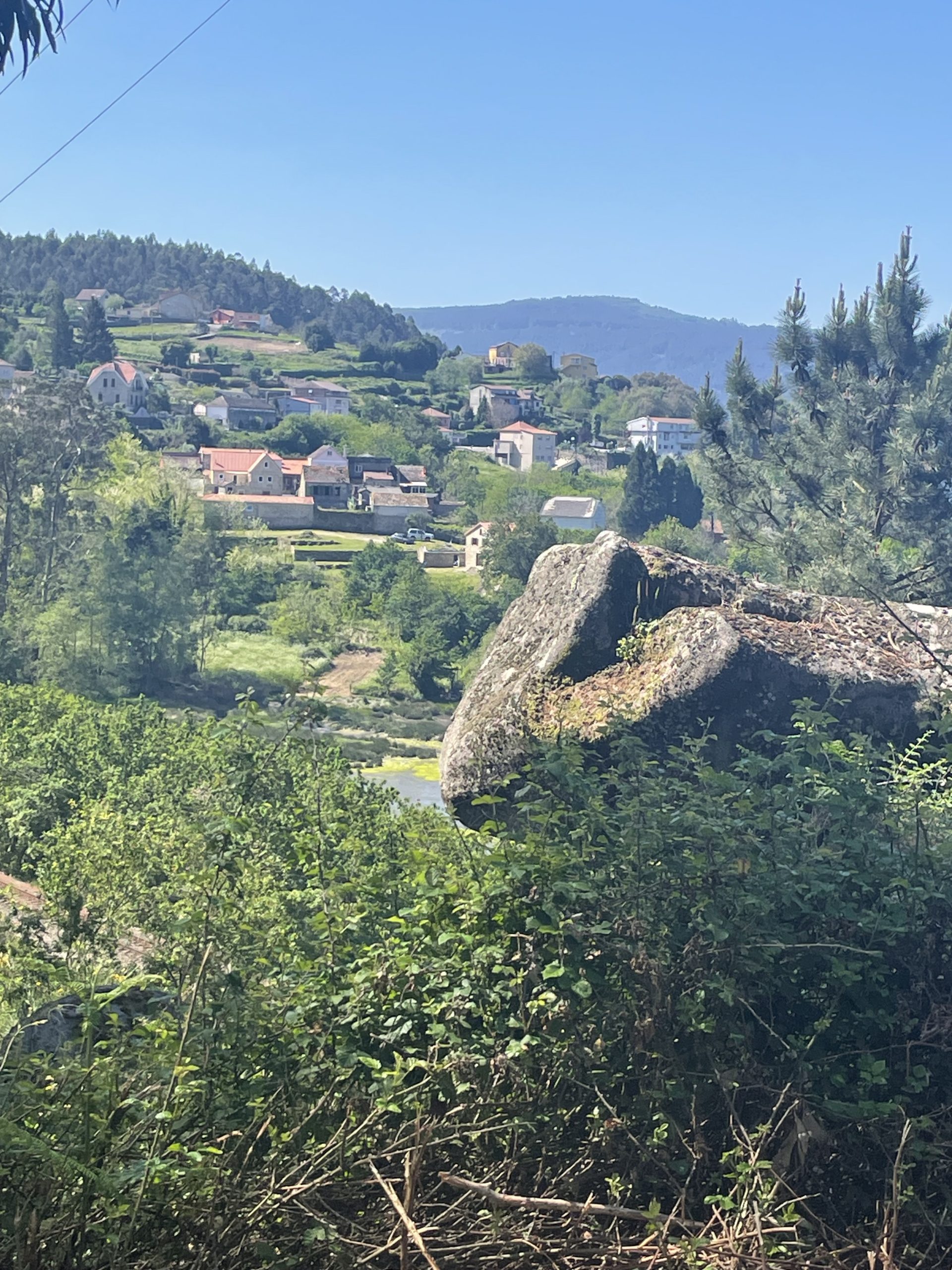 No matter, we’re up the next morning, just as last night’s stragglers stagger to bed, to head onto Pontevedra.





Leave a Reply