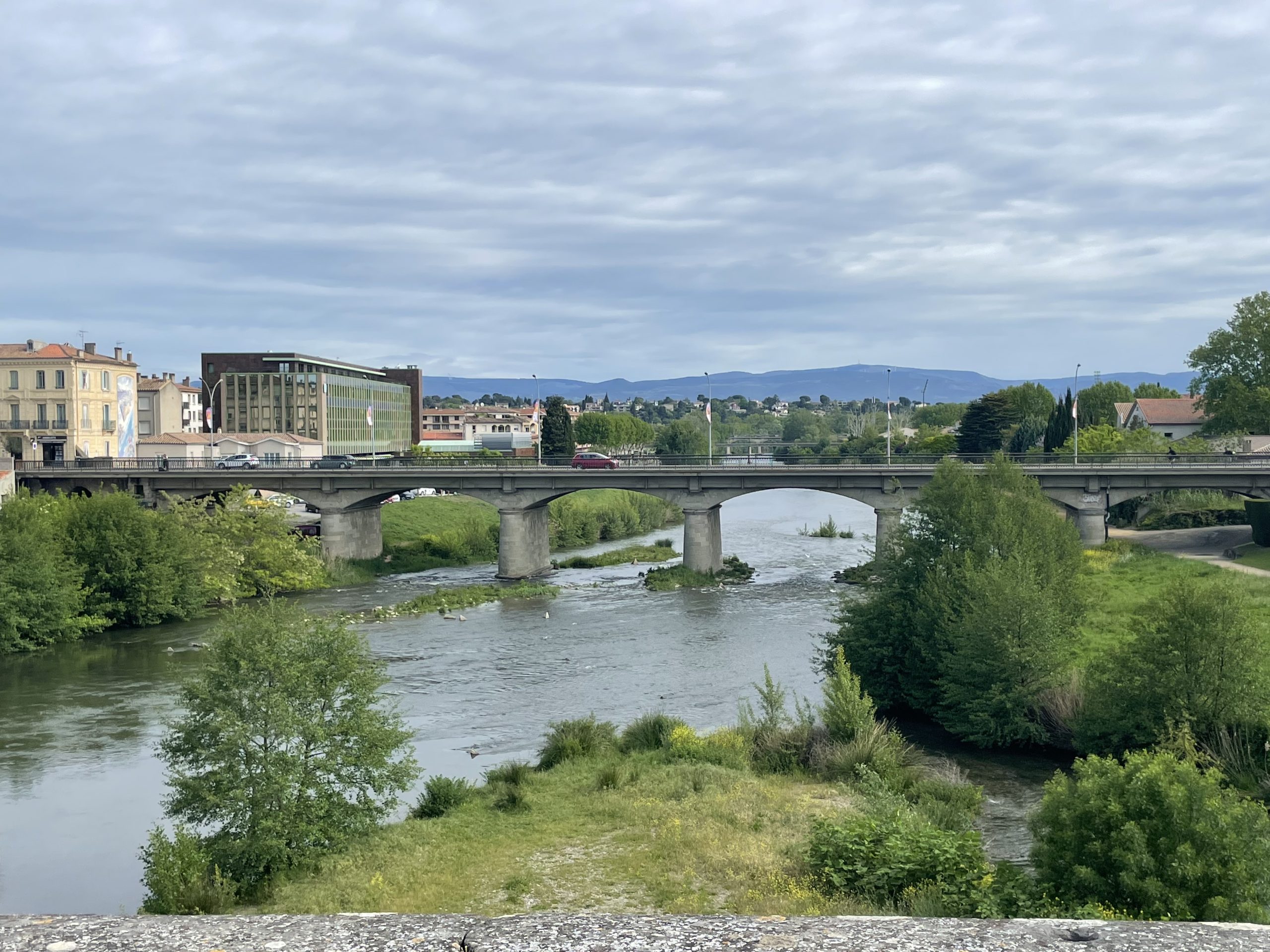
 With the weather finally improving we’re heading out into the countryside of Occitanie which, for those who care, was, mostly, the province of Languedoc prior to 2016. There’s an excellent regional train and bus system so, at least for the short-term visitor, there’s not a pressing need to rent a car. We’re going to hit up the fairytale citadel at Carcassone, the wine country of Fronton and the Hall of Machines in the suburbs of Toulouse.
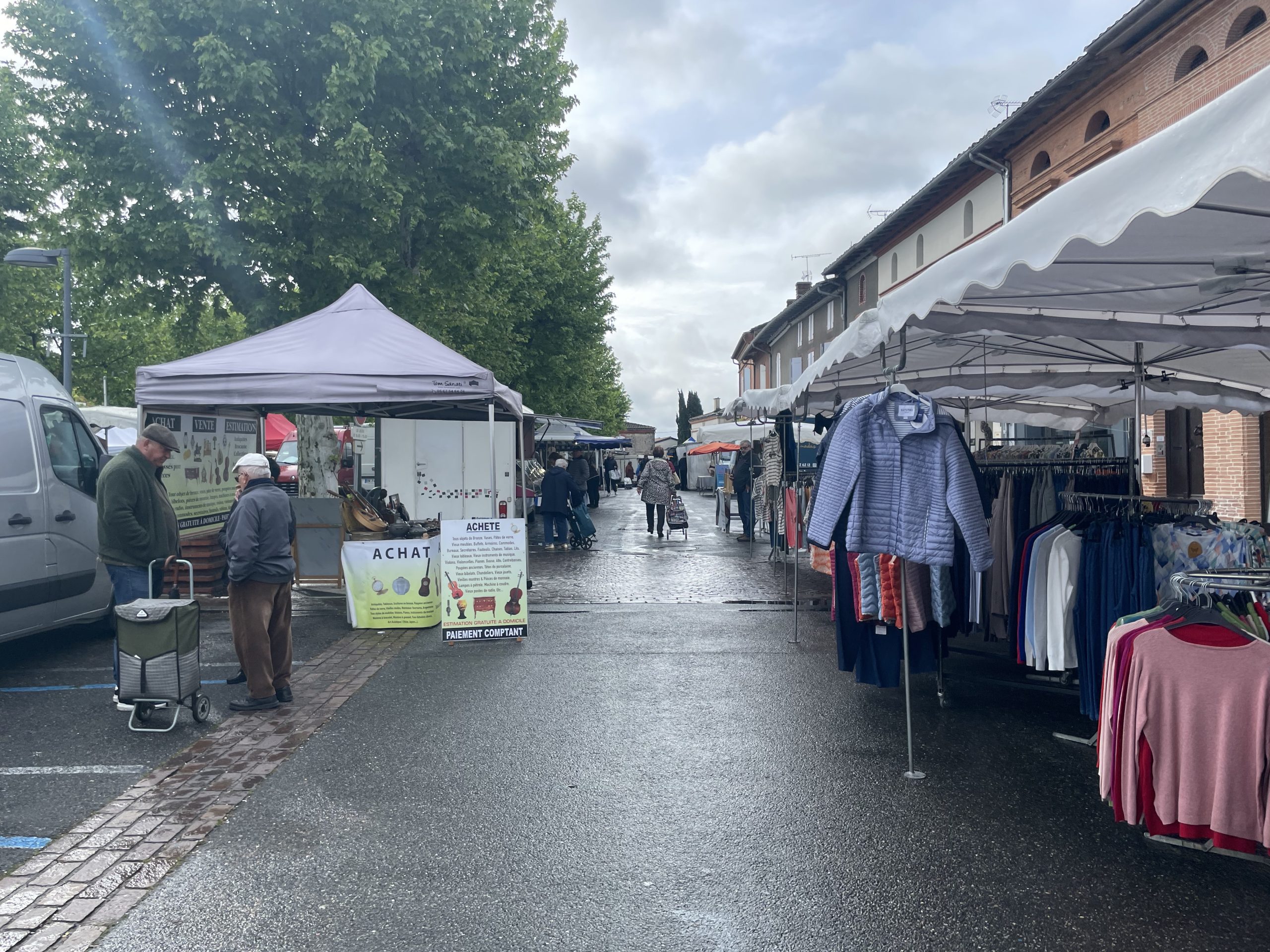
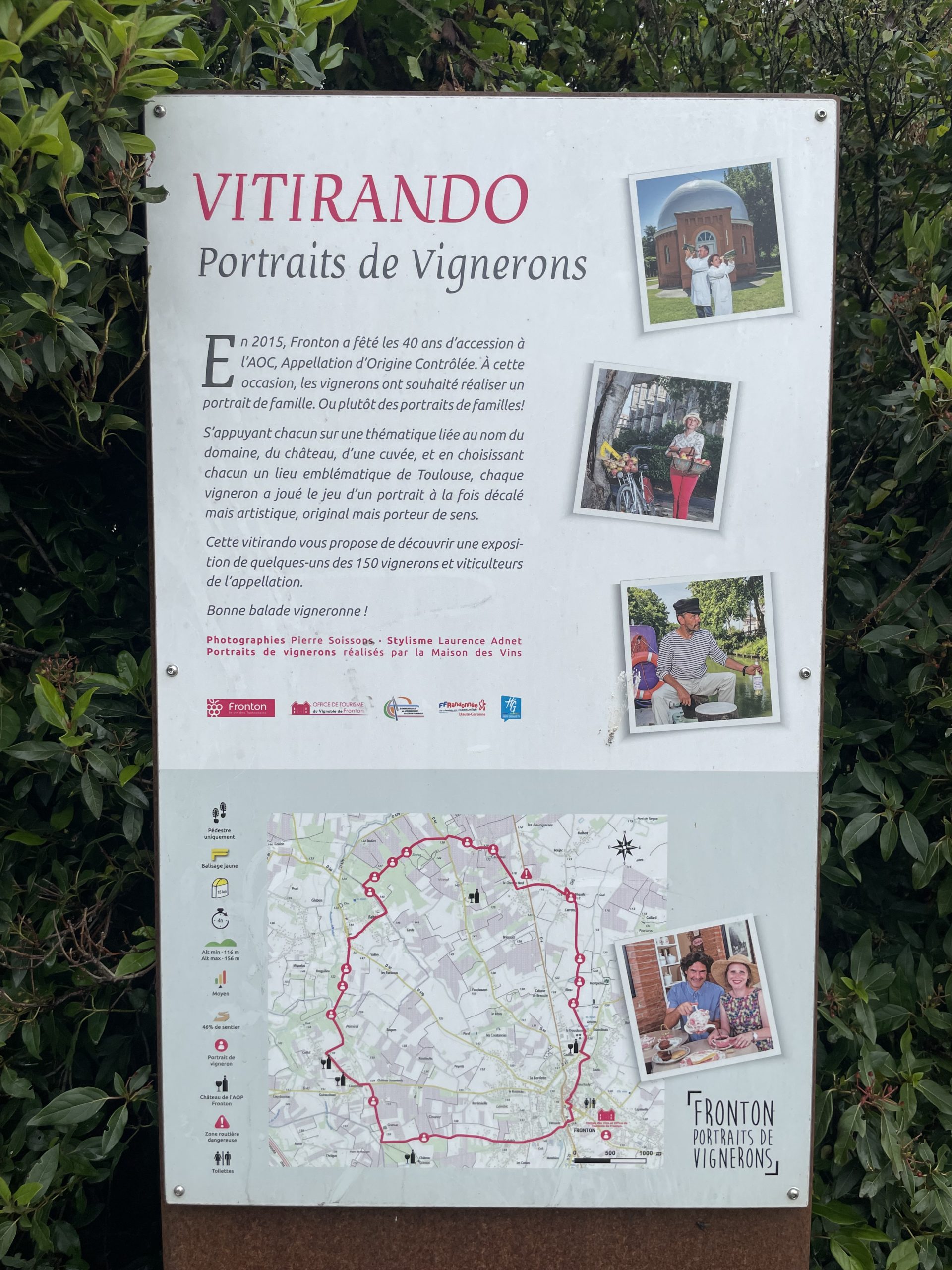
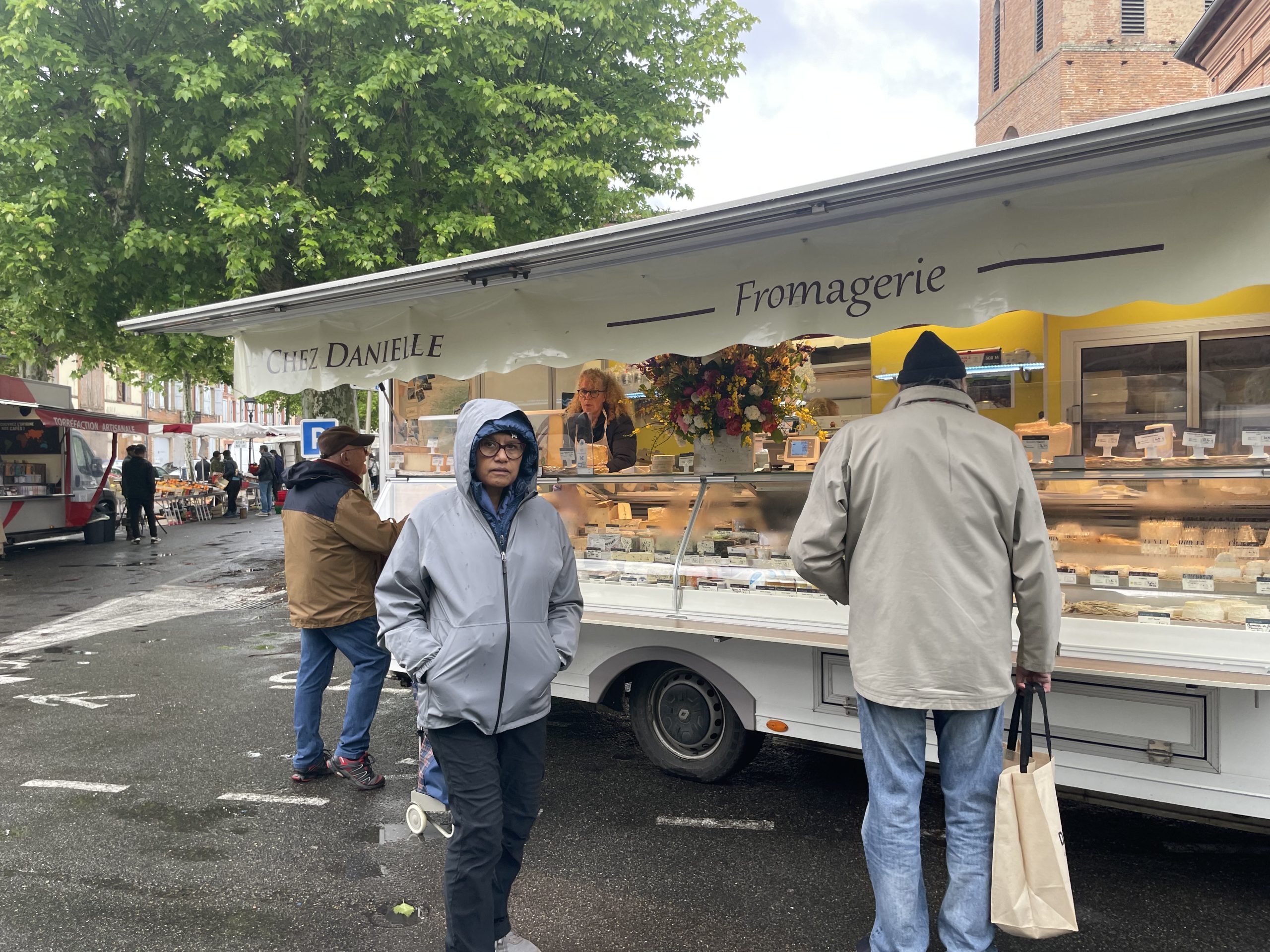 The Fronton wine appellation, AOP/AOC in French is not well known, even in France, and the tourist infrastructure is limited so, that was our one experience when a car would have helped: But who, then, wants to be a wine loving designated driver in that situation? Nevertheless, we take the country bus to Fronton (2 Euros for a 30-minute trip!) and are dropped off right in the middle of the weekly market event. The French are excellent at putting these on and all the locals have shown up for serious shopping: There are some simple stalls but also a number of sleek, stretch vehicles Airstream-like trailers, specializing in, for example, cheese, antipasti or charcuterie. There are a significant number of senior shoppers so I’m guessing this market is important and convenient for them as, otherwise, you’re looking at a fair car ride to buy fresh produce.
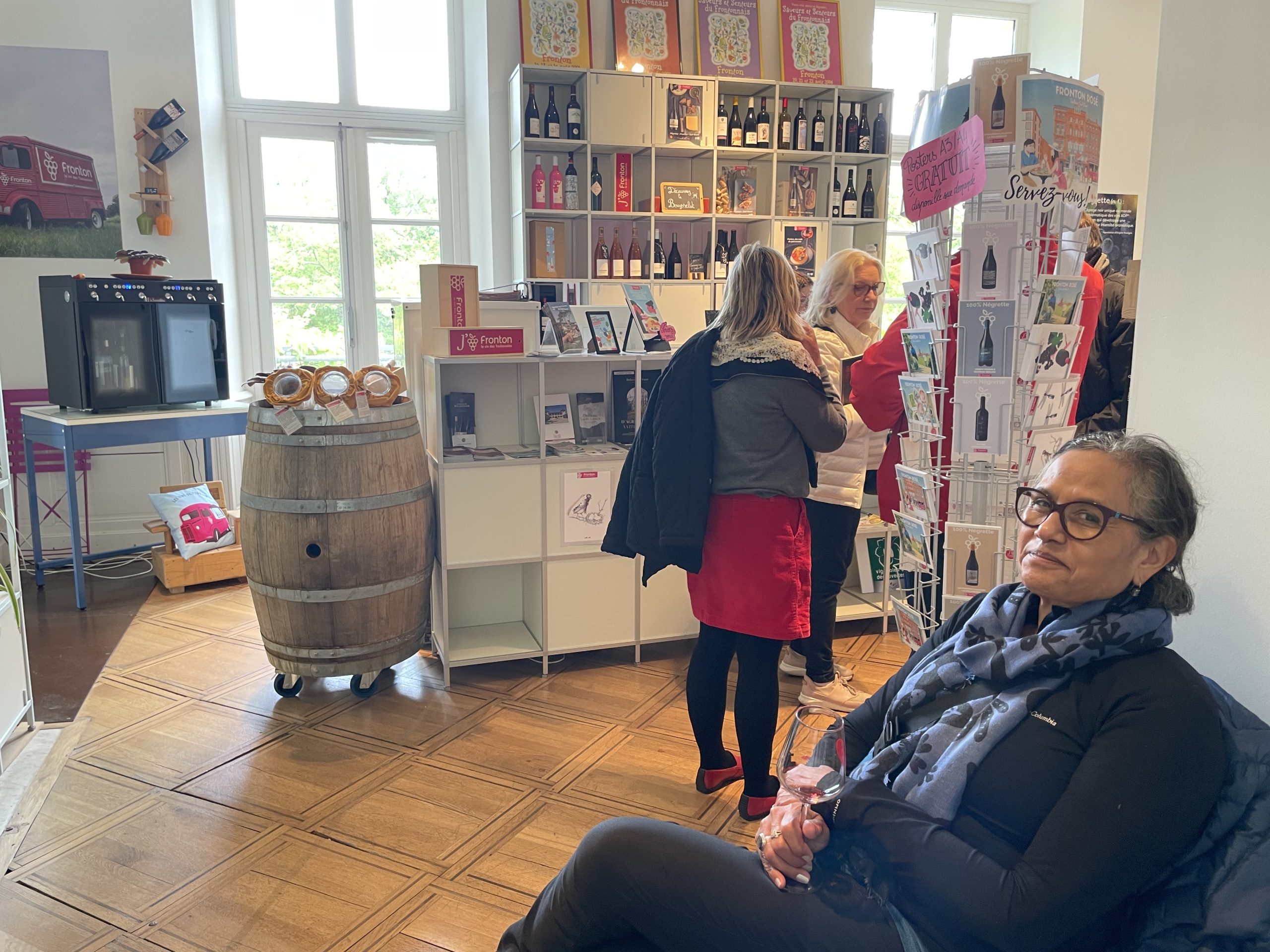
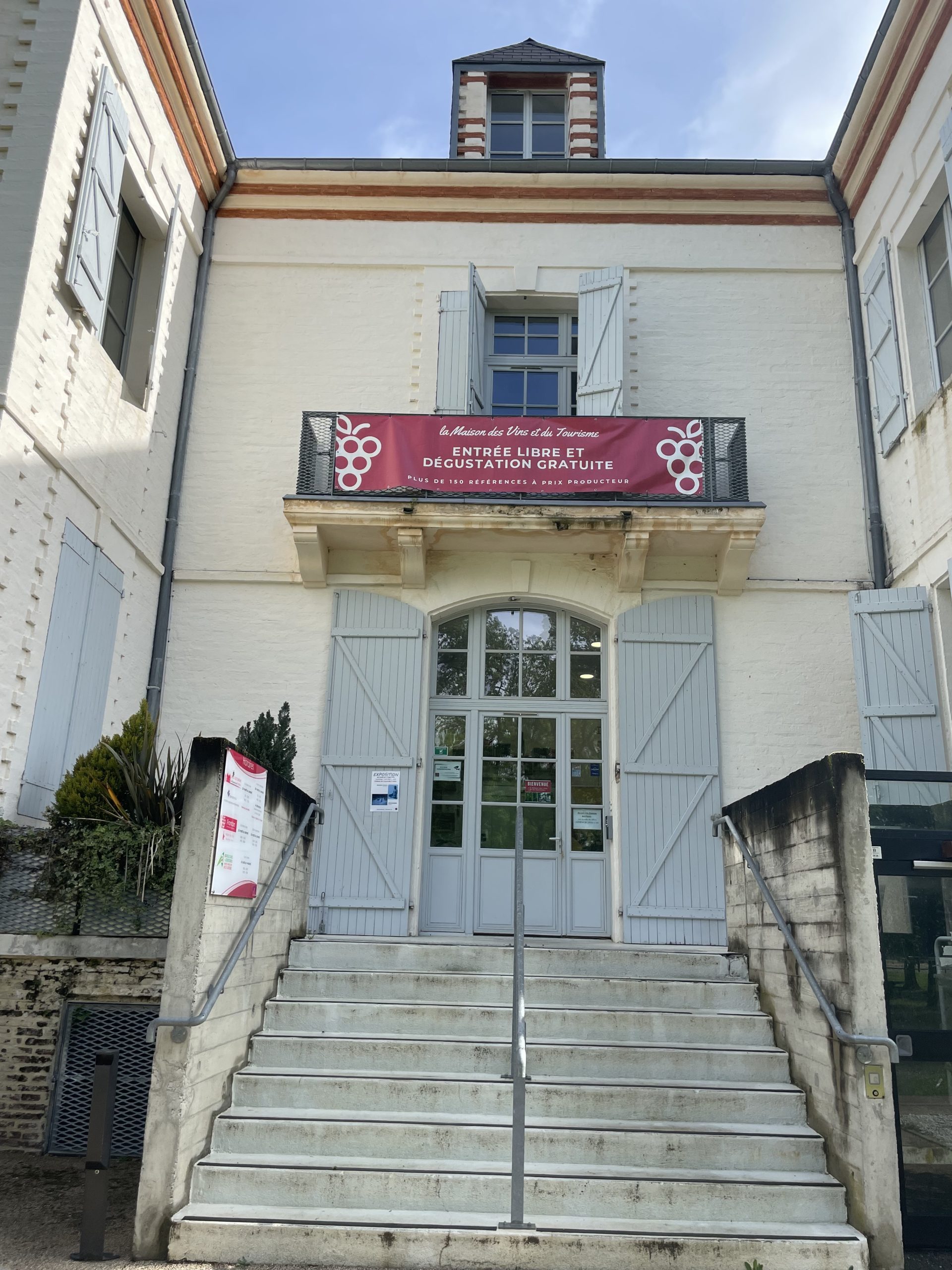 A short walk out of town takes us to La Maison des Vins, an information and wine tasting focus for visitors to the region. It’s not high season, and this is a relatively undiscovered area, so the staff are very helpful by setting us up with an appointment at a vineyard and a lunch reservation at the “best place in town”. Don’t get too excited about the restaurant, there are very few in Fronton. There is also free wine tasting, but they don’t really have the tasting room set-up and ambience down pat yet. Still, they probably don ‘t want people setting up and ploughing through their inventory, so we’re off in a taxi to Chateau Boujac. There’s only one taxi in town, “Taxi by Seb” to be precise: Seb has just a little English and I a little French but we cobble together a conversation centering on the upcoming Euro 2024 soccer tournament but, it turns out, Seb is more of a rugby man as Toulouse is, very much a rugby city with its team Stade Toulousain being the most successful team in Europe (or so Wikipedia says).
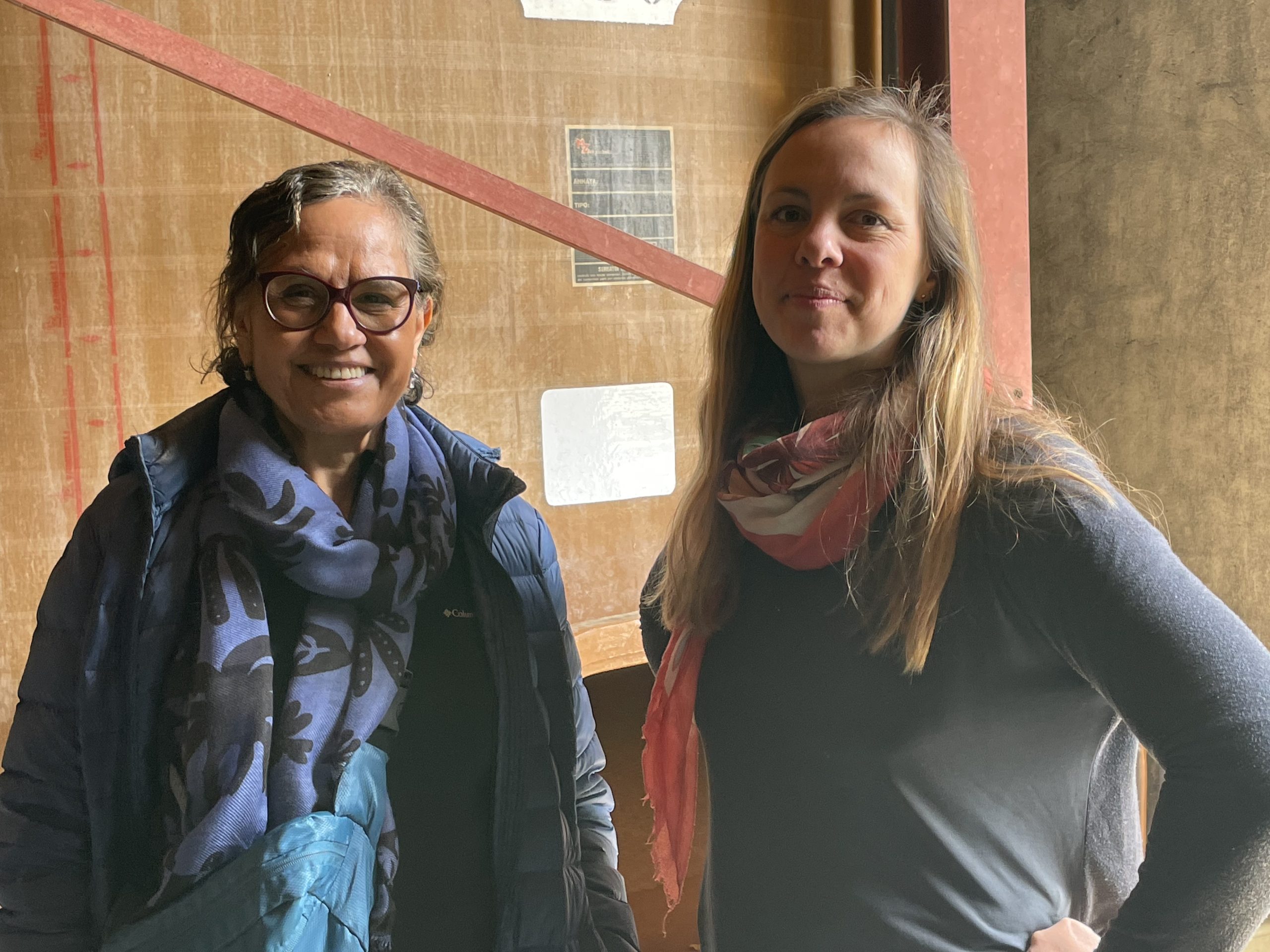
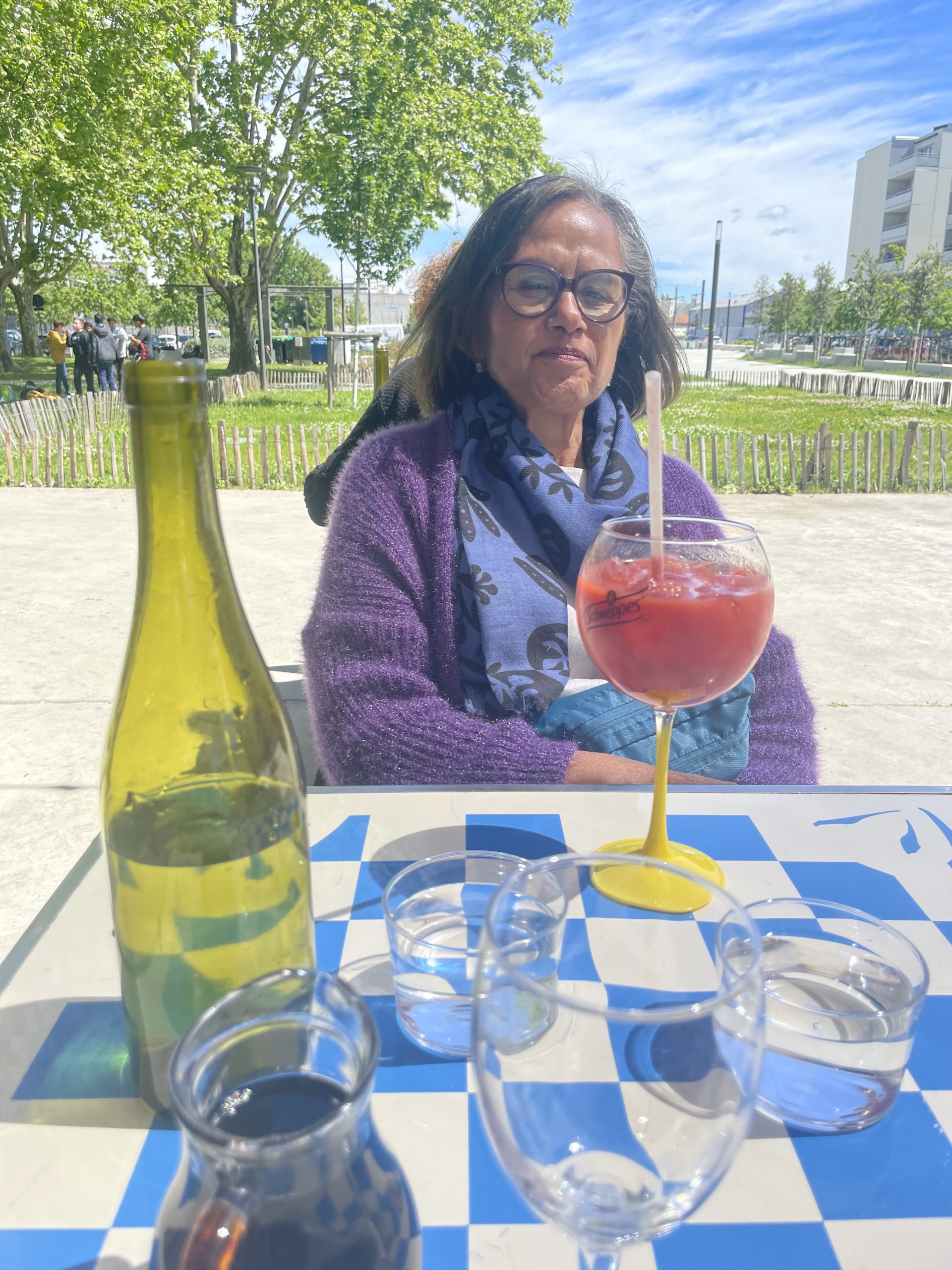
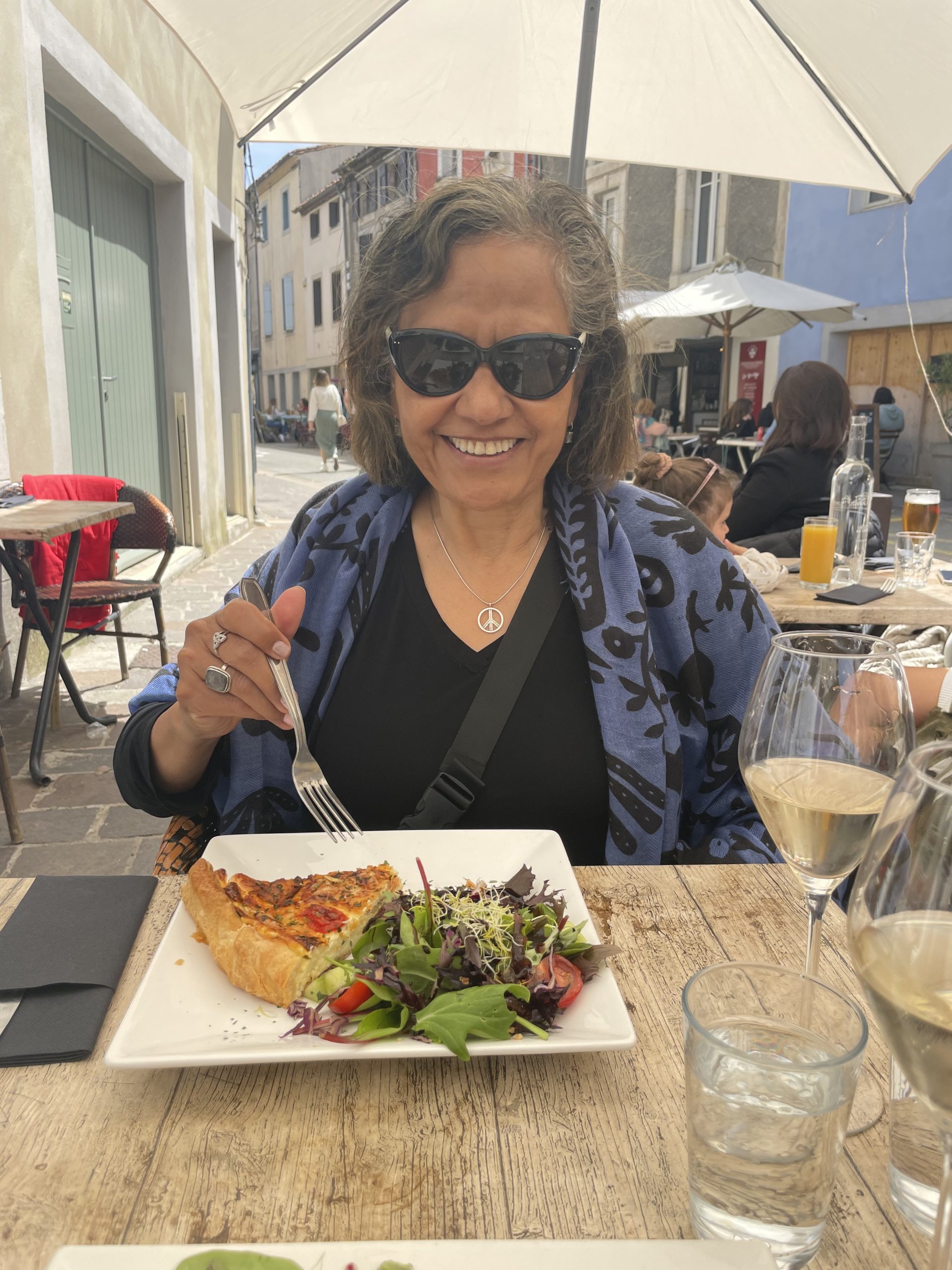
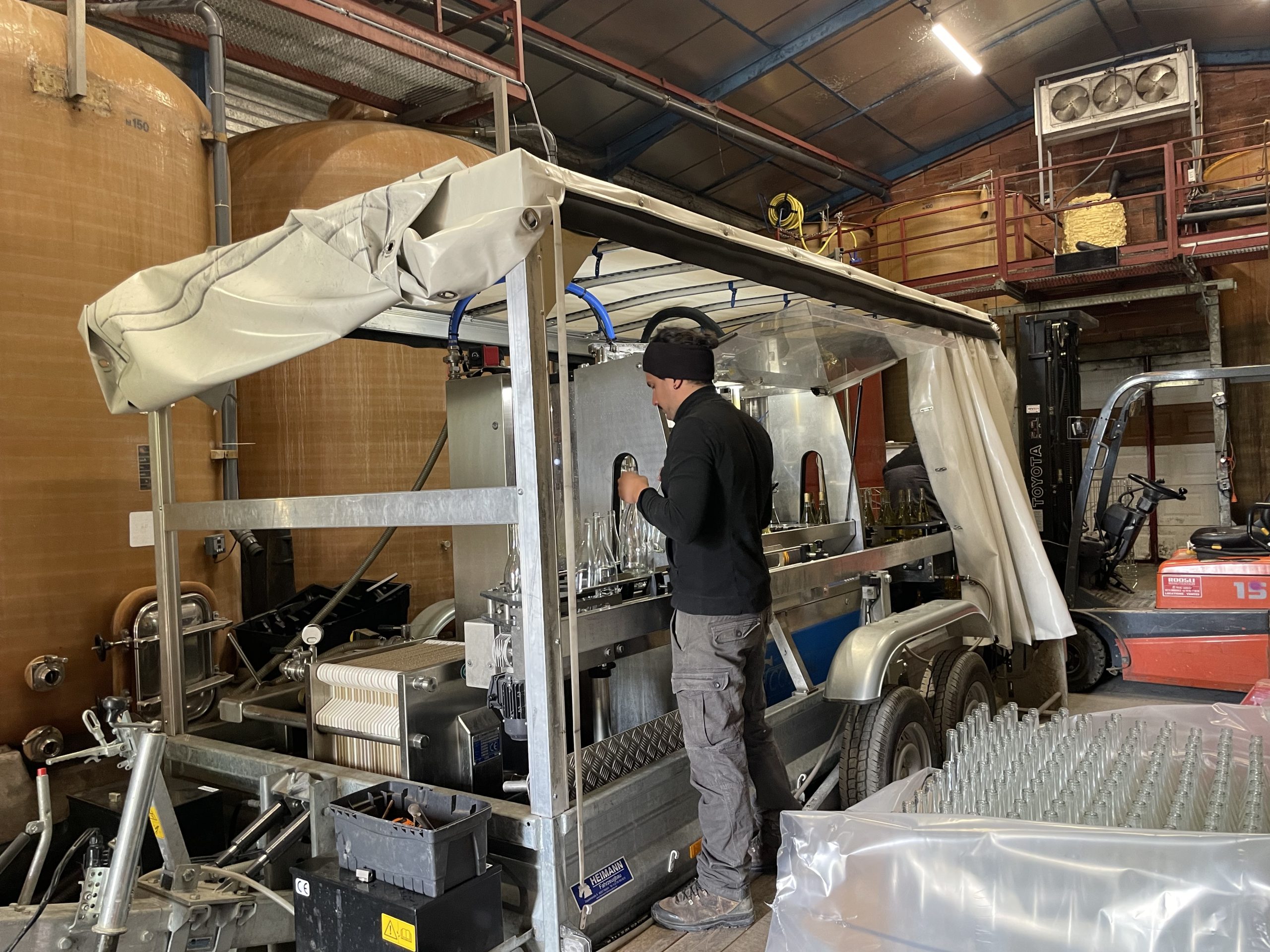
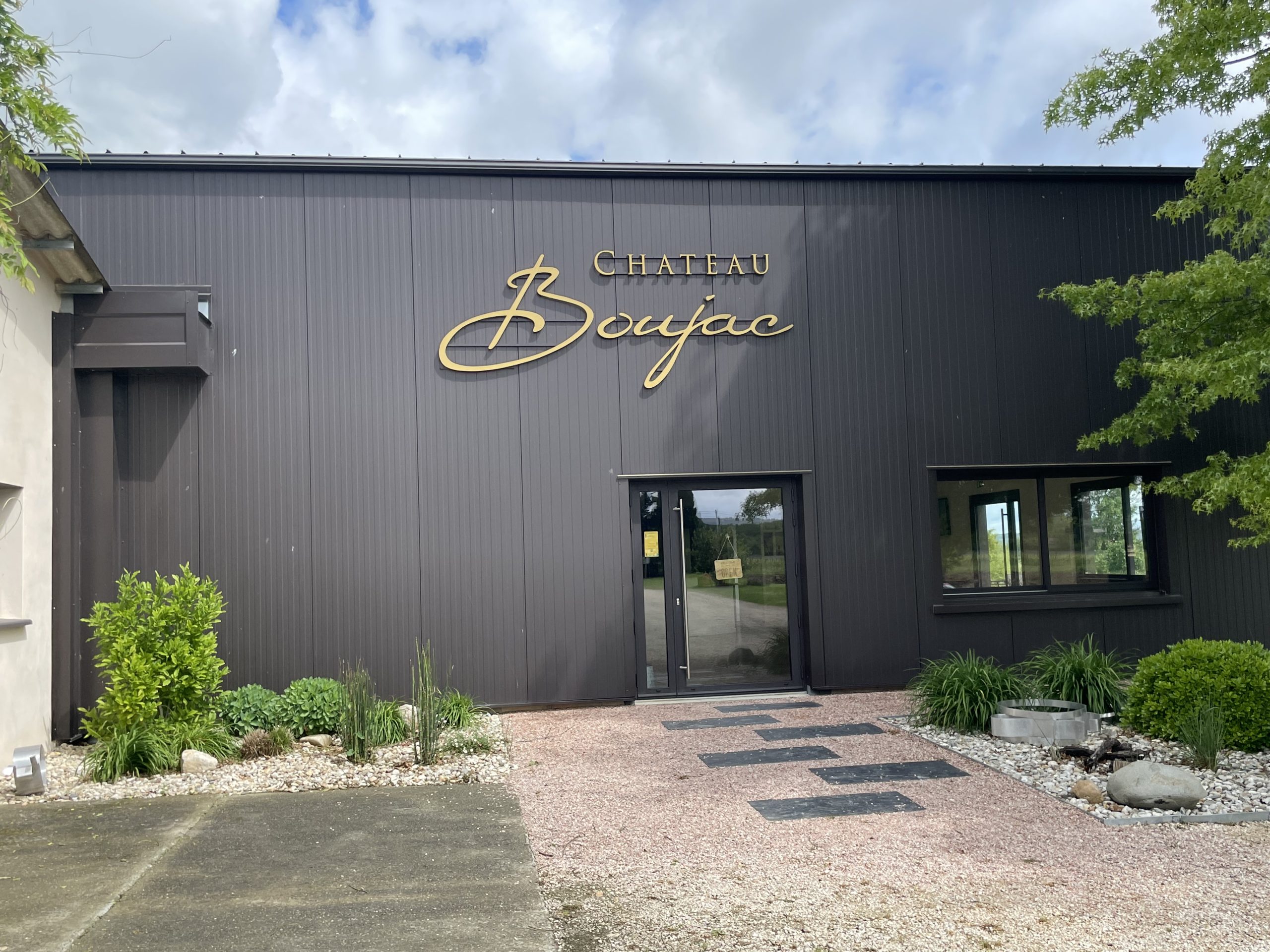
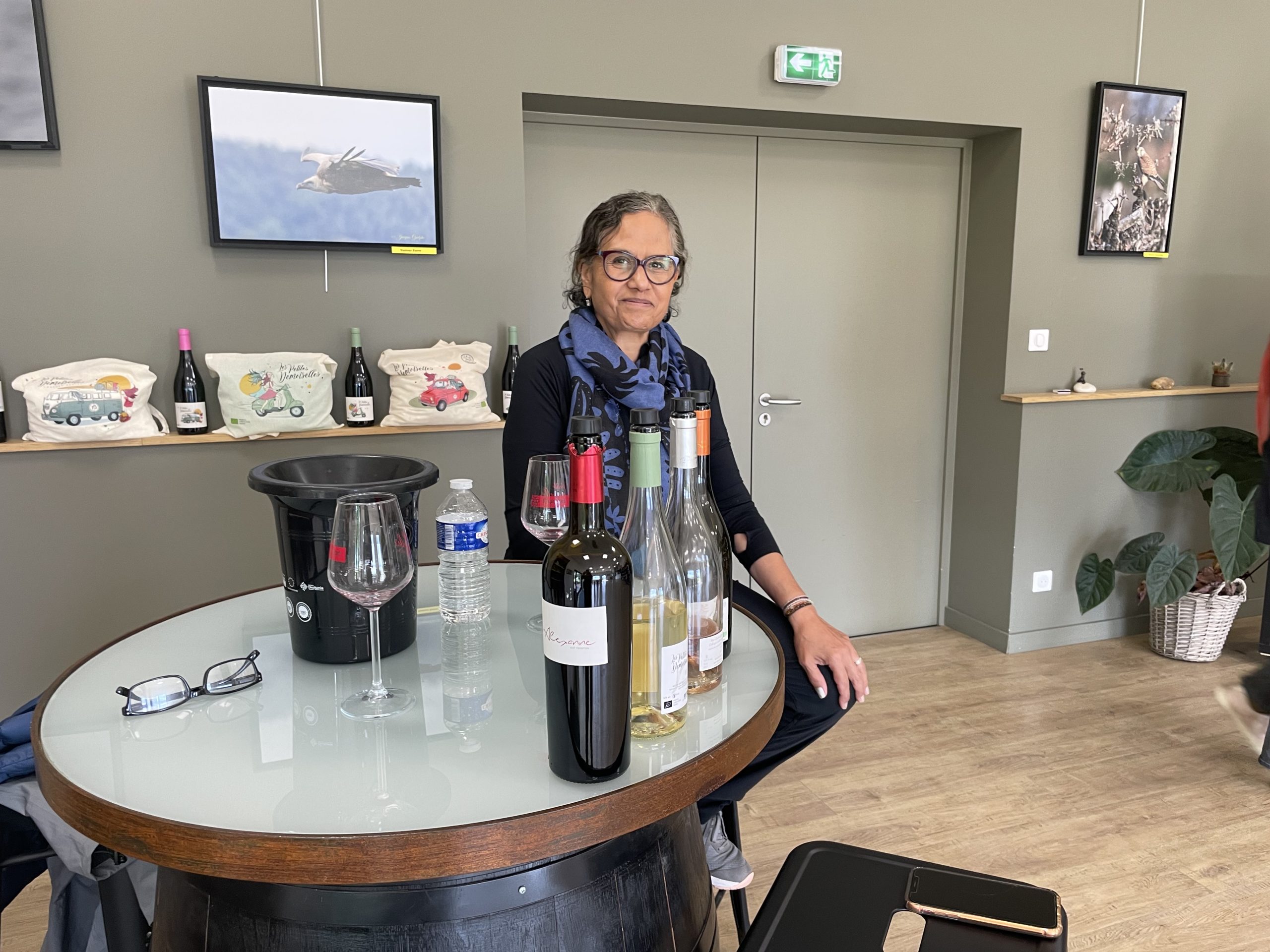
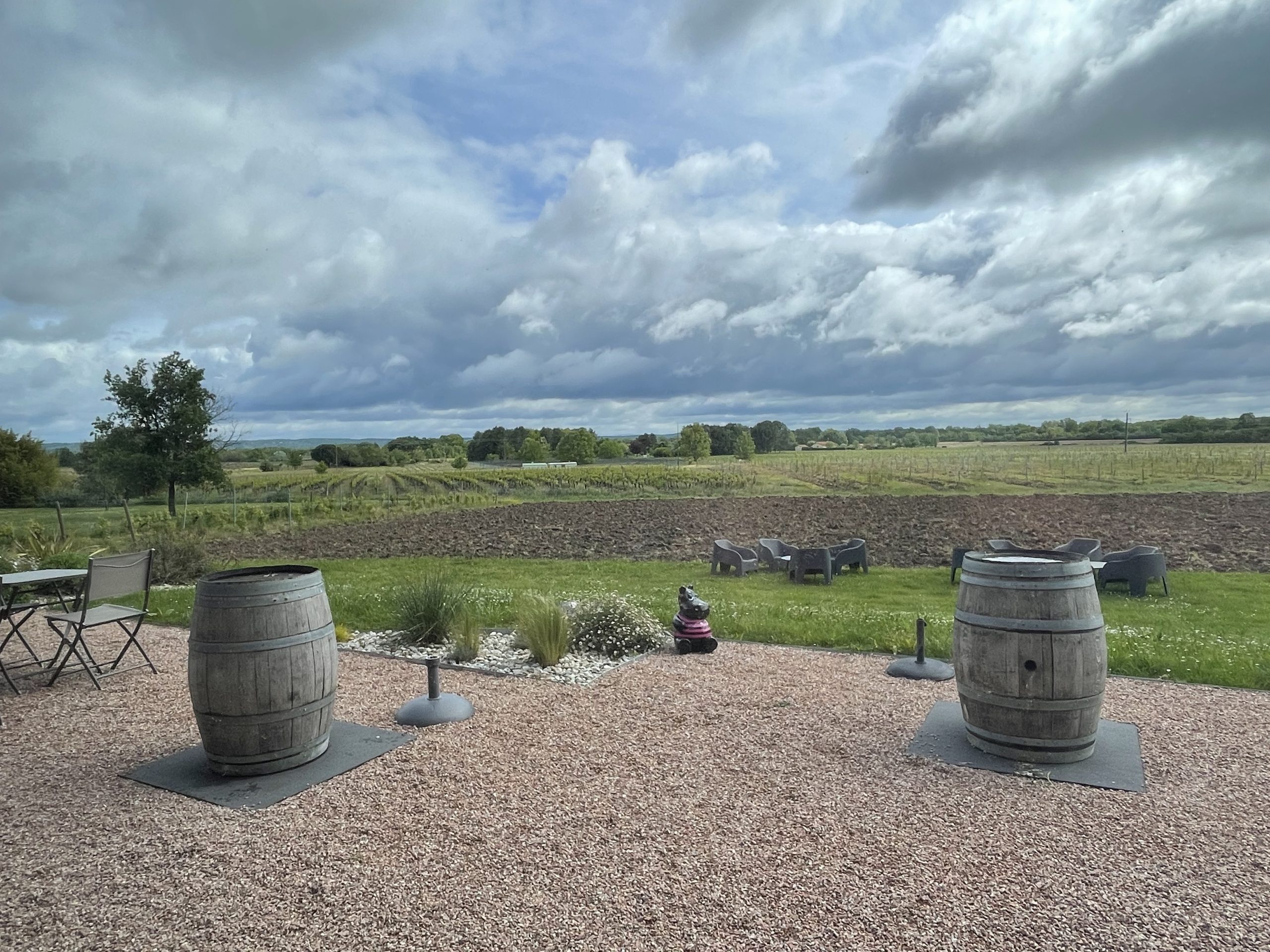 Chateau Boujac is not a grand chateau but rather a modern, low key tasting room and winery surrounded by its vineyards and we’re the only people tasting when we arrive. The Fronton AOP’s claim to fame is the Negrette grape, which is unique to this area, and which can be drunk on its own but is usually blended with Cab Sauvignon, Syrah or other varietals. The wine is not amazing, but it’s still good, and the prices are super low so we buy what we can carry (and what we can drink before we have to leave for Berlin). Seb is back, again on time, to pick us up and happy to see us as these kinds of rides must be a god send for him on a quiet Thursday lunchtime in the middle of the countryside. Lunch is at the modest, but highly recommended, busy and female owned, café “Mijote et Papote”, where we are the only tourists. Lucky us, the fixed lunch menu is vegetarian today, a rare event in rural France and, of course, there is excellent local wine. There were many wineries and vineyards scattered around the town but a car and, preferably, working French would be needed to really make the best of things.
 Still, it’s a region waiting to be discovered, so plan to visit before prices go up and things get less laidback. While you’re here hit up some of the other underappreciated wine regions which can be found throughout France, as, even here, people tend to focus mostly on Bordeaux, Burgundy, Cotes du Rhone and Champagne.
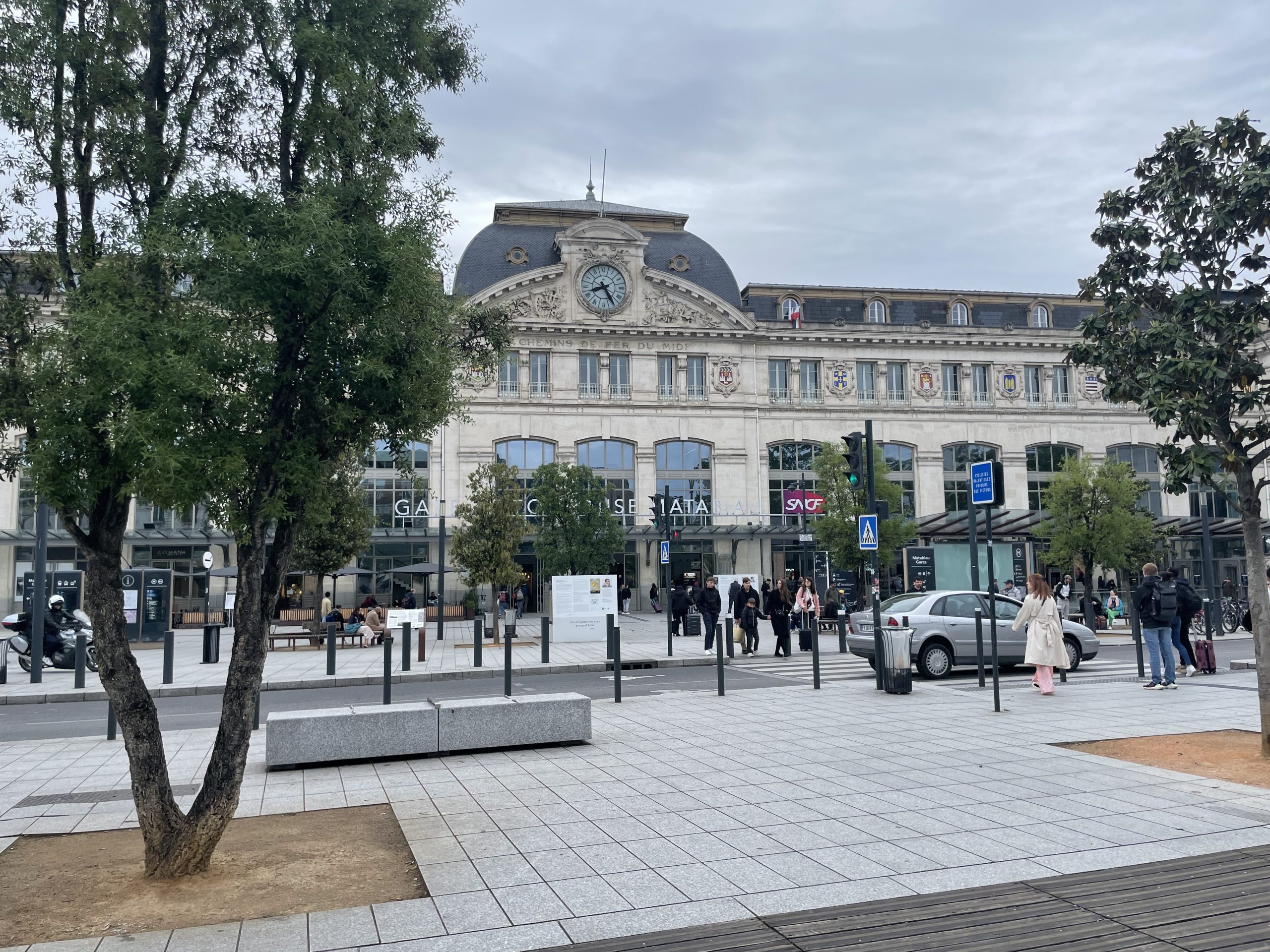
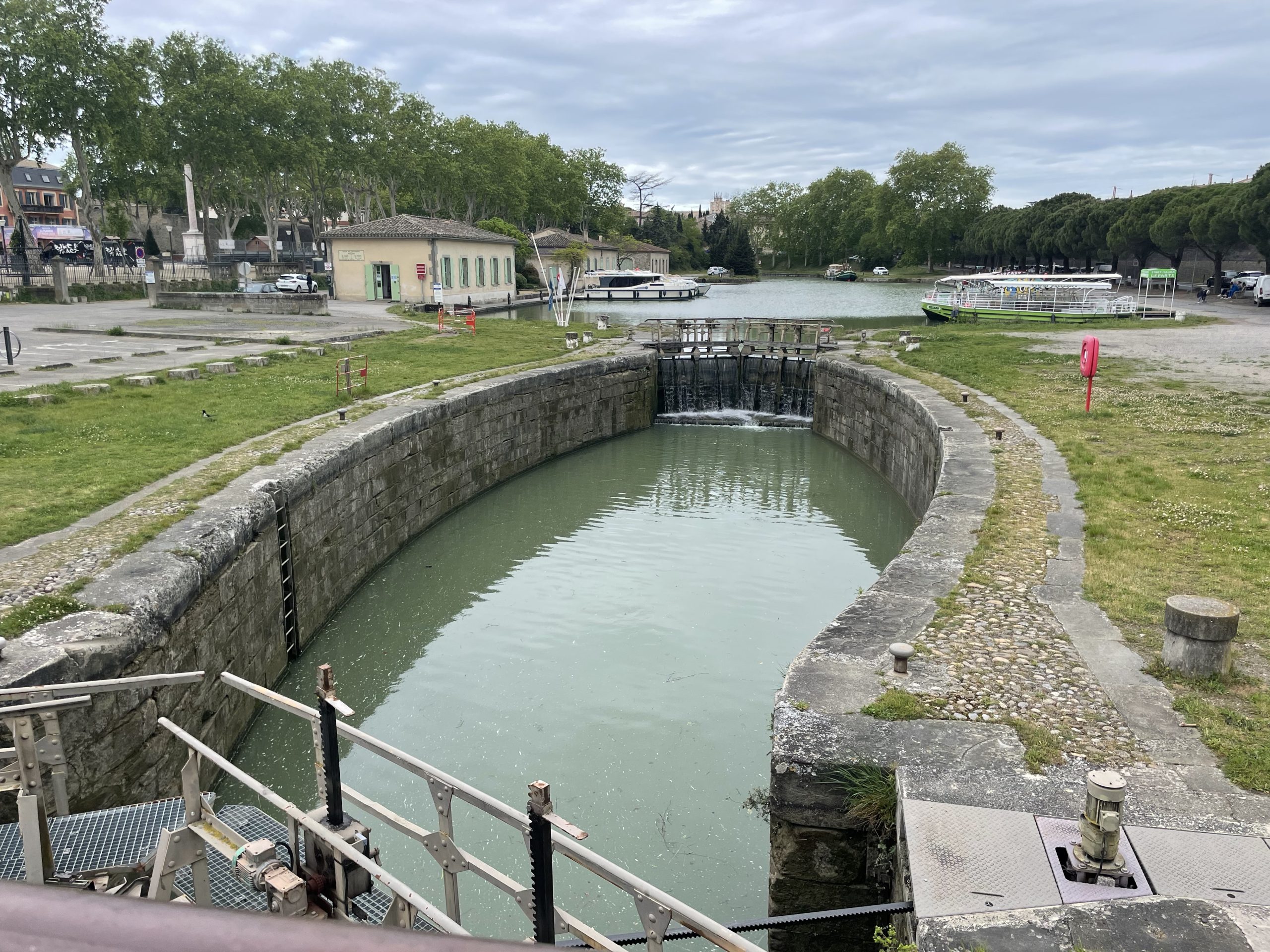
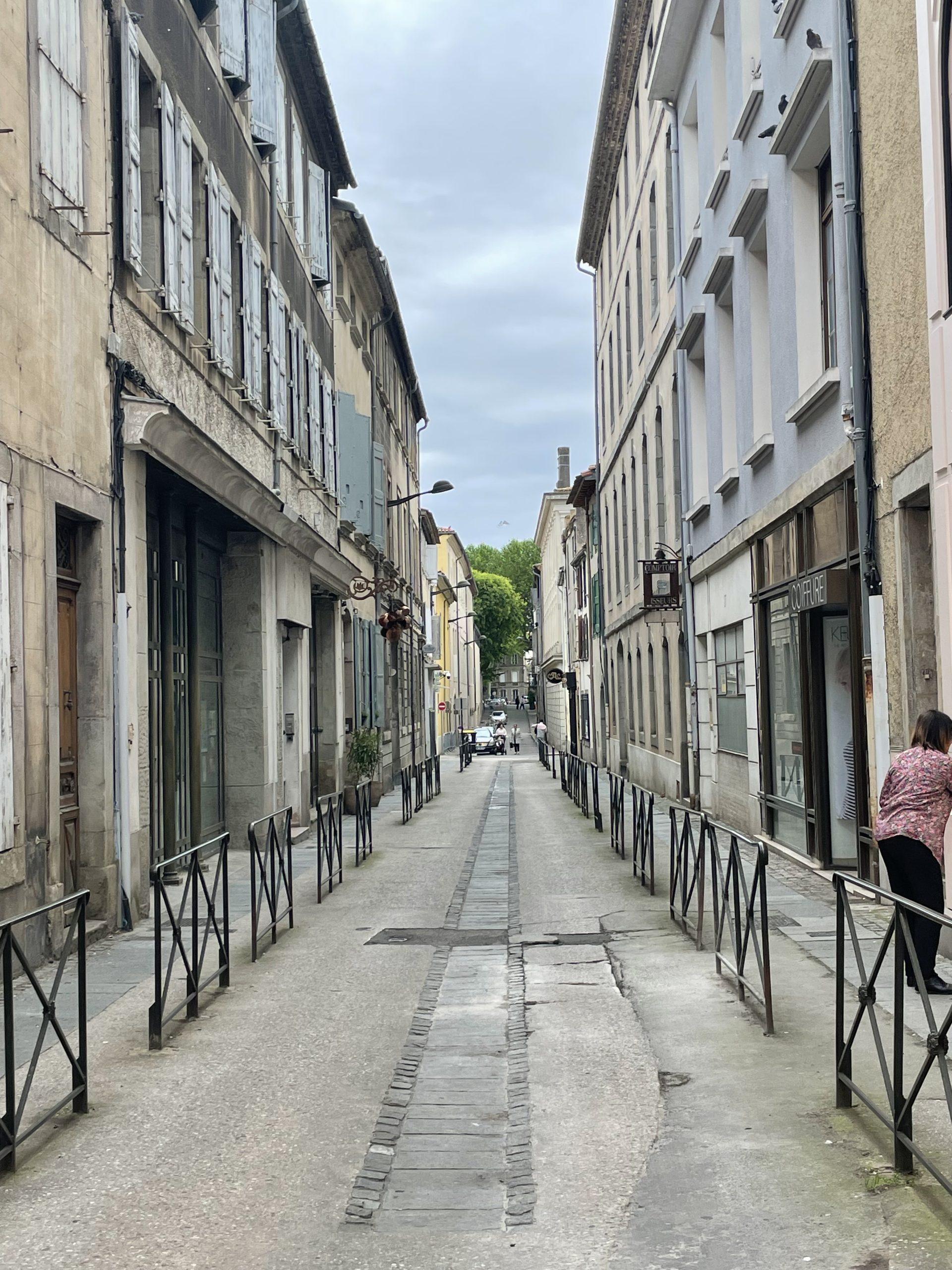
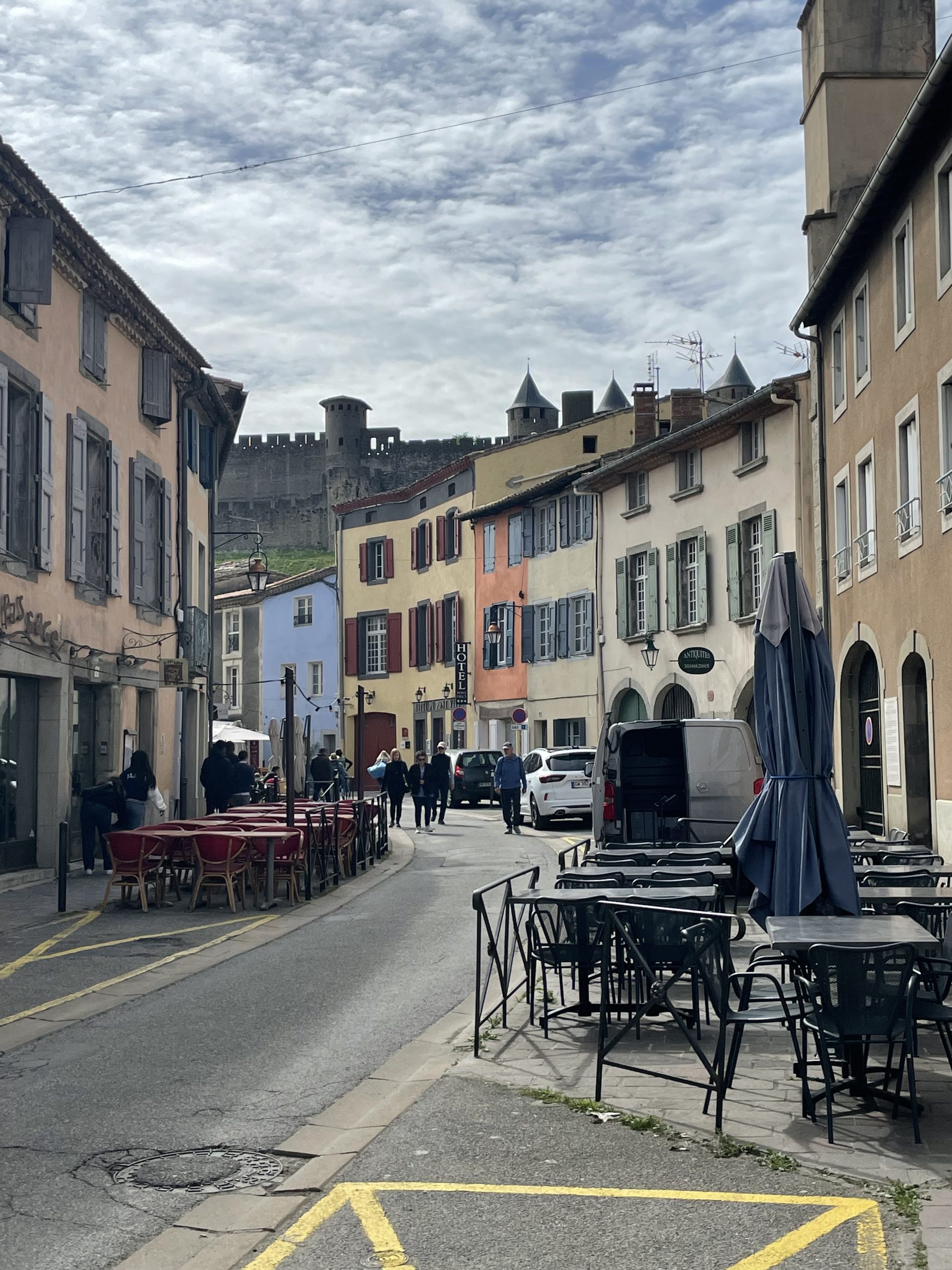
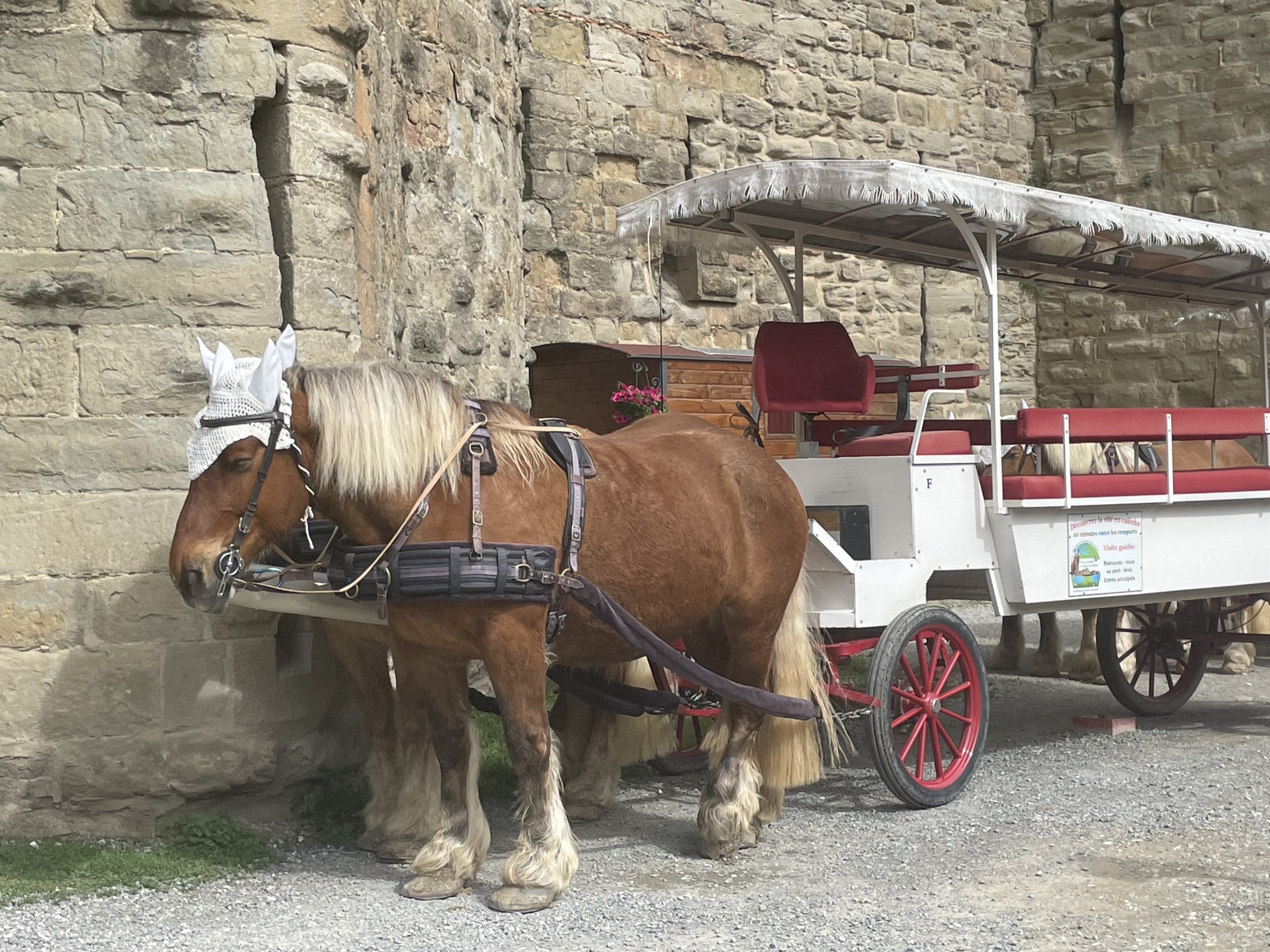
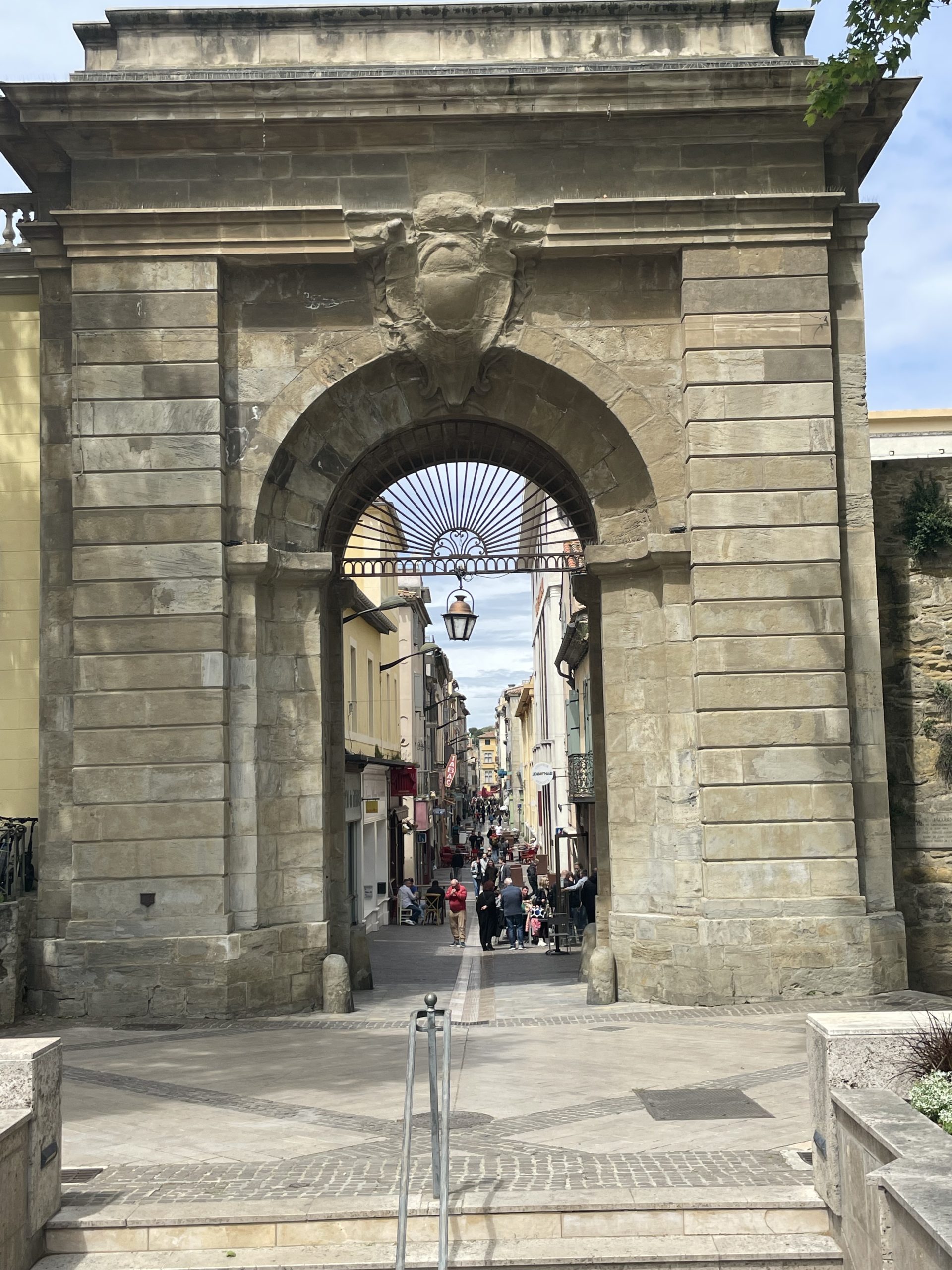
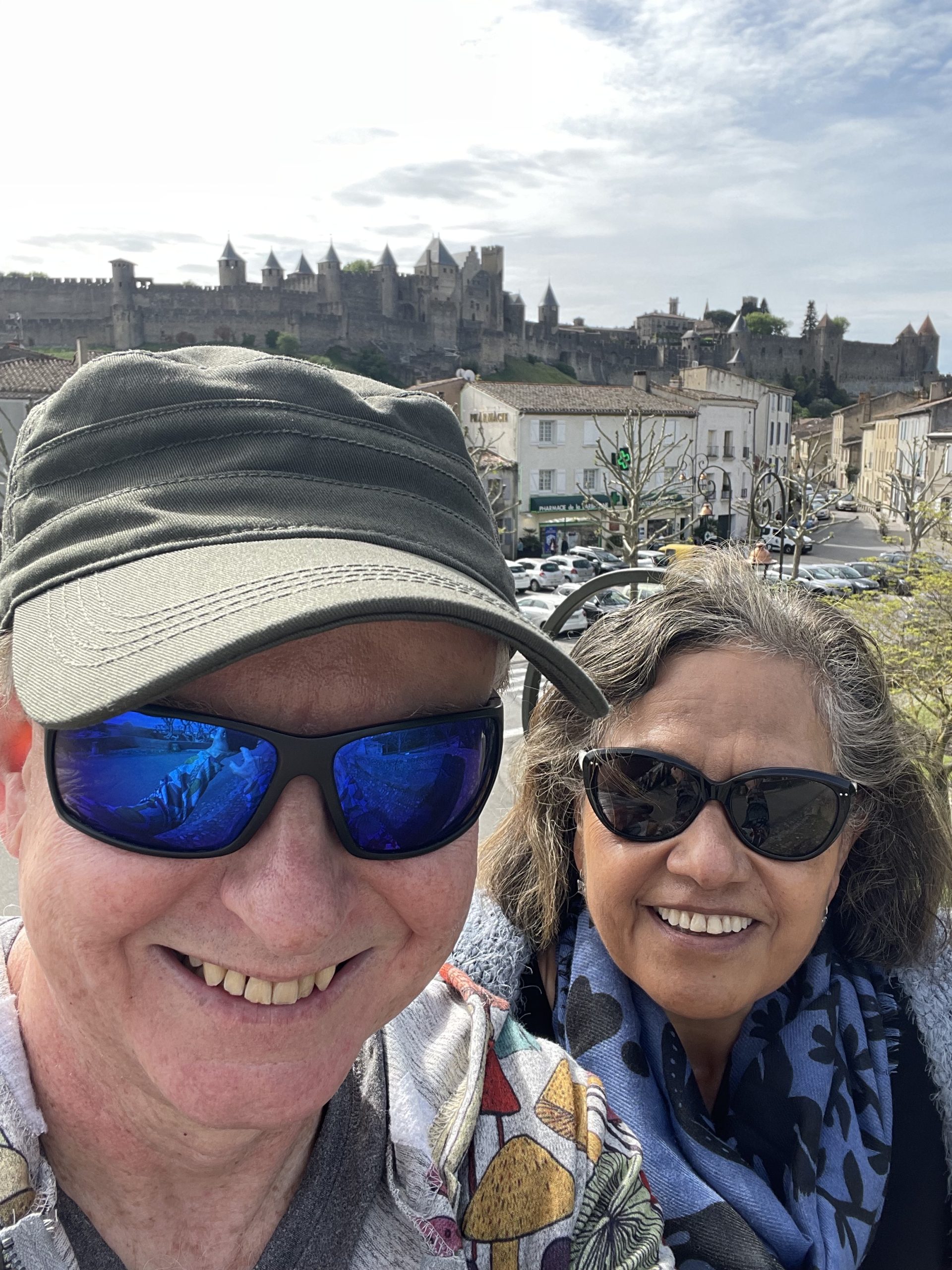 The next day, having tested out the bus systems, we gave regional rail a go taking a SNCF (the national rail company) inter-city train to Carcassone, which is the sight of the Cite de Carcassone, a UNESCO listed citadel going back to Roman times. This is a legit tourist site, on the bucket list for the French, so we’re expecting things to get crowded, and we gird our loins appropriately. The citadel itself is up on a hill, of course, with the lower town, La Ville Basse, a johnny come lately, only dating back to the late Middle Ages. The rail station is on the edge of the Ville Basse by the Canal du Midi, apparently the same canal flowing past our apartment in Toulouse. There’s a quick breakfast at La Rotonde, a café with 60s décor and a staff and local customers that look like they’ve been there for the duration. Croissants, coffee, juice etc. all done perfectly for 6.5 Euros. Our feeling visiting places like this is that, in most of Europe, the center of the community still remains intact whereas in the US it has fractured. “Liberty, equality, fraternity” still seems to mean something here, plus, a strict separation between church and state always helps. I’m not ignoring the troubles that France has these days, it’s just the impression we’ve gained in our recent travels outside of stereotypical Paris.
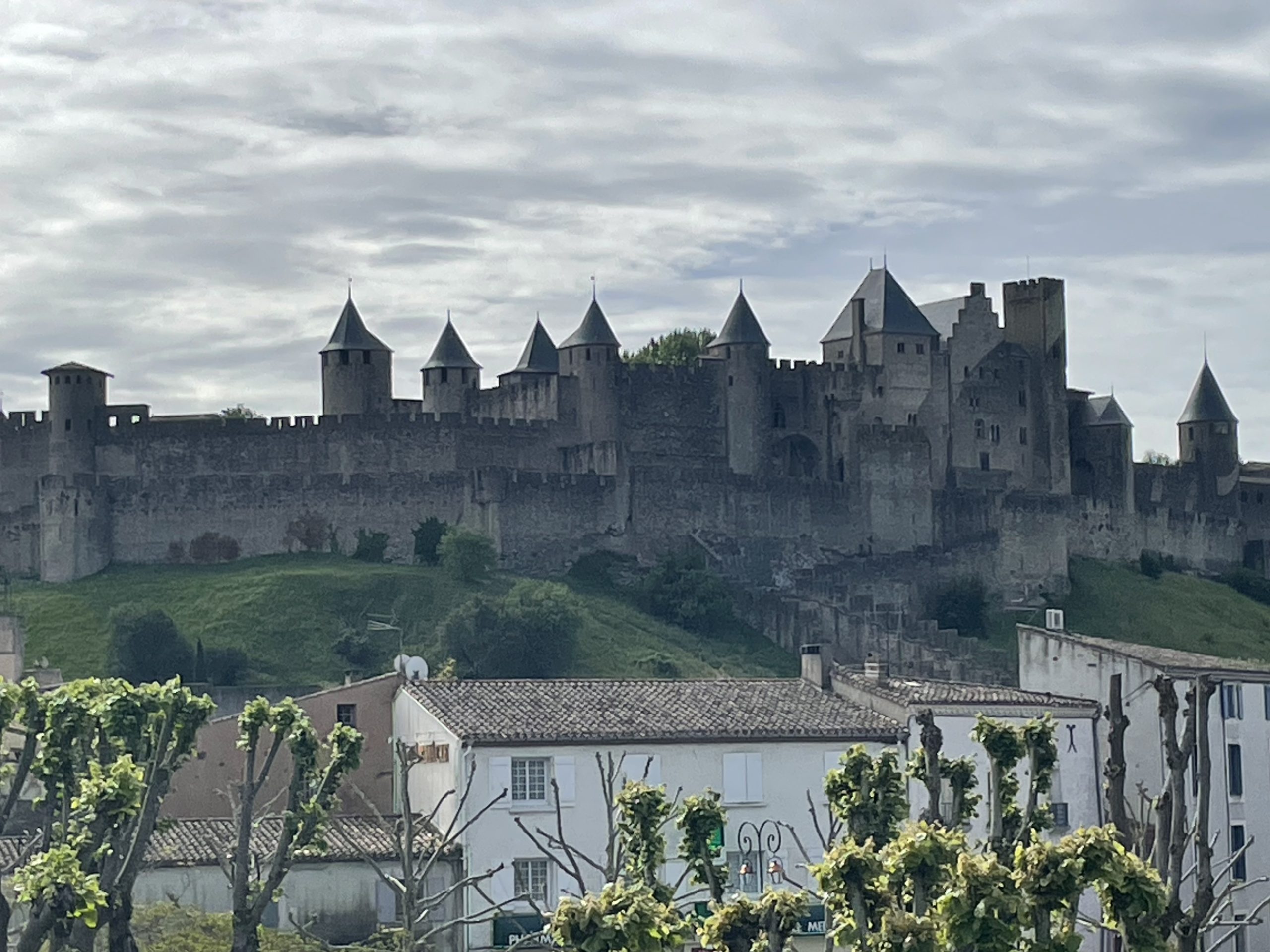
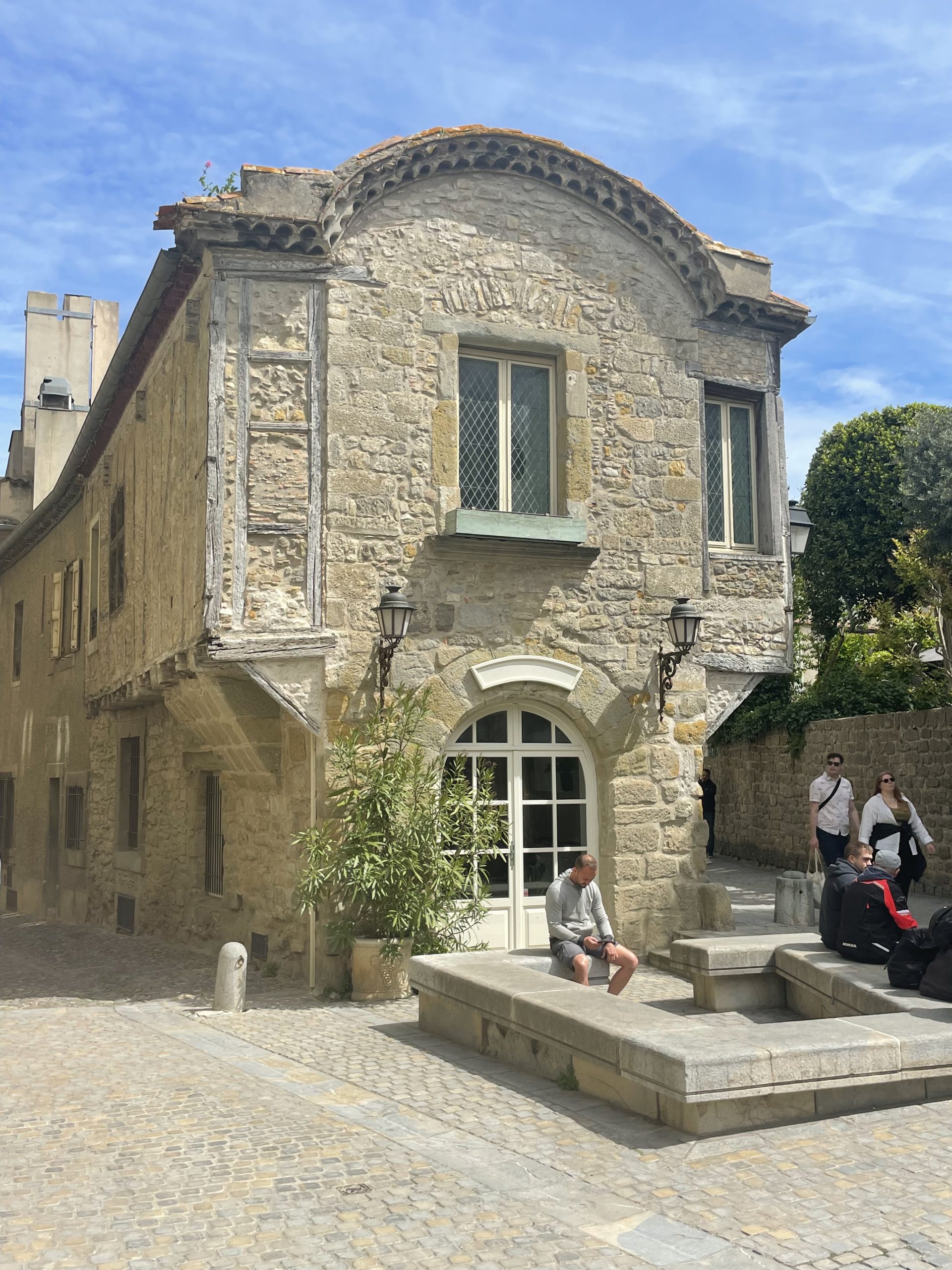
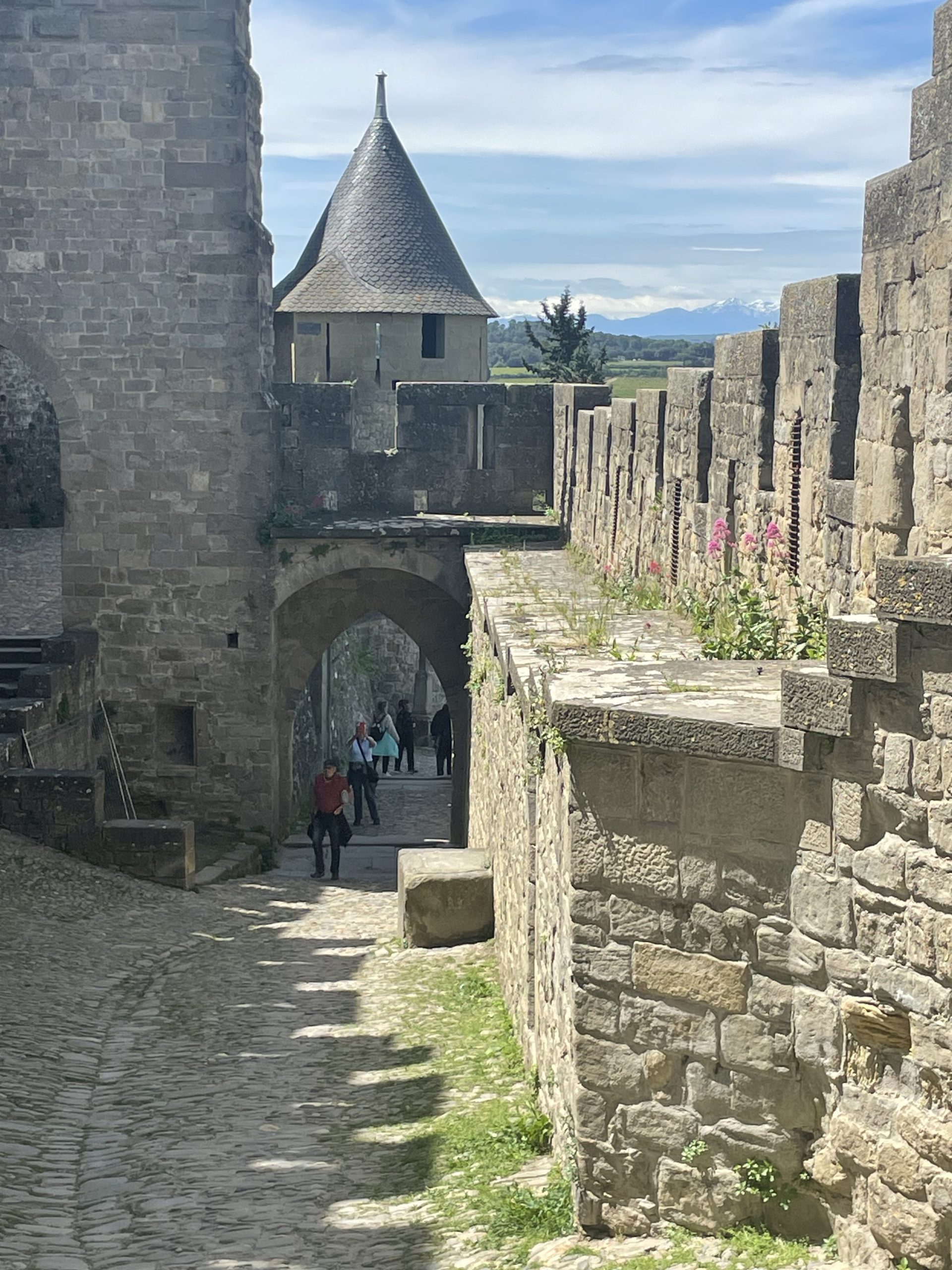
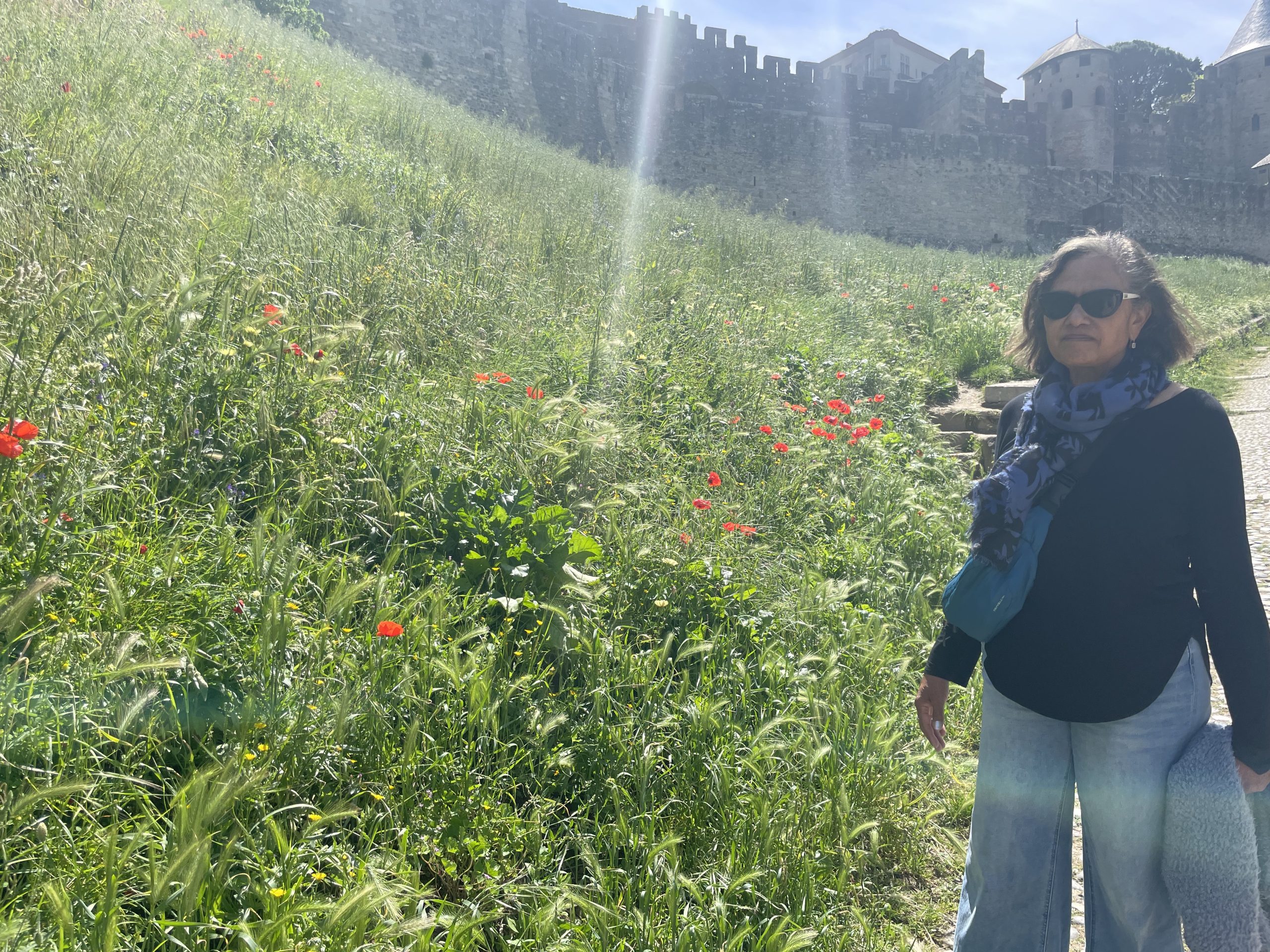
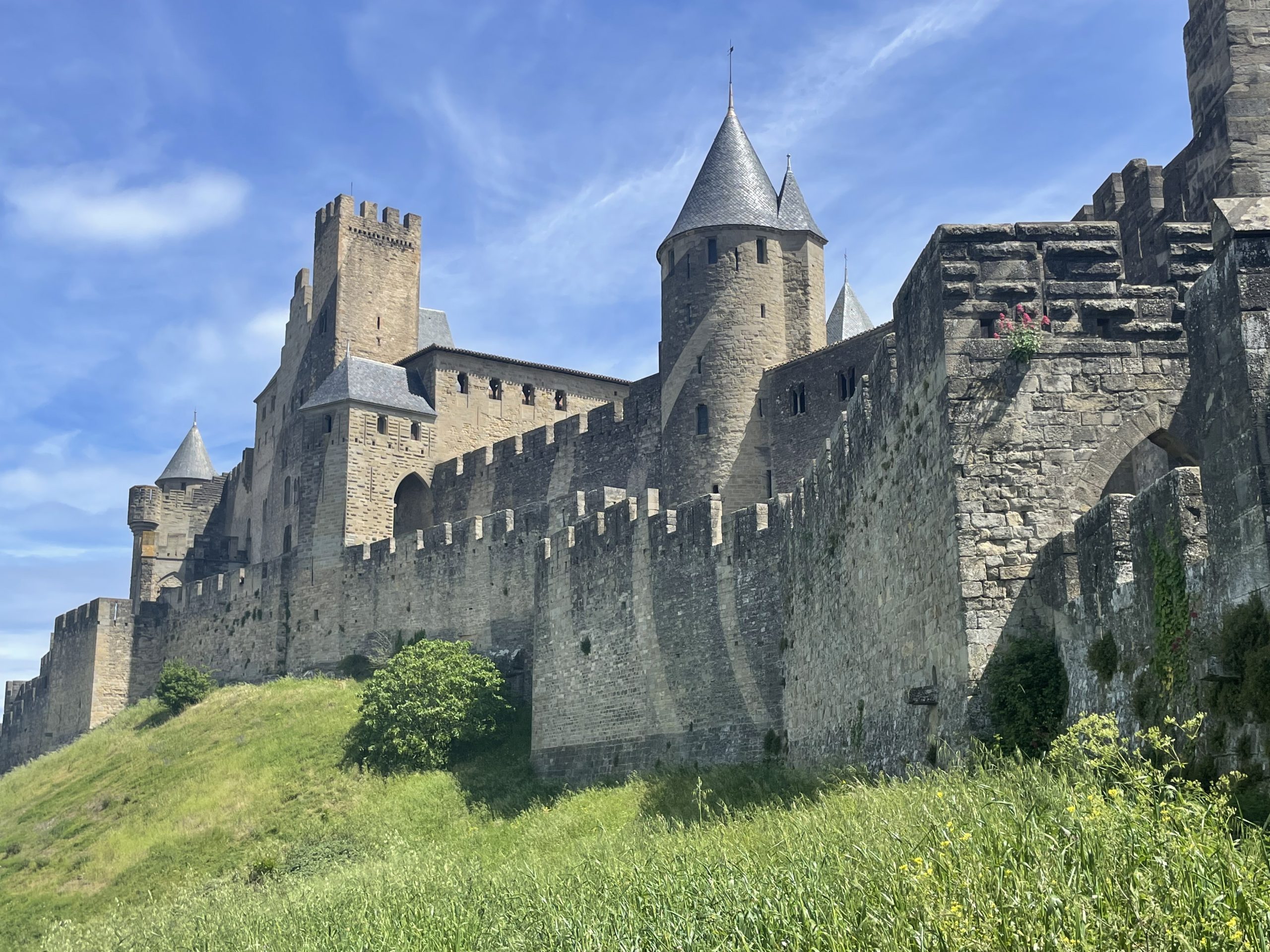
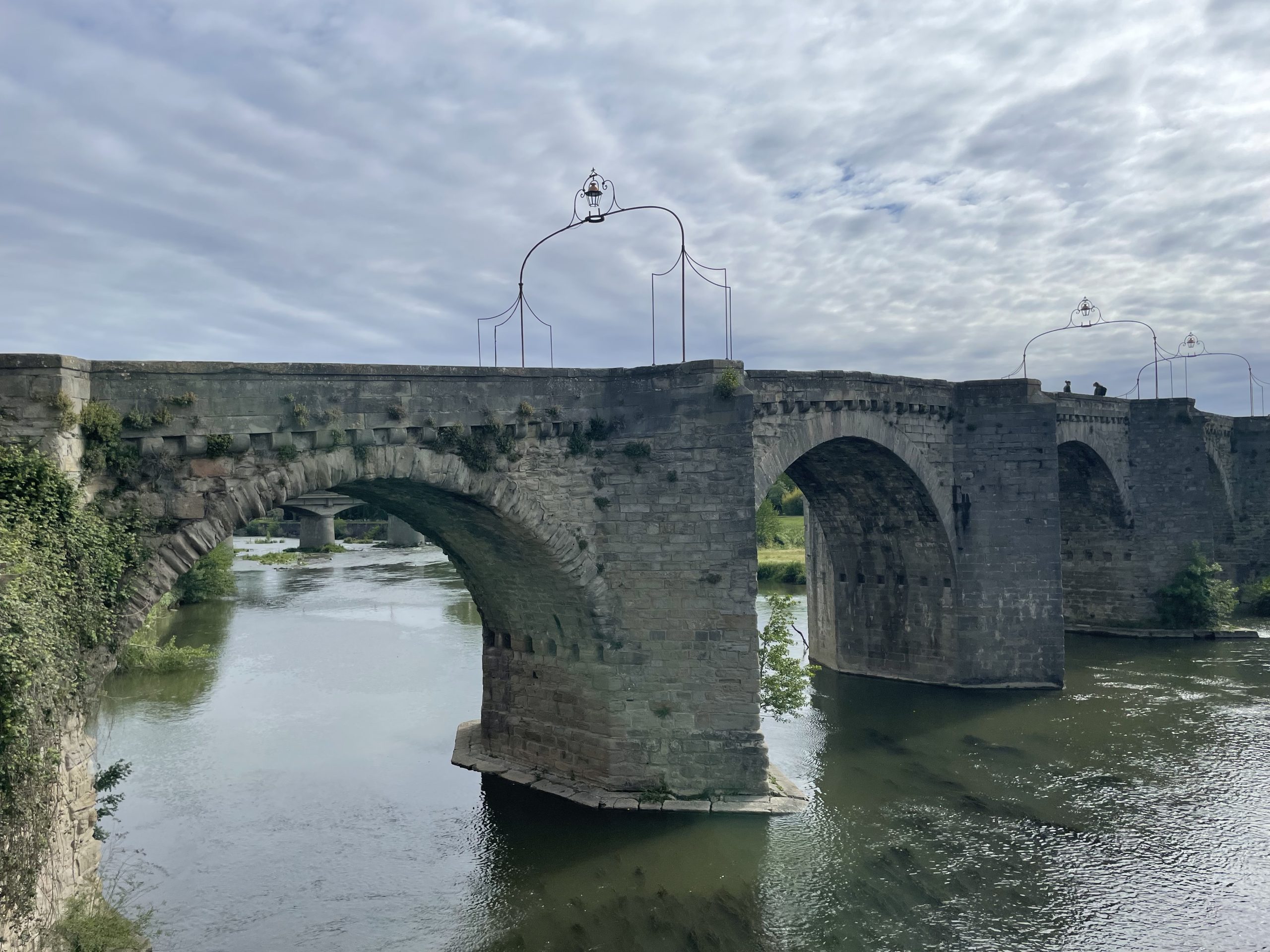 It’s a sunny Saturday, so the locals are also out in force, with another large street market in progress. Not many tourists in sight yet, but that changes soon enough as we cross the 14th Century Le Vieux Pont (The old bridge) crossing the River Aude, which provides a famous panorama of the citadel on the hill ahead. Castles are ten a penny in Europe, but Carcassone, at least as we see it today, is certainly spectacular, though not completely authentic. It has a long and lurid history going back to Neolithic times; it was a big deal for the Romans, the Visigoths later hung out for close to 300 years, then it was invaded by the Berbers and, later, the Franks, whoever they were. And then there were the Cathars, a Christian “heretical” sect who were vanquished during the Albigensian Crusade of 1209. Then, a Hundred Years War, jeez.
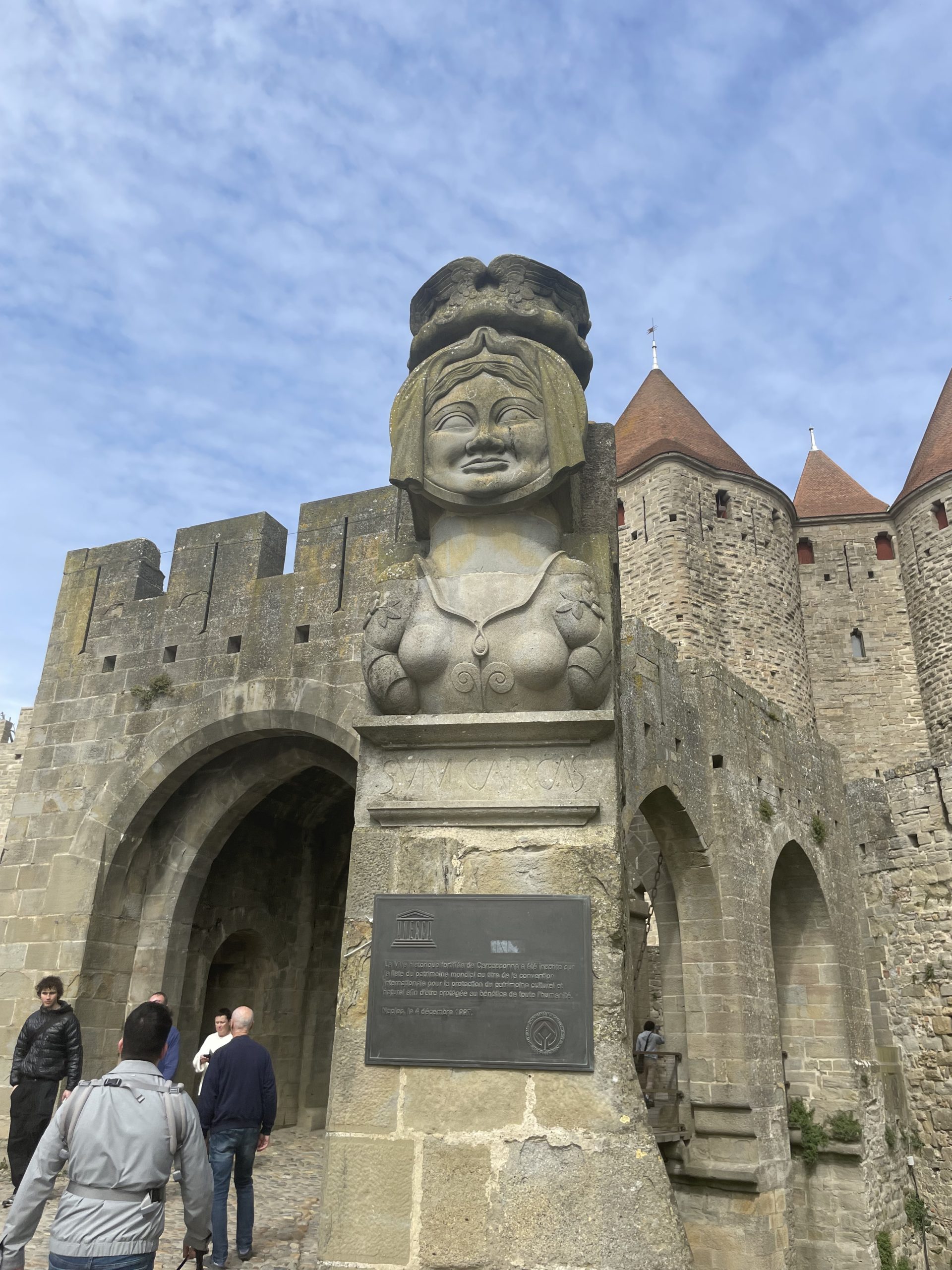
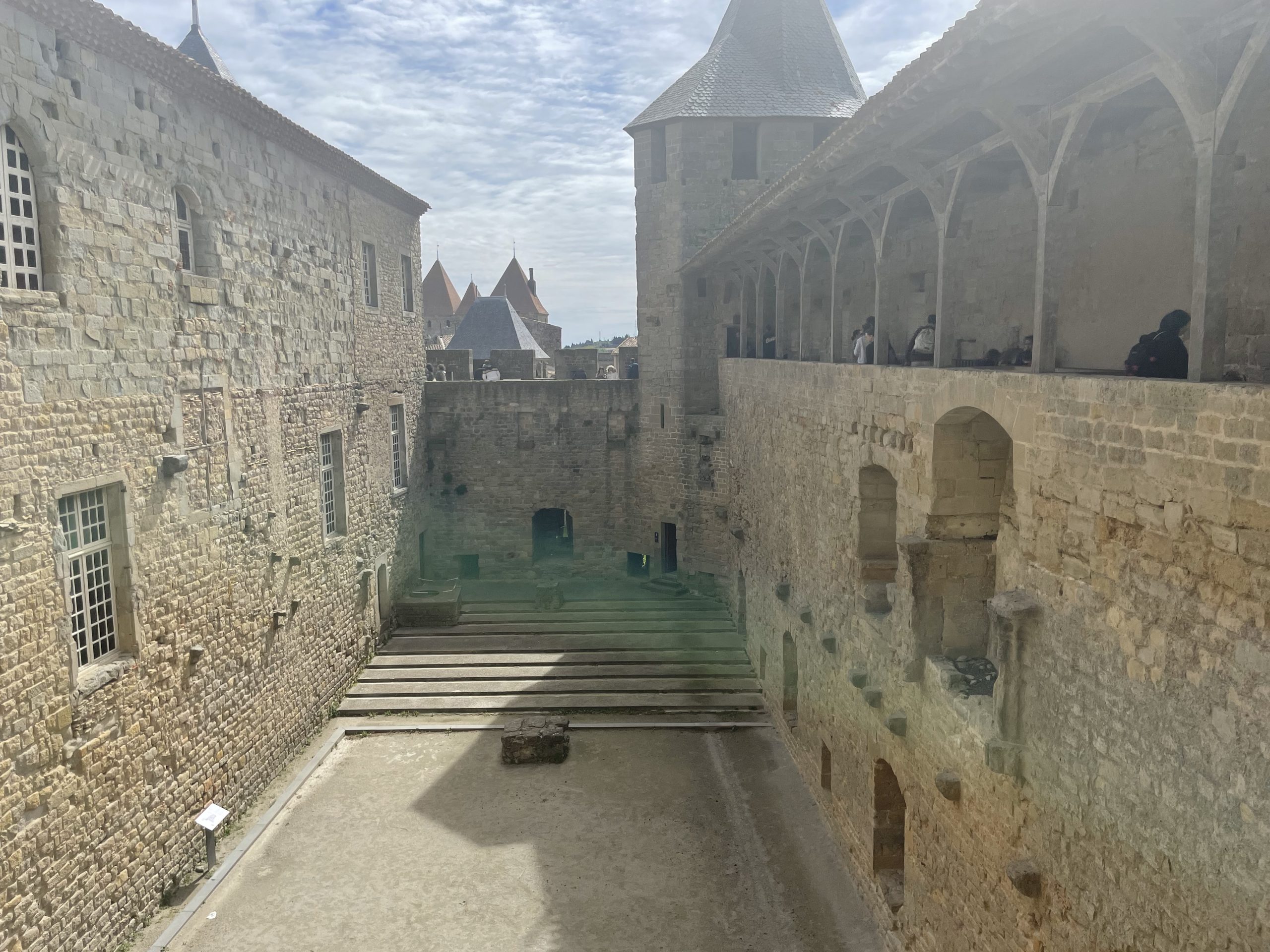
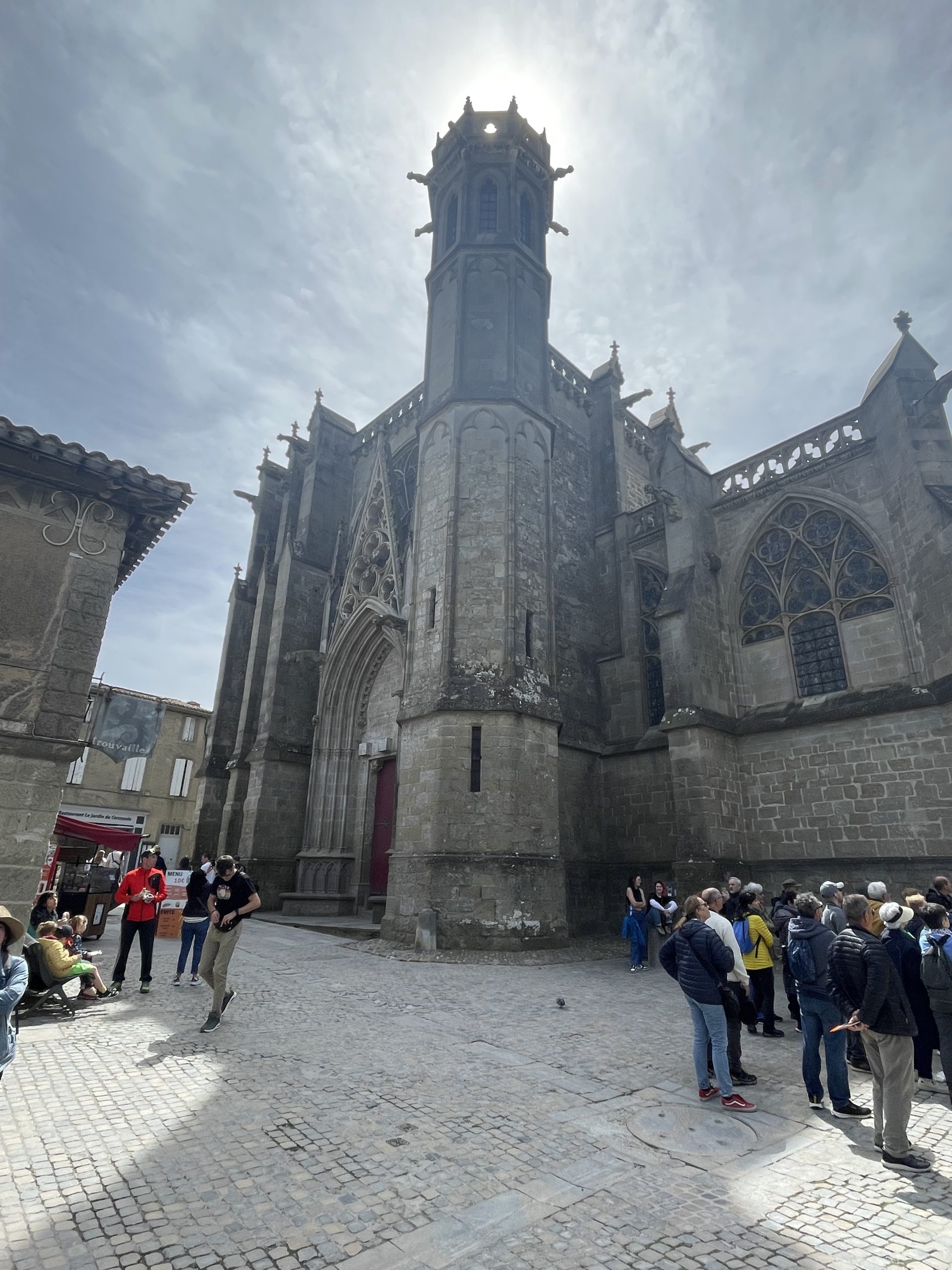
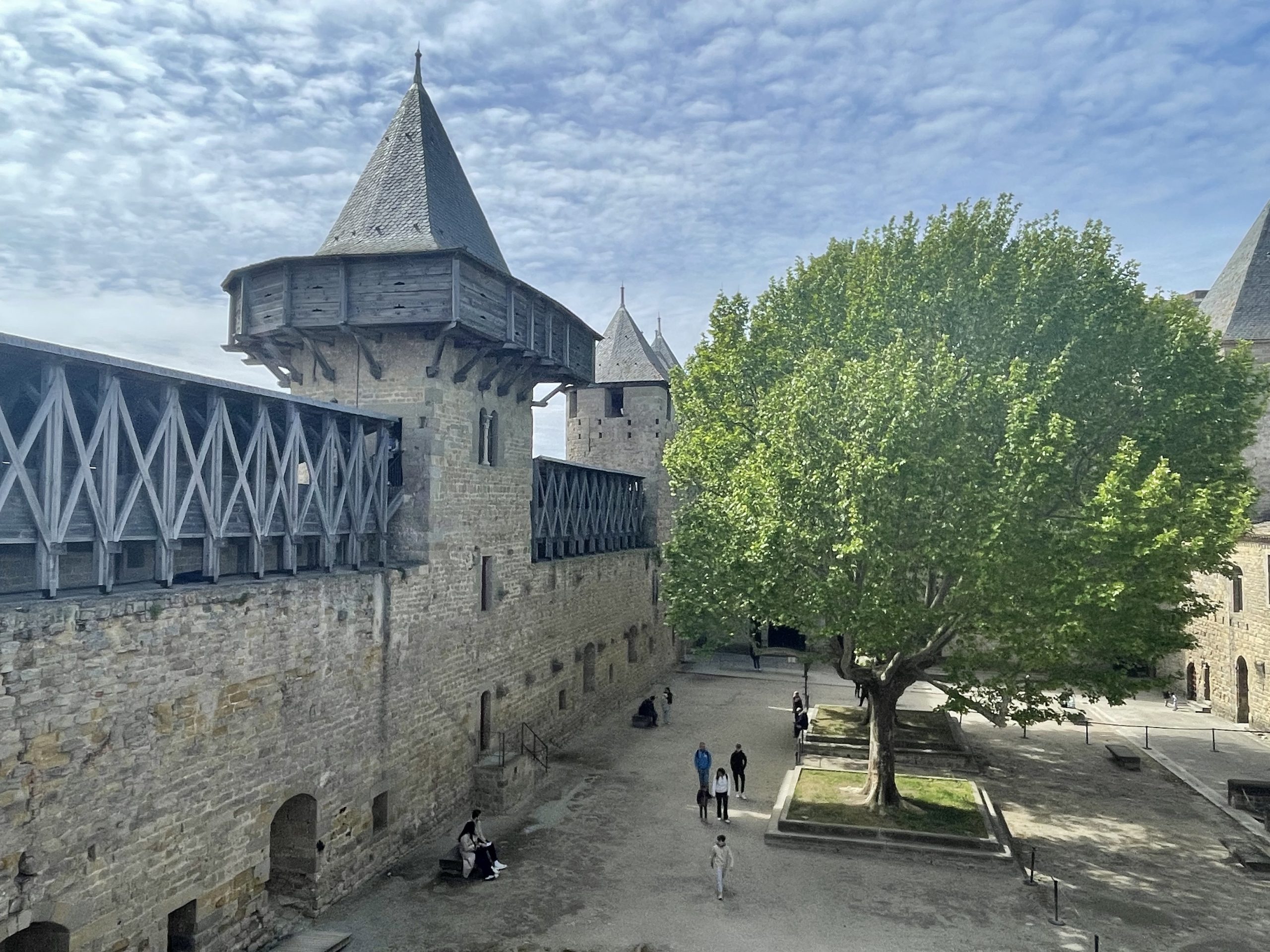
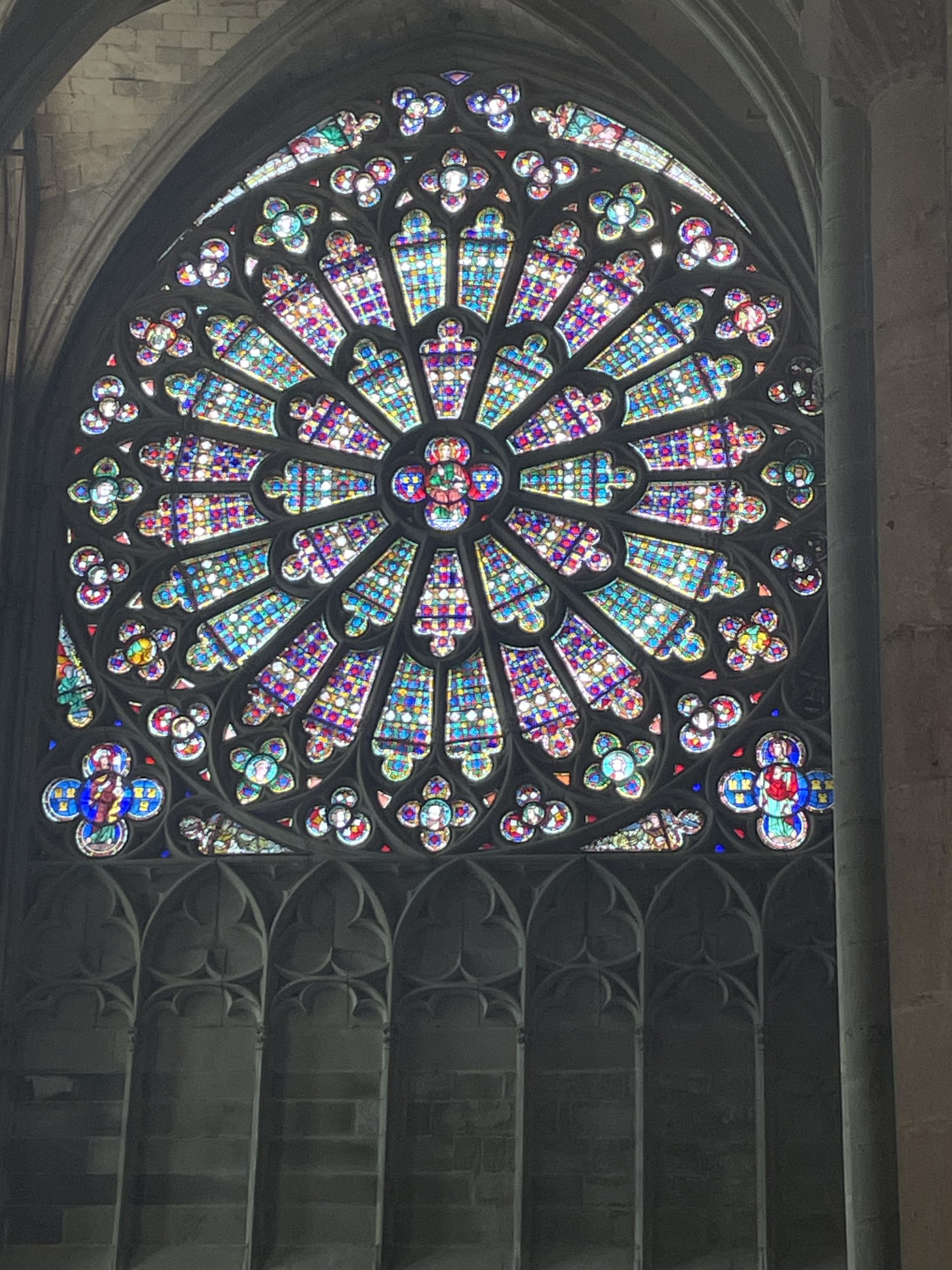
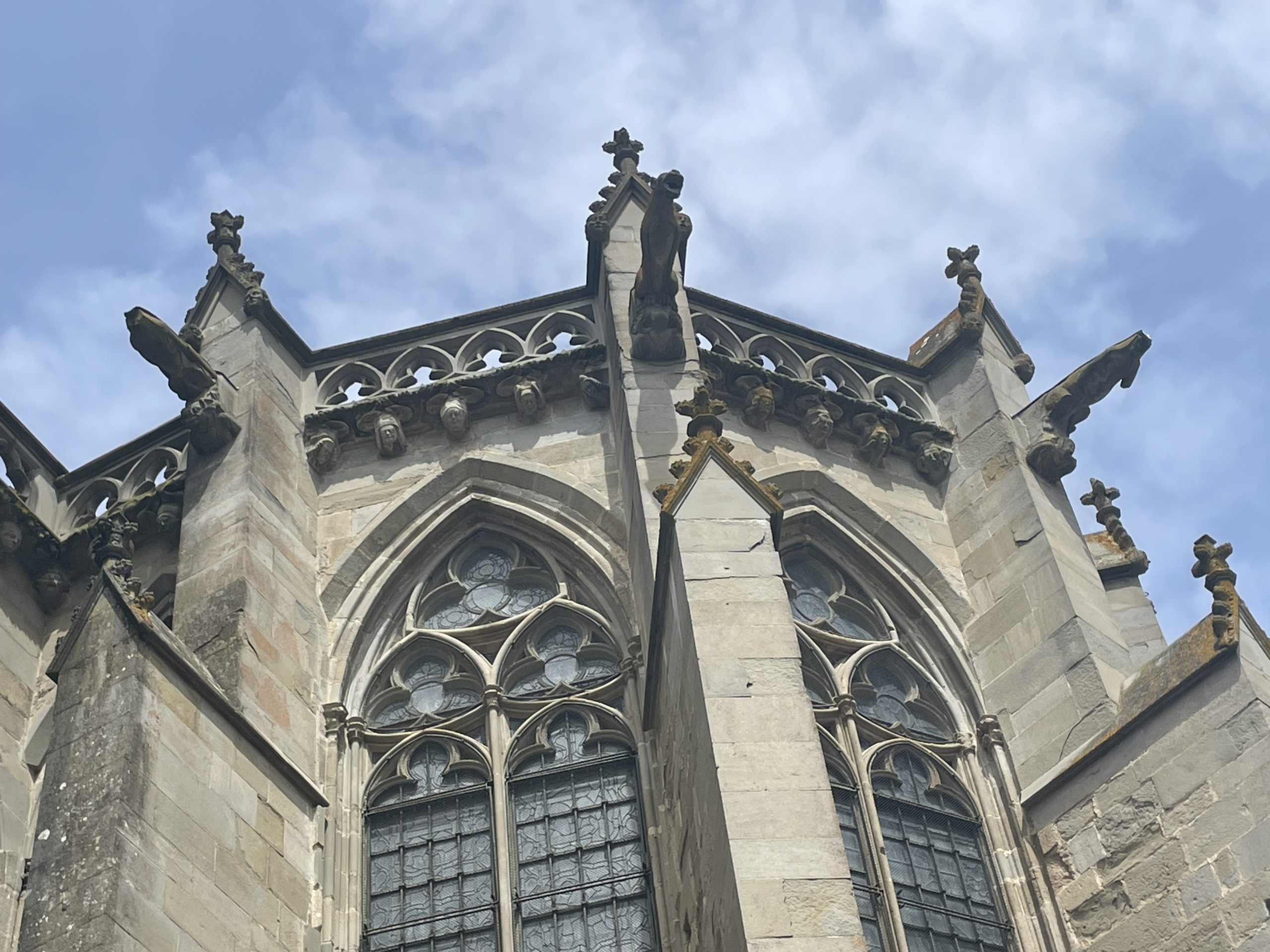
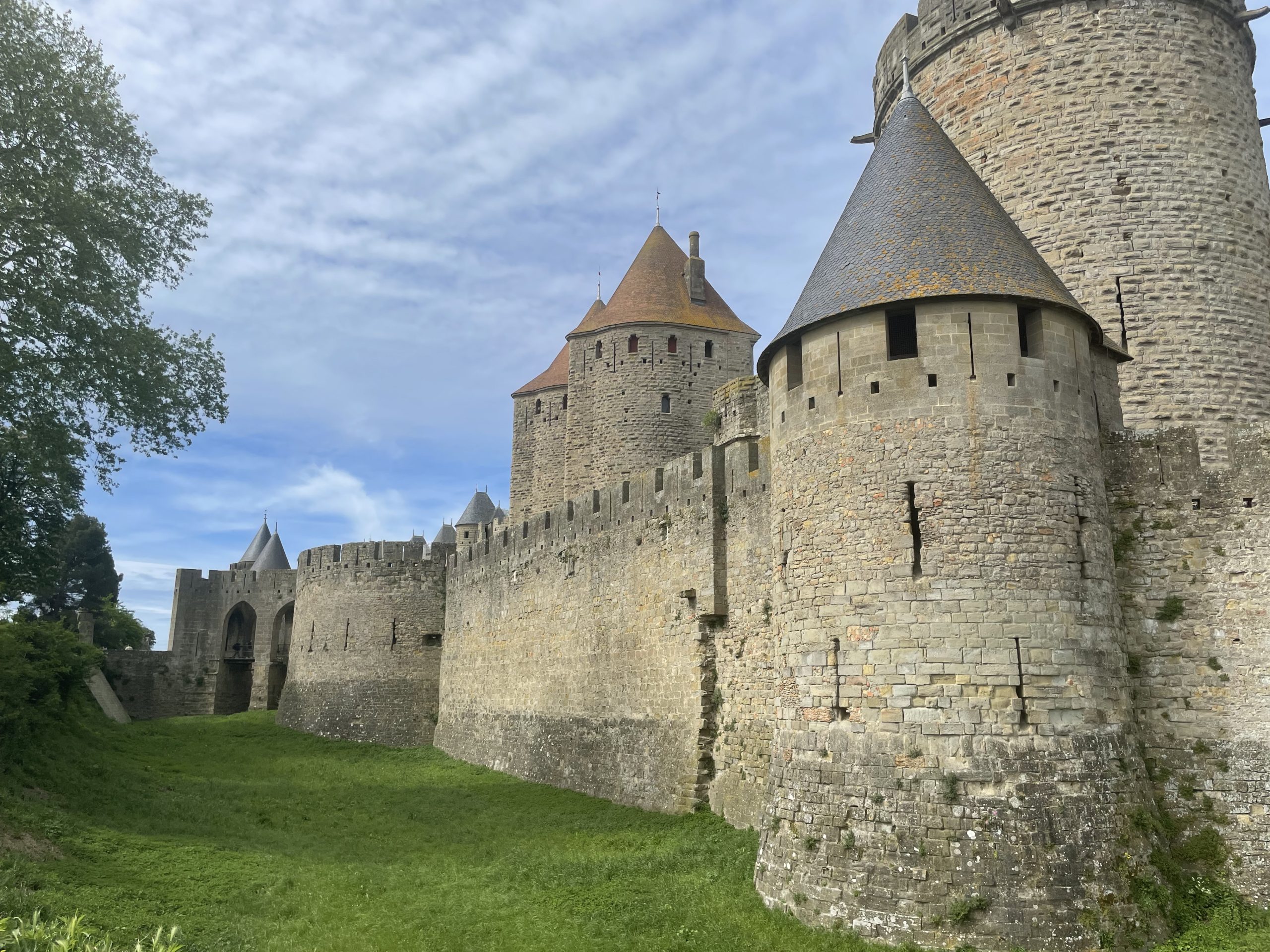 During these events the citadel was repeatedly added to and modified, though visible evidence remains of most of its history. Thankfully, the border between proto-France and proto-Spain was, eventually, moved further South and things settled down in Carcassone with it becoming a woolen textile town. Actually, things settled down a little too much and the citadel fell into disrepair, no longer of military importance and folks started stealing stone from its structure for their DIY projects. Napoleon wasn’t having this, and he enlisted the (in)famous architect Eugene Viollet-le-Duc who, after having a go at the Basilica of Saint Nazaire, decided to re-do the whole citadel. Eugene certainly had his own vision for the place, and it turned out quite nicely, though, apparently, not authentic to the, primarily, medieval structure. So, what we have now is a fairy-tale mashup of historical accuracy and Eugene’s vanity project.
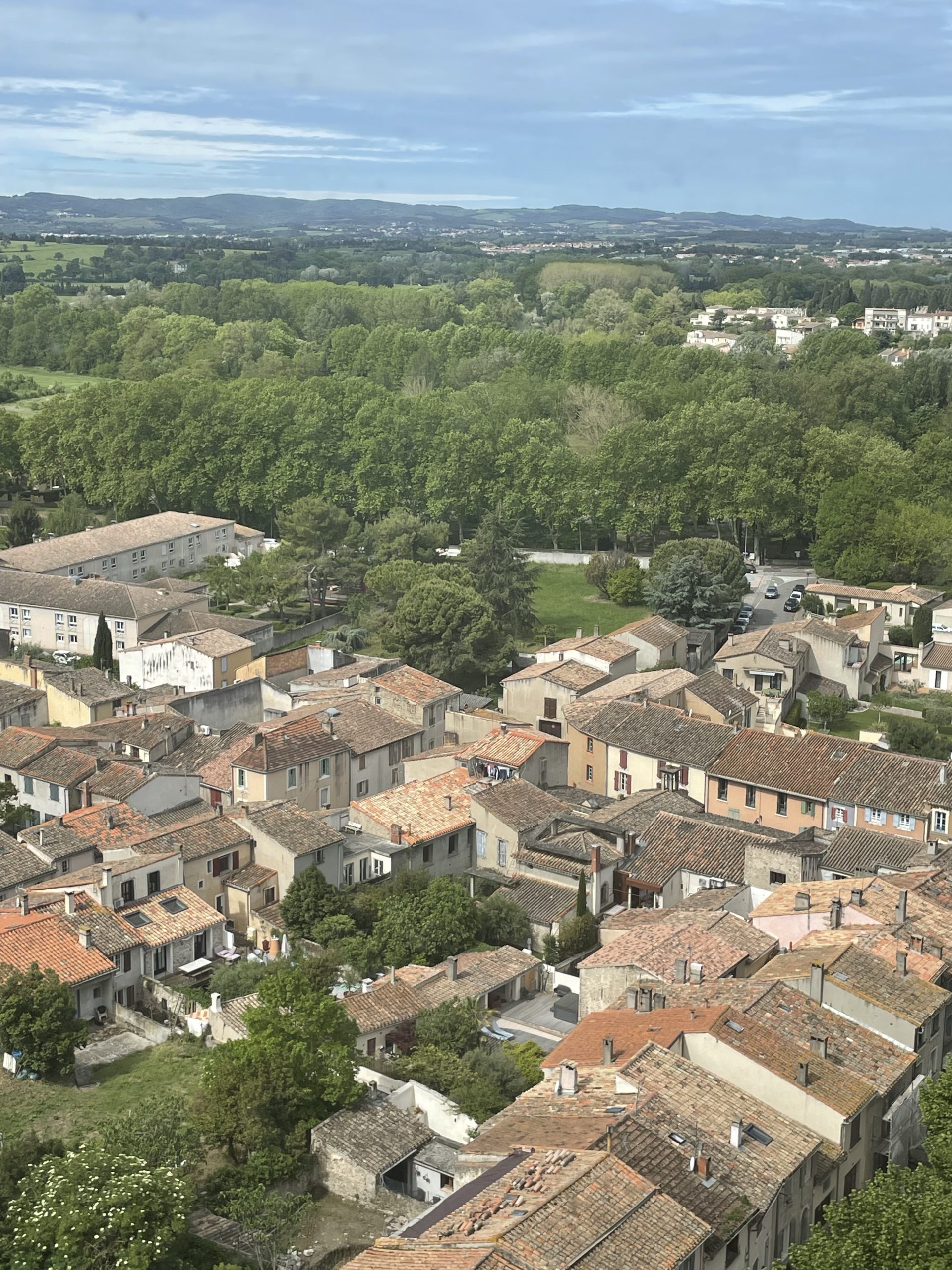
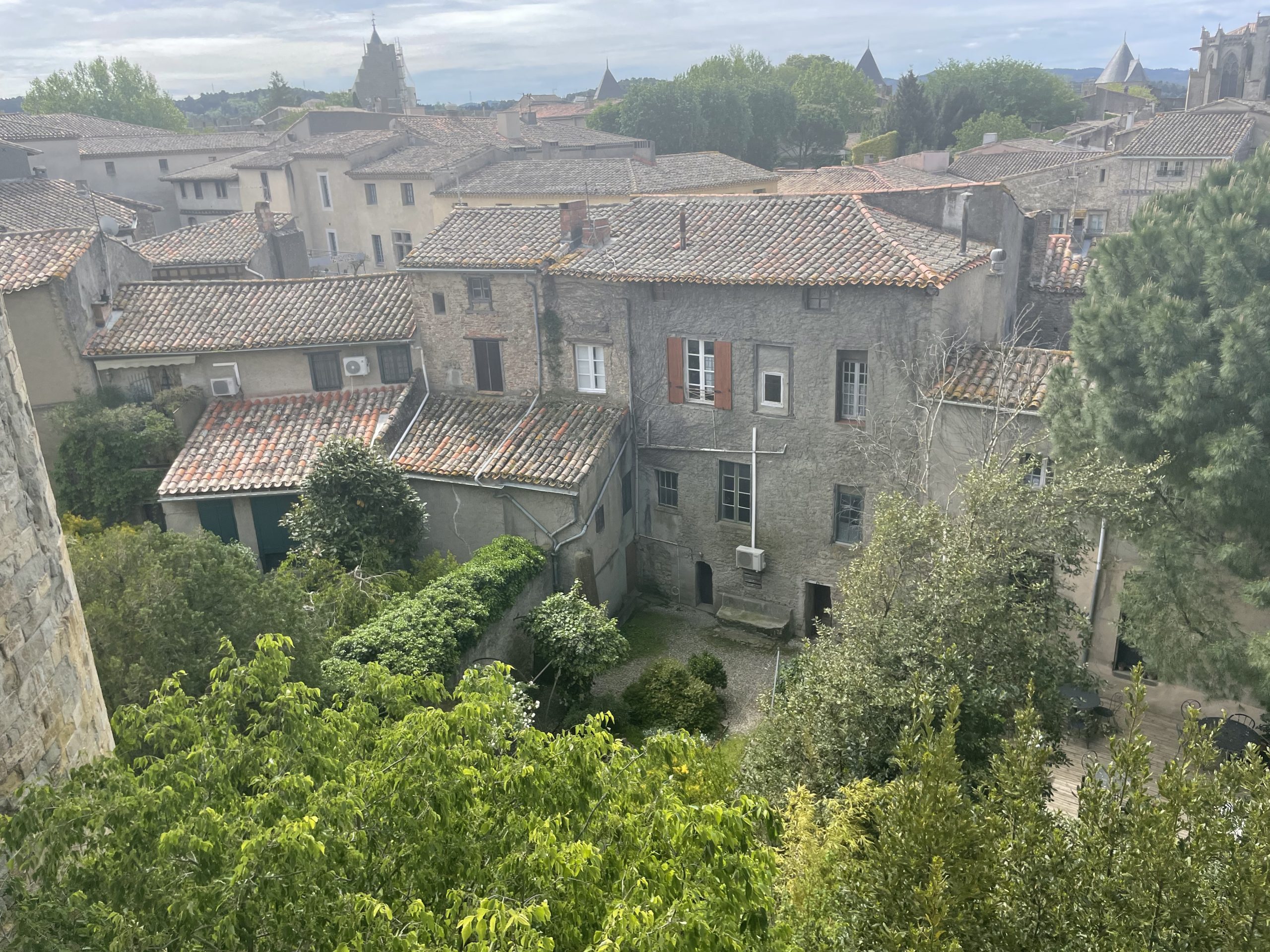
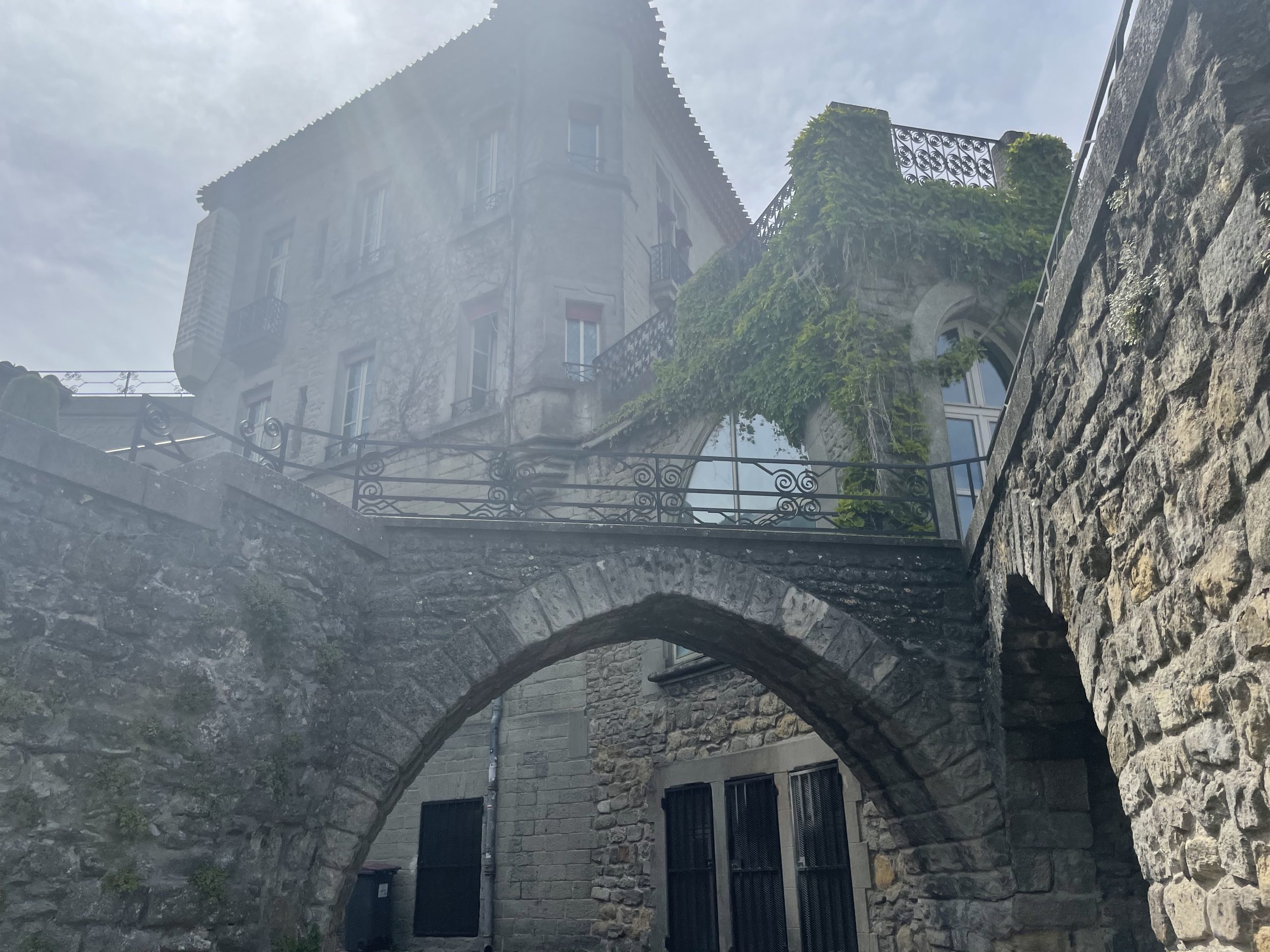
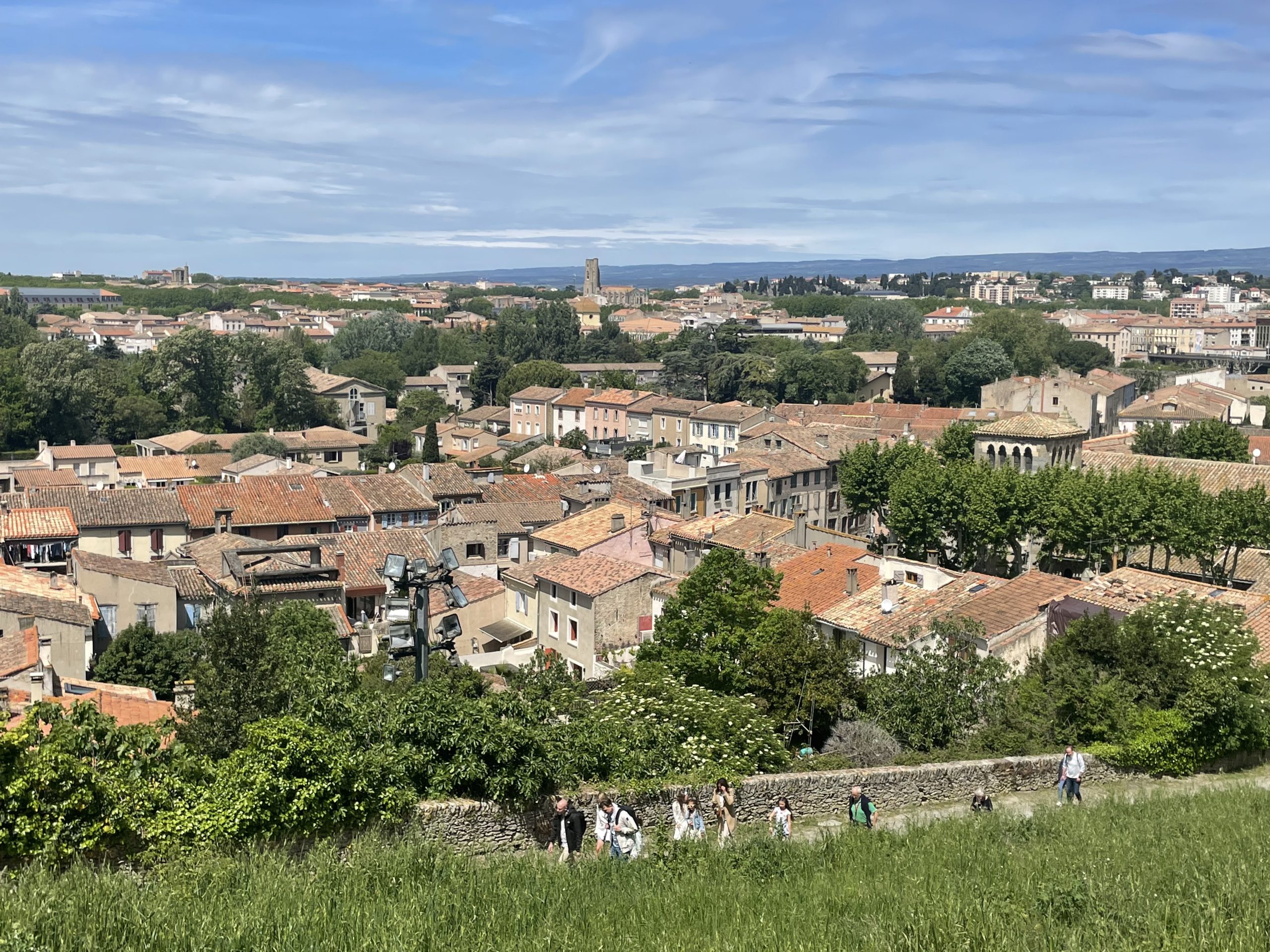 Everything does look rather “new”, a bit Disneyland but, nevertheless, if you pony up for a ticket to the heart of the citadel you will get your money’s worth of experiencing what life was like here in the Middle Ages. You can access the fully preserved ramparts which have excellent panoramic views of the countryside with the Pyrenees in the distance. This ticket will also insulate you from the menacing hordes of visitors who daily invade the old town to buy tacky souvenirs and take long, boozy lunches. Be warned, the place is completely overrun, so much so that we flee after our ramparts visit down the hill towards the Ville Basse for our quieter version of said same lunch. Still, Carcassone remains a sight to be seen and, with the right planning, it’s a recommended day out.
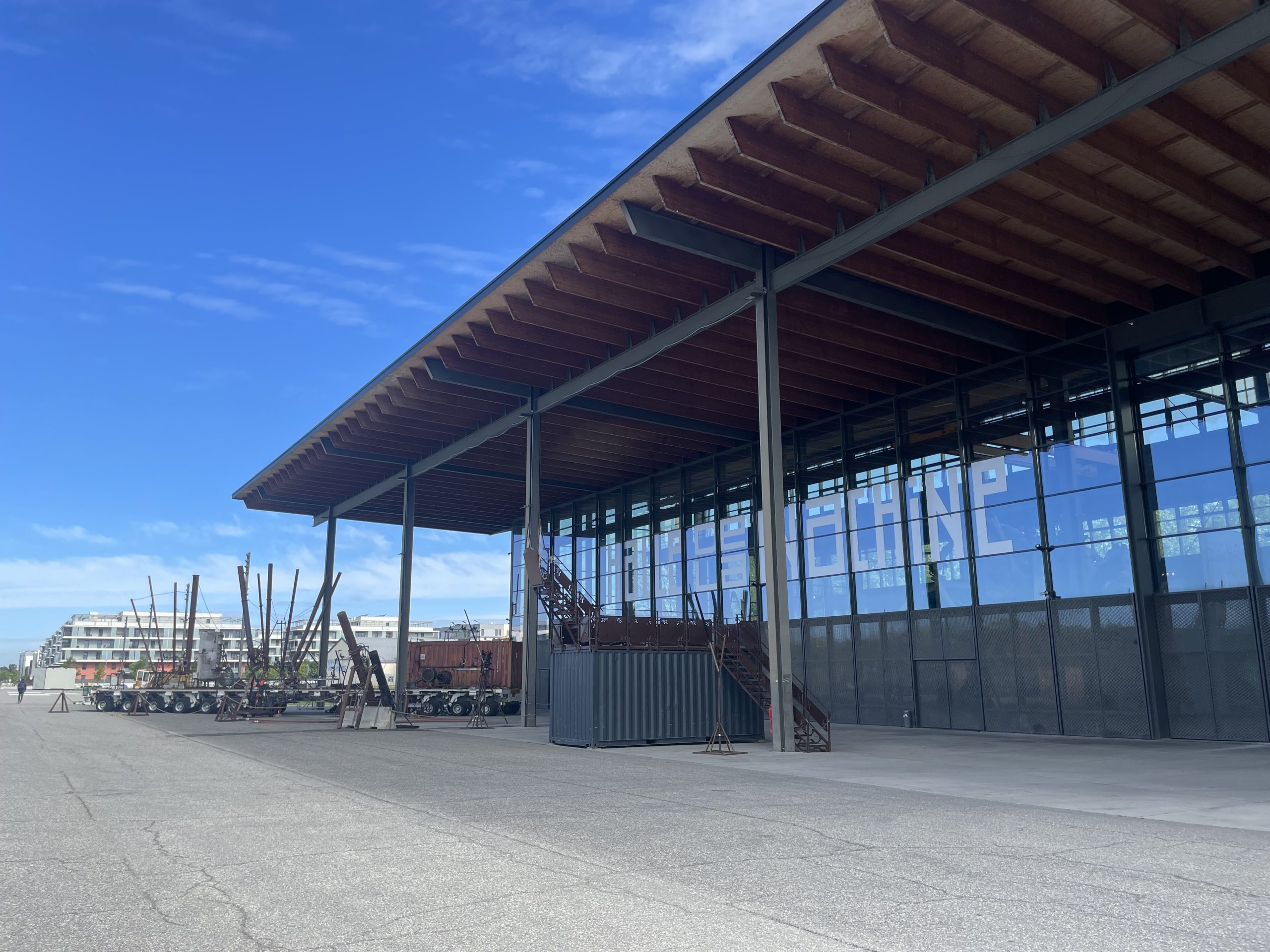
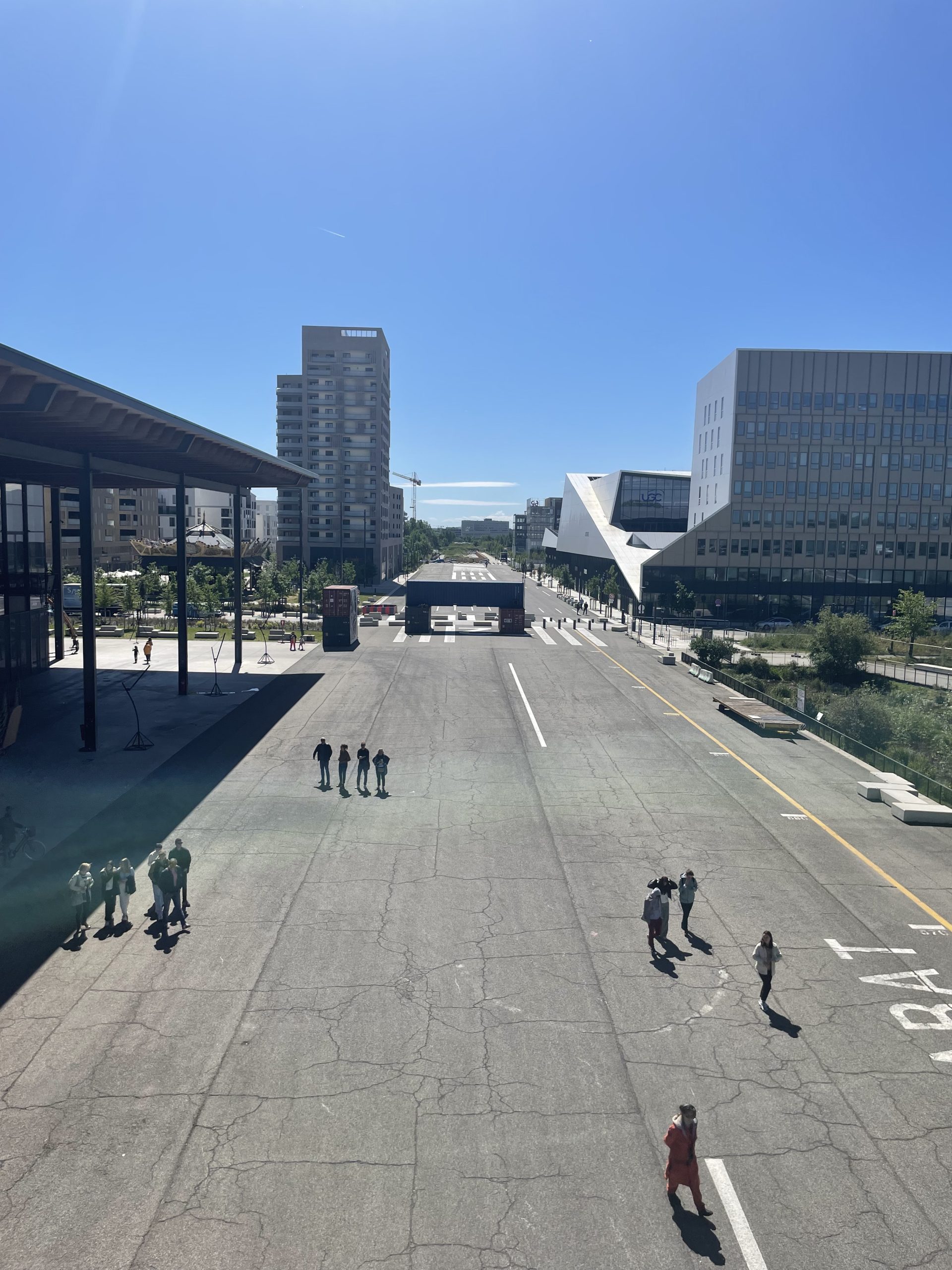
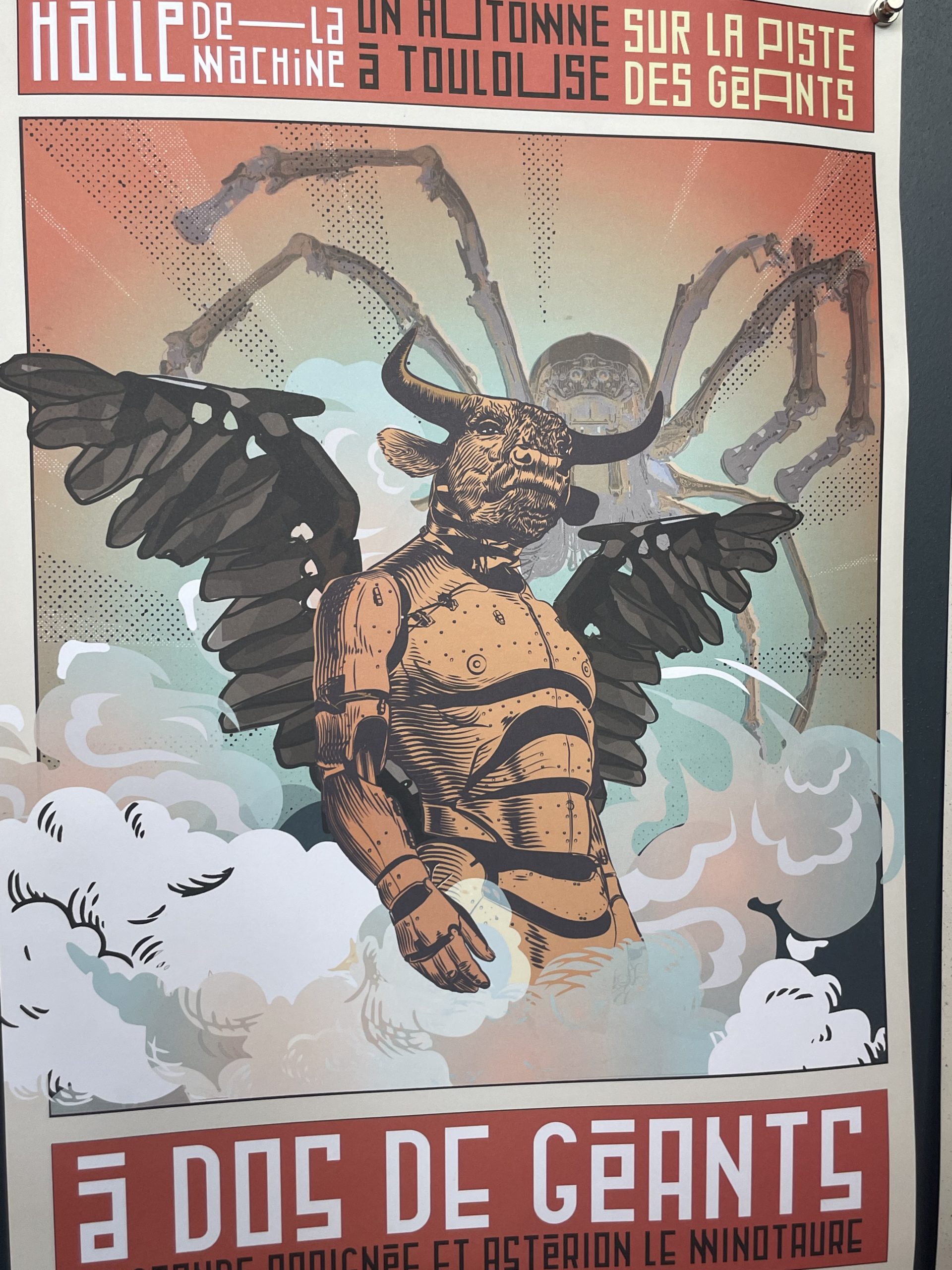
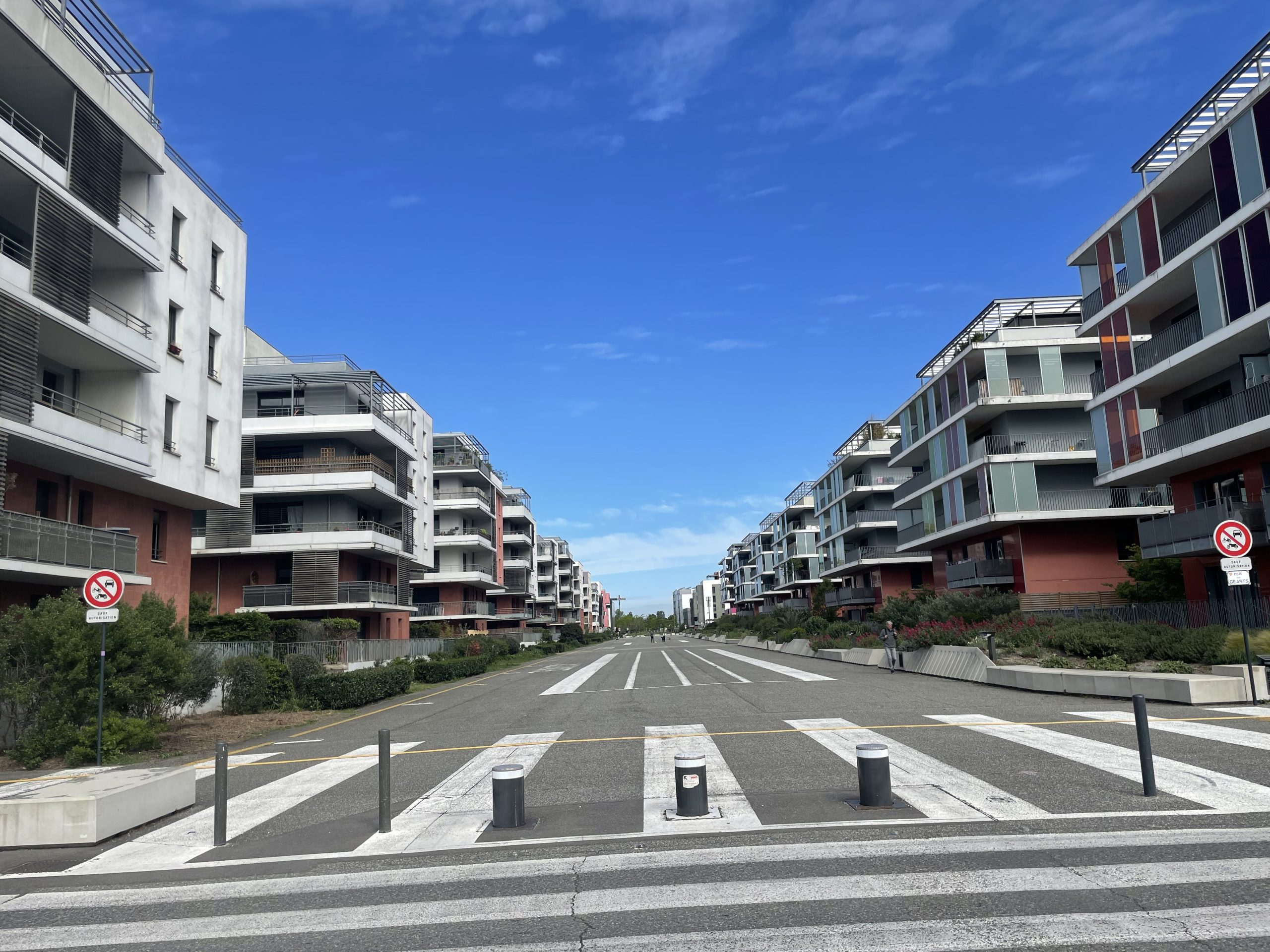 Back near town, we hit up The Hall of Machines which is in a new, suburban district that used to be an air hub for Aeropostale and Air France. The old Toulouse-Montaudran runway is now a runway of giants (La Piste des Geants) with, in addition to the machine hall, new condos, a park and other additions planned. So, you may ask, the giant road honors the aeronautical past but what function does it have now?
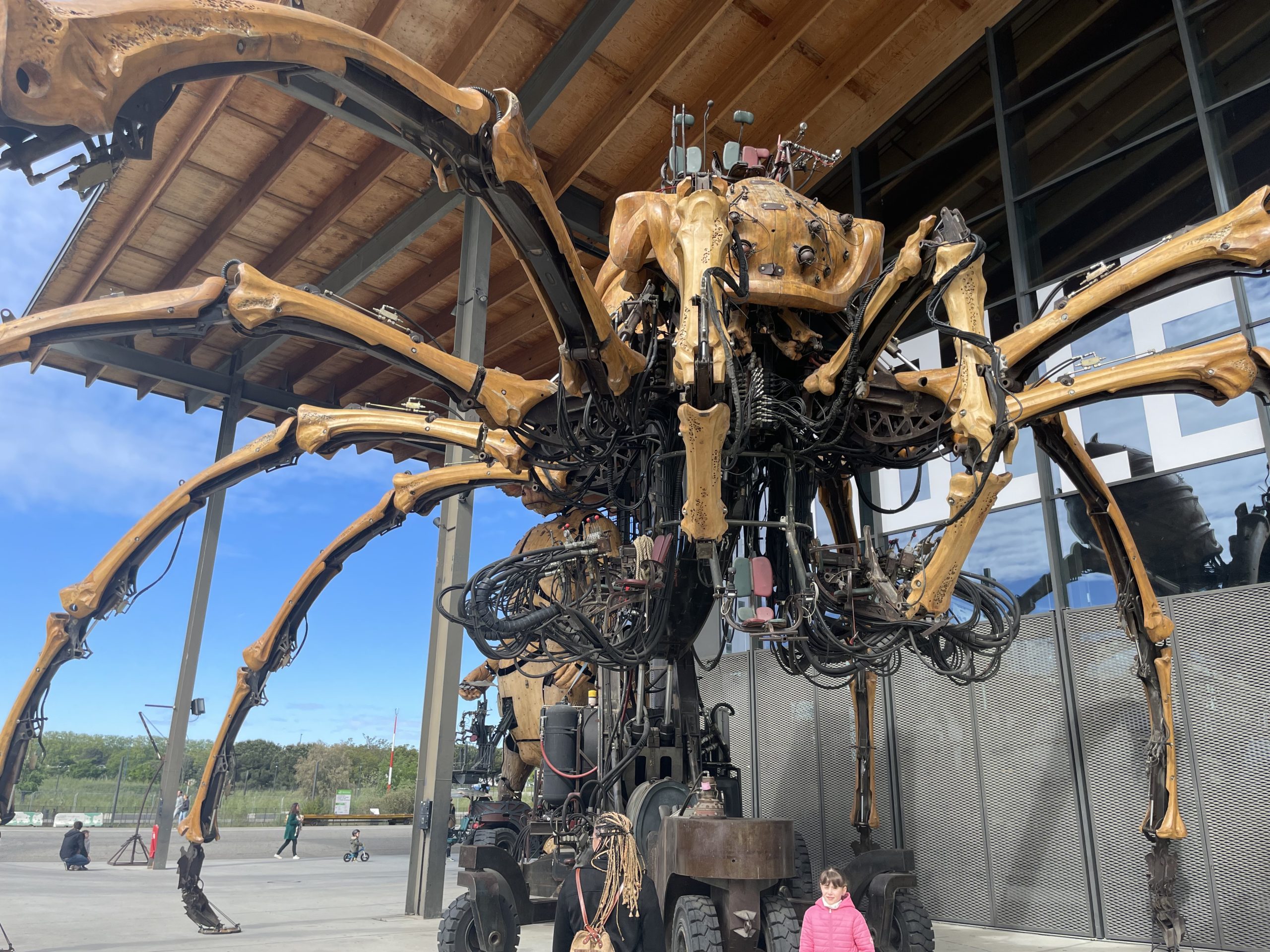
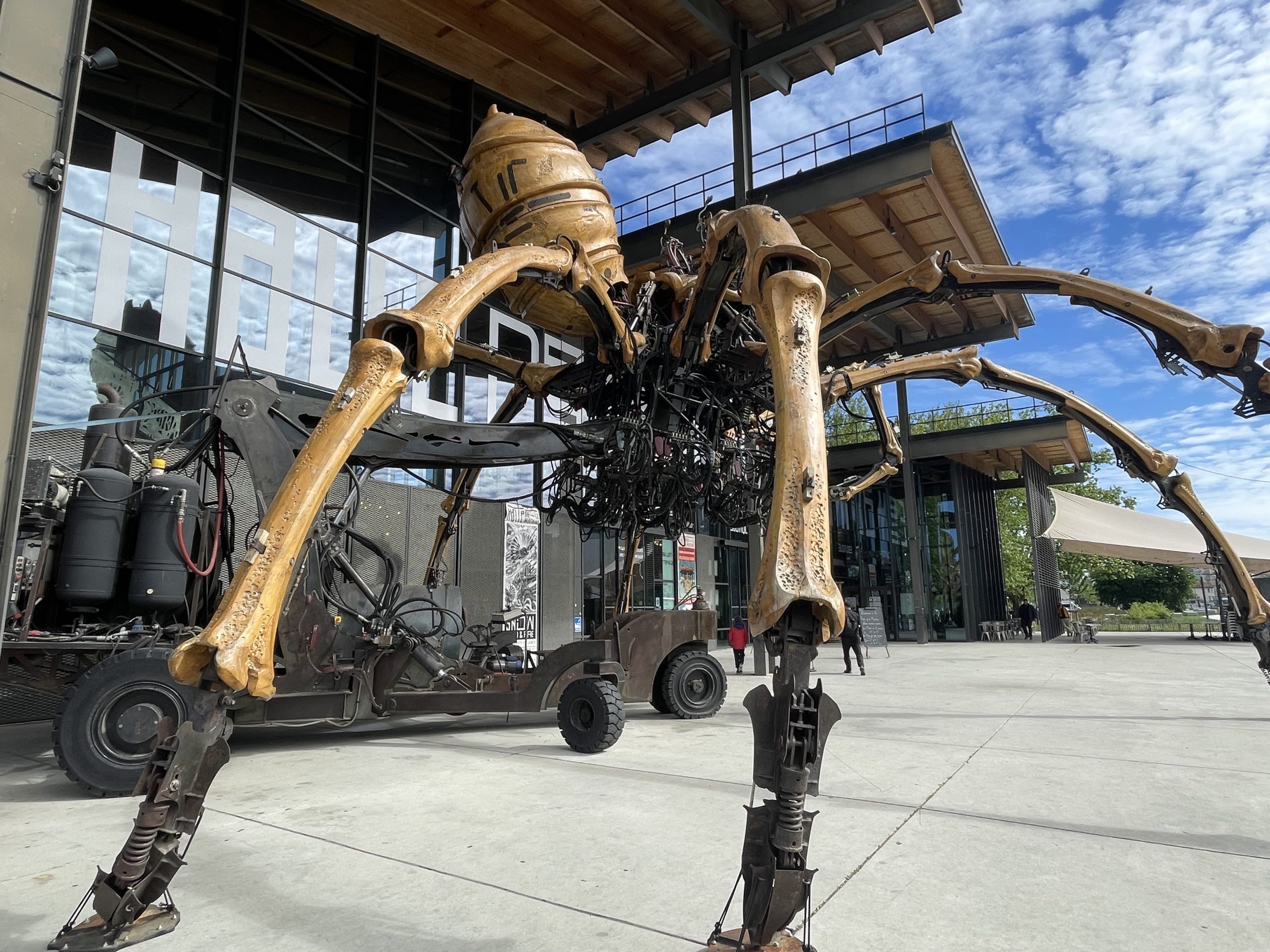
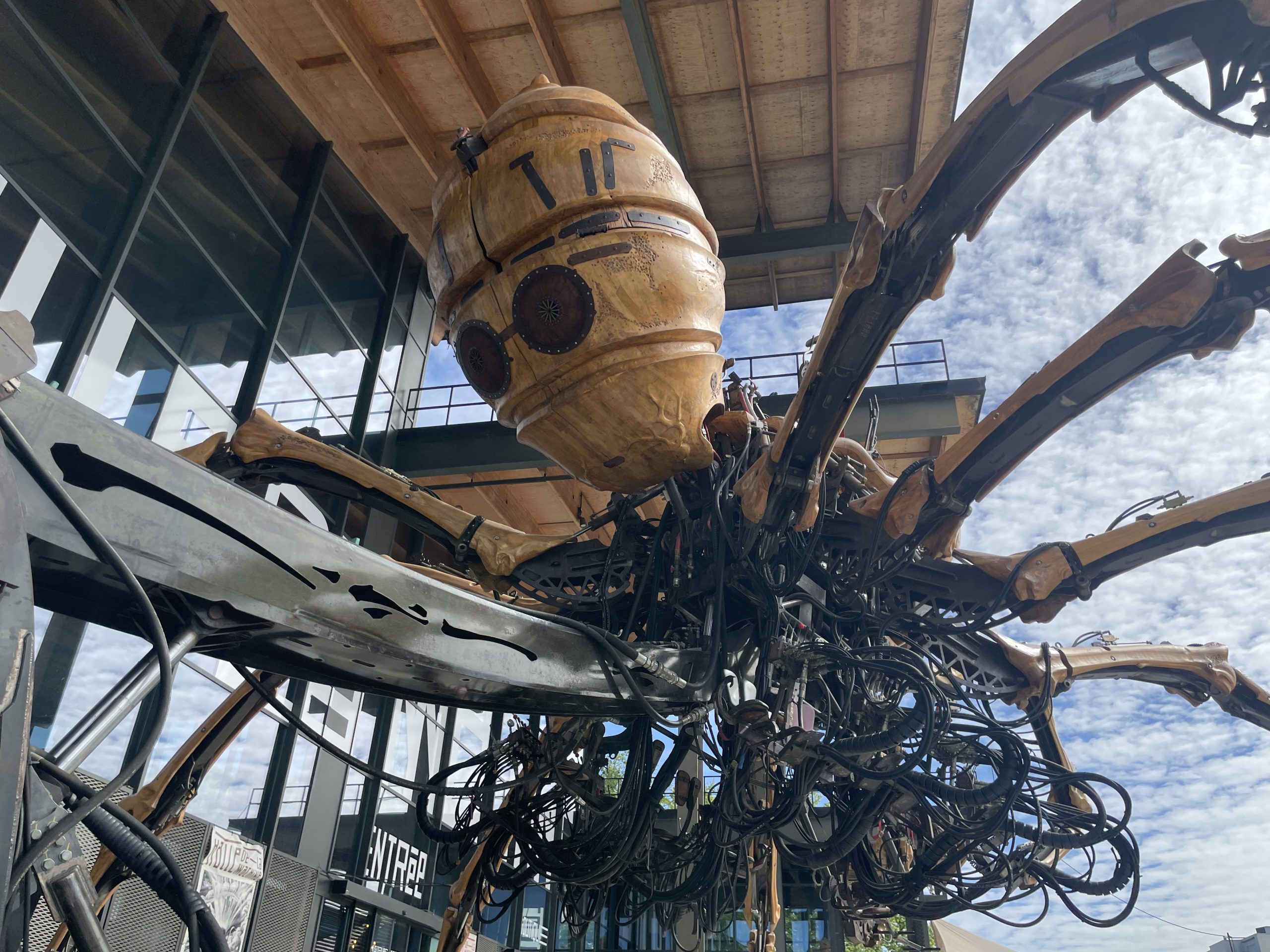
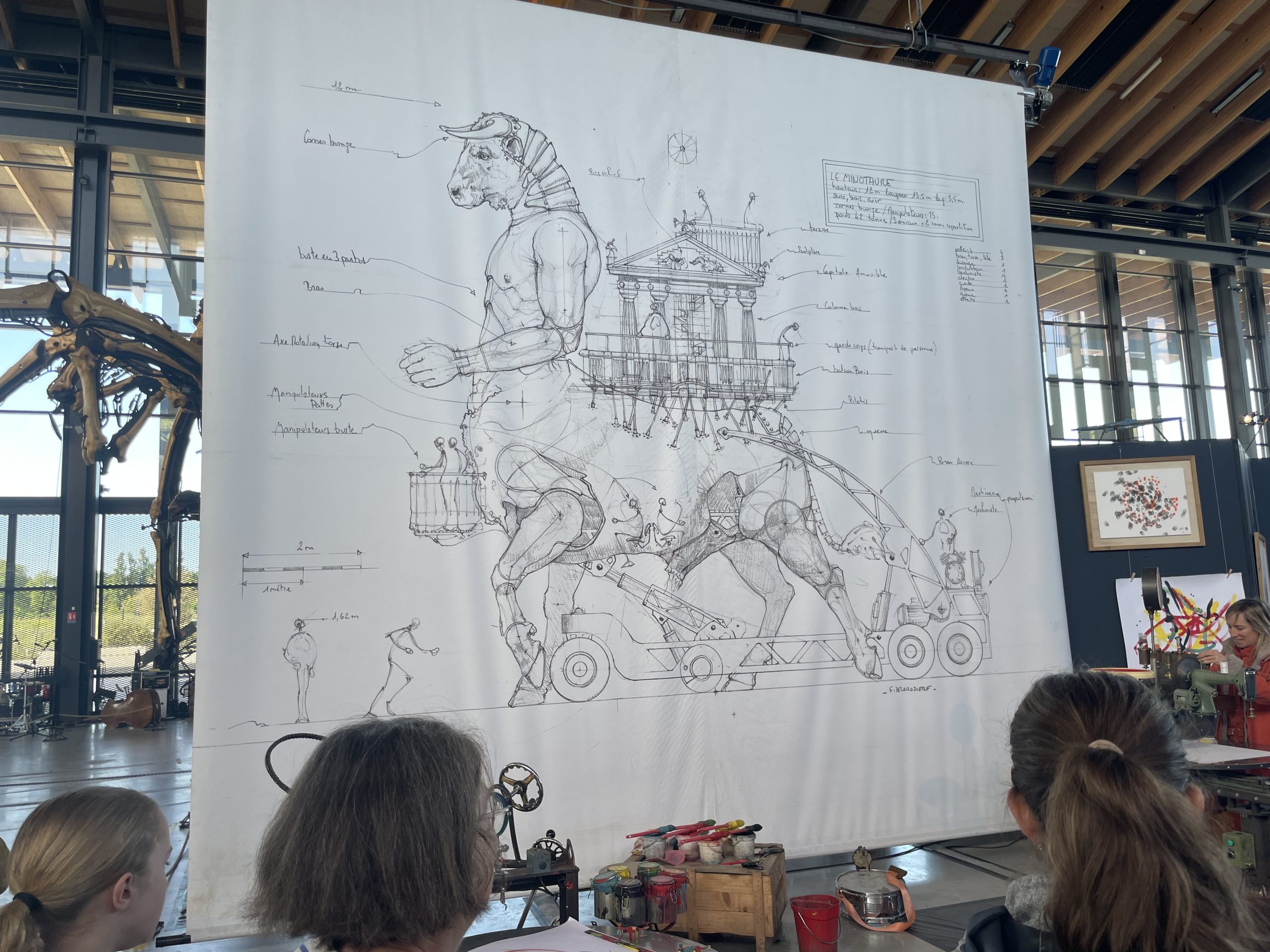
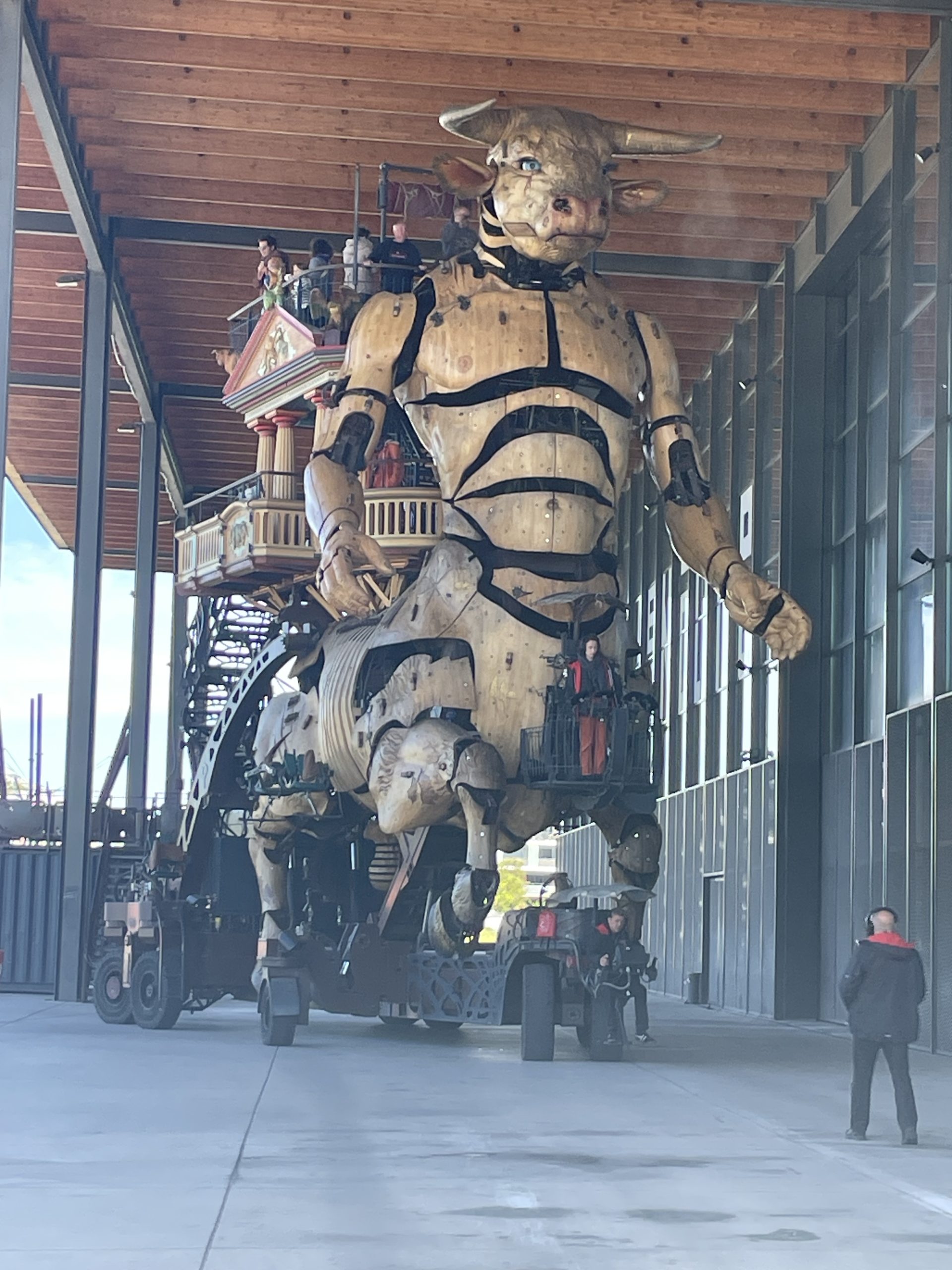
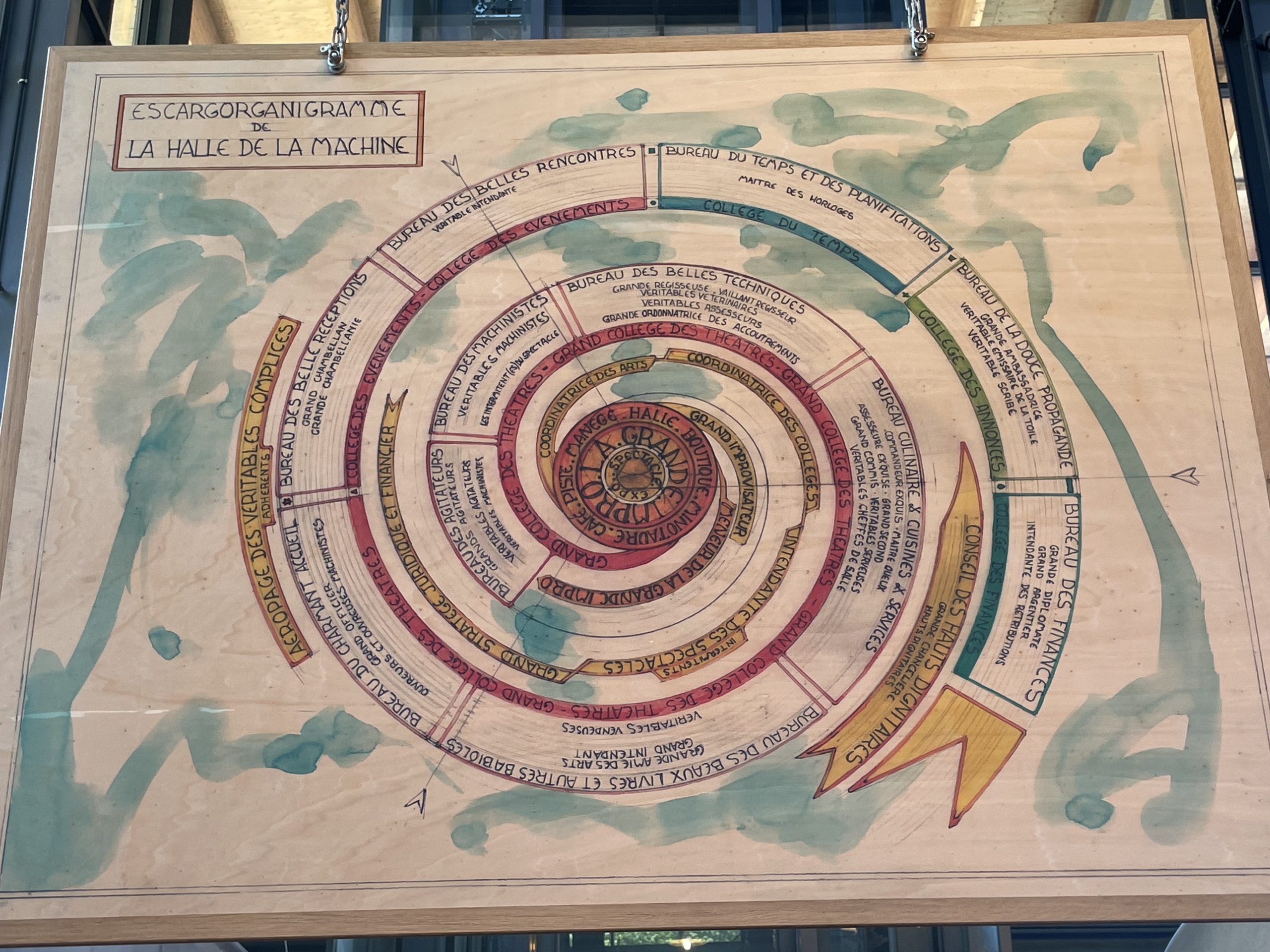
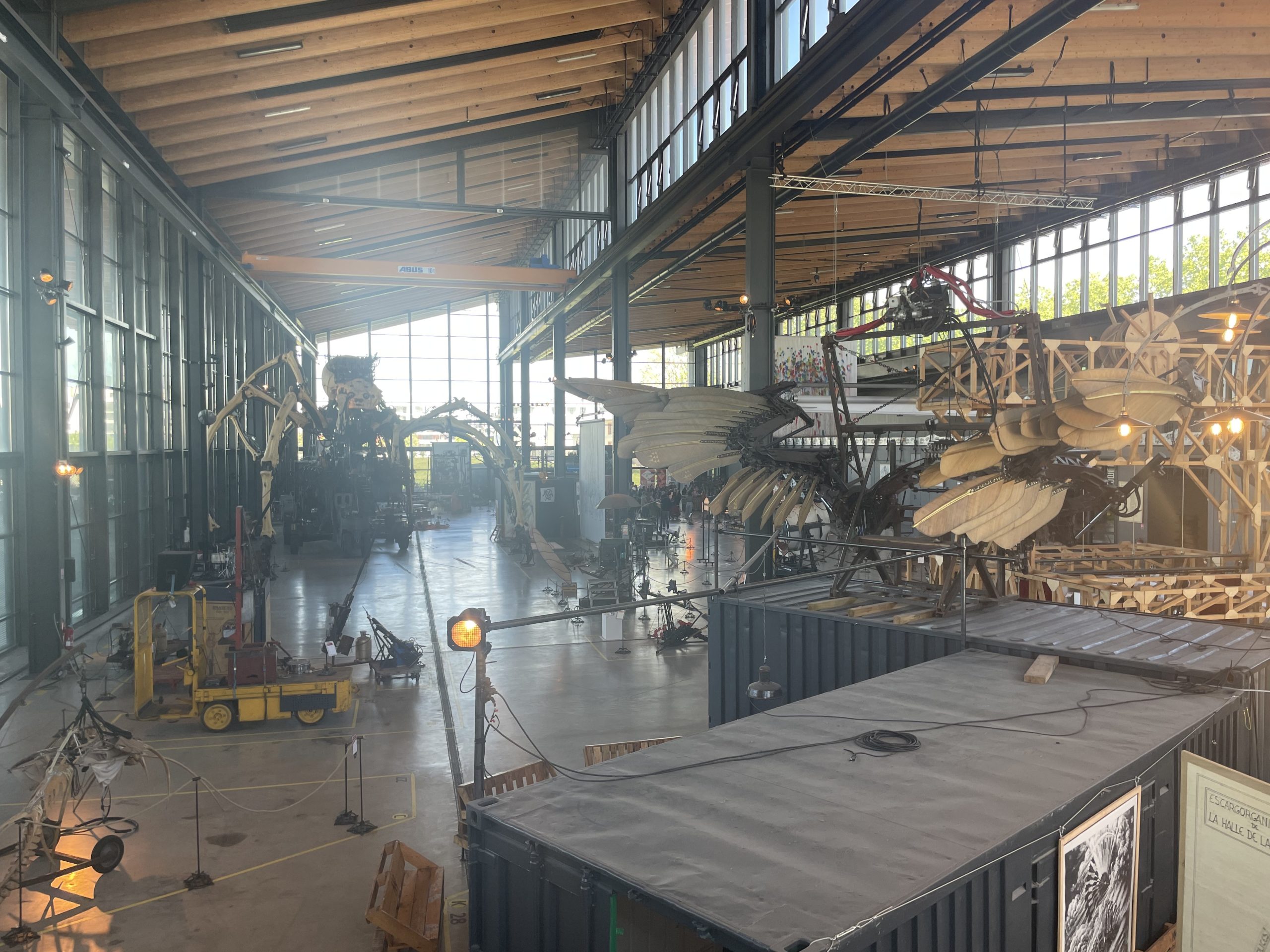
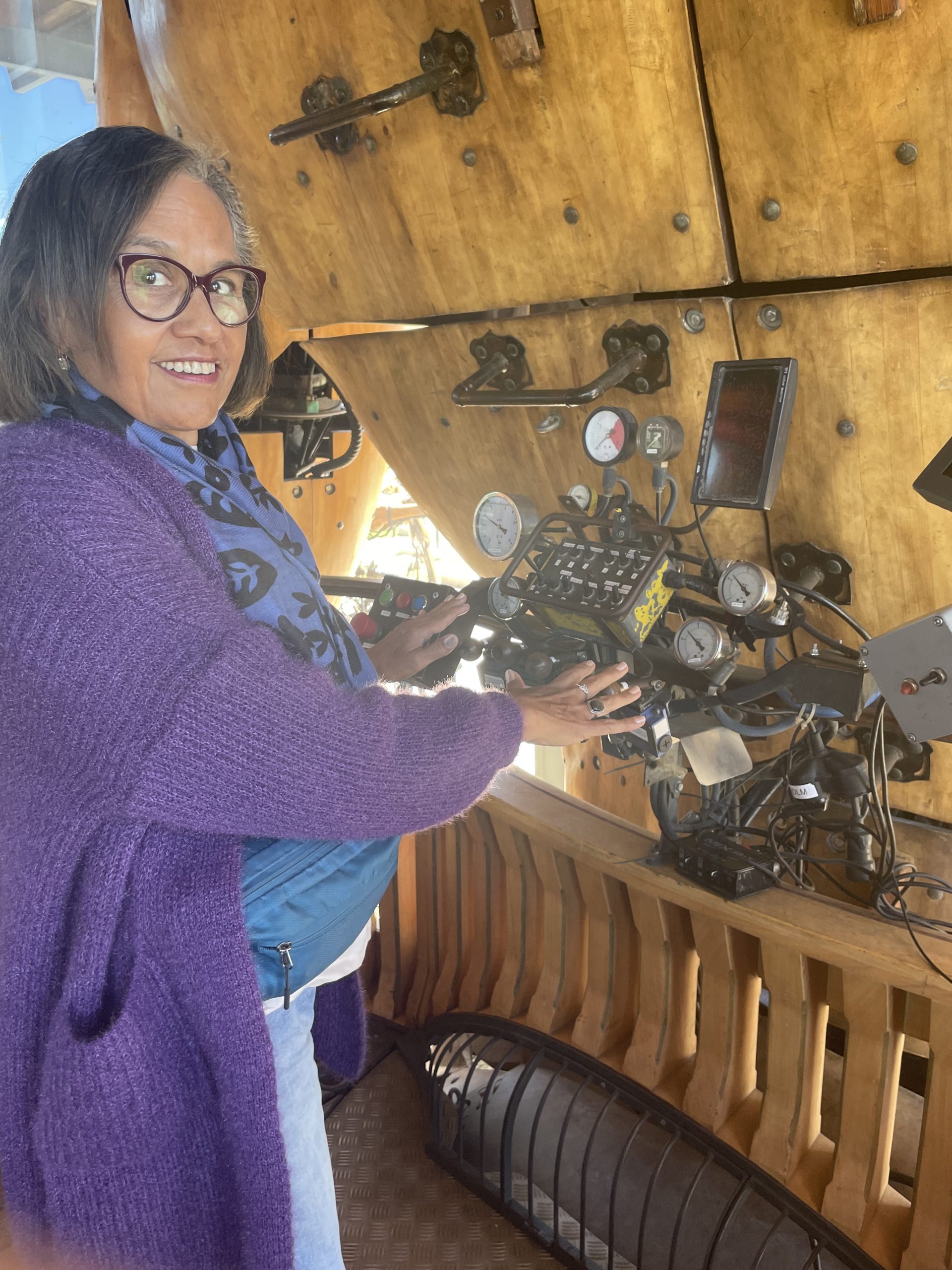
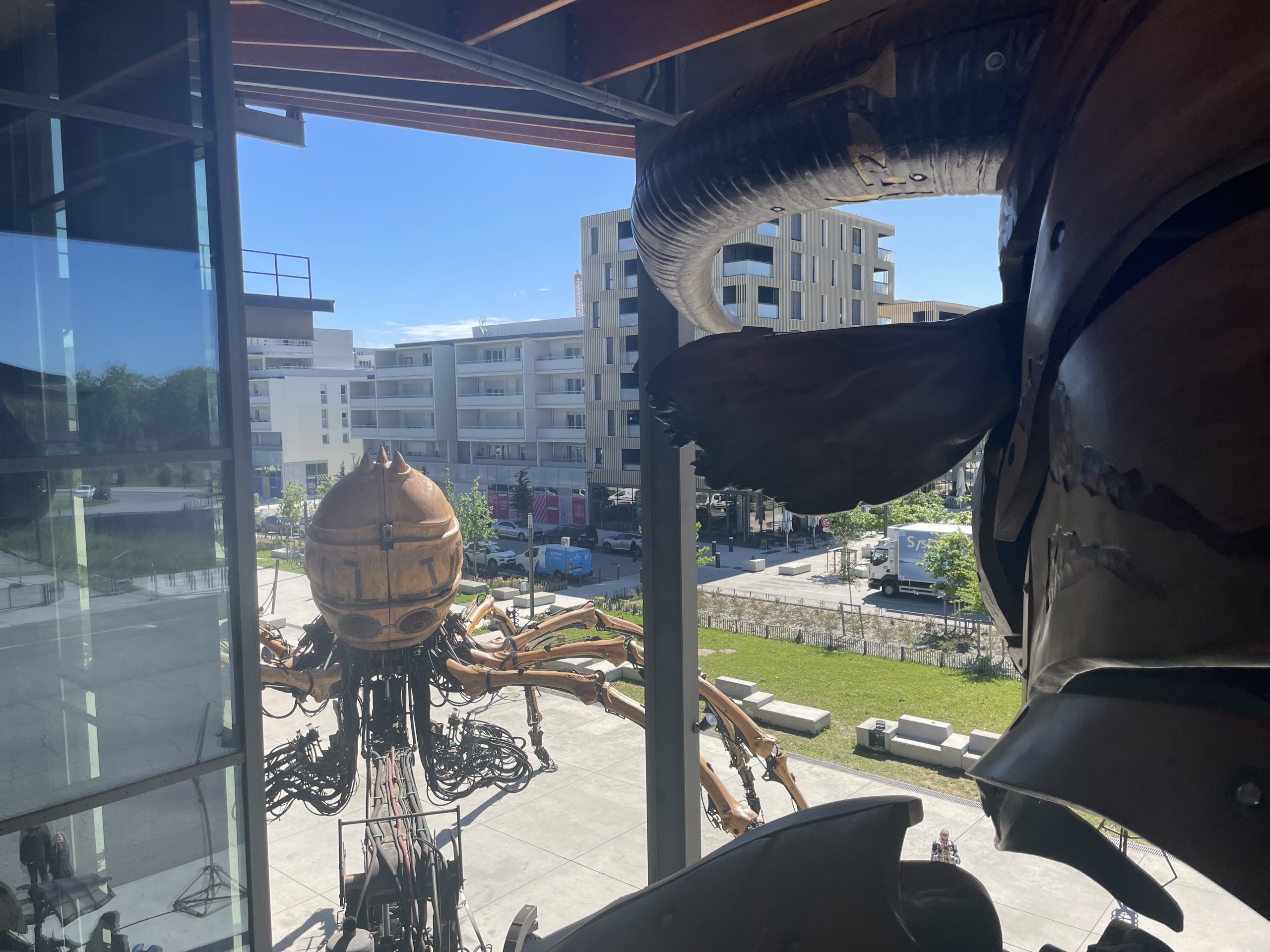
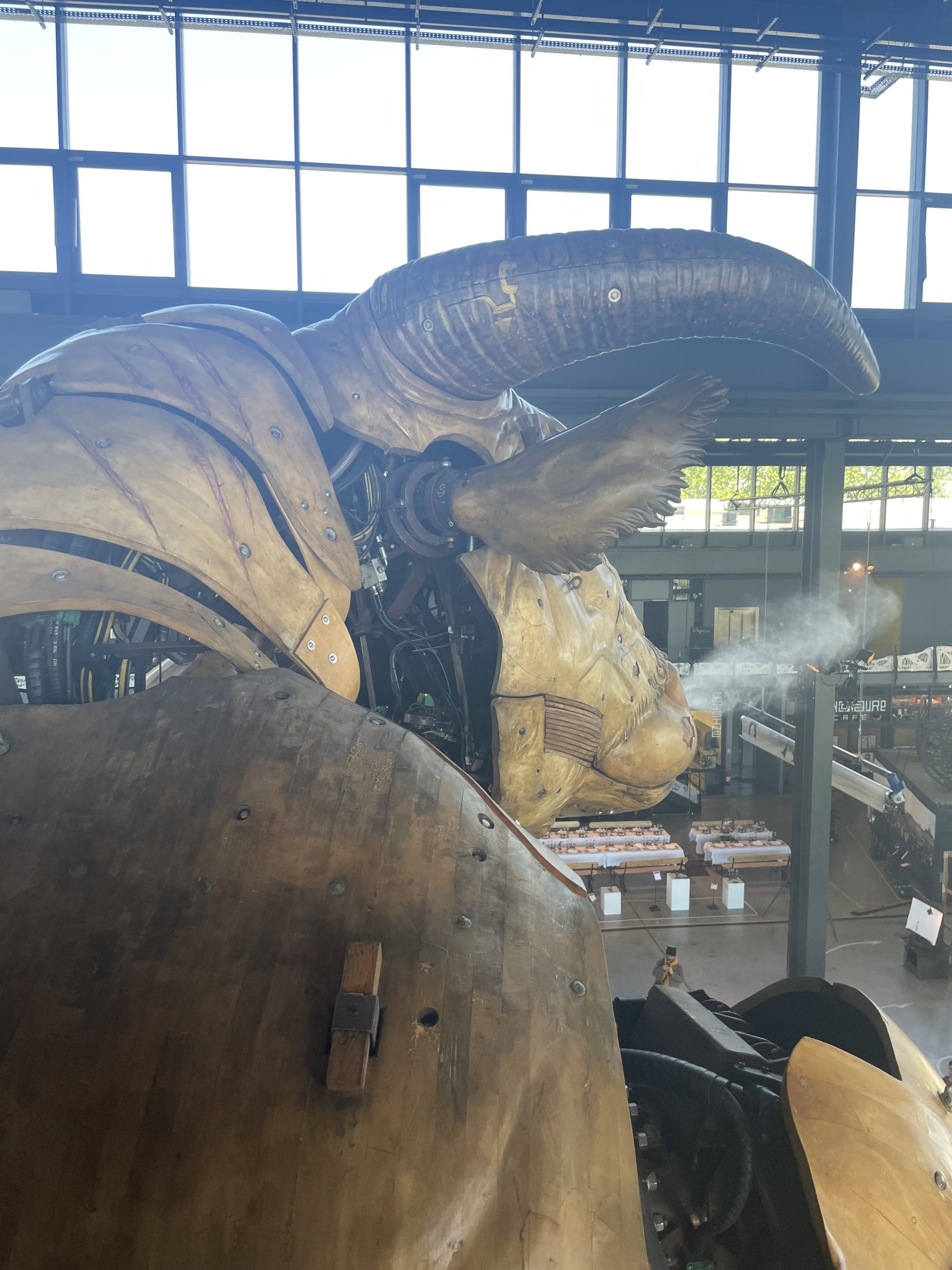
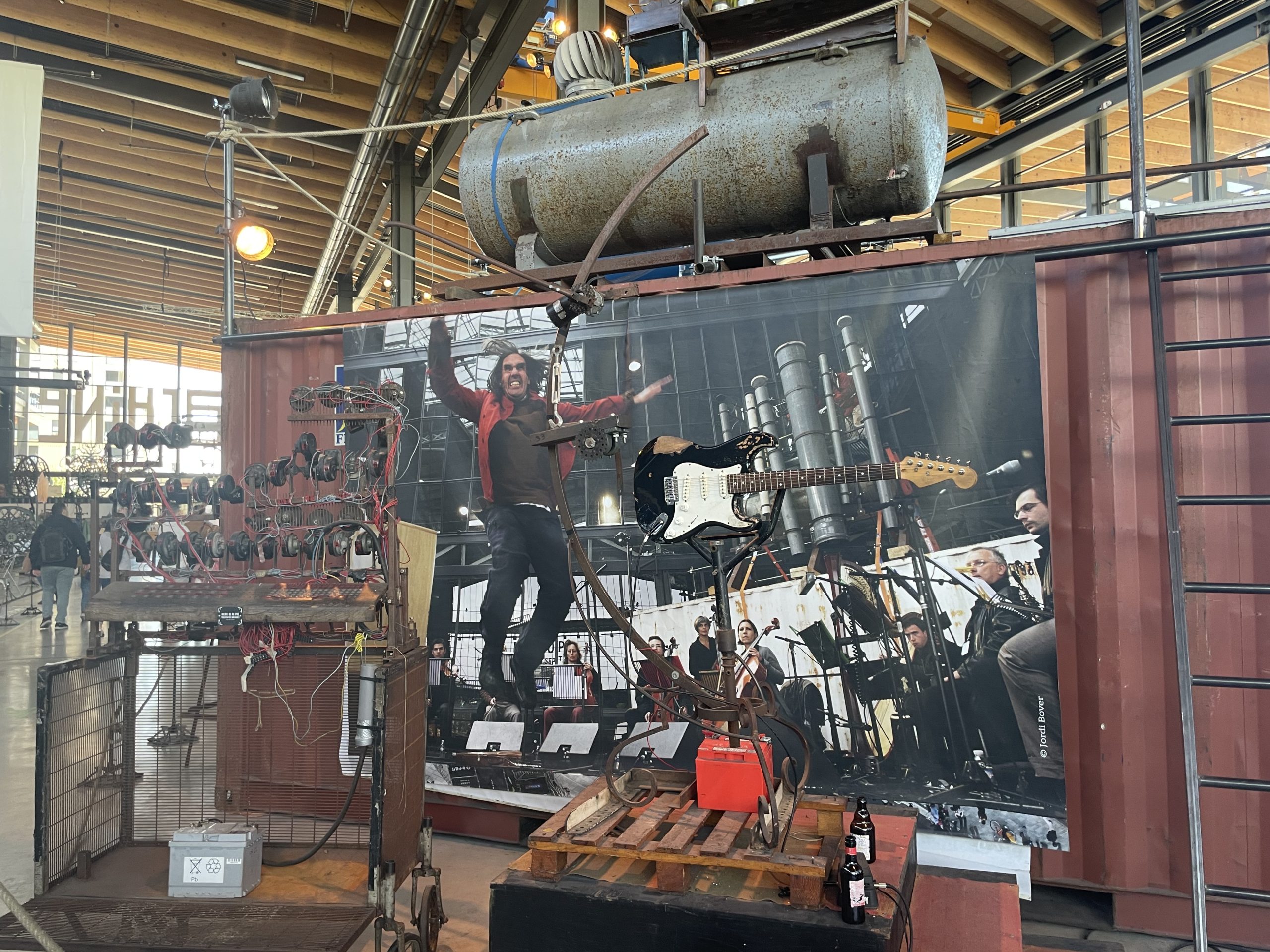
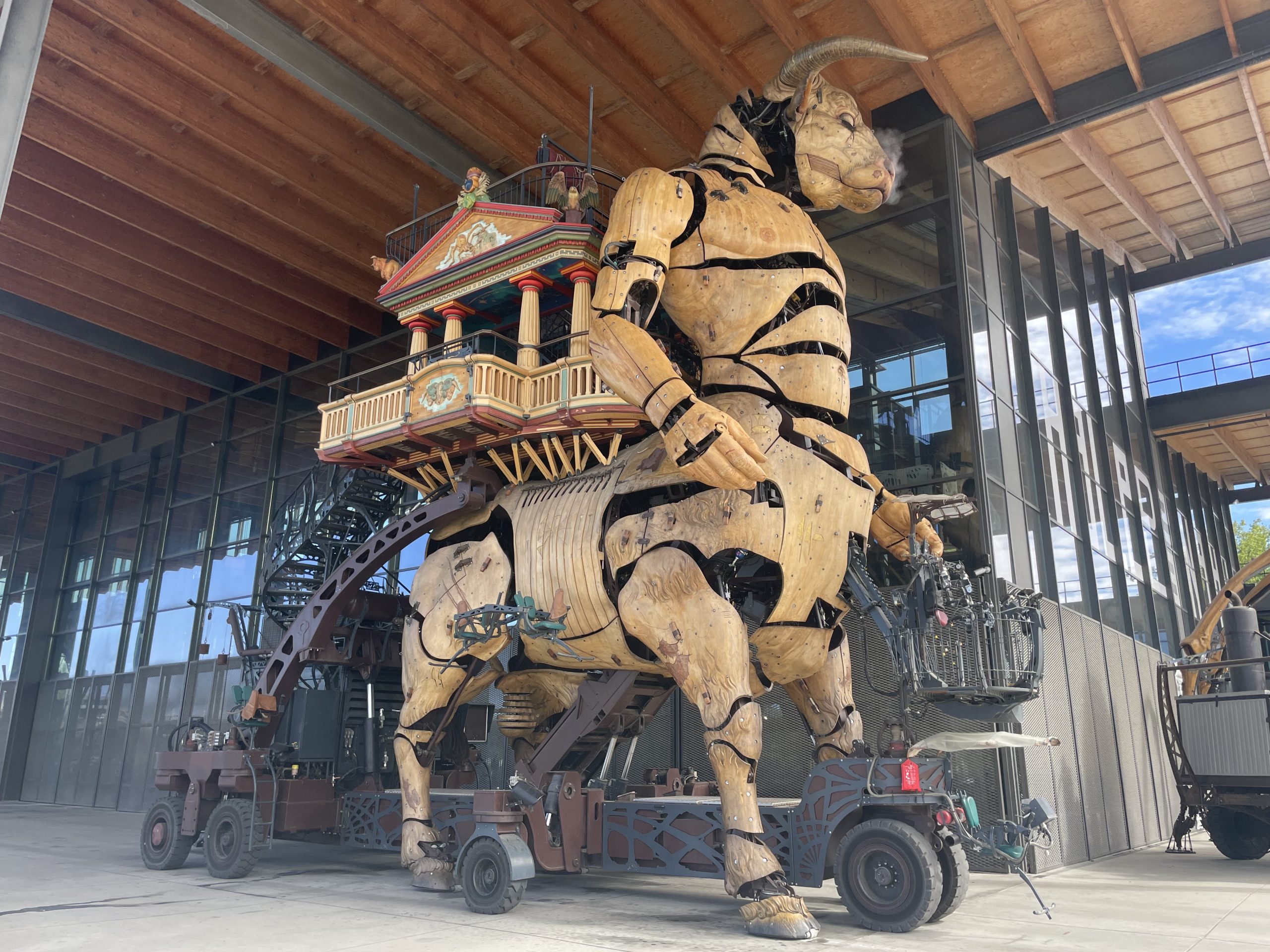 That is soon answered as a 50-foot tall steampunk minotaur lumbers out of the building and wanders down the giant boulevard. The minotaur, and other amazing entities, are designed and constructed by La Machine Compagnie who describe themselves as “a street theater company specializing in urban planning, architecture and, of course, theater in public spaces”. Aside from the giant minotaur and equally freaky, enormous spider, there are all manner and sizes of eccentric machines inside the hall brought to life by the crew of “veritable machinists”. A ride on the minotaur is also included, where we can get a close up look at how this big boy was put together, while he roars and emits steam or water intermittently. The electronics are kept well hidden, so what you see is metal, wood, gears and cogs maintaining that steam-driven illusion, even though there’s someone on the ground “driving” with a tablet. Certainly, it’s worth a few euros to feel like you’re in an HG Wells novel.
 Toulouse is an aerospace center, and home of Airbus, the second largest airplane manufacturer globally. There are a number of big flight related attractions that we didn’t make it to during our visit, that could be highlights for you including – Cite de l’space, Aeroscopia and “In the Footsteps of Pioneers”, the latter of which is right next to the Hall of Machines.
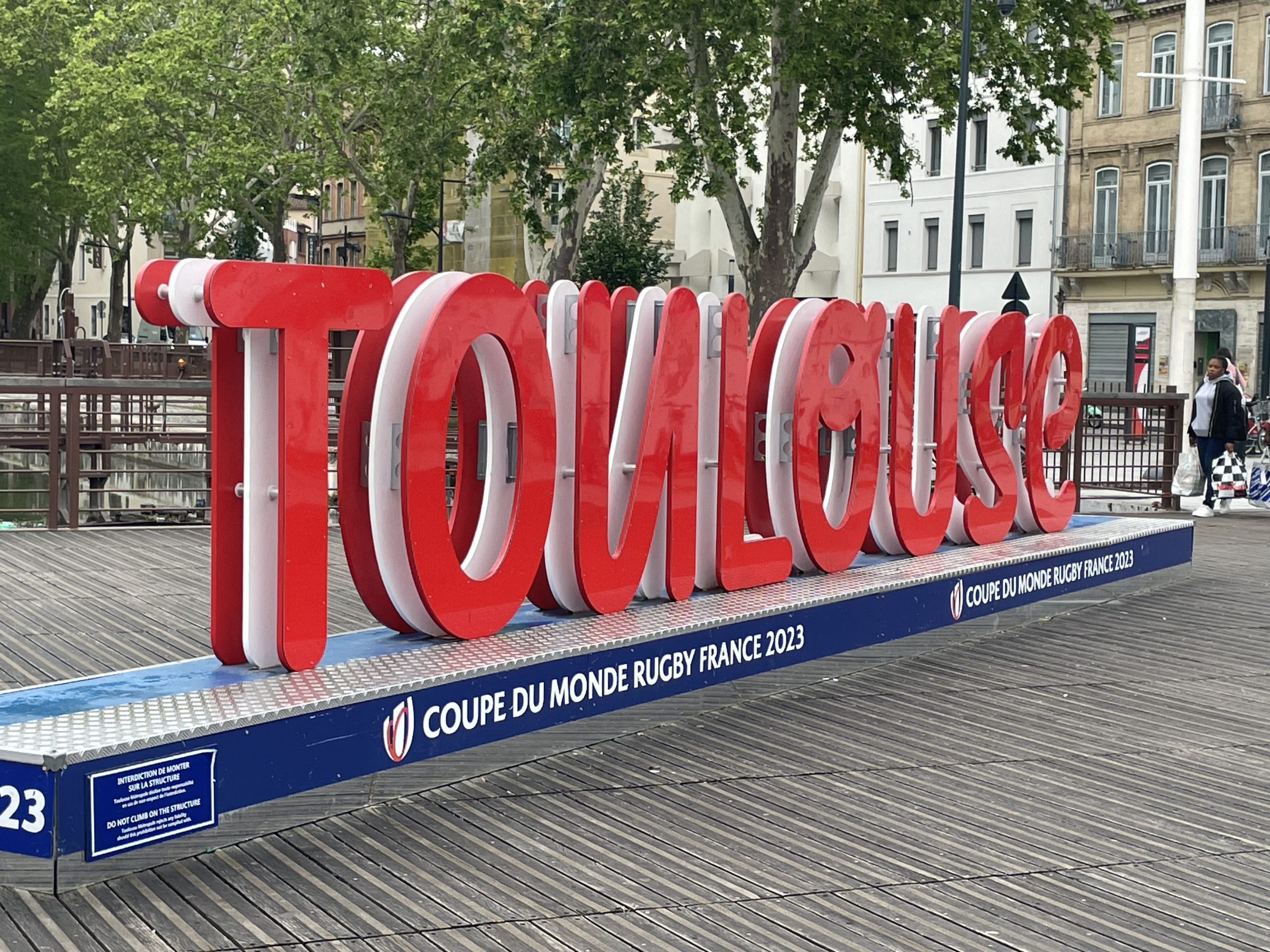 So, time’s up for us in Toulouse and we head onto Berlin. A visit to this area is certainly recommended, particularly once the city completes some of the current renovations, as Toulouse is investing in its future and will be all the better for it.



Leave a Reply