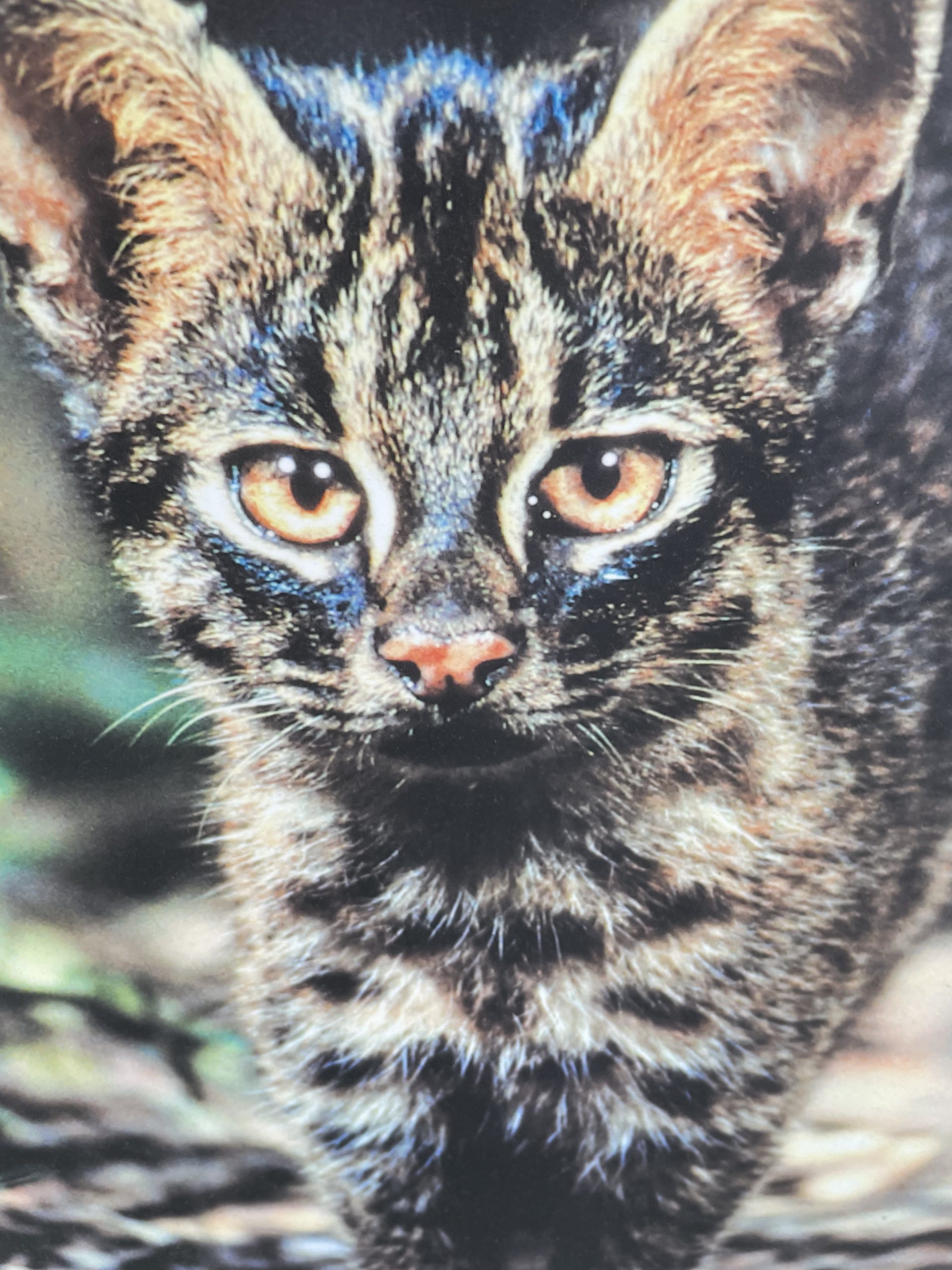
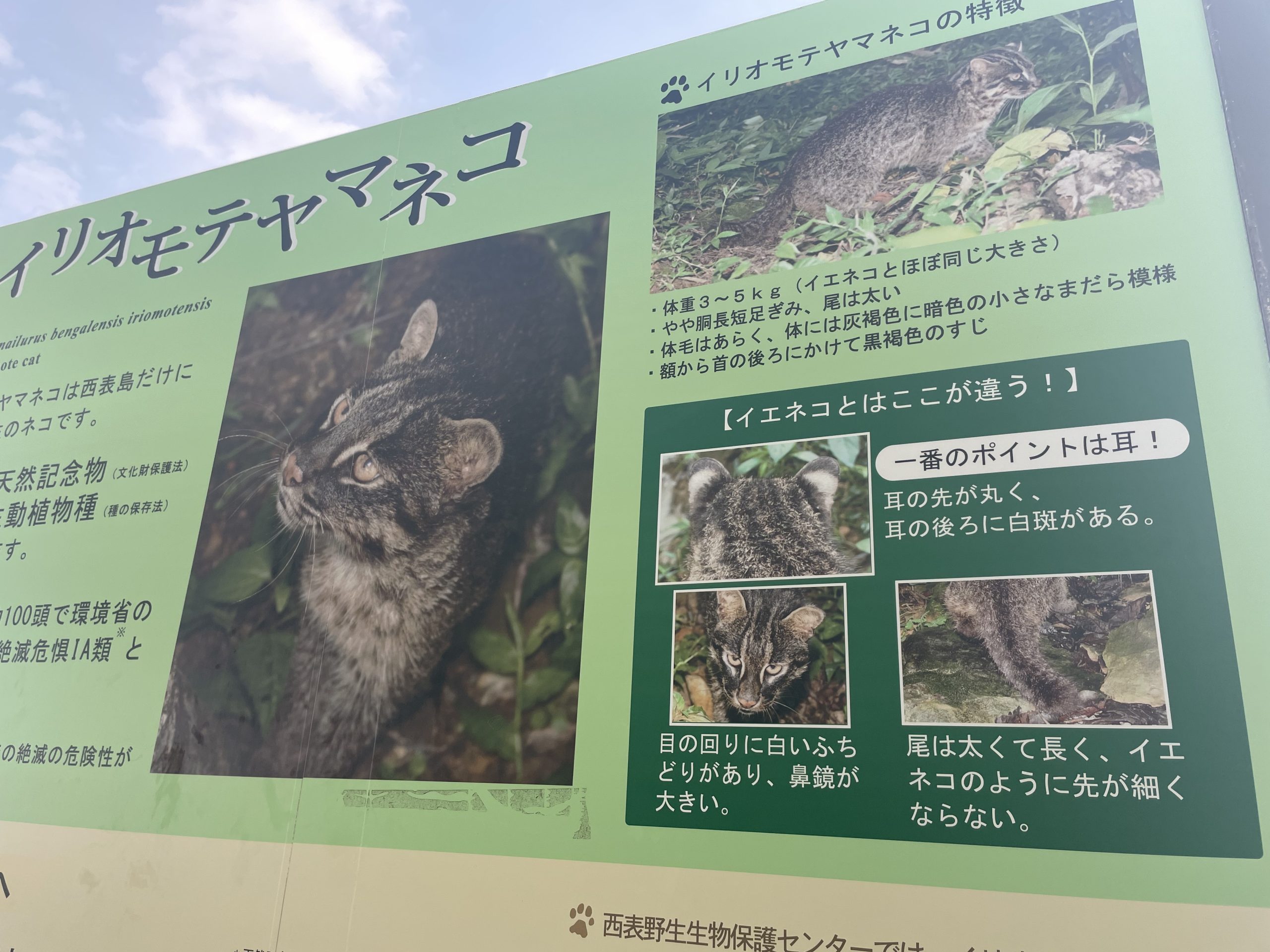
 Prionailurus bengalensis iriomotensis, the Iriemote wild cat, is a subspecies of the leopard cat that lives only on Iriemote Island in the Yaeyama group of Islands in the very South of Japan. In Japanese it’s “Iriemote Yamaneko” (mountain cat) and the locals call it “yamapikaryaa”, (that which shines in the wild). They’re lean, little guys maybe two feet long, only 7-11lbs, and critically endangered with about 100-110 individuals thought to remain. They evolved from the leopard 250,000 years ago or more and moved to their current location when the Yaeyama Islands were connected to Asia, which only ended about 20,000 years ago. Since they only occur on this island, which has a modest total area of 112 square miles, it’s obvious they are in a precarious position.
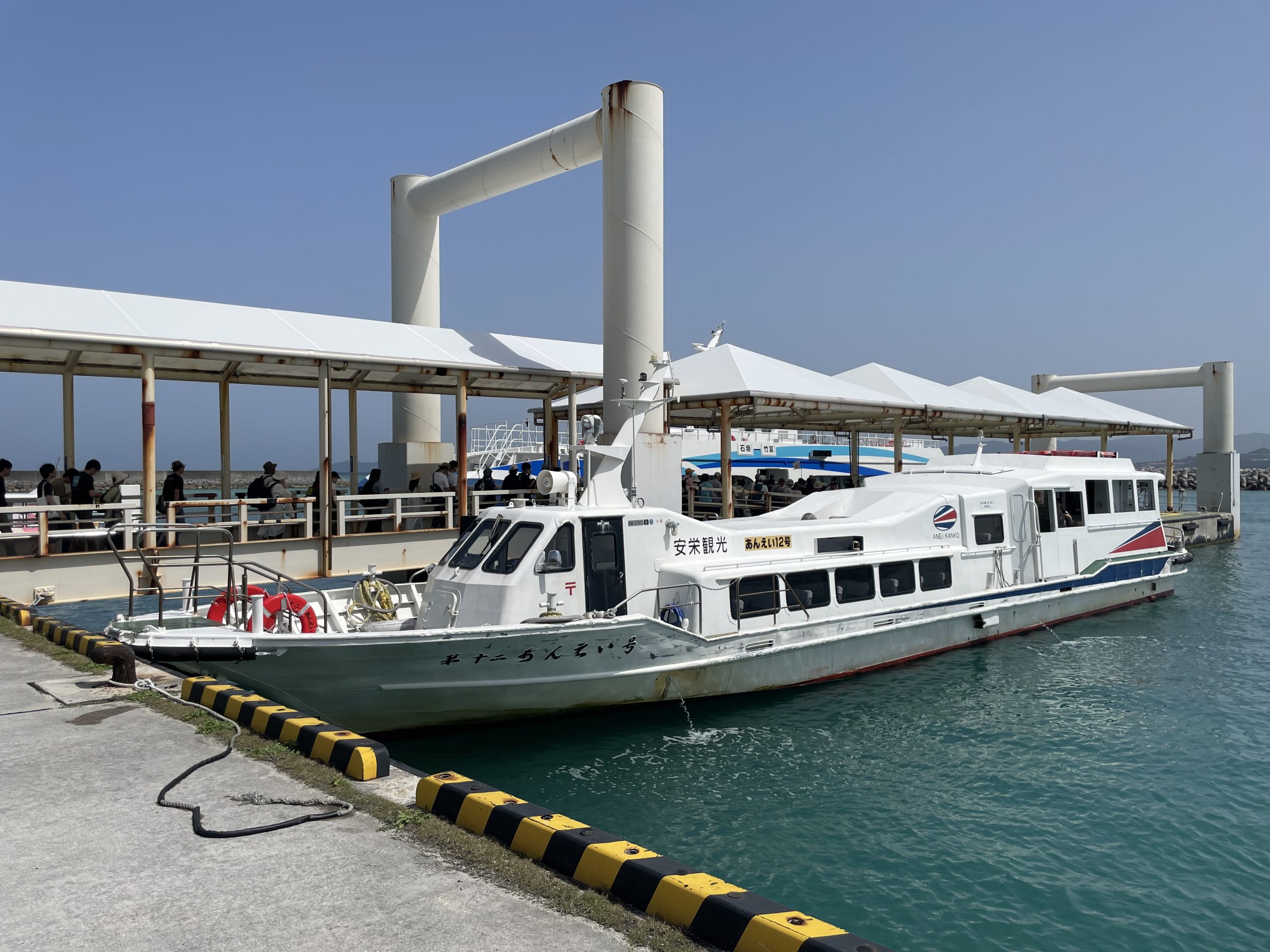
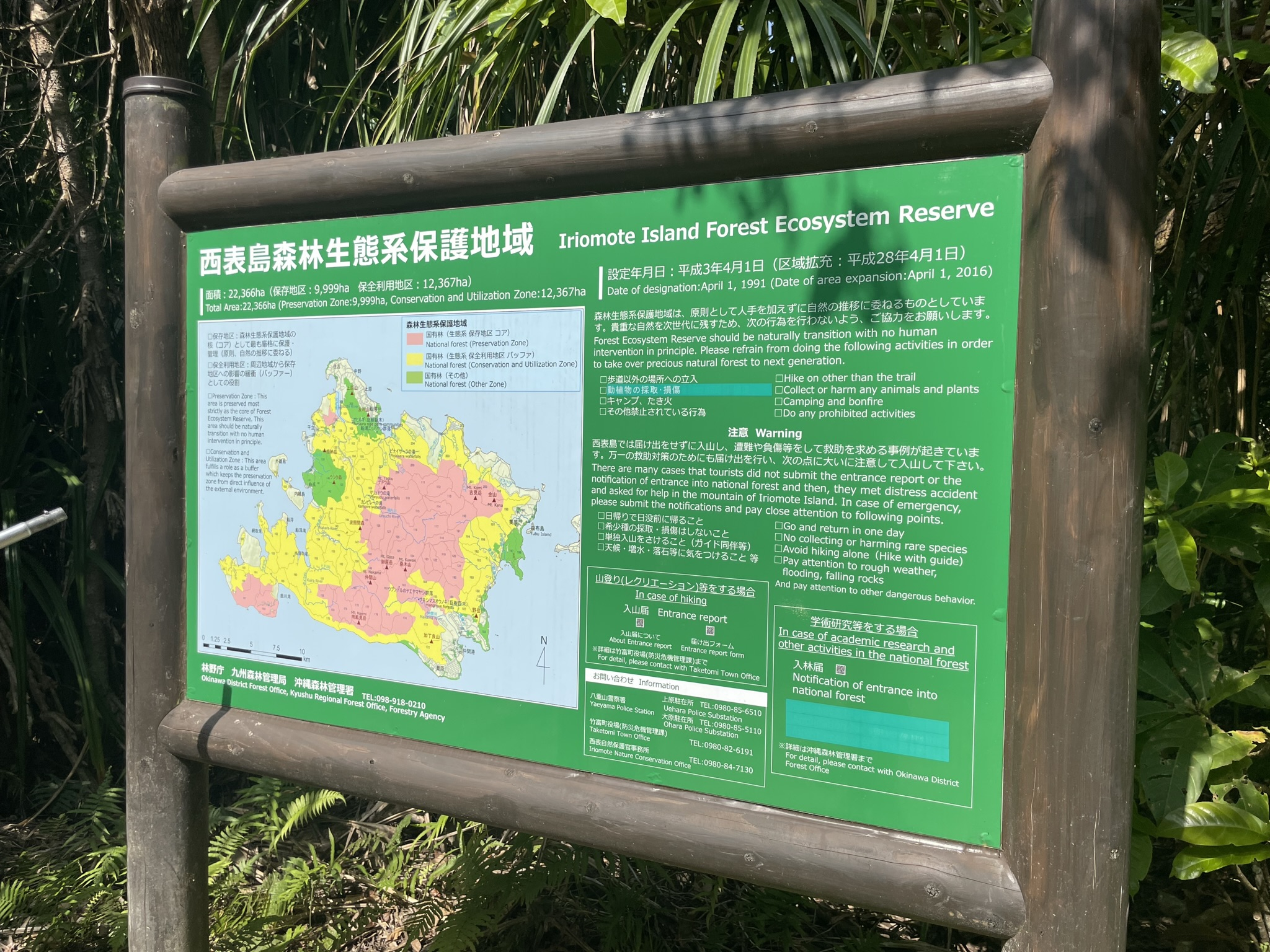
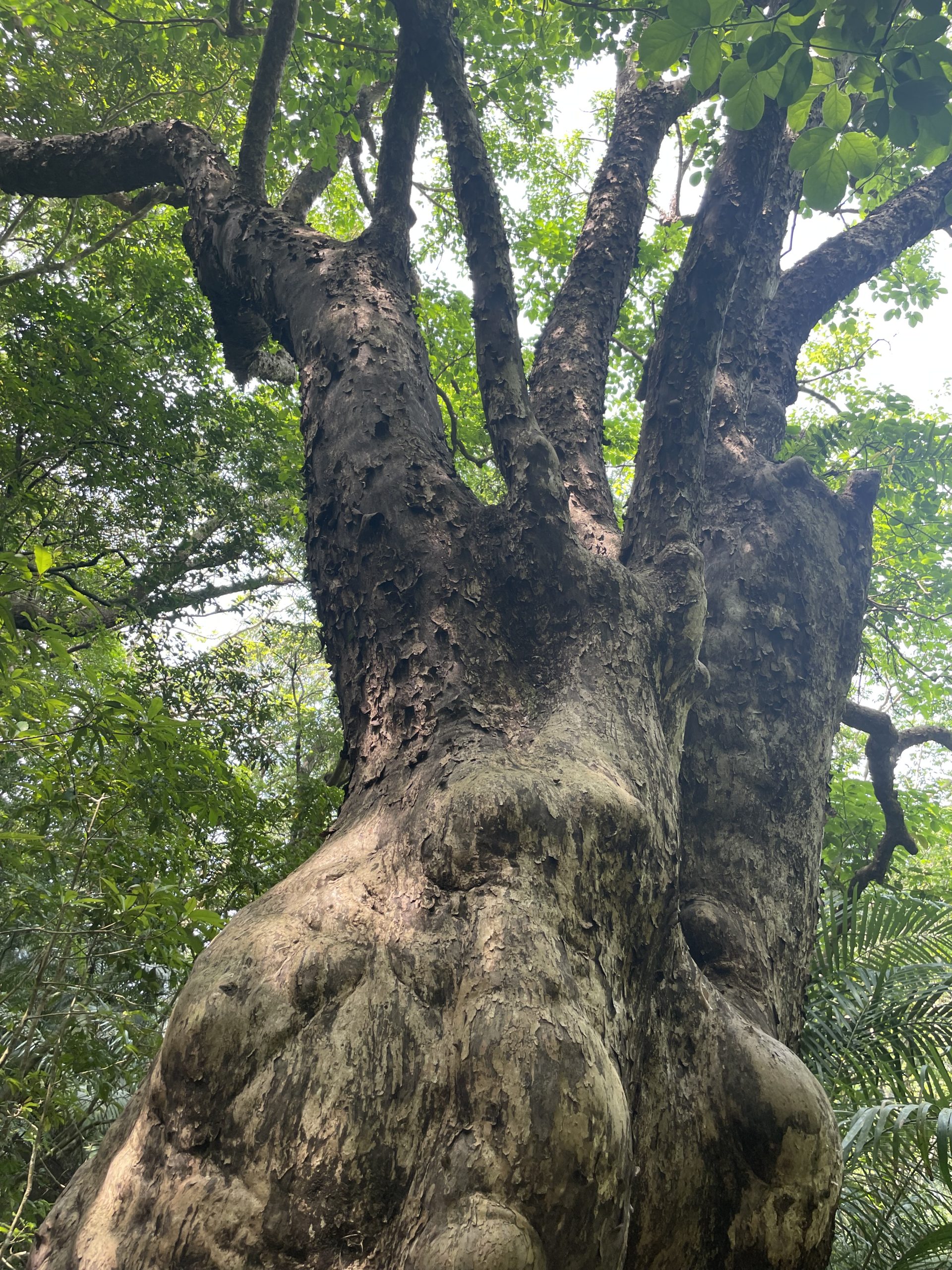
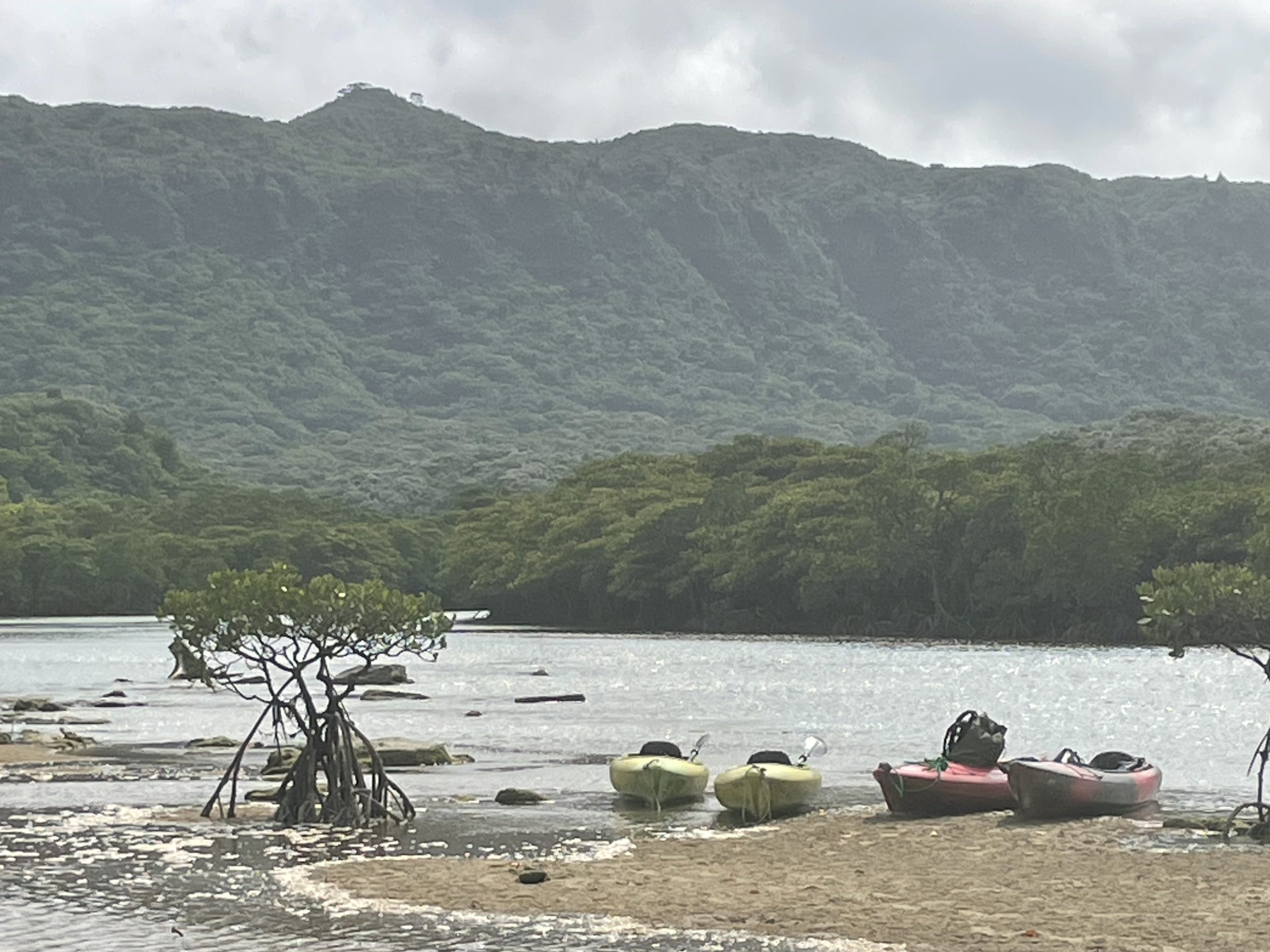 The reason they’re still here at all is that Iriemotejima is mostly wild country covered in mountainous tropical rainforest. As a far as Japan goes, it’s as wild as it gets, with most of it is being protected state land and national park with limited human infrastructure. However, it is accessible to the day tripper from Ishigakijima on guided tours and we sign up for the default kayak and trek option. During the Winter the 50 minute ferry transit can be hairy and often cancelled but on a clear day in April, it’s a breeze and a picturesque ride as you get a good look at the wild coastline as the ferry makes its way around to the port at Uehara. Not as spectacular as the Na Pali coast of Kauai but in the same vein.
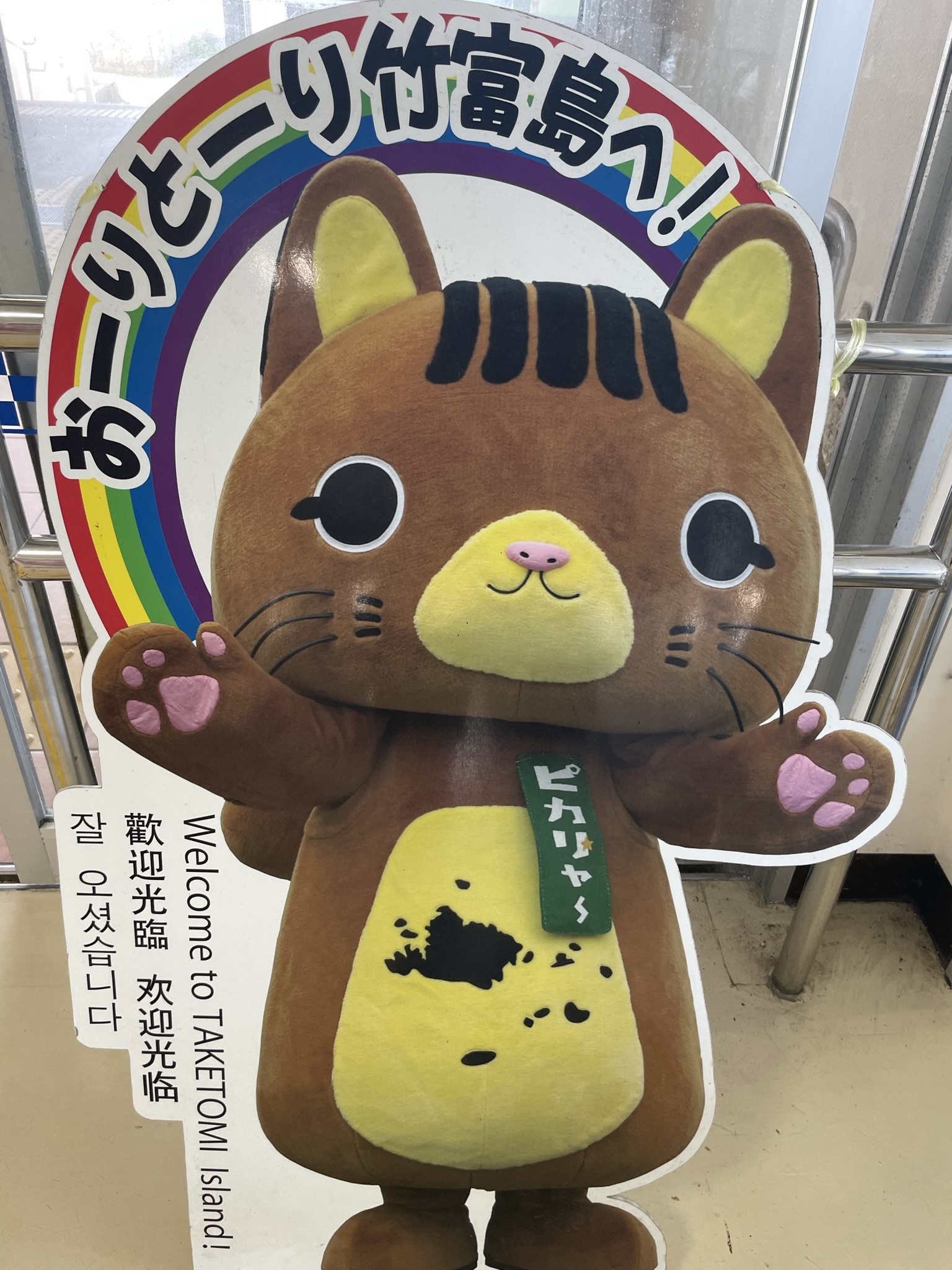 Now, given that the yamapikaryaa is a super rare, mostly nocturnal wild cat, we’re not likely to bump into one on our daytime tour, but that’s not going to deter the administrators and businesses of the area from highlighting the little guy, as he’s the very symbol of the wildness of these islands and a big tourist draw. There’s a cute mascot, it’s Japan, of course there is, and it’s name is Picarya, from the local dialect name for this cat. Picarya is everywhere in the ferry terminals and associated gift shops, in stuffed form, naturally, and imprinted on every possible piece of clothing and household “essential” item. He/she is kawaii (cute) with leopard stripes on his head and the shapes of the Yaeyama Islands on his belly. In fact, one of him is sitting on my desk top right now watching that I don’t say anything bad about Iriemotejima.
 There’s a video in the ferry waiting room where a life size Picarya shows the dumb tourists how to behave when on the island, with particular emphasis on plastic garbage. There are, deliberately, zero garbage facilities available to visitors on the island so everything must be taken back with you. In our brief stay on Iriomotejima we saw very little evidence of trash, but on the beaches of Ishigakijima and Taketomijima plastic debris was a real problem, as it, sadly, is almost everywhere in the world.
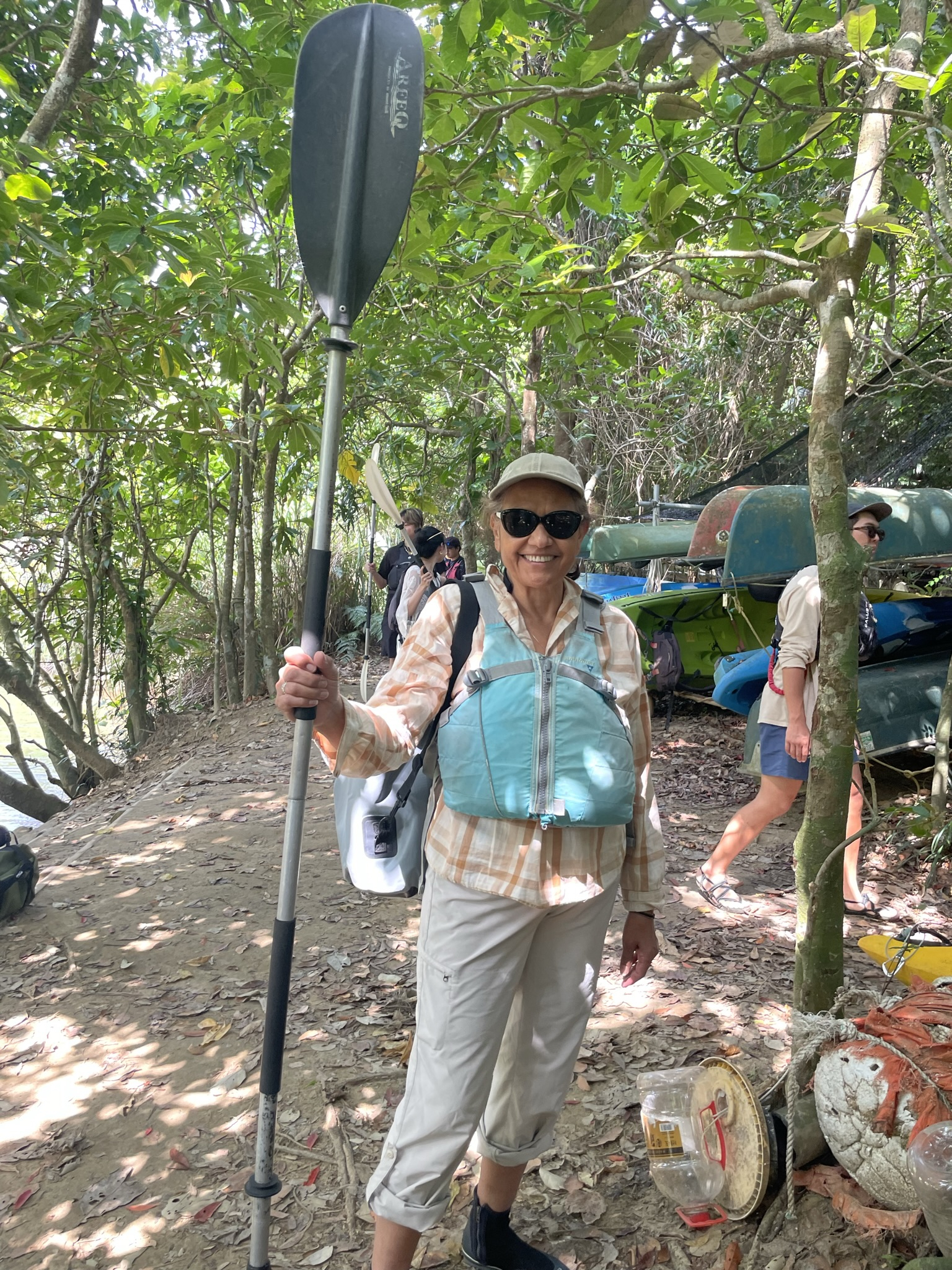
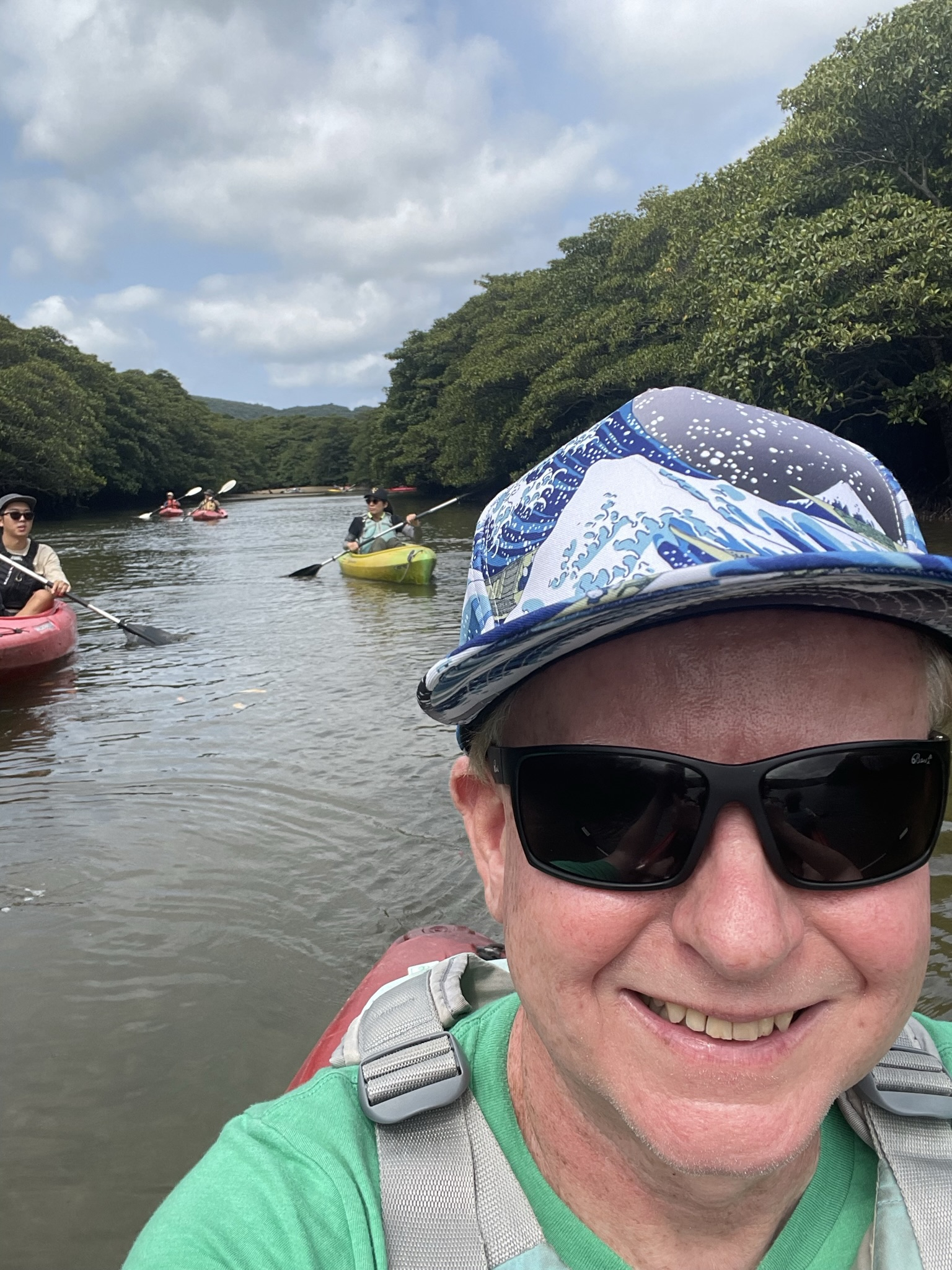
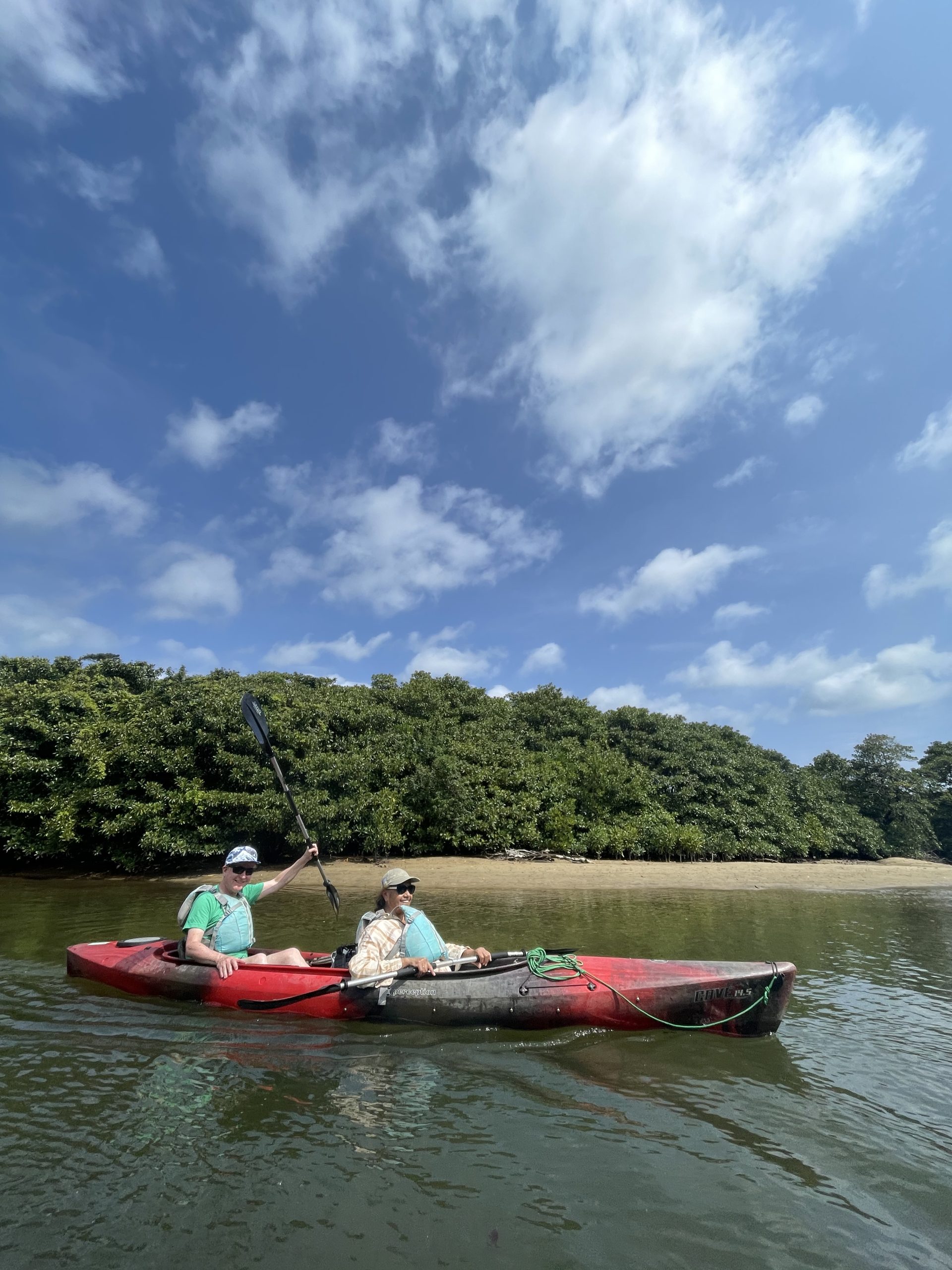 Our tour group has only four customers, which is great, but there are several other tour groups using a similar timeframe, so this is not going to be a wilderness experience in isolation. For that, you’d need to stay overnight and spend a lot more money on a custom package. Still, it’s beautiful and we’re here, so let’s go! Our tour guide lives on the island and clues us in on how rugged life can be here, especially considering the typhoon season. During a typhoon, power is usually out for three days, and can be up to a week. Ferry travel is disrupted, there is no airport and so, with no big grocery stores on the island, and everything coming from Ishigakijima, you have to be prepared. A van ride out of “town” and up into the hills brings us to the kayaking start point on the Nishida River where we can see our final destination of the Pinaisara Falls, plummeting through dense, tropical forest. We were a little concerned about the river current, but there was very little, and it was an easy paddle compared to a typical kayaking day in Oregon, notably because we were in a hard shell double with decent seats and enough room. (As opposed to the inflatable we use at home, which can be torture).
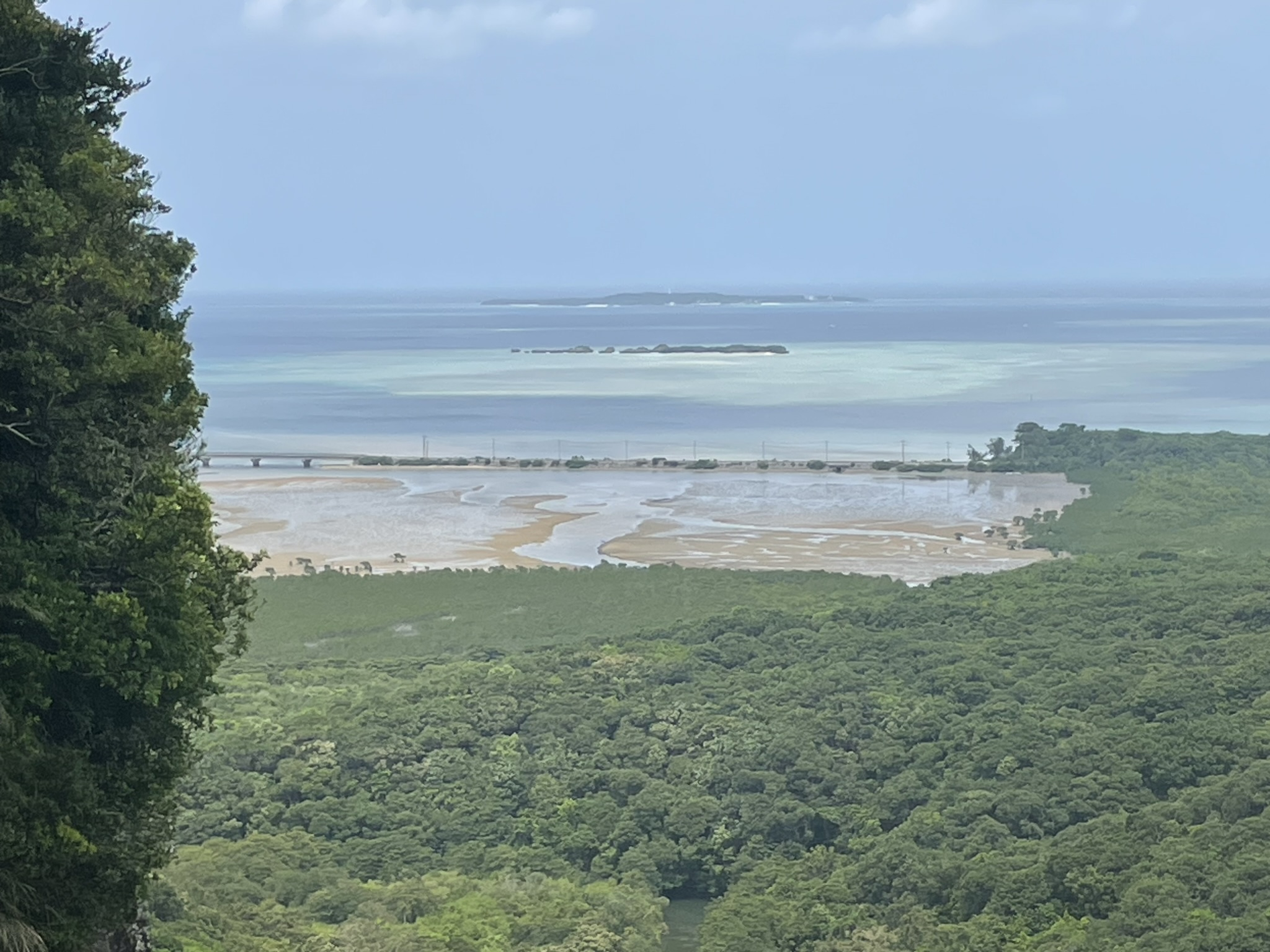
 The river is excellent, starting out with salt water mangroves before transitioning to fresh water jungle terrain near our put out. Some fish, but no baby sharks today, as it’s low tide: Birds are plentiful, with kingfishers nearby, but not seen, and we’re keeping an eye open for the locally iconic crested serpent eagle but no luck yet.
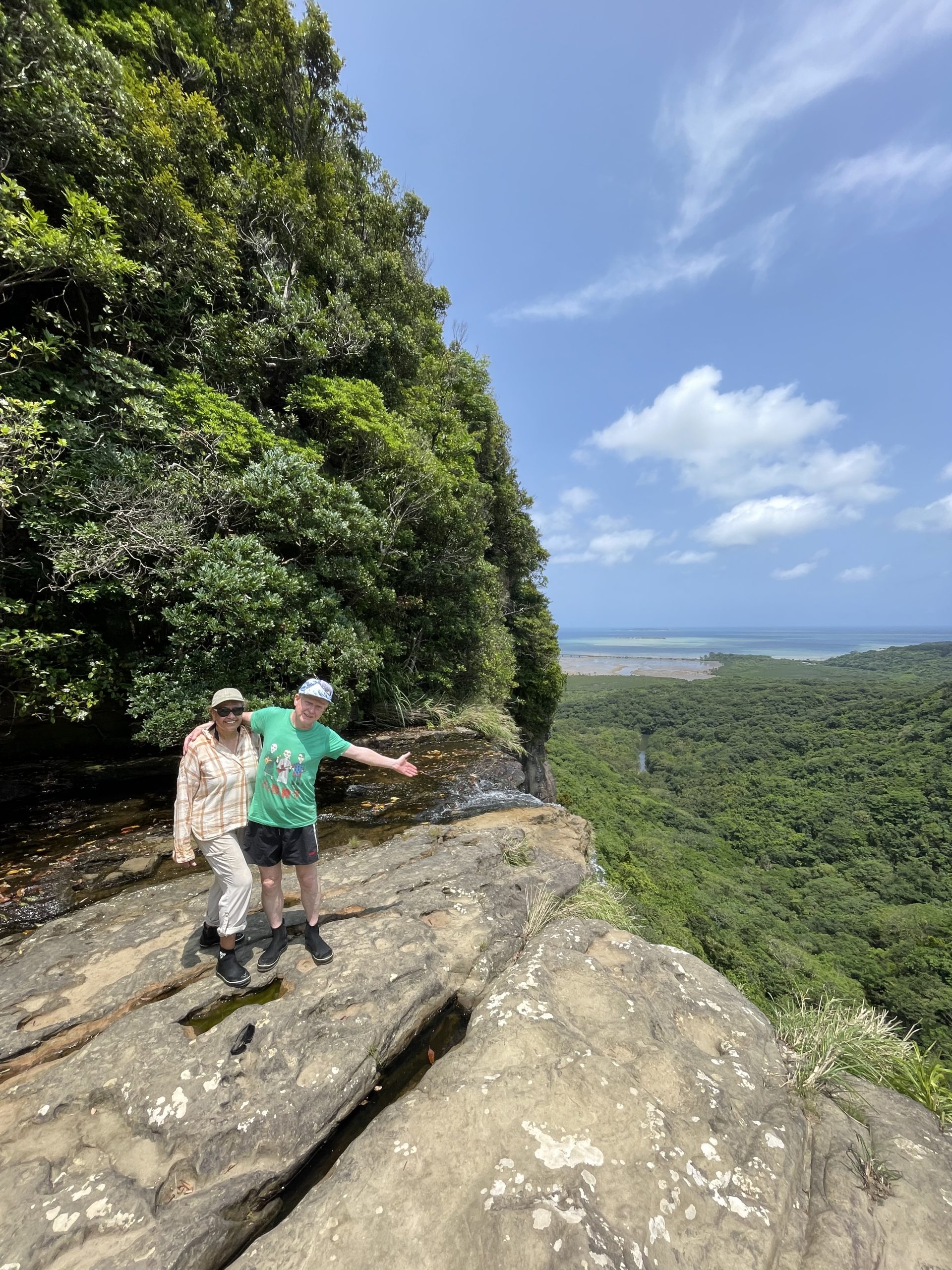
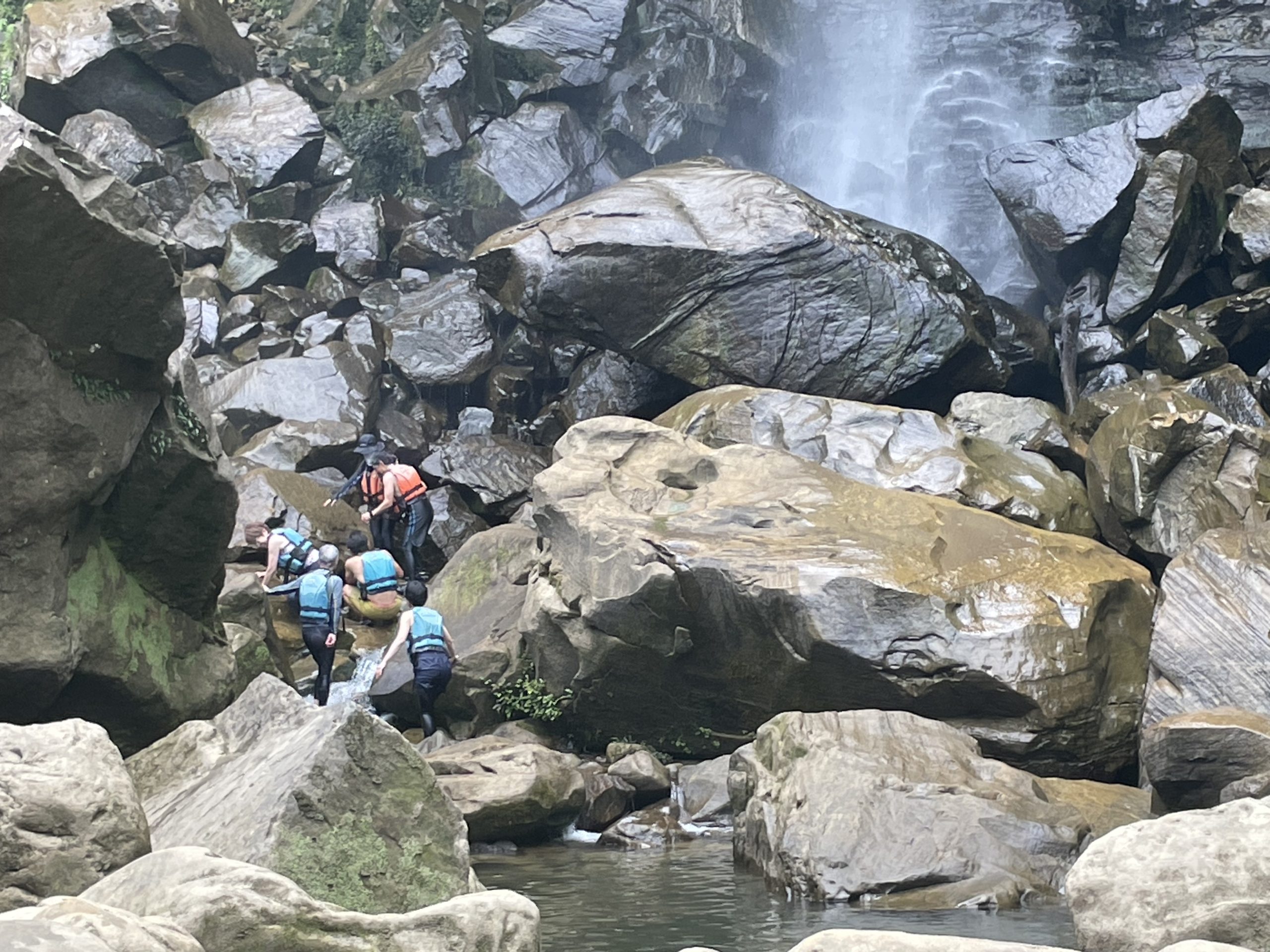
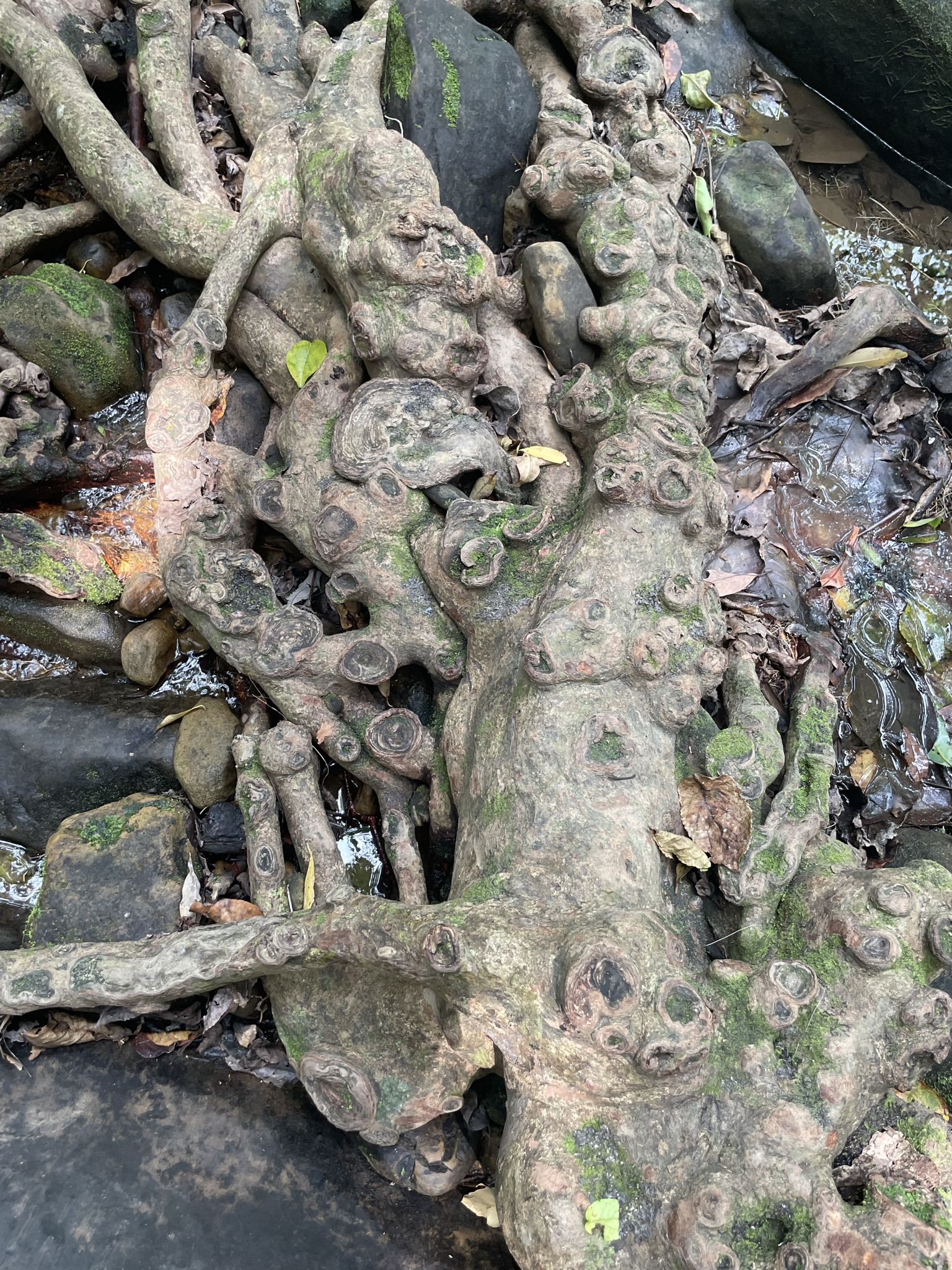
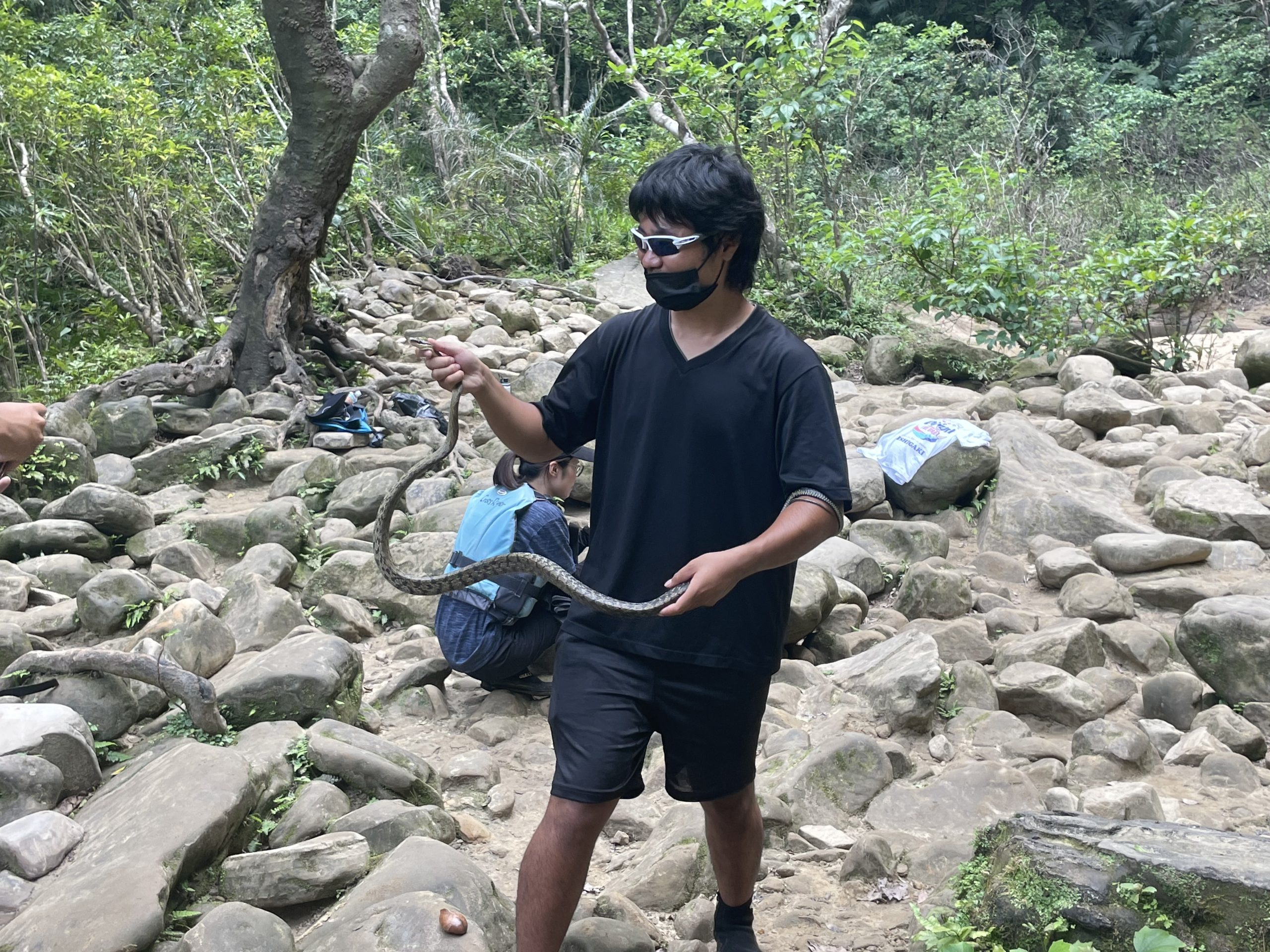
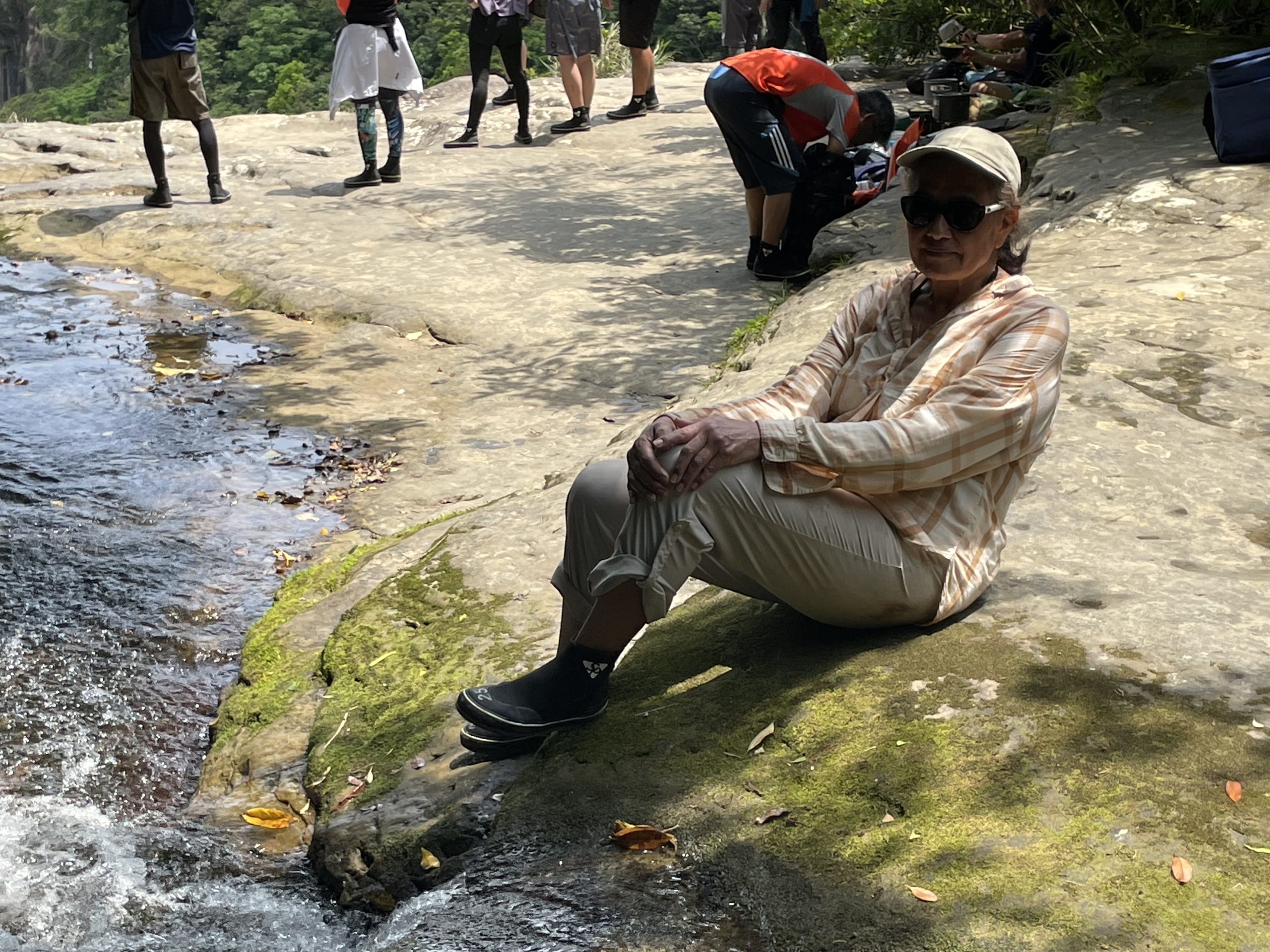
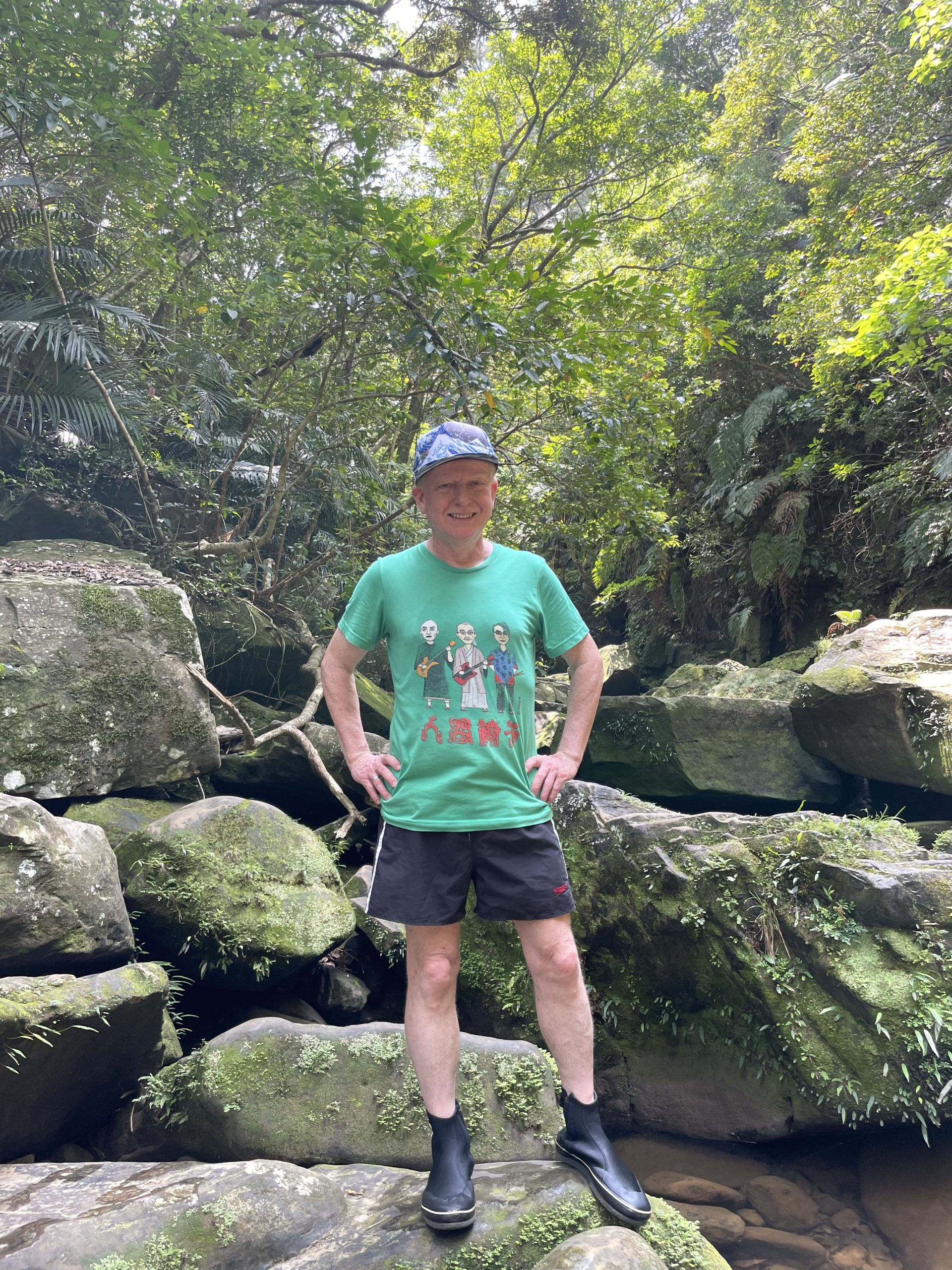
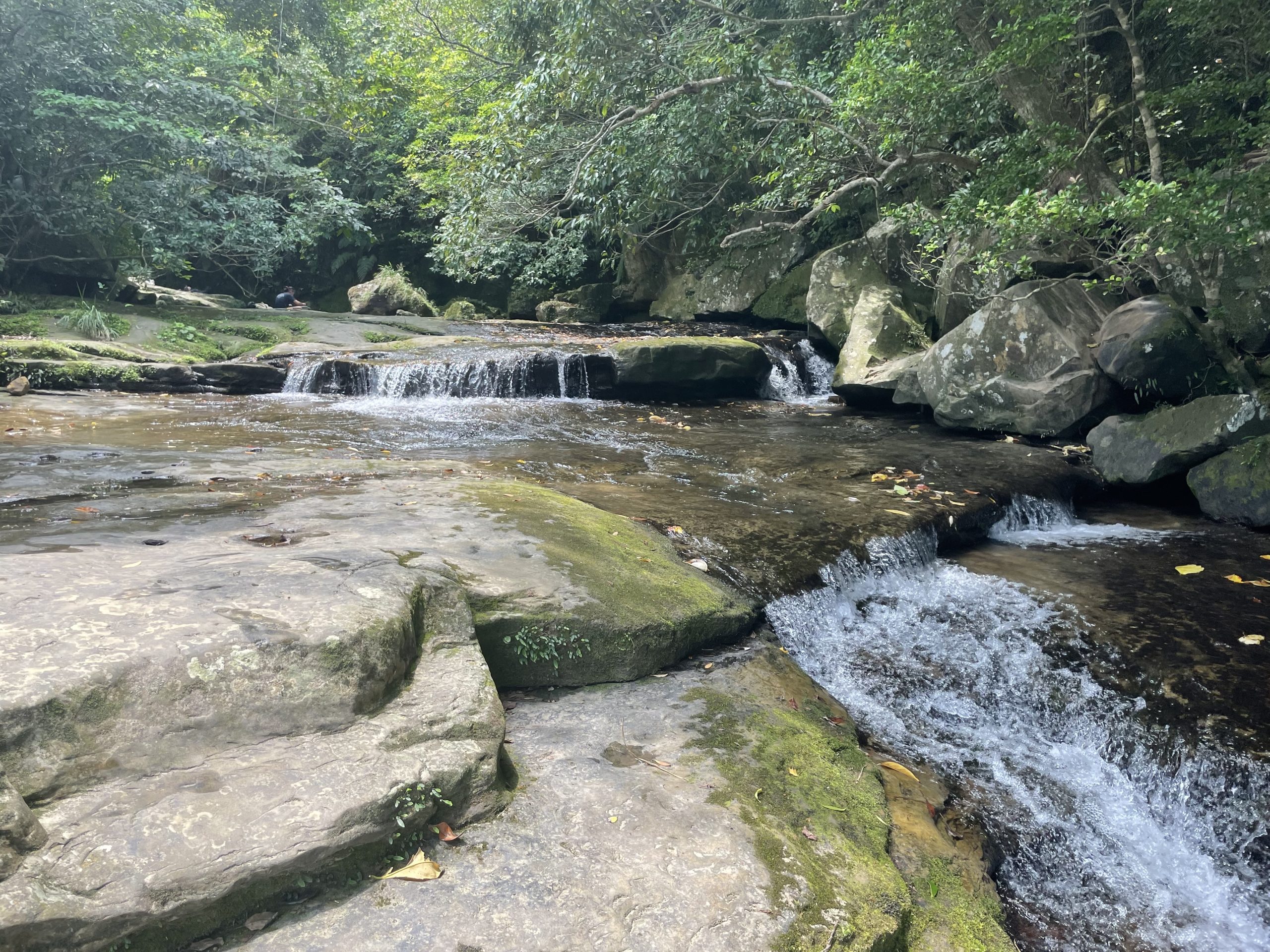
So, the kayaking was easy going and relaxing; the trekking, not so much. The trekking route will take us to the top of Pinaisara Falls, and it’s not far as the crow flies, but the crow is not climbing up the steep, muddy, boulder and tree root strewn rough path in the heat and humidity. It’s a bit a tough one for Abby and I, especially as the other three in the group are younger, but we keep up and reach the first destination. Along with way, snakes, butterflies and lizards, and watch out for the local caterpillar which is poisonous and camouflages itself on the very trunk you might be grabbing hold of for balance right now. The lunch spot is on the rocks by a stream, just where it becomes Pinsaira Falls, and there is a spectacular view of valley, jungle, beach and sea. 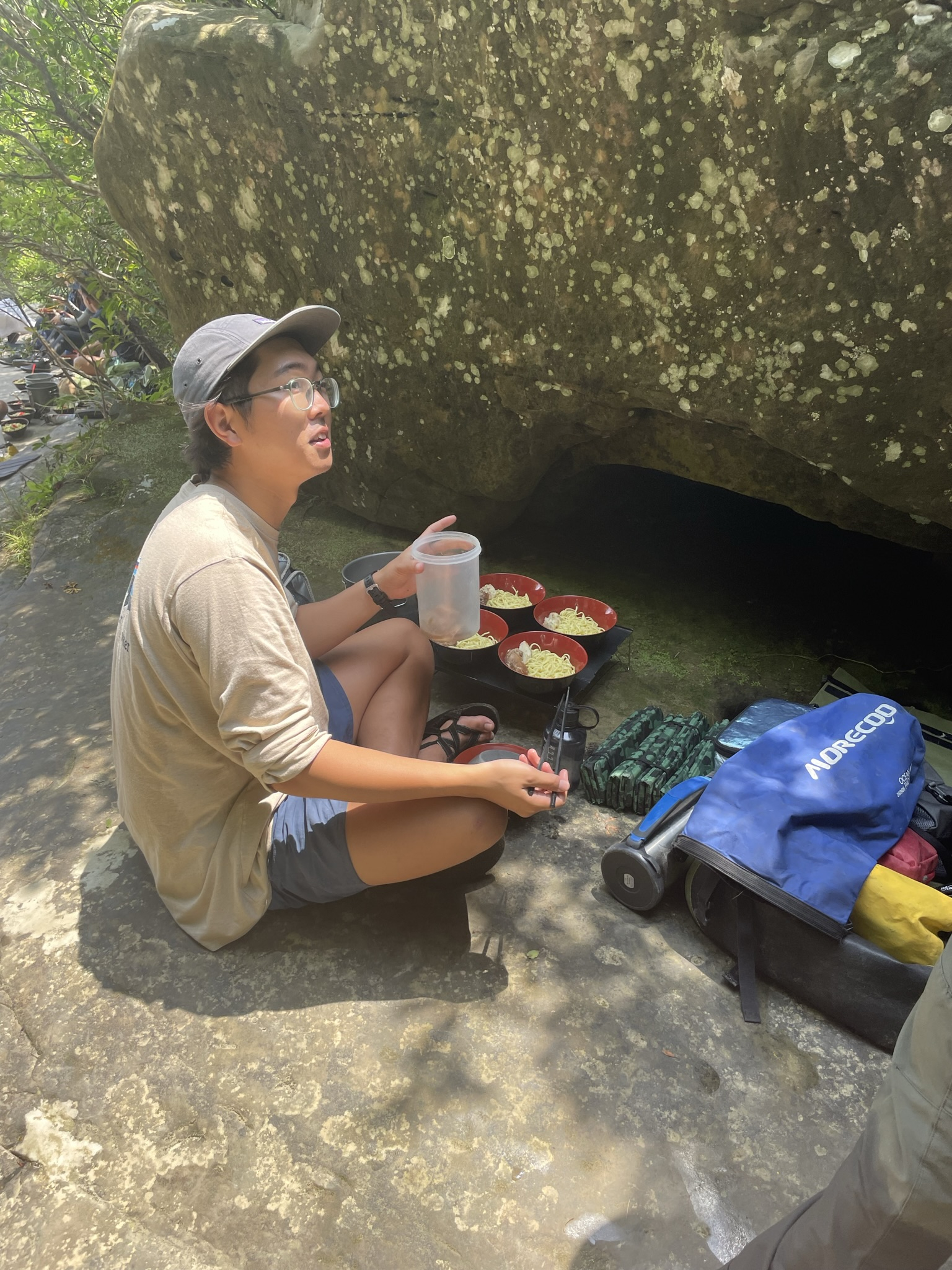 On top of that, our guide Issey-San, has lugged up all the gear to make Okinawan Ramen for our lunch, how lucky is that? Coming down isn’t so bad when you believe you’re heading for your kayaks soon to be homeward bound, but there is a plan first to swim in a natural pool (sounds relaxing) and, oh yeah, there’s a little climbing involved in getting there. More than a little as it turned out, more like part 2 of the trek, with extra mud and boulders, but we do eventually make it to the bottom of Pinaisara Falls, the location of the swimming hole. The water temperature is a bit low, so just a quick dip for Abby and I, while some of the kids there cannonball. Watch out for the snakes (really) as Okinawa has a venomous pit viper known, locally, as “Hime Habu” who, happily, doesn’t show up today.
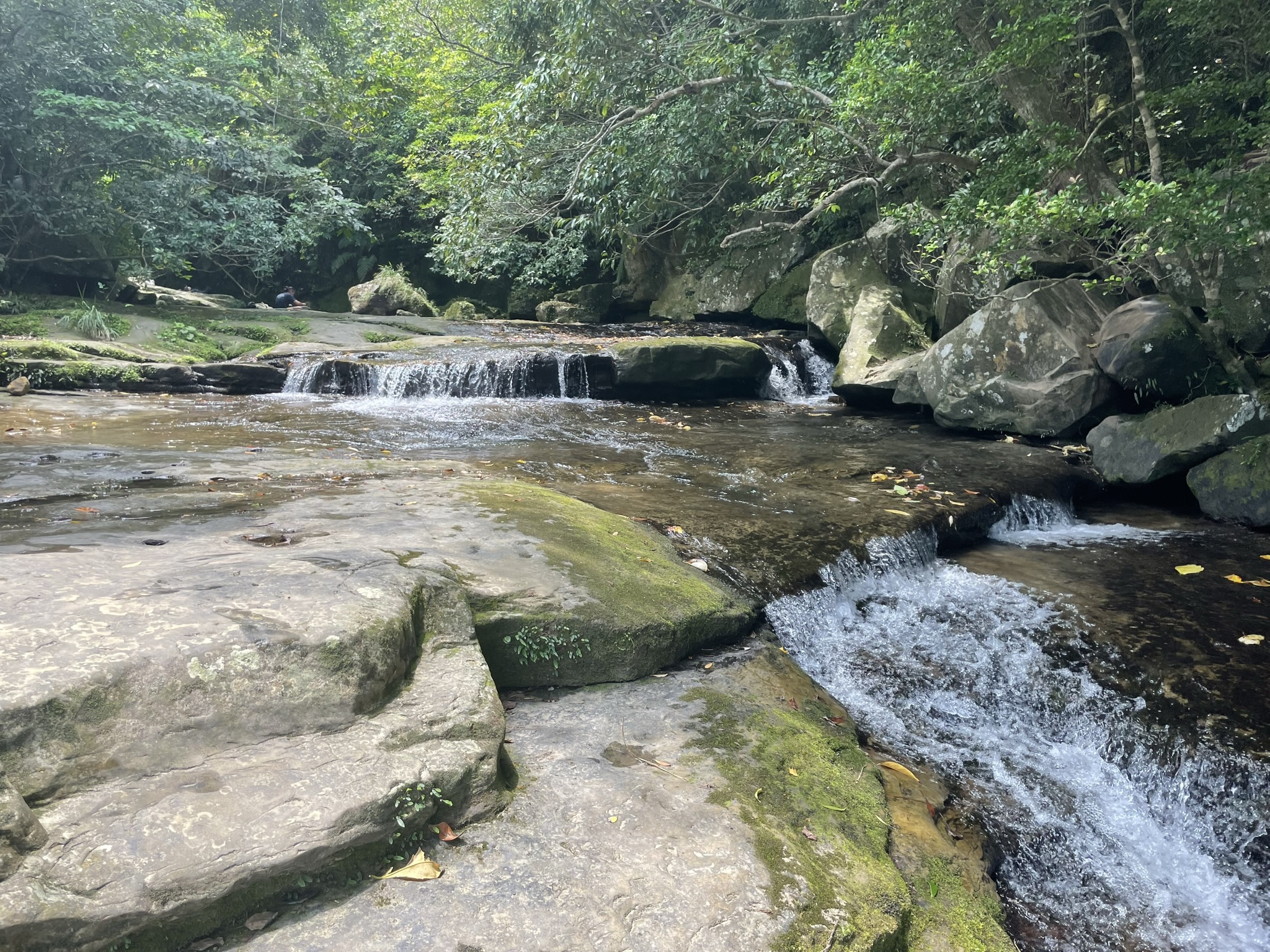 The island is putting in a strong effort to minimize the negative impacts of tourism and one feature is no peeing/pooping during the trek, i.e. not onto the ground, so there is a bush toilet with coverup and big absorbent pad bags so everything gets sealed up and carried back to a designated collection point at the parking lot.
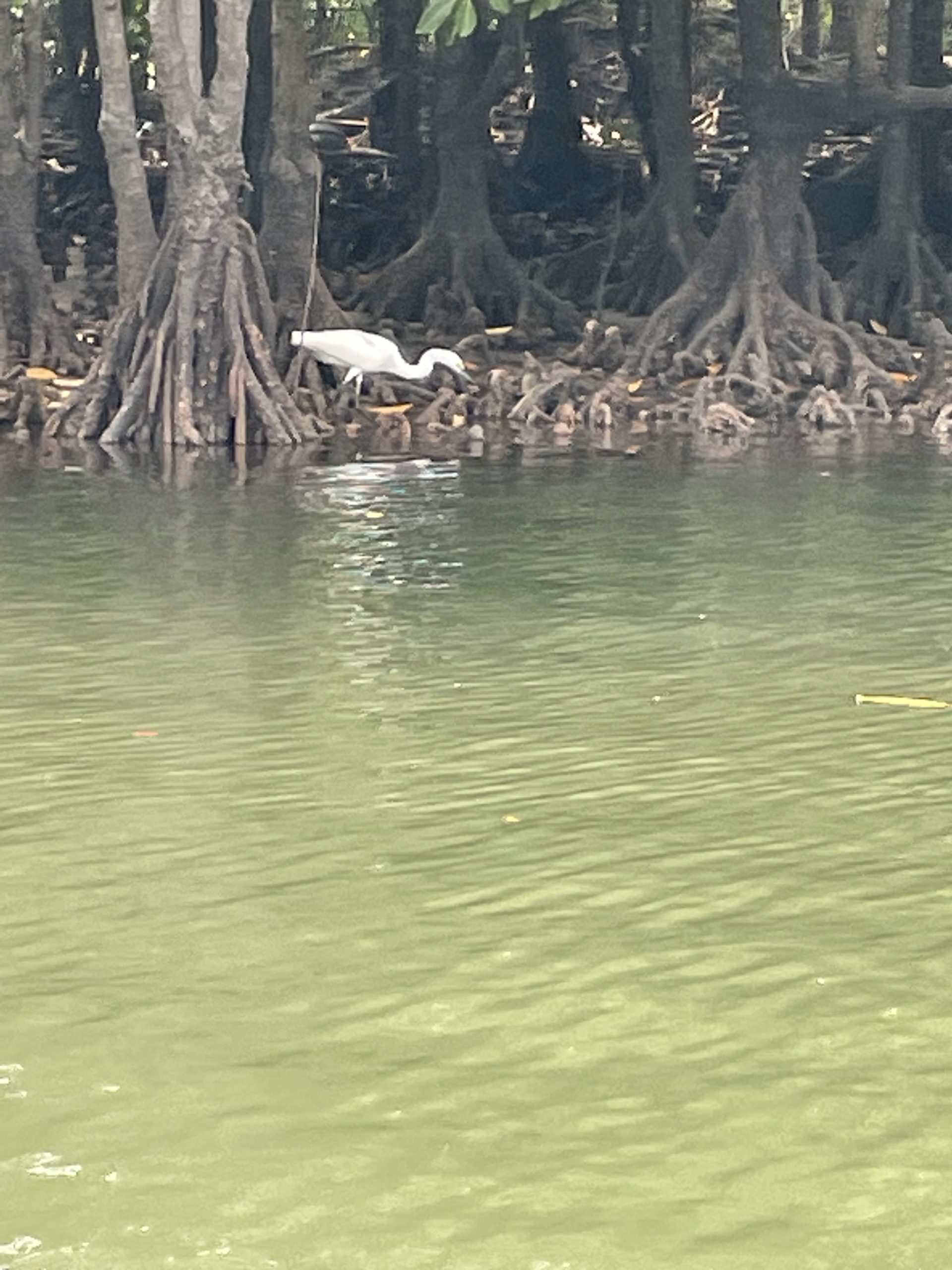
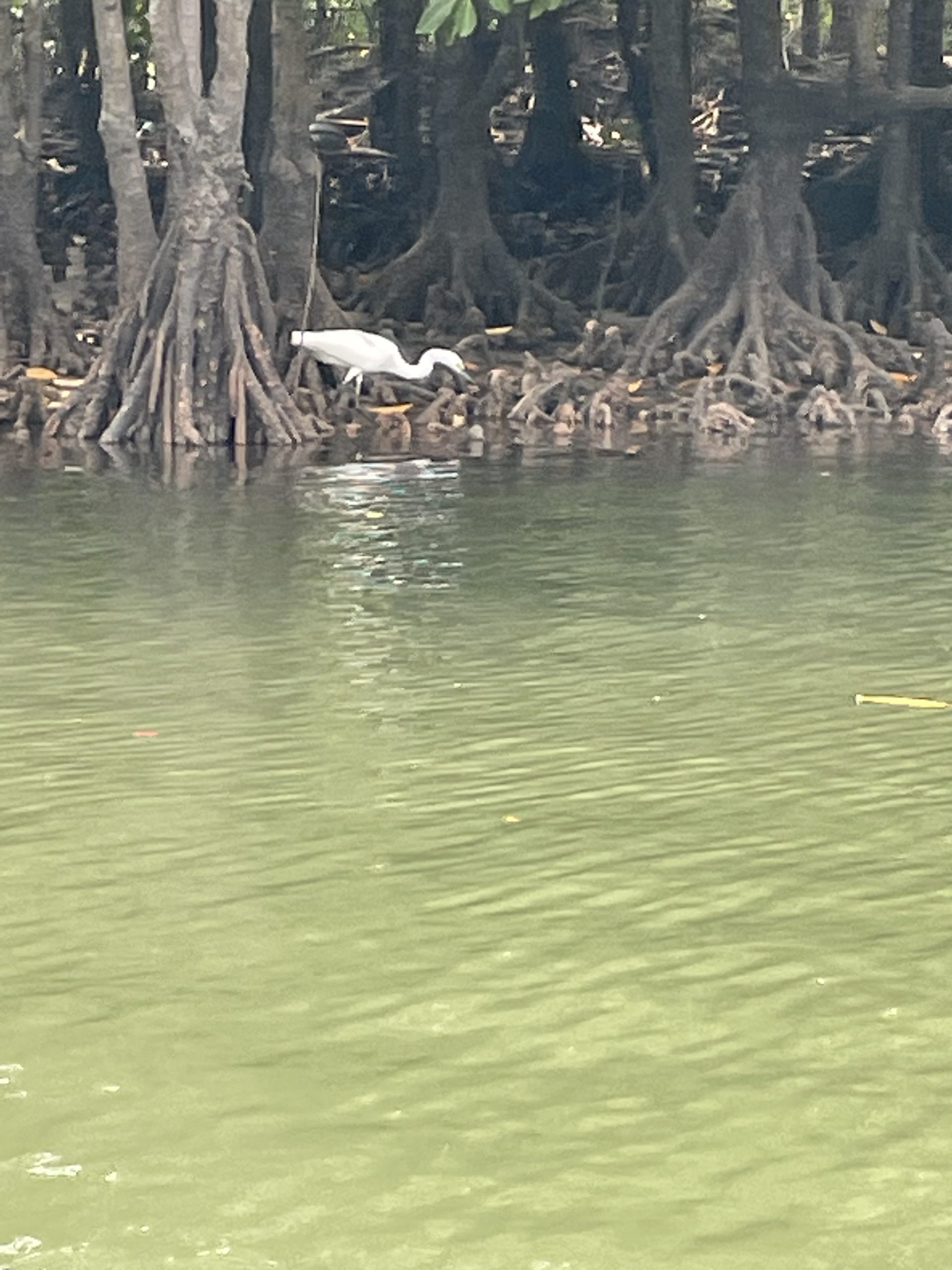
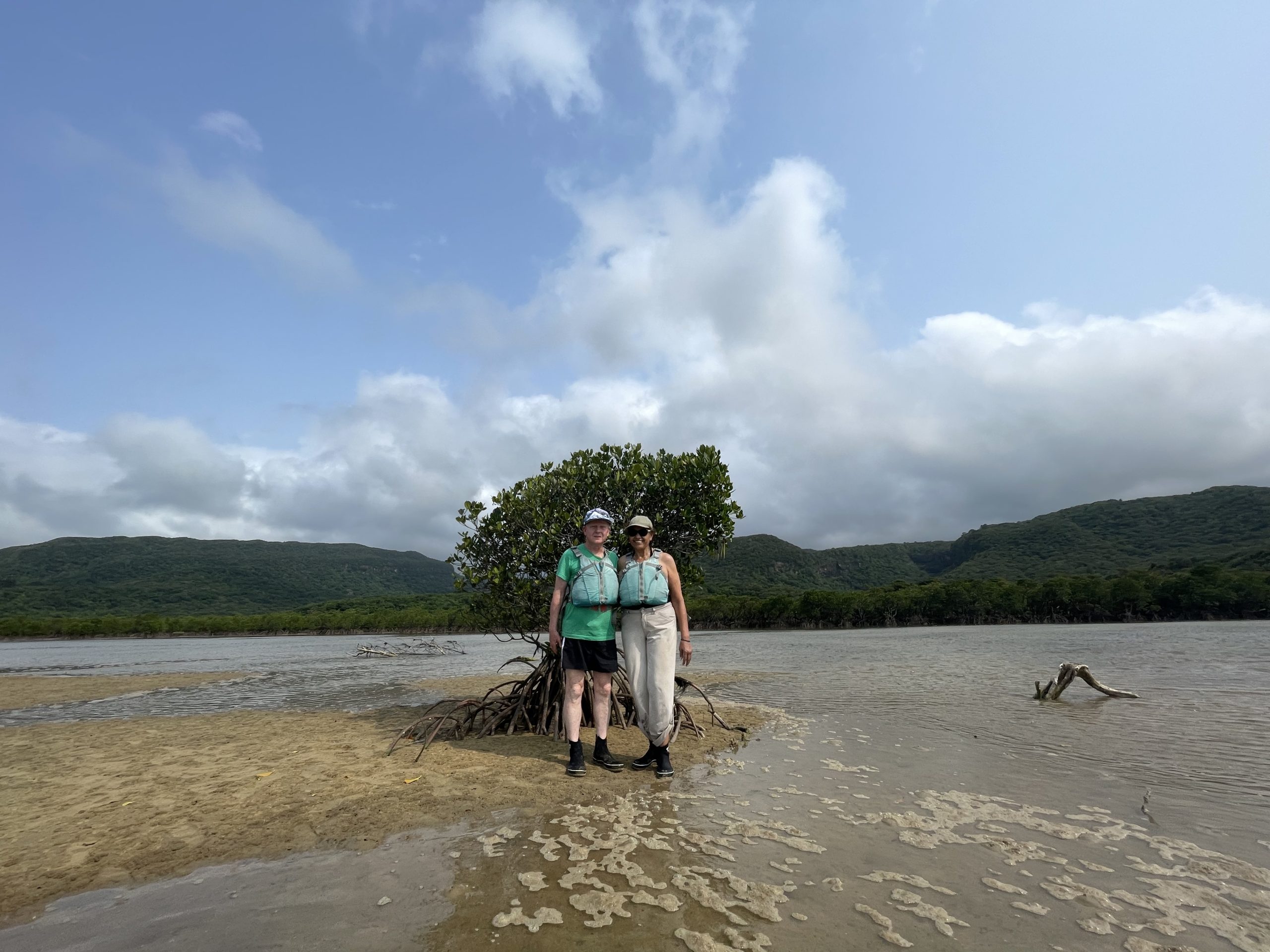 A tired slog back to the kayaks, followed by a mellow drift back to the starting point, with a cool diversion into a mangrove estuary where grey crowned cranes were feeding. We’ve got to catch the 4:30pm ferry back to Ishigakijima, so it’s a quick transfer back by van and ferry and, we’re soon back in “the city”. We can really recommend this tour led by Issey Ogawa whose company is http://Iriemote-osampo.com, though we were hooked up by the English speaking people at Hirata Tourist at the Ishigaki ferry terminal.
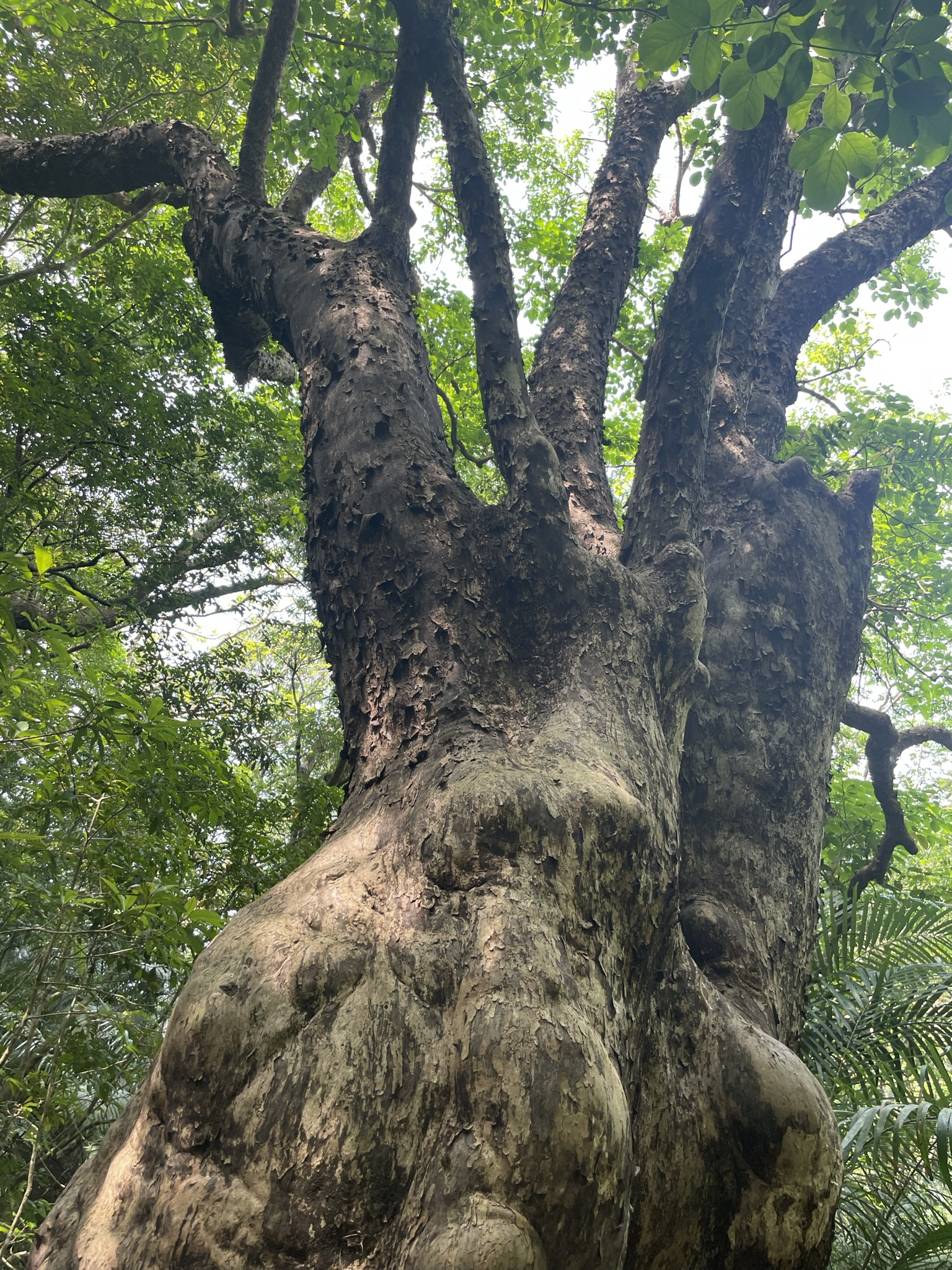
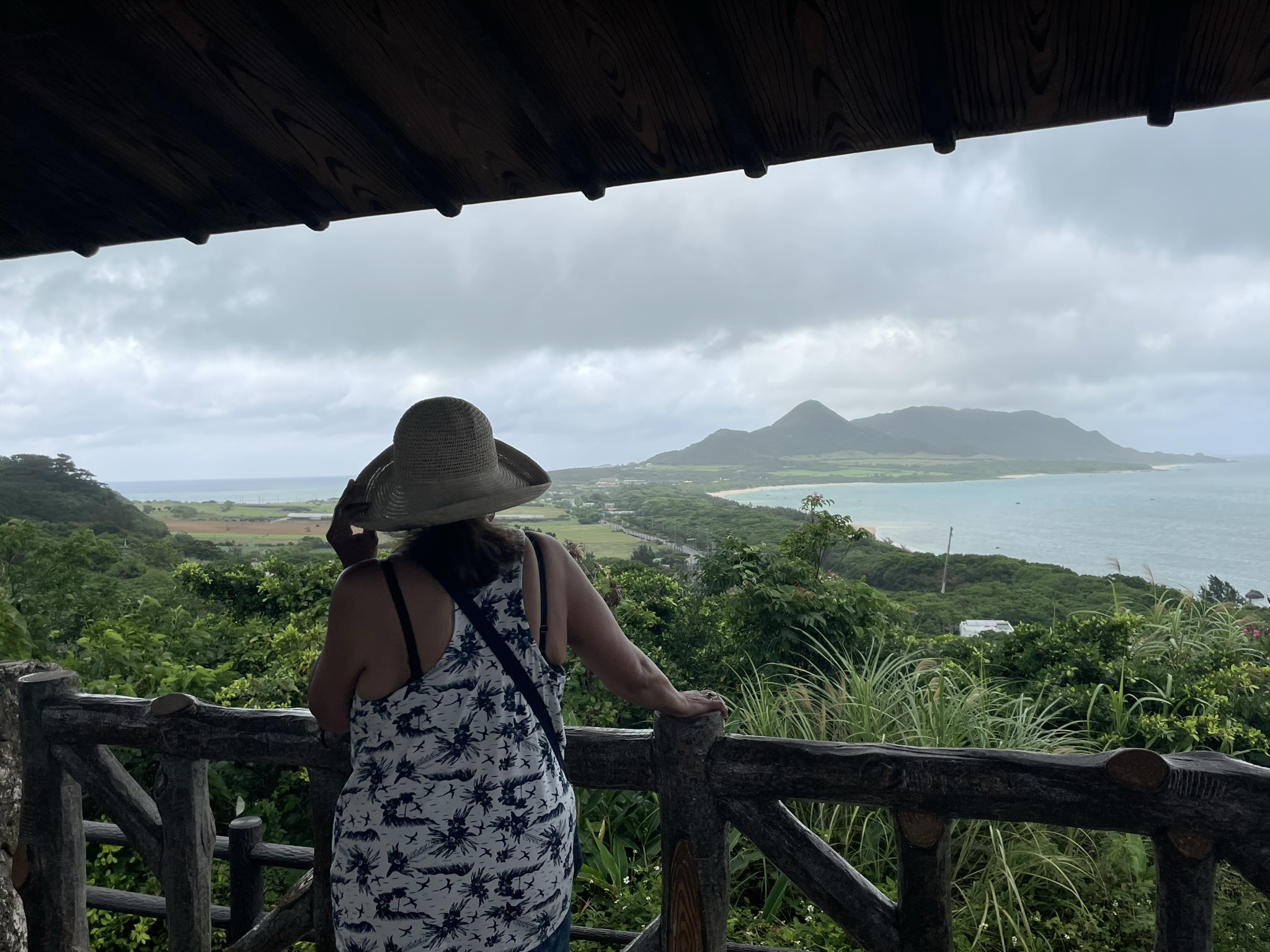 Ishigakijima and, especially, Iriemotejima, are the real deal if you’re looking for lush, tropical islands with mountains, wildlife and botanical curiosities. If we’re ever back in the area we’d definitely look into staying a few nights on Iriemote and getting to some places off the day trip circuit. We’re also wrapping thing up in Okinawa itself with a final dinner at Jimbei Sushi in Kabira Bay, a short drive from our house. Jimbei is not fancy or expensive but it’s good, not expensive and very popular with Japanese tourists.
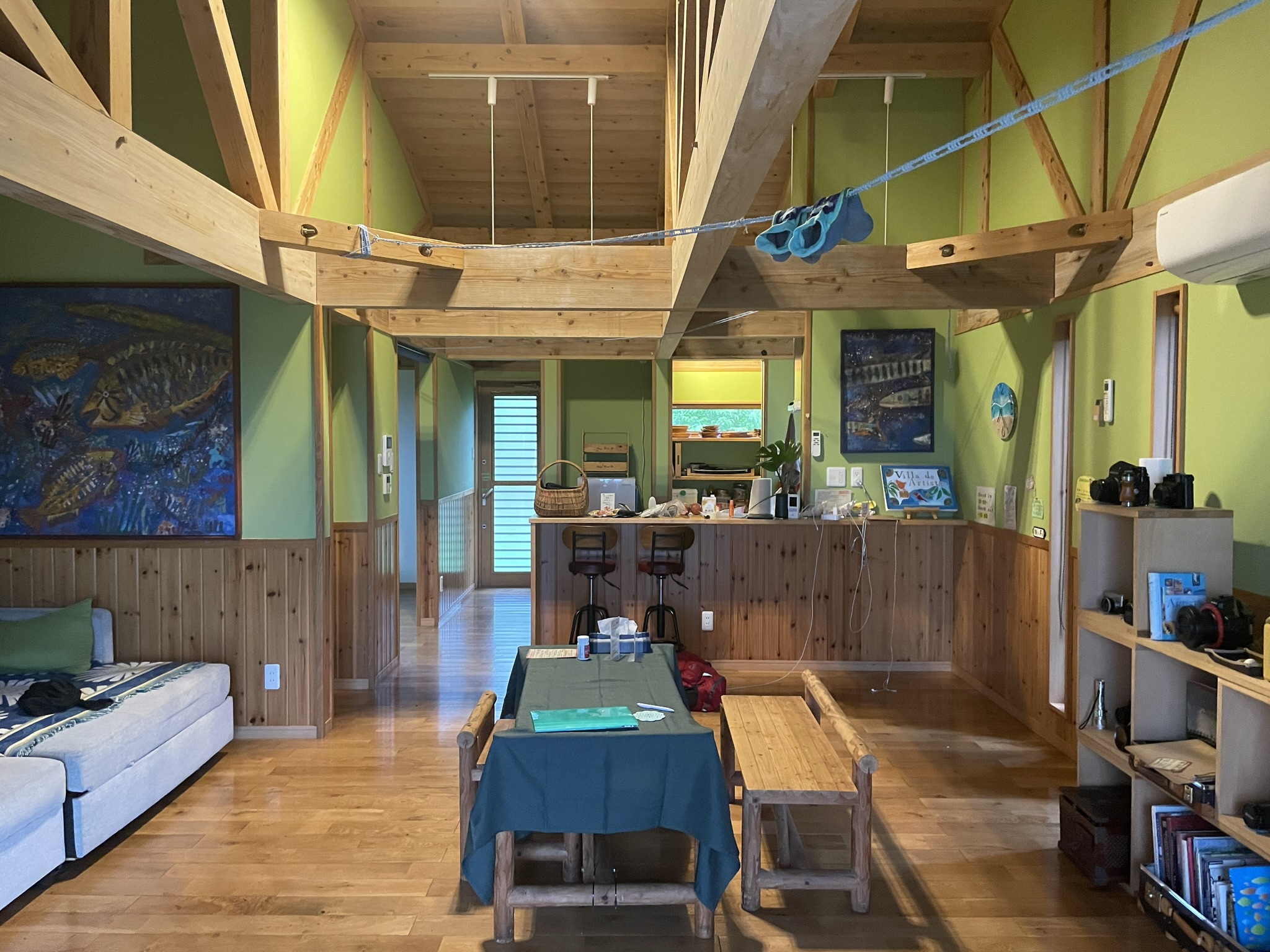 So, also goodbye to the Artist’s House, which has been a fine place at which to stay: We cooked there four nights out of seven, which is not bad for being on the road. Also one fine night stargazing but then stormier weather limited that. Sayonara, Ishigakijima.
Back to Tokyo for a final roundup, see you there.
Leave a Reply