 I should be telling you now about Japan’s industrial revolution but, instead, what’s important to me at the moment is that there are no irons in Japan. Yeah, someone might have one stashed away in a cupboard somewhere but in a hotel, inn, hostel or Airbnb, forget it. This, combined with the minimal availability of clothes dryers, necessitates a different approach to your travel wardrobe while in Japan. Better be right on it and hang those suckers up, assuming you have hangers, or a place to hang them. And then there is the humidity: You have to get creative. Yet, many of the places we’ve stayed in have humidification units, which is a mystery to me. OK, maybe Tokyo with its dry and cold Winter, but tropical Okinawa? On the other hand, regarding the minutiae of everyday life, there are clean public toilets, drink vending machines, great fish and noodles, nice people and quality convenience stores everywhere you look. Swings and roundabouts.
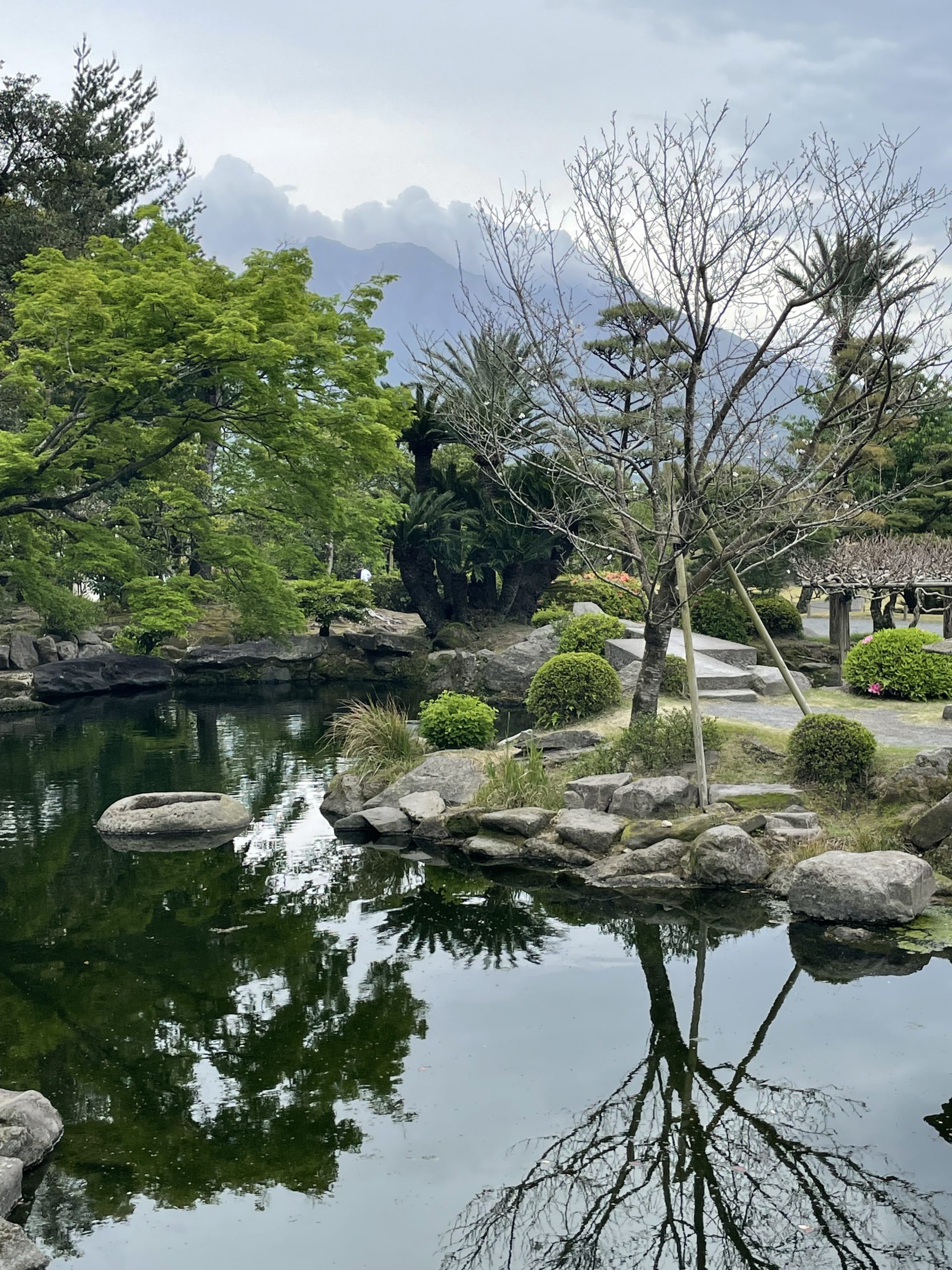
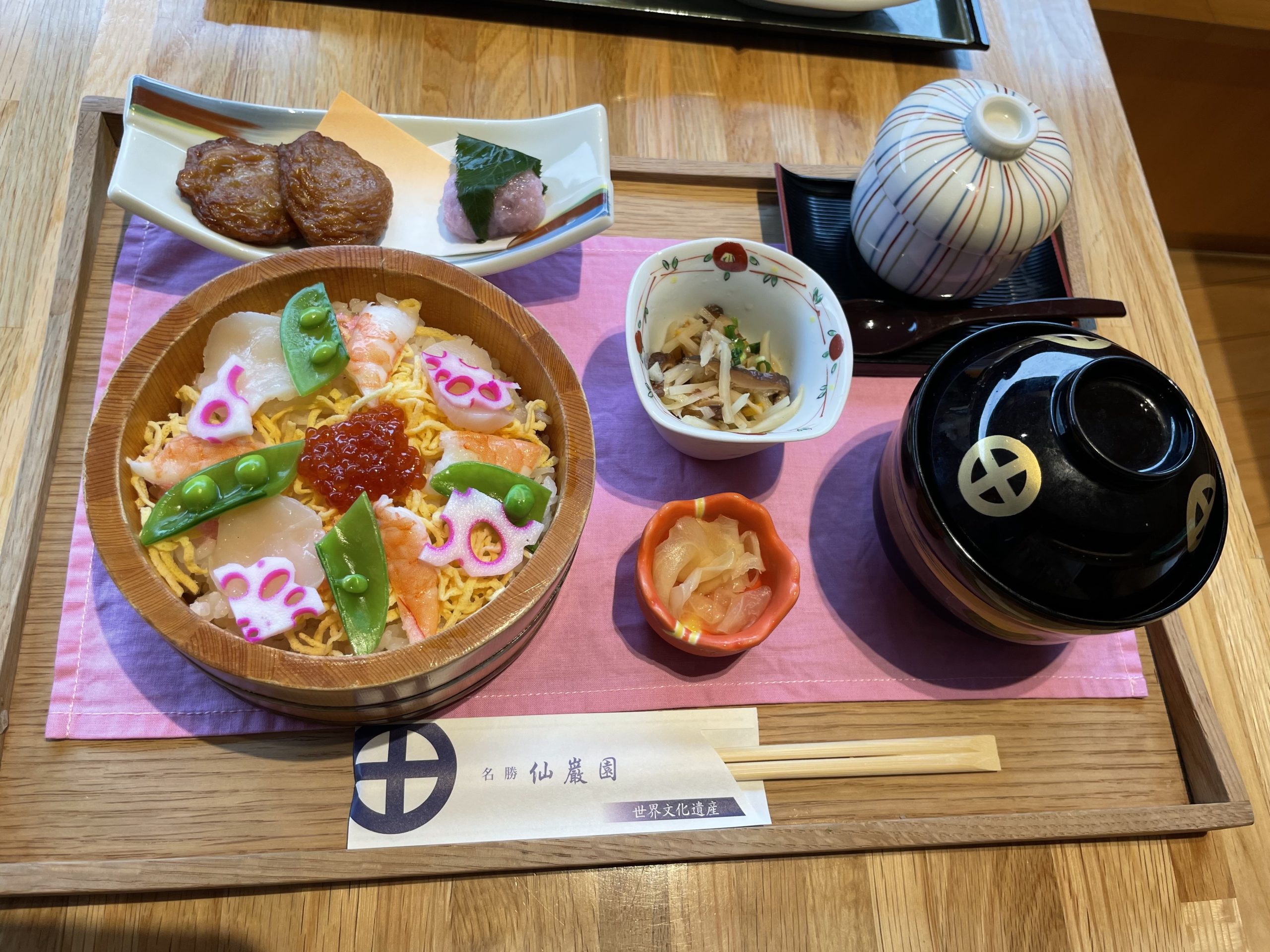
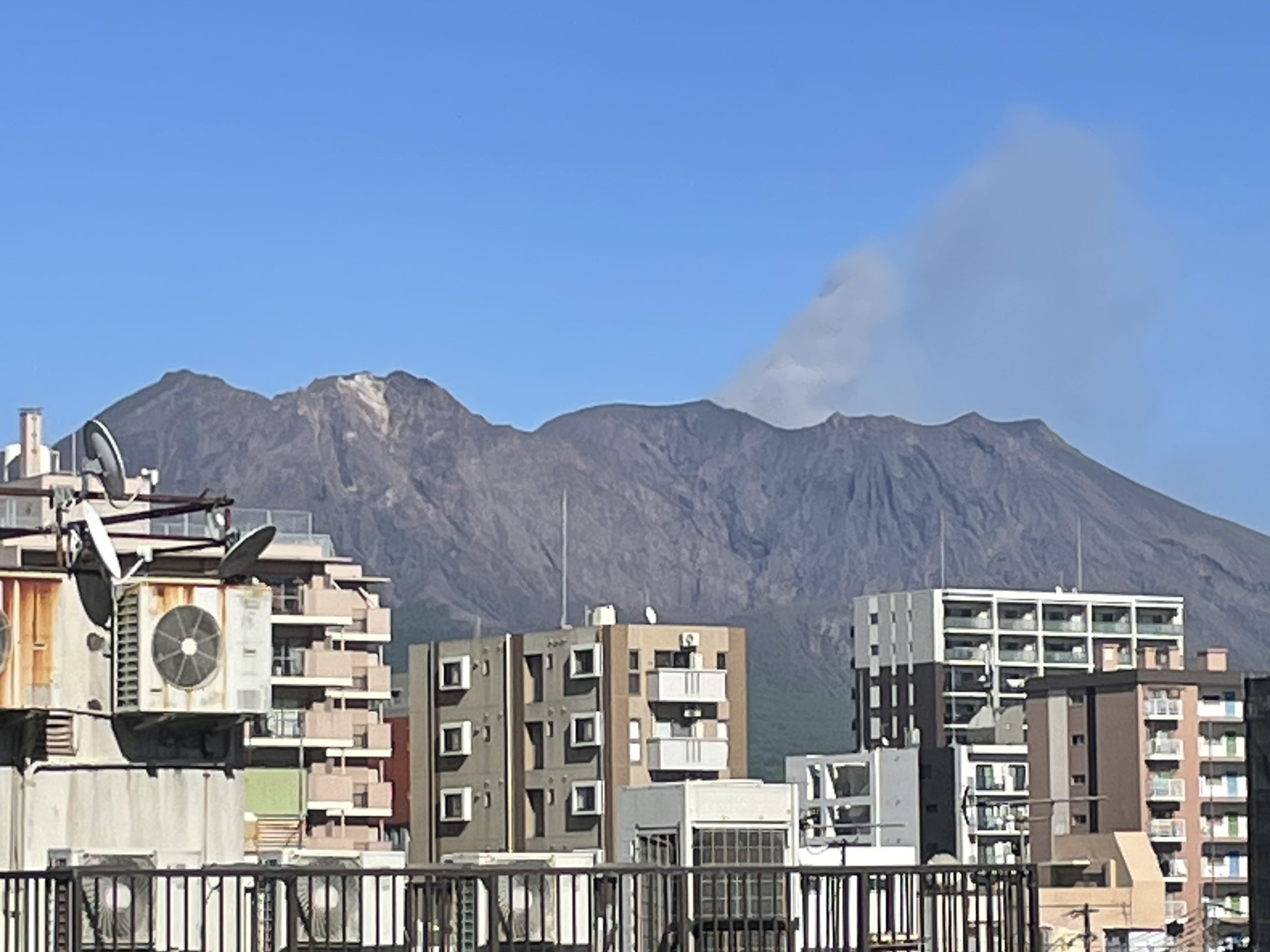
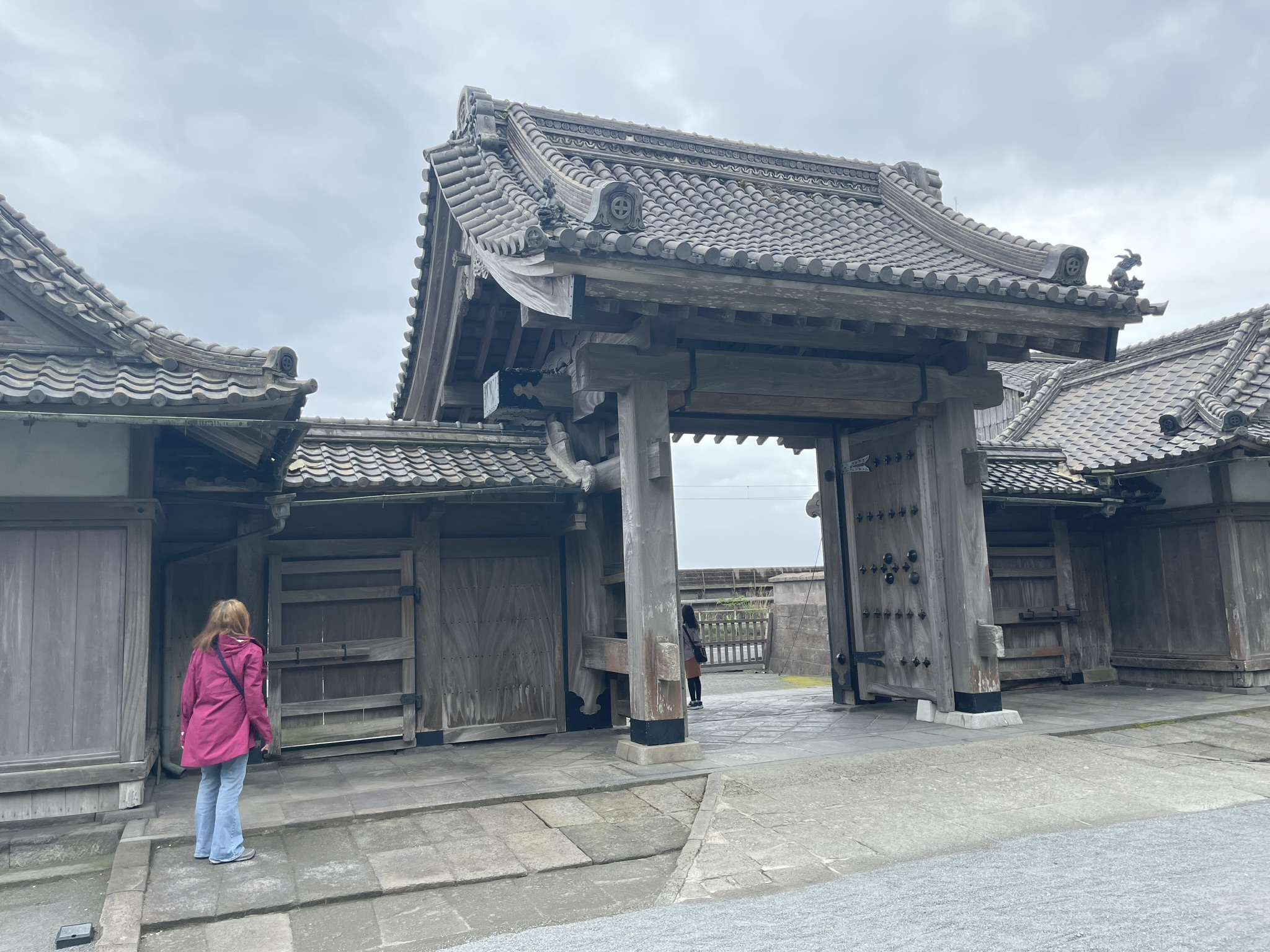
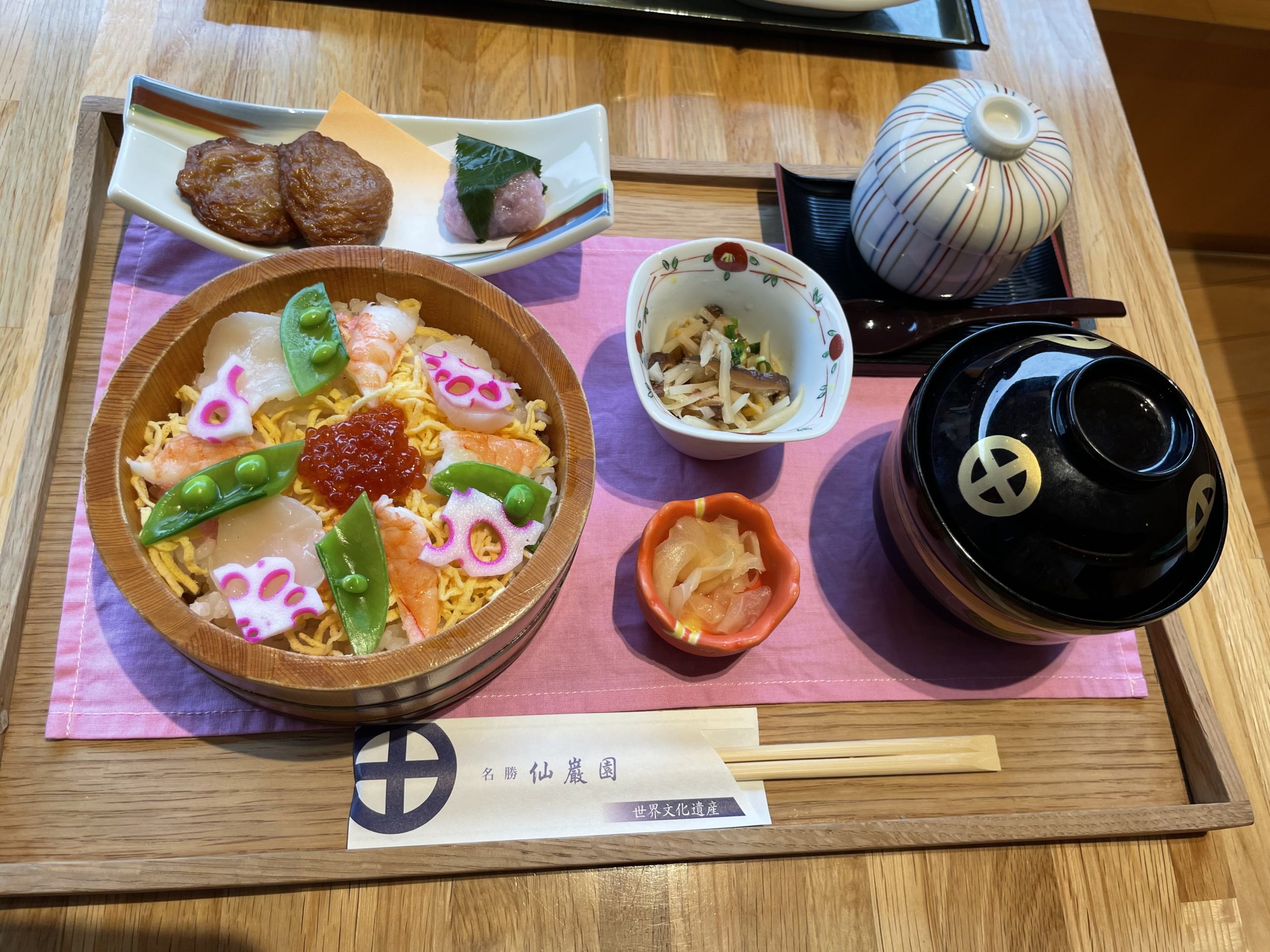
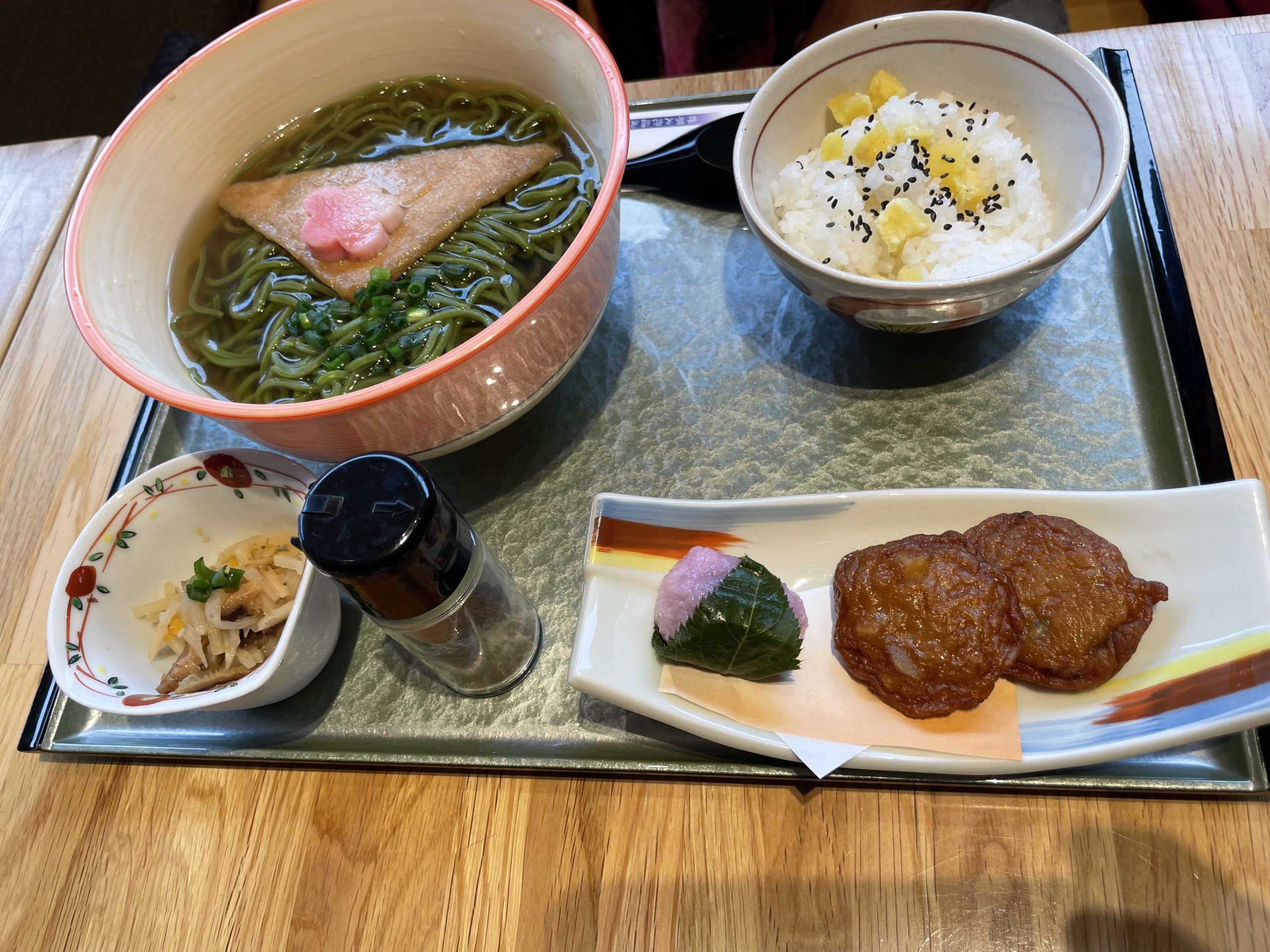
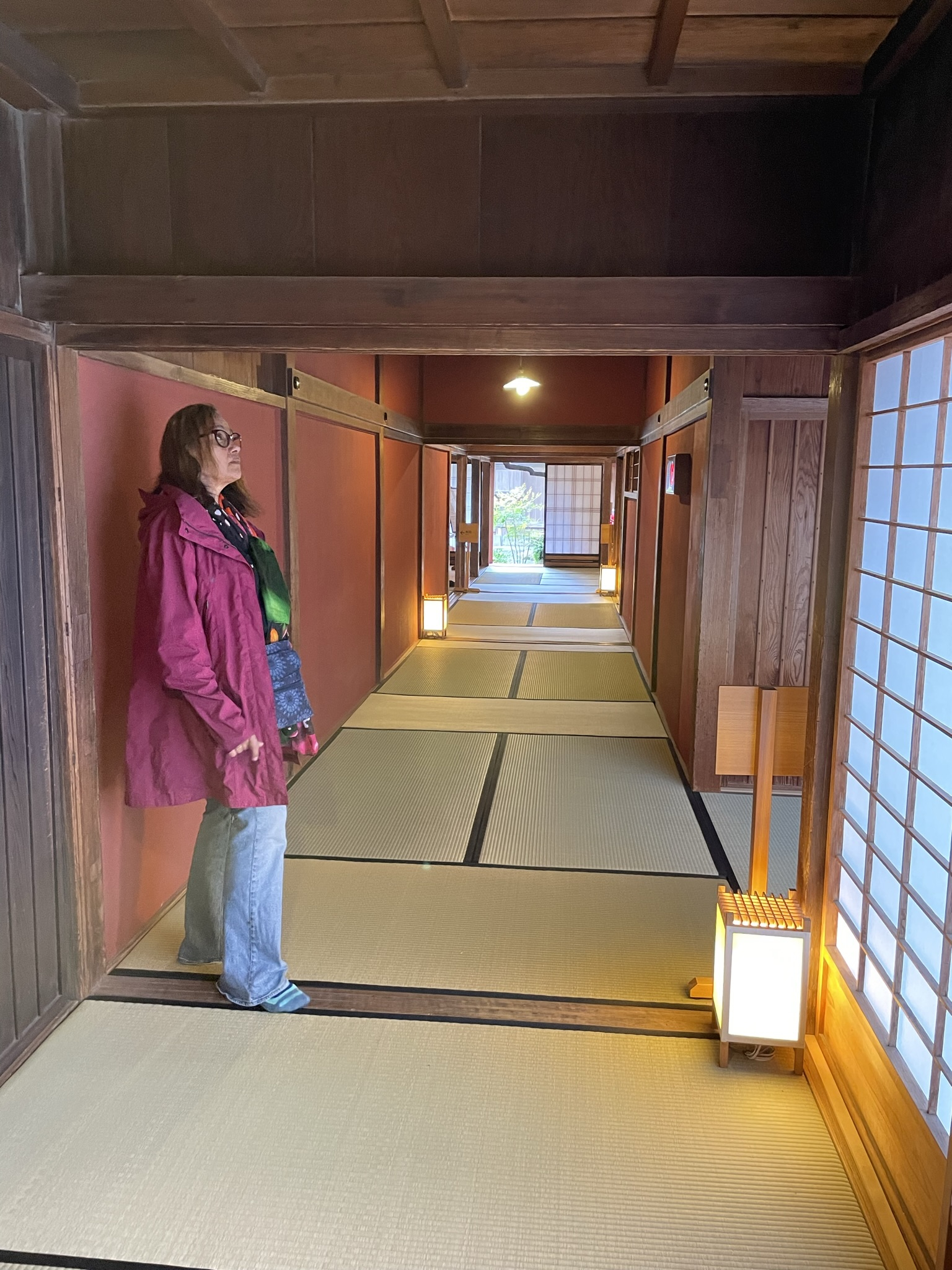
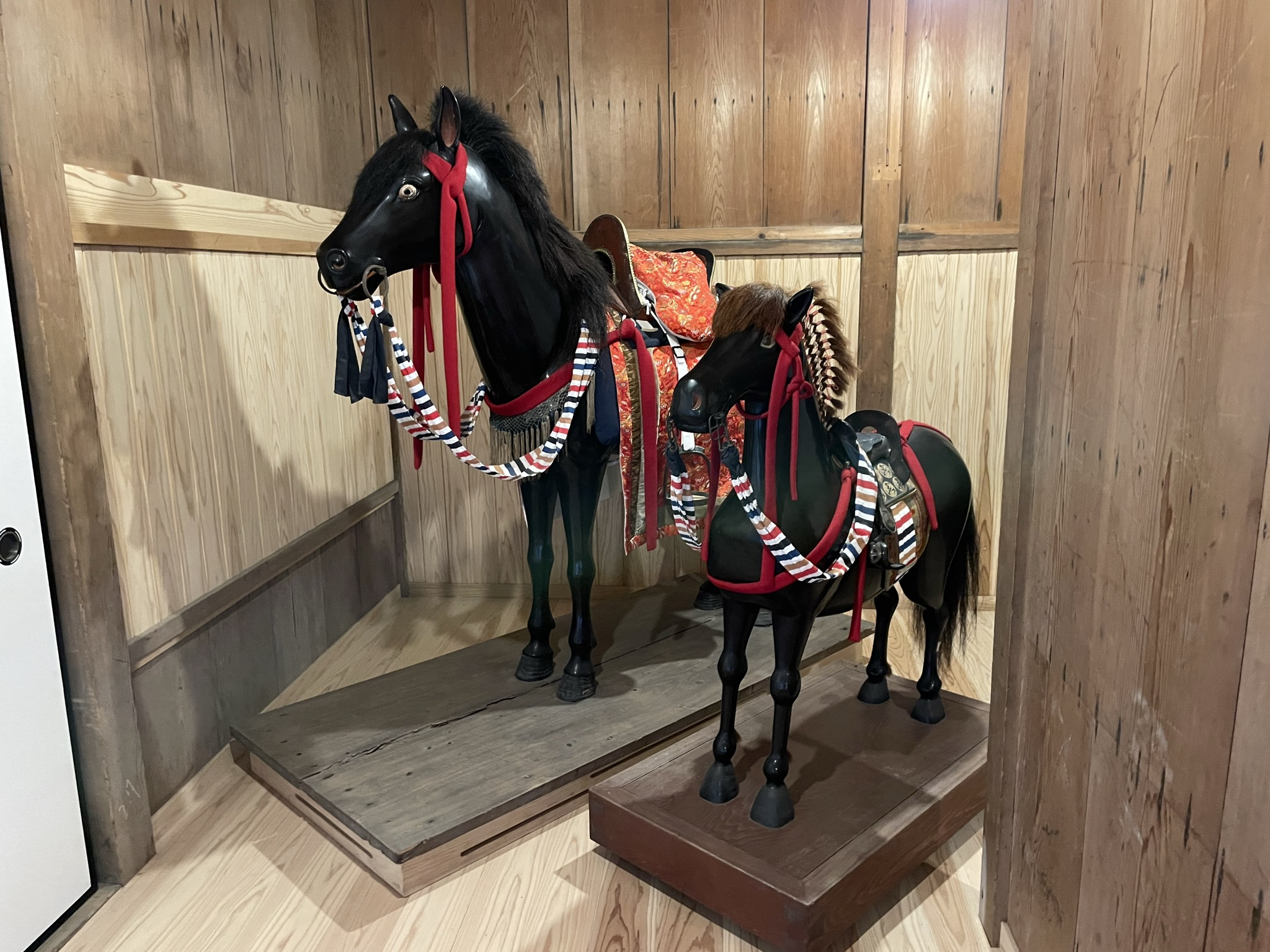
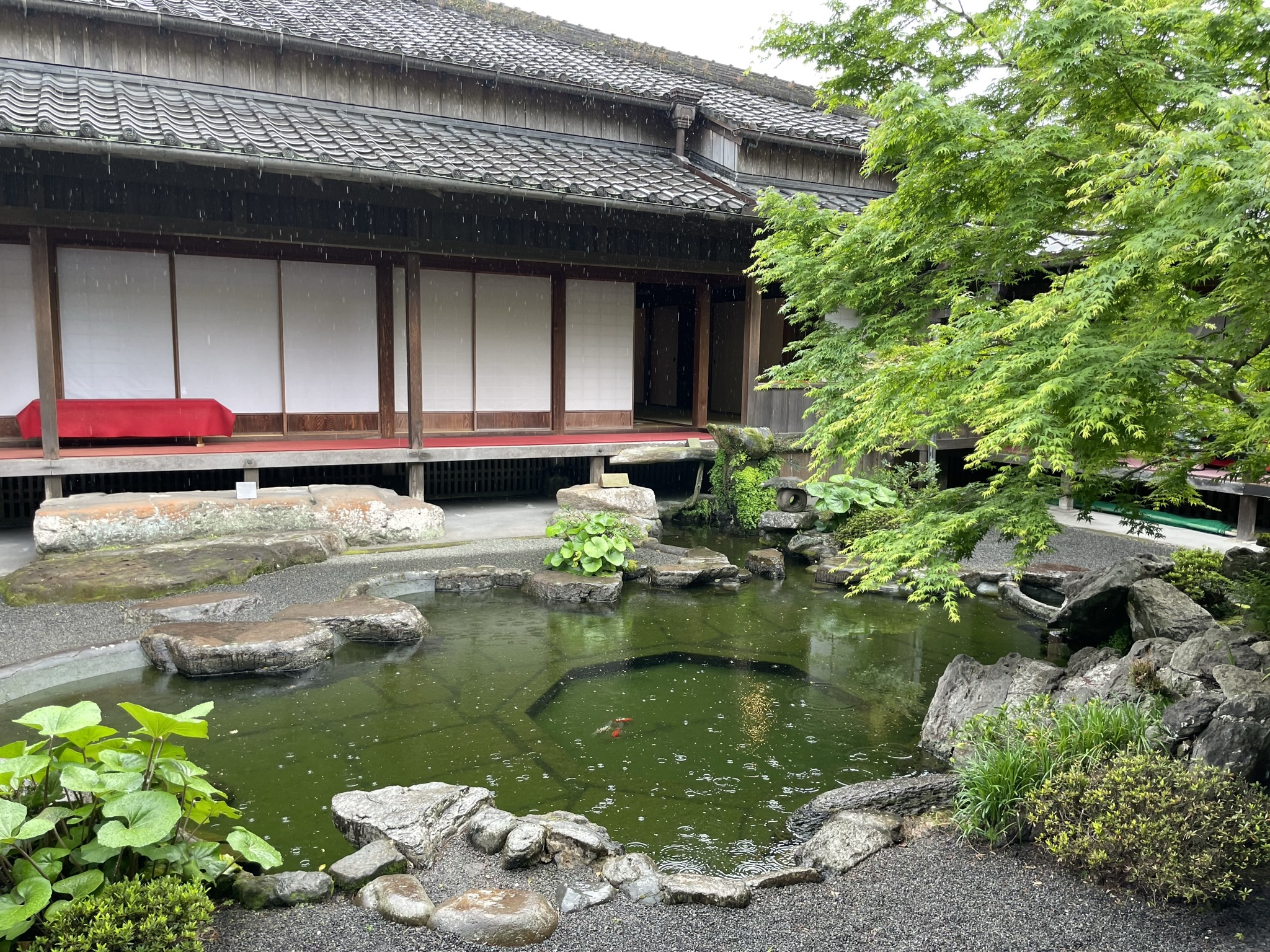
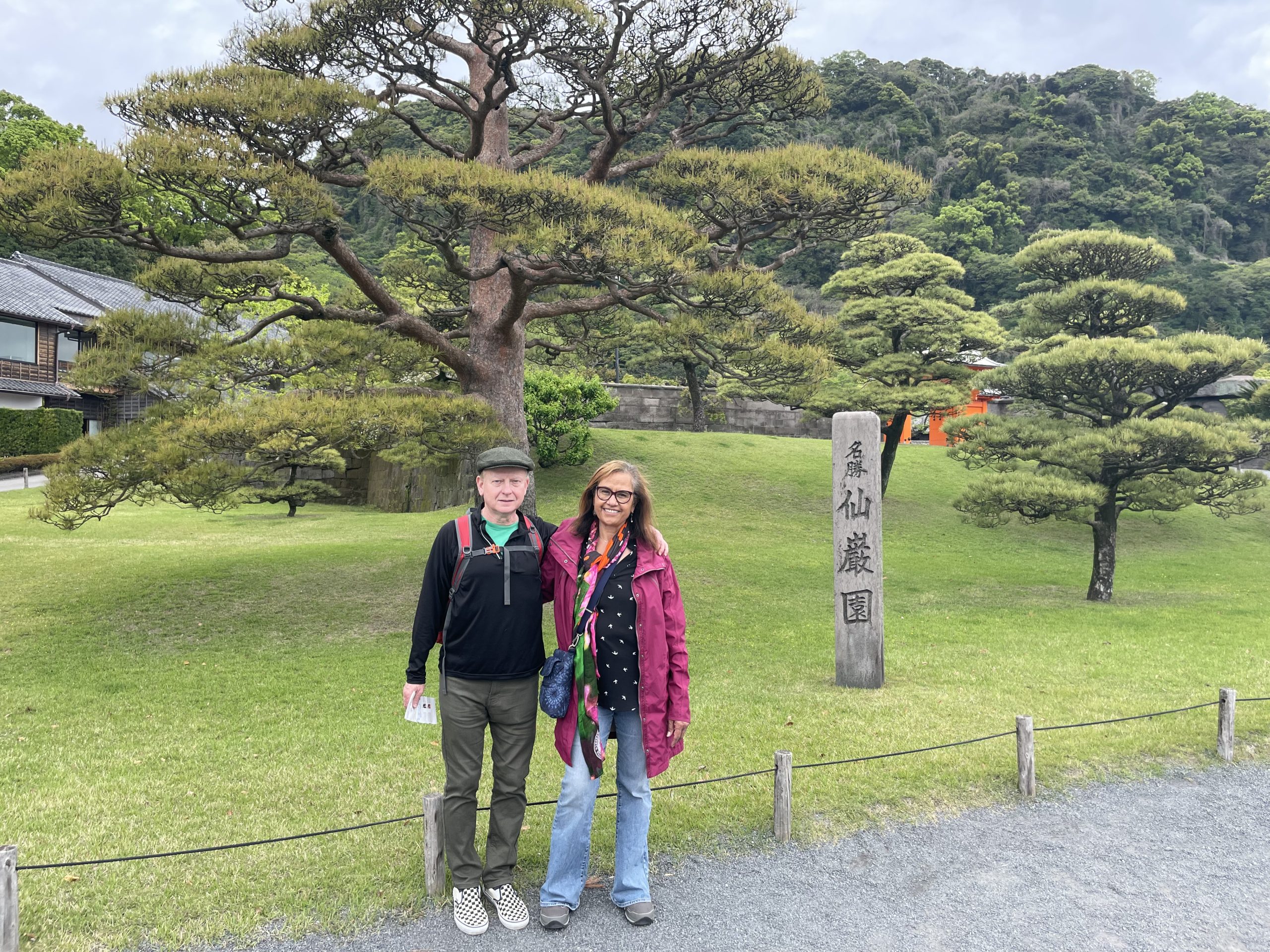
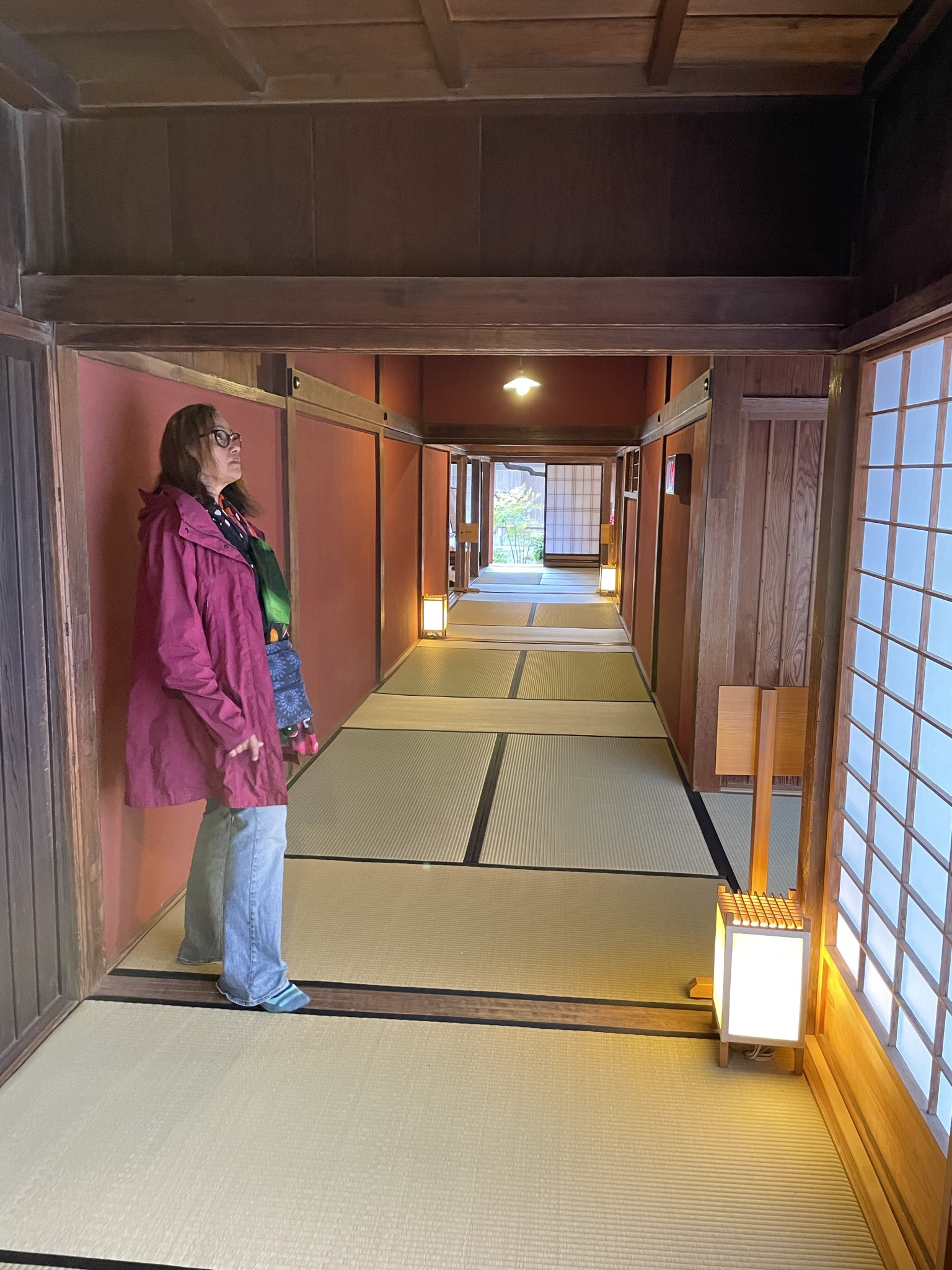 Today’s outing is a little unusual as we take the semi-tourist bus, that locals use too, to the end of the line arriving at Sengan-en, a compound which is a mashup of a 17th century country house, formal gardens, a shrine, an industrial history museum and a working decorative glass foundry. Sitting pretty right by the Kinko Bay, looking right at the volcano, it’s a fine location. I’ll spare you most of the ”tedious” details but, if you’re ever in the area, go. The birds are sassy, the butterflies amazing, the horticulture impressive, the people are nice (again), the lunch spot we went to was very classy, plus you get an earful of history. That is, some young Japanese dudes escaped to Europe in the 19thcentury (Japan was locked down then) and brought back a ton of Western technology, which they then attempted to implement at this site. It didn’t go too well, initially, as the samurai in charge did not have mechanical engineering degrees ie they had no idea what they were doing, but, with perseverance, they started to manufacture effective metal parts in volume. Which was just as well, as the British and other European powers were itching to have a go at Japan and continue their colonial escapades. What happened at Sengan-en started a process that was sufficient to deter European incursions but, unfortunately, didn’t prevent a rise in Japan’s own militarism and imperialism – Maybe the two things were related?
 Checked out the decorative glass factory, impressive artisanal techniques but we weren’t wild about the style of the product. Very angular and clunky but, then again, this is where Japan’s Industrial Revolution began, so it fits.
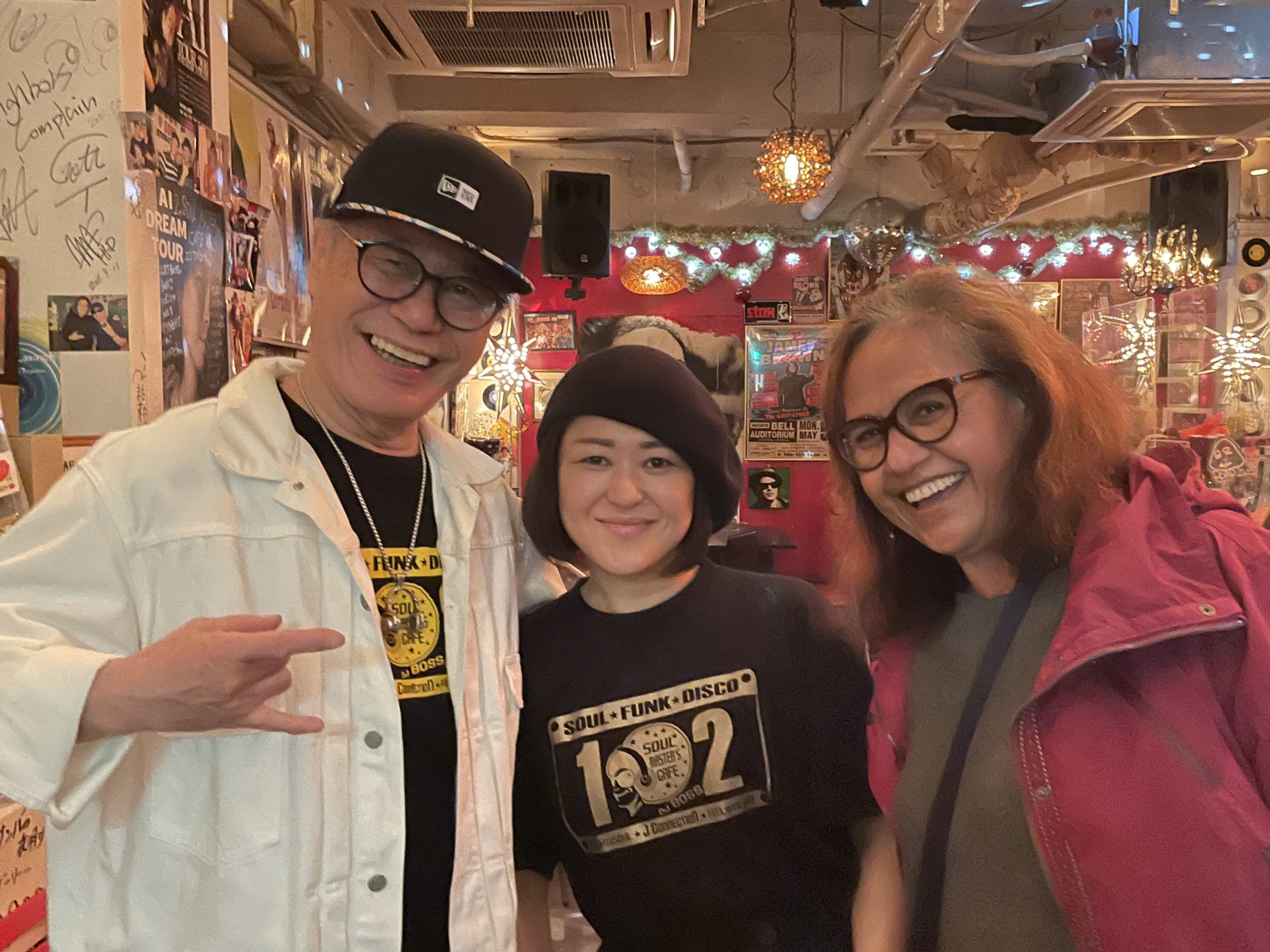
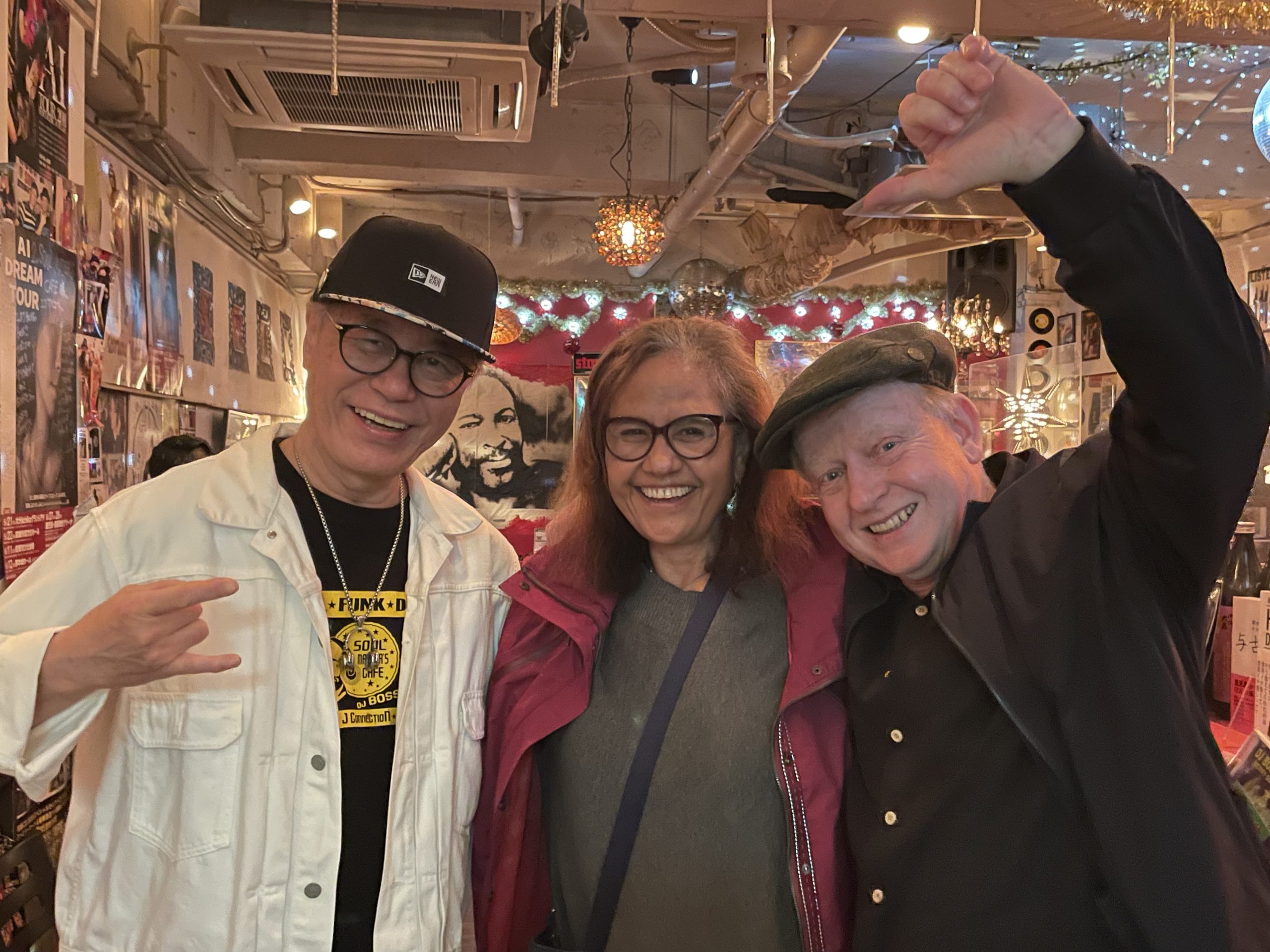
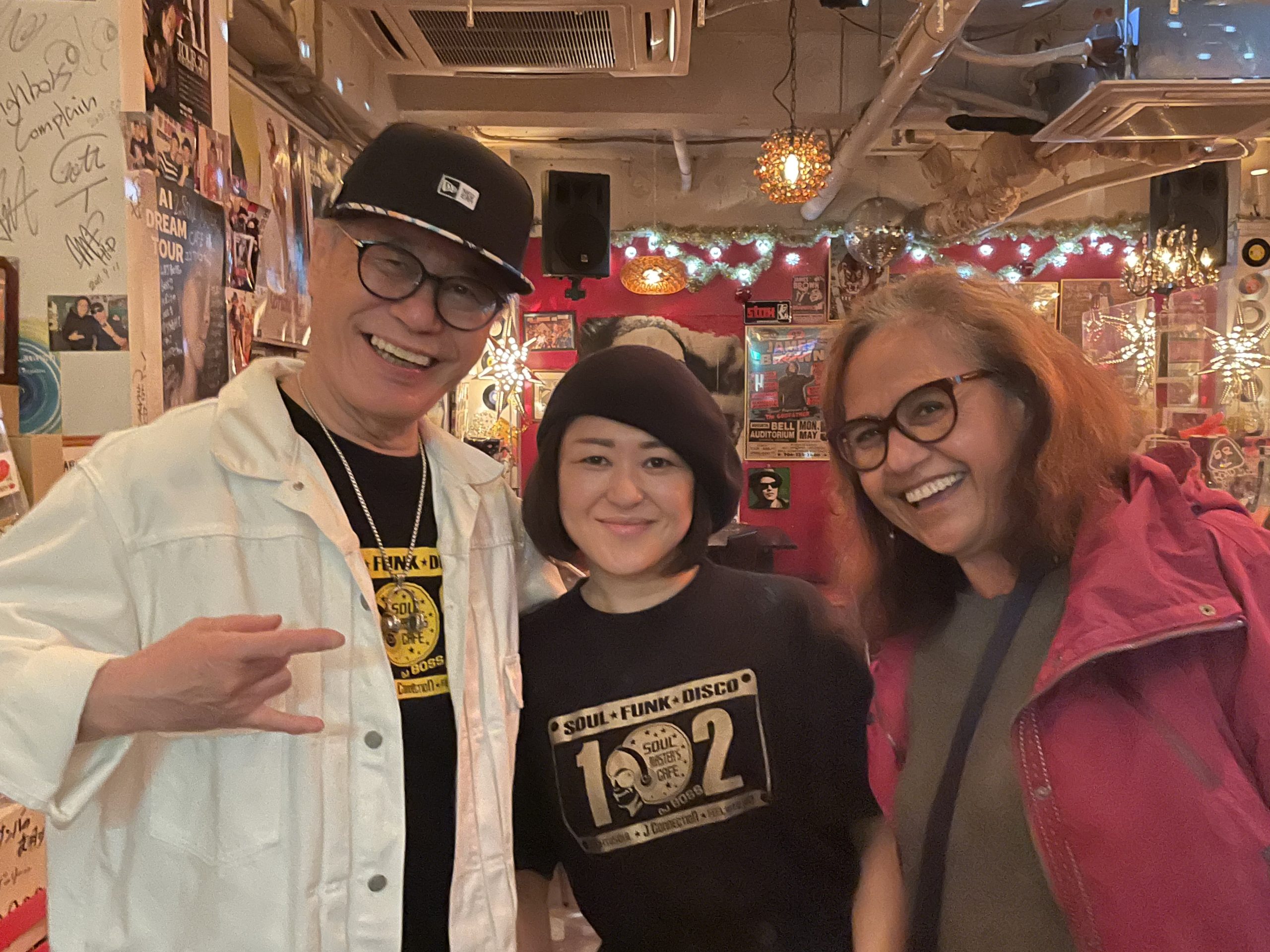 We have a lead or two on retro bars in town so first up is a vaguely Brit-themed sports bar “Bigben” for a pub dinner before heading to “Soul Master’s Café”. It is what is says, a temple to old school soul, funk and disco plastered in memorabilia, with a big screen showing “Soul Train”. We are the only patrons, which is not unusual in a small Japanese bar, but the music is banging and the drinks are cheap. As you go South you get deeper into Shochu territory, Shochu being a liquor made from sweet potatoes or similar carbs. As you get into Southern Kyushu, it is no longer rice growing country, so sake or, more accurately, nihonshu, is not the National drink of choice anymore. Time to get on the Sho Chu Train and Abby is pulling the “whoo whoo” whistle. Keep in mind, nihonshu is brewed and Shochu is distilled…….In time, the soul master himself does show up and starts to do whatever you do with two turntables and a microphone. Deep cuts man, but still cool and we don’t get out of there without dancing. I know other places in the world have bars specializing in soul music, but I doubt any other country could match this degree of knowledge and deep geekery in a sub-genre. Music freak heaven, but finding these places safely is another matter as you could, inadvertently, end up in “Bar Ankle Breaker” and have your wallet lightened considerably by some nice, young ladies.
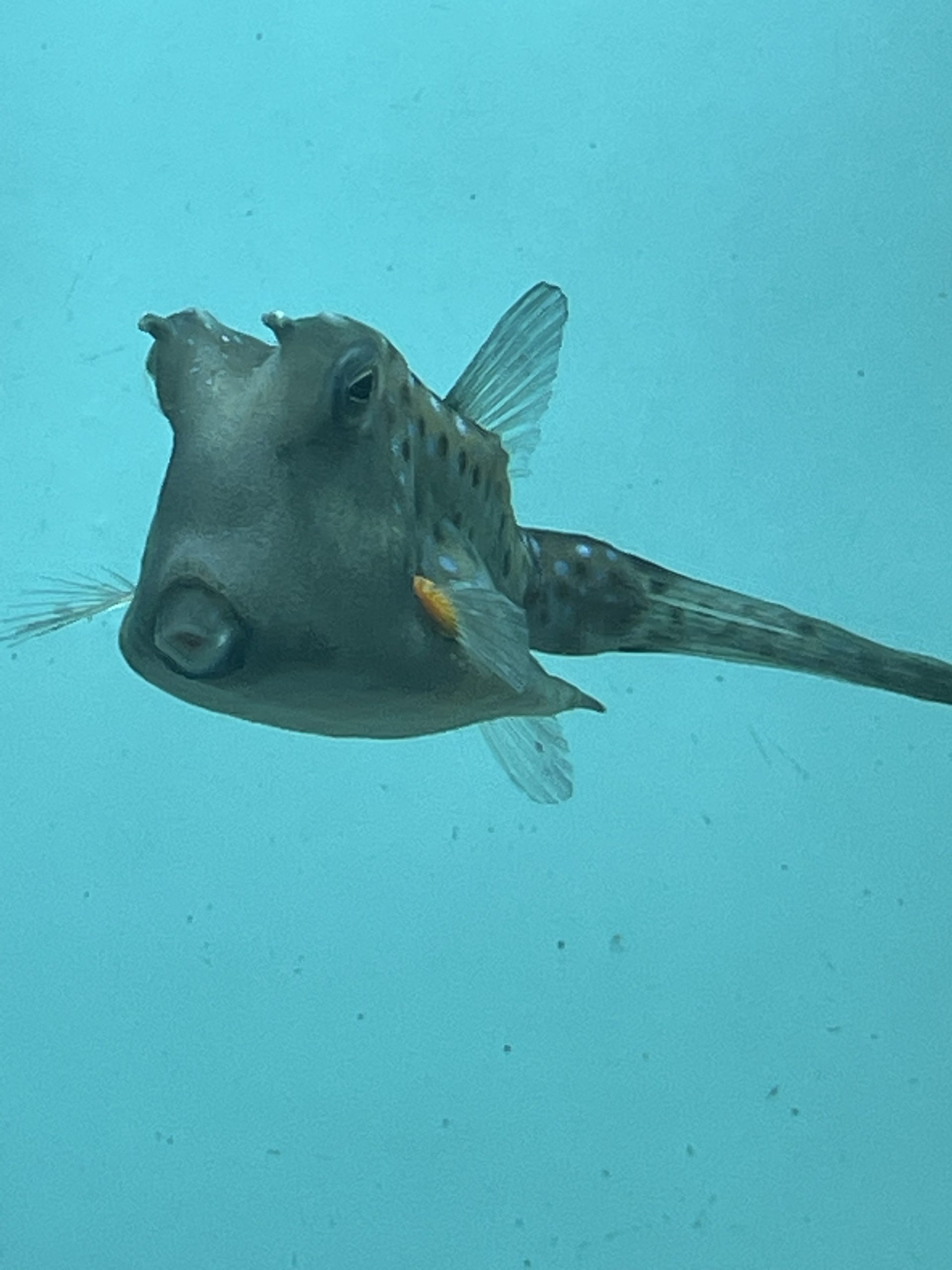
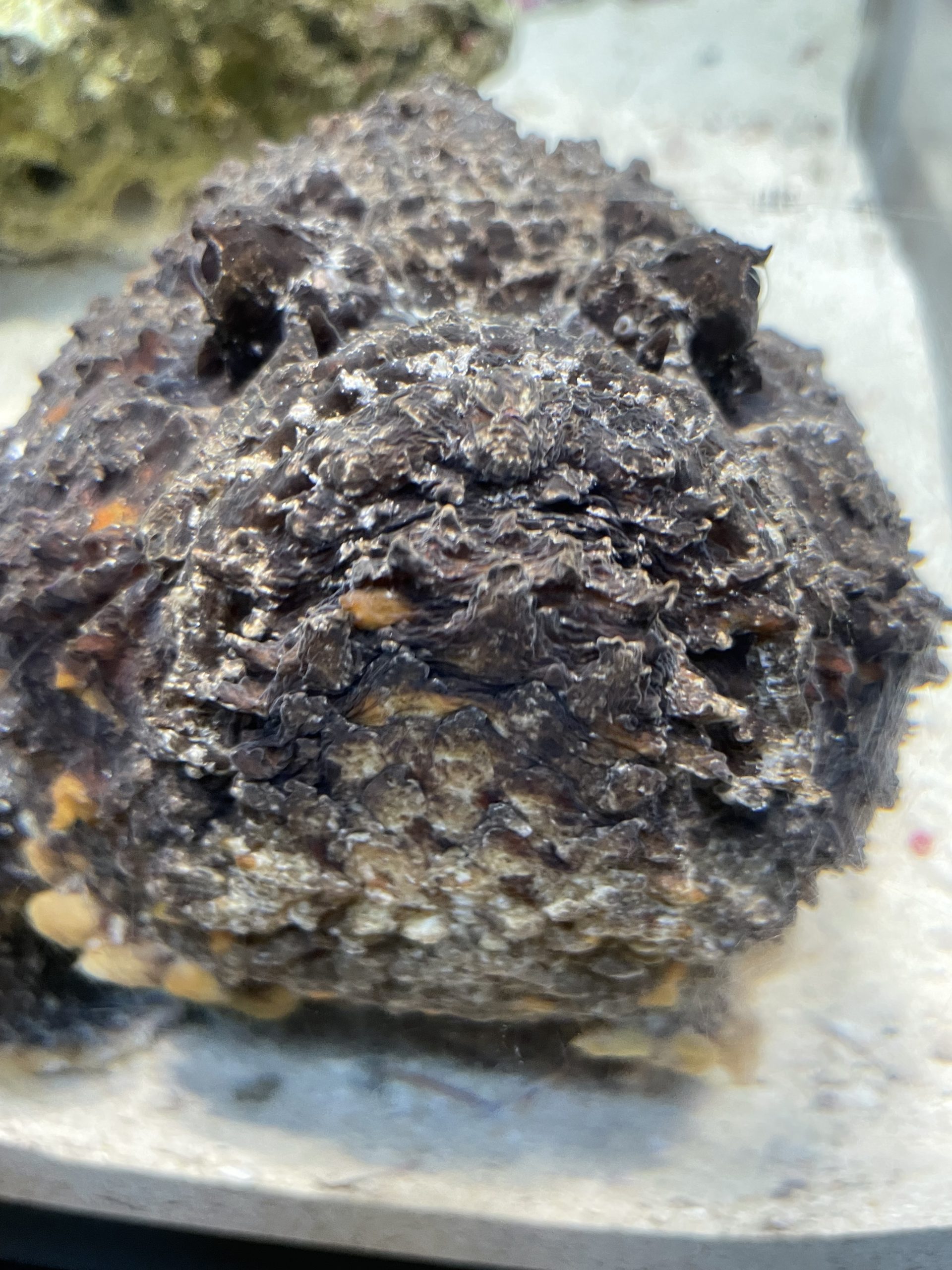
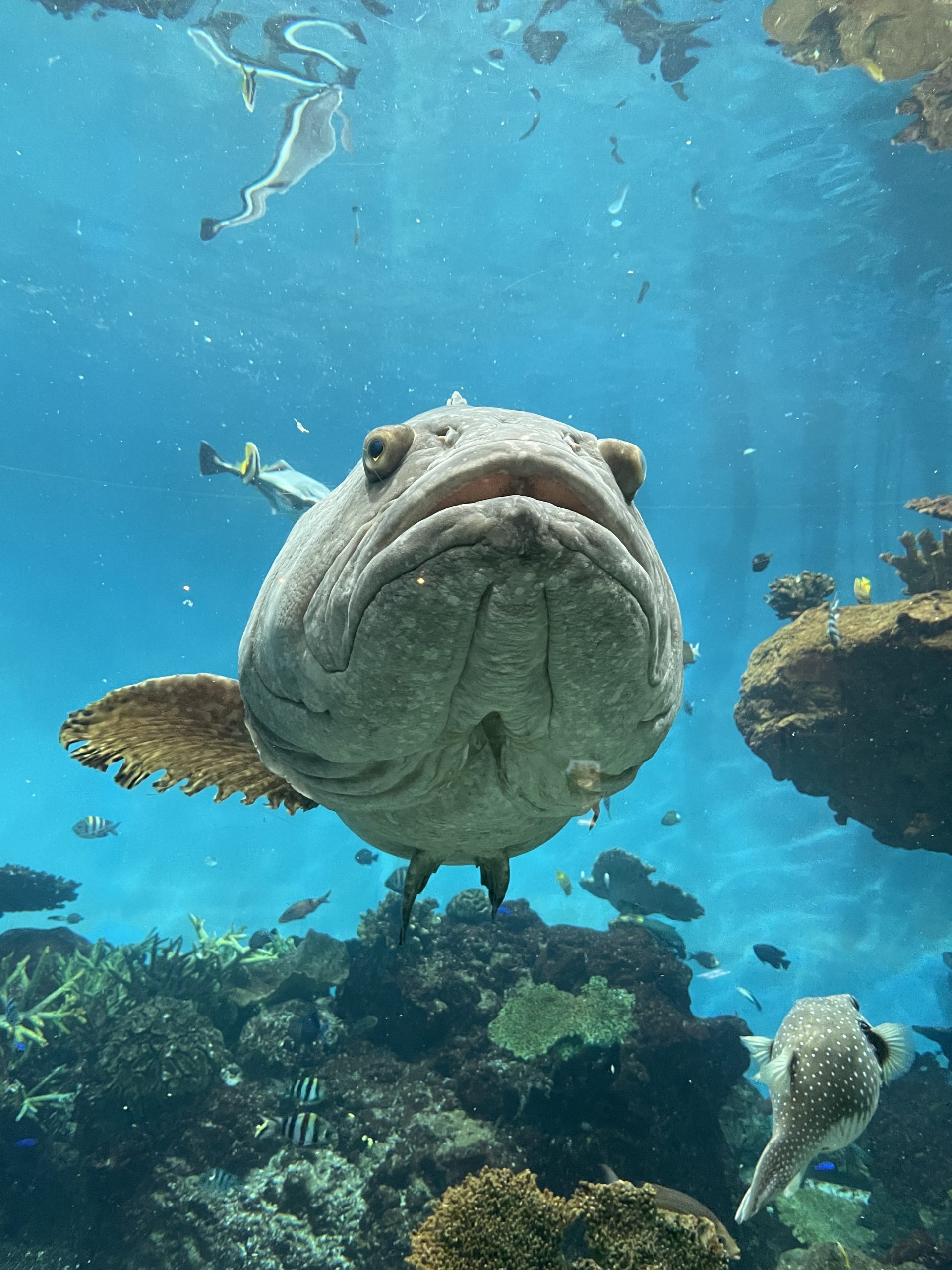
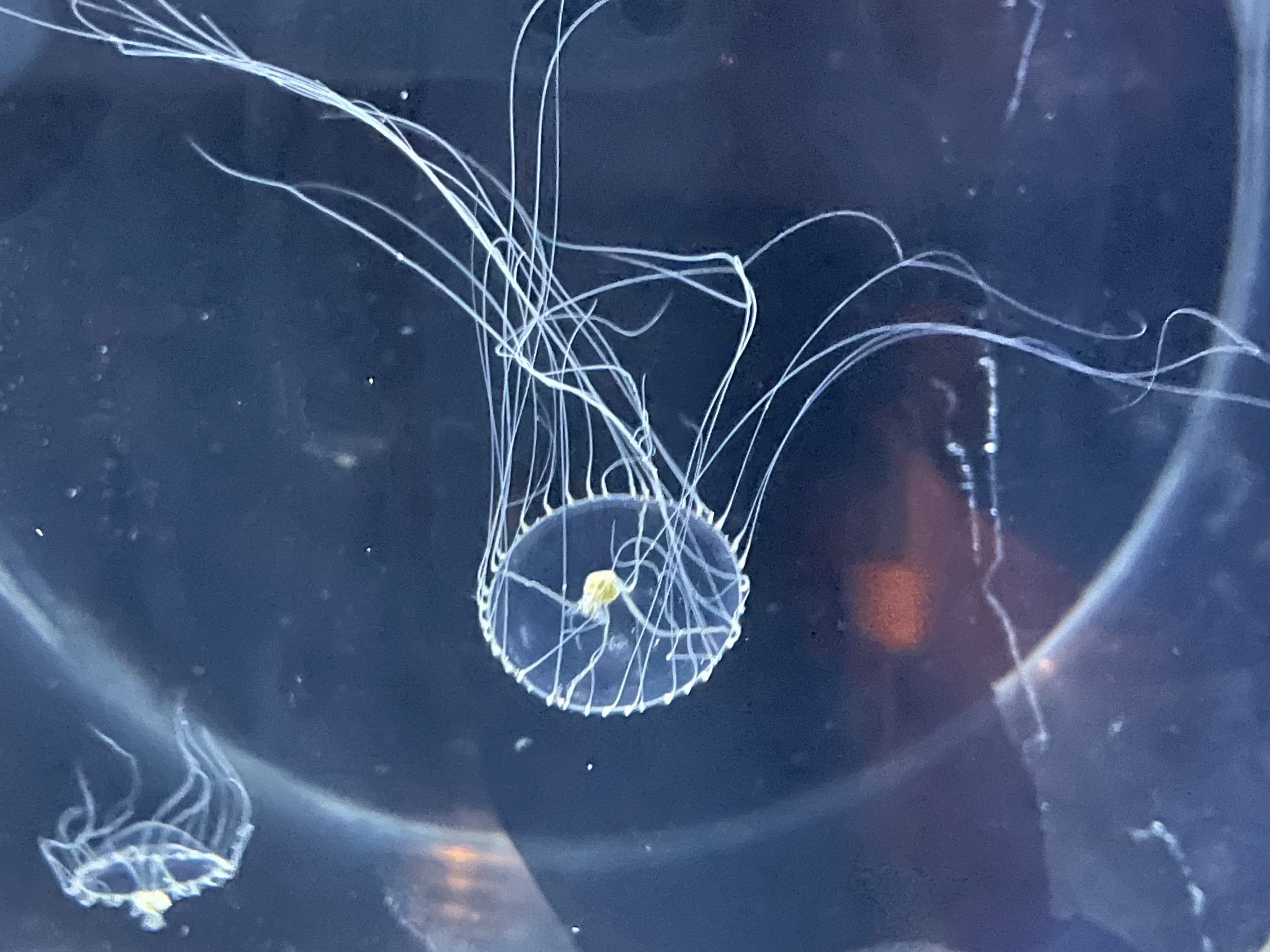
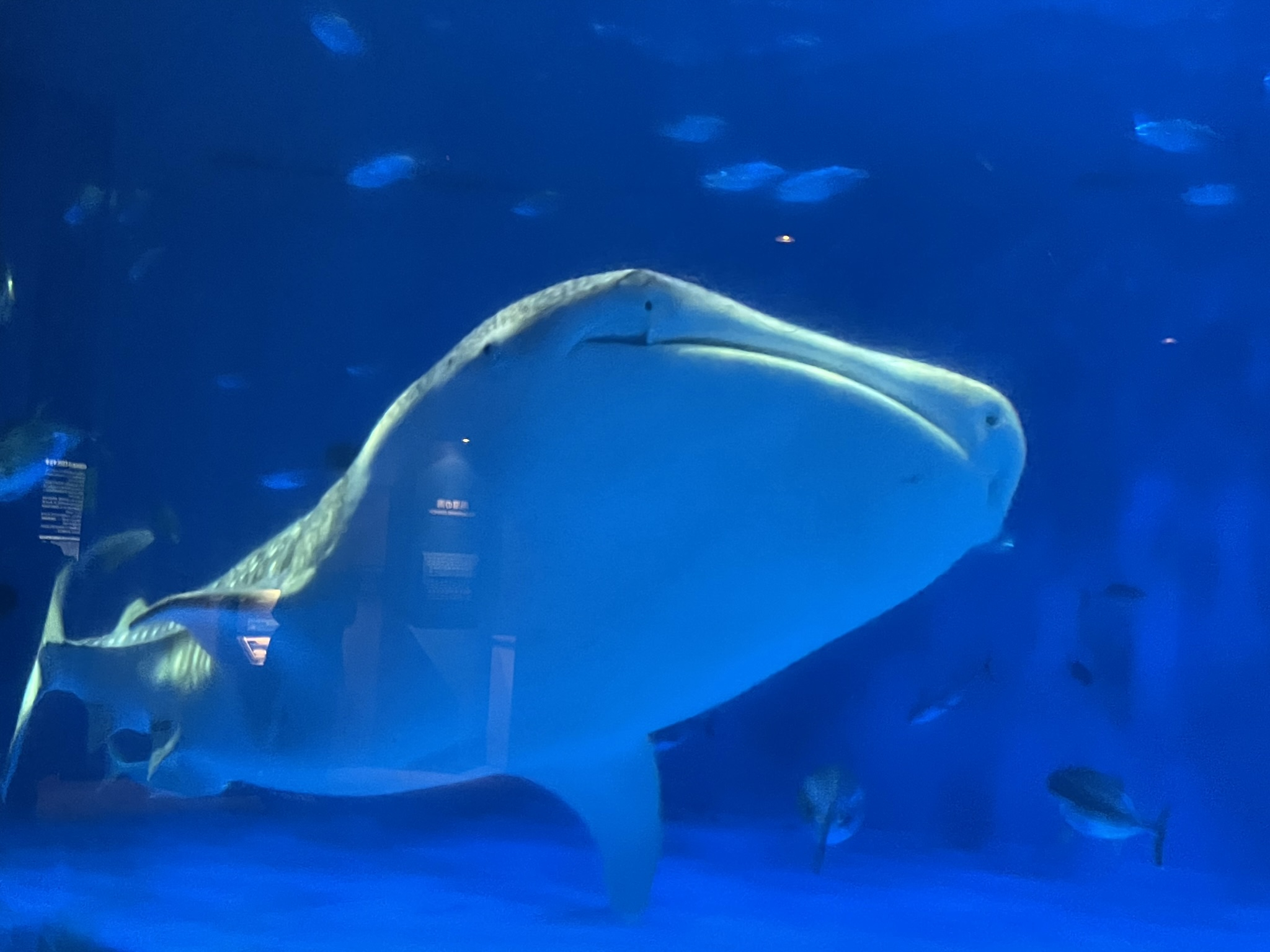
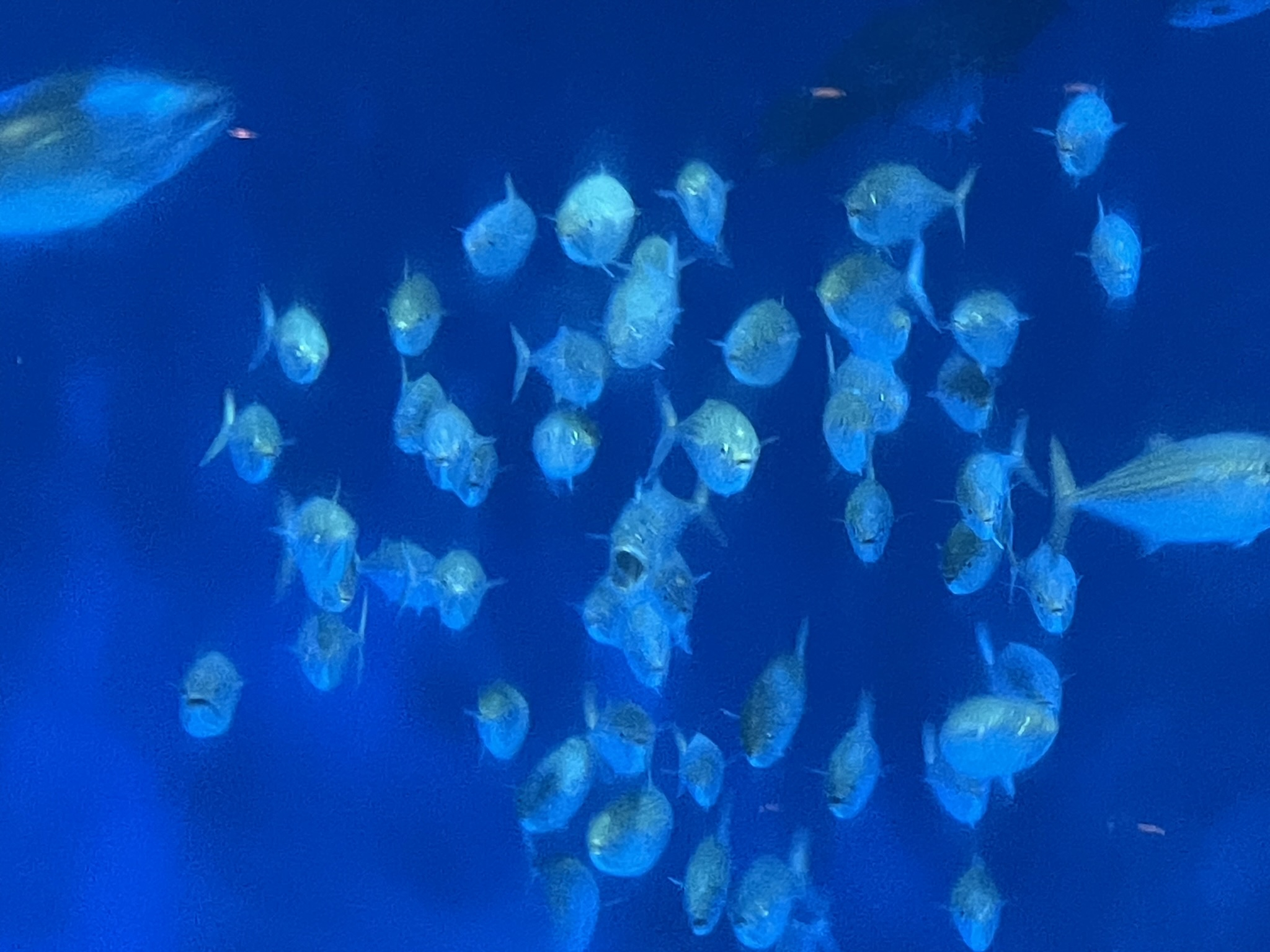
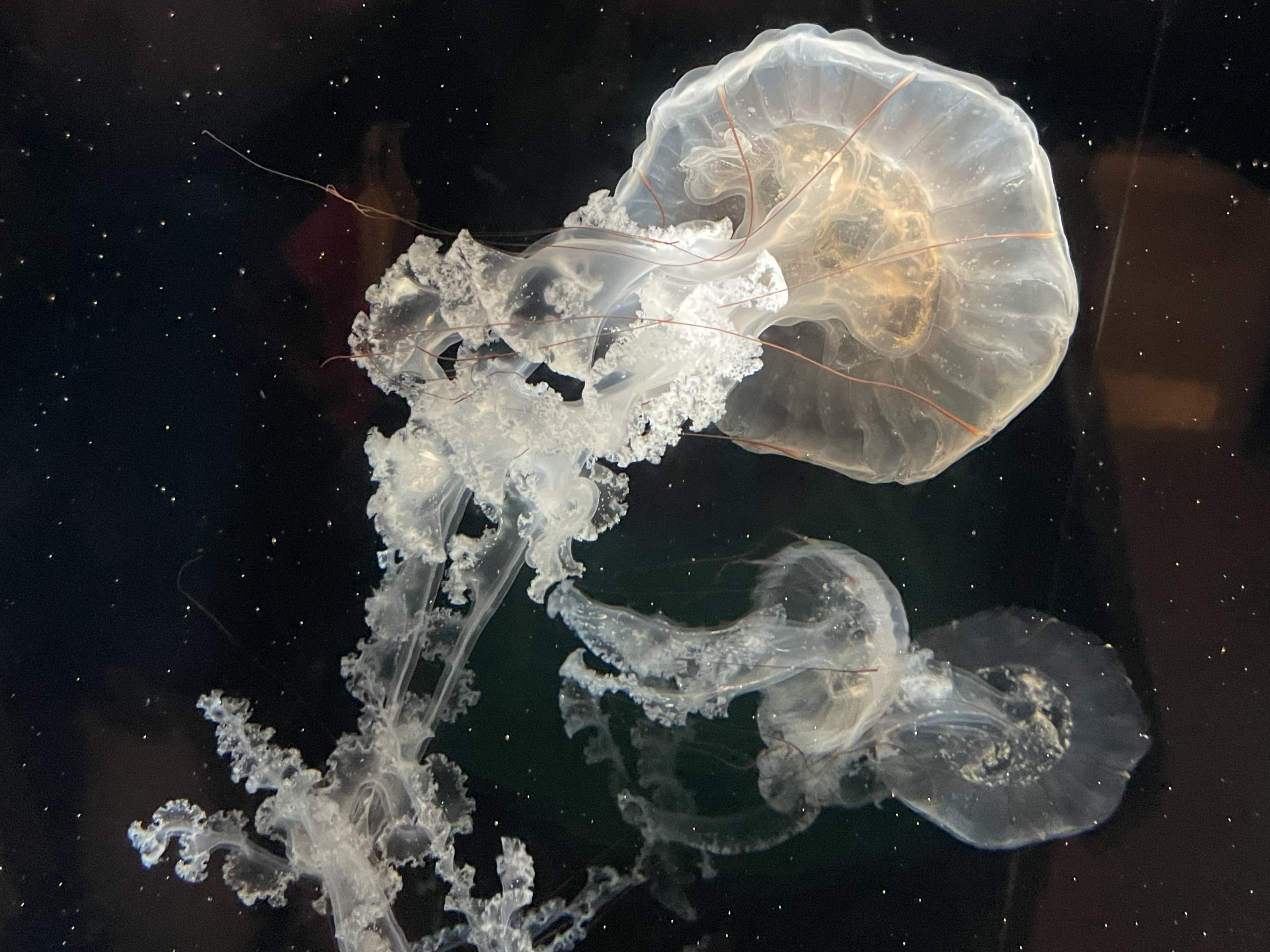 Our nighttime revelry leaves us drained, and I’m still dealing with a persistent back and hip problem that is not going away, so we take it easy the next day and stay in town, but do hit up the excellent local aquarium. We understand the concerns about aquariums with respect to animal welfare, particularly with respect to the captivity of whale sharks and dolphins as seen here, but this place is also doing a great deal of educational work with respect to the local marine eco-systems and is also involved with breeding programs for endangered species – The usual dichotomy. Whale sharks and manta rays are local and star in this aquarium and if we were scuba divers we’d be all over the opportunities offered here. There is an amazing jellyfish exhibit, and then there are the hilarious tube worms, or are they tiny eels, the meerkats of the sea bottom.. They’re long, skinny and bury part of their bodies in the sand while the top part with the head peers around constantly. They come in large groups, so they’re an amusing sight, particularly when you get the odd rogue who pulls out of the sand and races round the tank while the others look on in disgust. The whale shark, manta ray and, even, the tube worms/eels are all local icon images for Kagoshima, as indicated by their prevalence on tourist souvenirs.
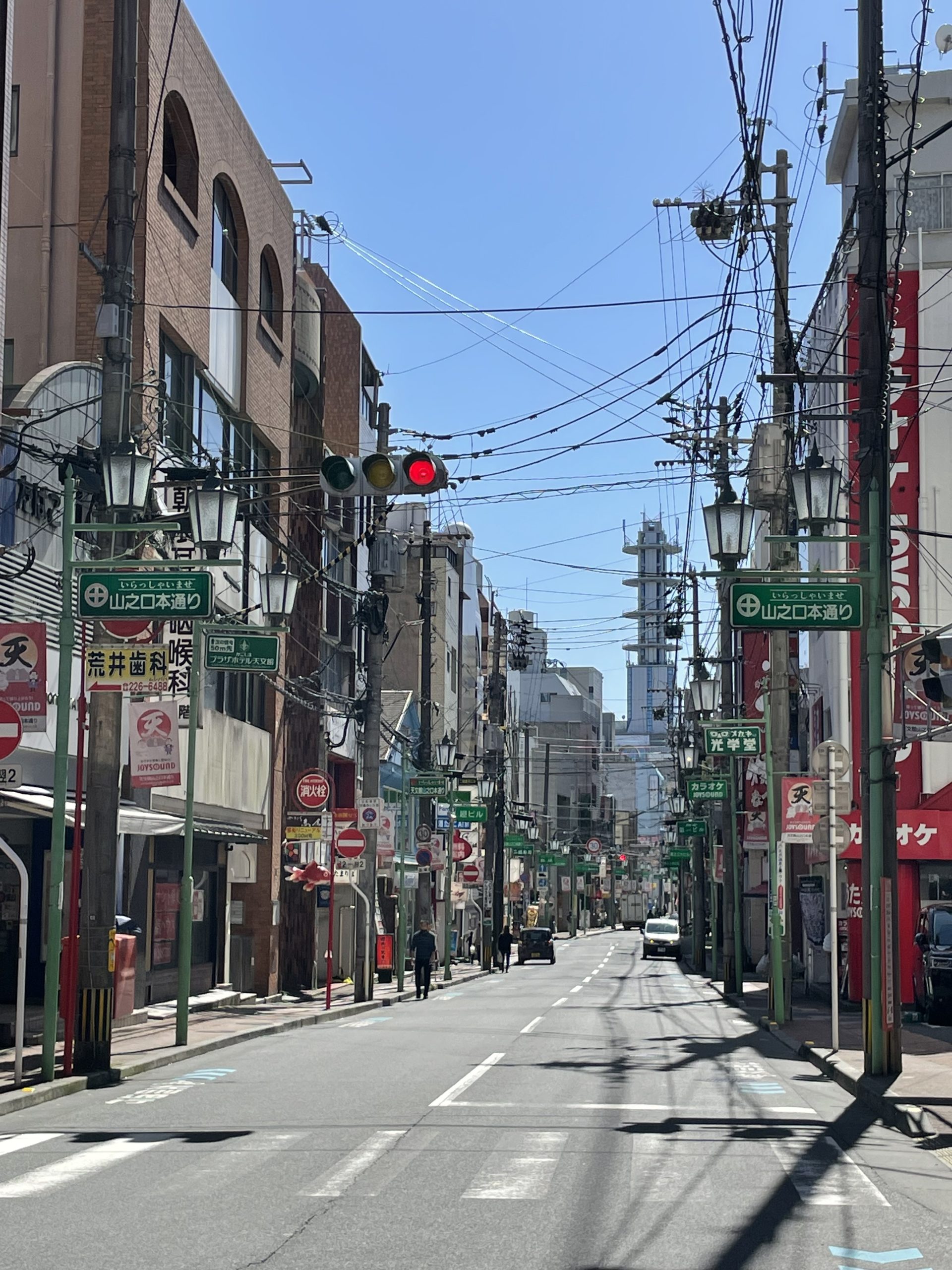
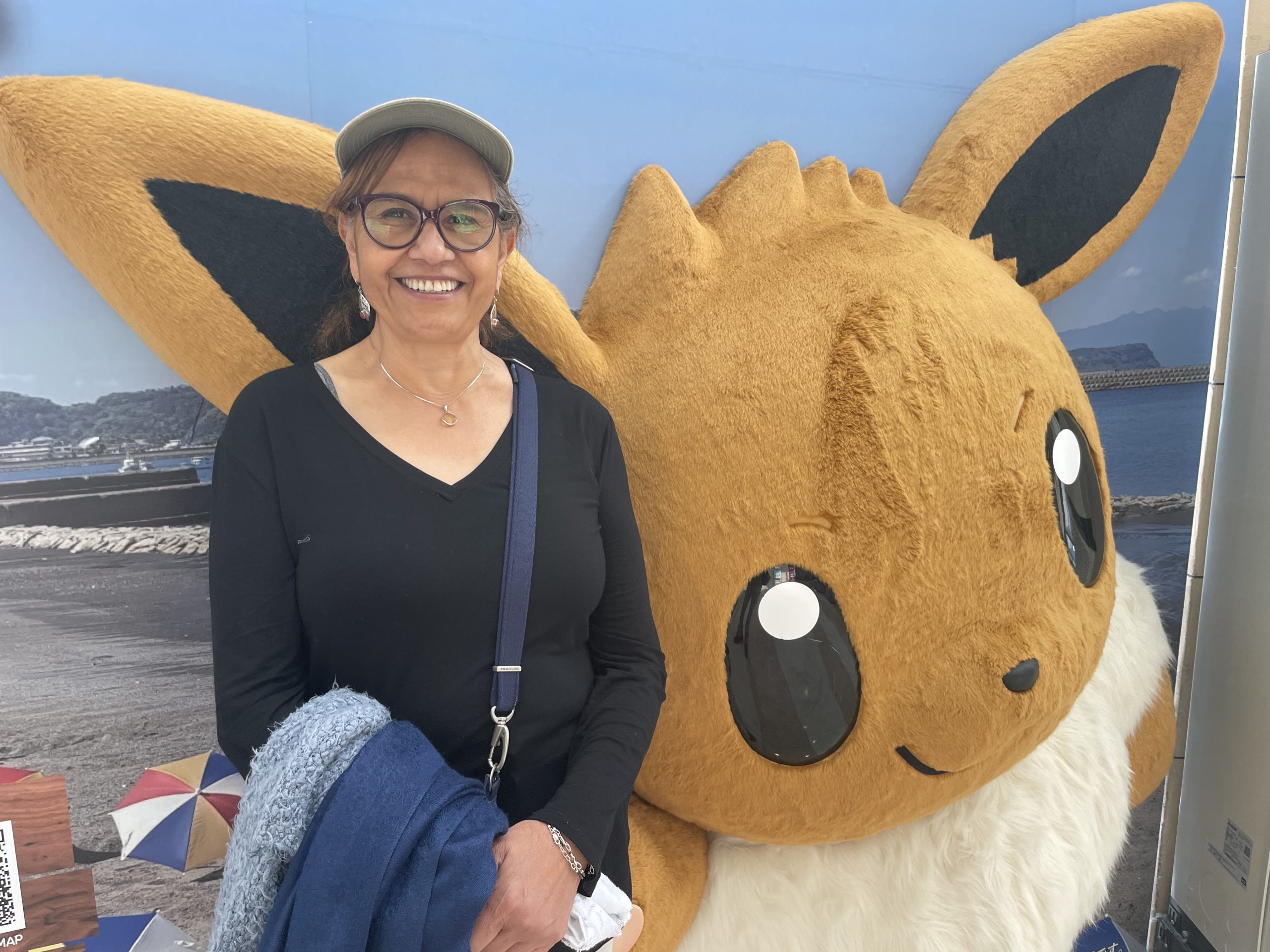 Kagoshima is also a big shopping city, and our red light district directly connects to the expansive Tenmonkan shopping arcades (Shotengai in Japanese) and a couple of excellent department stores. In one of the latter we pick up a “noren”, which is a decorative fabric hanging as you see at the entrance of traditional Japanese restaurants: Here, we go for the owl motif. (Owls are big in Japan). Also, Abby has the experience of shopping for, and buying, a yokatta, a cross between a light dressing gown and a kimono. There must have been six or so different ladies involved in assisting in this process with much hustling around, help in fitting and selection input. I kept out of the way.
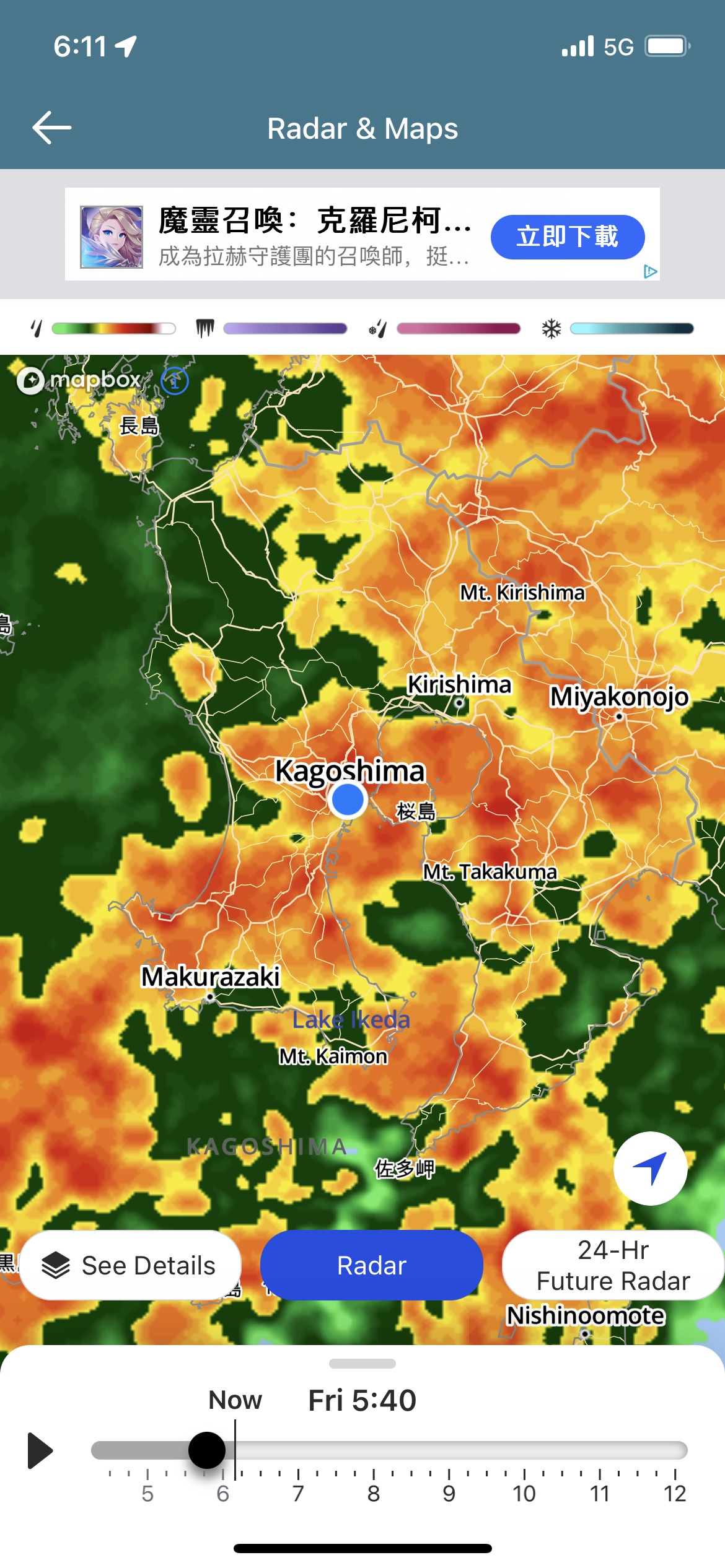
We finally get a big storm after much good weather, and it’s a humdinger. Losing power was a distinct possibility during it but, aside from a couple of flickers which cause temporary electronic confusion, the lights stayed on. The rain is heavy enough that, basically, the city shuts down for a day. The rain outerwear typical of the Pacific NW is very rare here, with the umbrella being the standard, but an umbrella is worse than useless in a storm of this magnitude, so the locals stay home, and so do we.
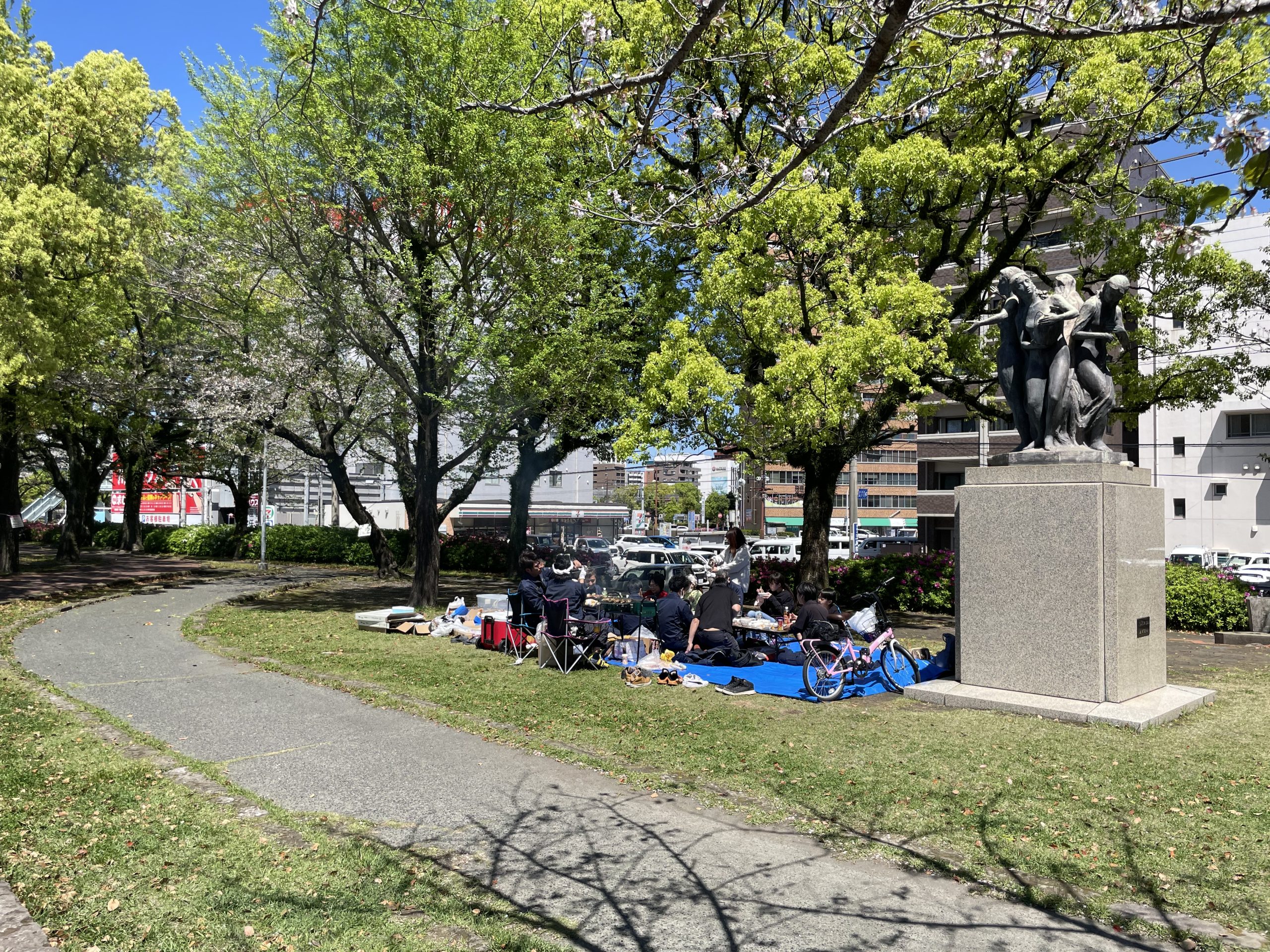
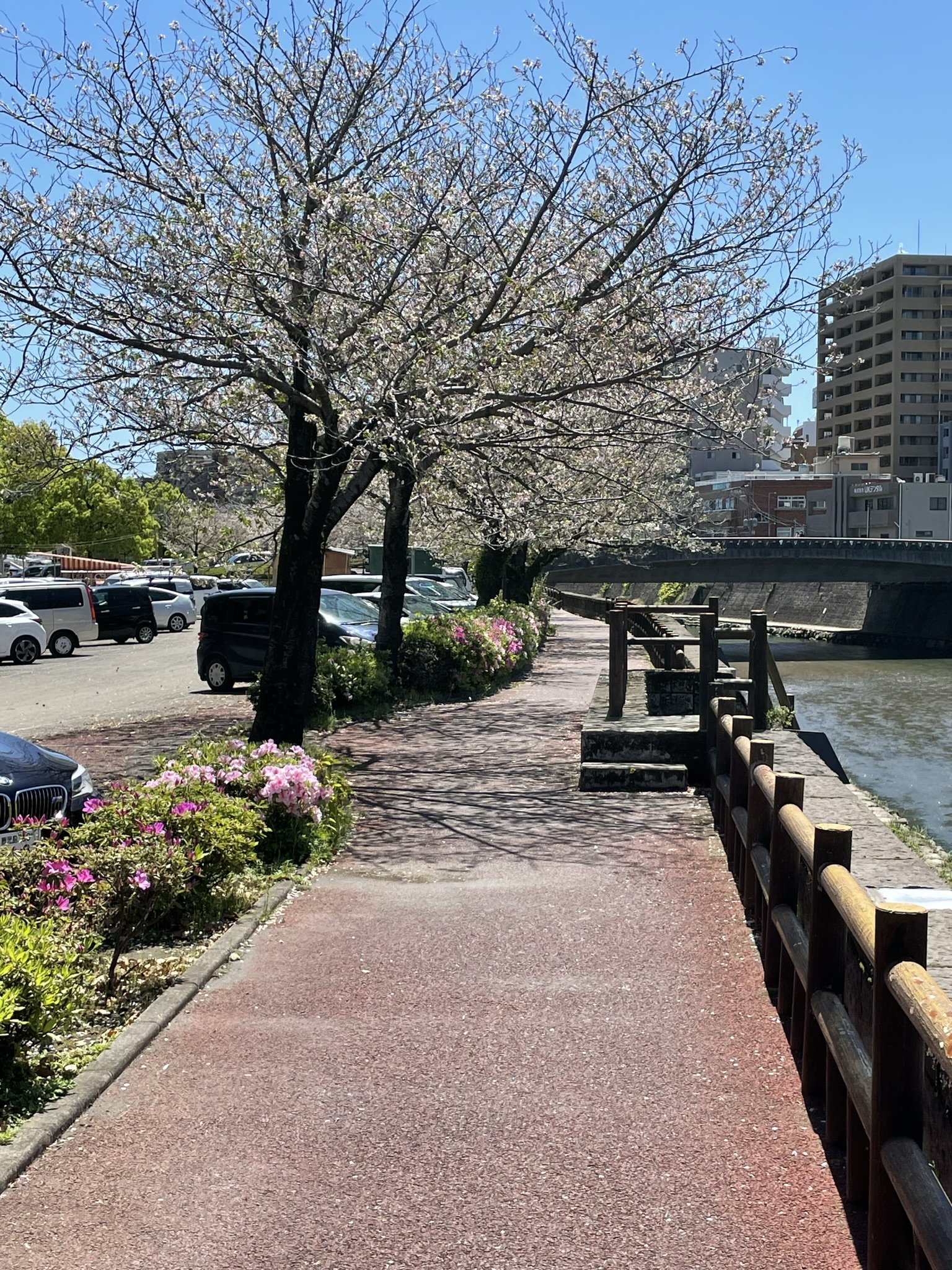
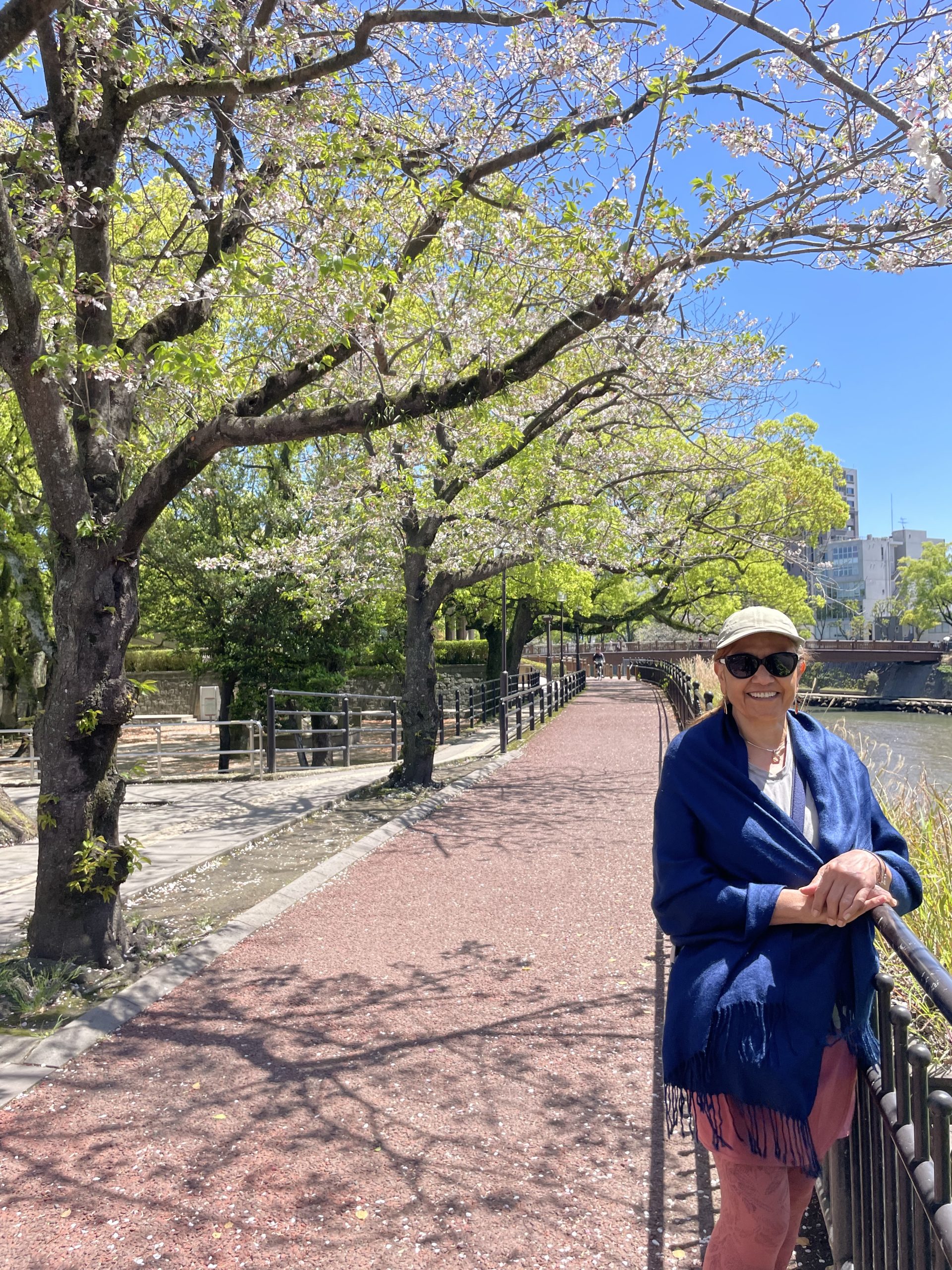 The next day bright sunshine returns and, although I’m still partially crippled (waaaa), we walk the entire length of the Kotsuki Riverside Park. Amazingly, the cherry blossoms are still in bloom, though past their peak, and it’s a Saturday, so it’s Hanami-a-go-go. Groups of all sizes, ages and types of picnicking gear are camped out underneath the Sakura having a good time. There are free samples of Shochu, coffee stalls and a couple of cafes, but people mostly bring their own stuff. It’s about as Japanese as you can get.
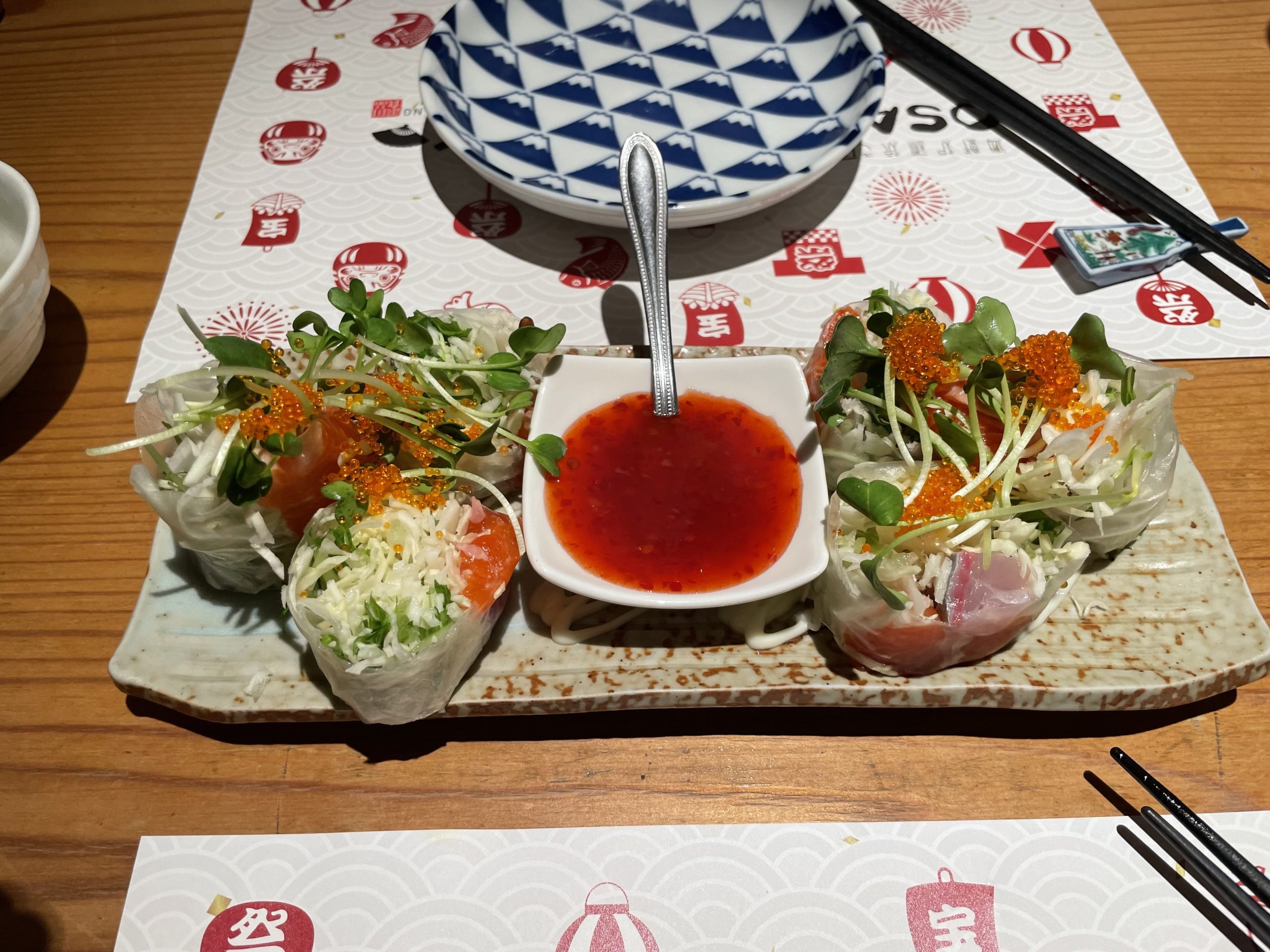
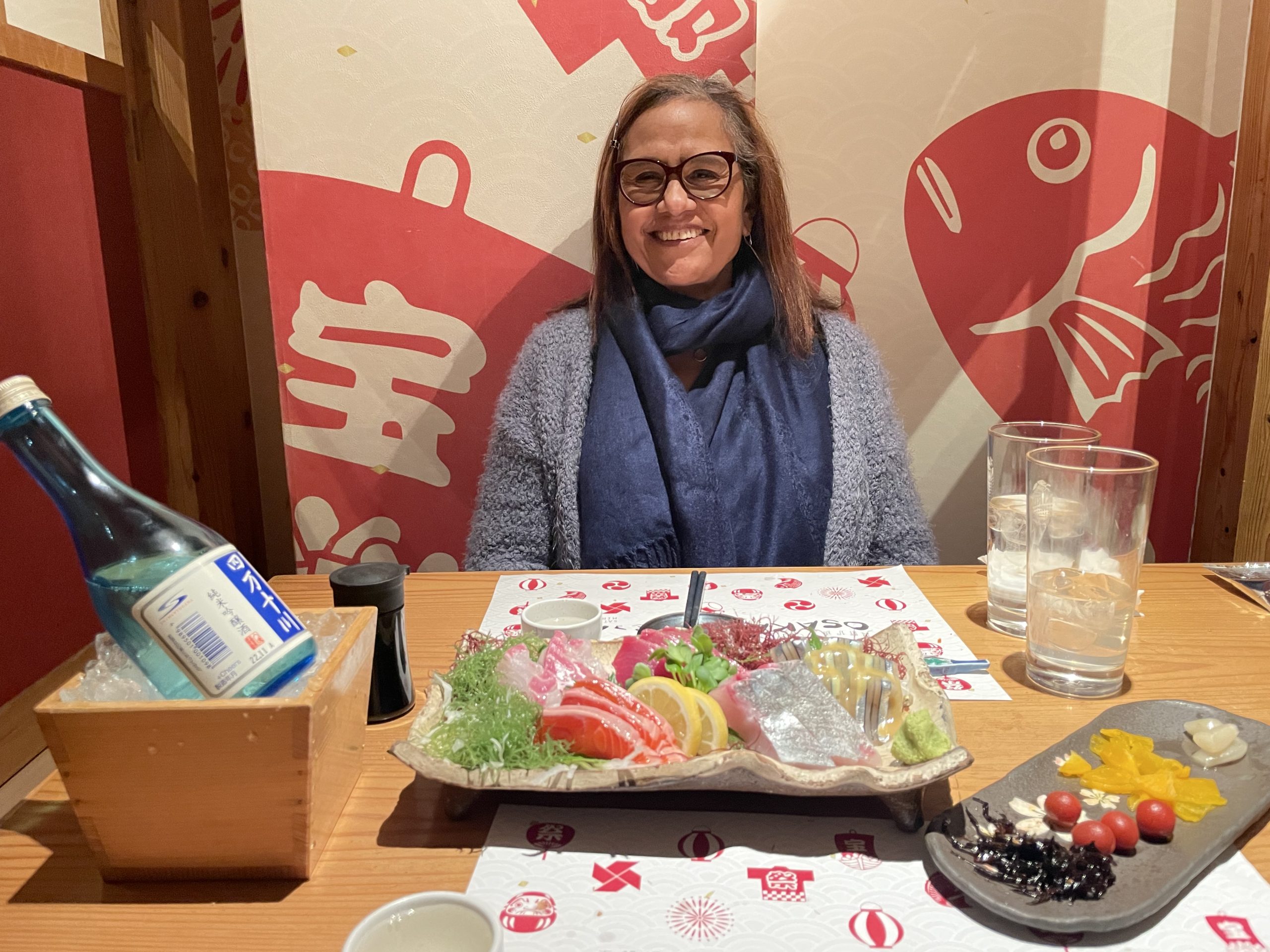 We wrap up our time in Kagoshima with a wonderful dinner at an izakaya round the corner from our Airbnb. Remember, an izakaya is a drinking place with small plates, ranging from rough and ready to fine dining, with our selection being somewhere in the middle. These places are very popular with locals, and reservations are often needed, but making one is difficult for the Western visitor or, in fact, anyone who can’t read kanji. So, usually, the best way is to visit the place in advance and make it in person, so plan ahead. We did manage to do it on line once or twice, but that’s a hit and miss process based on the app or website, what information they want from you and your luck with Google Translate.
Our flight next day to Naha on the island of Honto is fairly early, so we call it a night and try to get some sleep in before the alarm goes off at 5:30am. See you in Okinawa!



Leave a Reply