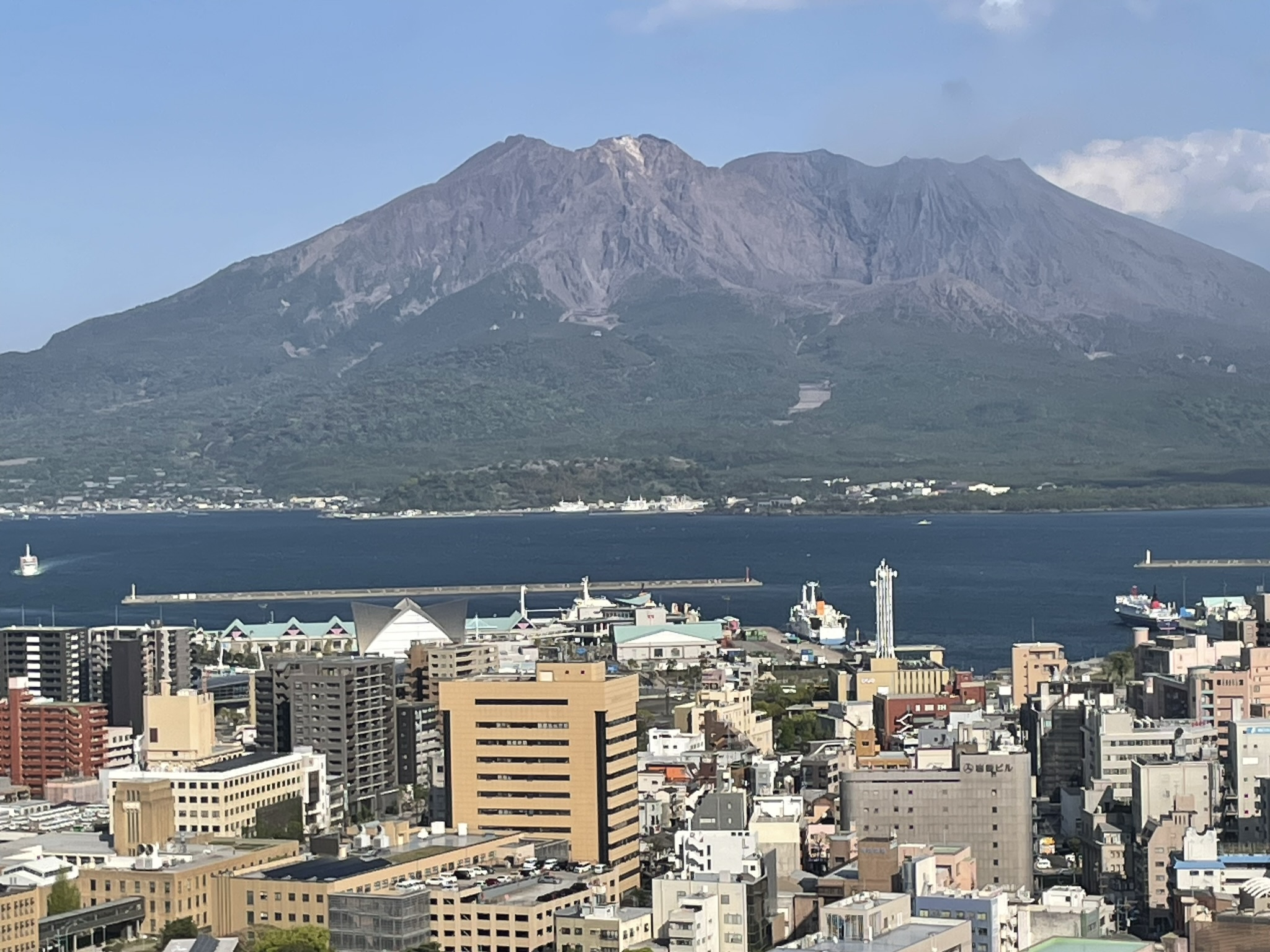
 Globally, there are a surprising number of cities with active volcanoes within their city limits, but I don’t think Abby and I have ever stayed in one. That is about to change as the Sakura Shinkansen glides into the city of Kagoshima near the Southern tip of Kyushu Island. Given the time of year, we wanted to get as far South as possible on the “mainland” before jumping off to the archipelago of Okinawa. Aside from the volcano, Sakurajima, sitting across a narrow channel directly in front of downtown, we don’t know much about what we’re getting into.
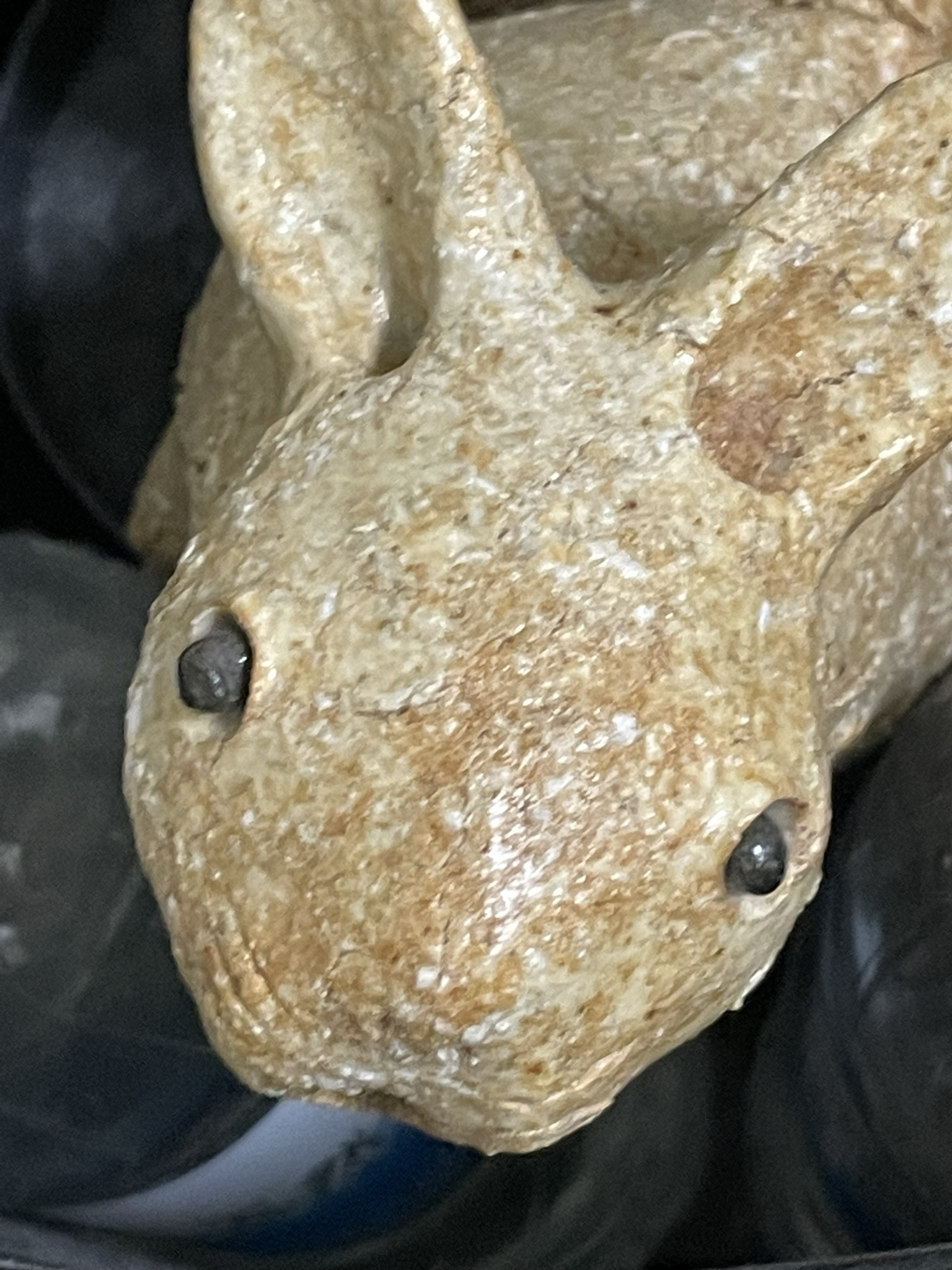
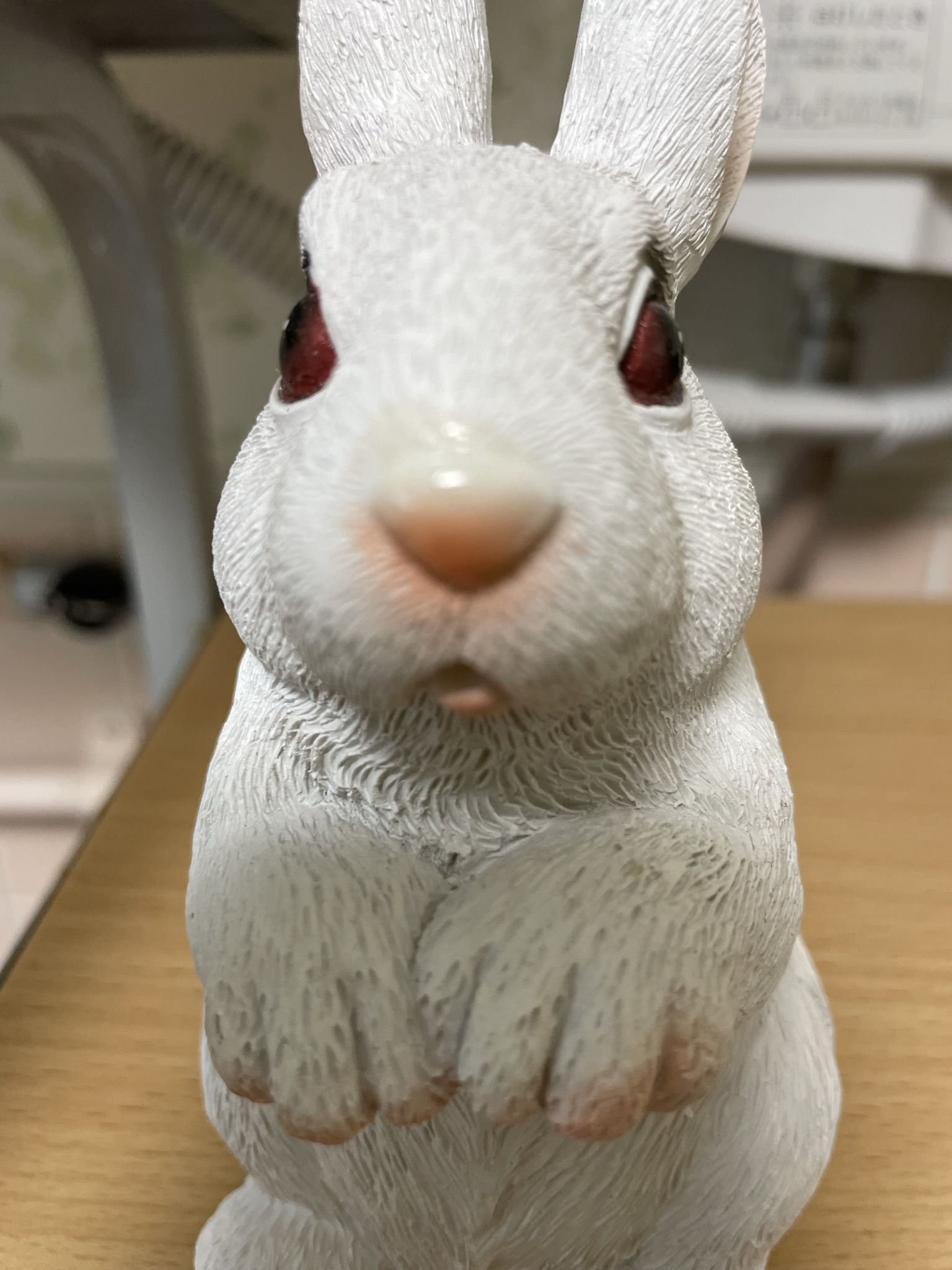
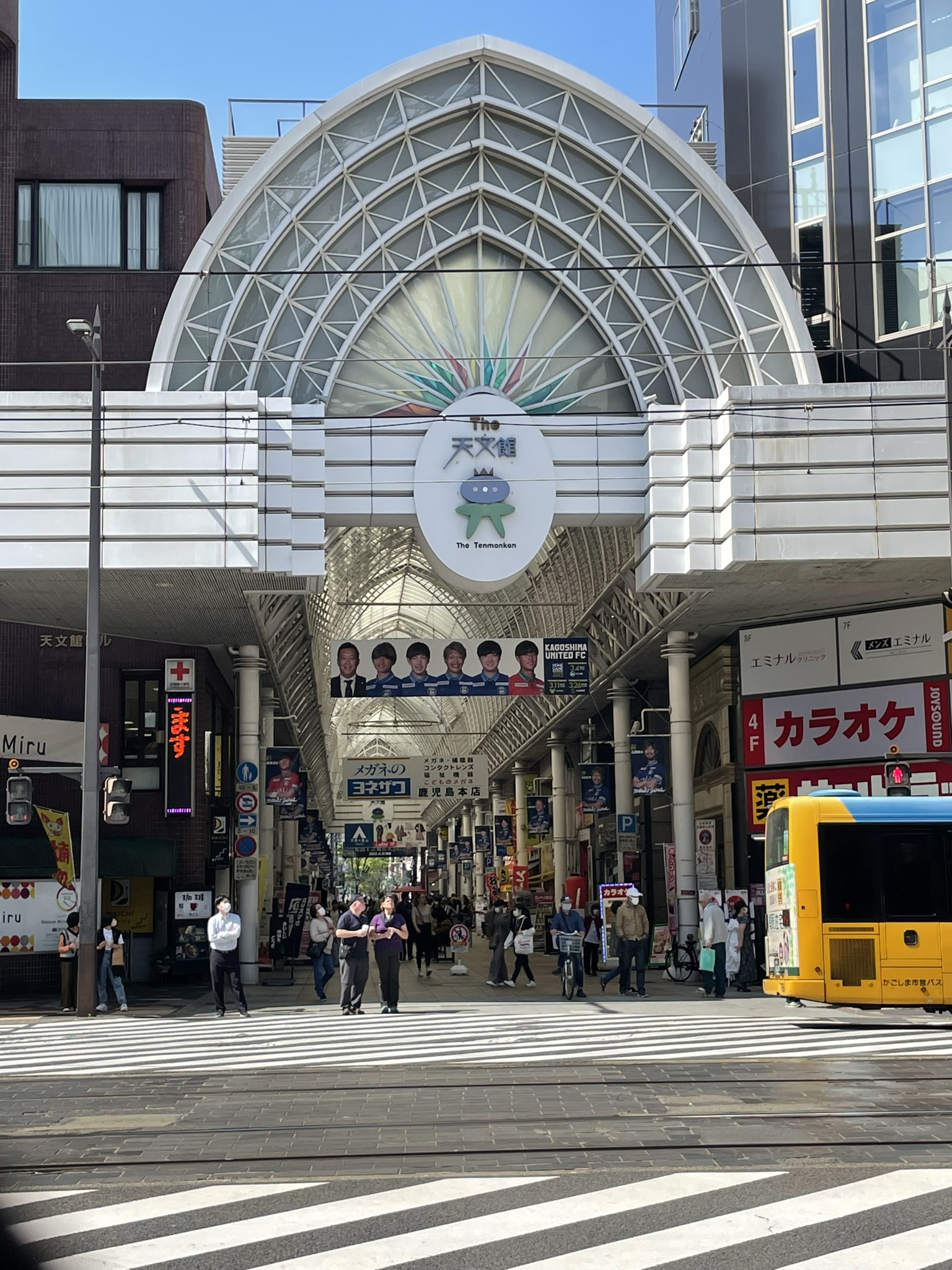
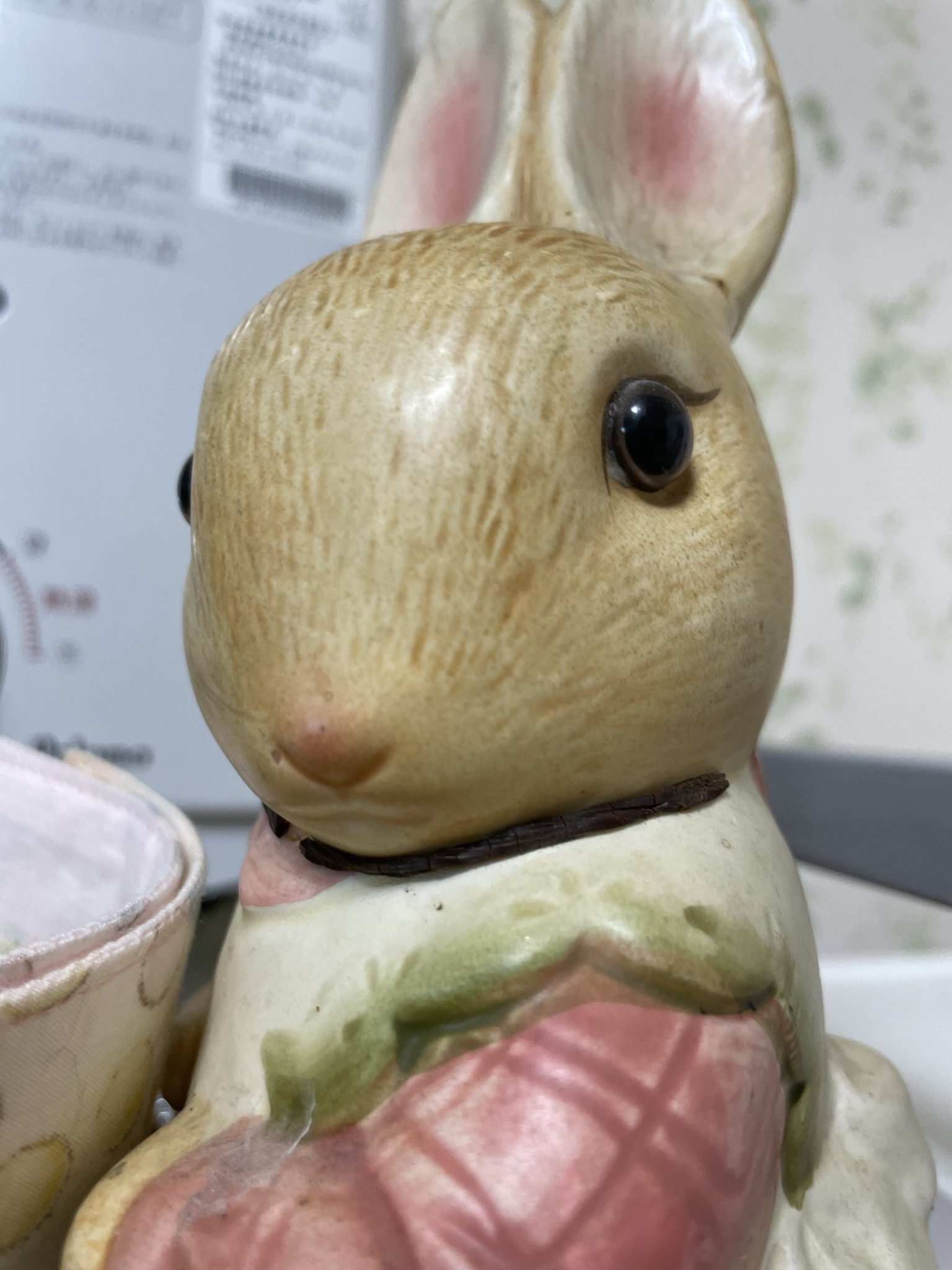 As it turns out, what we’re getting into is rabbits, lots of rabbits. Our apartment is slam bang in the middle of the “entertainment” district, the kind of entertainment that goes all night and ends with an empty wallet, a sour stomach and a possible STD. No matter, up to the 4th floor, where the rabbits are waiting. We have the uncomfortable feeling that a Japanese Grandma has just been ejected to allow our stay as the place is extremely homey and has more rabbits than your wildest dreams. Not real mammals, but rabbit representations of all varieties peering glassy-eyed from every surface, cushion and wall. Japan law only allows 180 days a year rental for Airbnbs, so are local grannies working a 2 apartment system where they move between the two every 6 months at highly advantageous rental rates? Hope so! Aside from the surrounding razzle-dazzle, we are also in construction central, with not only an enormo-construction project across the way, but also some obvious, frantic renovation of adjacent apartments to Airbnb standards. For all that, the apartment works well, and you can see the volcano if you step outside the front door.
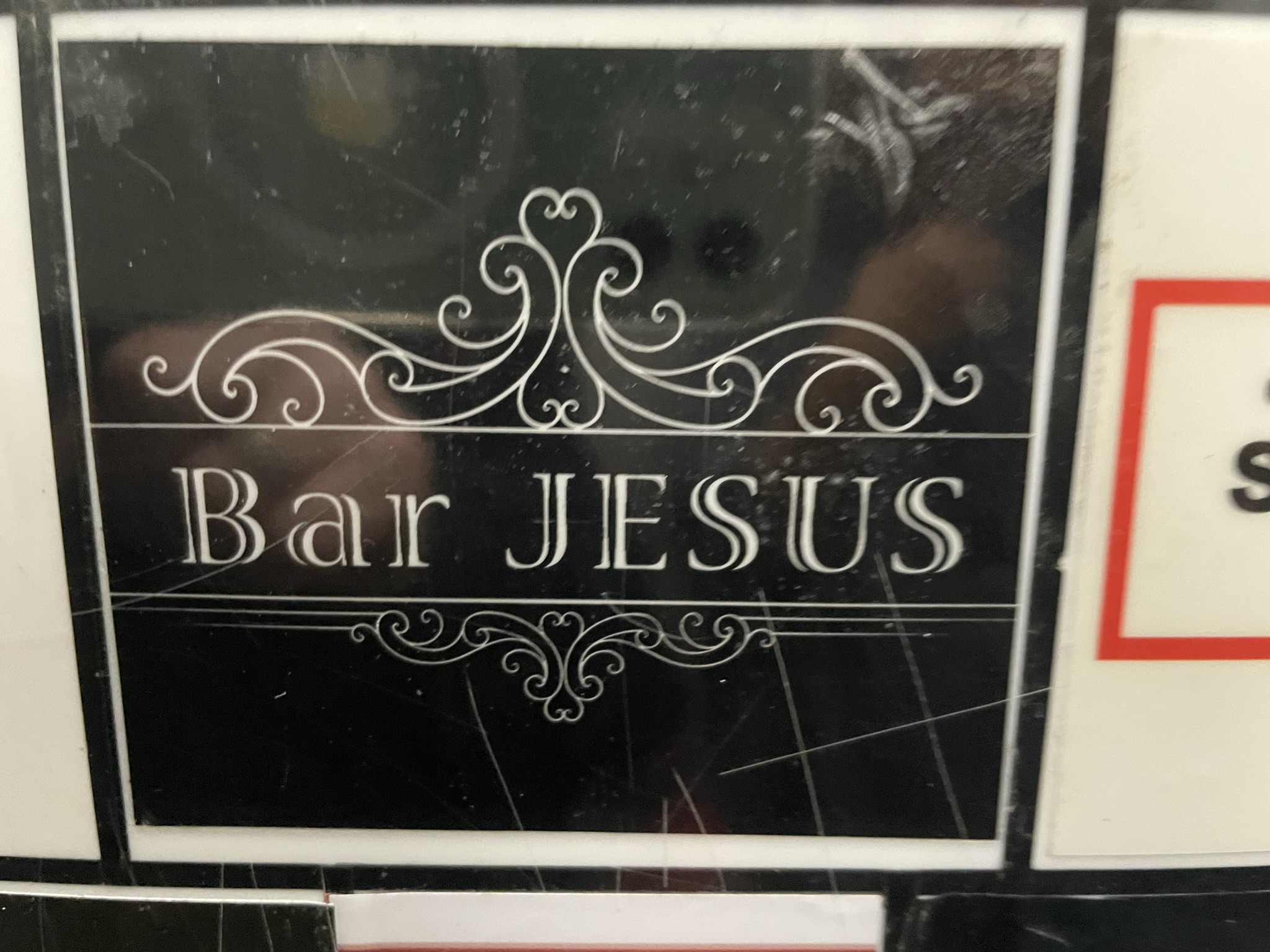 Not to mention, “Bar Jesus” is in our very building, praise the Lord!
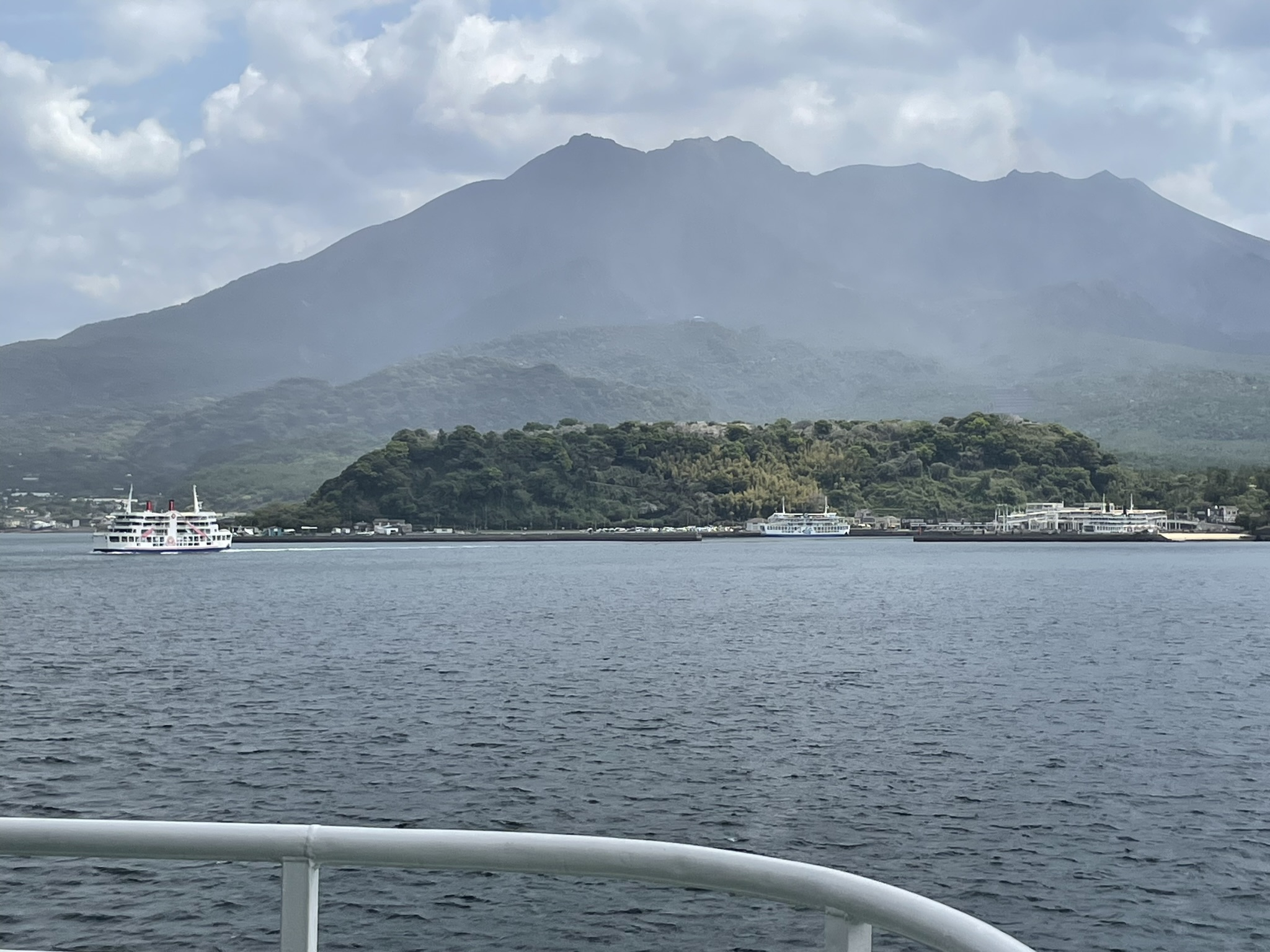
It is all about the volcano so, on our first full day in town, we head off to Shiroyama (white mountain) a hill directly behind downtown with an excellent viewpoint of Sakurajima. “Jima” means island, but since the volcano constitutes the whole island, it goes by “jima”, rather than “yama”, which means mountain. But, since an eruption in 1916, the volcano is, actually, no longer an island but a peninsular. Have you got all that?
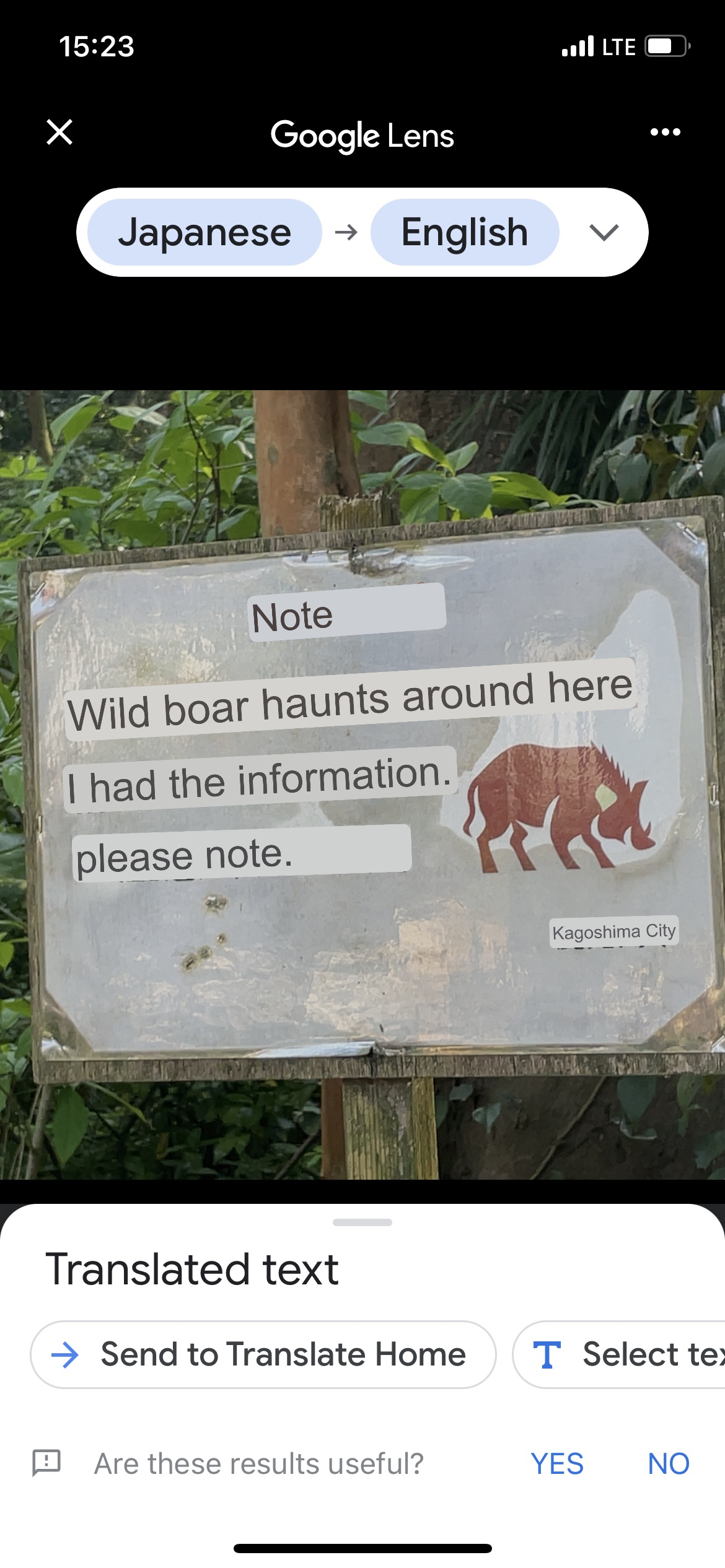
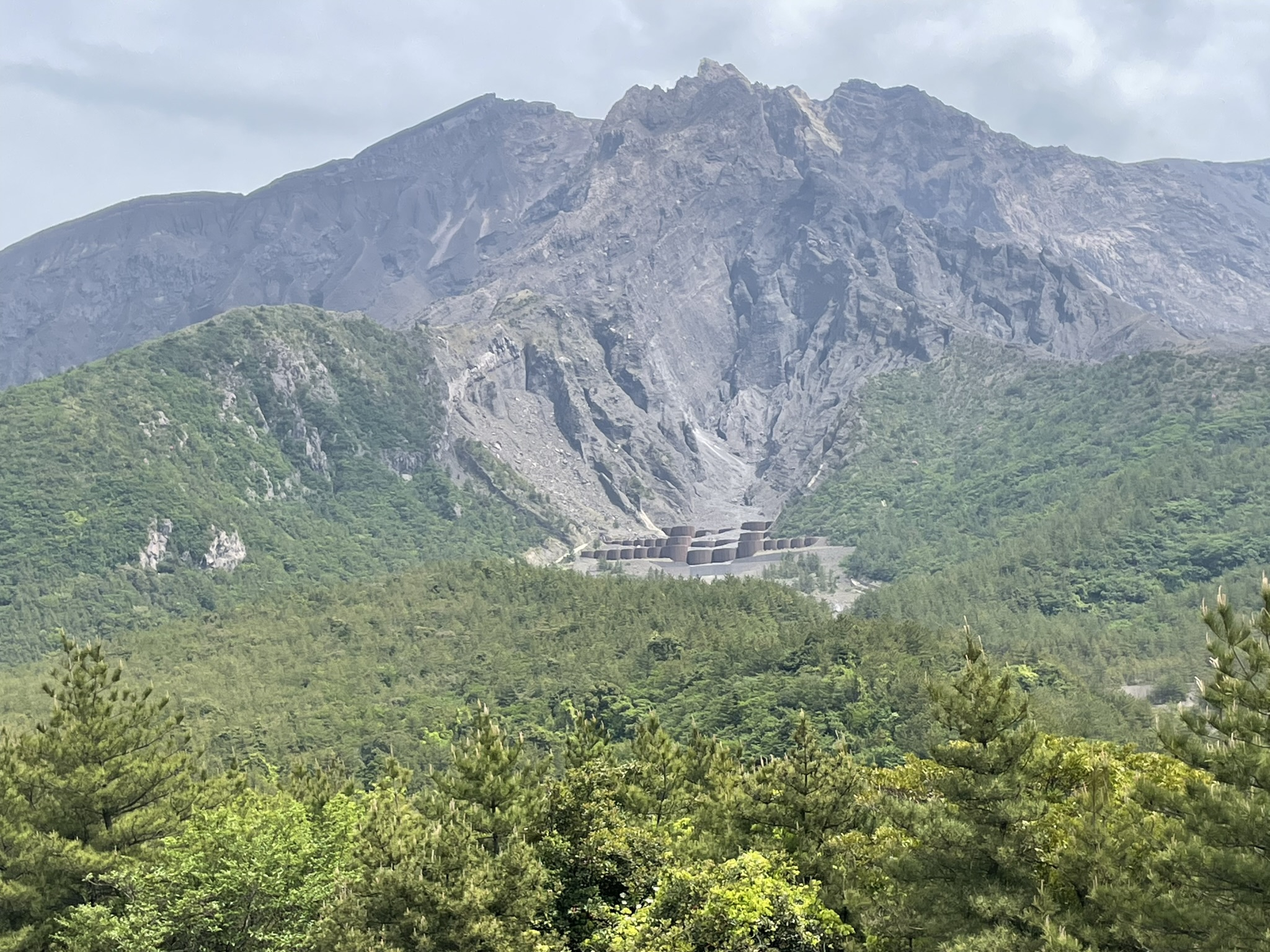
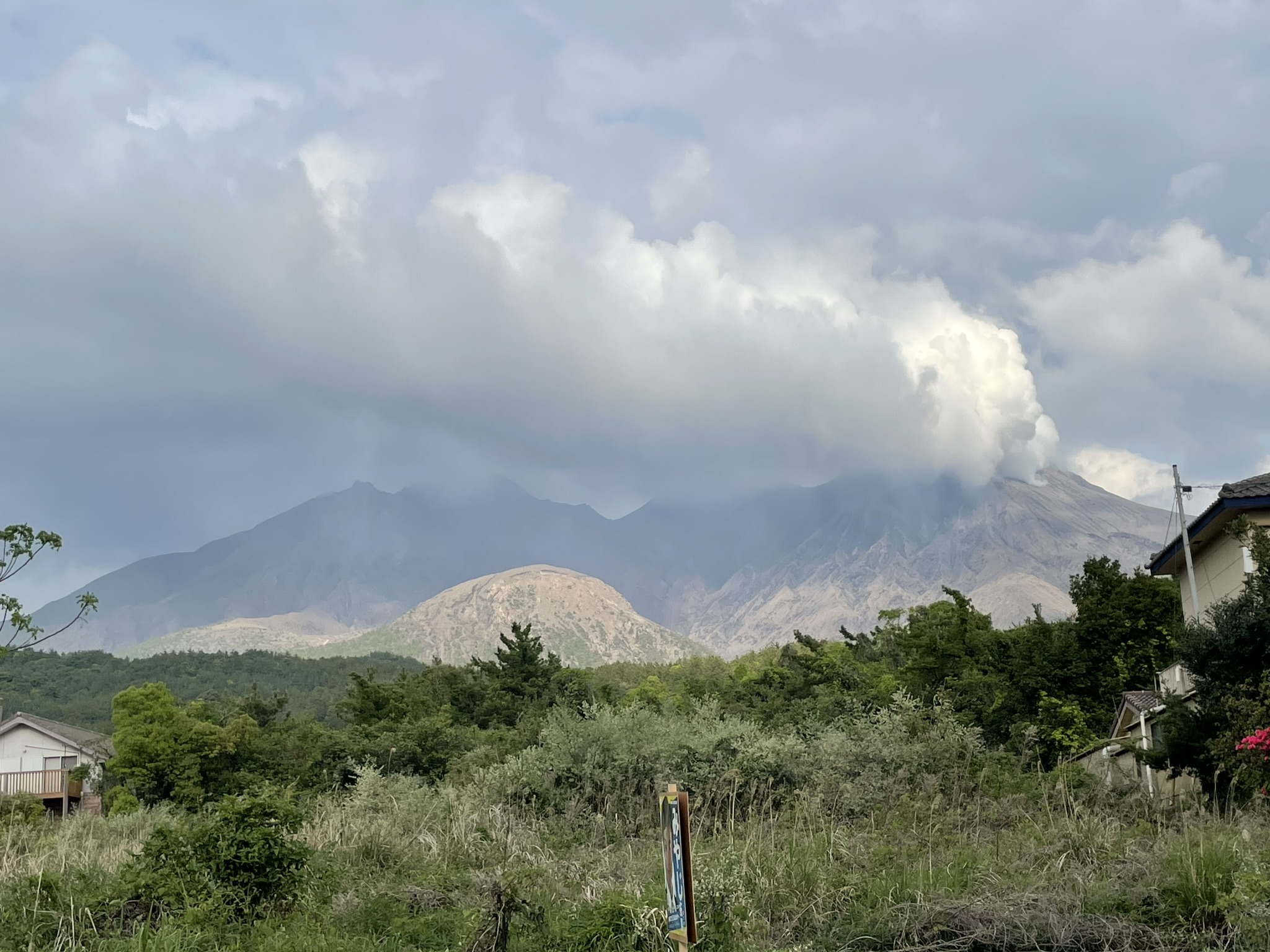
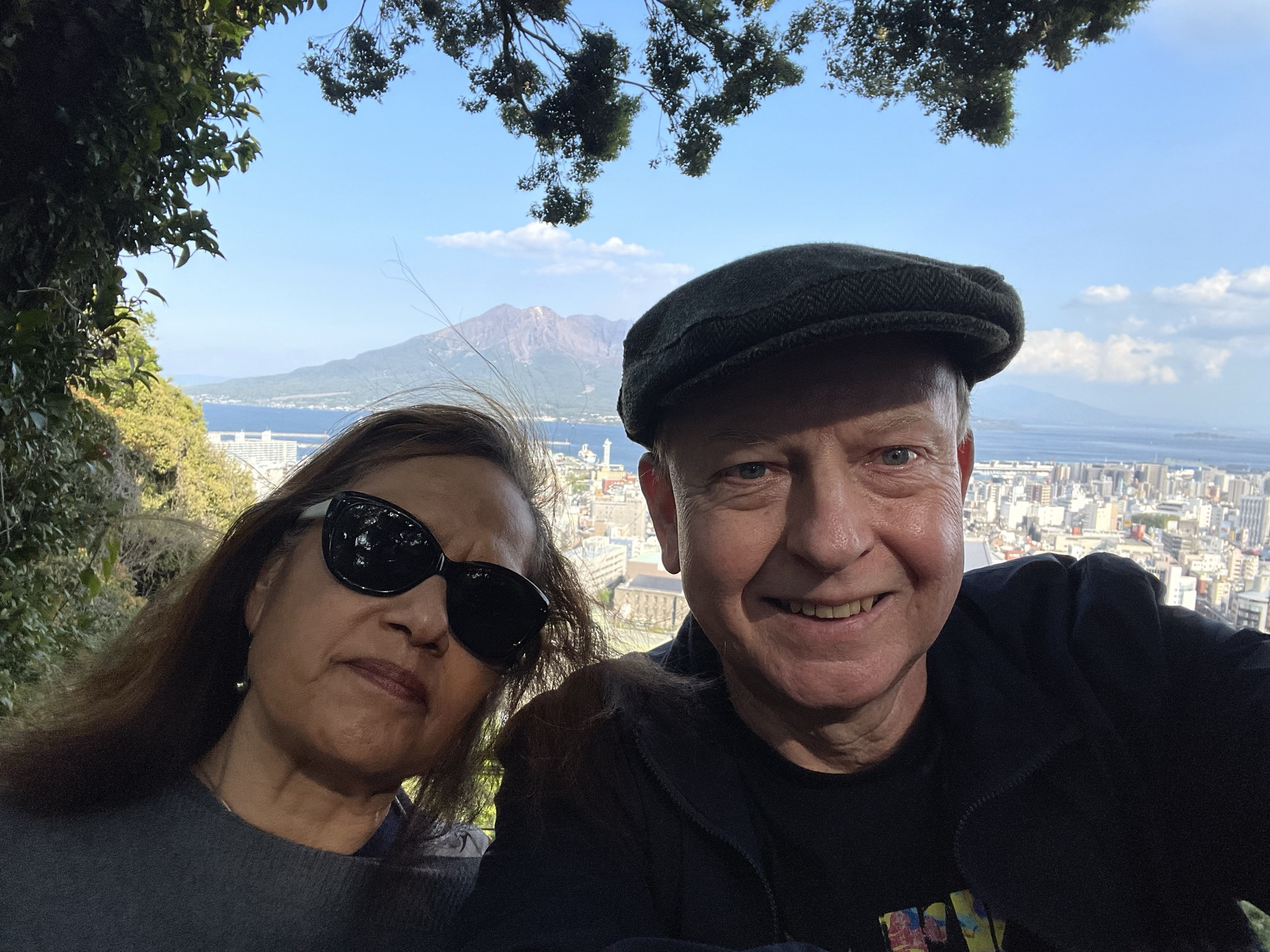 As we head South in Japan, we’re getting into the sub-tropical region, and the vegetation is green and lush on the walk up. A sign warns “Note – Wild boar haunts around here, I had the information, please note”. Darn, with a little more thought that could’ve been a haiku. It’s tough for Google translate to deal with calligraphy, hilarity and confusion normally ensue. It is a fine view of the volcano from the top – Sakurajima is a stratovolcano like those near Portland (Mt Hood, St Helen’s, Rainier etc) and remains very active. Most of the time there is a plume of ash erupting from its Southern peak, Minami-dake in Japanese. When the wind blows the wrong way, Kagoshima sees a lot of ash fall and there are monthly pickup days for bags full of ash filled by the locals but, luckily, our 6 or so days are ash-free. A couple of things about this area – It used to be known as “Satsuma” (insert obligatory citrus-related pun) and this is was the location of the last Japanese civil war, the Satsuma Rebellion.
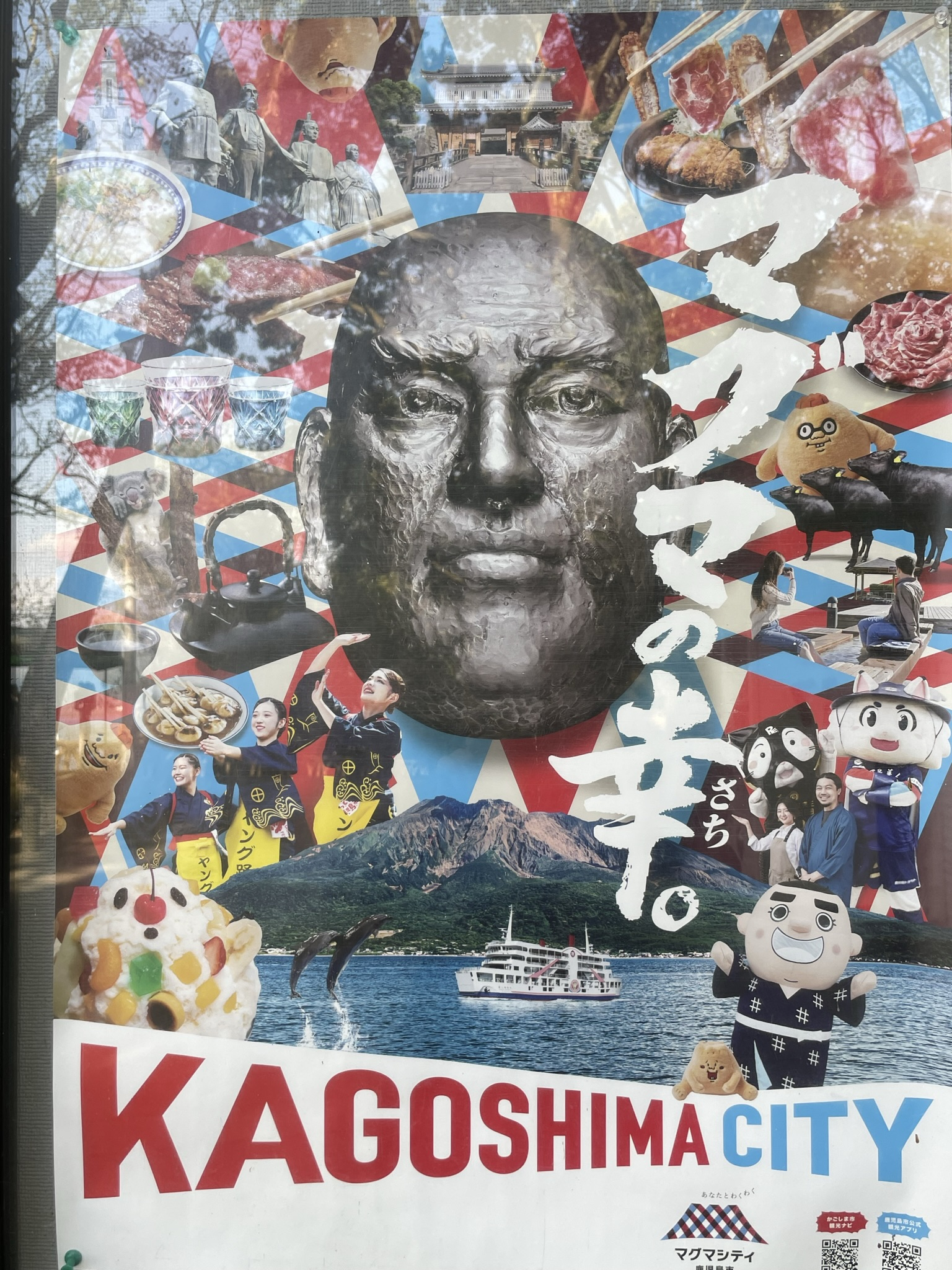
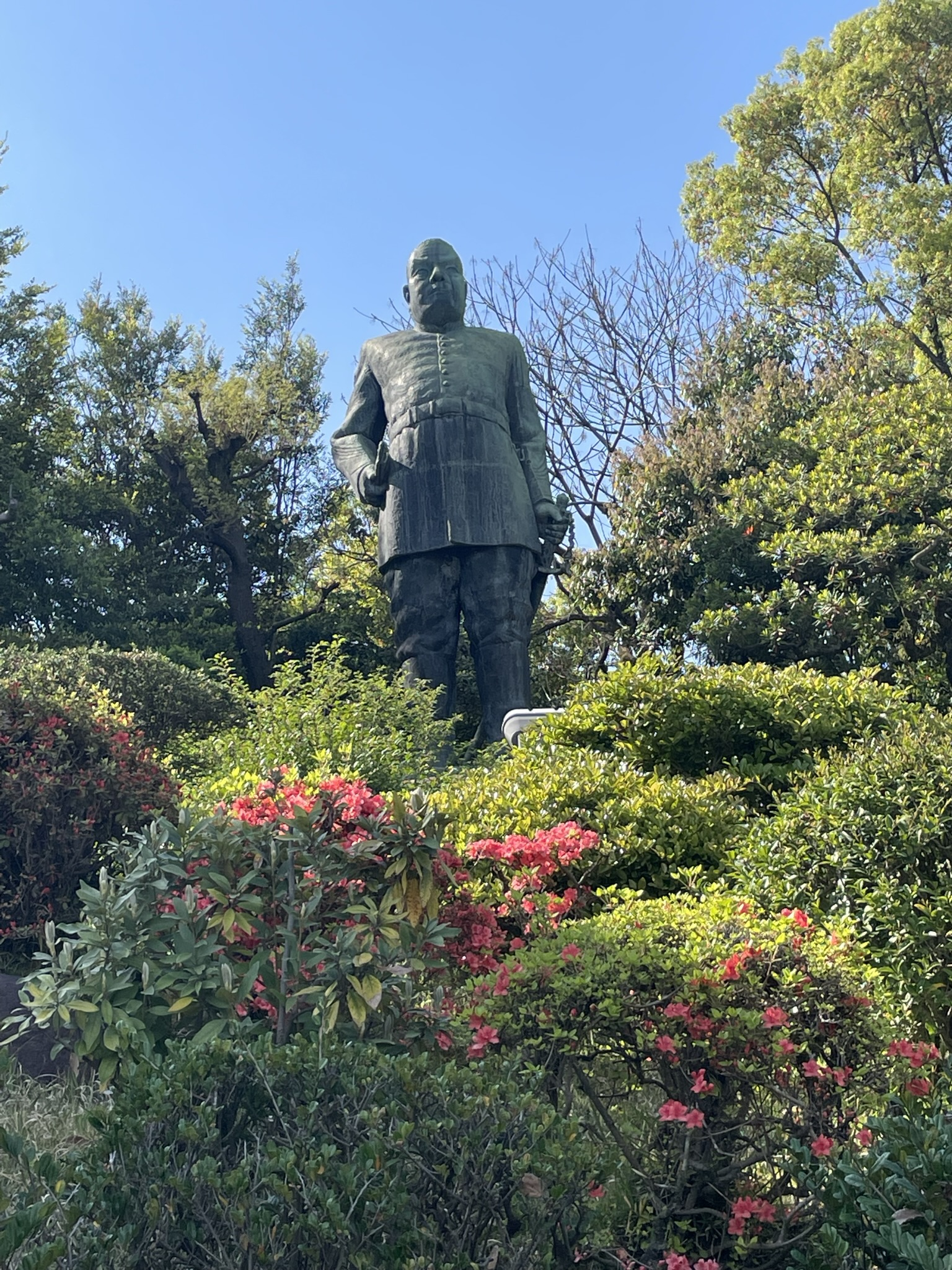 This local rebelliousness against, and independence from, the Tokyo establishment is still a point of pride, as can be seen through many murals and exhibits around town. It’s also the place where modern Western technology from the Industrial Revolution was introduced into Japan, more later. Thirdly, they had a big, but brief, dust-up with the colonial British, the Anglo-Satsuma war of 1862, after which reconciliation occurred, and a positive relationship developed. And that is why satsuma tangerines are so popular at Christmas time in the UK. Flippant, but actually true, as tangerines and novel, local citrus fruit are a big deal here.
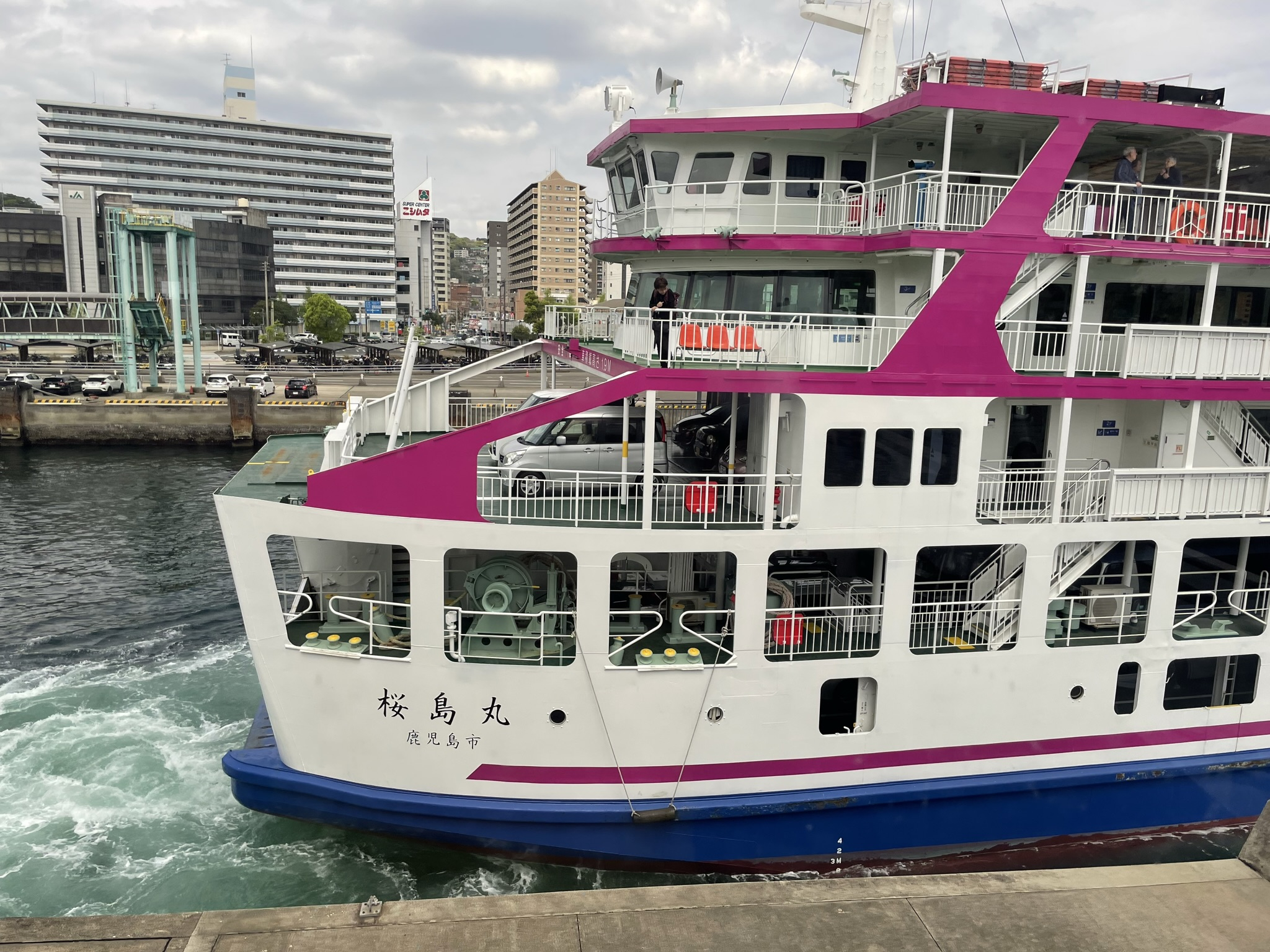
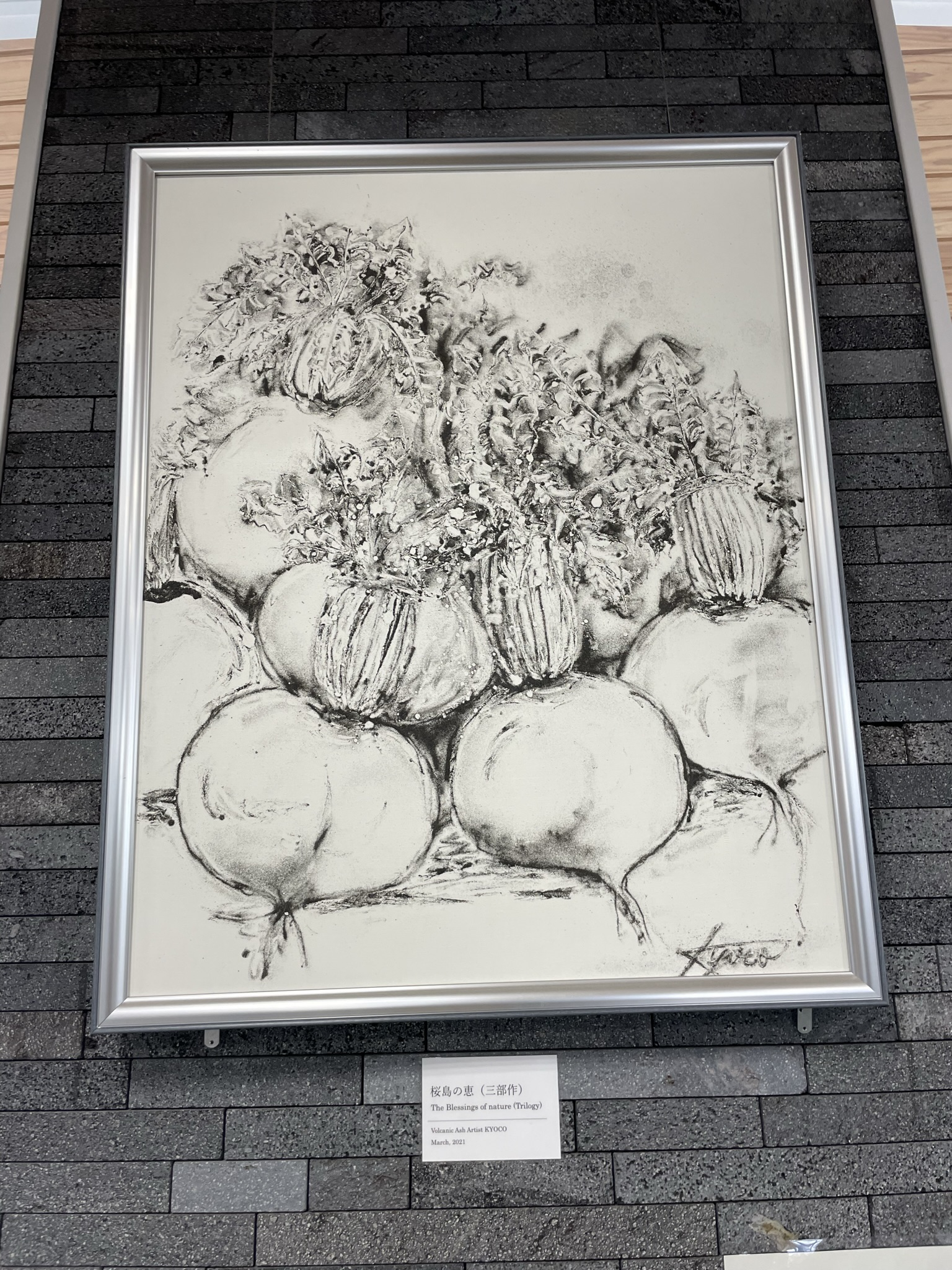
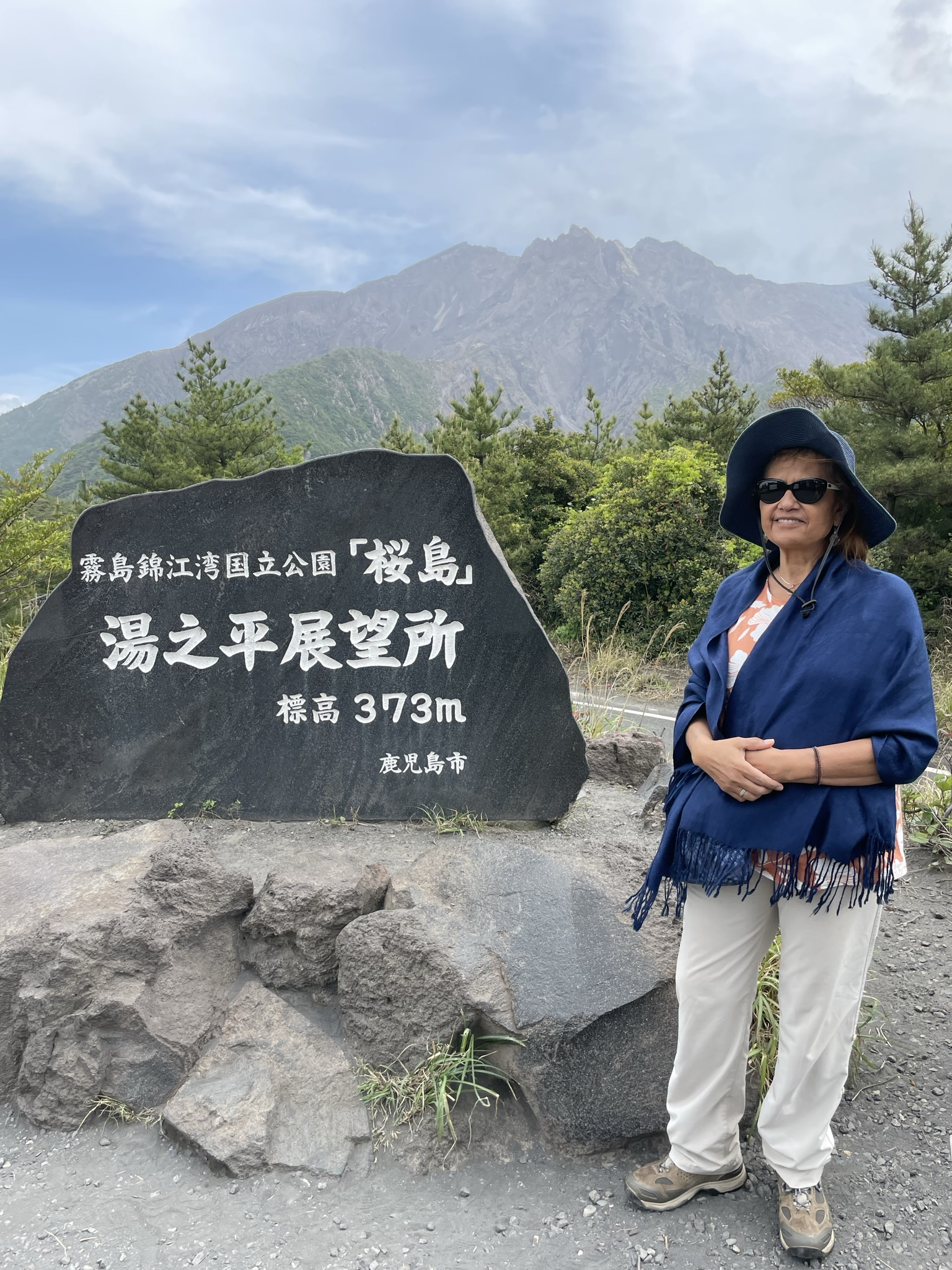 With the weather holding up, a day trip to Sakurajima itself is the plan for the next day. A quick ferry over, a browse though the visitor center and onto the Island View tourist bus. The island, or I should say, peninsular, is mostly active volcano so there’s only one main road encircling the perimeter, with a couple of incursions to observatories, and we’re taking the bus to the highest one, Yunohira. Quite sulfurous up there and some great views, not only of the volcano but back to Kagoshima across Kinko Bay. Kinko Bay is a huge, beautiful inlet about 60 miles long, looks like it would be excellent for boating and, maybe, kayaking. Aside from satsumas, Sakurajima is also known for the world’s largest daikon radishes(!) which thrive in the volcanic soil.
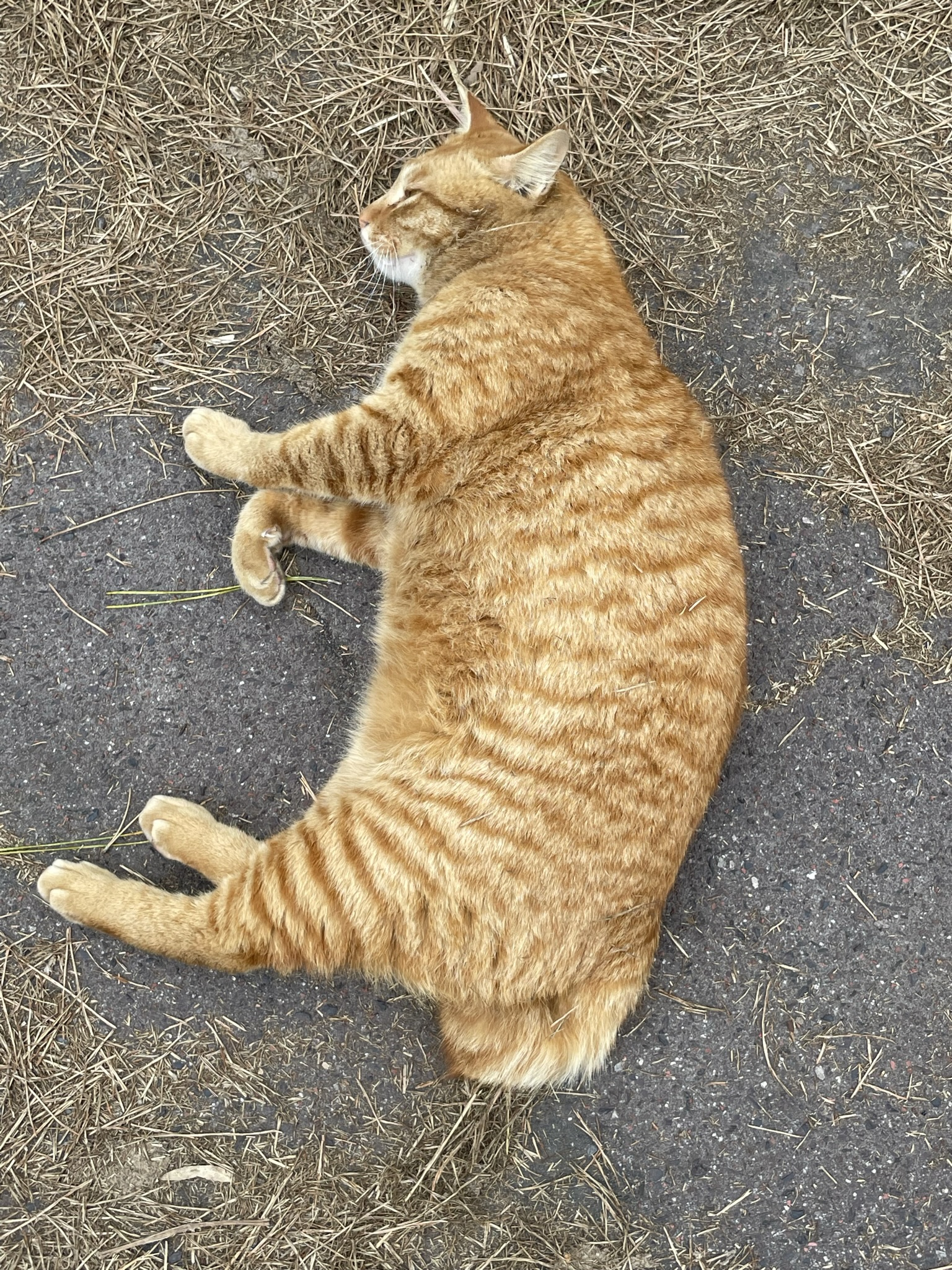
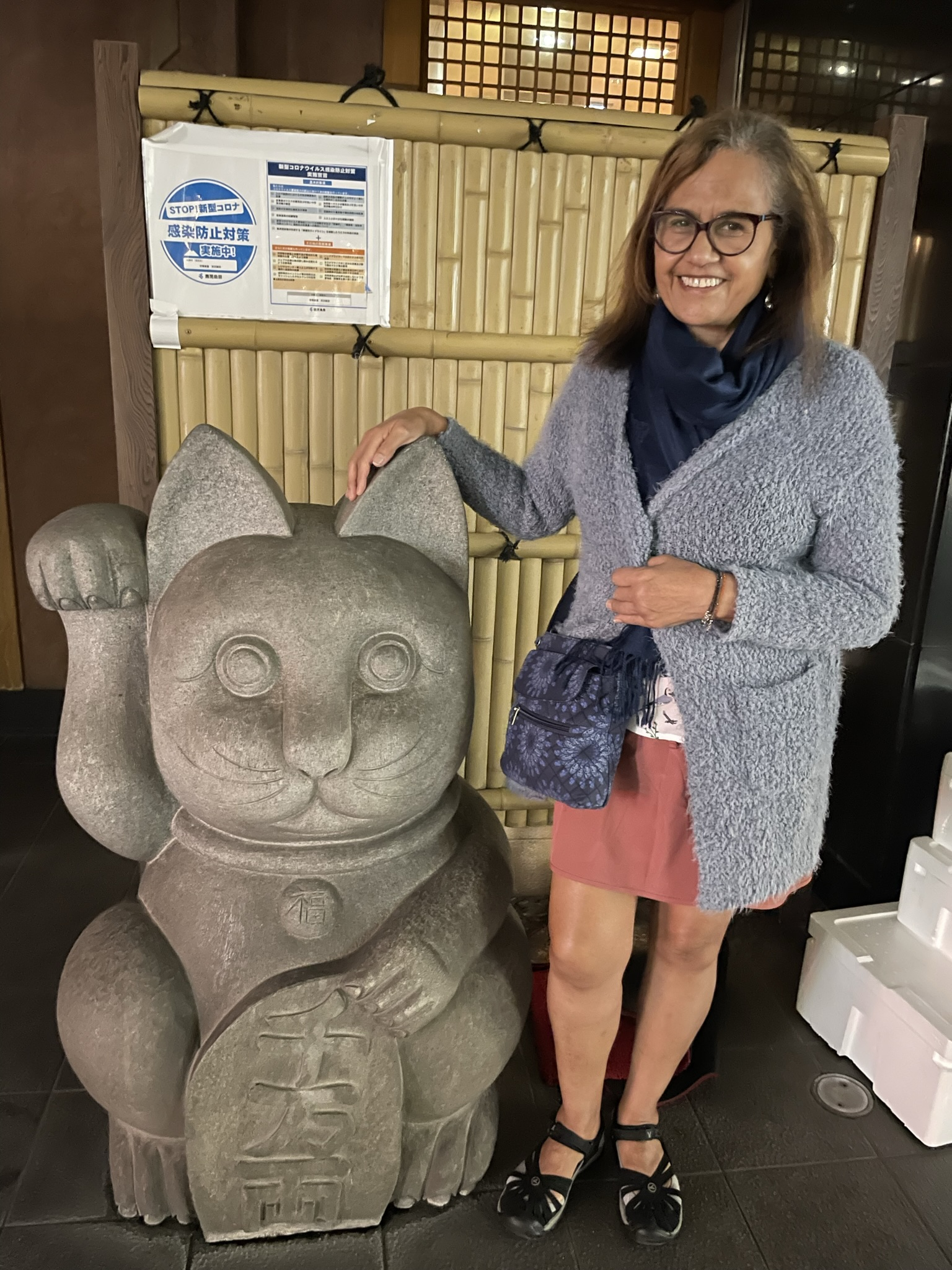
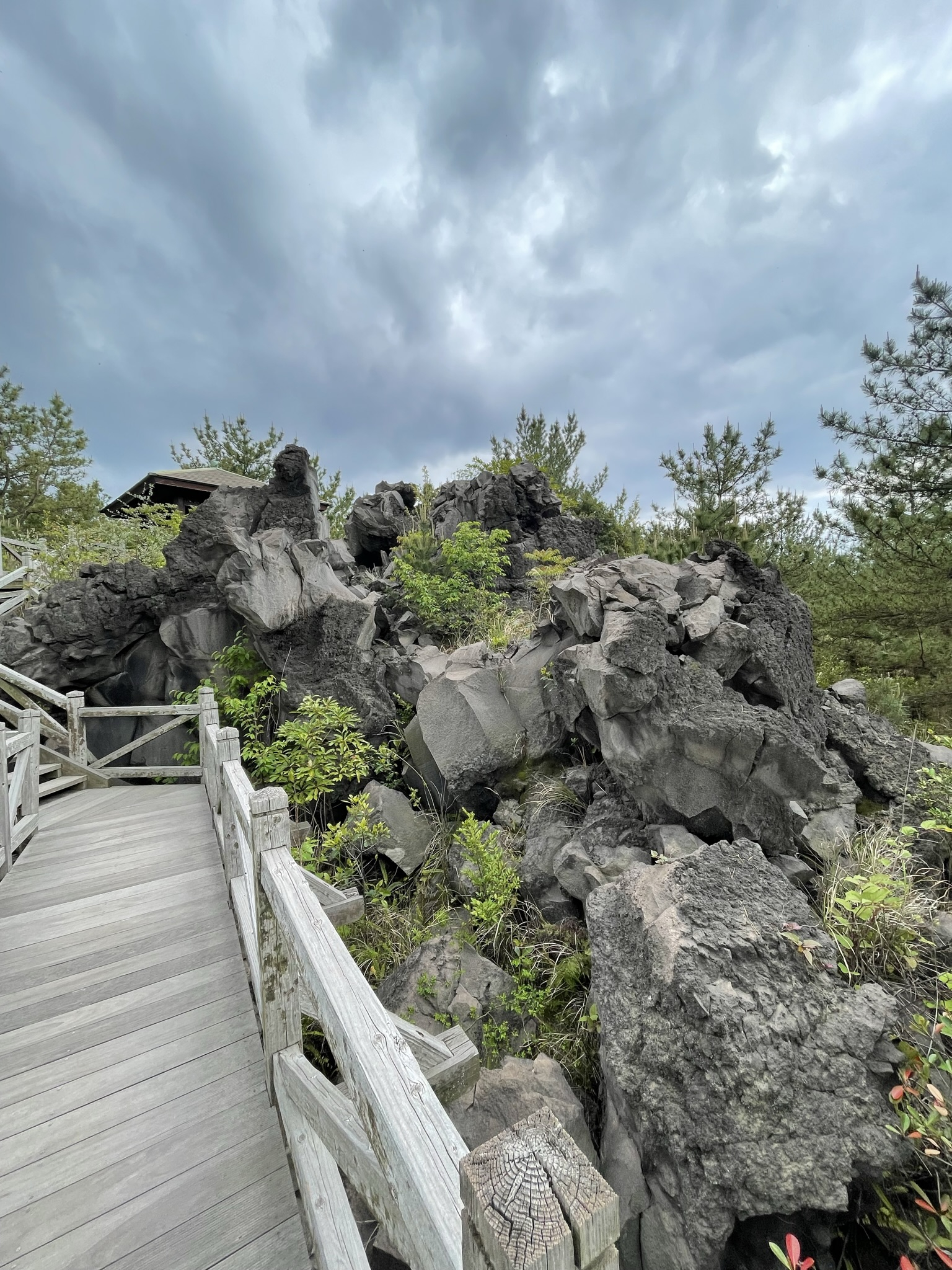
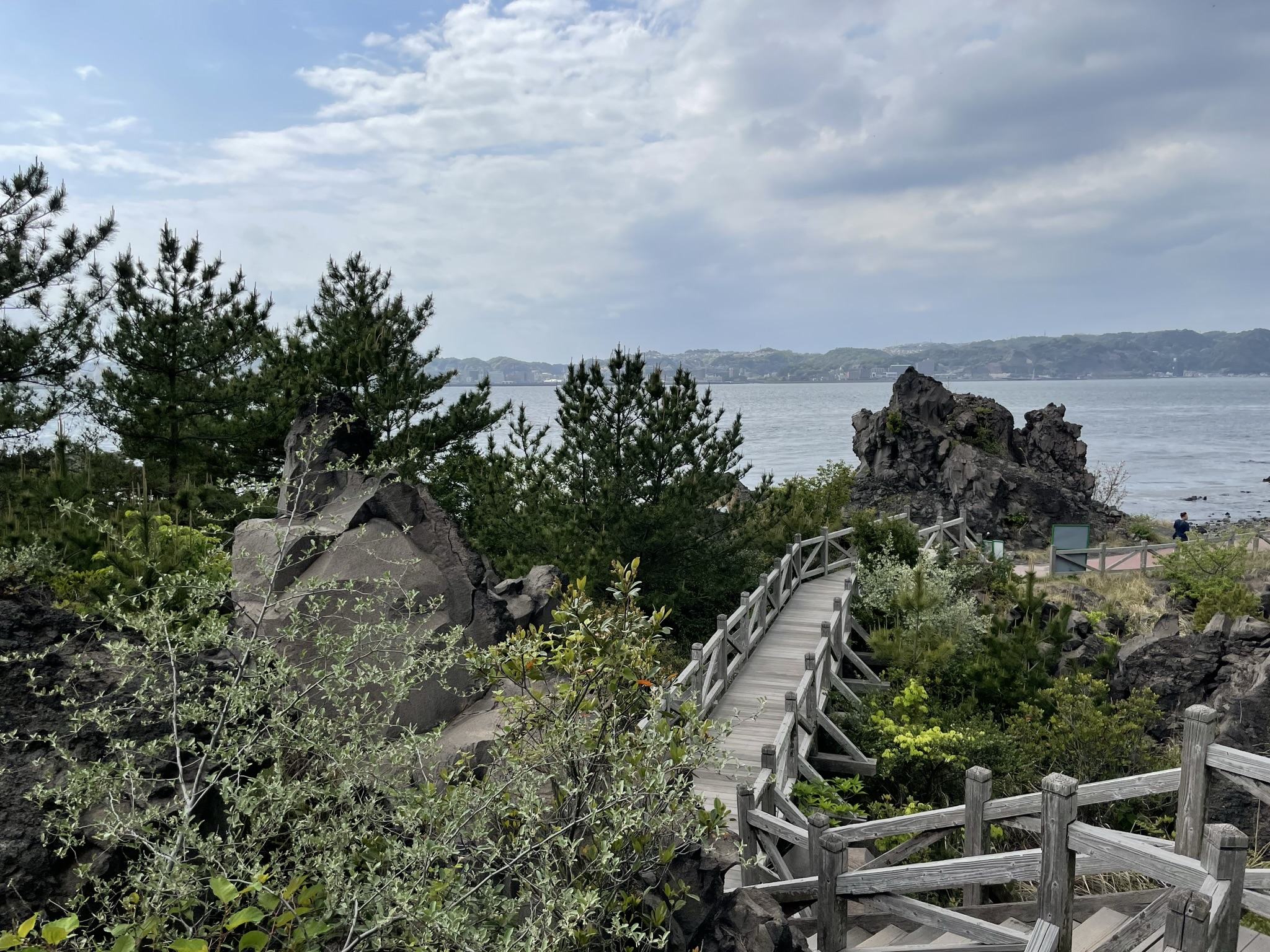
 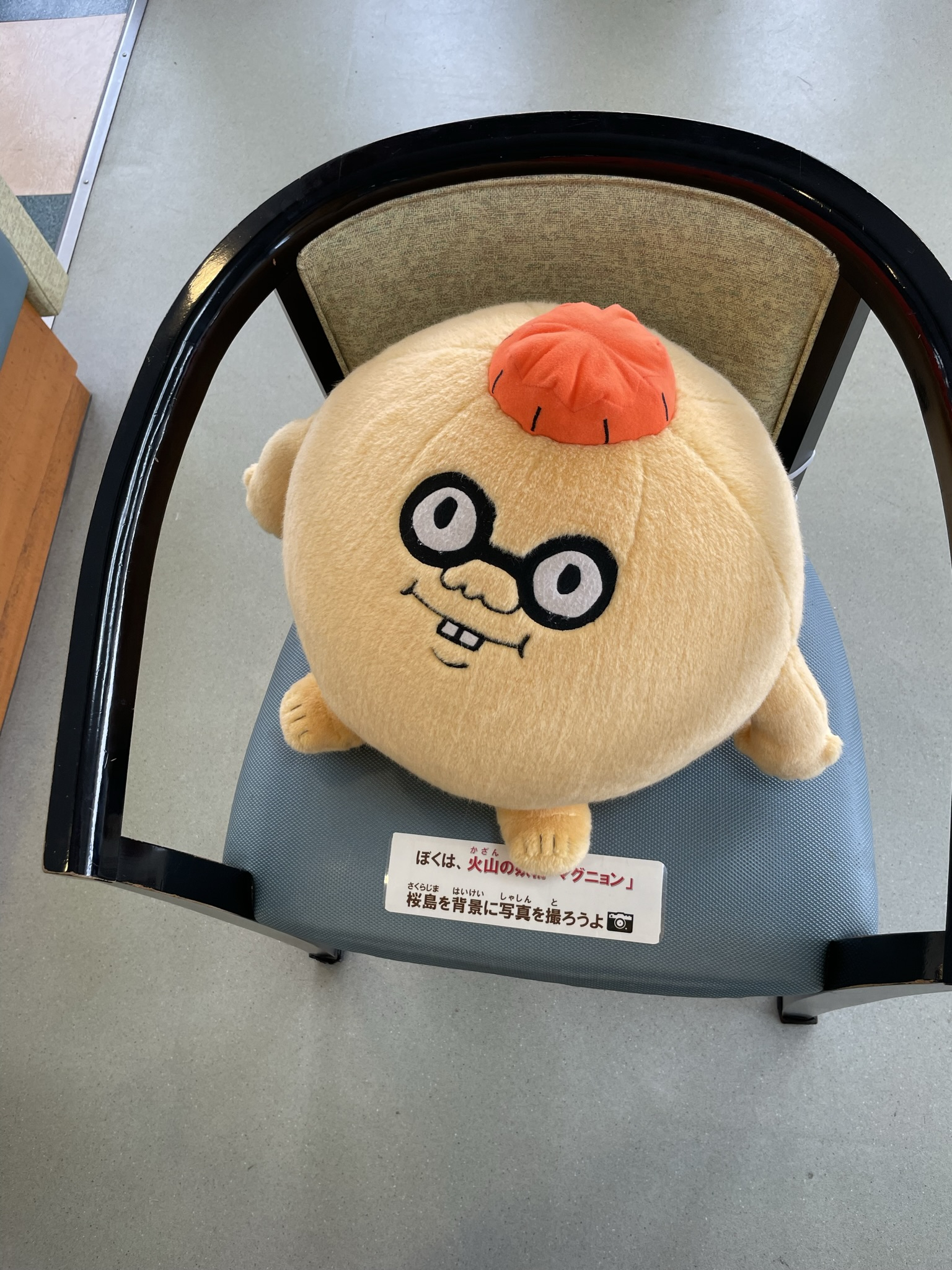 Of course, there is a kawaii (cute) radish mascot, the name escapes me but it’s appearance still haunts my dreams. The only real, legal and safe hiking opportunity on the “island” is through lava fields down by the water, and we do our duty. It’s a scenic, easy walk through the lava and tropical vegetation, punctuated by poems inscribed on zen-like stones, which Google Translate murders (an opportunity for AI here) plus a lot of semi-feral cats. Tokyo is a dog-town, the more high end and pampered the better but, as you head South, the cats (nekos) take over. There are many neighborhood, temple and park cats who don’t seem to have a specific owner but are looked after by the locals. The lava trail is well populated by chill, well-fed felines enjoying the balmy weather. Not good for the local bird population, but I’m just reporting not encouraging.
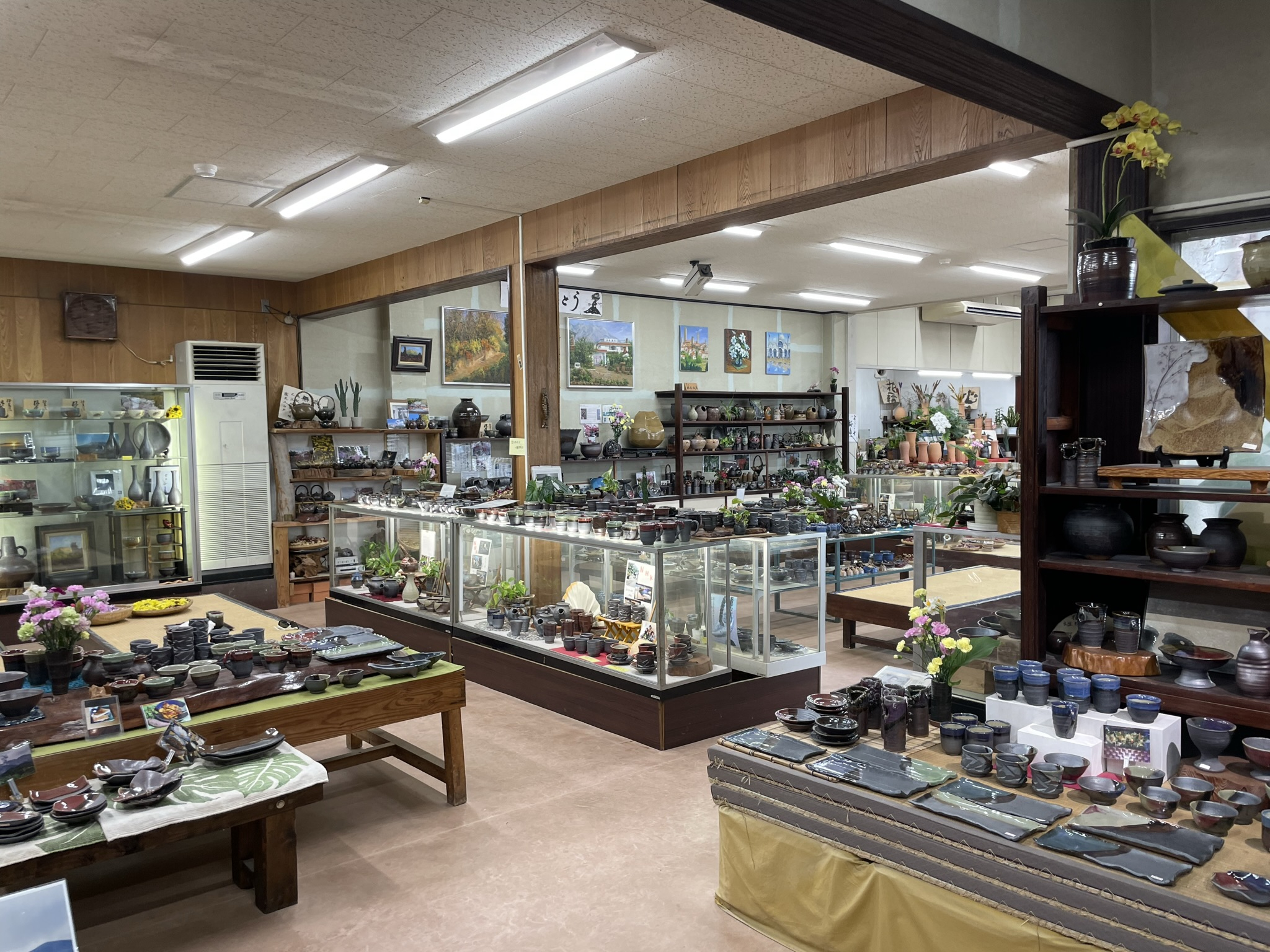
 A stop is made at a local female owned pottery studio and store where we’re given tea and a snack gratis, plus a tour of the workshop where Sakurajima ash is incorporated into the pottery and the colors are derived entirely from local flowers: A cool and friendly place.
We’ve been putting in the miles, you walk a great deal in Japan even with all the trains, and we look for a bus back to the ferry terminal, but it turns out we’re in the wrong spot for the ferry route. Some locals take pity on us and give us a ride back to town. We like this place! Back to the apartment in the red light distract to plan the next day’s excursion to Sengan-en, home of the Japanese Industrial Revolution. (It’s better than it sounds).

Leave a Reply