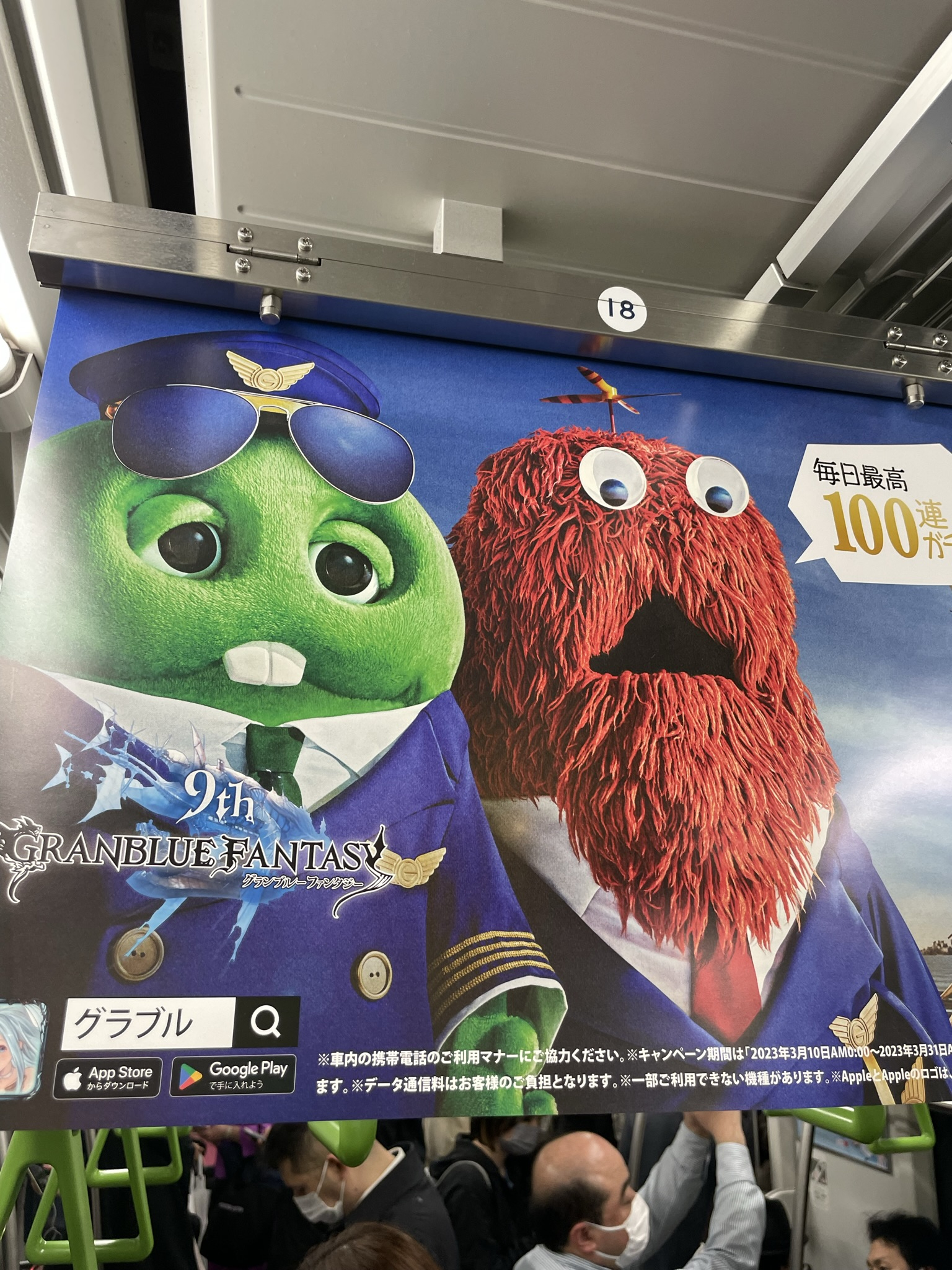
 It starts with a tickle in the throat, which develops into full-on soreness, then the coughing begins: Not the slightly annoying type, but the “this is bruising my lungs and I’m going to die” variety. Sounds bad but, wait there’s more, a follow up bacterial onslaught where your lungs produce substances never before seen on Planet Earth. Covid may be so last week now but, don’t worry, there are plenty of other viral and bacterial infections available in Japan for the unsuspecting long-haul tourist with lowered resistance. Nevertheless, it’s time to take the Shinkansen for the first time this trip, wearing a mask, and make the journey down to the city of Fukuoka on the island of Kyushu, about 620 miles SW of Tokyo. Tokyo’s main station is always a riot, and Saturday morning is no exception. You have to be quick on your feet, which is problematic when you’re as overloaded with luggage as are. We certainly travel lighter than the insanity of 60lb bags back in the early 00s, but our 40lb suitcases and large backpacks are not a good match for a hyper-busy Japanese railway station.
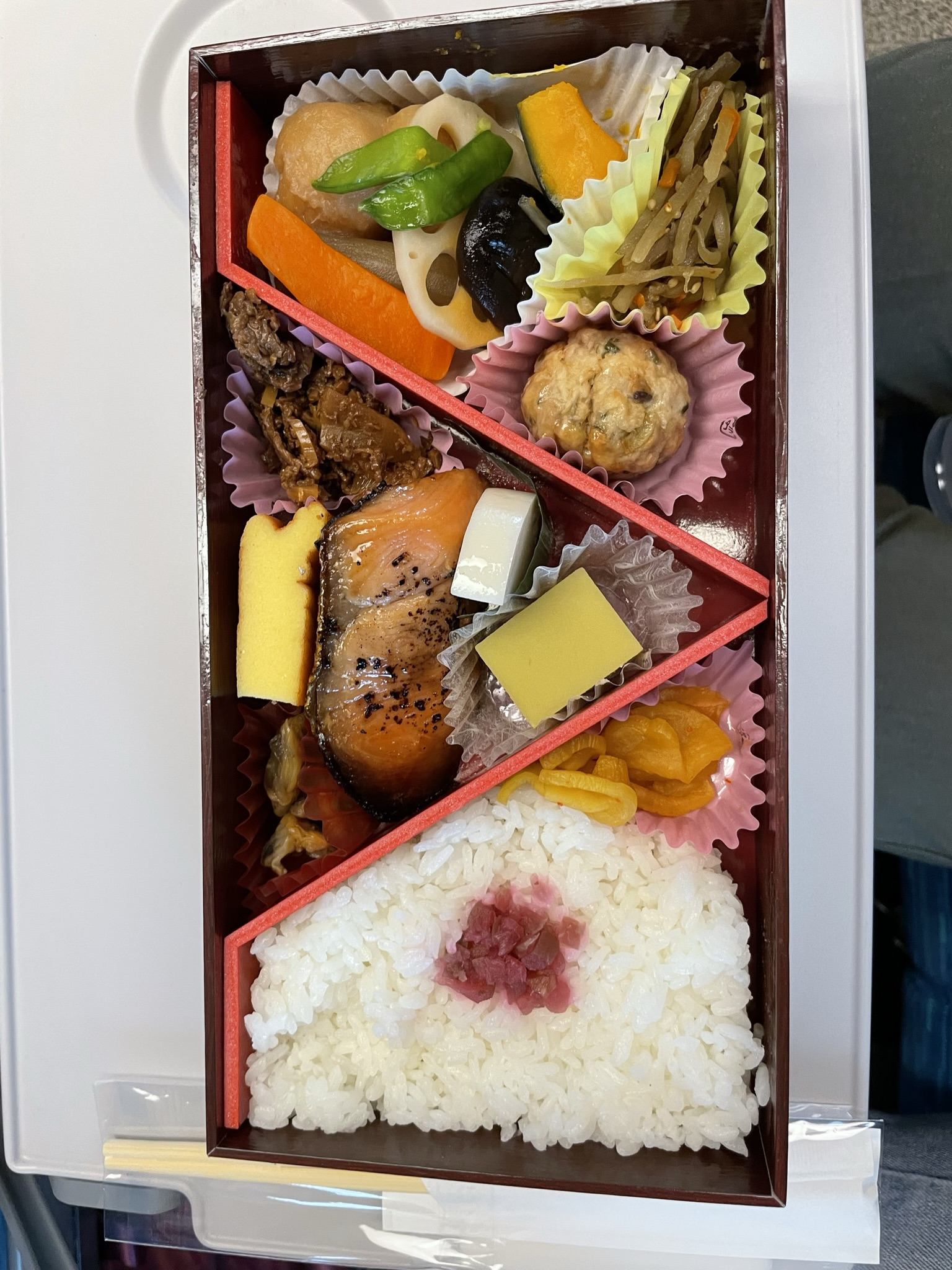
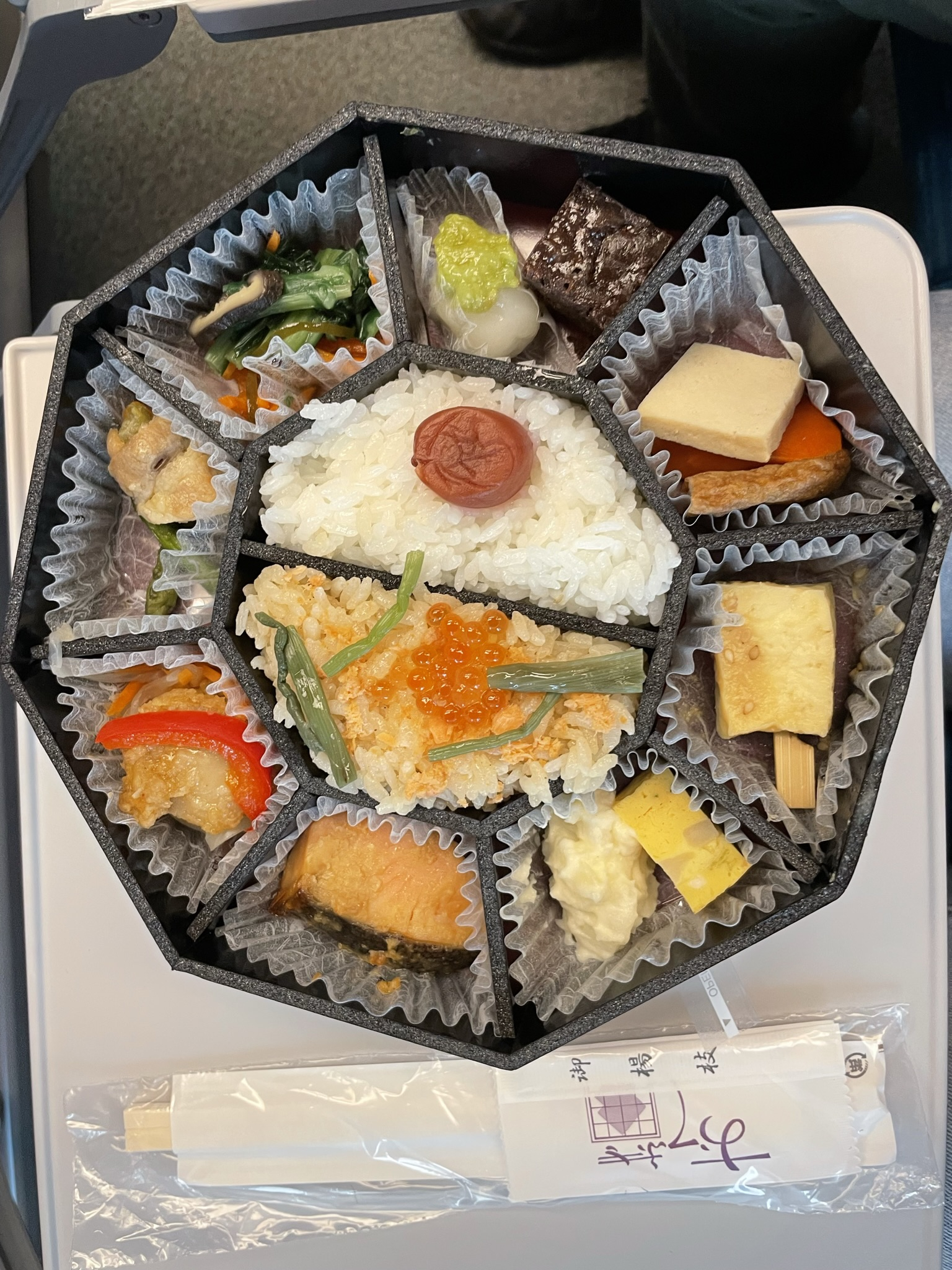 But the orchestrated melee on the concourse is nothing compared to the ruby scrum going on in Tokyo station’s most famous Eki-Ben store, Matsuri. (Eki-Ben = Pre-packaged meal for the train, Eki being Japanese for station and Ben short for bento). I leave my bags with Abby and dive in to grab what I can without getting pummeled. I exaggerate a little, but not much: Only in Japan could people be jammed together in a mosh pit like this without tempers flaring or injuries occurring. Lunch successfully extracted, the next trick is finding the correct path to the Shinkansen lines heading South since all the North bound lines are clearly marked but those for the South are nowhere to be seen. We have to ask for help, and we never figured out where the signage was but, due to prudence, we have plenty of time to catch our train. Let me state the obvious, if you’re catching a long distance train that you have seat reservations for at Tokyo station give yourself a lot of time, more than 30 minutes, to get from the entrance to the platform.
 Normally, you’d fly from Tokyo to Kyushu, as it would be cheaper and, probably, faster but we need a JR Rail Pass for its convenience and, with that in mind, we need to use it as they’re not cheap. In our case, a 14 day pass was $360 per person, and that’s with the excellent (for us) exchange rate of ¥130+ to the $. Once you’ve seen the lines for the ticket machines at any major Japanese rail station you’ll understand that the rail pass is a lifesaver. Here, we’re talking about inter-city travel, locally you can usually use an IC card like Suica or Pasmo to tap on/off for train, bus and subway. For Shinkansen and other express trains, and carrying long-haul luggage, you definitely need seat reservations, which can cost as much as the train ticket itself, but these are no extra charge using the rail pass. Thankfully, the seat reservations can now be done on a machine so, if you’re willing to commit to an itinerary, you can book all your seats in one session. Just remember to hit “Confirm” twice at the critical point or you’ll be stuck at the machine indefinitely wondering what the heck is wrong. And, oh yeah, storage for large luggage is now at a minimum on the Shinkansen so, if you can’t heft it up into the small overhead racks, it’s going to be squeezed in between your knees and the seat in front.
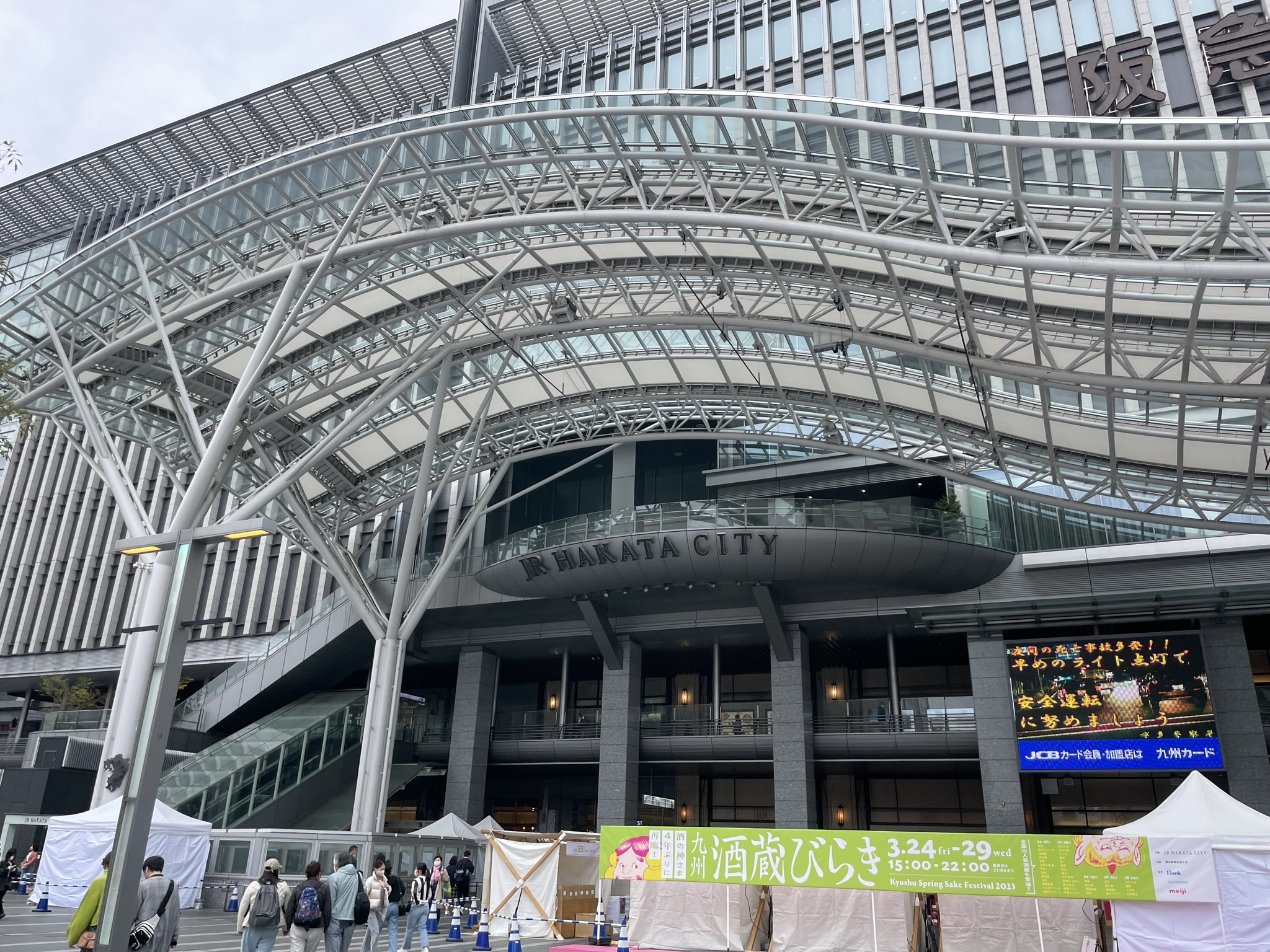
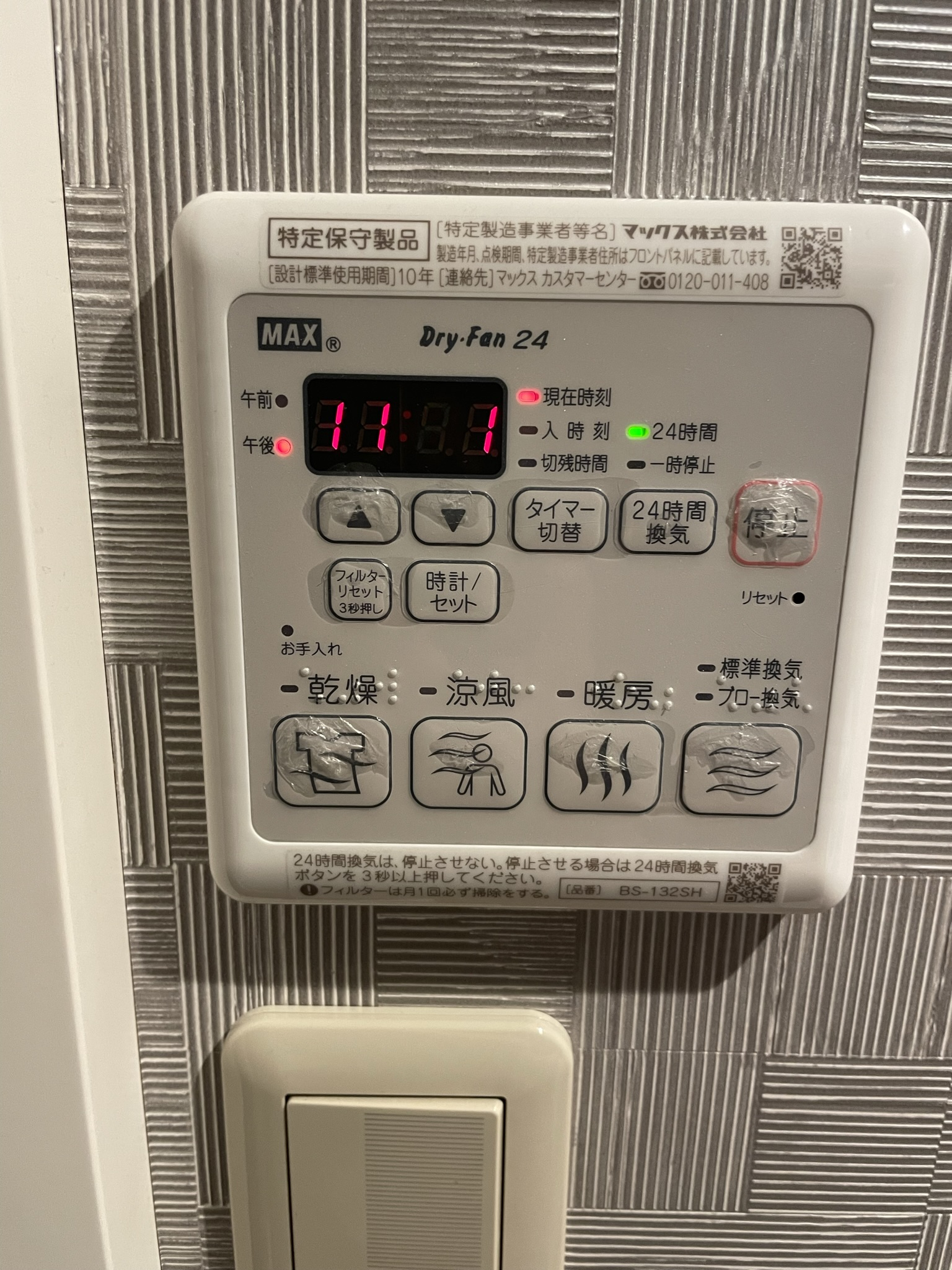
 We get into Hakata station in Fukuoka without incident and discover the the Spring Sake Festival has just gotten underway and is setting up right outside the station. Whoo hoo! A TripBase aparthotel about 12 minutes away will be our hangout, a no contact operation heavy on the electronics. The apartment is loaded with appliances and devices with no English instructions but after an hour or so of Google Translate camera work, and a lot of trail and error, we’re, basically, in business though there’s a couple of remotes we never figured out.
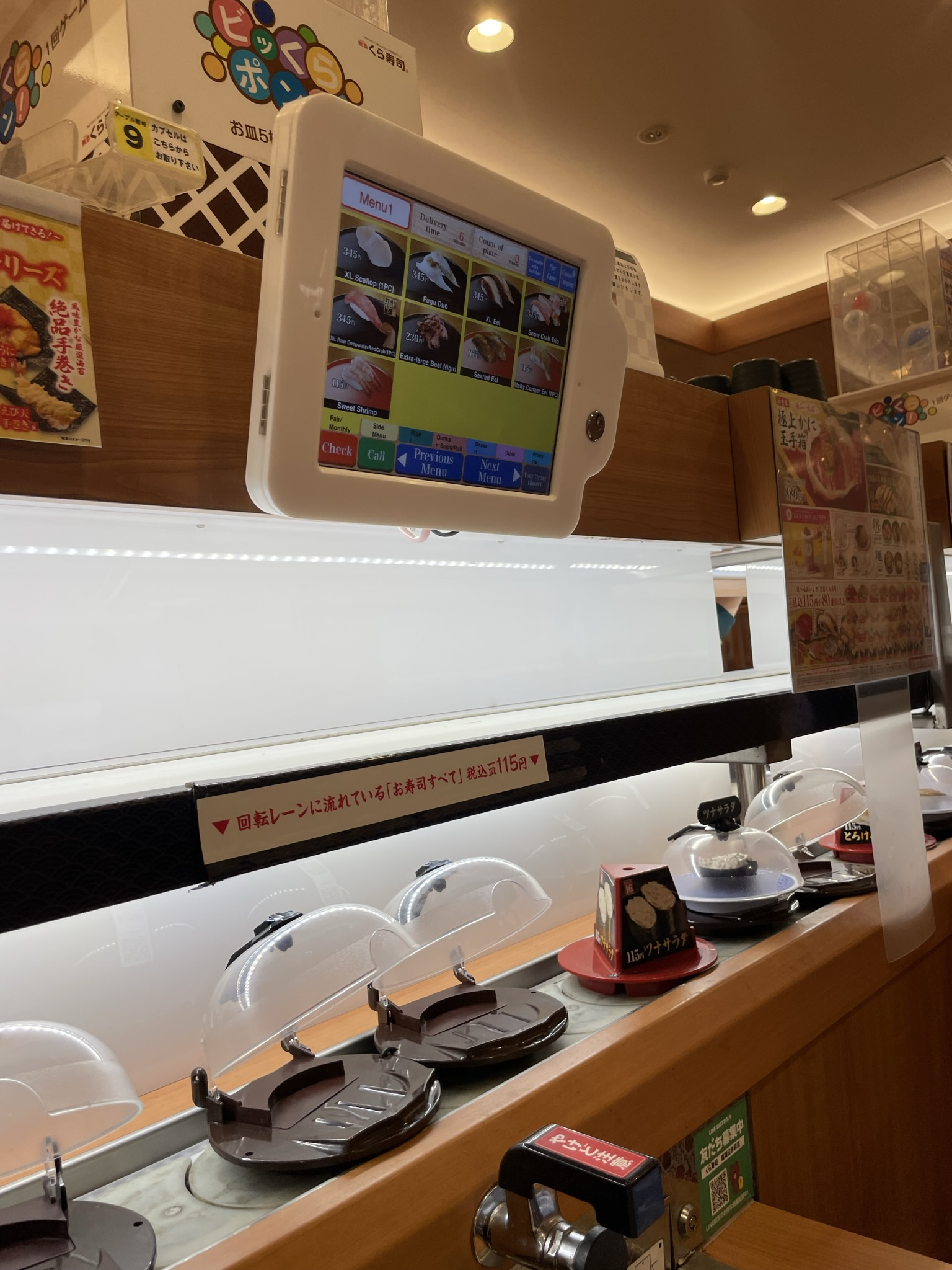
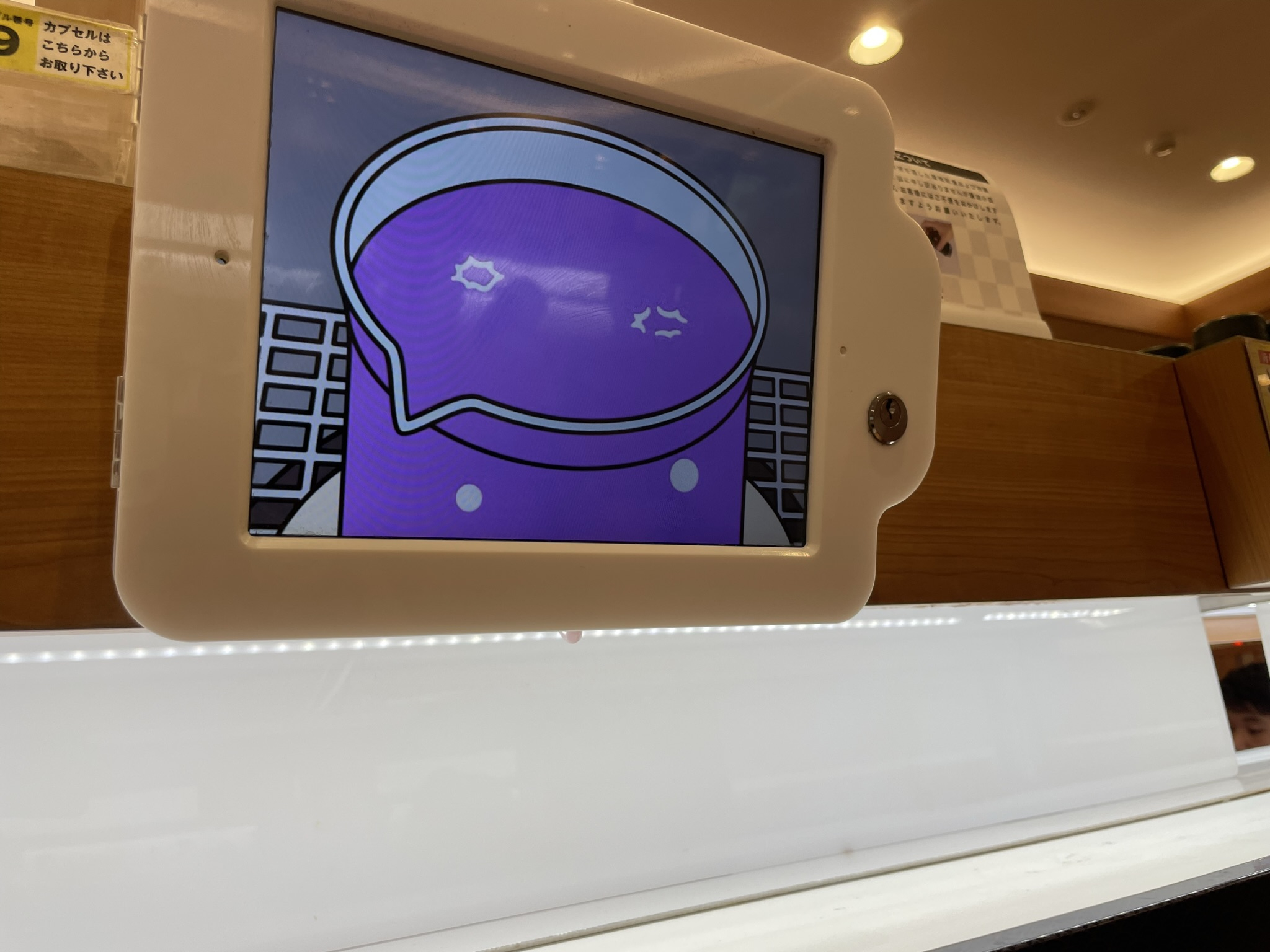
 We’re not oriented in the city yet and dog tired so the thought is that one of those kaiten sushi (conveyor) places would make for a low stress evening. Kurazushi is one of the top three kaiten chains so there we head there, only to be confronted with a battery of screens and endless kanji (idiomatic Chinese derived characters) dominated instructions. We flounder around for a while, and are about to give up, but a young local couple comes to our aid and shows us the ropes. First terminal – Reservation Yes/No, then you’re given a number, then onto terminal/screen 2, where you watch or listen for your number then, when its up, a table number is automatically allocated to you. Ordering for everything, including drinks, is from your table’s personal screen with your items are made to order and arriving by track directly at your table.
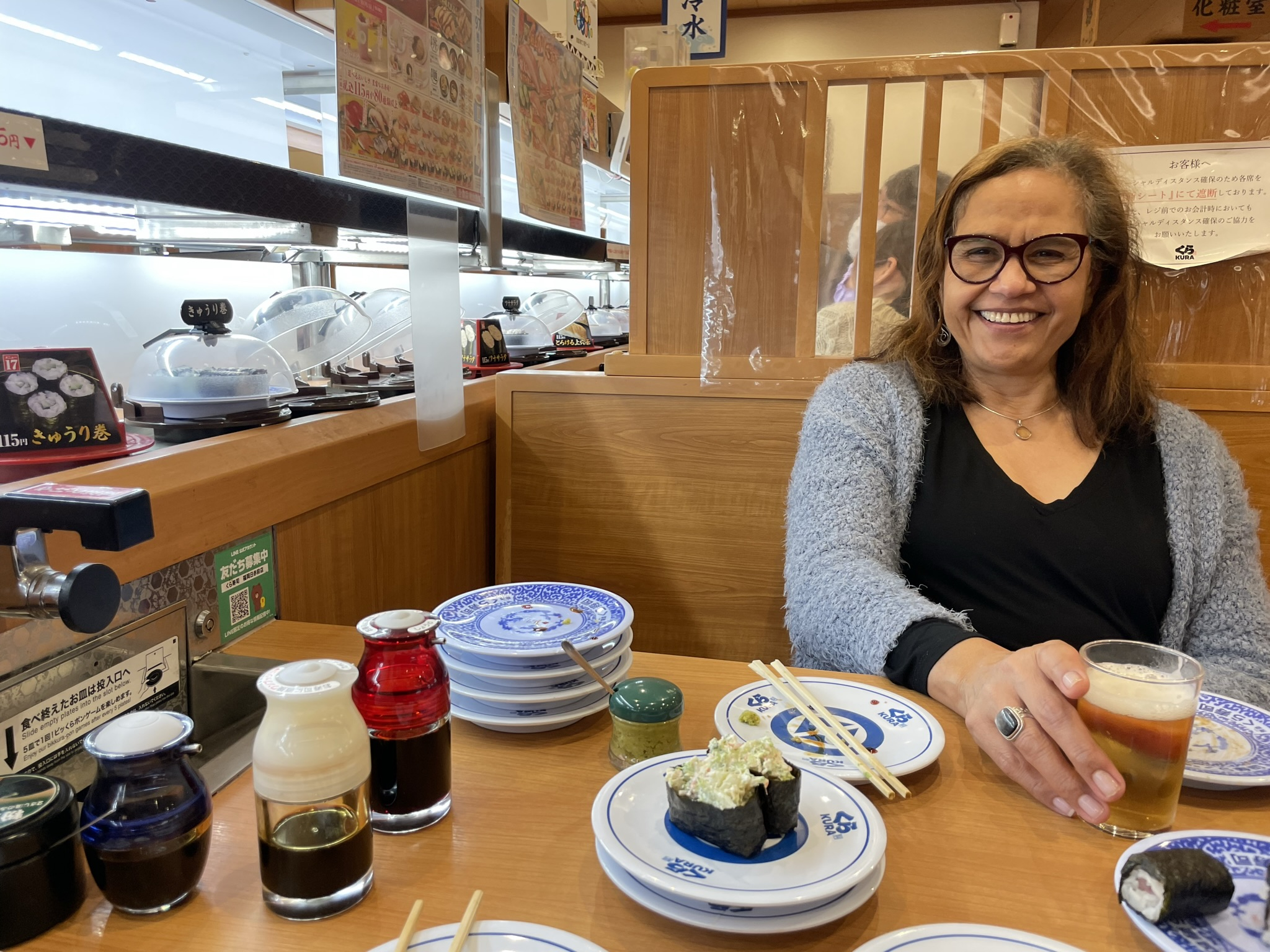 Given the number of tables and orders running simultaneously, the system is impressive. Hey, it’s not fine dining but the menu is large, it’s fun and amazingly cheap (How about $1 for a pair of nigiri?). Also, when you put 5 empty plates down the chute you get to play Bikkurapon! where you have a chance to win a Gachapon (capsule game, which are amazingly popular over here). Abby is a winner!
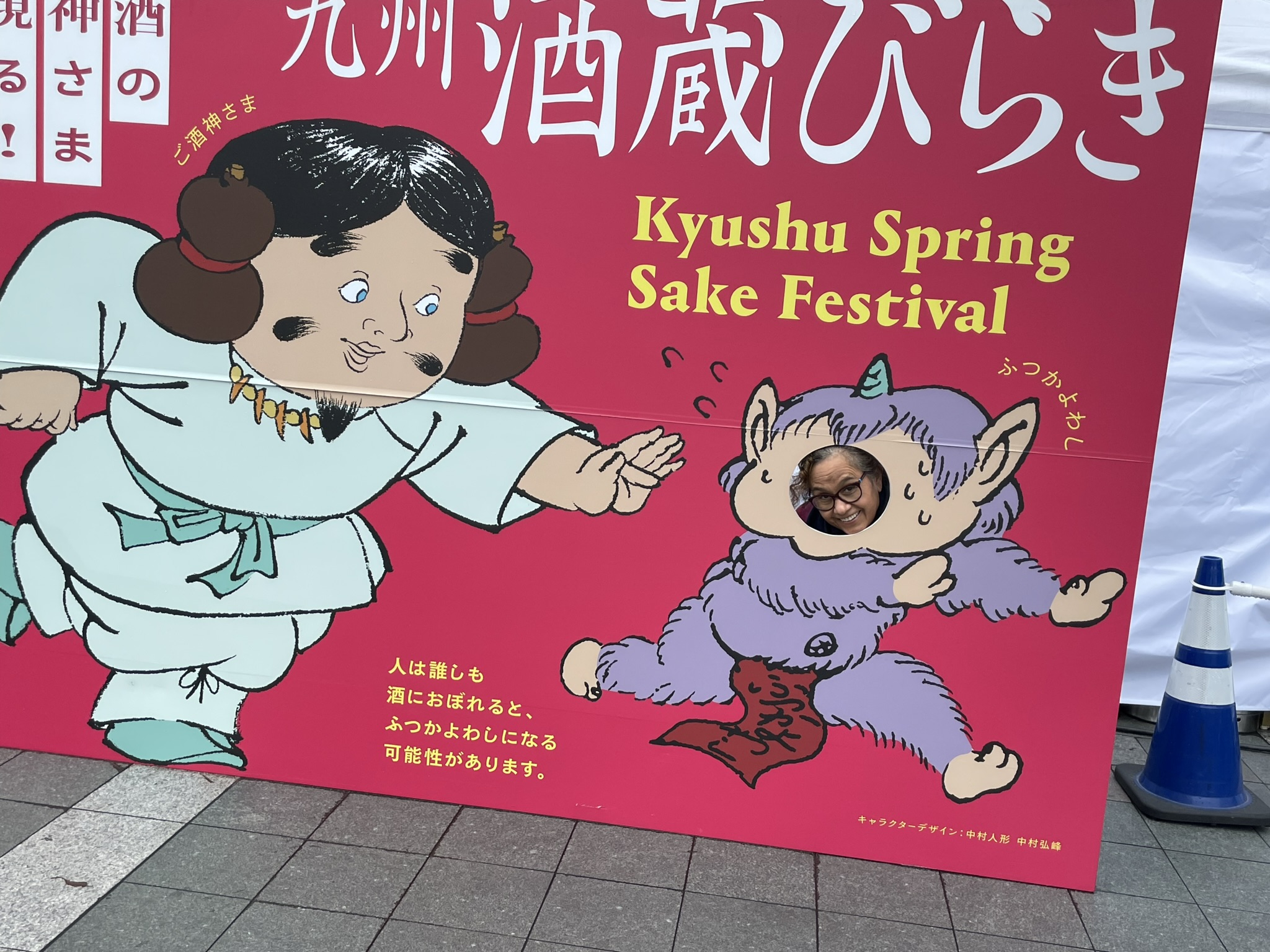
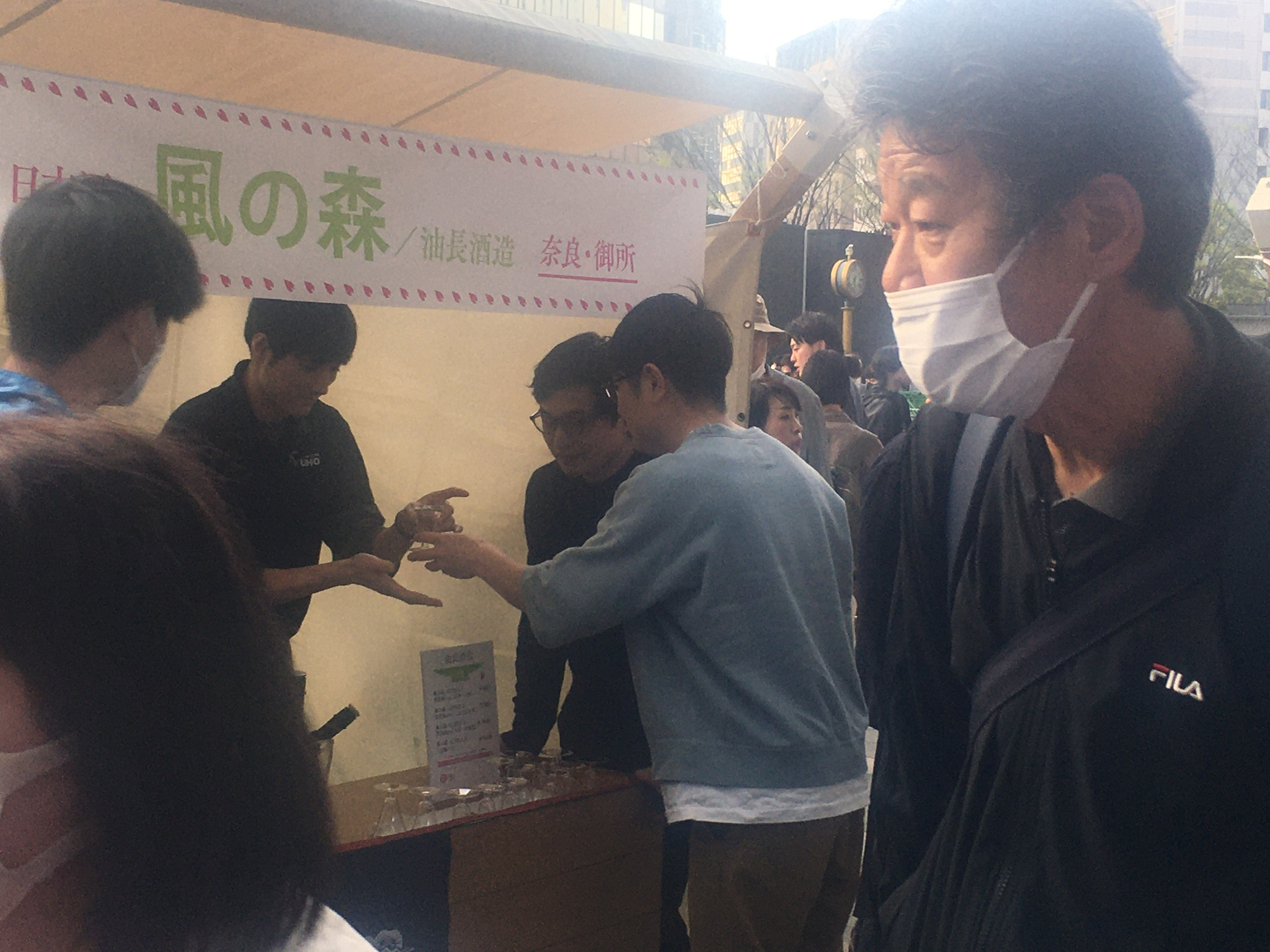
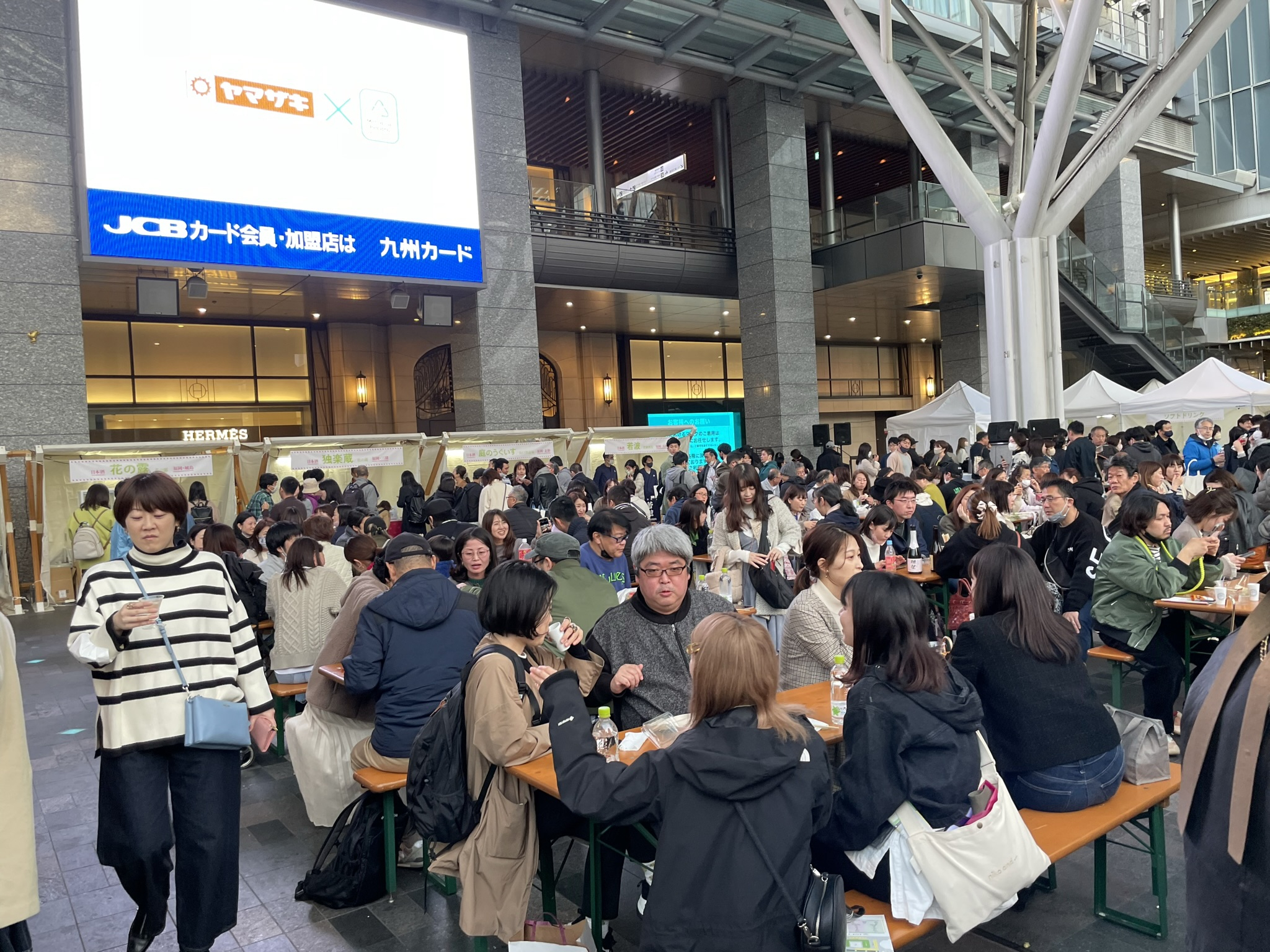
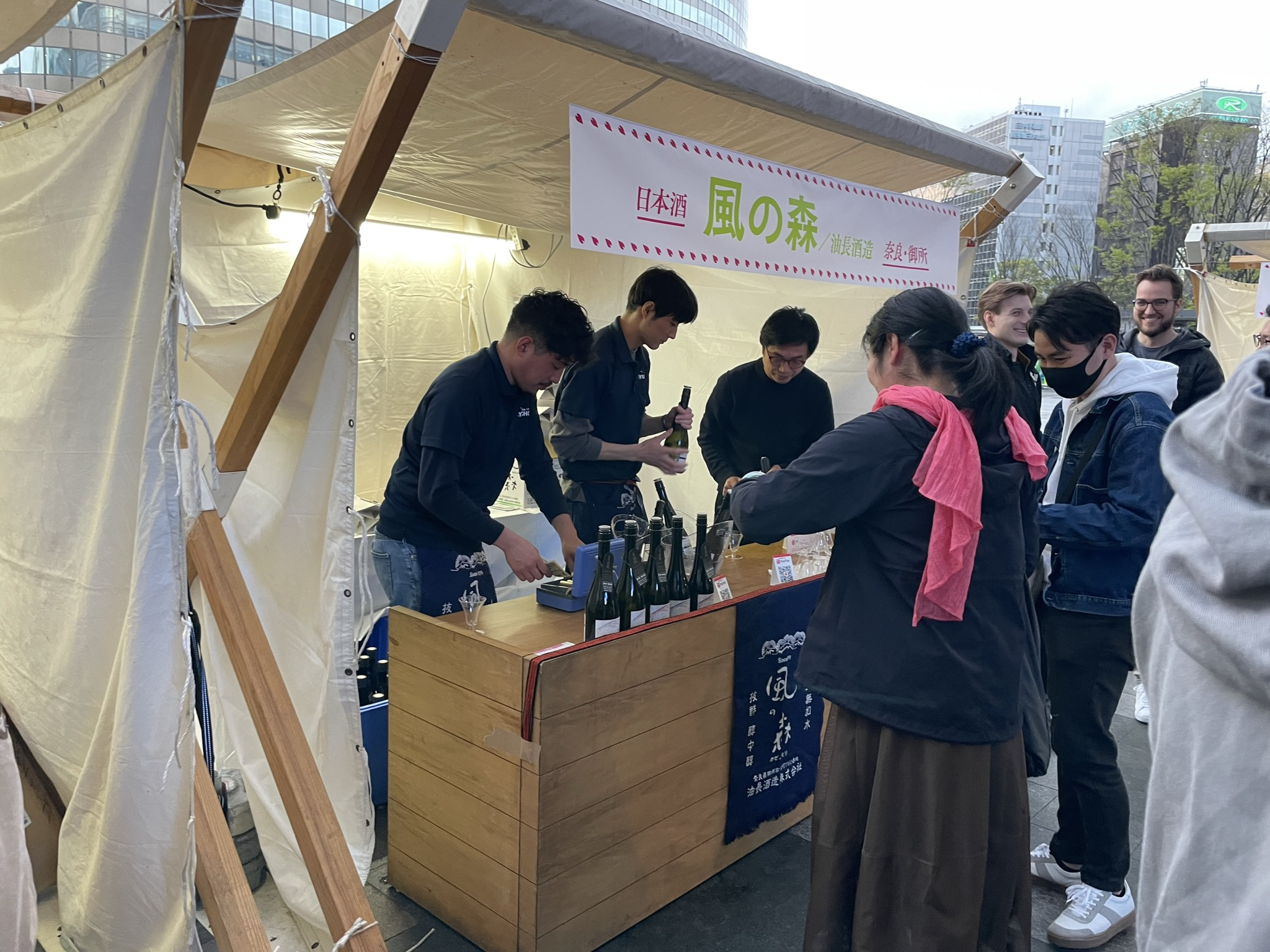
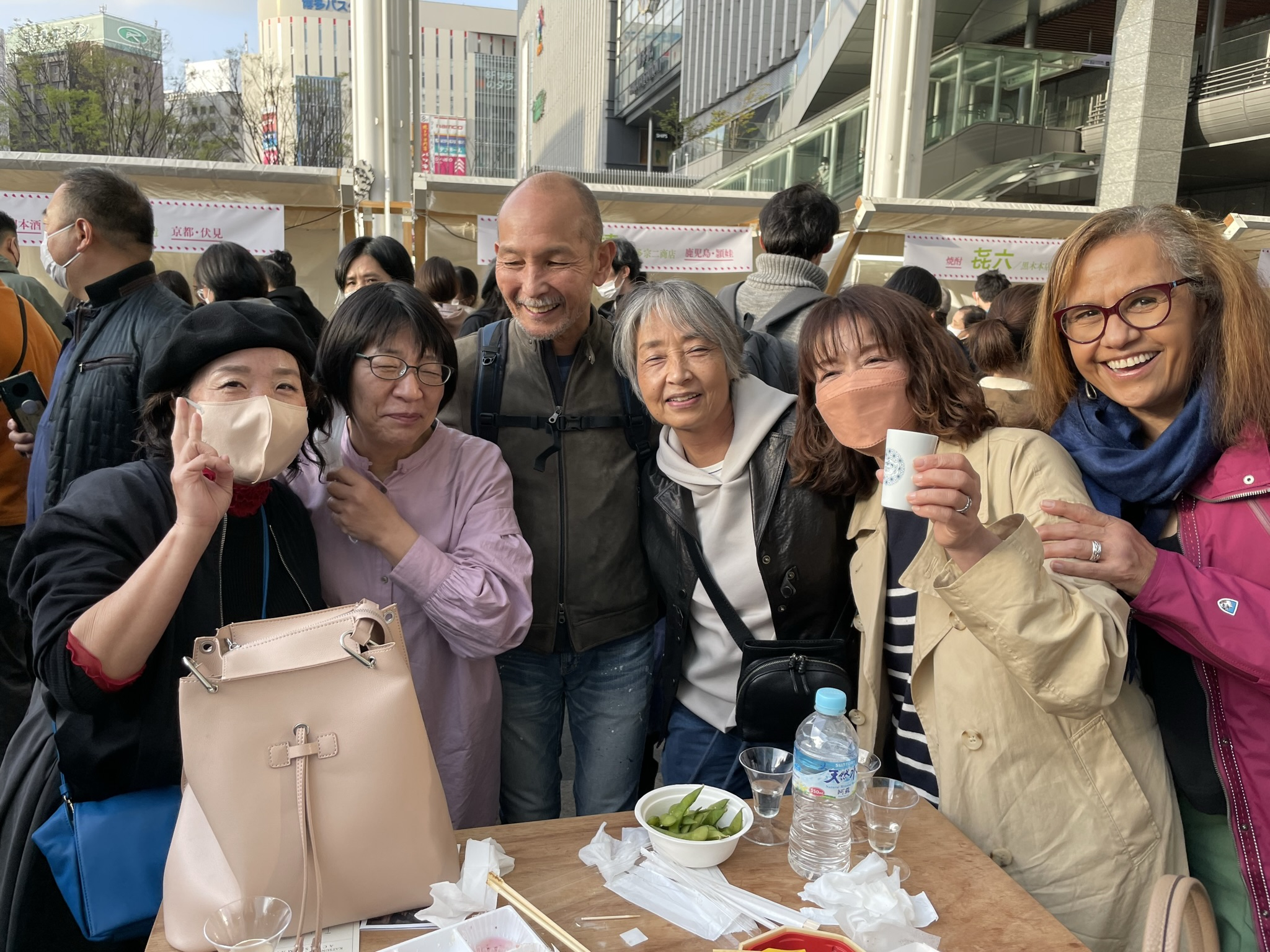 The next day, after some city orientation and recreational shopping in the Eki Departo (Train station adjacent department store) we, ill-advisedly, sign up for some day drinking at the Kyushu Spring Sake Festival. It’s outdoor, but undercover, courtesy of the giant station gazebo, for lack of a better word. The set-up is not that different than what you’d get at a US beer or wine festival with perimeter booths and standing tables in the interior. 90% Kyushu sake but also craft beer, wine, shochu (liquor derived from sweet potatoes, barley etc) and food accompaniments, commemorative cup etc. As you’d expect it’s a lively crowd, but also varied, with young and old, nihonjin (Japanese) and a few gaijin (foreigners).
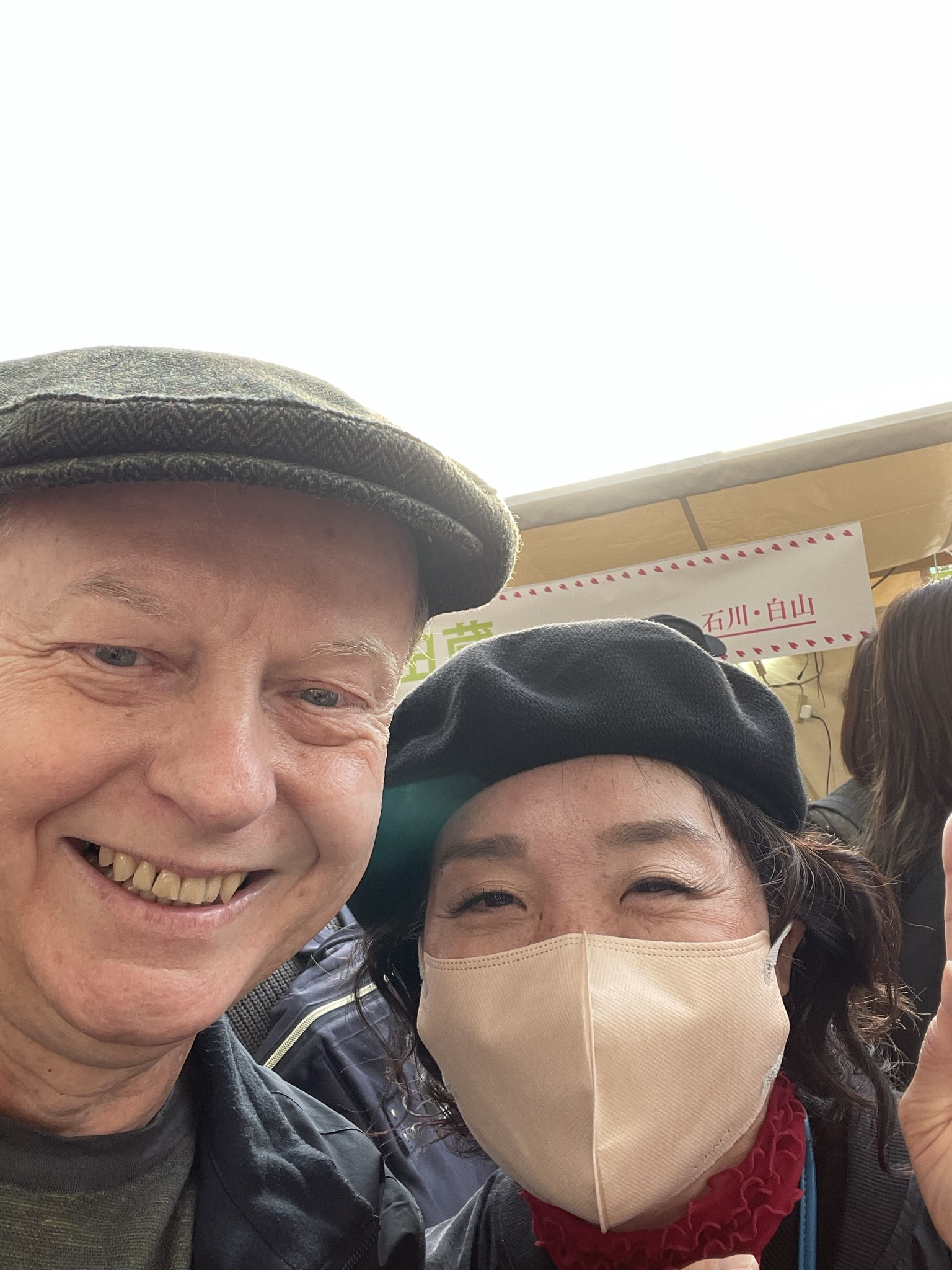 Looking to snag a table we fall in with some older locals who are amazed by my Japanese language capability (ha ha). One couple runs a specialty liquor store in Miyazaki City and the husband is particularly enamored with Oregon Pinot Noir. He gives us his card and, maybe, when we’re in Kagoshima, we’ll visit their place. (Un)suitably elevated we head out from the festival towards the West part of Fukuoka, known as Tenkin with no real idea of where we’re going. This is where things can get a little awkward in Japan for visitors with limited Japanese. Fukuoka seems fine as a city, but they don’t put much effort into making things easier for tourists, Western or otherwise. Outside of the train station mega-complex, the restaurant and bar scene is under wraps, i.e. it’s very difficult to know from the street what any place is and whether you’d be welcome there.
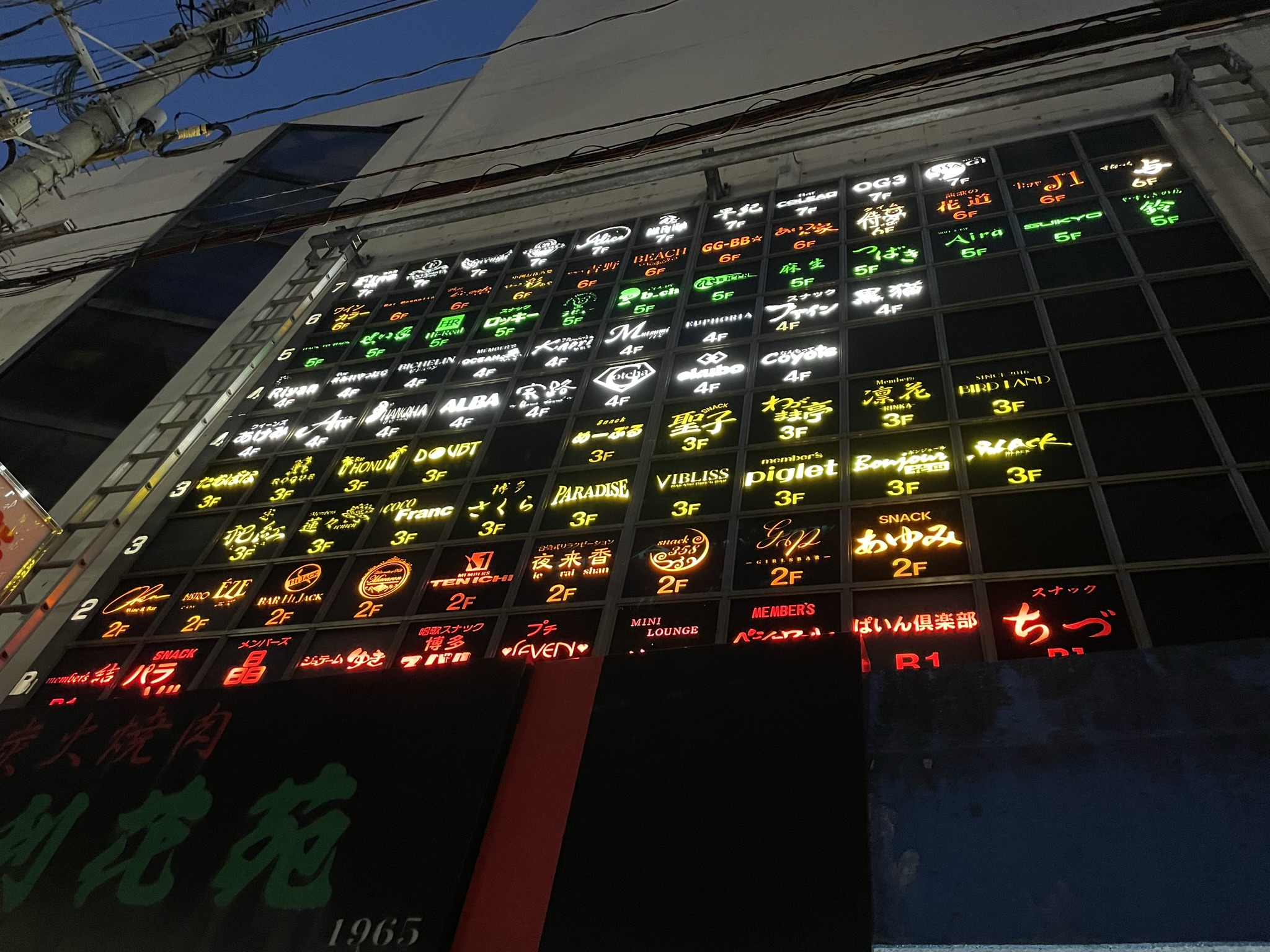 Google translate is invaluable but it can’t handle traditional menu calligraphy well and, considering what its like trying to understand a “foodie”restaurant menu in English, never mind Japanese, things can get frustrating. One other factor of consequence is that many Japanese restaurants and bars are very slanted towards a particular age group and, not surprisingly, one of those groups are 20 something’s. We can confirm from repeated experience here that if you show up at one of those places, particularly later in the evening, as 50-60s folks, you are likely to be turned away. Yes, its ageism not xenophobia and racism that is the main discrimination you’ll come across as a tourist couple in Japan, with the caveat that the whole male chauvinist issue being something that foreigners are generally spared. So, we end up wandering through the sleazy Nakasu entertainment district, and onto the Westside of downtown, without finding a suitable restaurant.
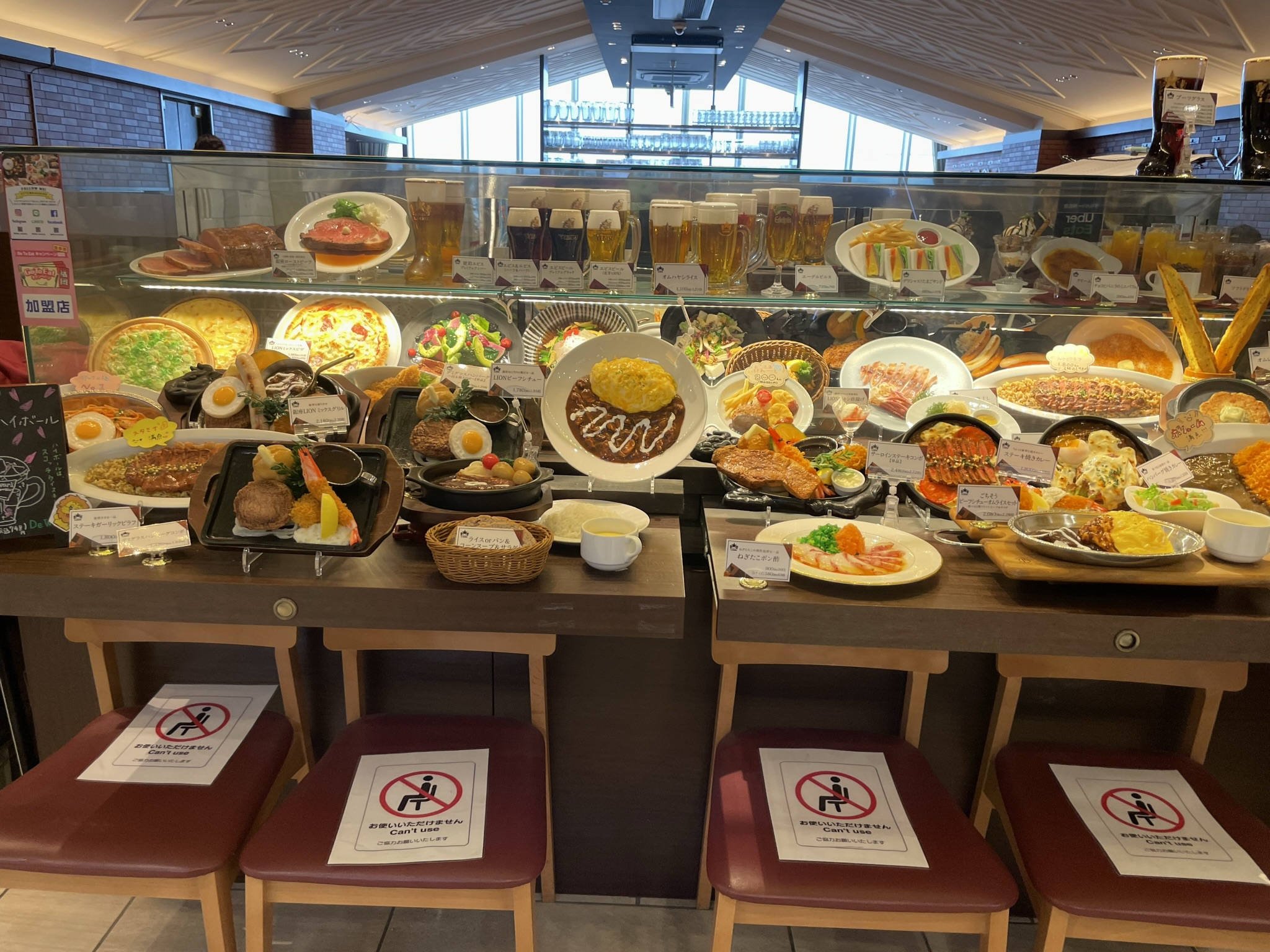
 Probably bad planning on our part, plus the aftermath of the sake festival didn’t help, and we end up eating at a Western style restaurant Royal Host, which is a glorified Denny’s, but still appears to be popular with the locals. You win some, you lose some, onto tomorrow where we’re going to see a giant reclining Buddha.


Leave a Reply