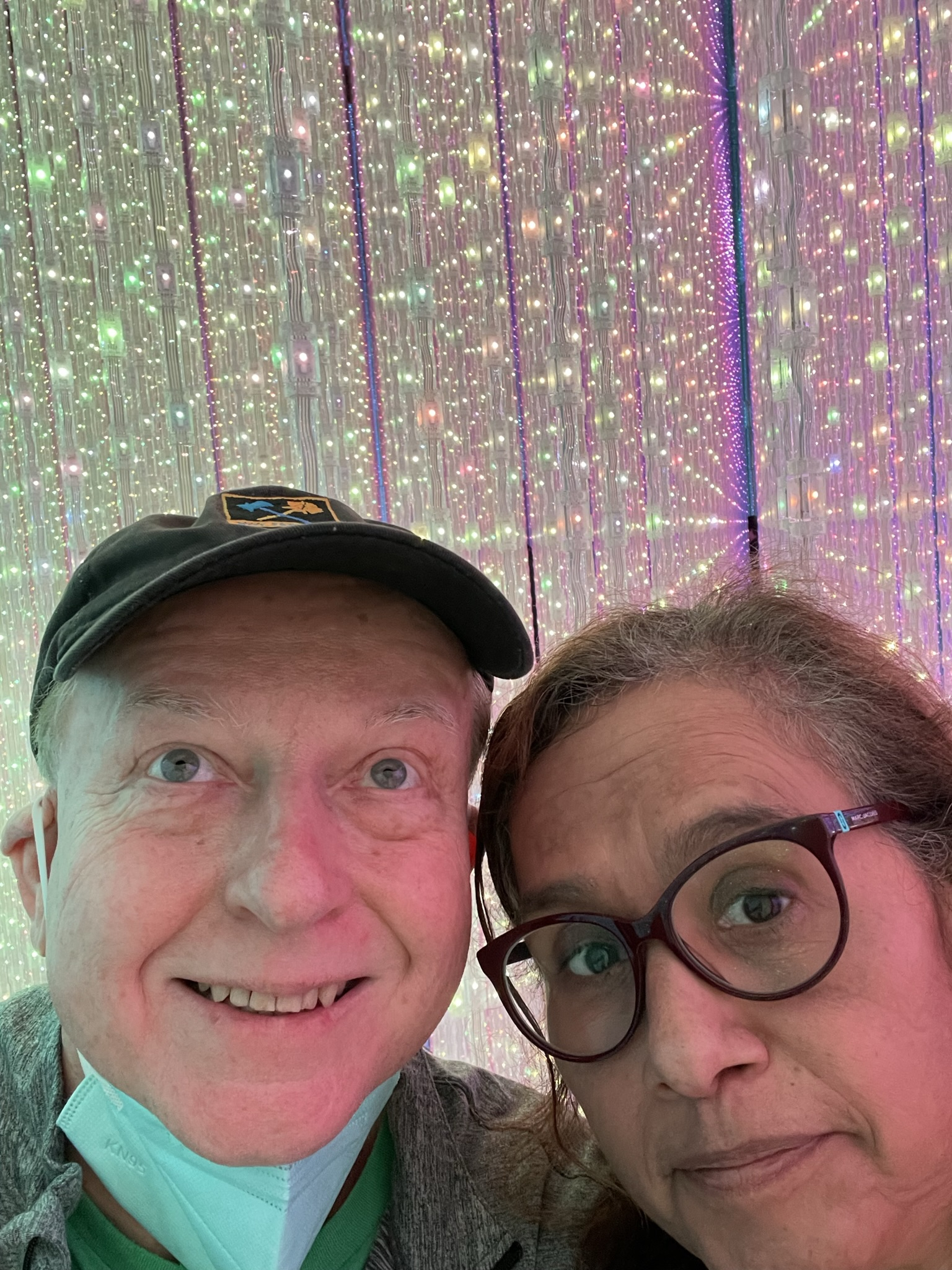
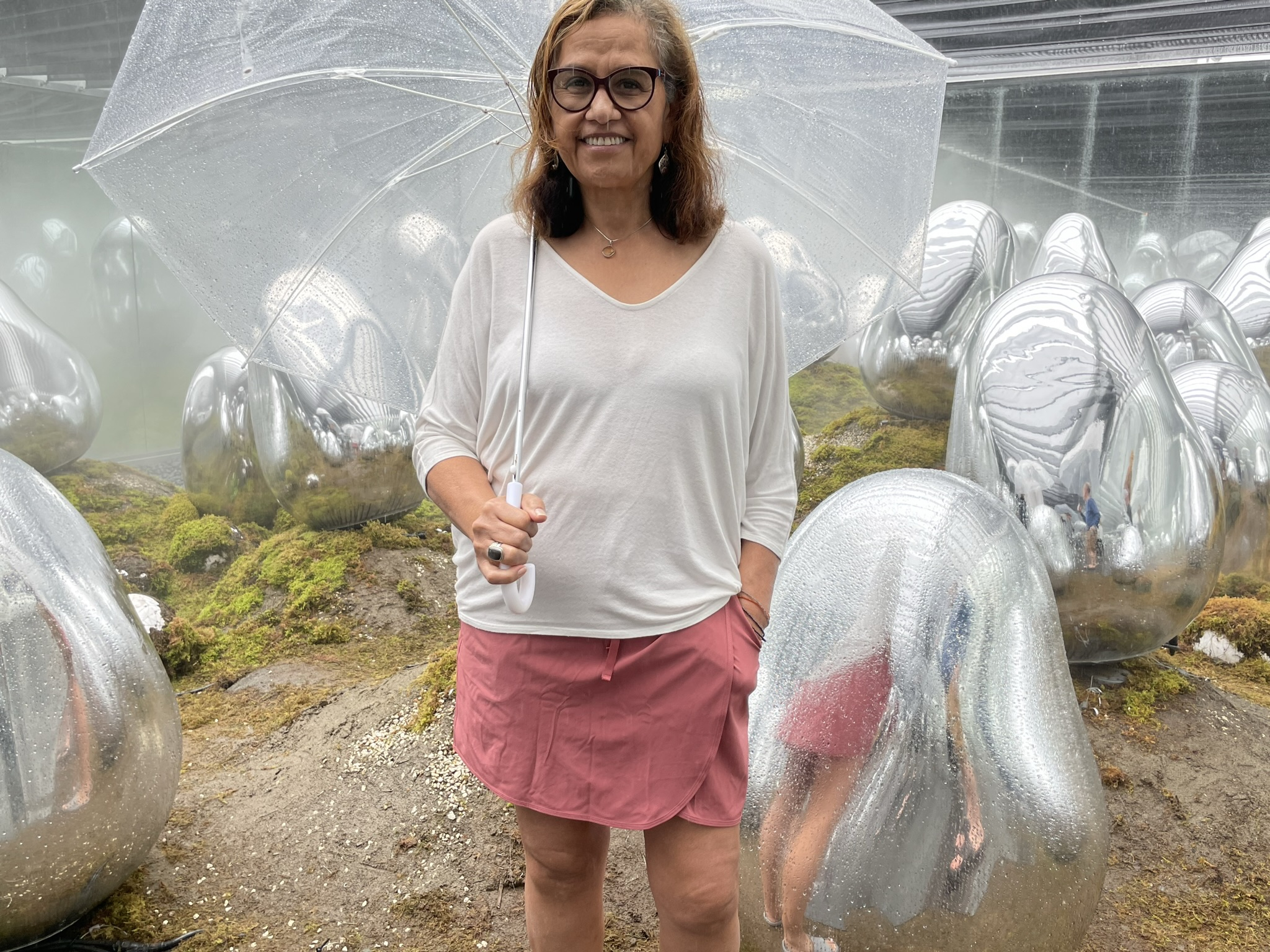
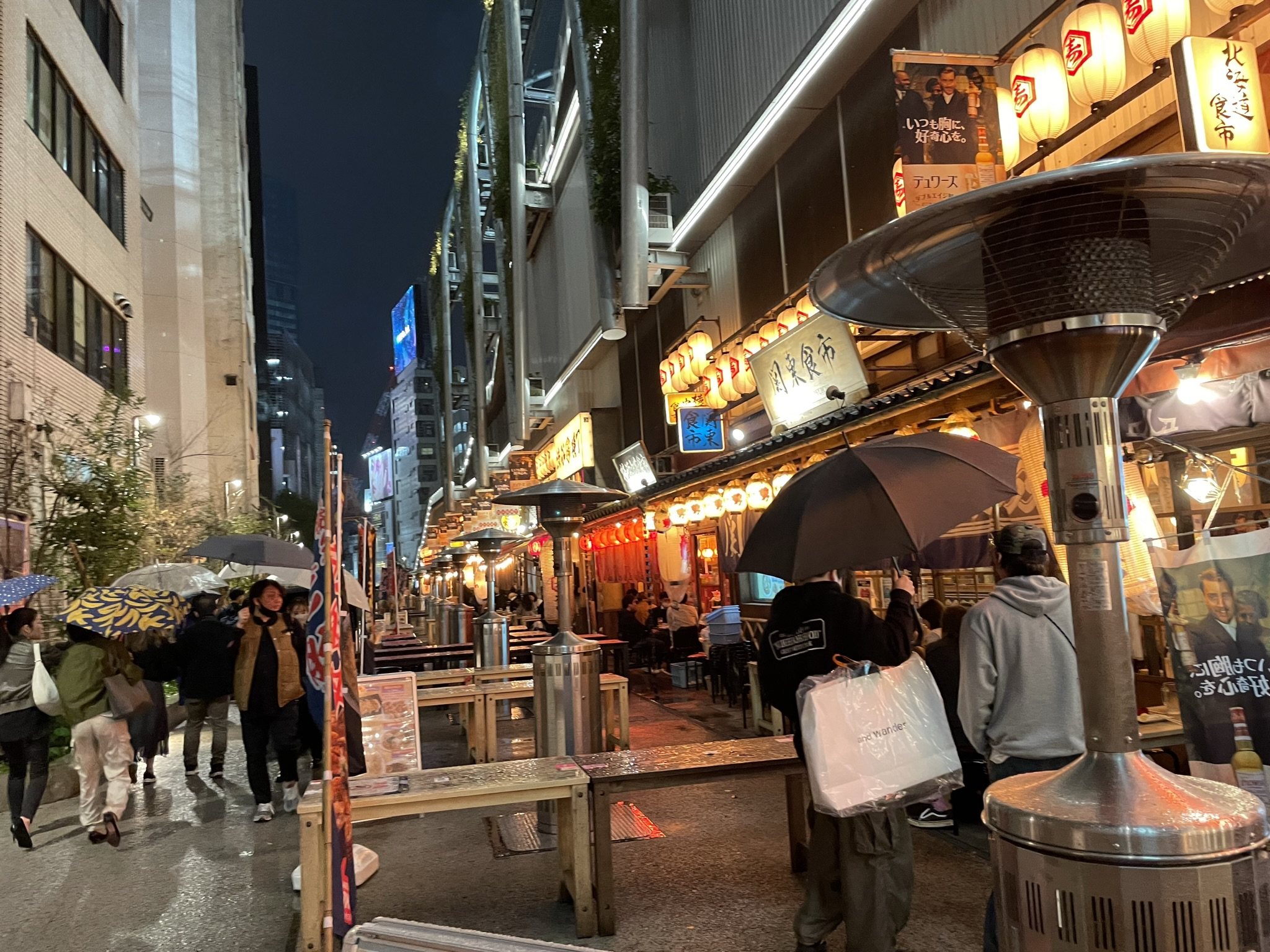
 It’s a slow start after yesterday’s shenanigans in Okachimachi, but we have a noon appointment at teamlab tokyo, an immersive art attraction in Toyosu near Tokyo Bay. Japan is, generally, a wet and green country, and Tokyo is no exception with it receiving, on average, 63” of rain annually, with Winter being the only season that could qualify as being dry-ish. So, it’s not a surprise that we head off to Toyosu in a soaking rain, which keeps up all day. Tokyo often gets socked in, so I’m definitely feeling that Blade Runner vibe as we trek to Toyosu,, first getting to Shimbashi, then switching to the Yurikamome line, which winds around the various attractions in the huge Tokyo Bay Area, most of which are on reclaimed land. It brings to mind the London dock lands projects and its light rail system, but this seems like its on another scale all together – It’s vast, and an eerie sight in the mist with endless monster sized buildings of futuristic architecture, complex waterways, bridges of all varieties but very few people visible. We’ll have to come back on a clear day to get a better picture of this place. There’s a new direct subway line from central Tokyo being built which will speed access in future as it takes quite a while getting there at the moment.
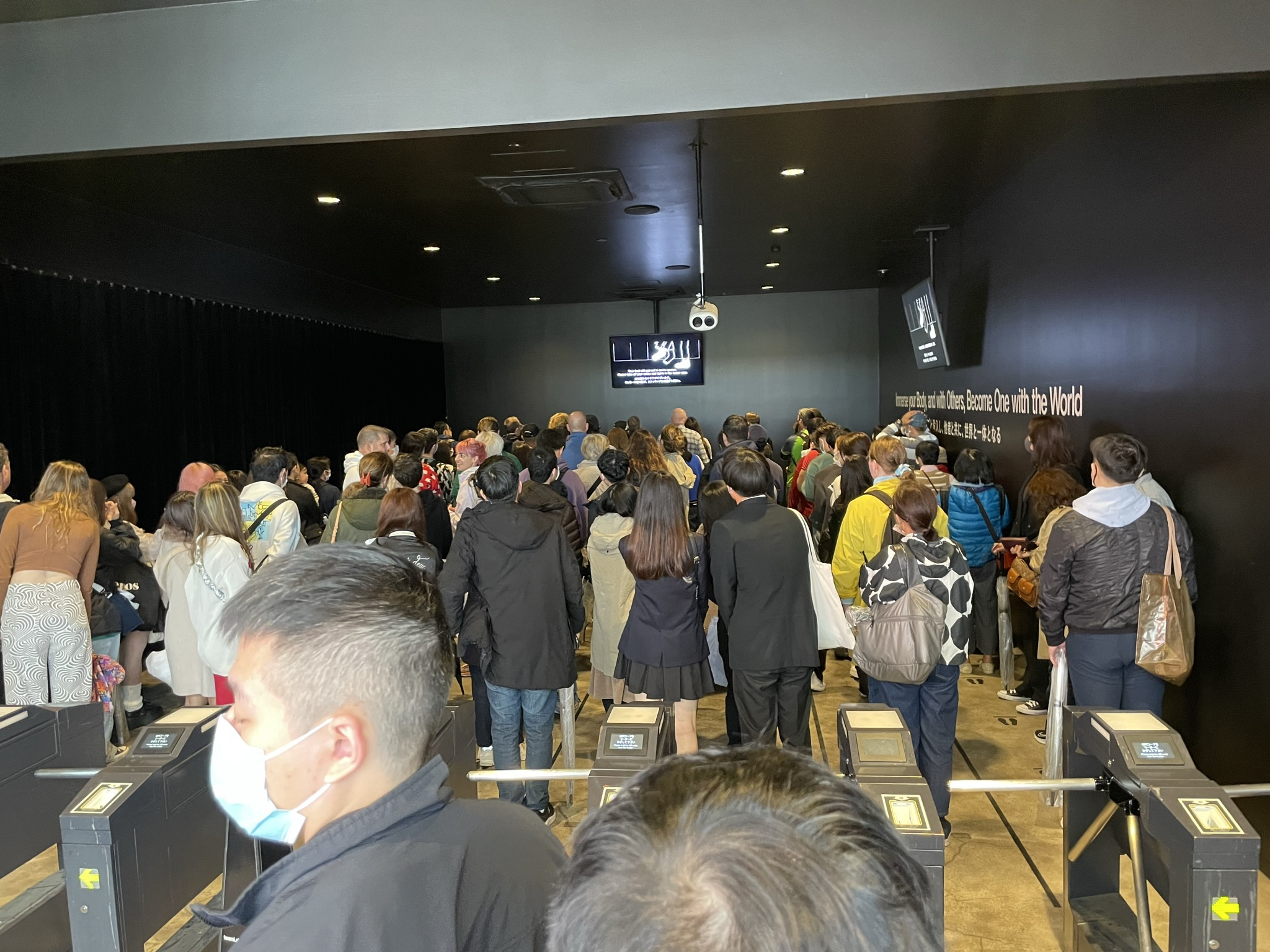
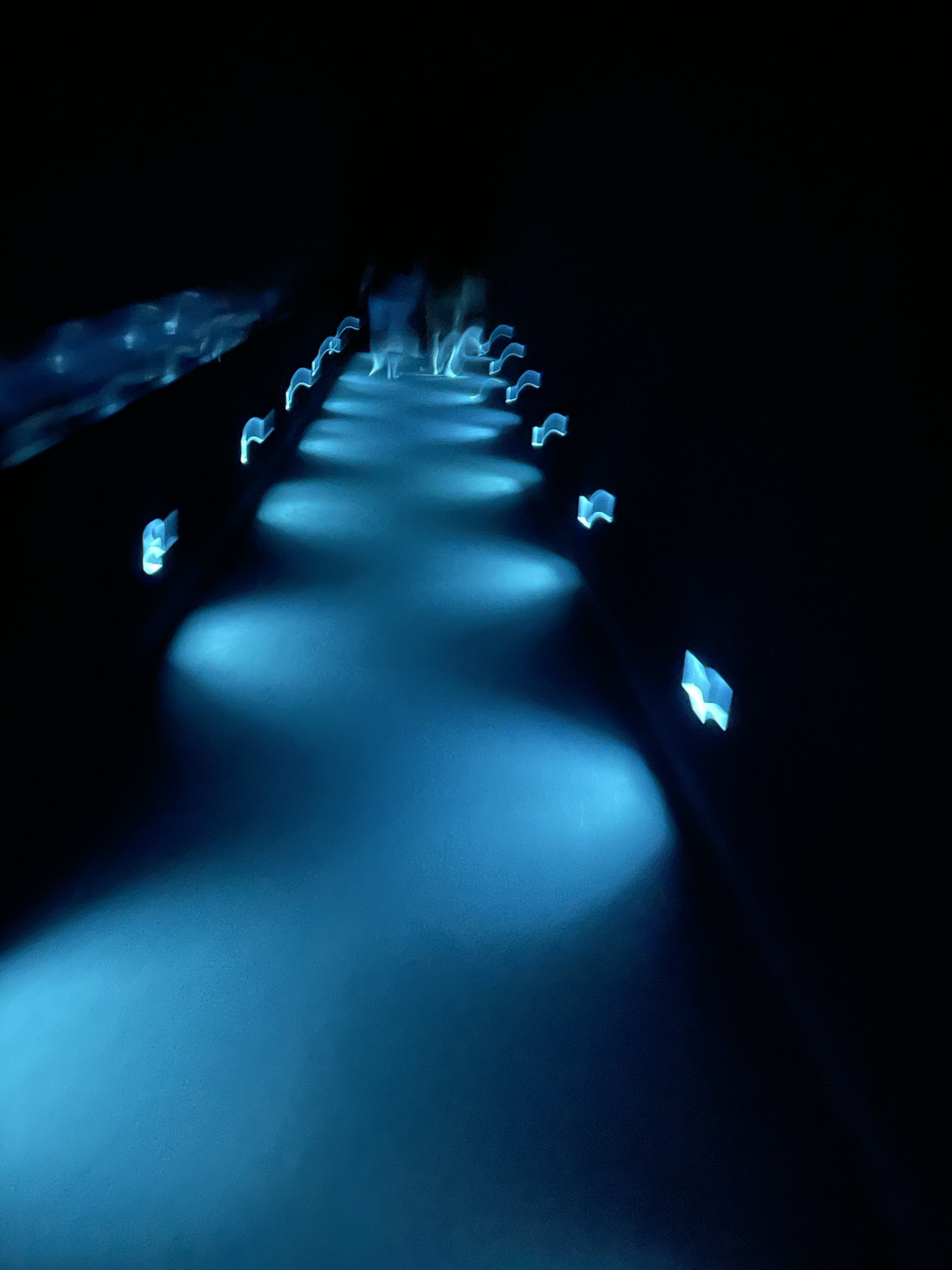
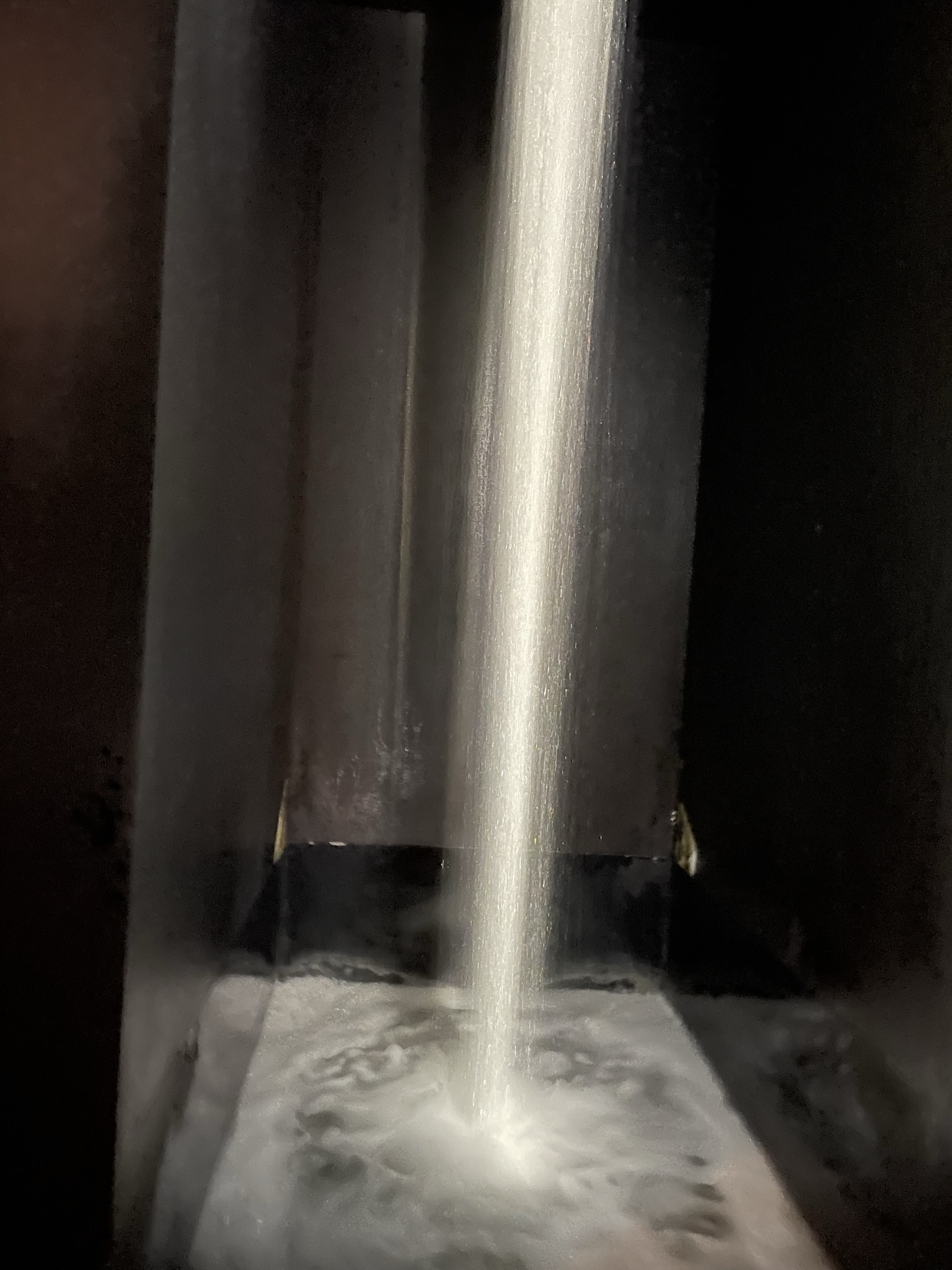
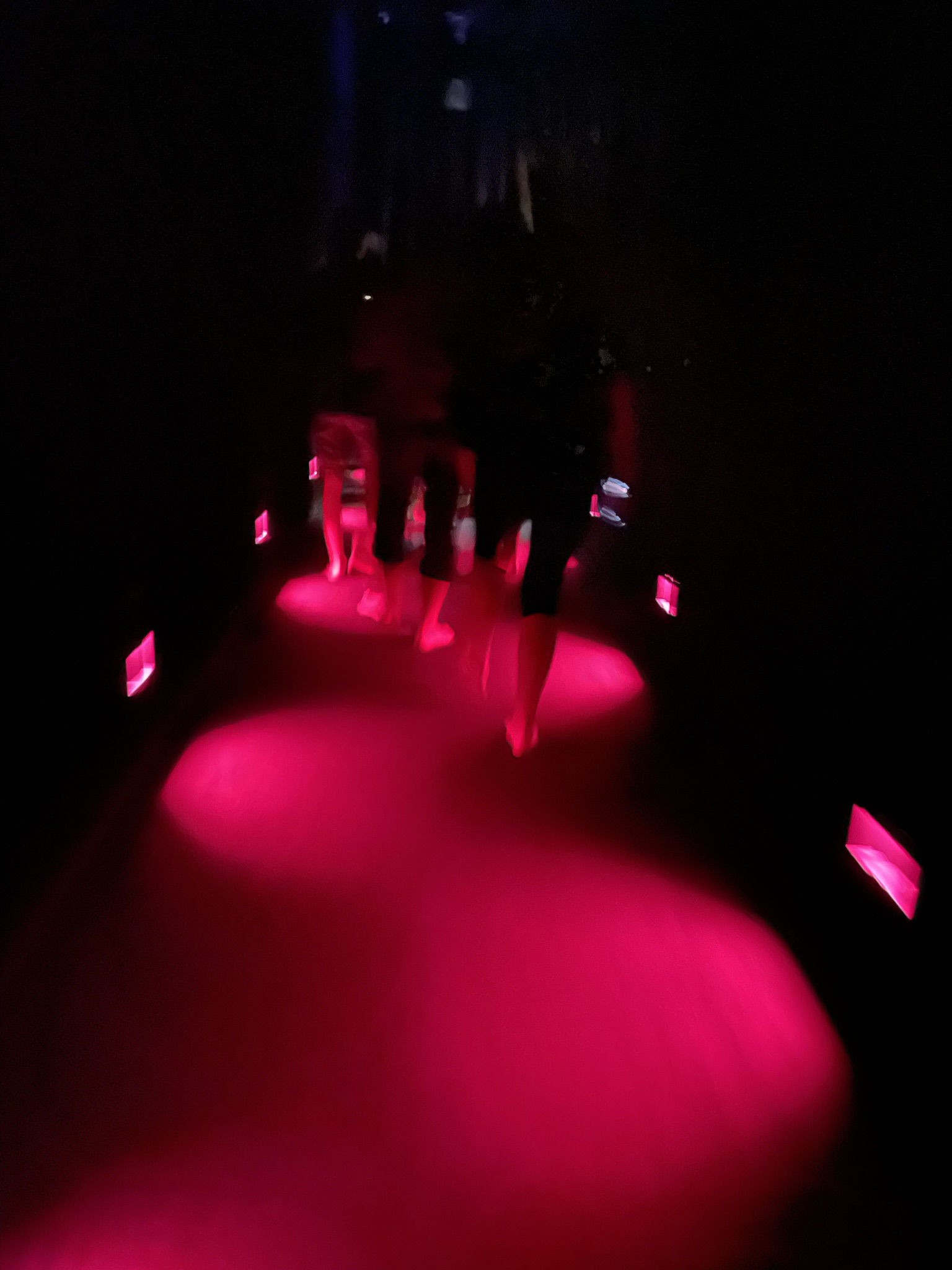
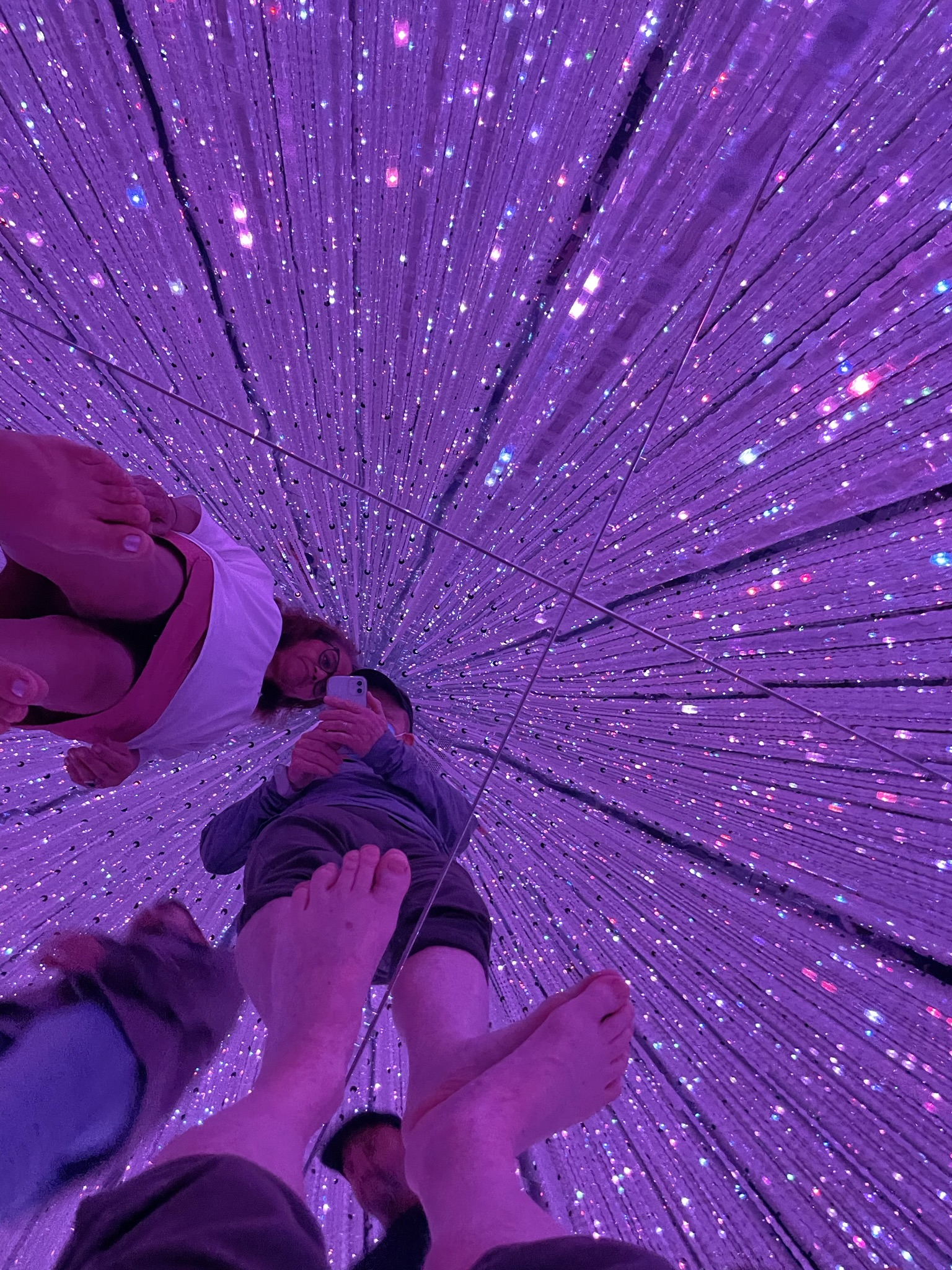
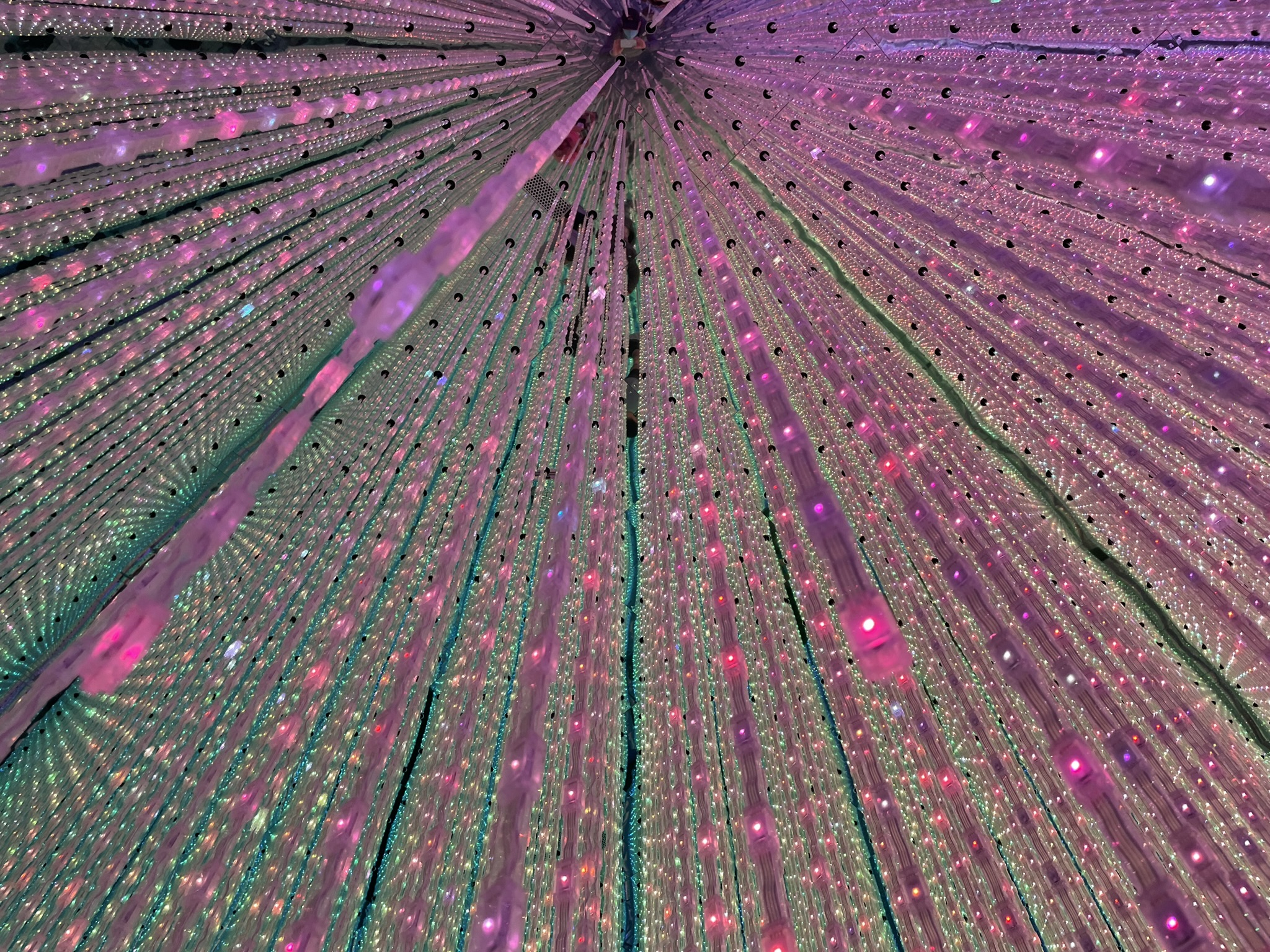
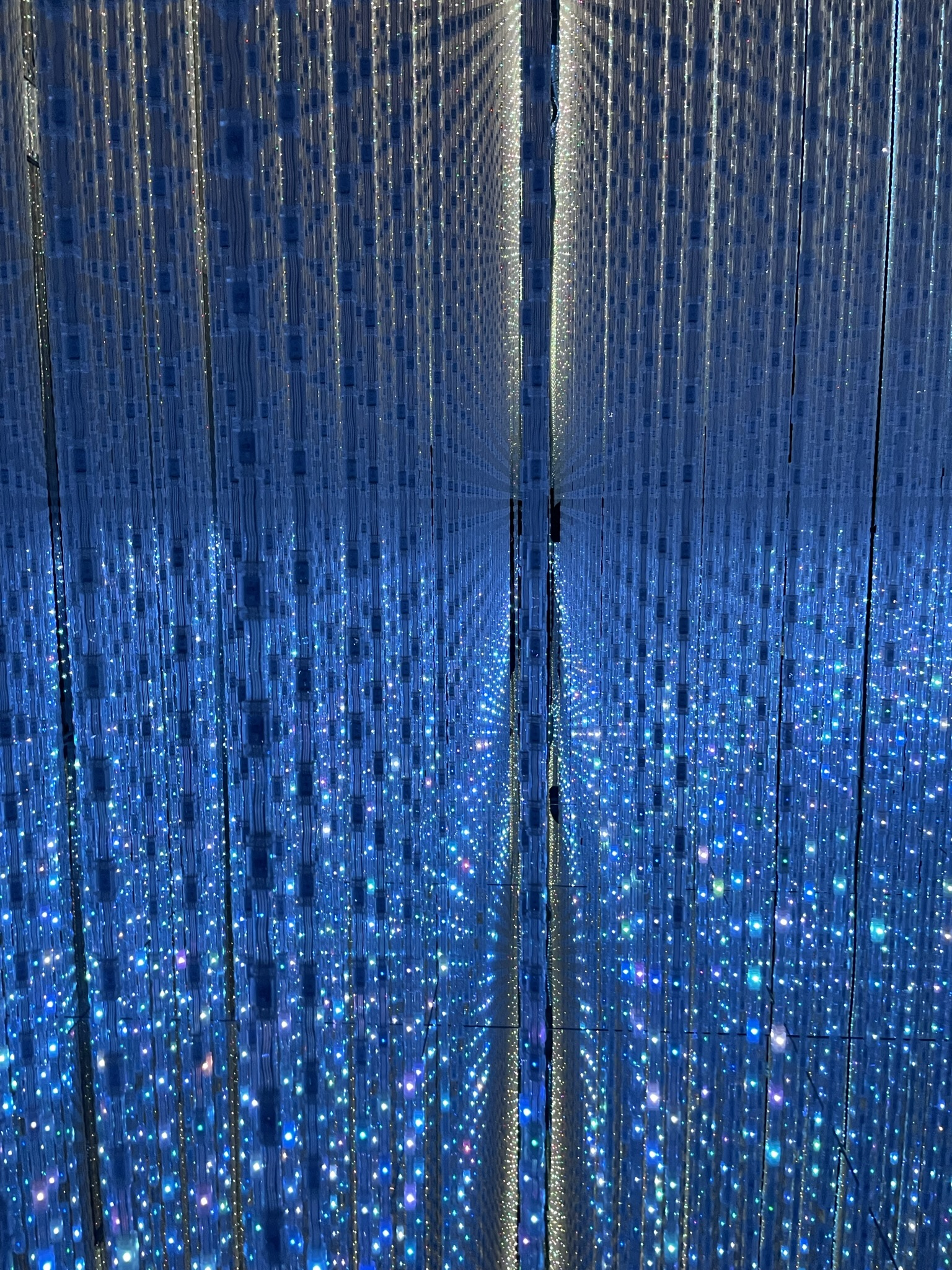
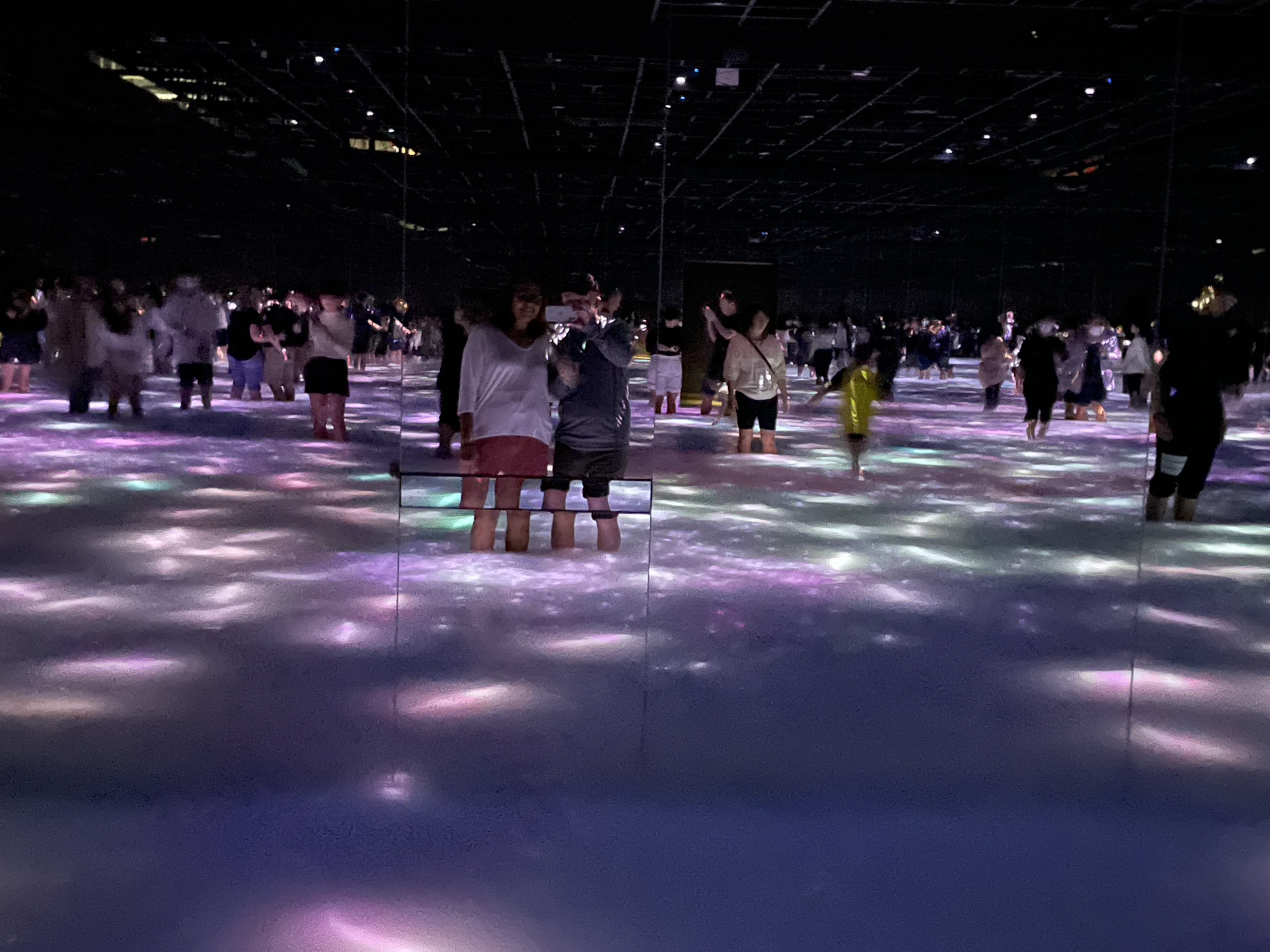
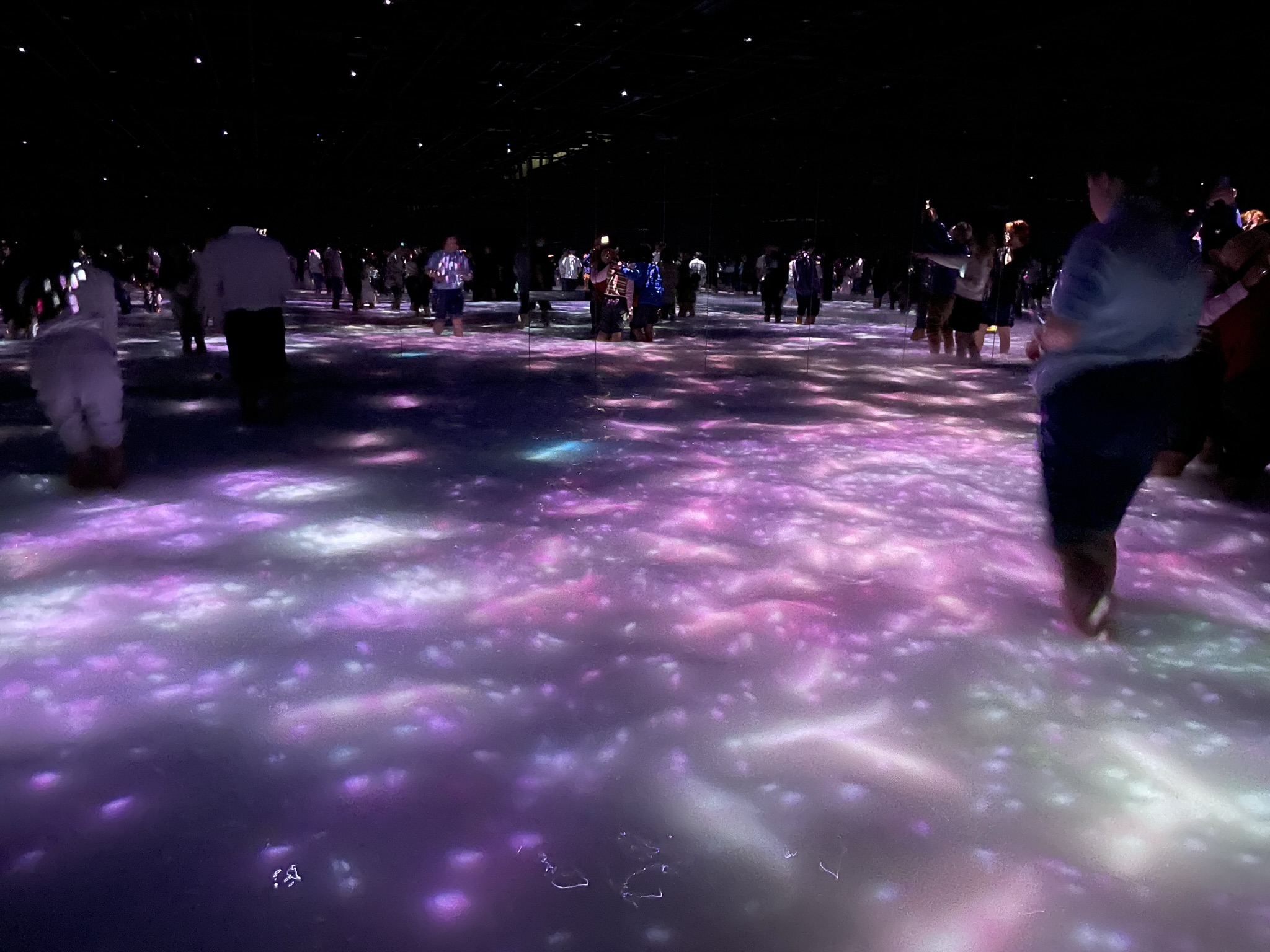
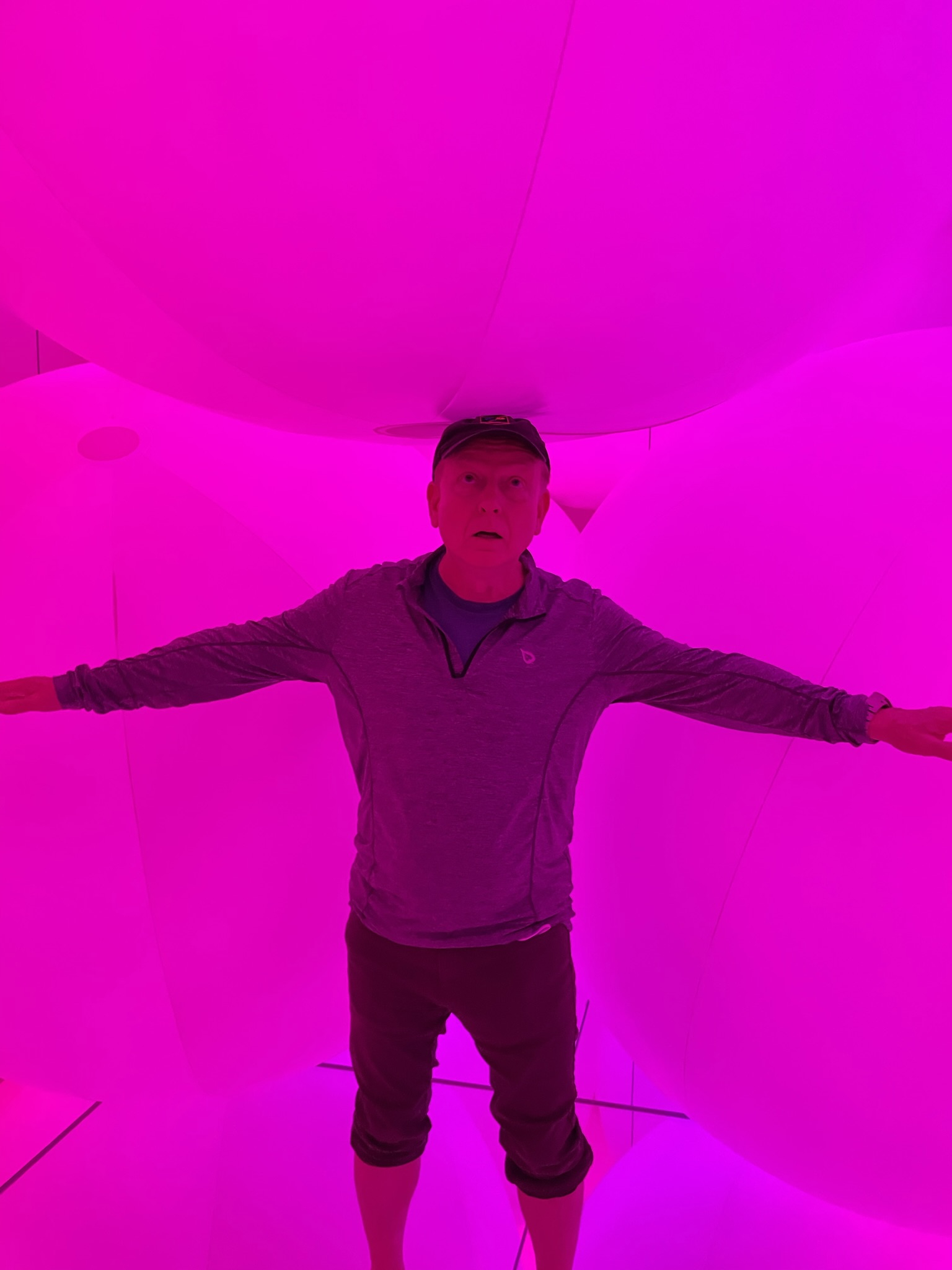
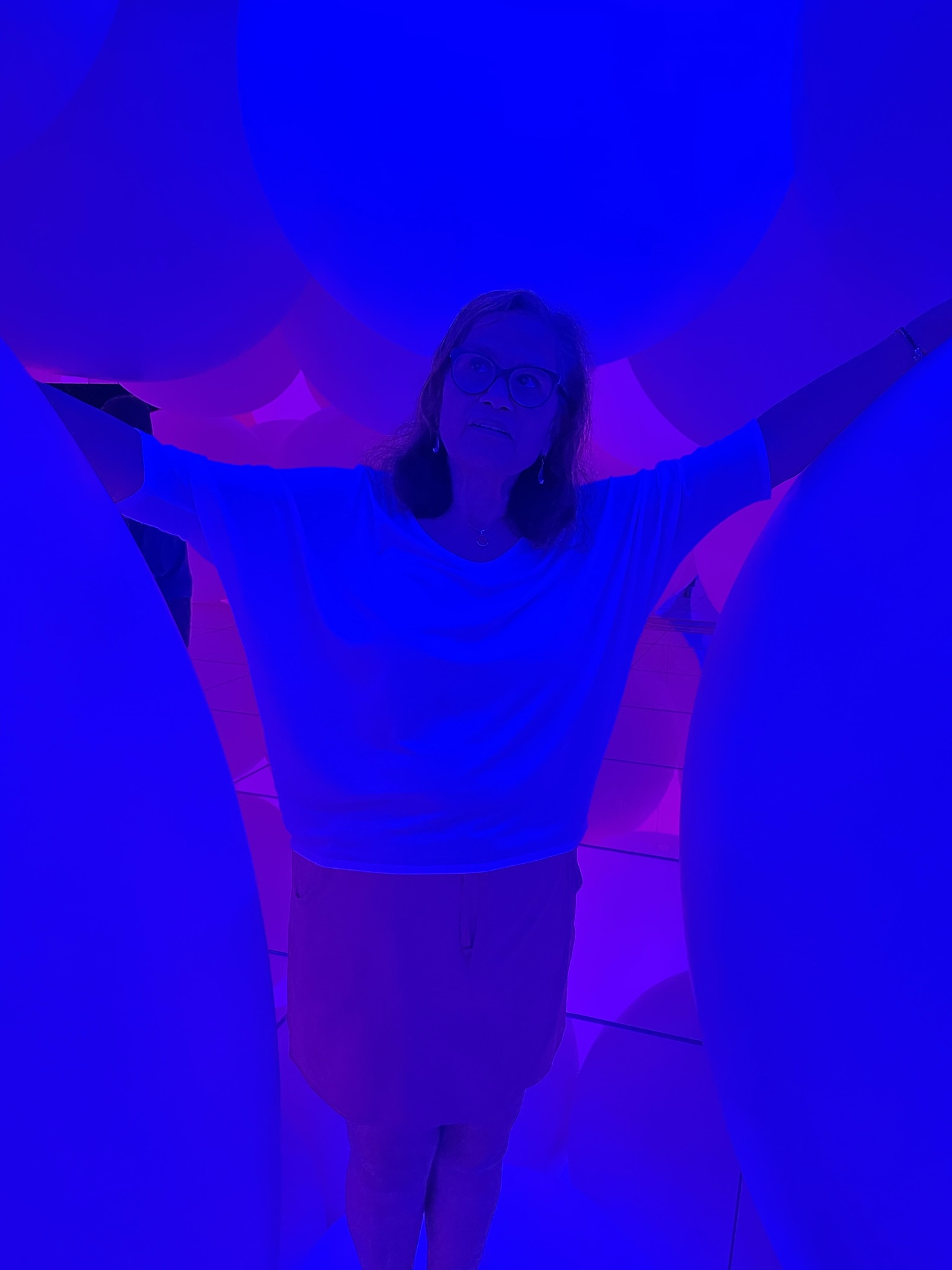
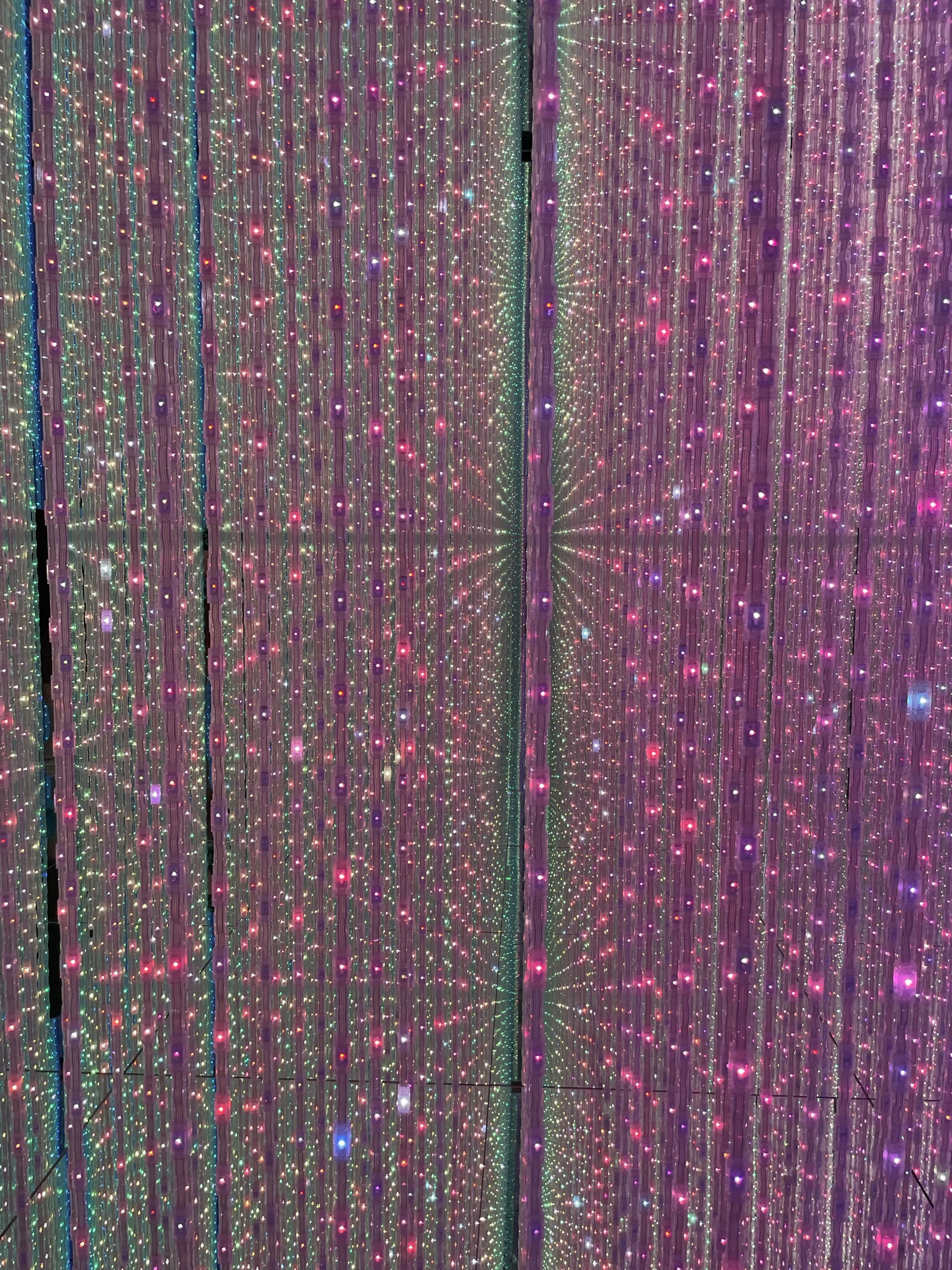
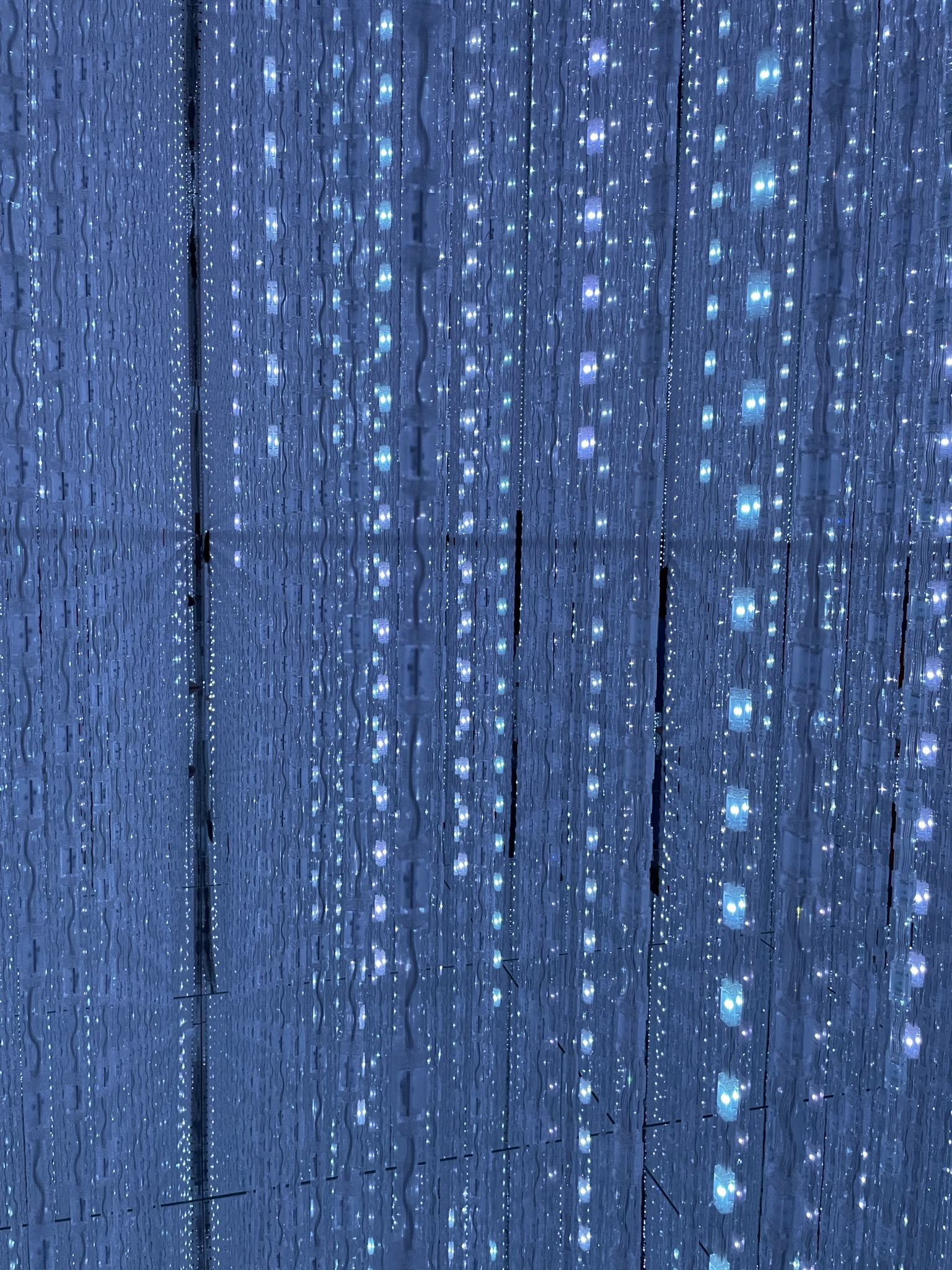
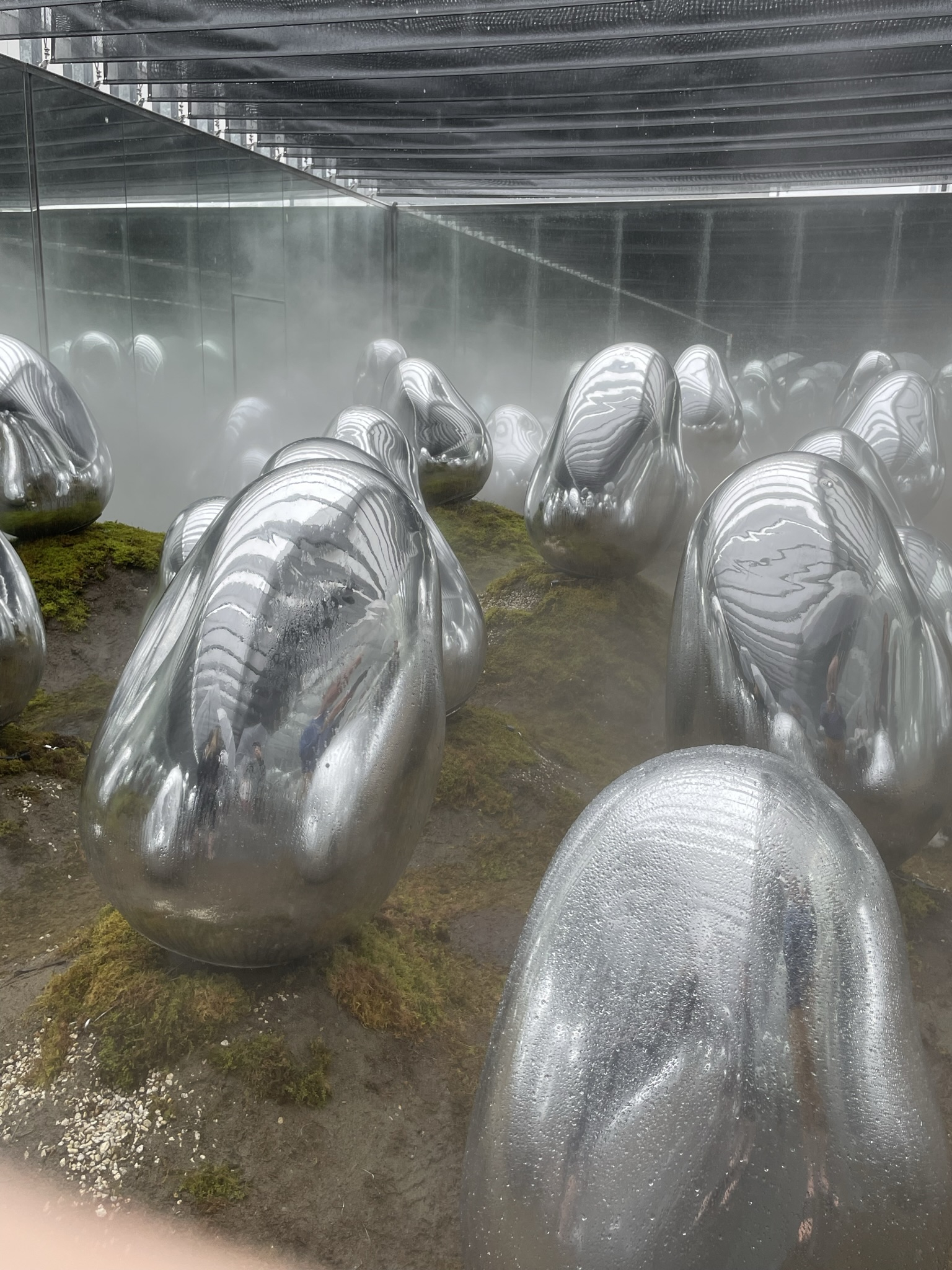
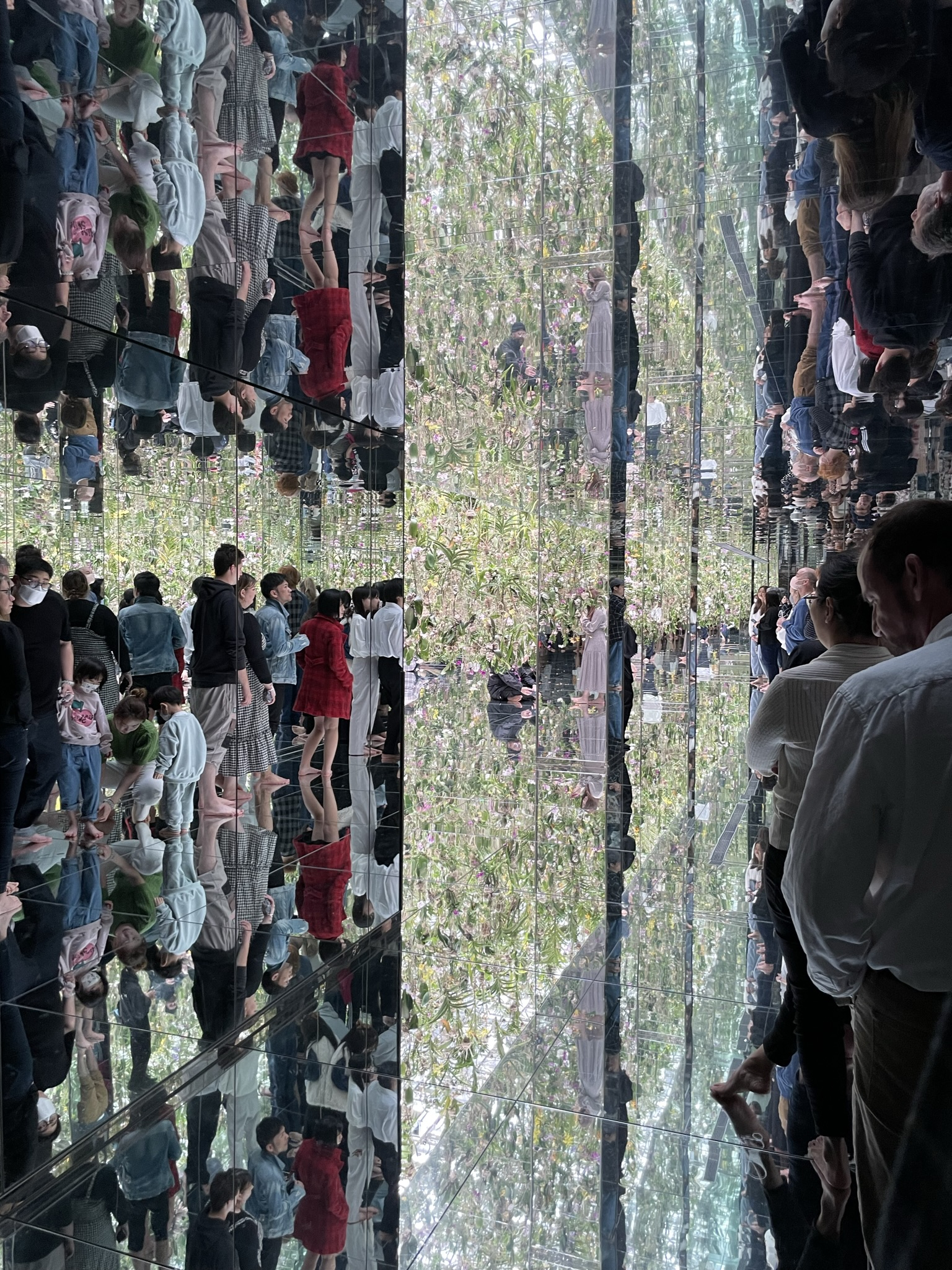
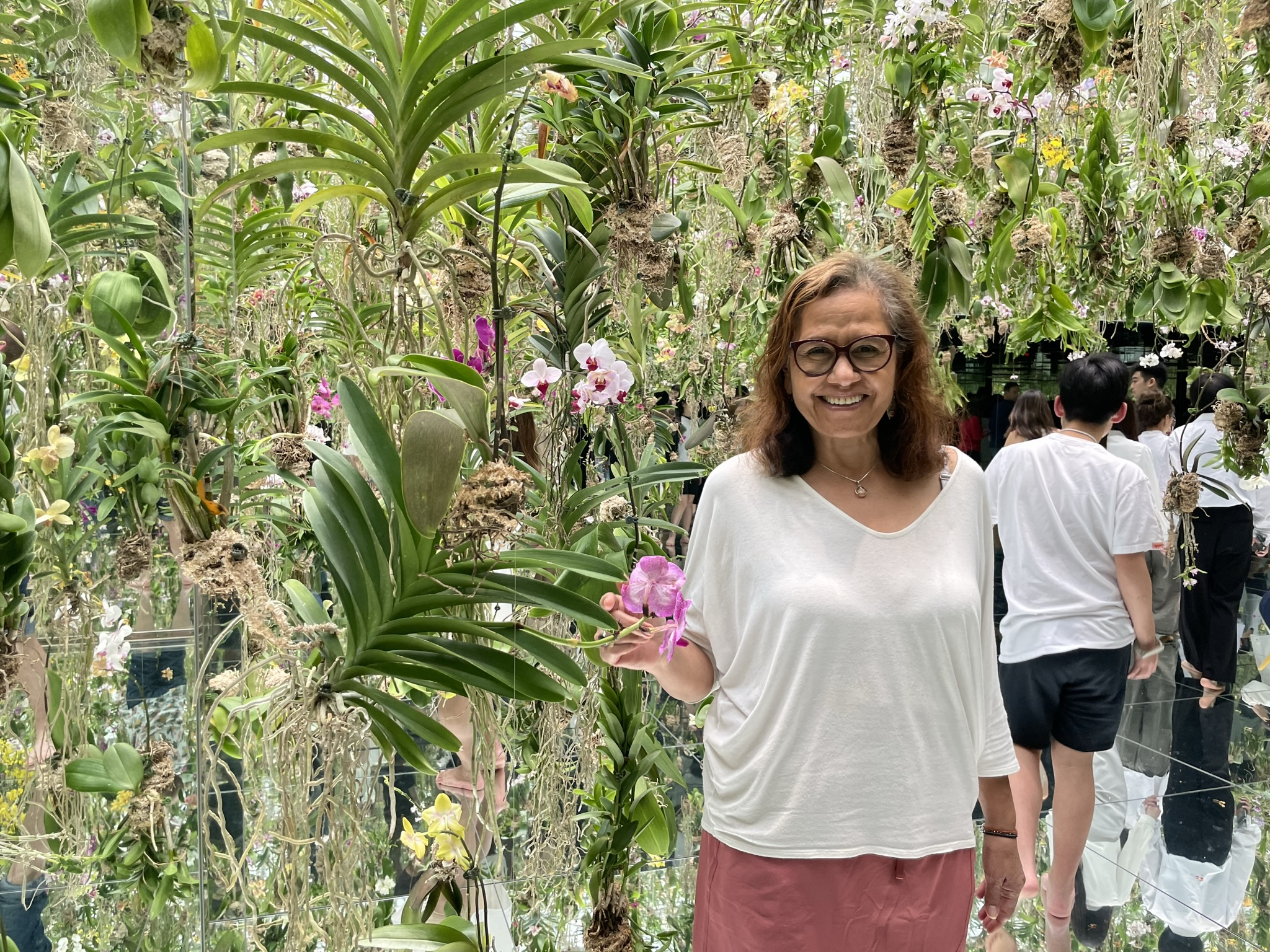
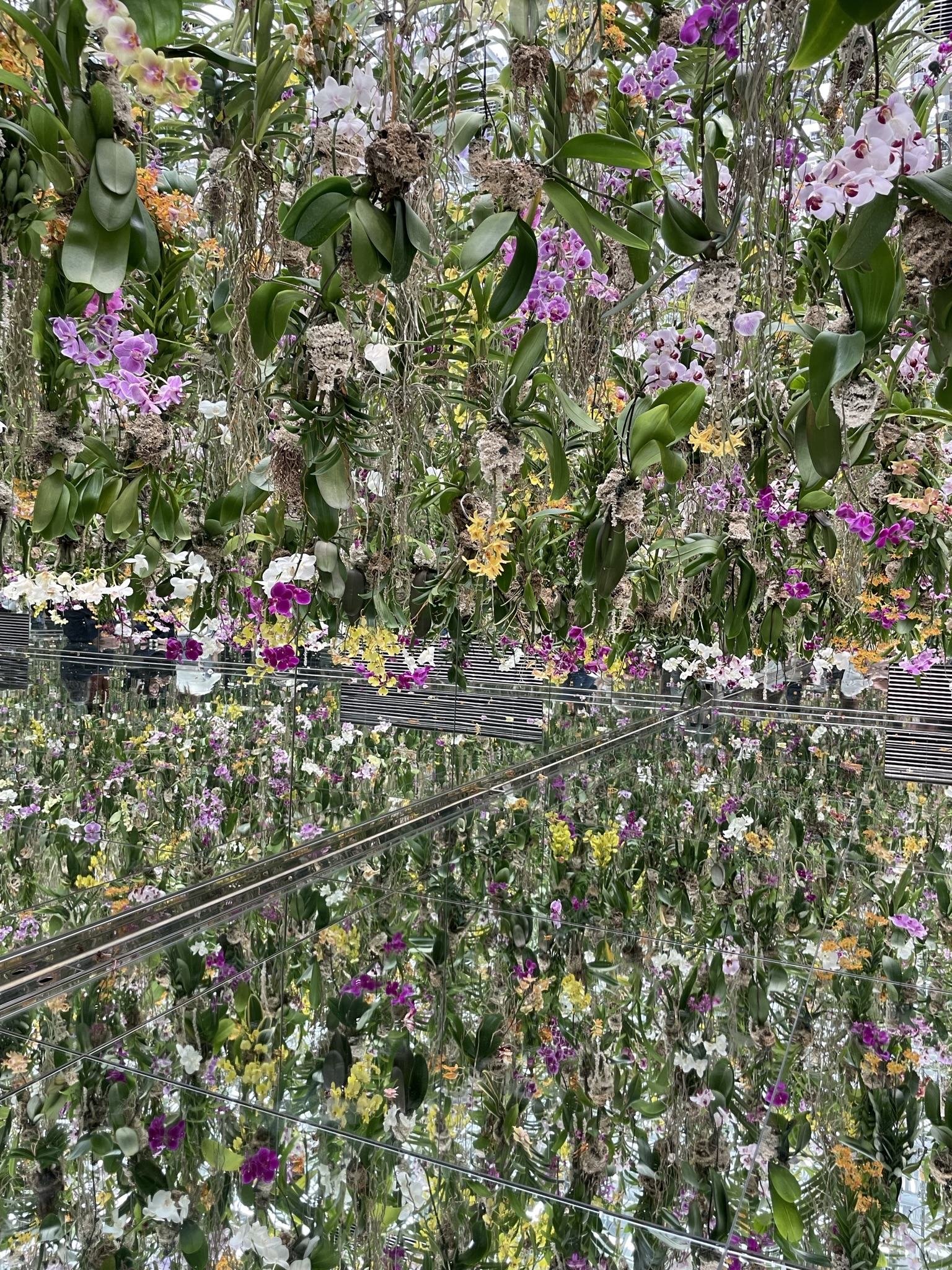
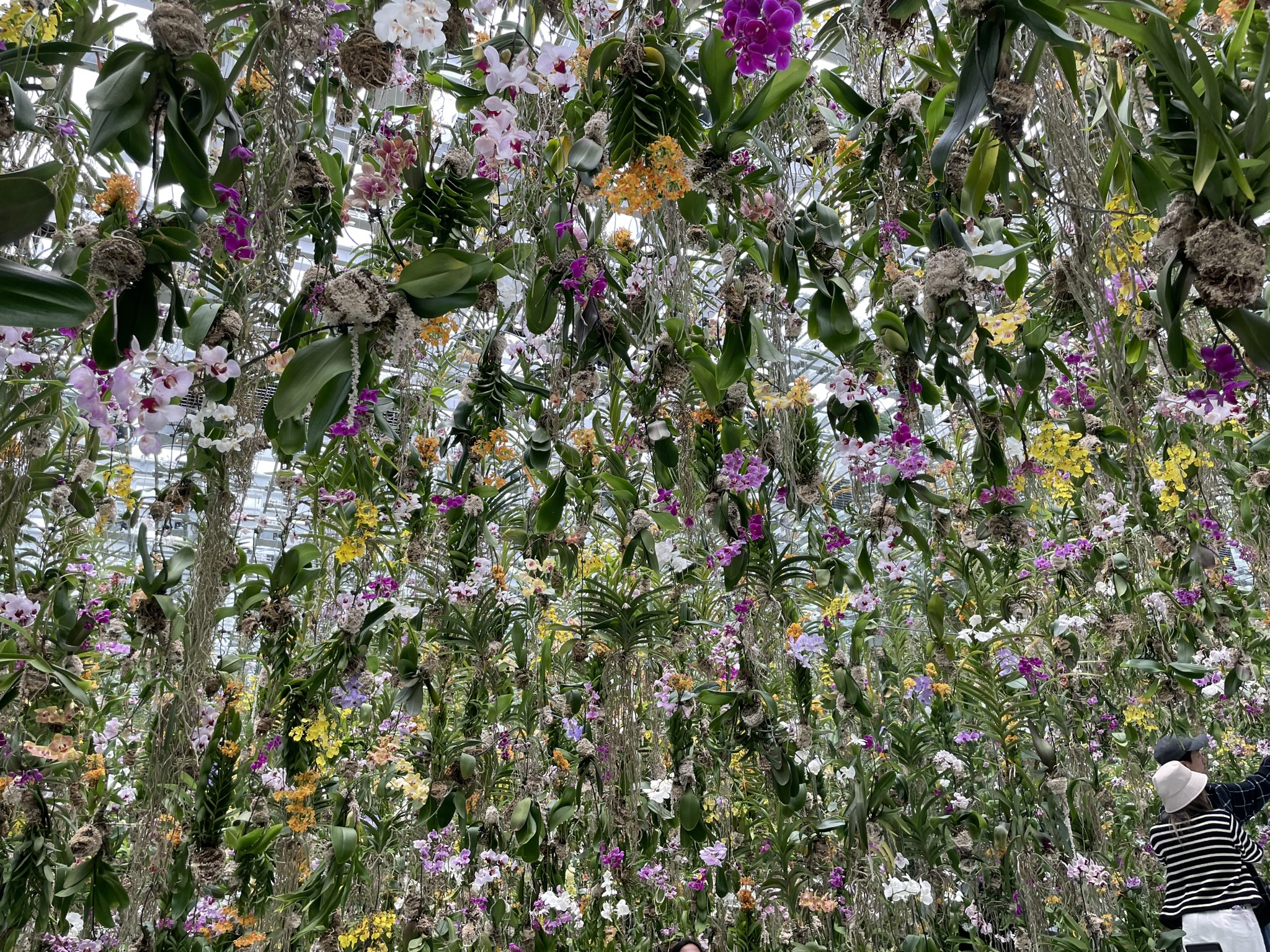
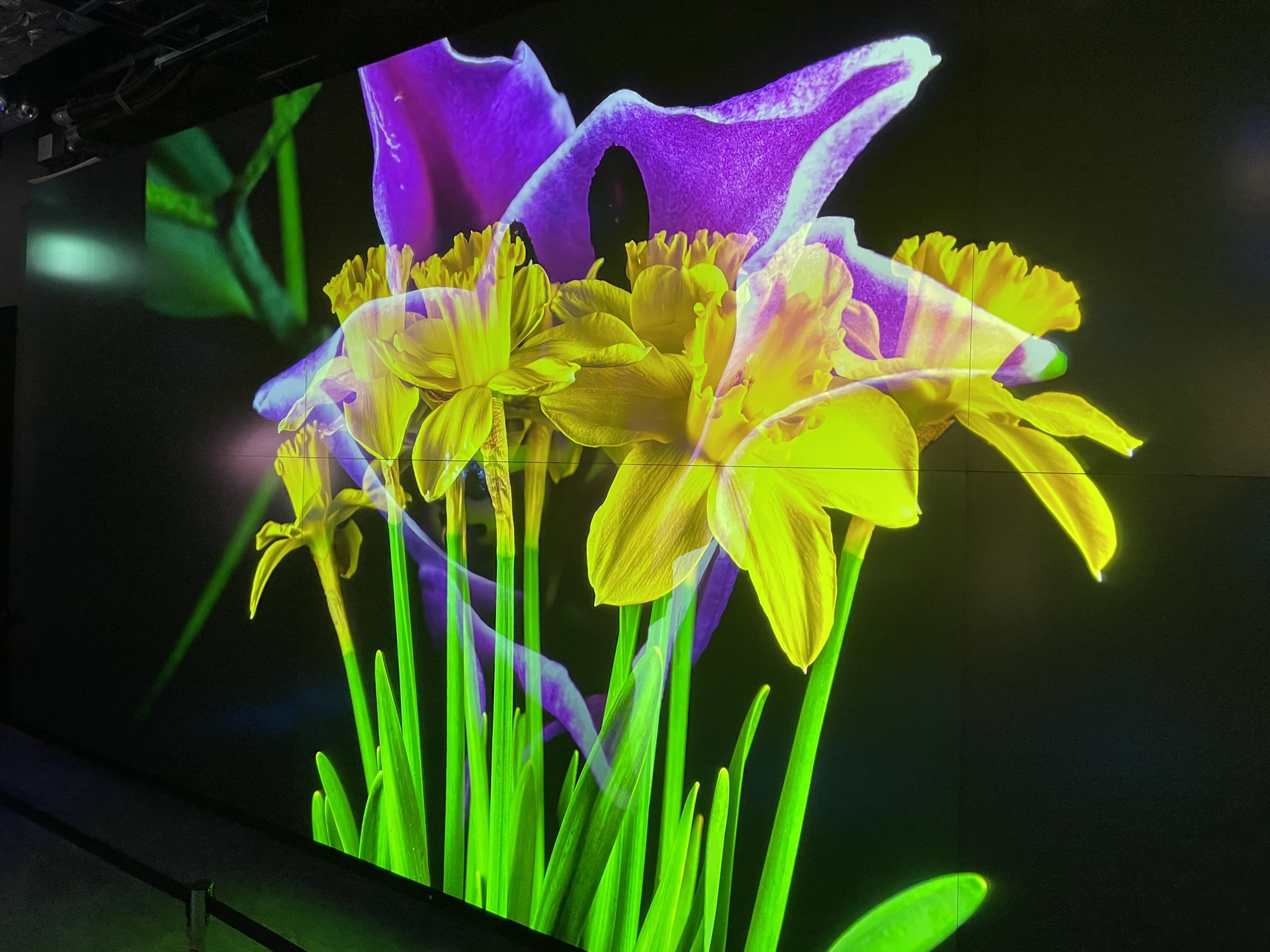
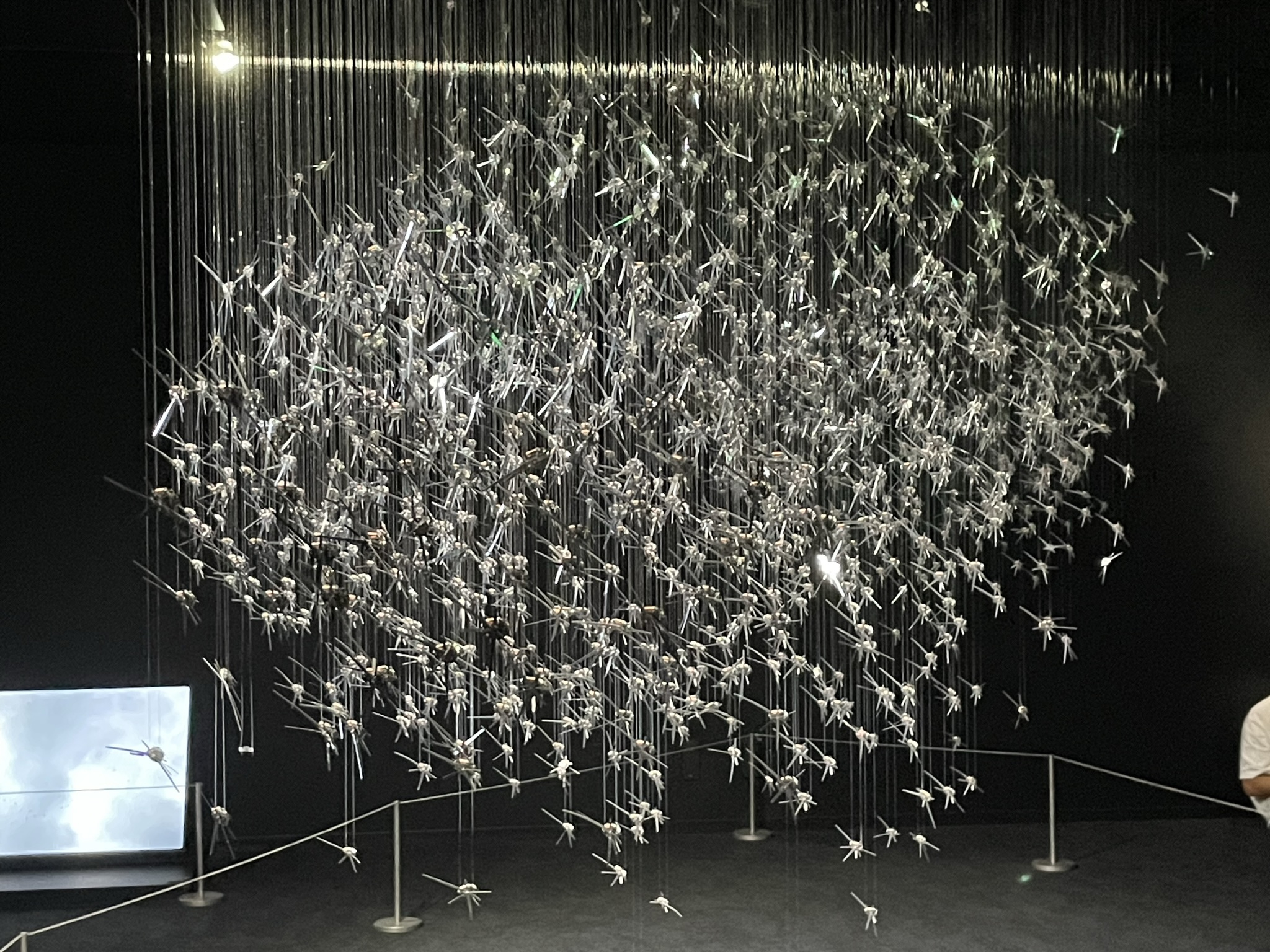
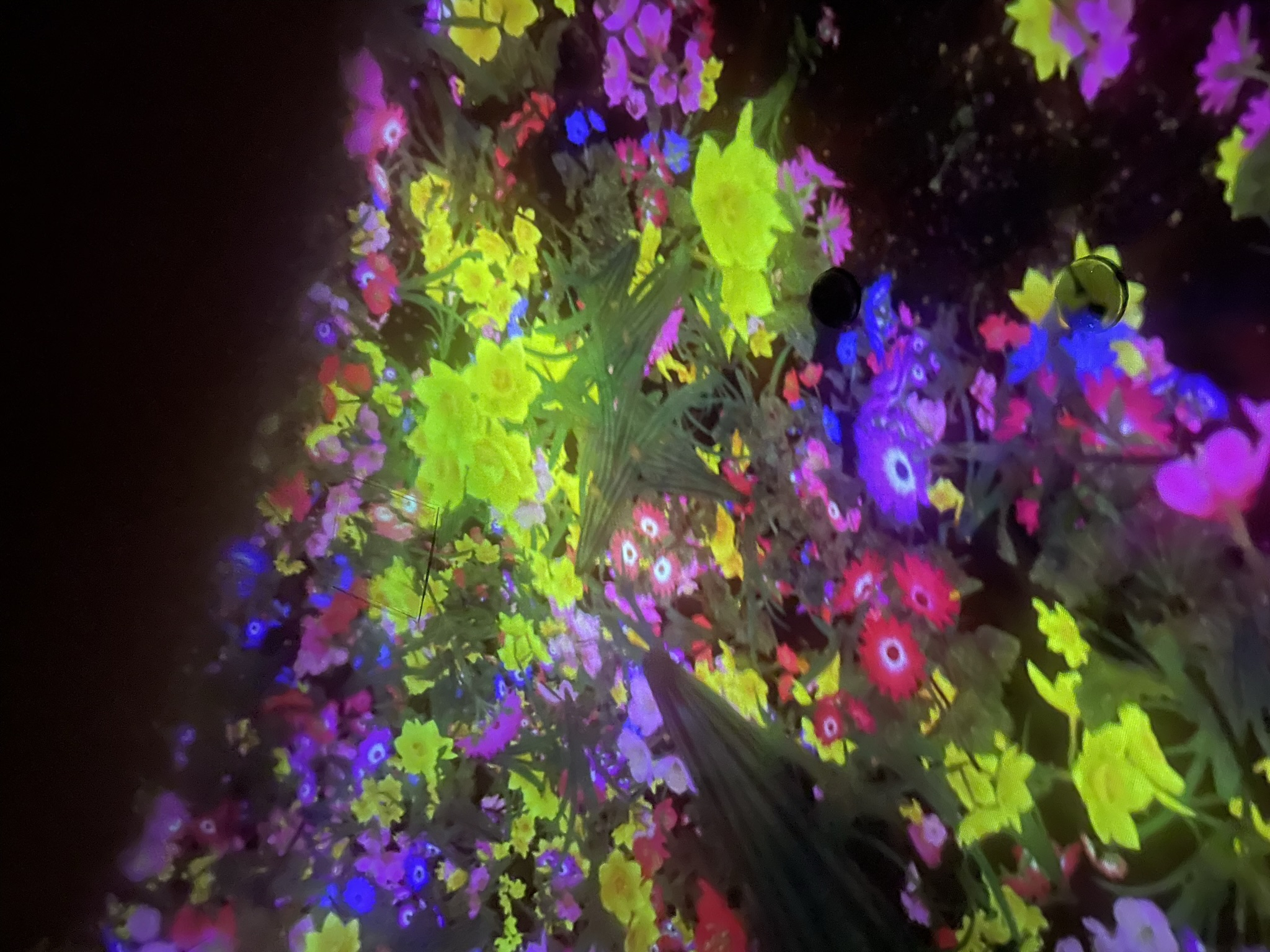 Teamlab is a top Tokyo attraction, and has the entrance lines to prove it, as it takes us 40 minutes from our arrival to make it into the building. Shoes off and pants rolled up, get ready for an immersive art experience: Initially through dark corridors with eerie minimal lighting, followed by wading through an uphill stream, then a crazy-house marshmallow floor area, that takes you to the infinite crystal matrix. Wowza! As Chris Farley often said, it was awesome. Vertical strings of LED lights in all directions with mirror walls extending it to infinity and an interactive algorithm running patterns and colors that never repeat and is responsive to human presence. Other highlights were the virtual koi pond where you’re wading calf high through water with e-fish responding to your presence and disintegrating into shards of light when you touch them. We end up in a hanging garden where real flowers are suspended soil-less but still living and moving. Ahem, you just have to see it. Too many people, but still a memorable visit, check out any of their installations.
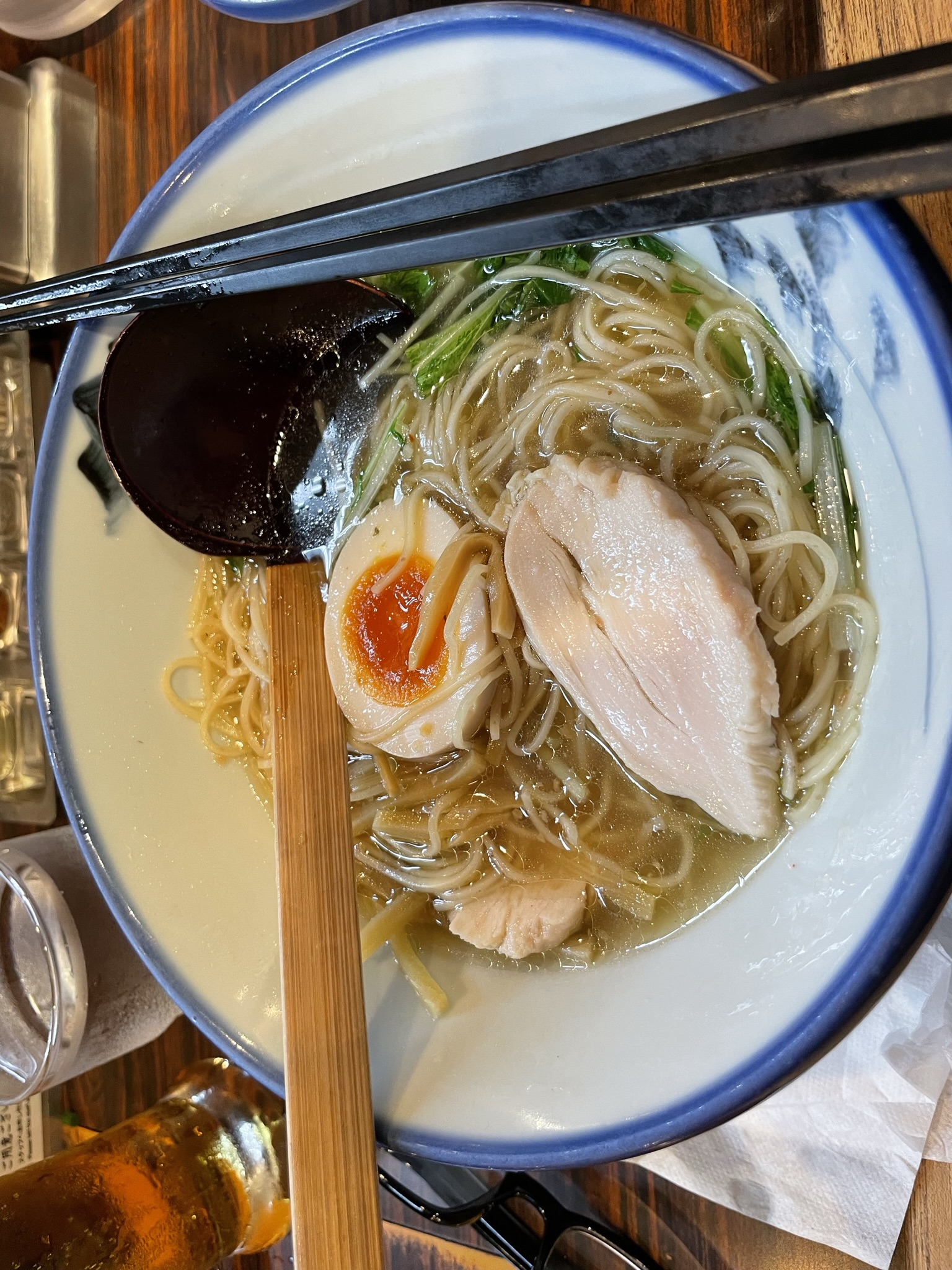
 After that, we nipped over to Roppongi and had some Afuri ramen: So many of the reasonably priced restaurants have automated systems, you have to be on the lookout for ticket machines or other e-systems when you enter. The afuri ramen is known for its light citrus-y broth, which we appreciate as a lot of Japanese ramen is heavy on the fatty pork. We take it easy that evening and gear up for a trip to far West Tokyo tomorrow.
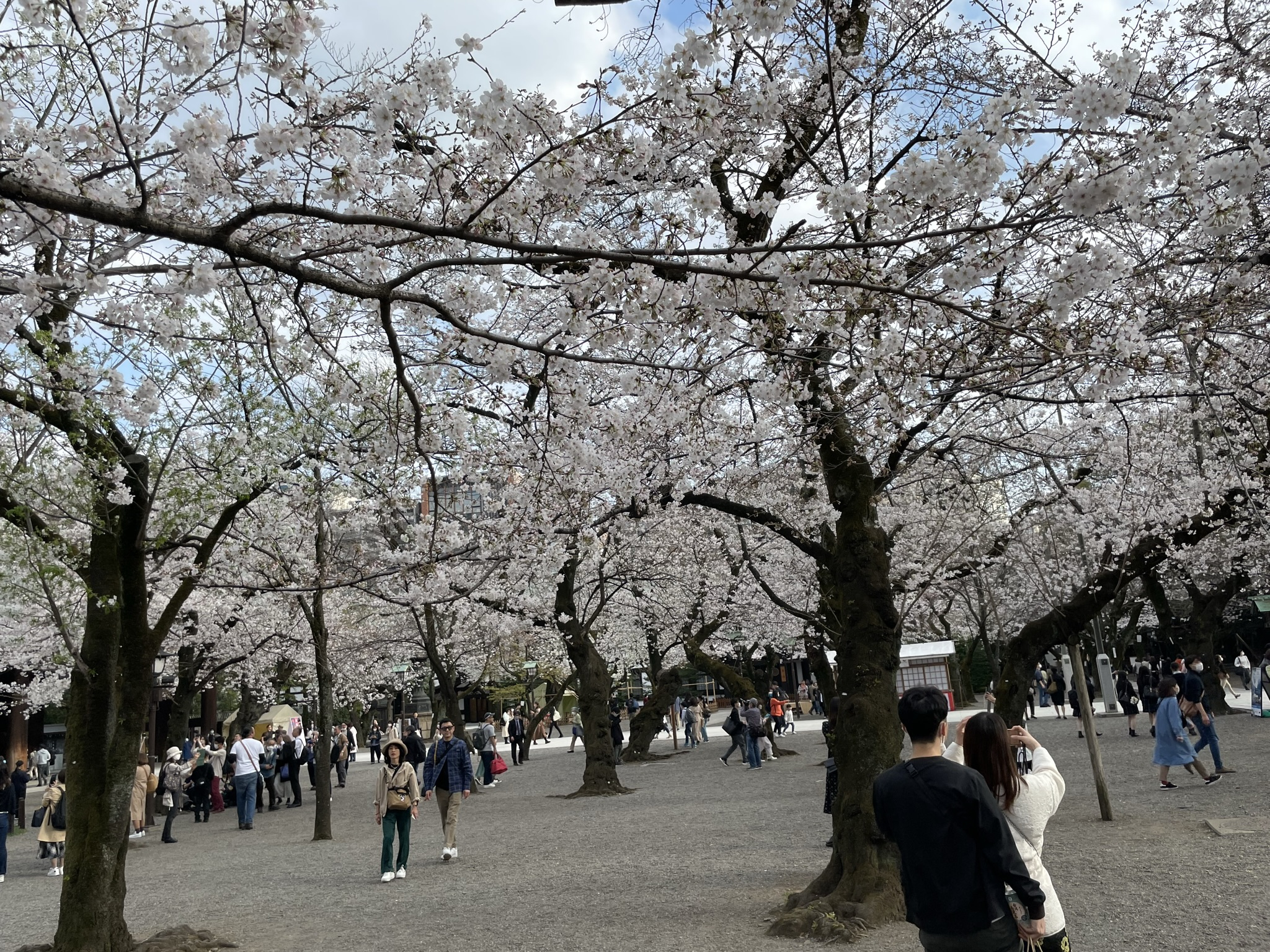
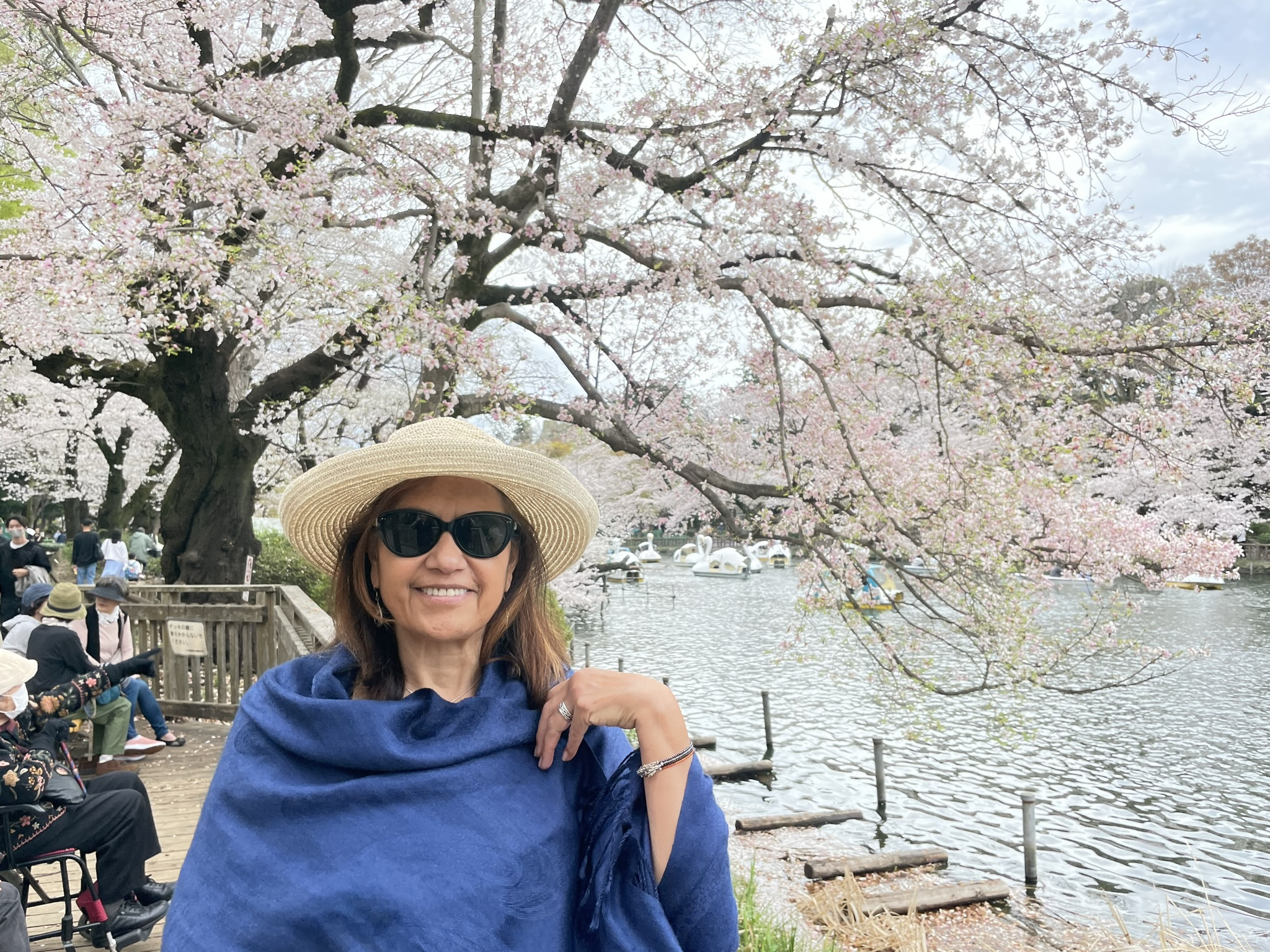
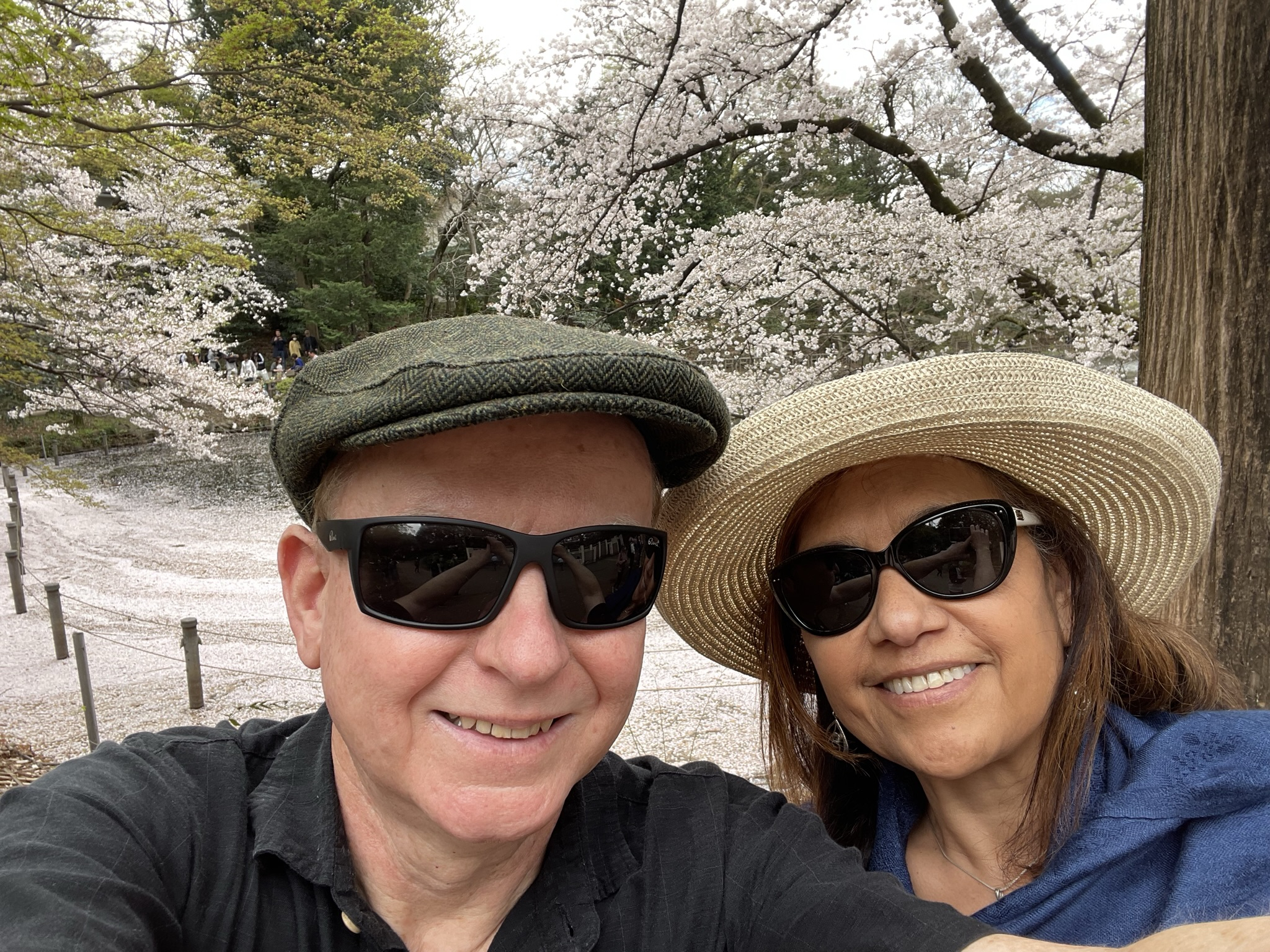
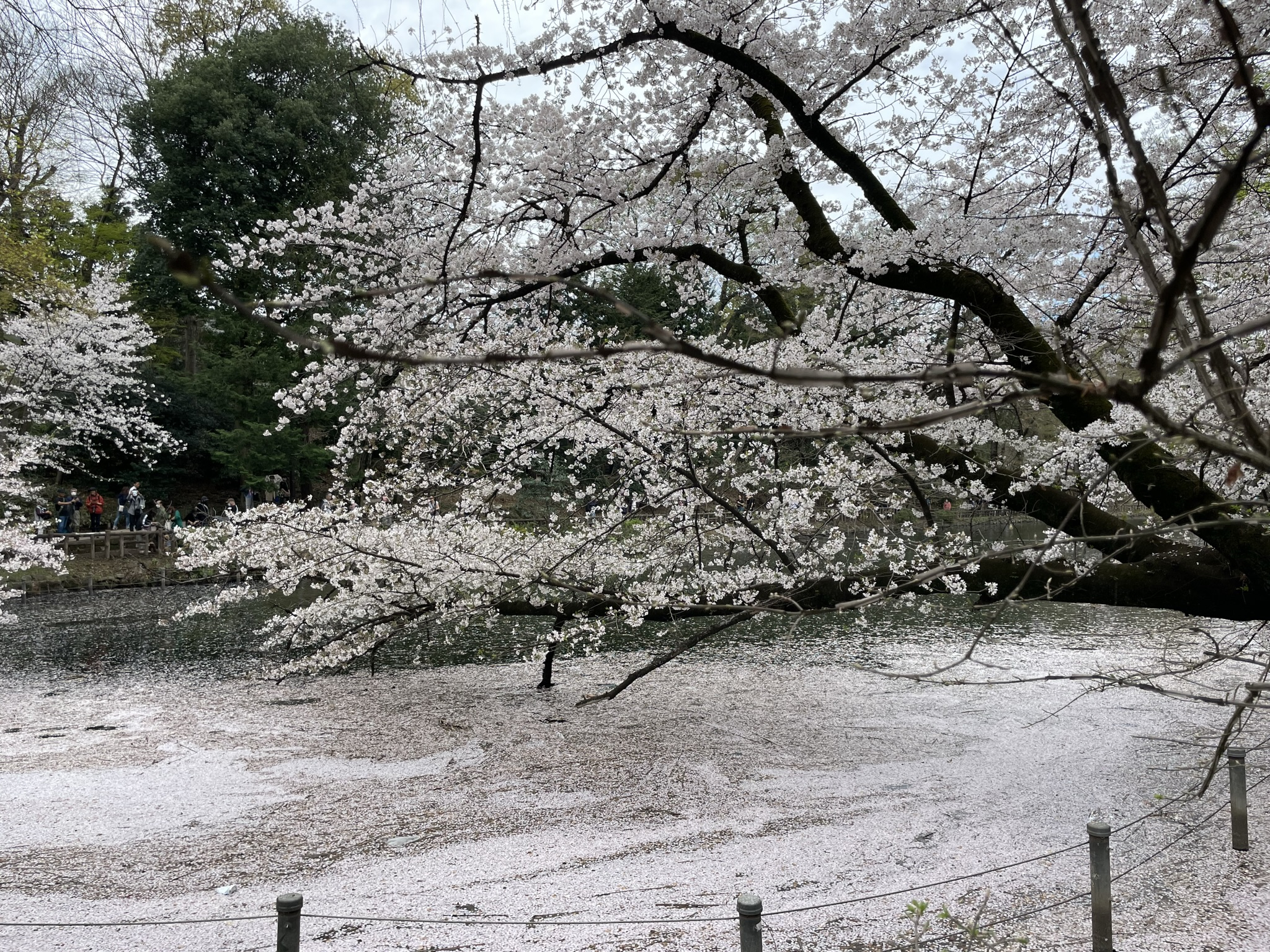
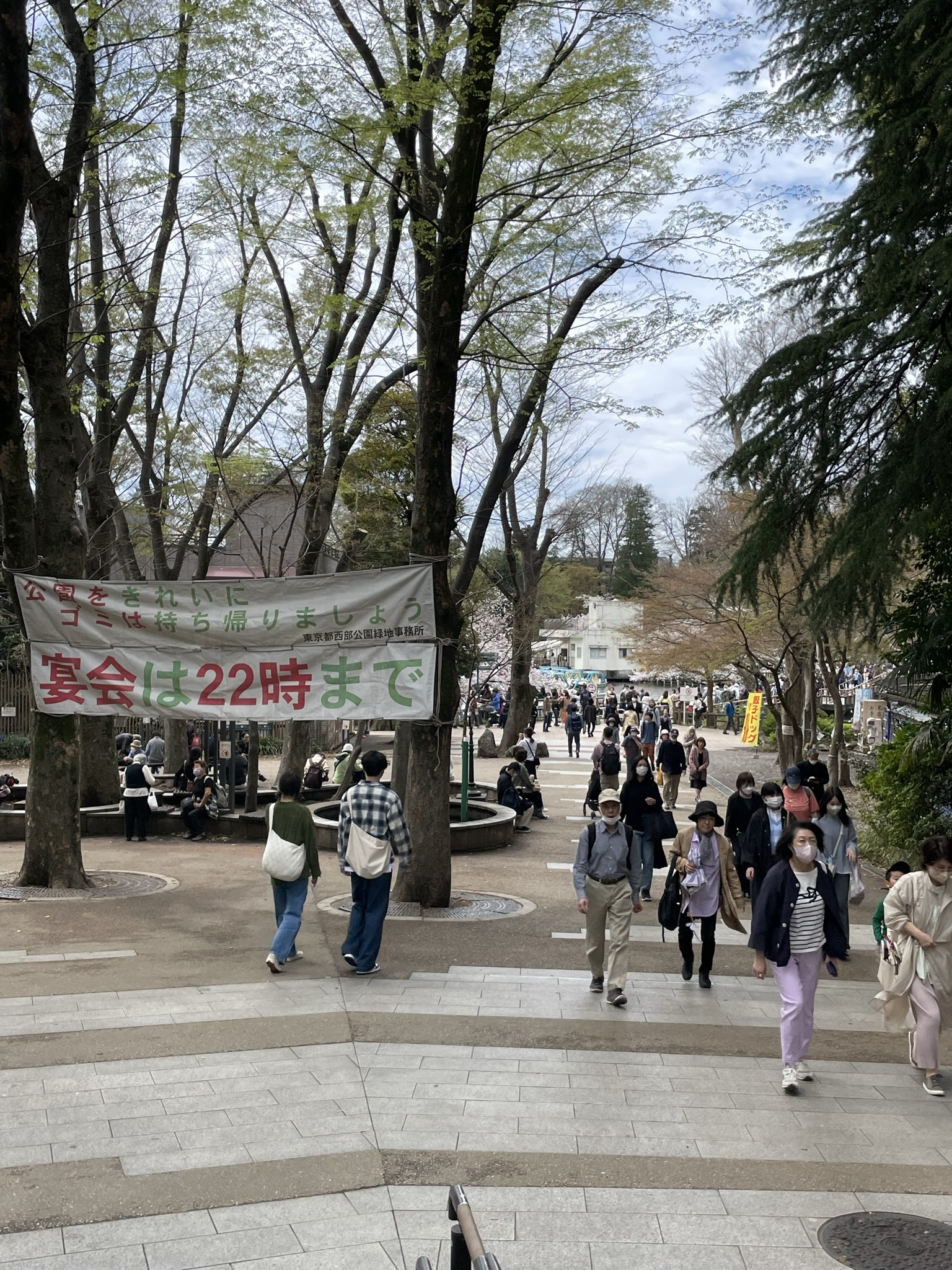
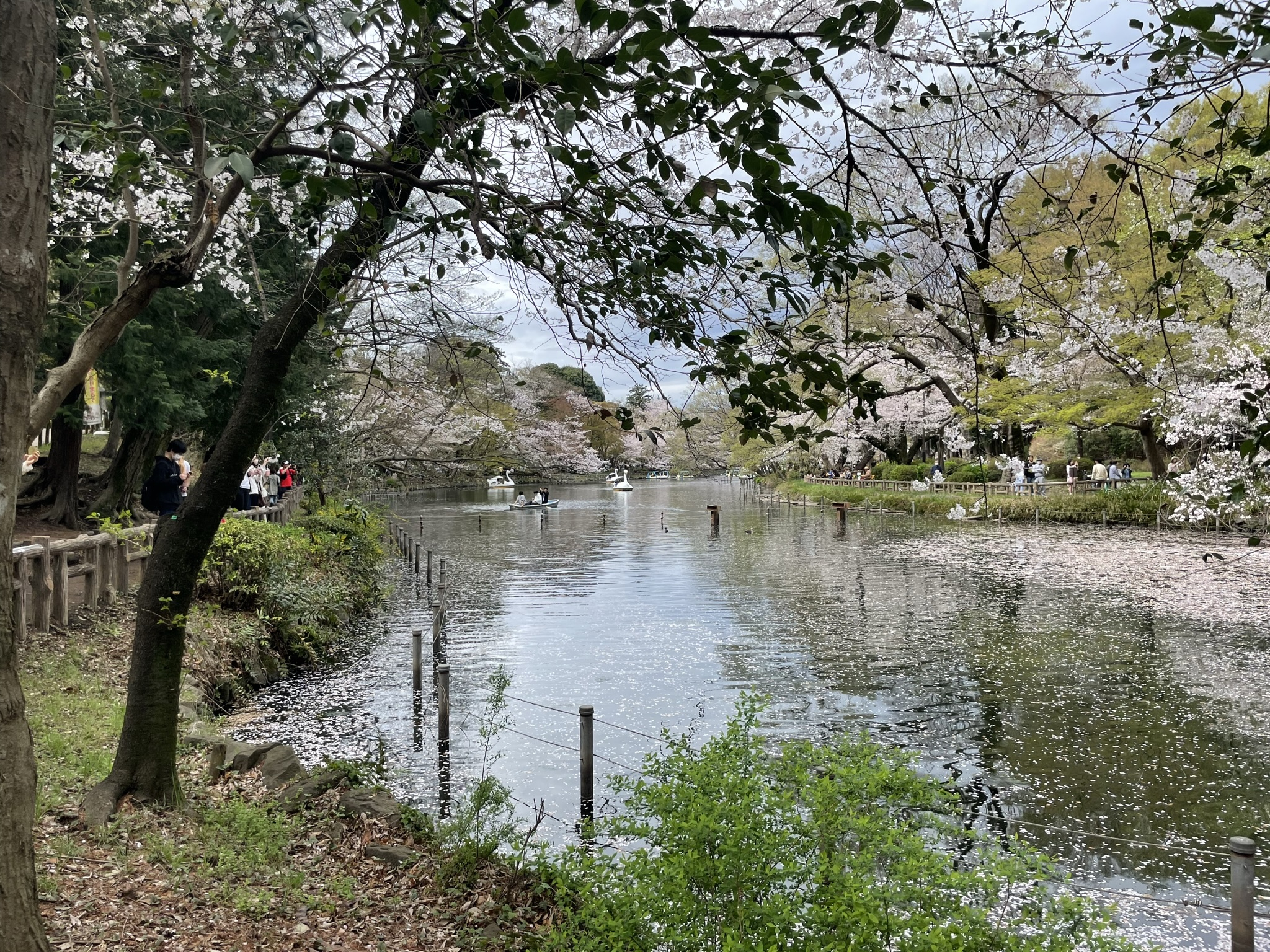
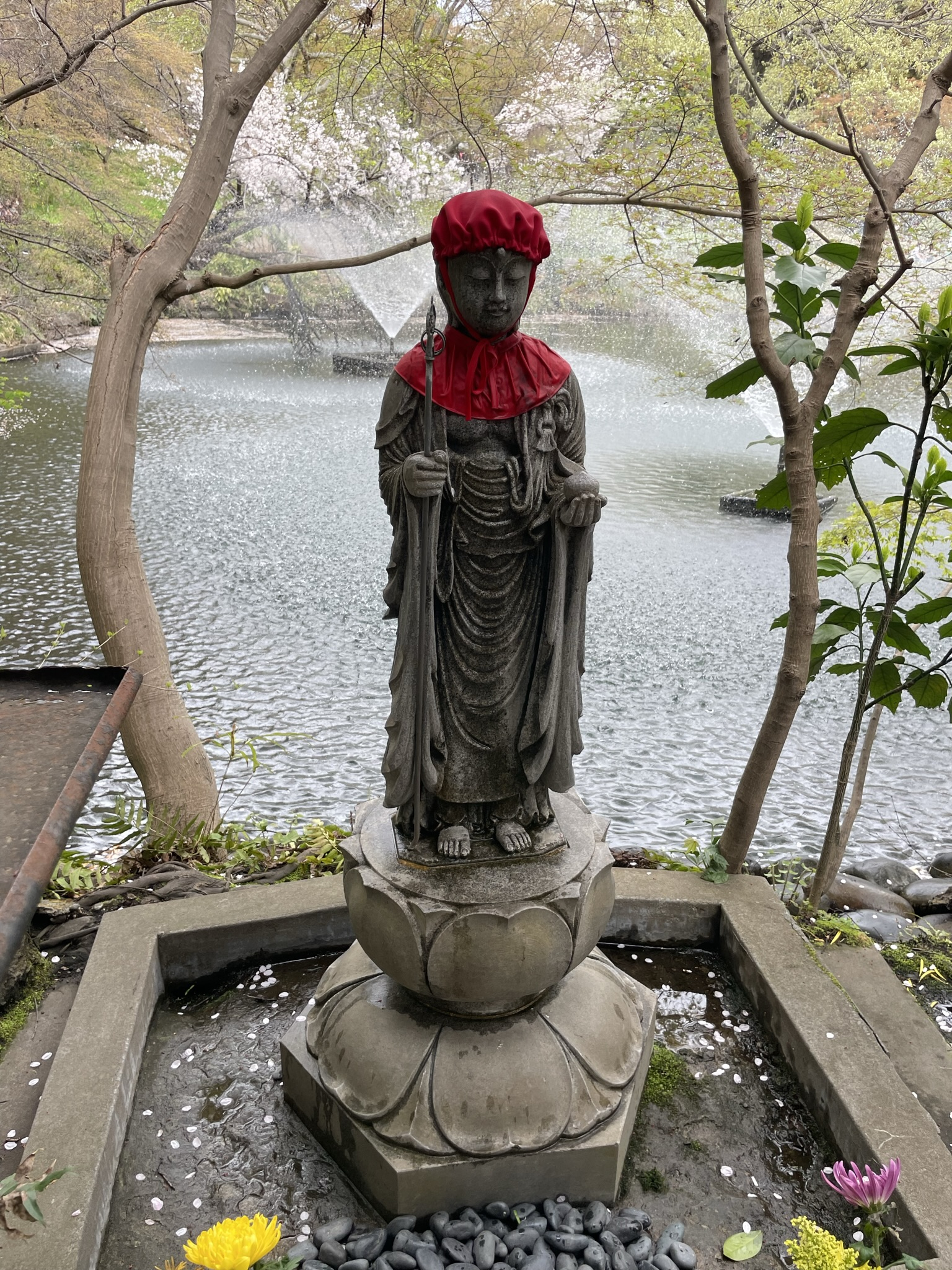
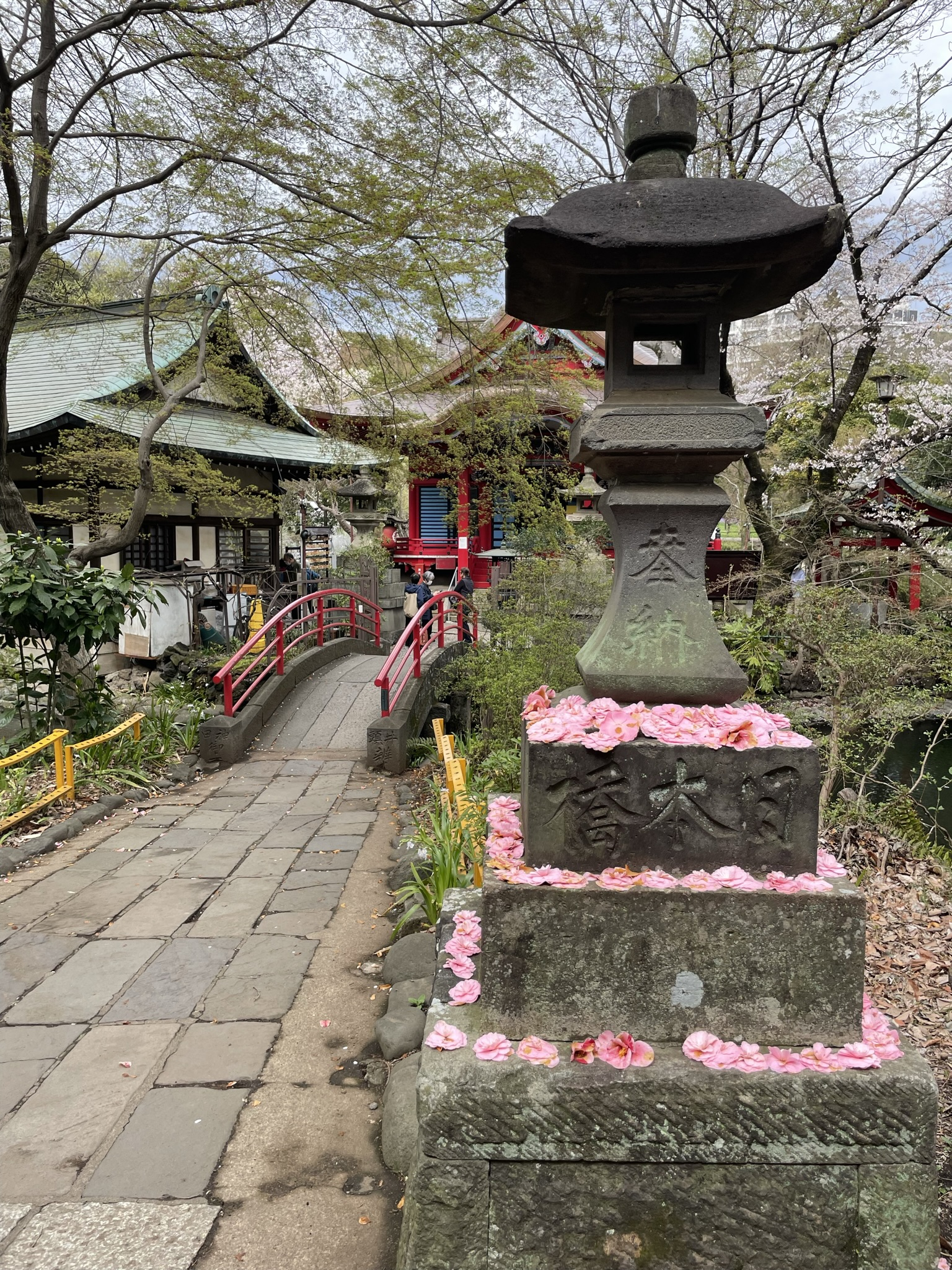
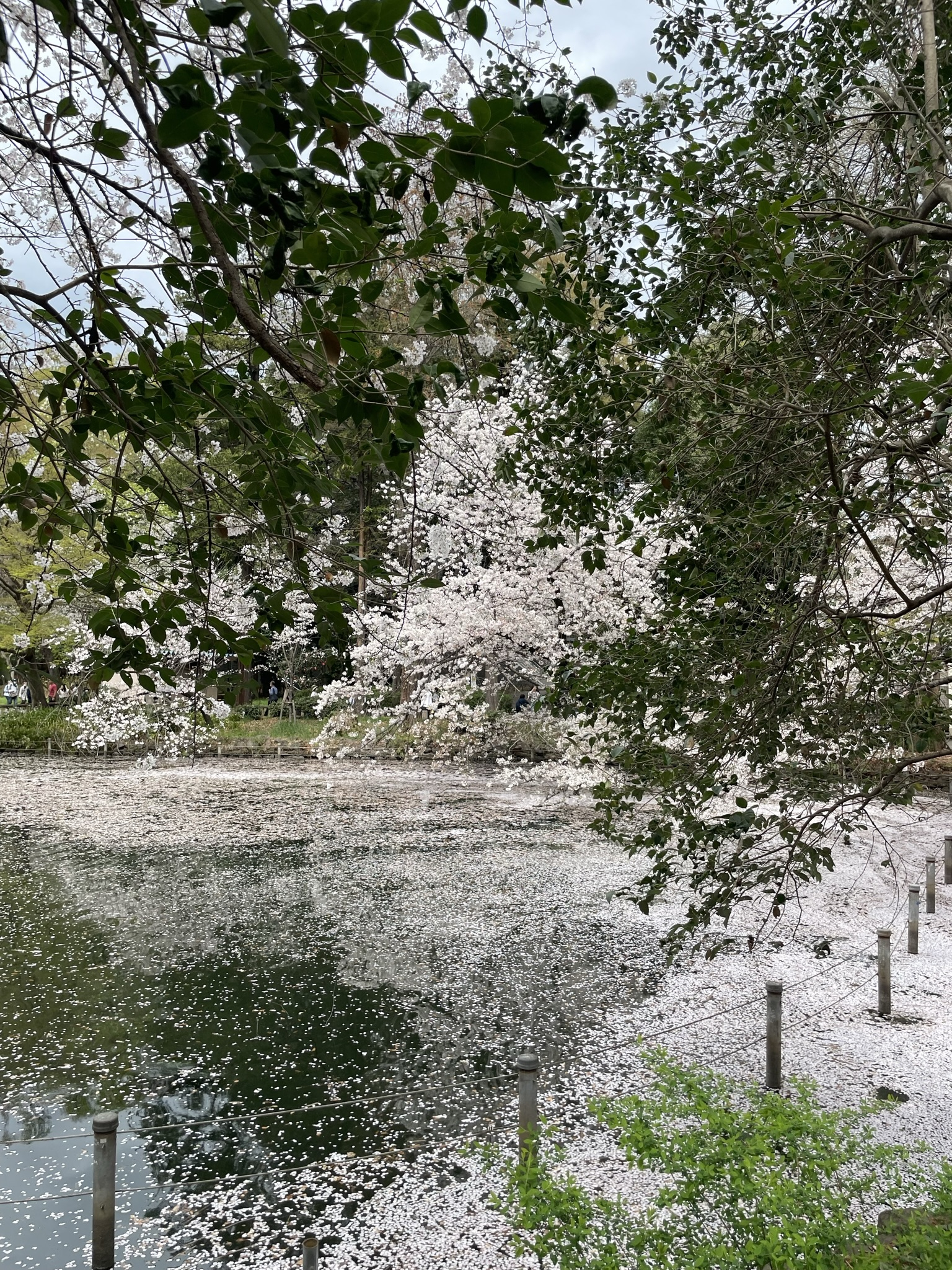
Last time in Japan in 2017 we stayed in Shimokitazawa, a hipster-iffic West Tokyo neighborhood, but the recent legalization of the short-term rental market i.e. Airbnb and similar, resulted in the close to complete disappearance of these rentals in cool Tokyo hoods, hence our staying in an inn near Ueno this time. Still, way out West is where some of most interesting Tokyo hang-outs are, so we make a day trip out to Kichijoji, another sought after district way beyond Shinjuku. Having been disappointed in the Sakura (cherry blossoms) of Ueno we’re taking another shot at it in Inokashira Park, a short walk from the railway station and are well rewarded. It’s a beautiful place with many sakura in full bloom, a picturesque lake, a temple and all kinds of horticultural delights.
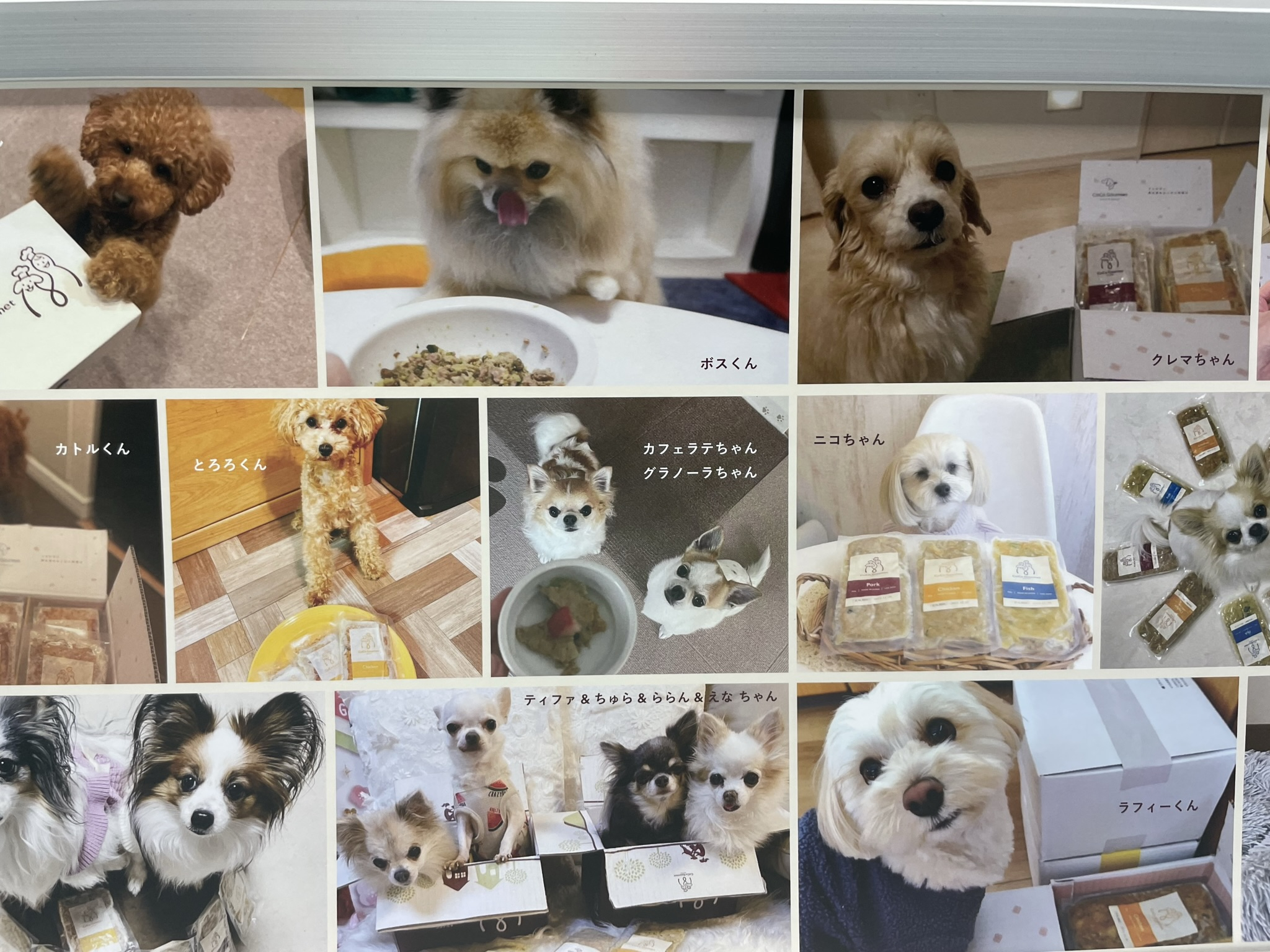
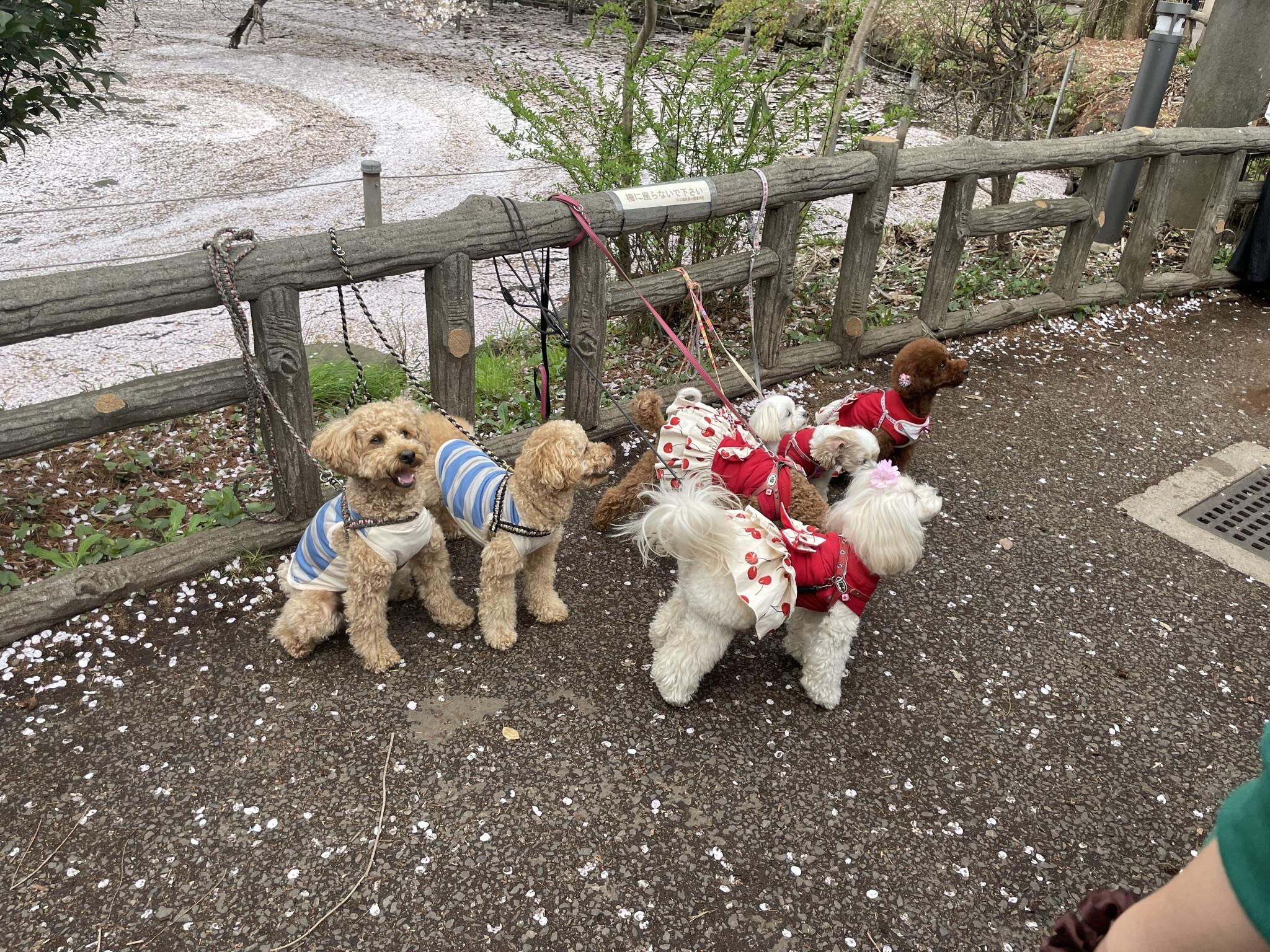
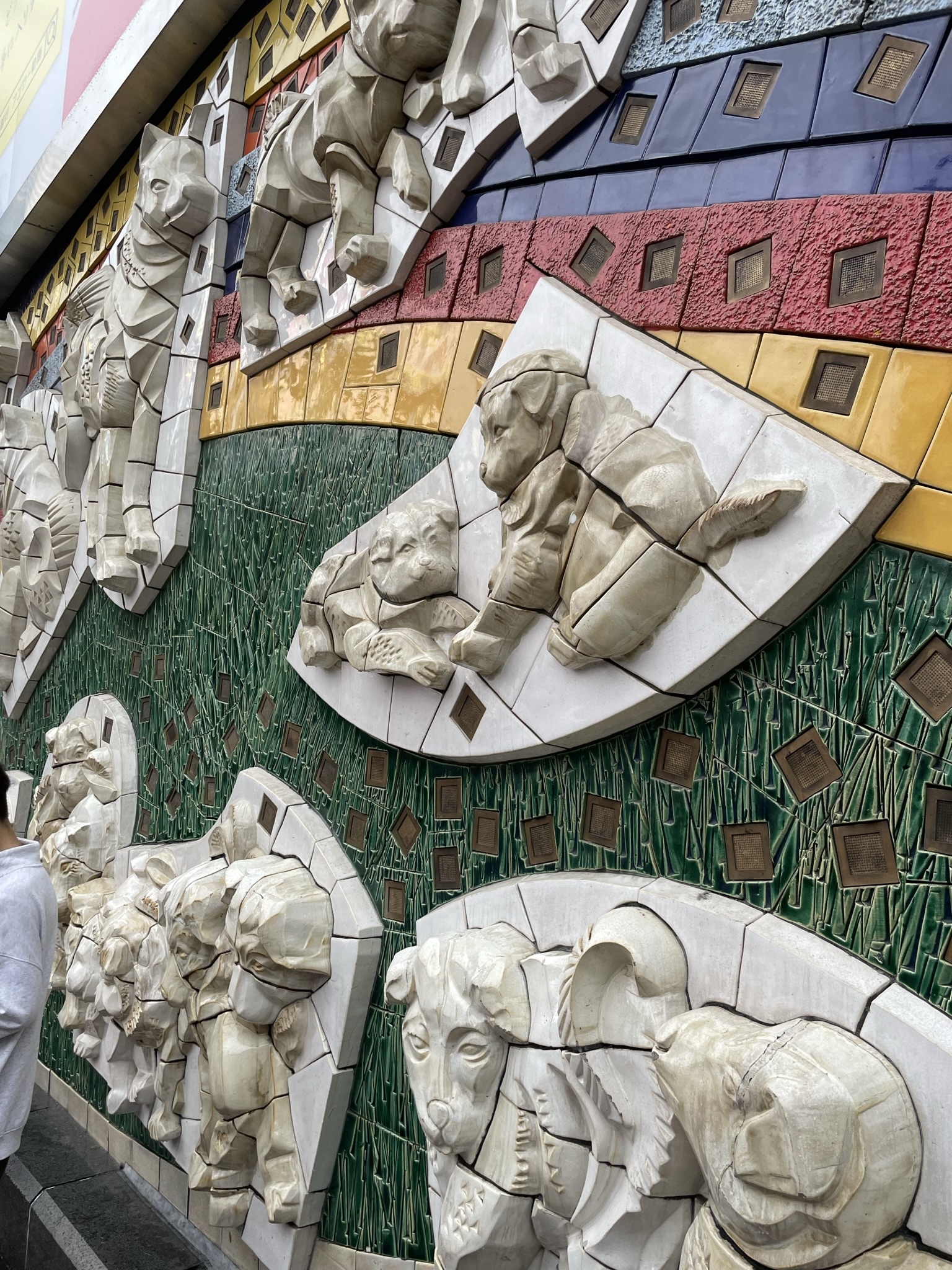
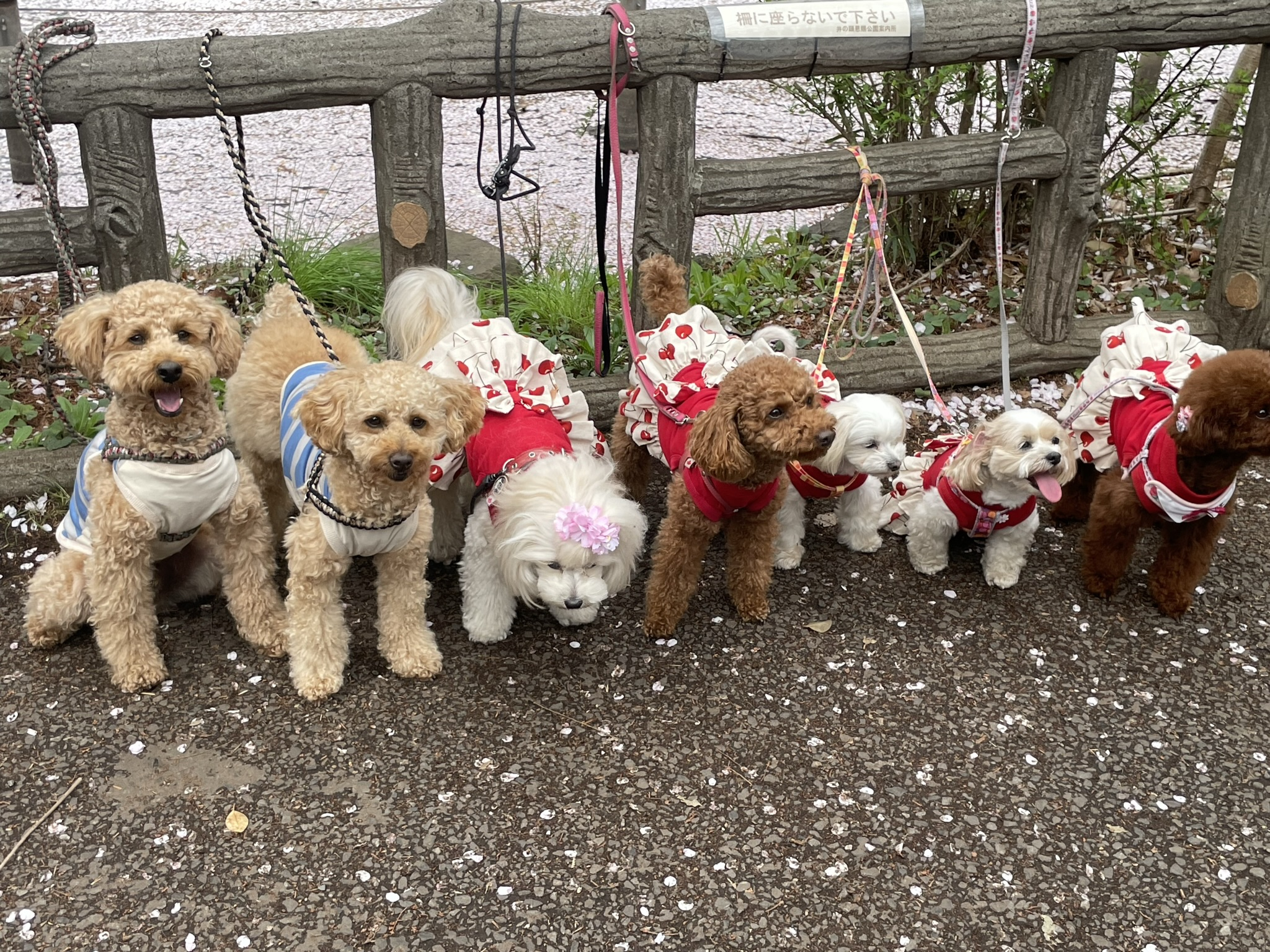 The locals are out in force and a designer dog with designer jacket is “de riguer”. Kawaii overload. Not surprisingly, small dogs rule in Tokyo, as the average apartment size is only 710 sq ft, so toy poodles and chihuahuas run amok. Just kidding, they are quite well behaved and play well with others, which is more than can be said for the human children. Until they head off to school and are introduced to the endless expectations of Japanese society, kids here do amok on a regular basis. Also, because of the relative safety for kids here compared to most other places in the world, tiny children are often seen off on their own in public without a parent close by. Small Japanese kids are still transfixed by the ghastly apparition of visiting foreigners (gaijin), particularly if you get off the standard tourist routes, but older children may try to say “Hello”, though that’s typically as far as they go. As far as adult interaction, most Japanese will leave you alone unless its obvious that you’re struggling with something, translation or otherwise. However, it they’re studying English you will be pursued for practice purposes and, further, if alcohol is involved and a common interest determined such as music, history, sports etc, you may well have a new friend.
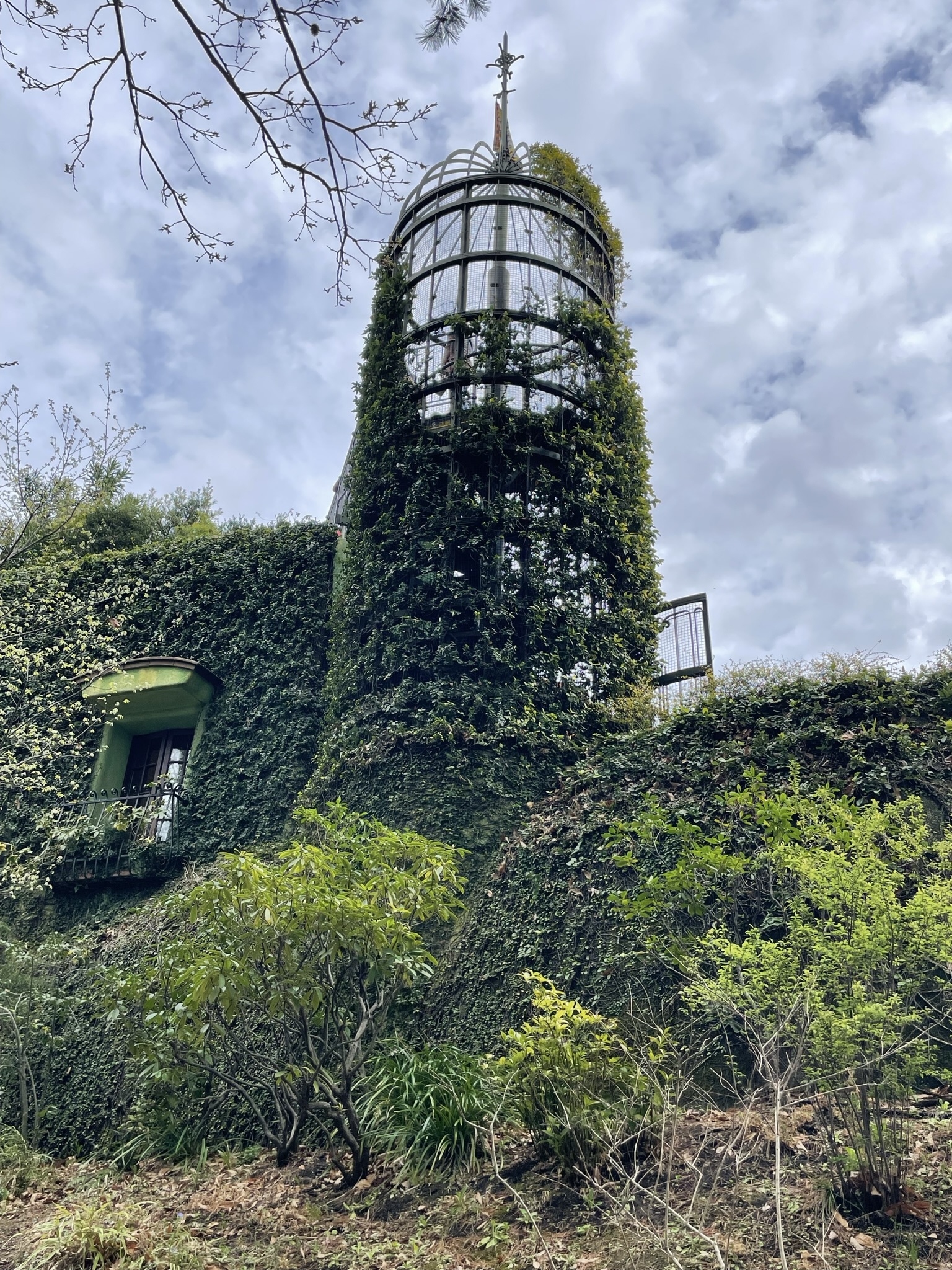
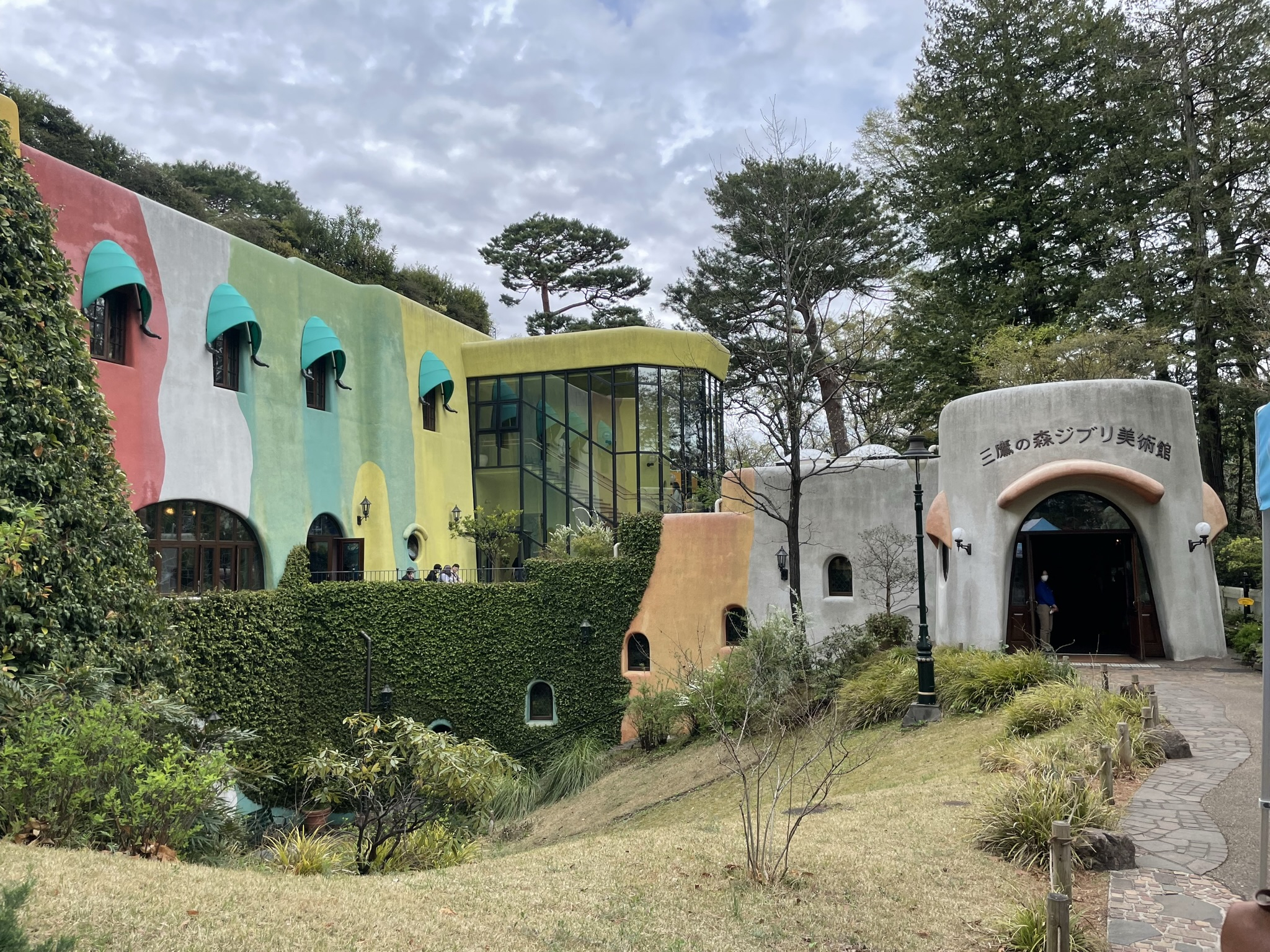
 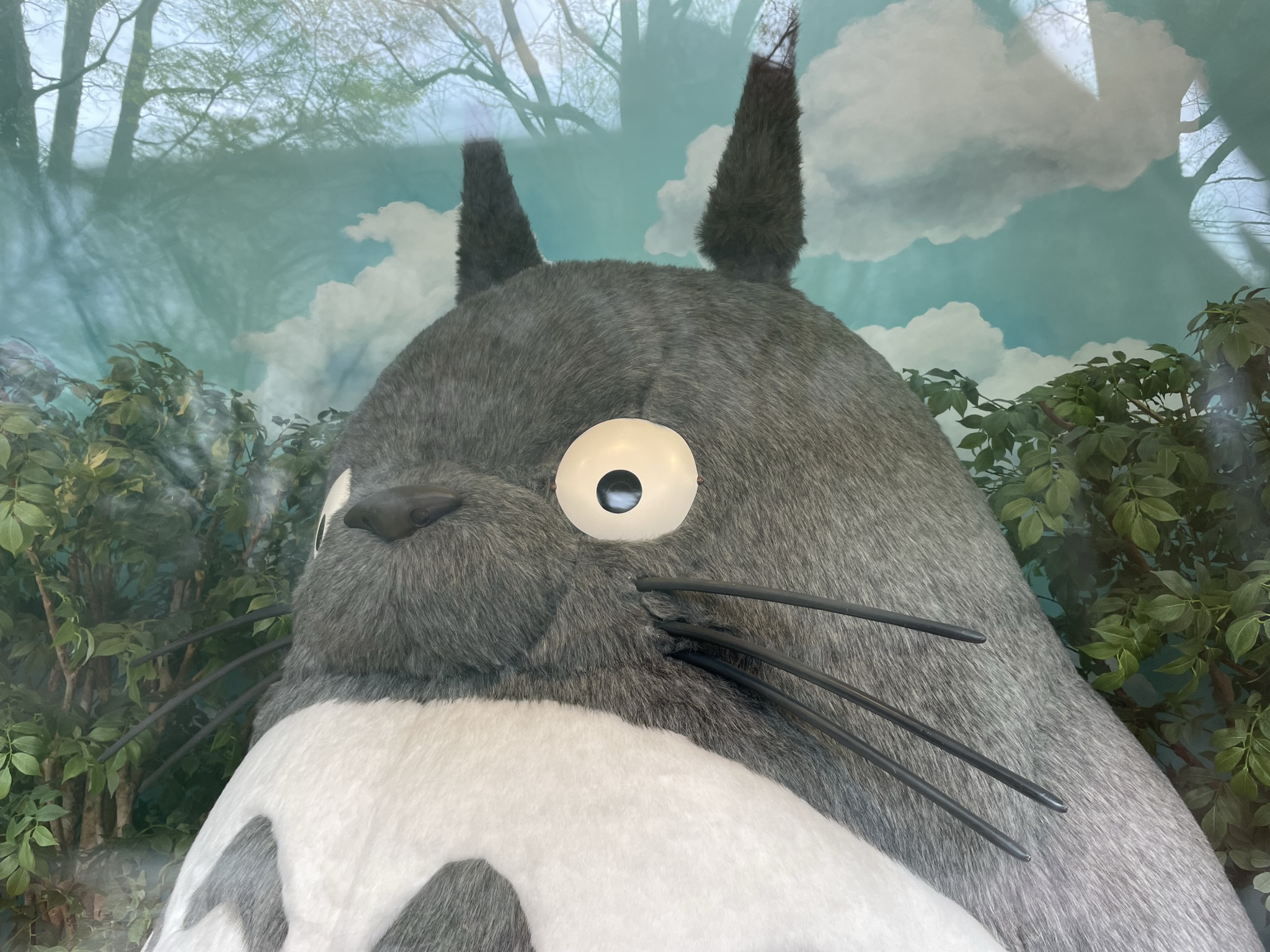 The Ghibli museum is also in an extension of the park and we, dutifully, trek over there to take a look, even though we couldn’t get tickets. They’re a hot item and tickets for the following month go on sale on the 10th at 9am Tokyo time: If you’re not on line right then, you’ll be out of luck, as it sells out in minutes, or, at least, it did as regards April for us. There’s a new Ghibli theme park about an hour East of Nagoya but we couldn’t include it in our itinerary this time. It’s still new and areas are still to be added, so it could be part of a future visit.
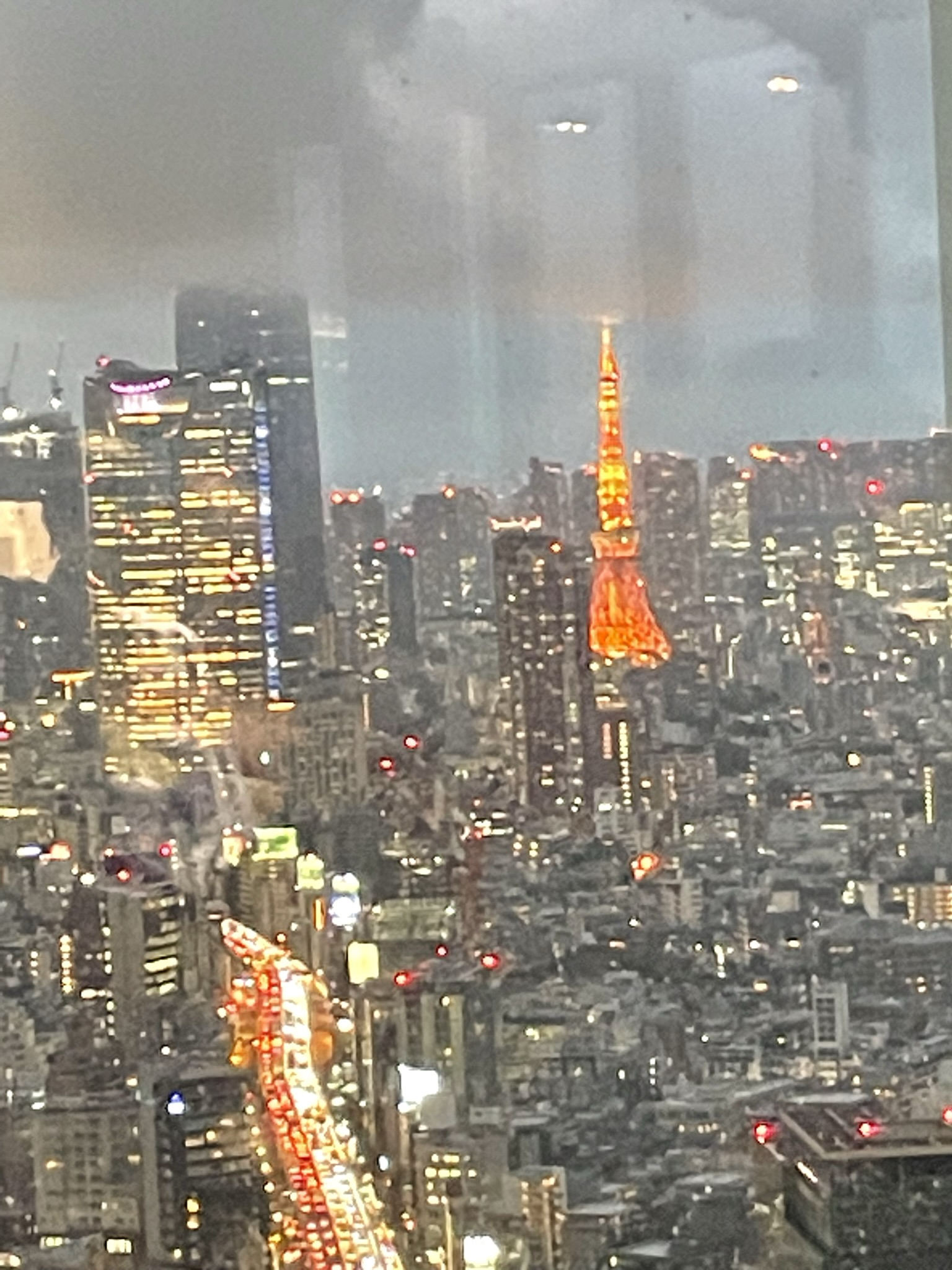
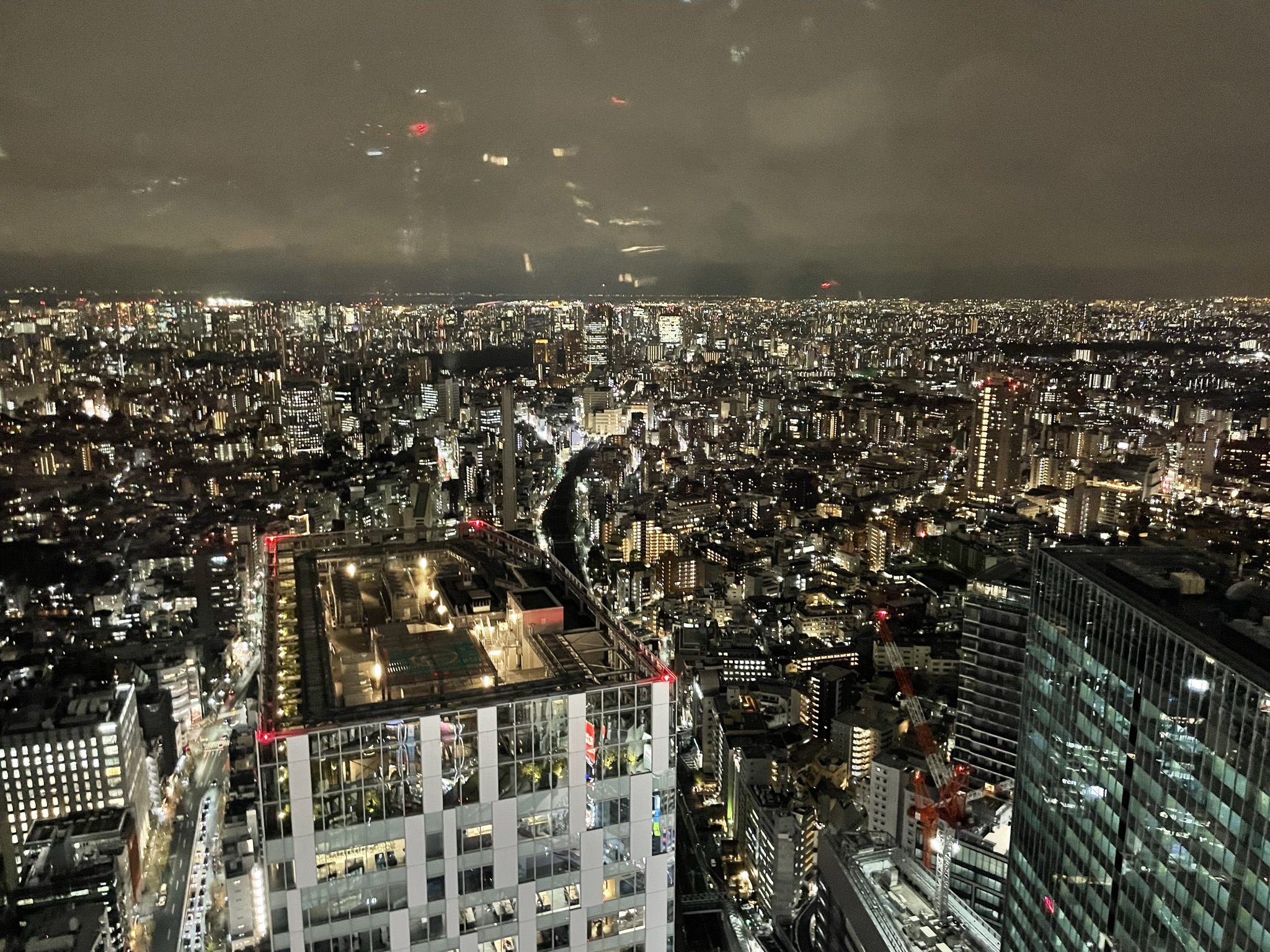
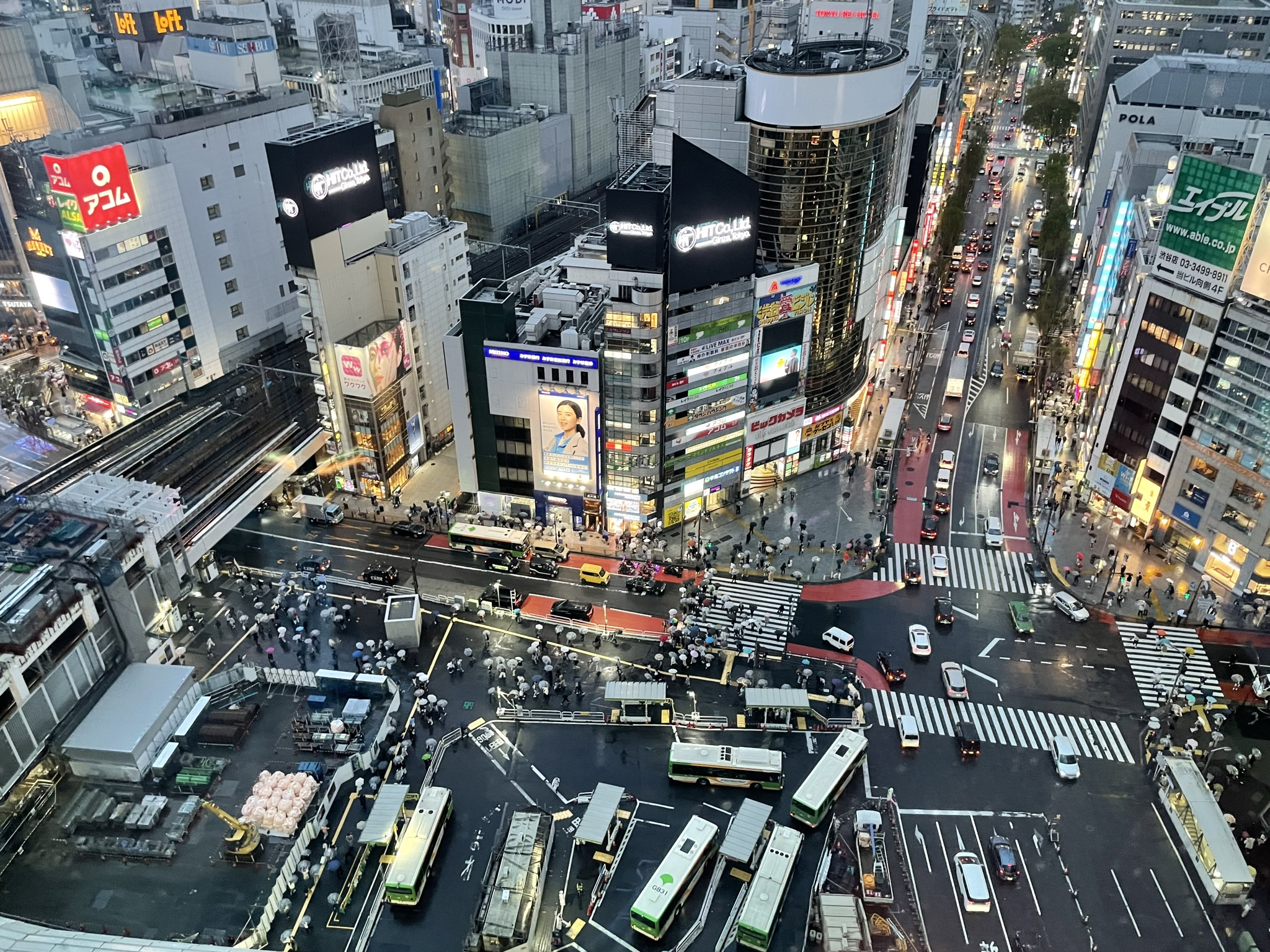
We wrap up in Kichijoji as the forecasted rain arrives – Kichi looks like a nice neighborhood to live but didn’t match the coolness factor that Shimokita has in terms of vintage clothing, live music bars and independent restaurants and bars. Kichi is definitely more upmarket, whereas Shimokita is more bohemian and nicely worn around the edges. The rain is unfortunate as we have reservations at 6pm for Shibuya Sky, the latest observation platform in Tokyo. Due to the rain, the whole of the outside part of the space was closed, so everyone is jammed into the indoor viewing area. There’s definitely a “check it off the list” feel to the place, lots of teens and 20-somethings Instagramming furiously. Still, our visit is timed for sunset and it’s worthwhile to watch the city light up as the day fades plus it’s right over the iconic Shibuya Crossing.
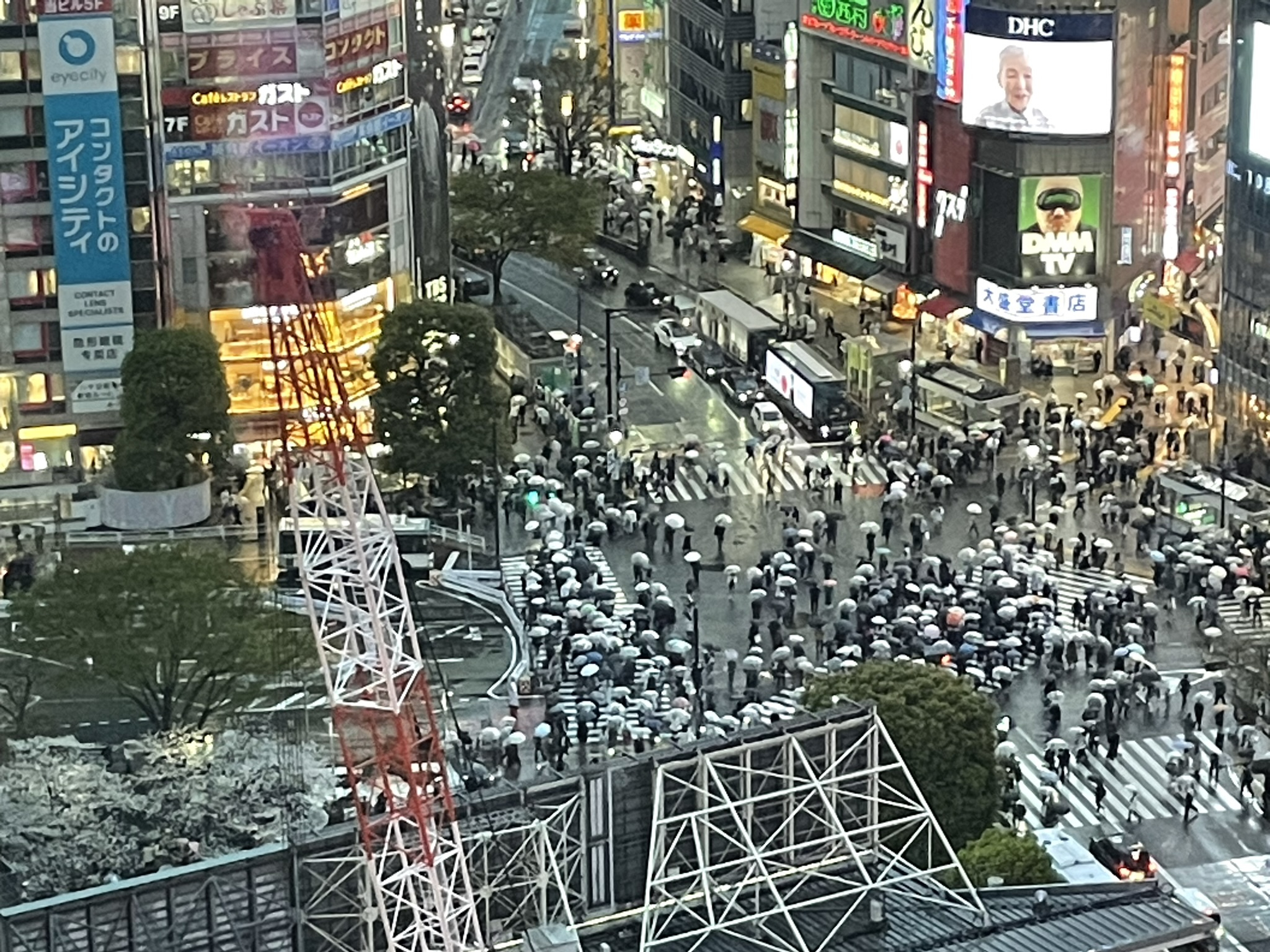 If you get a craft beer from the bar there you can get a seat, get away from most of the hordes, and chill as night descends and the city illuminates. If the weather is good and the outside deck open, I’d say it’s a good deal for your, roughly, $14. Our time in Tokyo is up for now and tomorrow we’ll be taking the Shinkansen all the way to Hakata/Fukuoka down South on Kyushu Island. Would likely be quicker and cheaper to fly but we need to use our JR rail passes because in Tokyo and most other cities an internet card like Suica or Paso works fine, but for inter-town and city trips the pass is essential. Just see the craziness around the ticket machines and counters at any large railway station, and and these are not just tourists, foreign or otherwise. The JR pass has been updated now so you can use the automated barriers and you make your (essential) seat reservations on Shinkansen ticket machines, so no need to talk to someone in a ticket office anymore. If you’re willing to commit to a schedule you can do all your seats reservations in one shot. We did that and breezed through every station after that. Tokyo has been hard on our bodies, and jet lag doesn’t get any easier as you get older, but we’re still on our feet and ready to get out of town and see a new part of Japan.
Leave a Reply