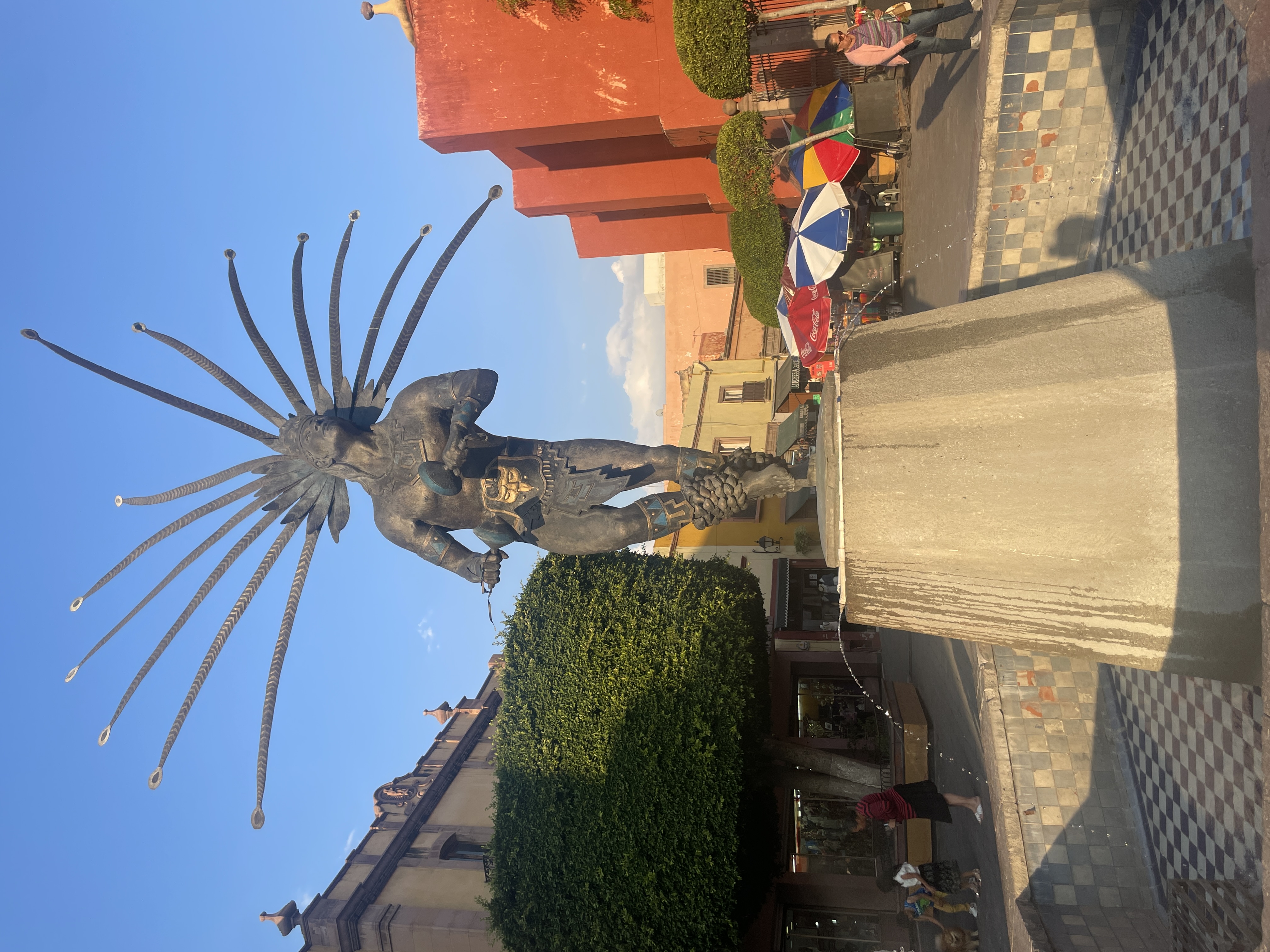
 Our plan on this trip is to get a handle on what it’s like to live in the central highlands of Mexico so, even though we spent a month in CDMX, it’s time to head out of the big city and see what else this huge area has to offer. We’re going to vsit San Miguel de Allende, Puebla and, first, Queretaro.
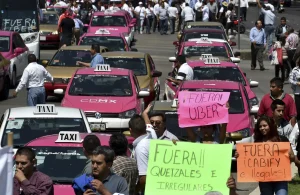 Q(uereta)ro is about 3 hours North of the Norte bus terminal in CDMX and, as I touched on in an earlier post, Mexico has an excellent inter-city bus system, but not much in the way of a rail network yet so, within the central highlands, the big buses are the way to go if you don’t have a car. This is not third world travel: It is organized, clean, reliable and comfortable, but we stick with the higher end companies such as ETN, ADO, Primavera and Estrella Roja but, even so, prices are very reasonable. It’s a struggle with the crazy traffic getting out of CDMX going North but plain sailing after that, mostly on freeways, all the way to Qro. At the bus terminal the struggle between the old school taxi drivers and Uber et al continues. In general, Uber has worked fine for us so far here, but you may run into troubles at airports and bus stations as the legal and, sometimes, physical squabbles continue. Meaning, your Uber, at best, may not have defined pickup points and, worst, they may not be able to drive in or out of the facilities, which can make for a stressful experience as you try to track your driver downed dragging long haul luggage through crowds and traffic. Or you can pony up for a safe taxi by getting a prepaid voucher at the airport or bus station to minimize taxi driver shenanigans. Typically, there are no meters and, particularly in CDMX, reports of legendary ripoffs abound. End of PSA.
 Alrighty, Qro is a boom town spearheaded by automotive, aerospace, tech and manufacturing, but it also has a UNESCO recognized colonial historic center: Which of these aspects will dominate our visit? Our apartment is in a quiet, mid-Century (?) neighborhood fairly close to Centro, not sure if its accurate name is El Cortijo or Los Arcos, cut off from it by an enormous 6 lane expressway, plus auxiliary frontage lanes, aka Boulevard Bernardo Quintana. It takes three separate sets of traffic lights to make it across as a pedestrian, unless you detour to the only bridge within a mile or so. Big ass SUVs are the weapon of choice and valet parking is de rigueur in the flashy restaurants that line the freeway, bringing to mind suburban Western USA. Well, this is not what we came to Mexico for, but try telling that to the local, young professionals with cash who are here to chase the “American Dream”. It’s a weird start to our stay but, once you make it over the bridge towards Centro, it’s a different story.
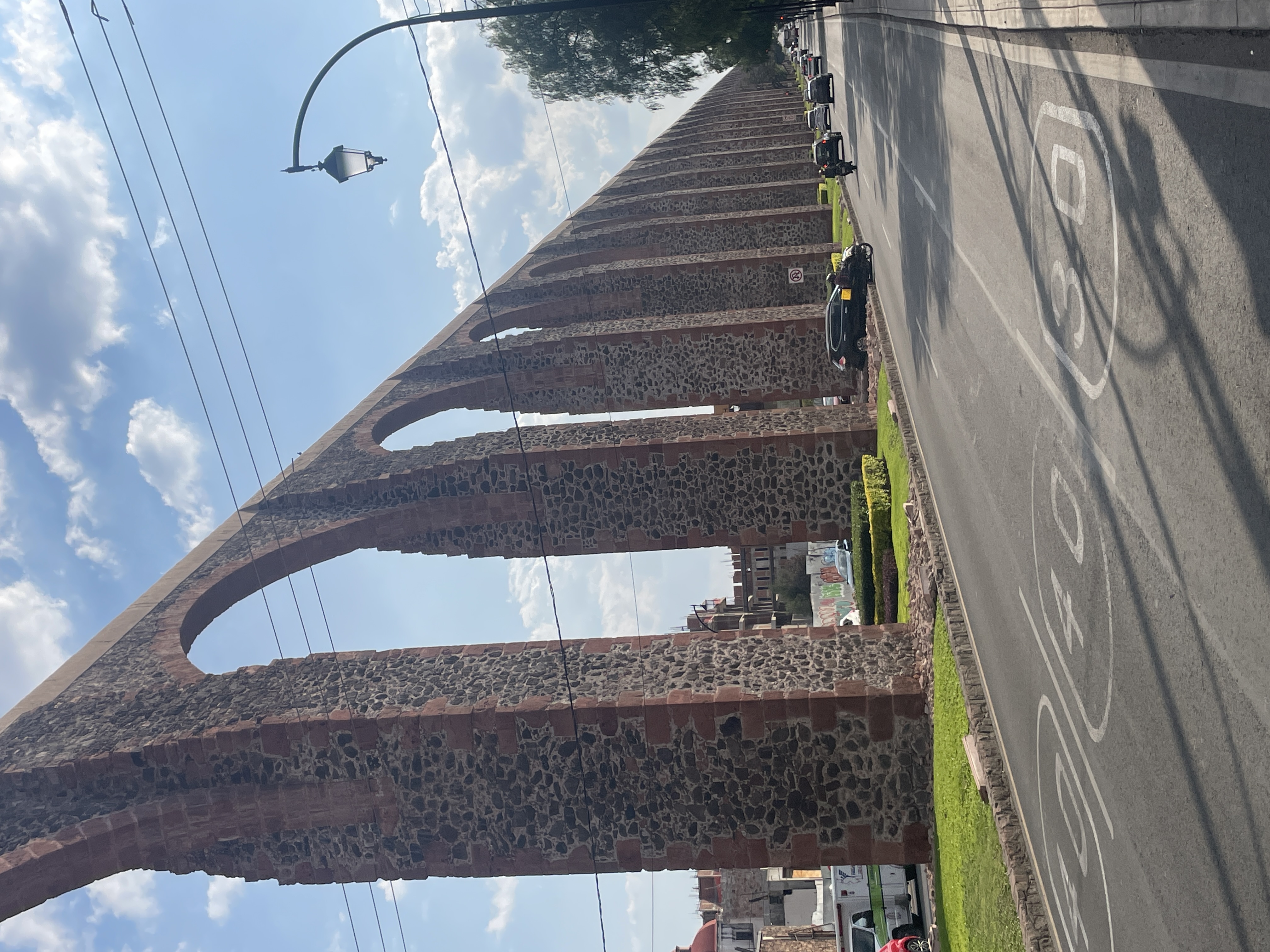 Right away you find your self underneath the Queretaro Aquaduct built around 1730 to carry water 0.8 of a mile from the El Canada spring to Centro and which was still in use until 1970. It’s an impressive series of 74 pink stone arches, about 95 feet high, that leads you into the center of town. El Centro has very well preserved Spanish colonial architecture, but pre-Hispanic neighborhoods still remain, making for a peaceful coexistence, at least in modern times, between Spanish and local cultures such as the Otomi and Tarasco. These days, indigenous people are regularly seen in Centro selling crafts while simultaneously protesting (for constitutional rights and justice for murdered activists and against water concessions and disruptive mega-projects).
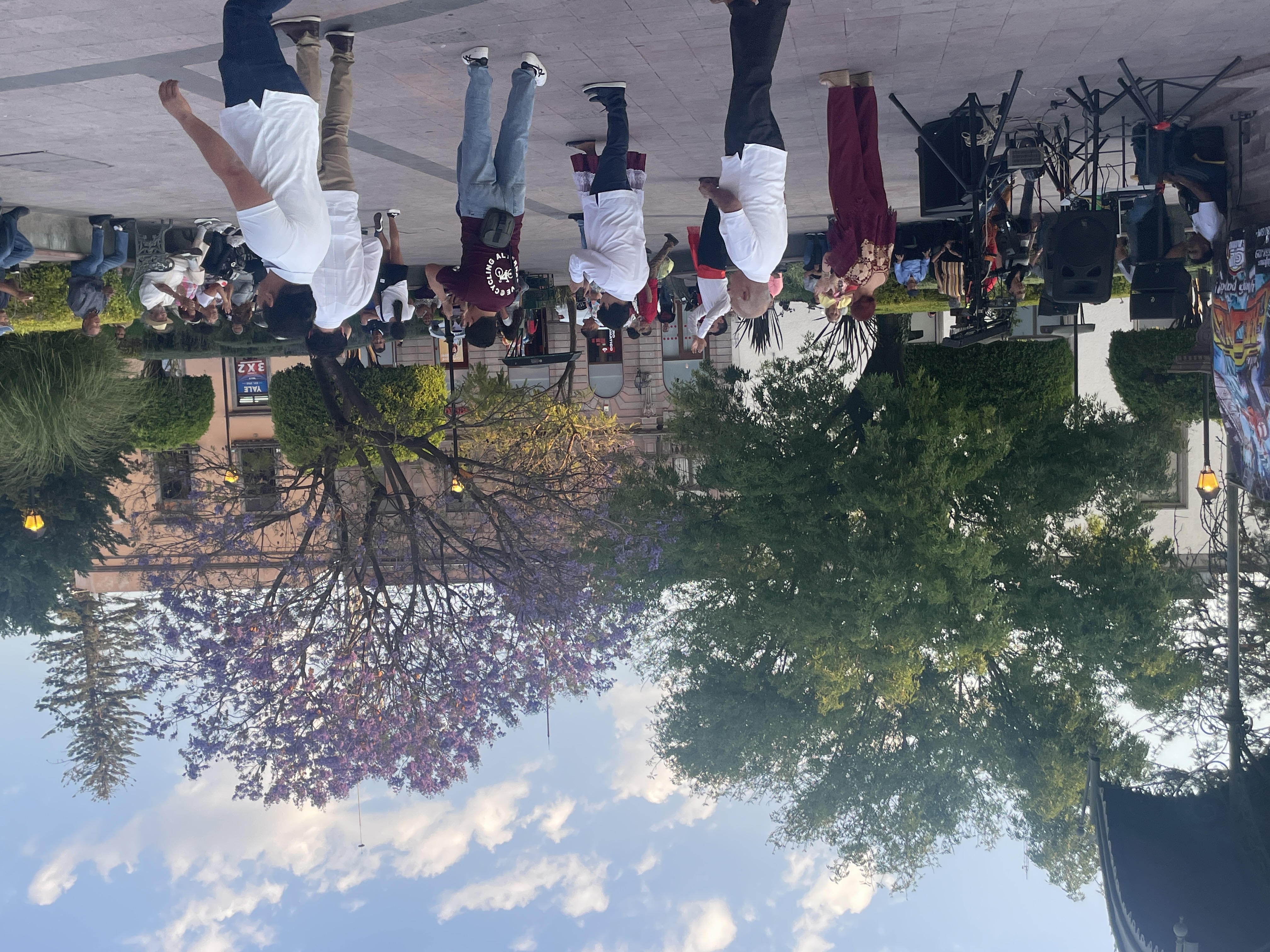 It’s an attractive place with pedestrian precincts, shaded plazas, outdoor markets, and music. The eternal Spring climate means that the shops and restaurants inevitably spill out into the streets and the mix of locals hanging out and, mostly, Mexican tourists doing the rounds mean that there’s always a buzz, at least until the later hours of the evening.
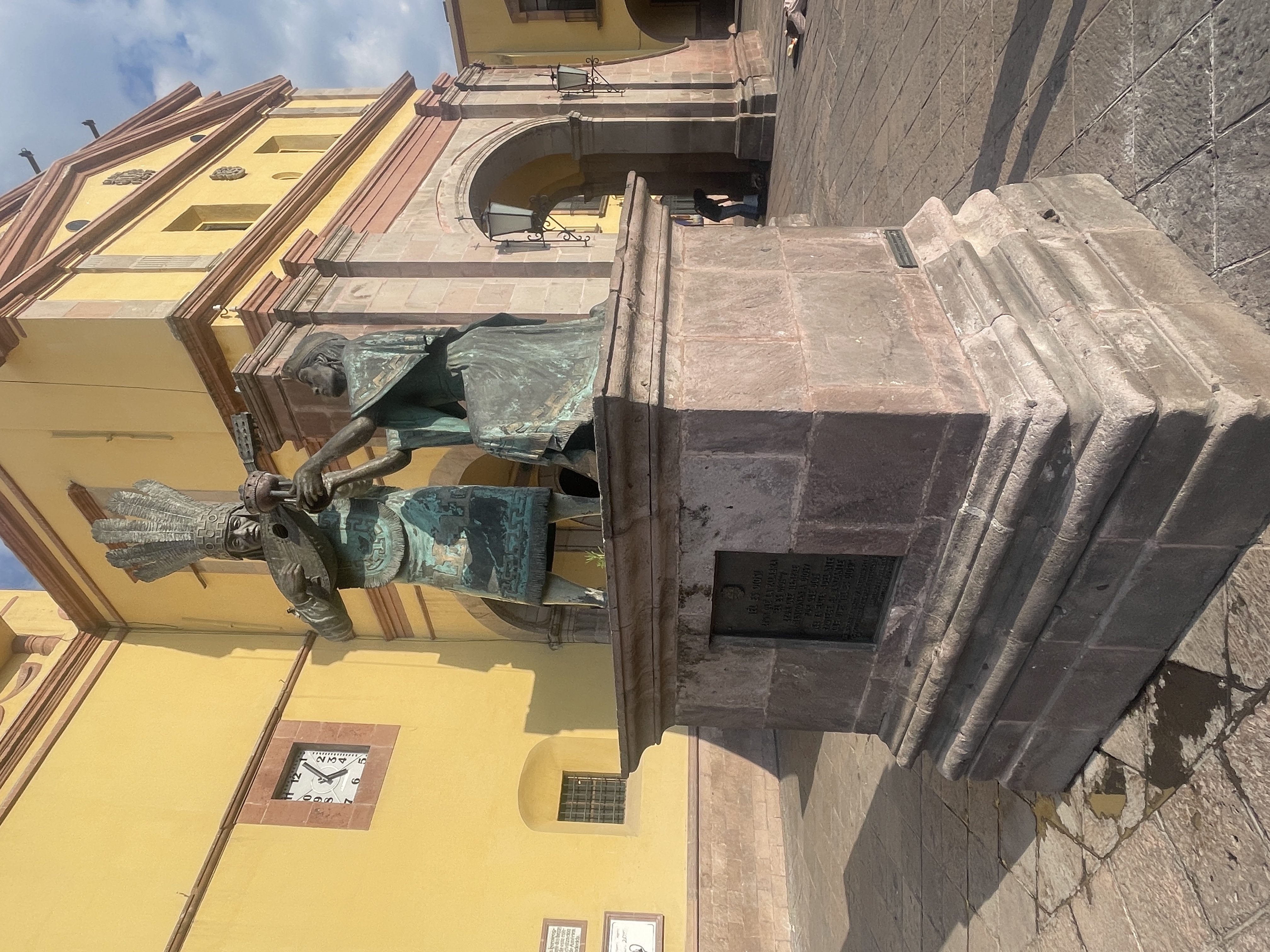 By the way, Qro’s full title is Santiago de Queretaro, analogous to Santiago de Compostela in NW Spain, the final destination of Europe’s famed network of long-distance trails and, yes, Qro is at the end of its own hiking and pilgrimage route, the San Junipero Serra Camino. We popped out to our neighborhood greengrocer (verduras y frutas!) for some healthy bits and ran into some “camineros” decked out in pilgrimage gear in the very final stages of their Camino. Later, in Centro, we checked out this Camino’s final destination at the Mission of St. James of Jalpan.
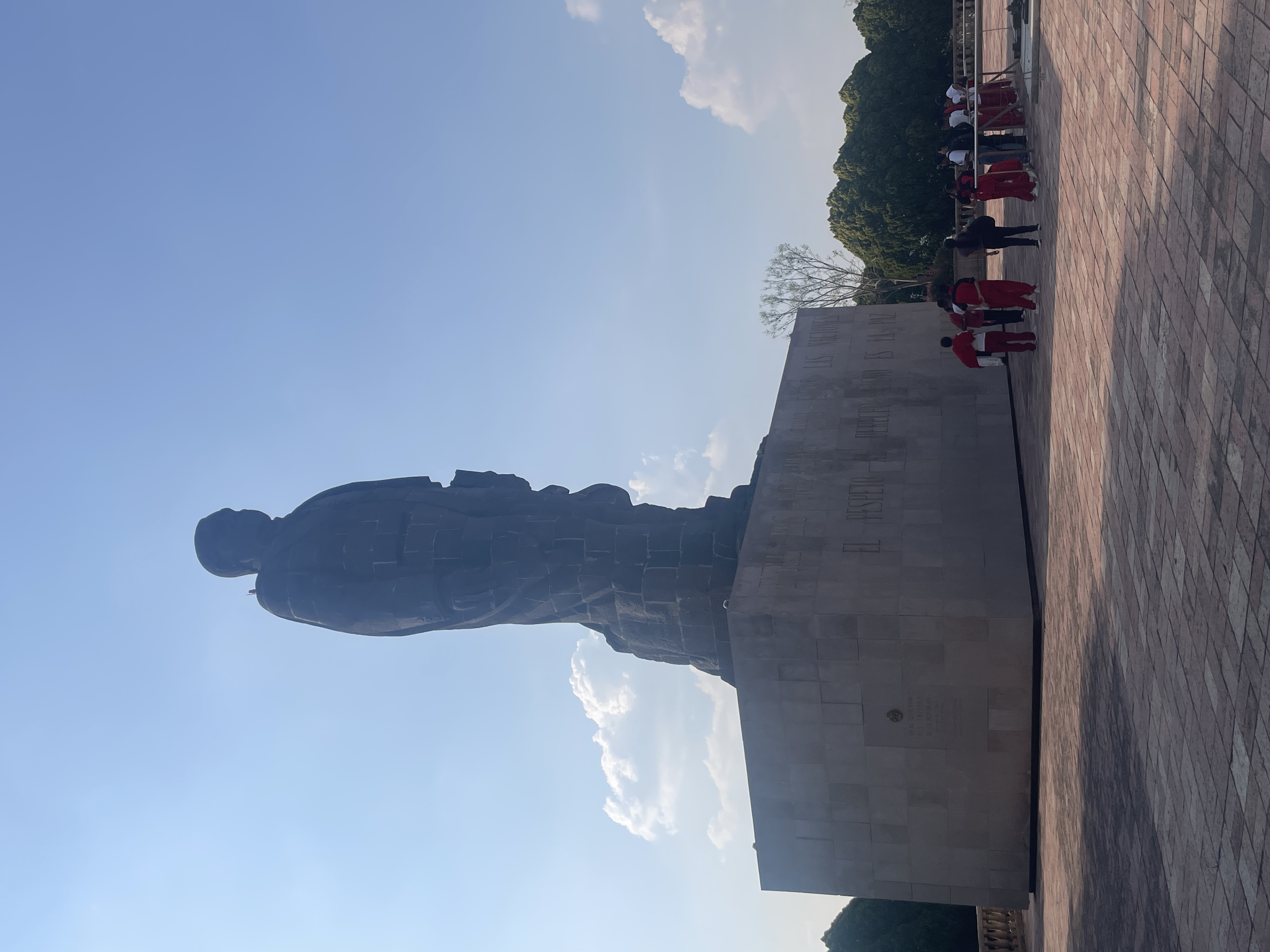 If you don’t know much Mexican history (like the fact that Texas, Arizona, New Mexico and Southern/Central California used to be part of it until the mid 19th Century) then you probably don’t know that Benito Juarez was the first indigenous president of Mexico, democratically elected to boot. His name and visage are plastered all over the country, filling both the George Washington and Abraham Lincoln slots, as he led the fight against the French occupation and then established a democratic federal republic. In Qro, he looms over the city in the form of a 50’ statue at the top of the Cerro de las Campanas (Hill of the Bells). He is there in particular as this was the place that Maximilian, the last Viceroy installed by the French occupiers, was executed in 1867, signaling the end of the European empire. The French were only here for a brief time, sneaking in after the Spanish regime collapsed in 1821, and the locals didn’t put up with it for very long. Still, Maximillian is commemorated in the Chapel of Piety(!) on the same hill as an example of the uneasy truce that remains between the European heritage due to colonization and the much older indigenous influence going back thousands of years. The reality is that modern Mexicans identify as a blending of Spanish and indigenous peoples.
 Security is an issue here – Of course, there is the ongoing struggle with the cartels, which is a serious issue for those living in areas under their control, but Mexico’s unsettled past seems to have implanted a level of paranoia in the inhabitants. Typically, most residences are protected by high walls, locked gates, and various levels of additional security (electric fences, razor wire, and embedded broken glass). Having reported that, we’ve been here for more than a month and have consistently felt safer on the streets here than in the USA, or most of Europe for that matter. Often, things are not fancy, and there may be some run-down buildings or trash, and the sidewalks can be an obstacle course, but the vibe is laid back and simply functional. I realize that I’m just a tourist here at this point but am simply reporting what we have and haven’t seen: No sketchy folks hanging around, no open drug use, and no uncomfortable interactions even after dark.
 Still, you have to constantly watch out for drivers doing crazy sh*t, while keeping en eye on the local and state police and national guard who seem to be constantly patrolling while packing highly visible heat and whom do not always have your best interests at heart. Luckily for us, the latter seem to focus mostly on hapless local drivers and motorbike riders and, particularly in CDMX, we’ve seen a steady stream of “victims” negotiating their “mordida” (little bite) with the police.
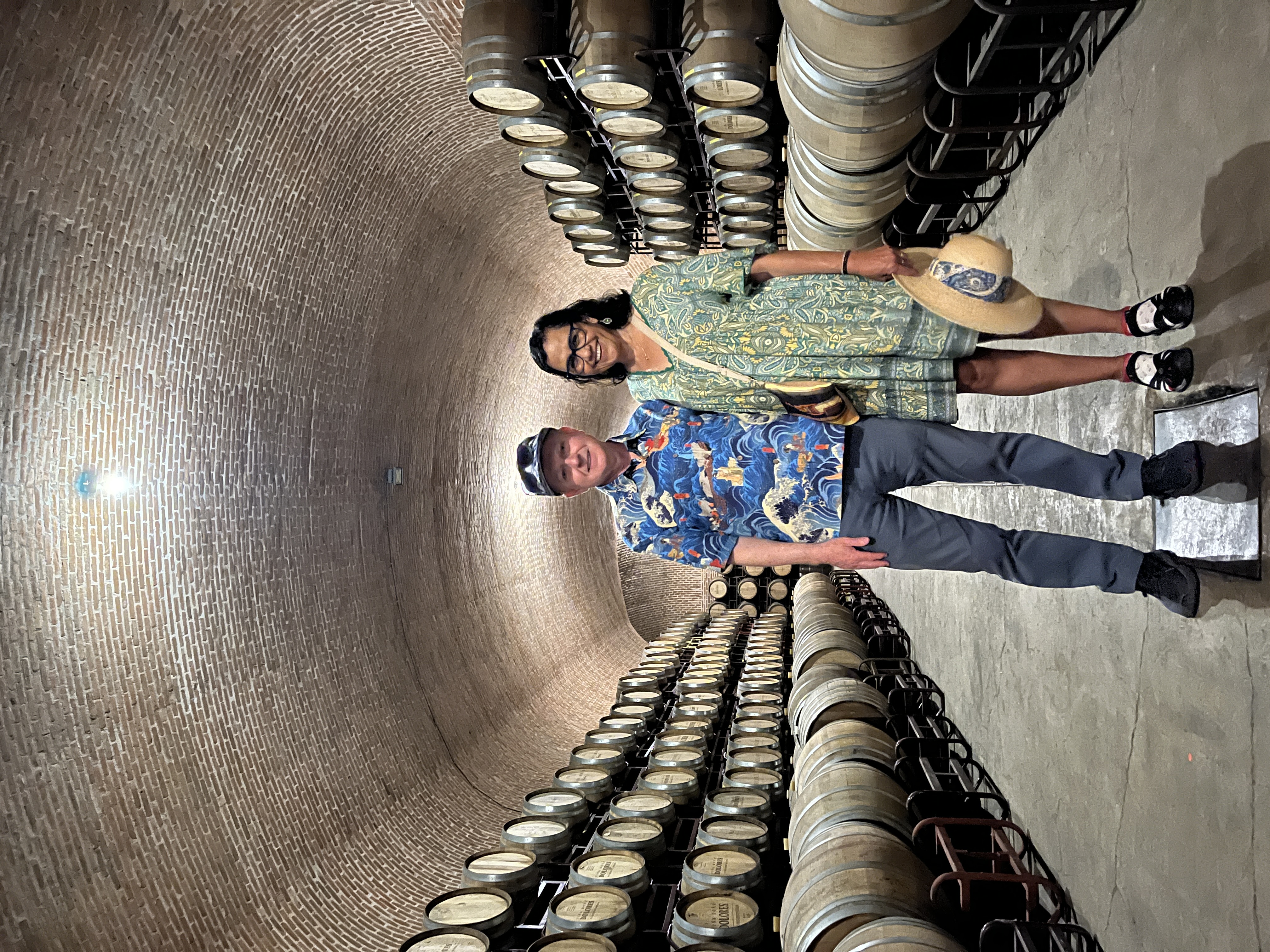 There’s a wine region adjacent to Qro so we signed up for a wine tour including stops in the resort towns of Tequisquiapan and Bernal. A small van with just the 4 customers including us plus an extremely talkative driver. The main wine stop was at Freixenet, which many of you will recognize as a Spanish sparkling wine producer, who expanded to the Qro area around 1979. It’s an impressive setup, and the tour of the facilities was interesting, but there was only 1 glass tasting at the end and that was a sparkler that was nothing to write home about, so, not much “tasting” per se. We had a similar experience at the other wine stop in Tequis, lots of tiny cheese tastes and very little wine: Well, it was 10am!
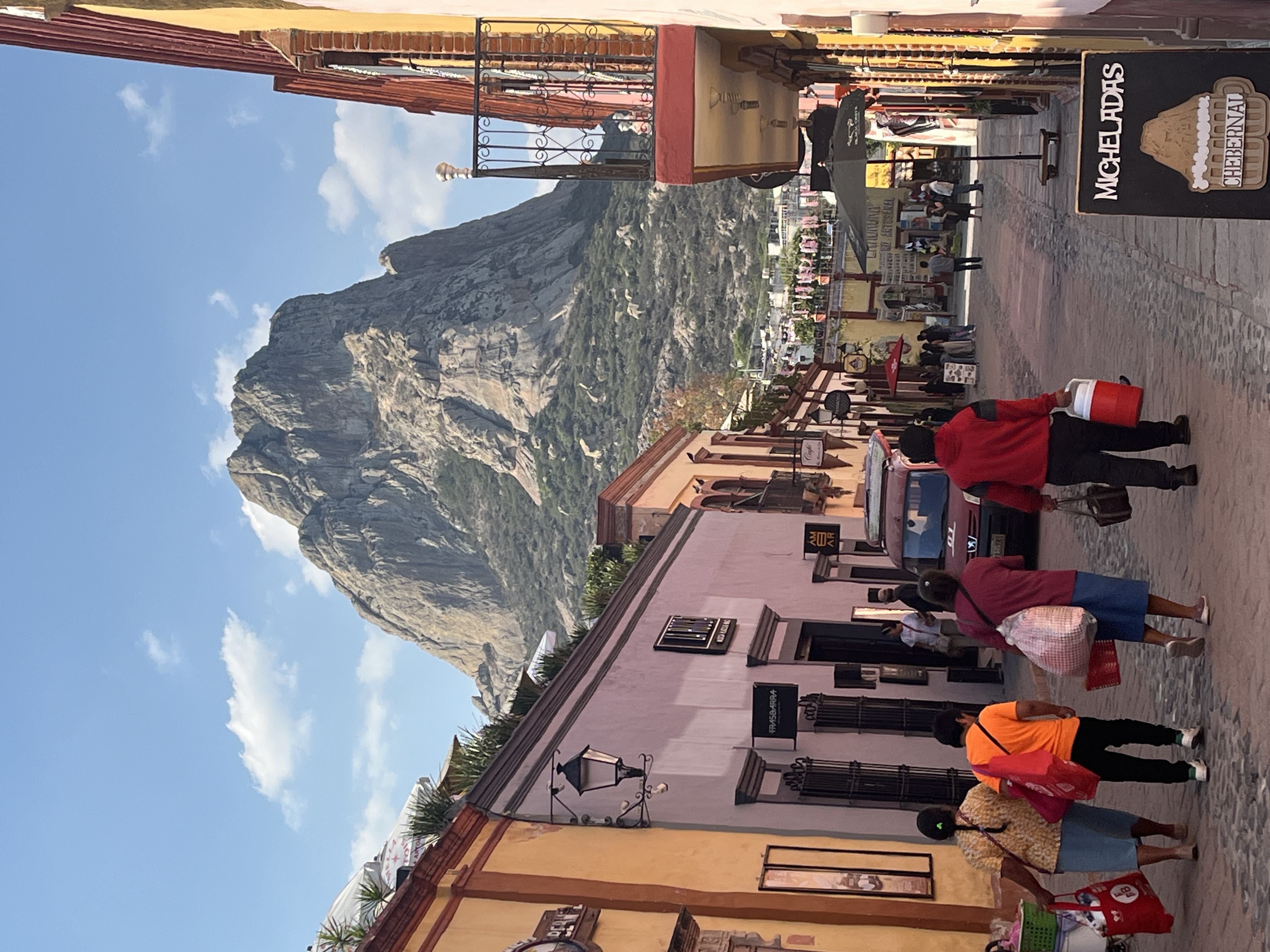 Still, we got to see the countryside and both the towns were worth a visit. Tequis had a bunch of hot spring resorts and Bernal is the home of a 1420’ freestanding monolith formed 8.7 million years ago from a volcanic residual magma plug with the rest of the mountain long ago eroded. It makes for a very cool vista from the town center, and we snagged a table on a rooftop deck with a birds-eye view. While we were there and ordering a snack we had to make sure the waiter understood “sin chapulines” (without grasshoppers). Yes, a particular type of grasshopper is a favored crunchy tidbit down here. They’re small, well cooked and seasoned so it’s not as daunting as you might think. However, to this point, we’ve chickened out.
Leave a Reply