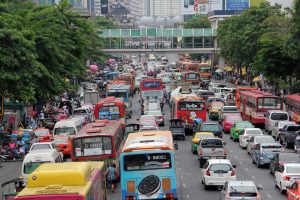
 Heading up North to Chiang Mai from Bangkok by plane pondering the differences between driving habits in Vietnam and Thailand. In the former case, everyone uses their horn continually while emergency vehicles do not: Somehow, they are conspicuous by their silence. In Thailand, use of horns is very rare, which is strange considering the dangerous actions occurring all around you on the road. Given the lack of honking, the traditional “banshee out of hell” sirens of the ambulances make sense there. But don’t think Thailand is necessarily safer for pedestrians for, even though there are traffic lights, they are considered optional, particularly for motorbikes, or if the person in front of you just went through the red. As a pedestrian, I’ve had close calls in both countries so you have been warned.
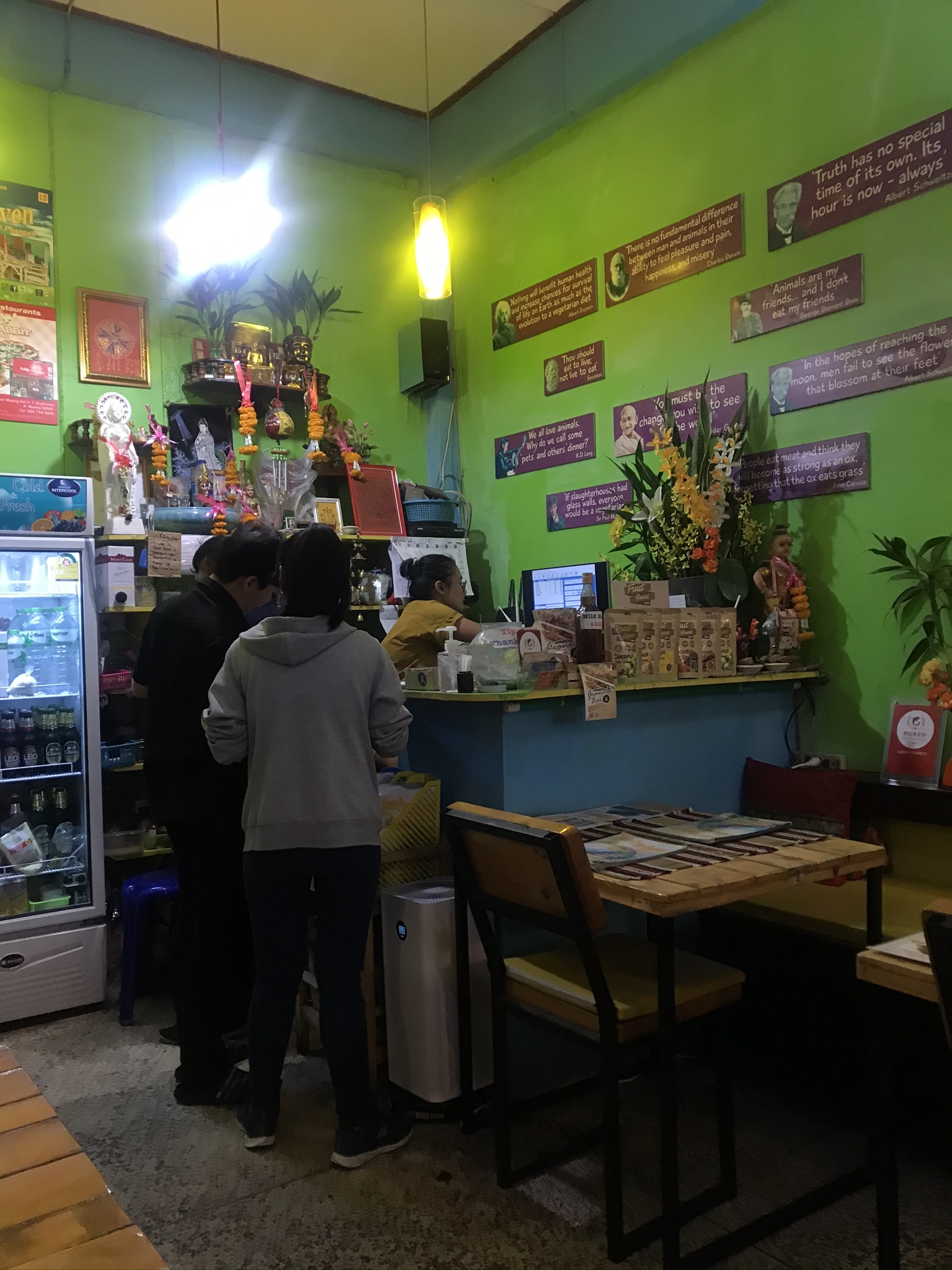
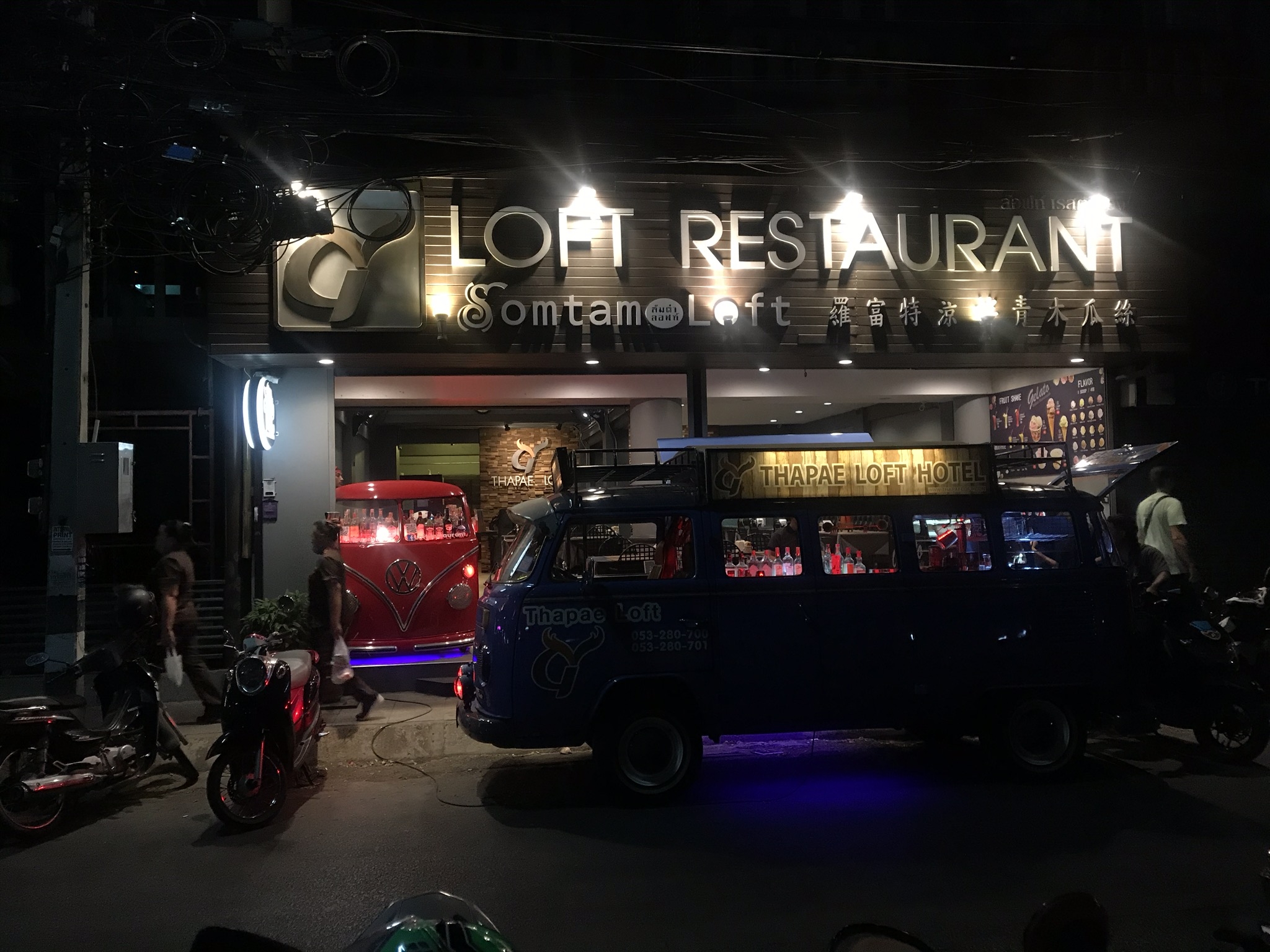
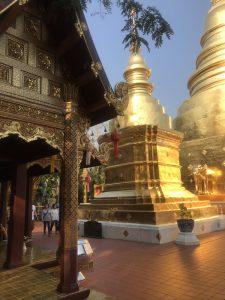 We chose Chiang Mai because its way up in the Northern hill country, is a manageable size, has good reviews(!) and should provide a good contrast to bad-ass Bangkok. Surely enough, we find on arrival that its a pleasant, provincial town with a specialty in alternative tourism. “Alternative” meaning it has an old town full of temples surrounded by a moat, tons of vegetarian restaurants, many art galleries, famous street markets, a good live music scene and, close by, many outdoor activities available. Not much in the way of public transportation here, except the Songthaew (song-tails), which are converted pickup trucks with two rows of back benches. These are pretty much what we rode in our National Park excursions and our rear ends still haven’t recovered from that, so we won’t be doing those.
 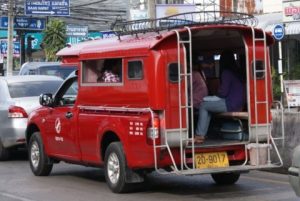 Luckily, the old town is compact and walk-able, and the Grab app covers any longer local trips, so we are good to go.
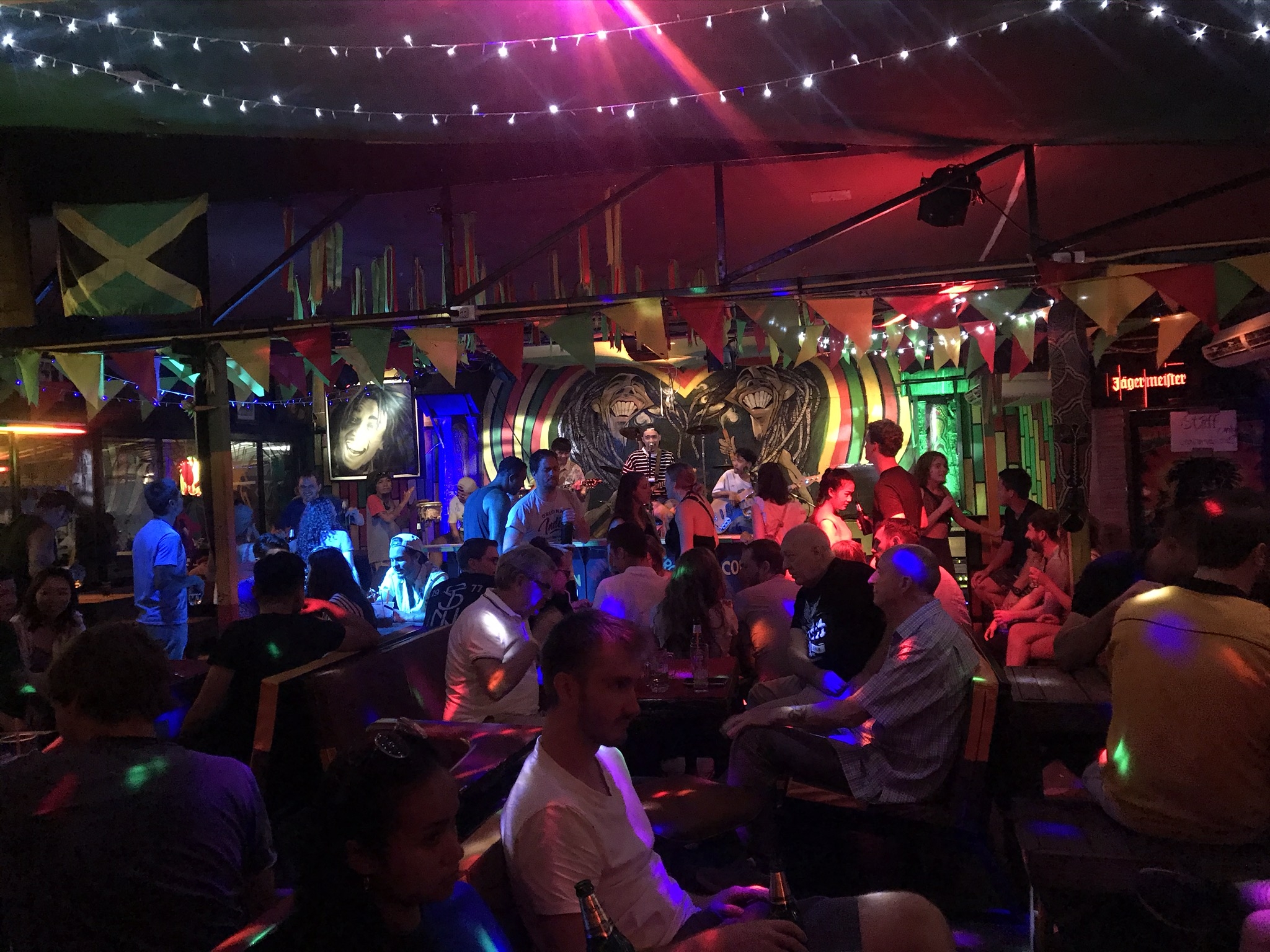
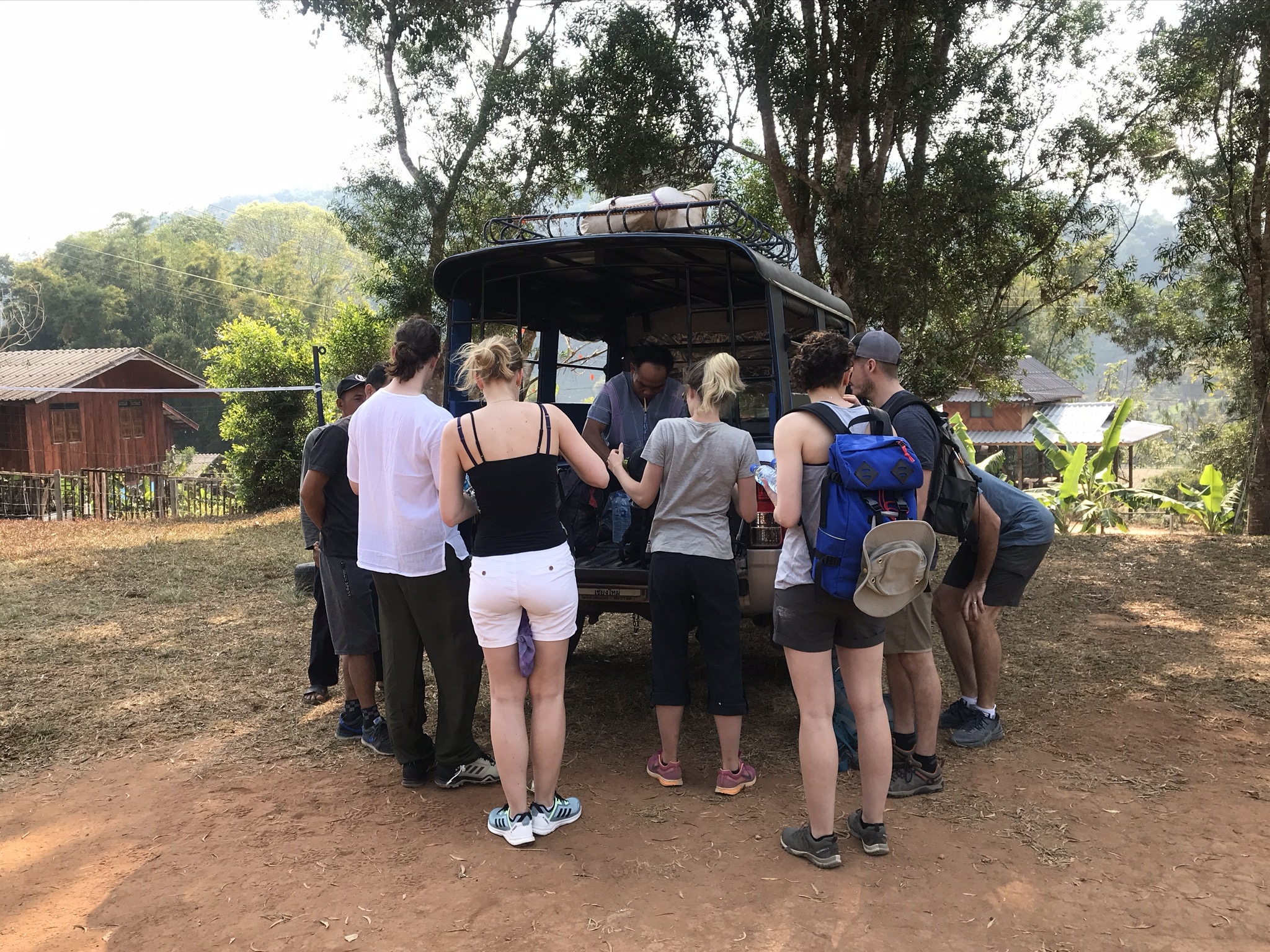
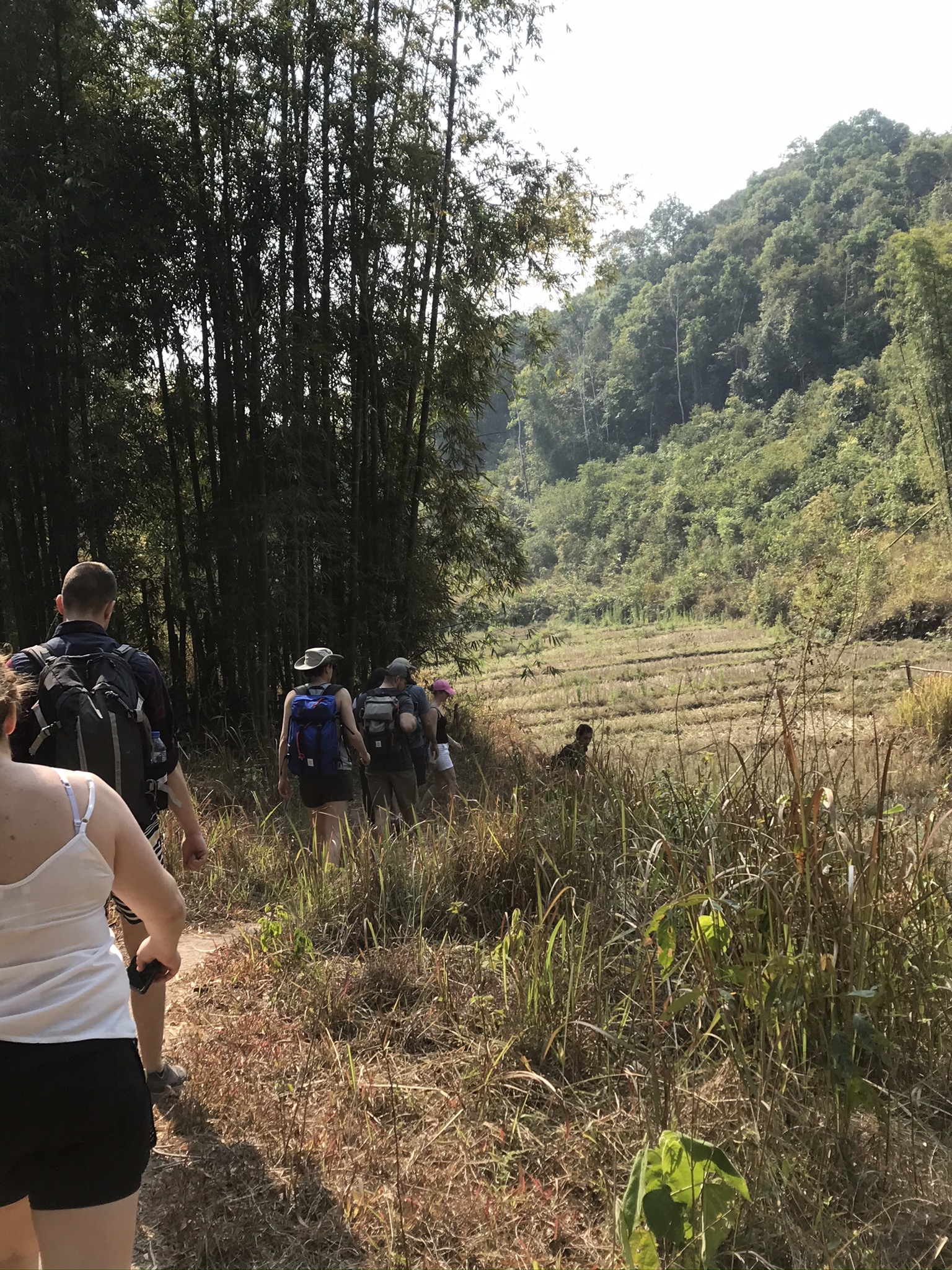
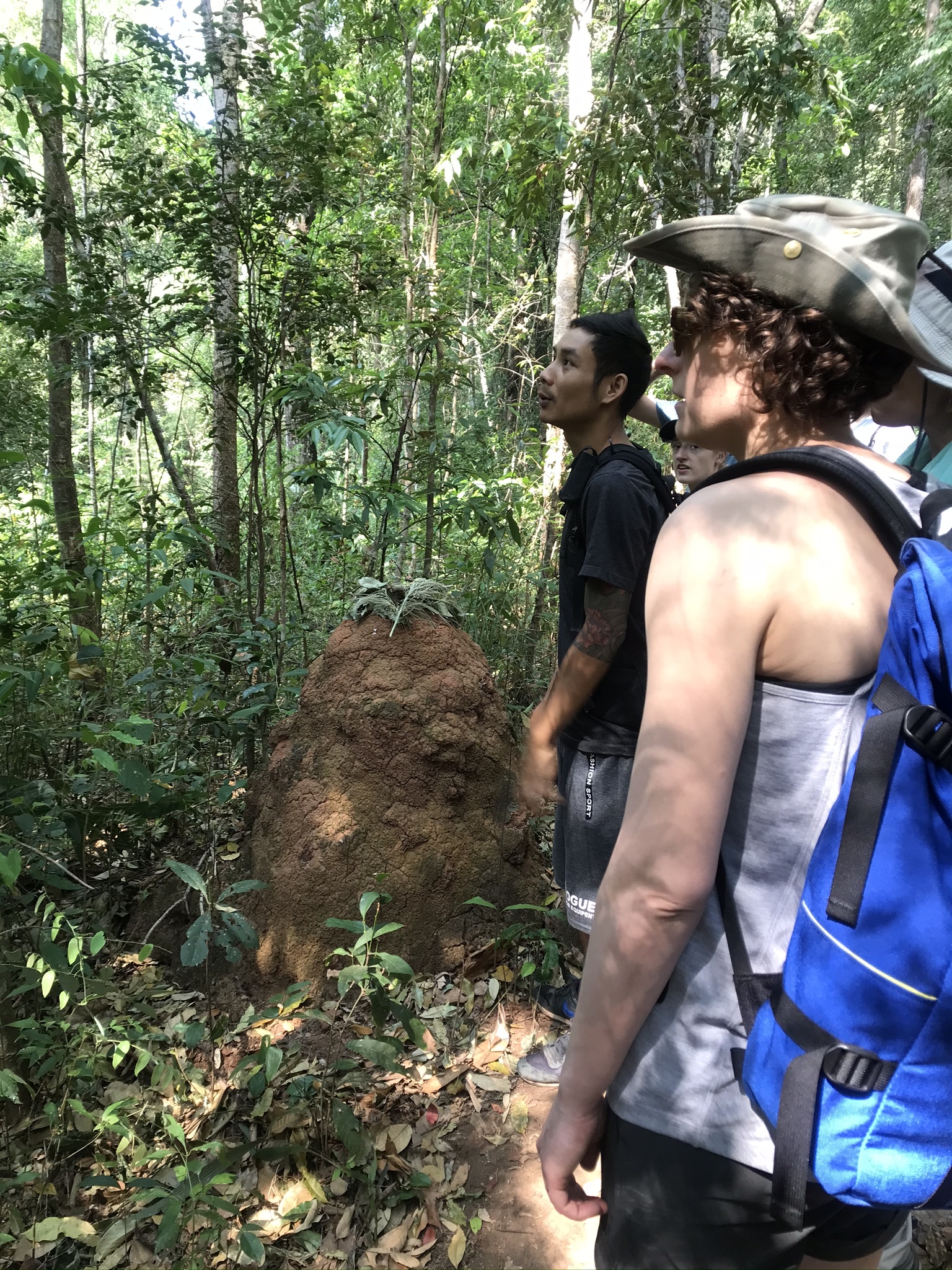
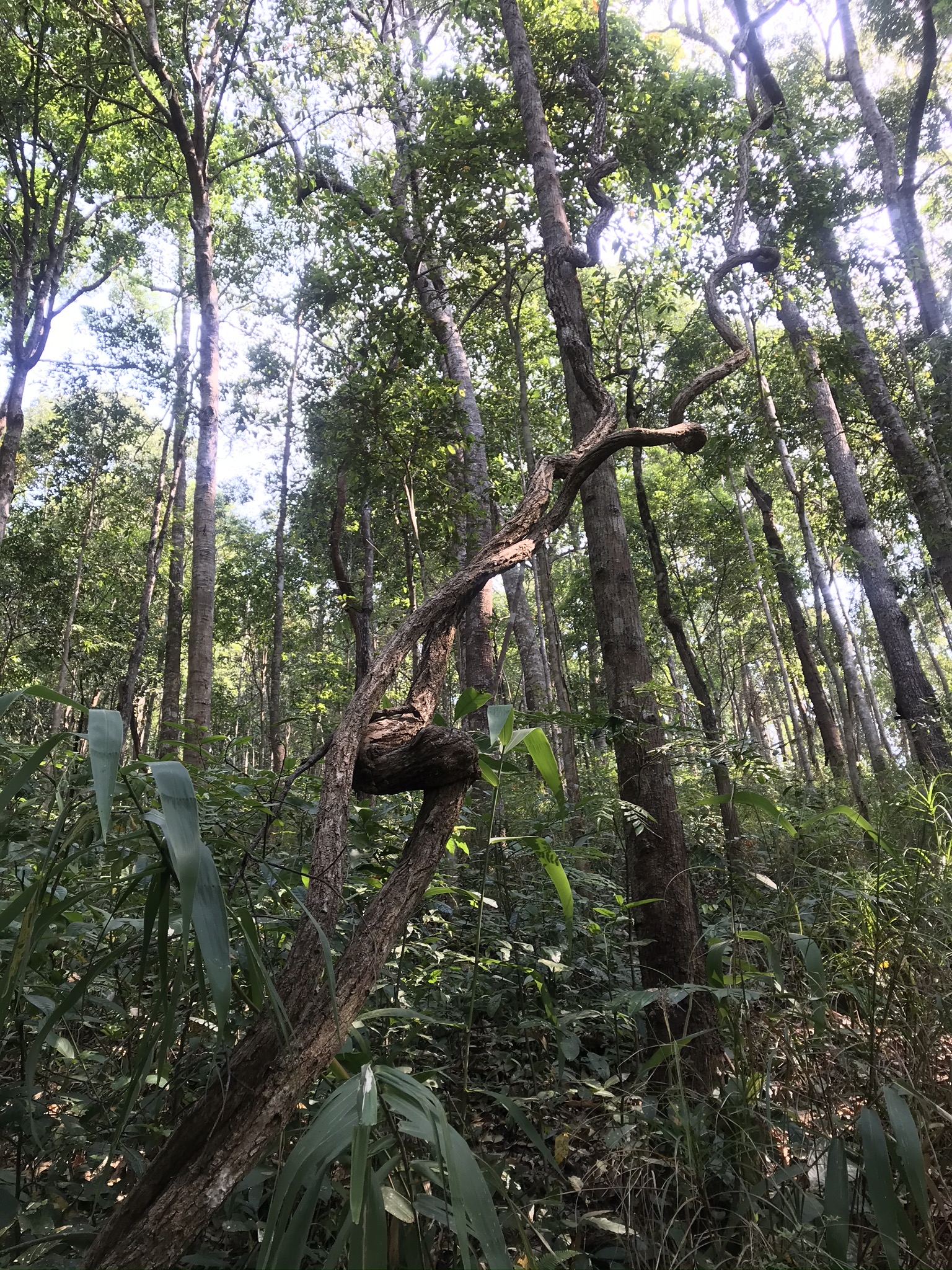
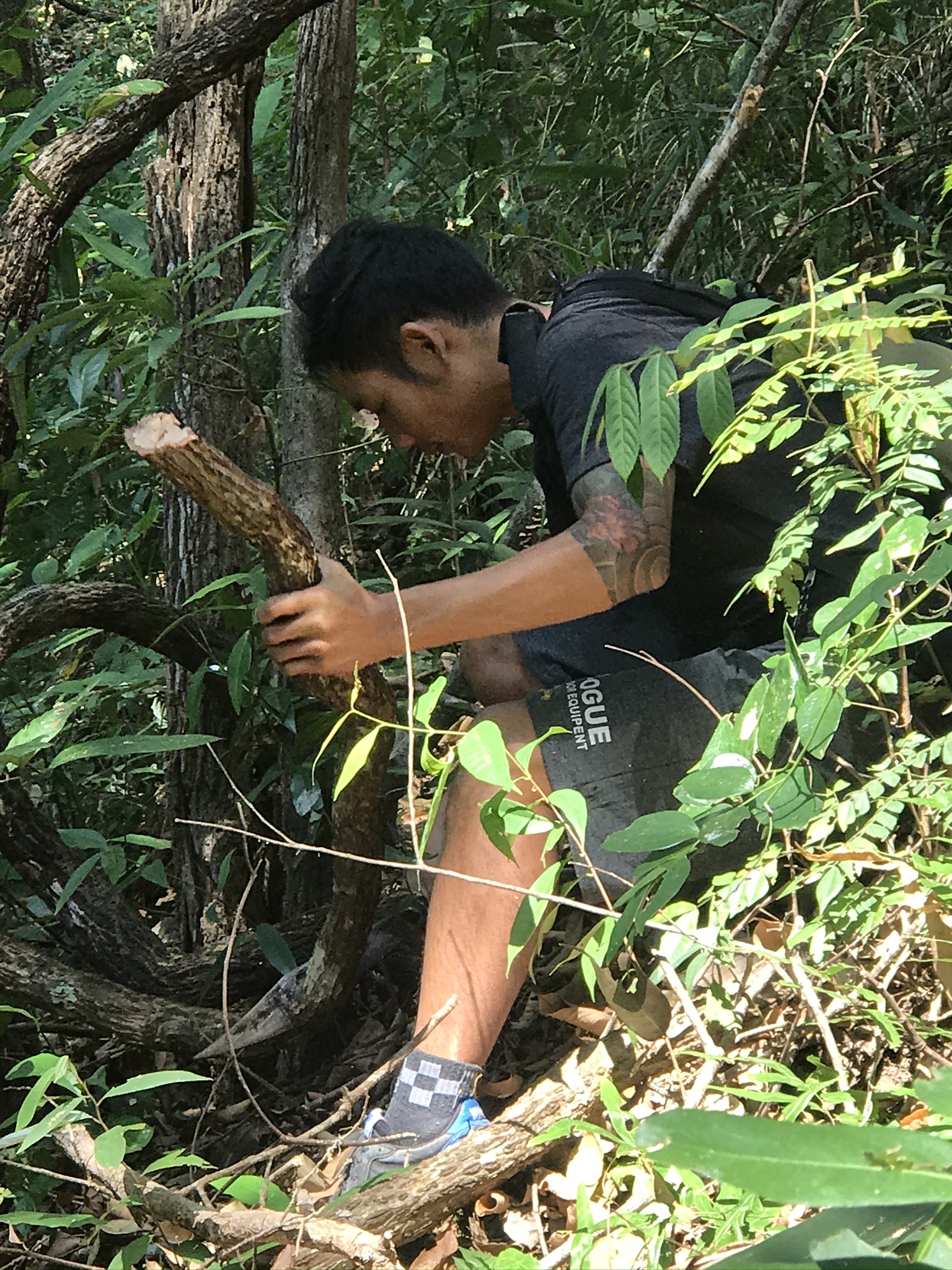
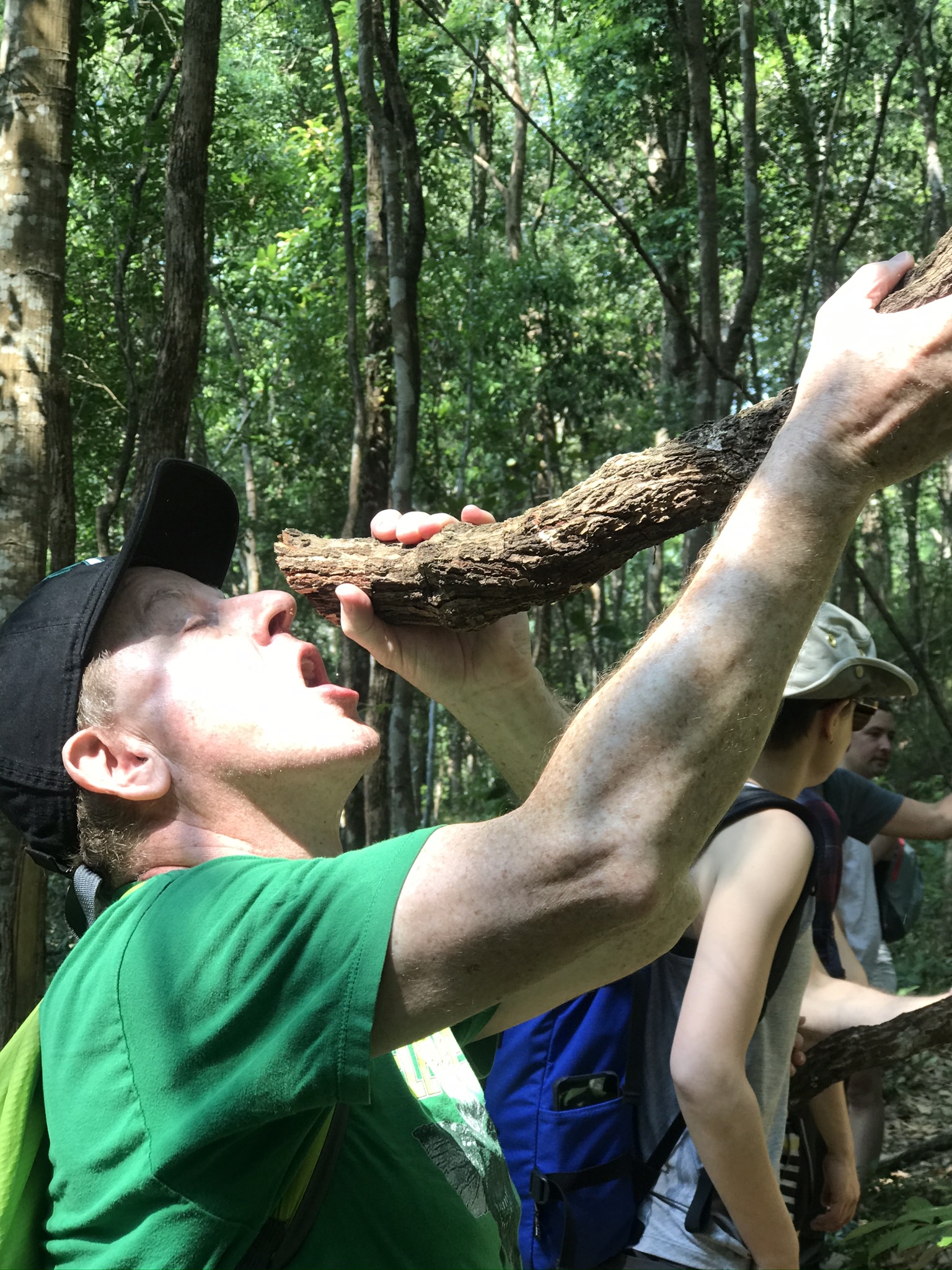
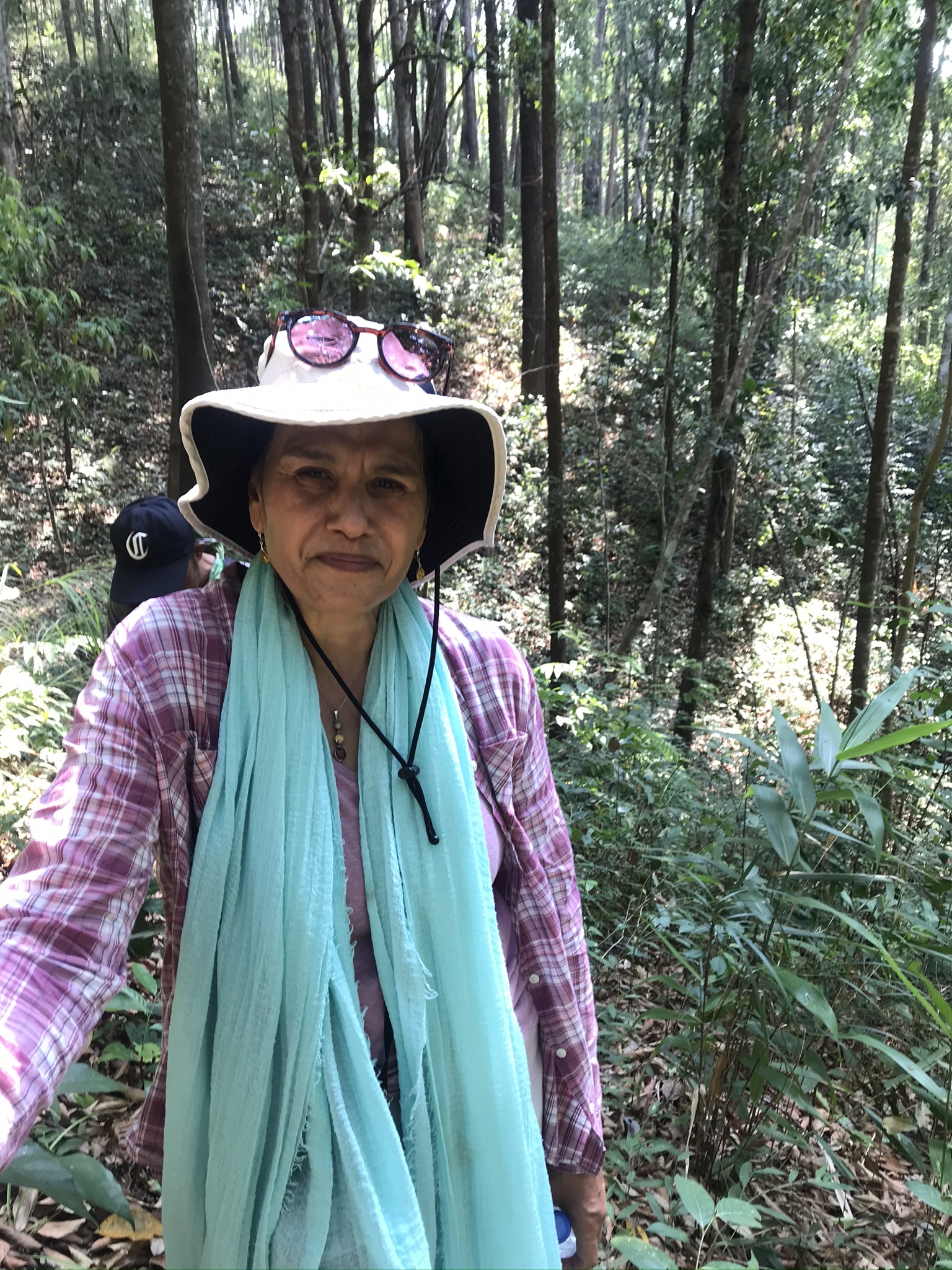
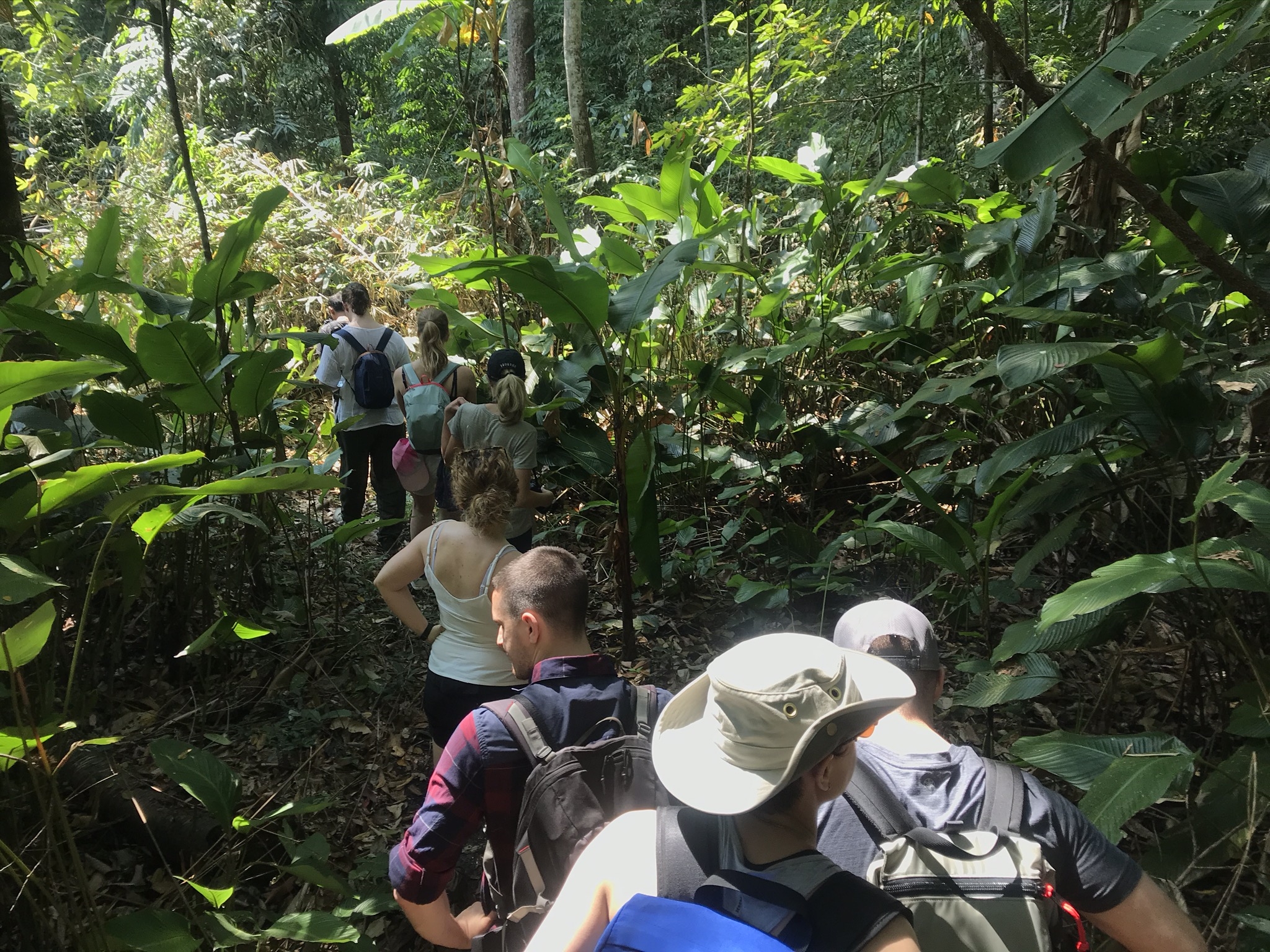
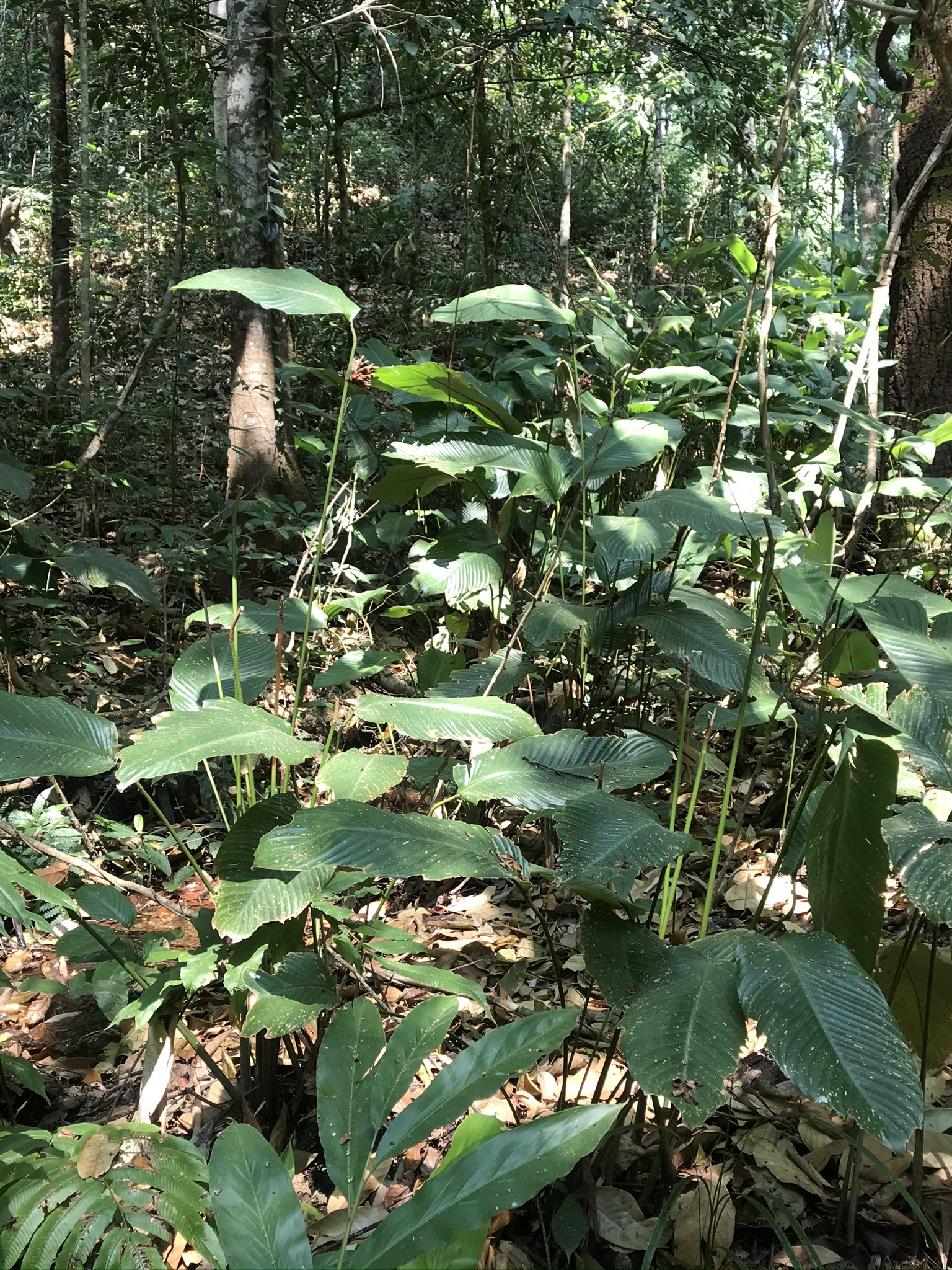
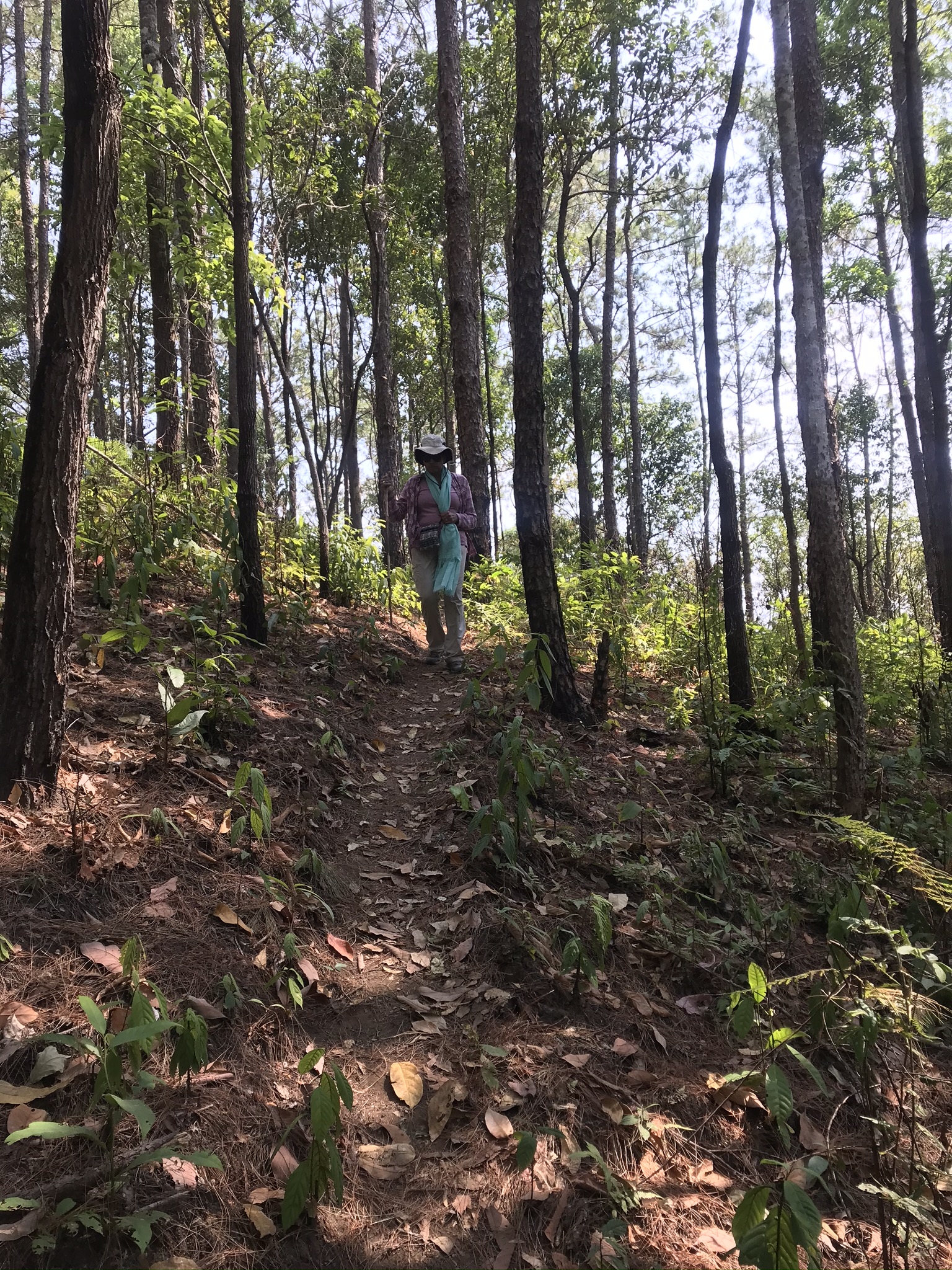
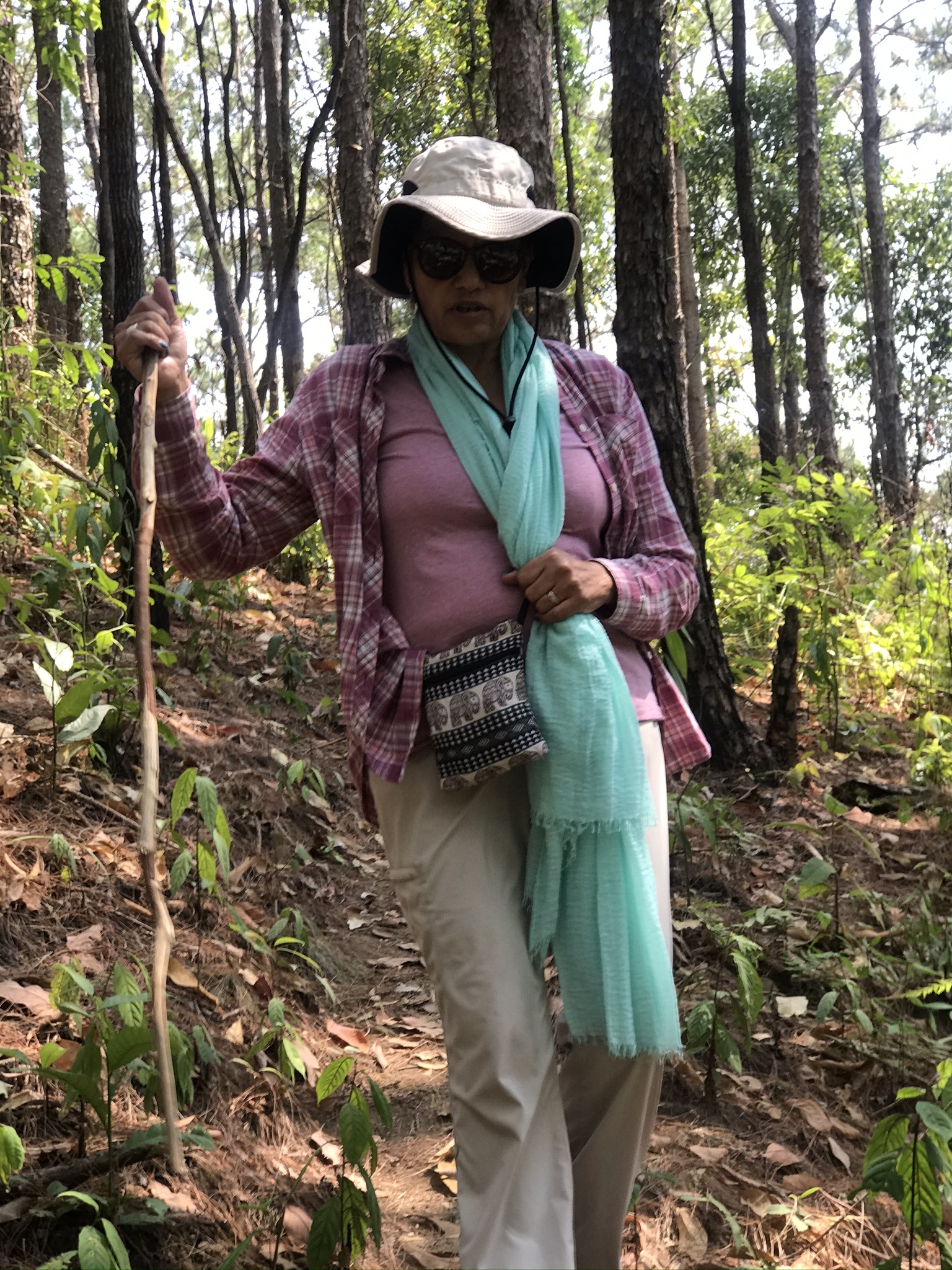
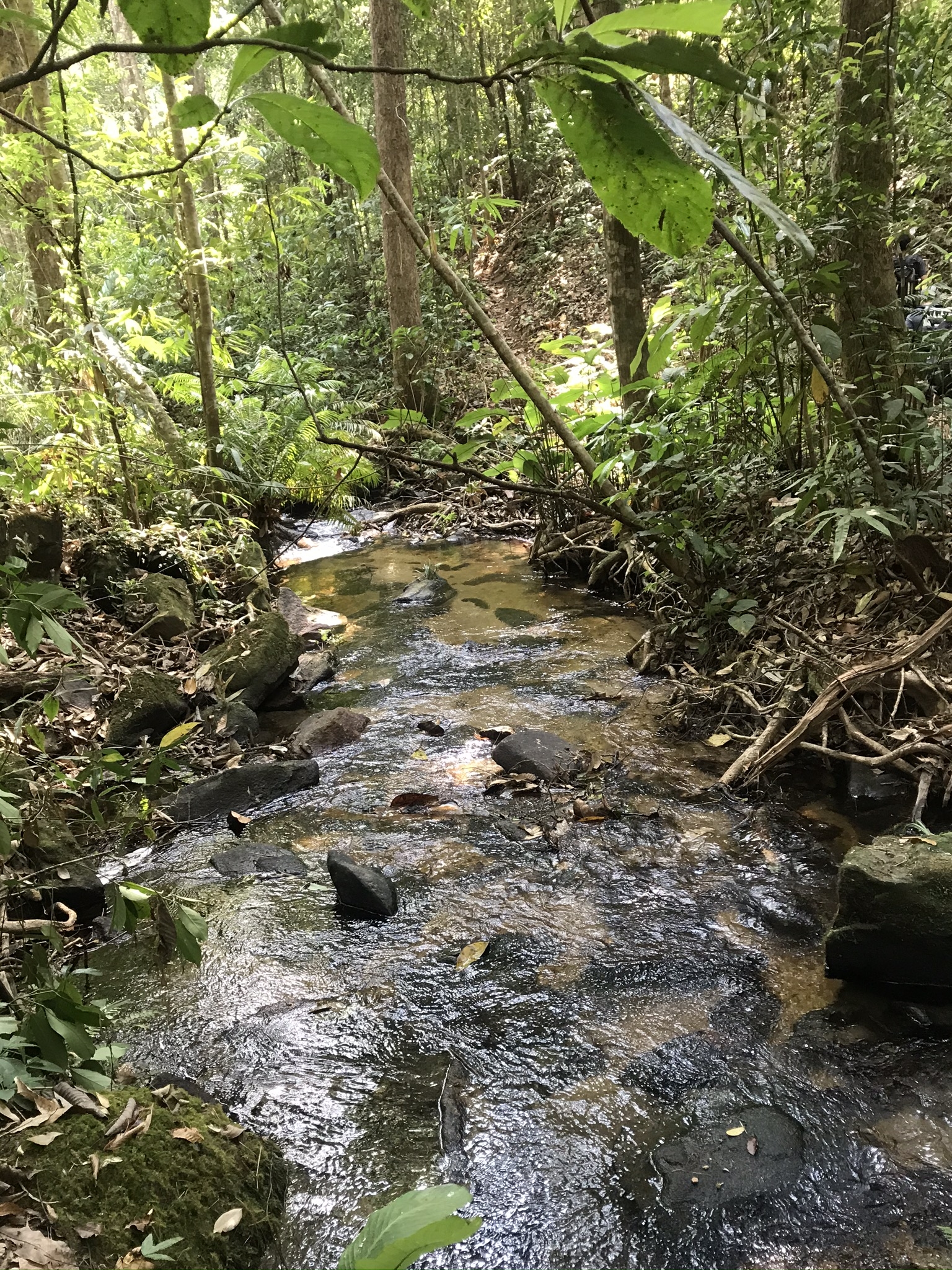
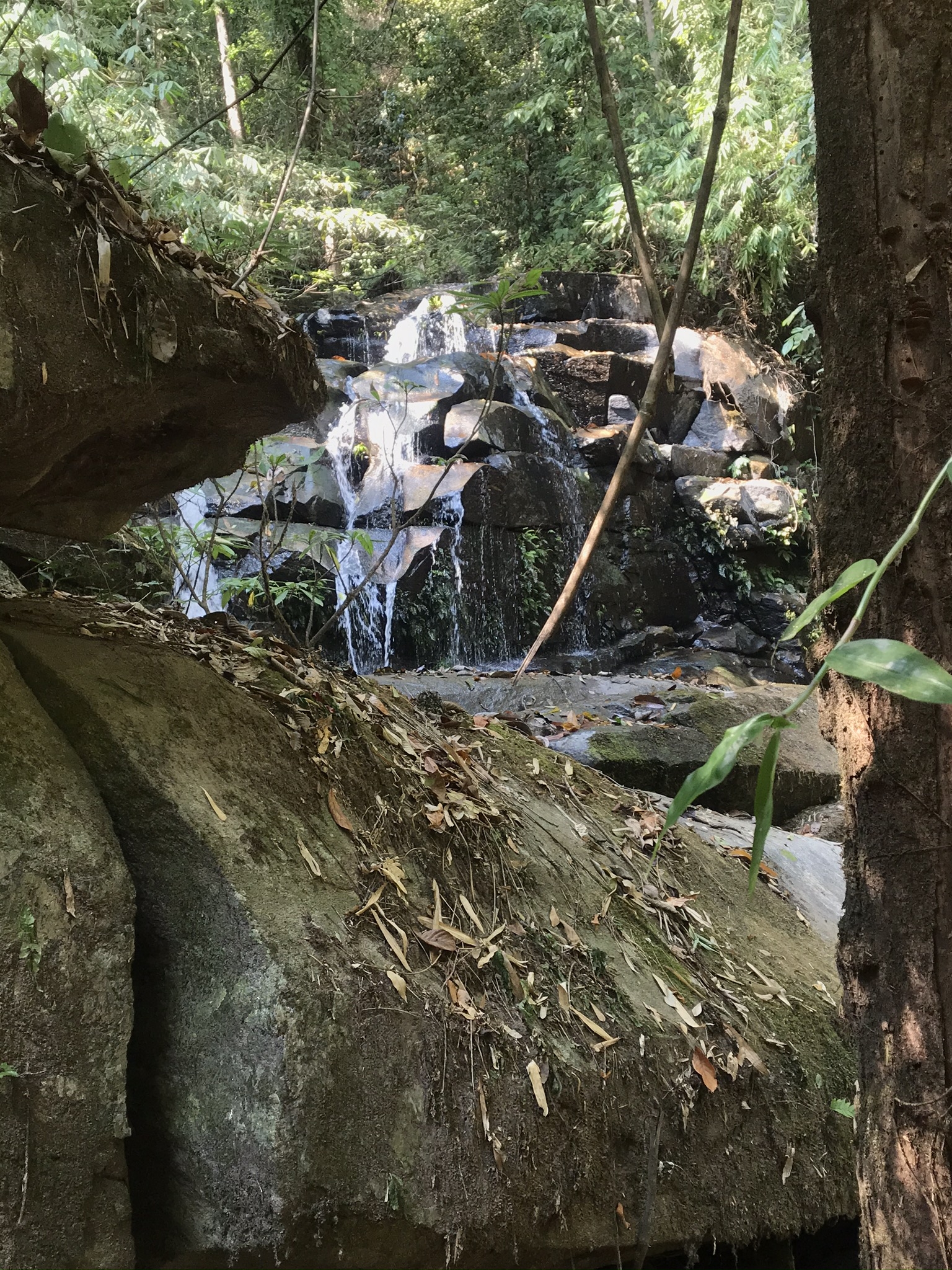
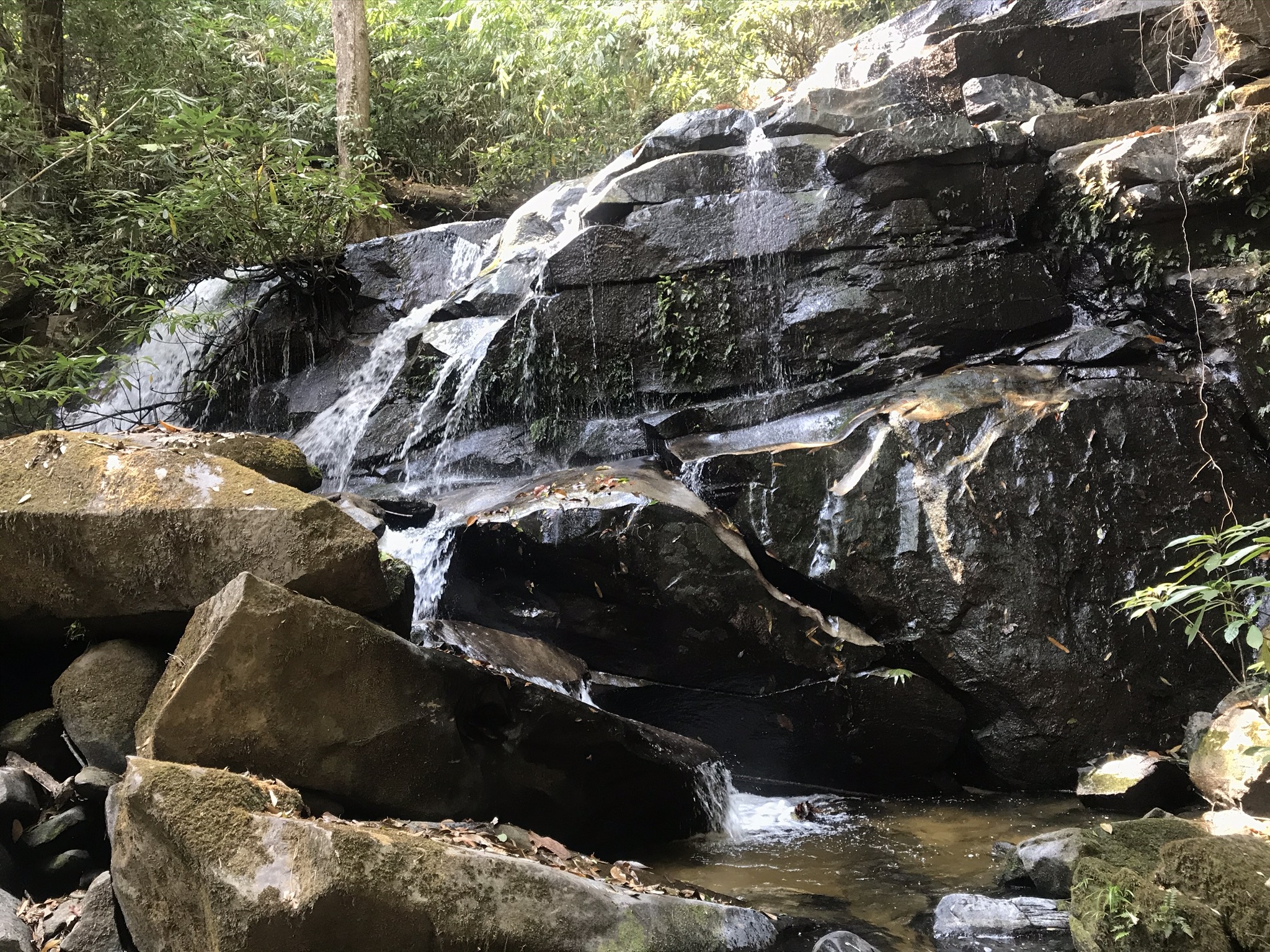
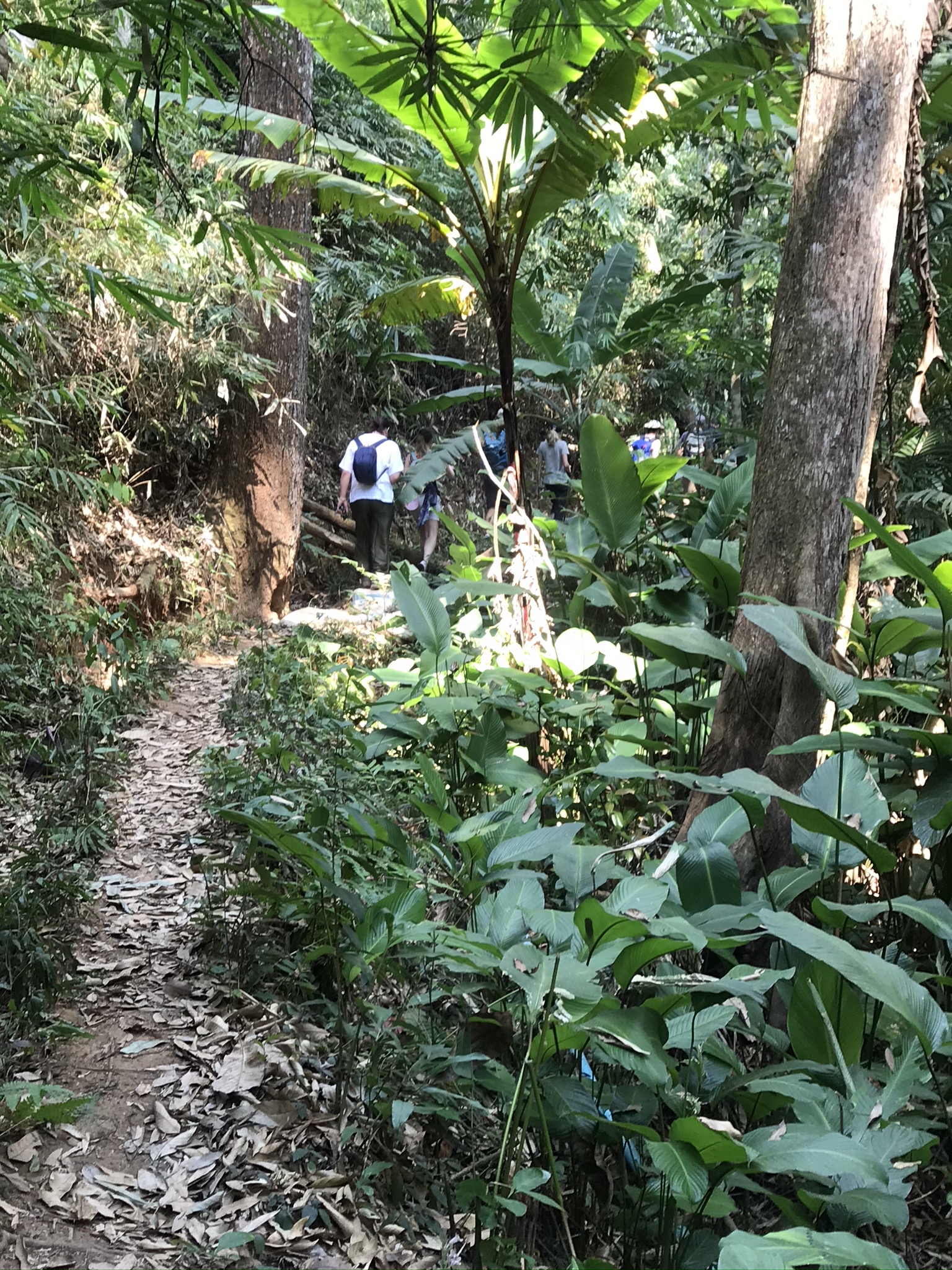
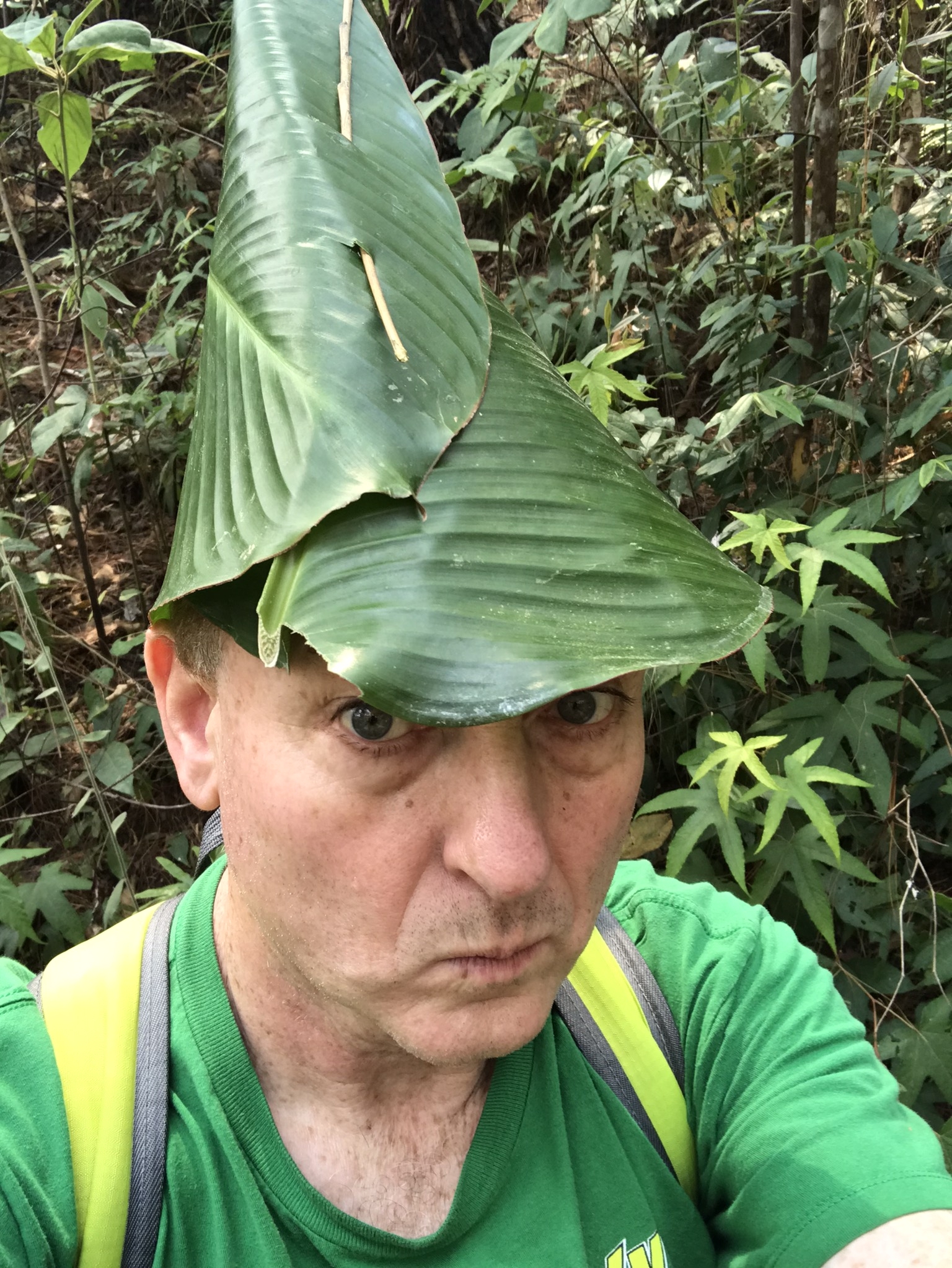
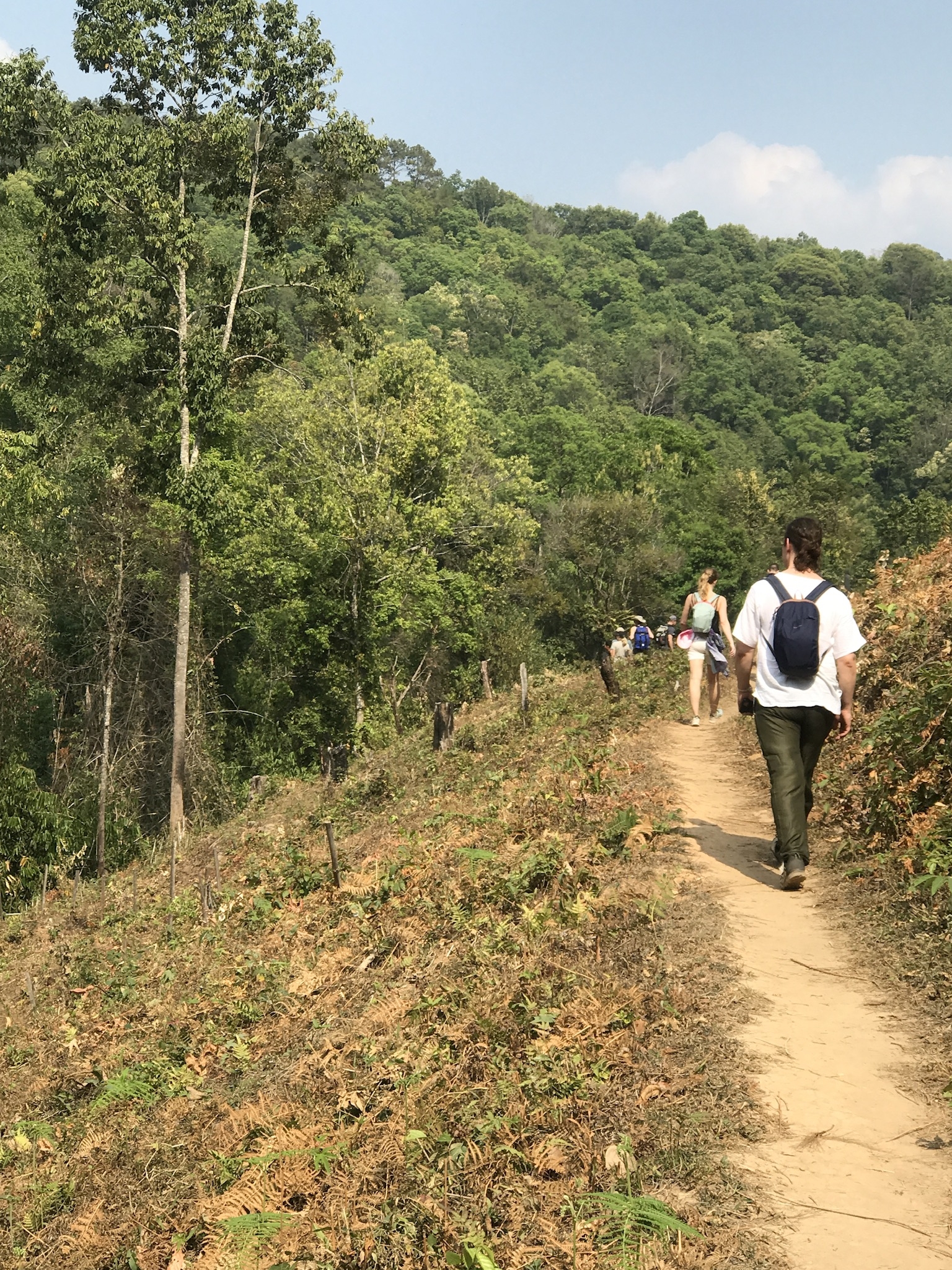
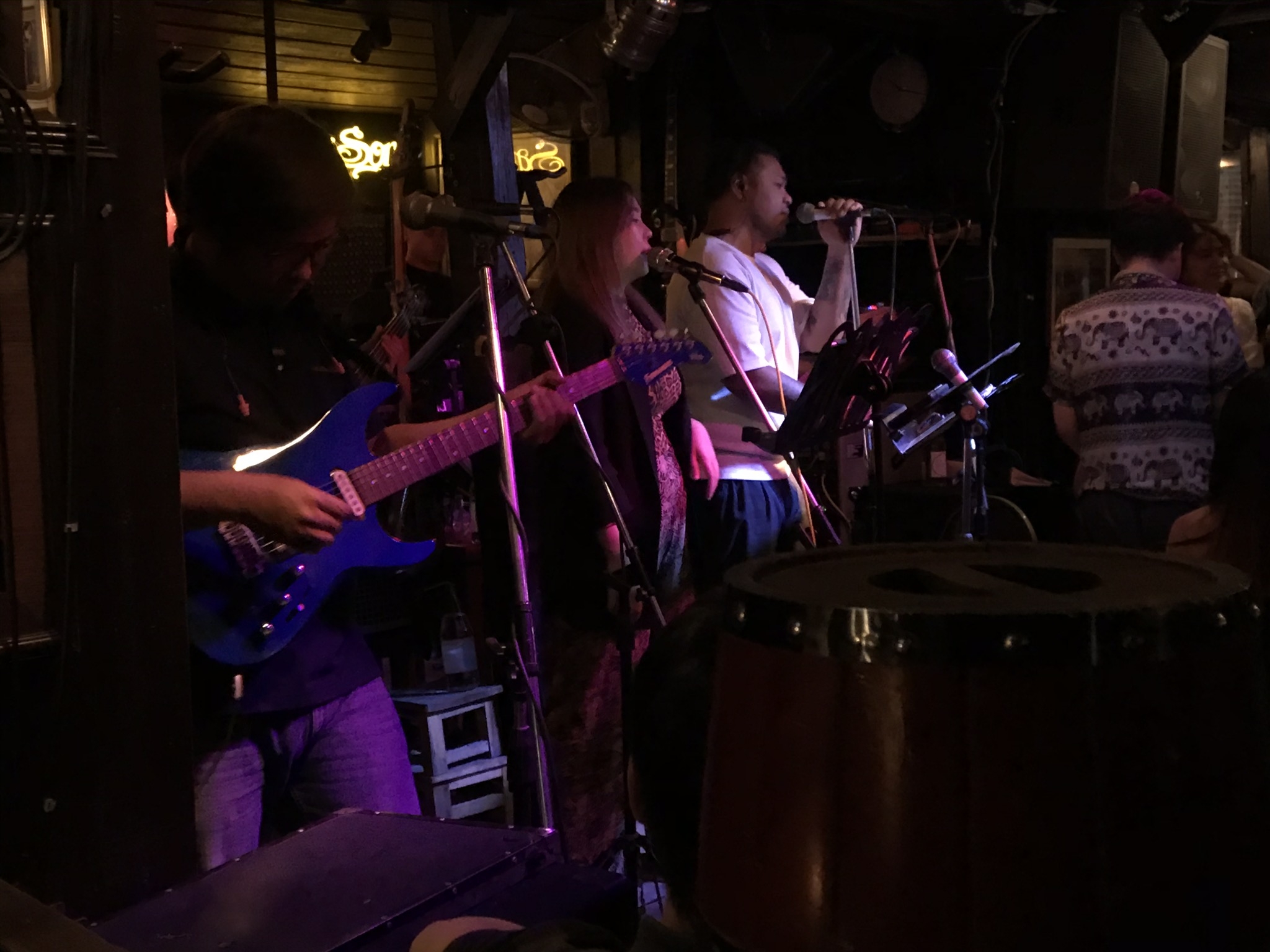
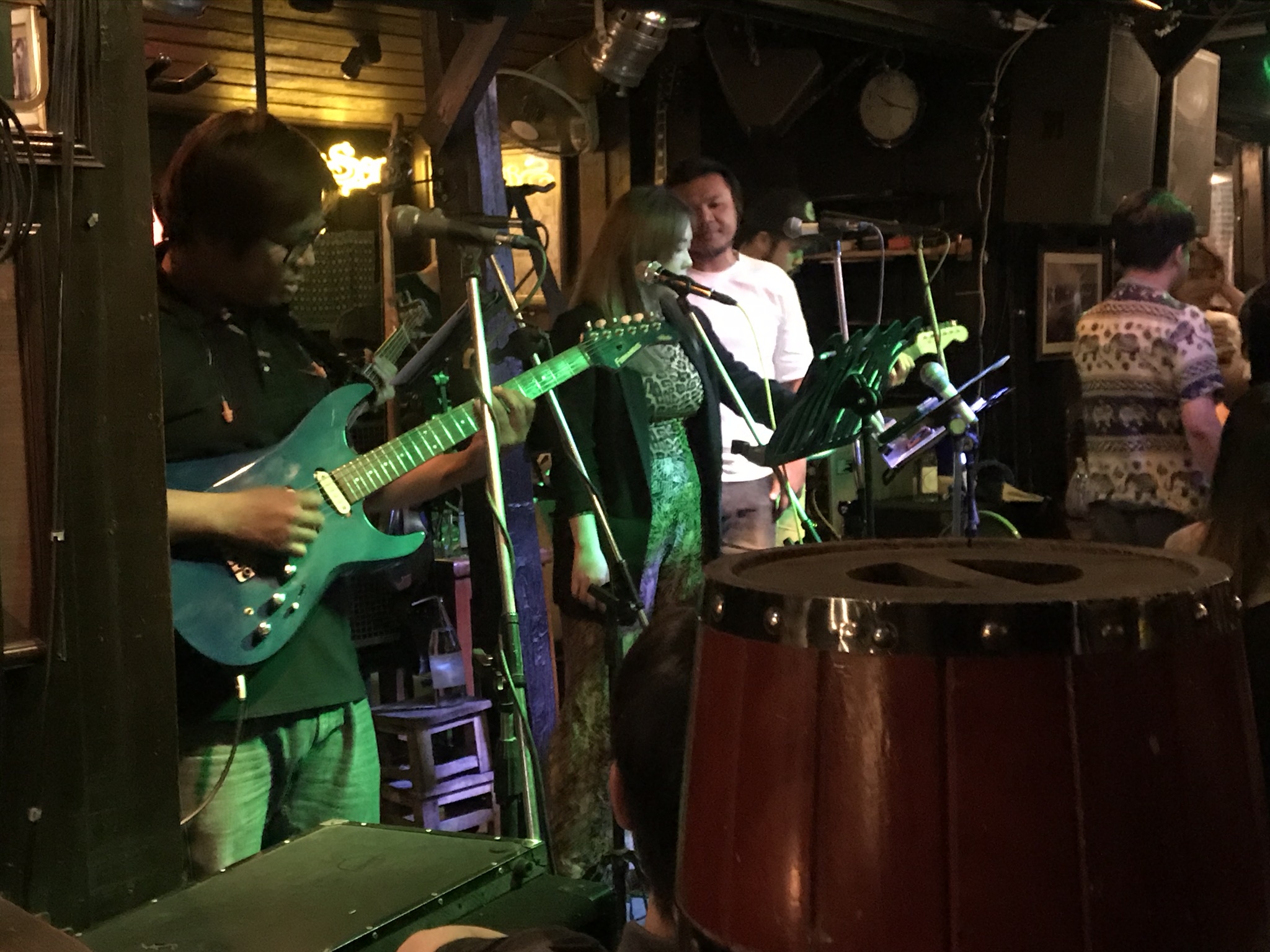
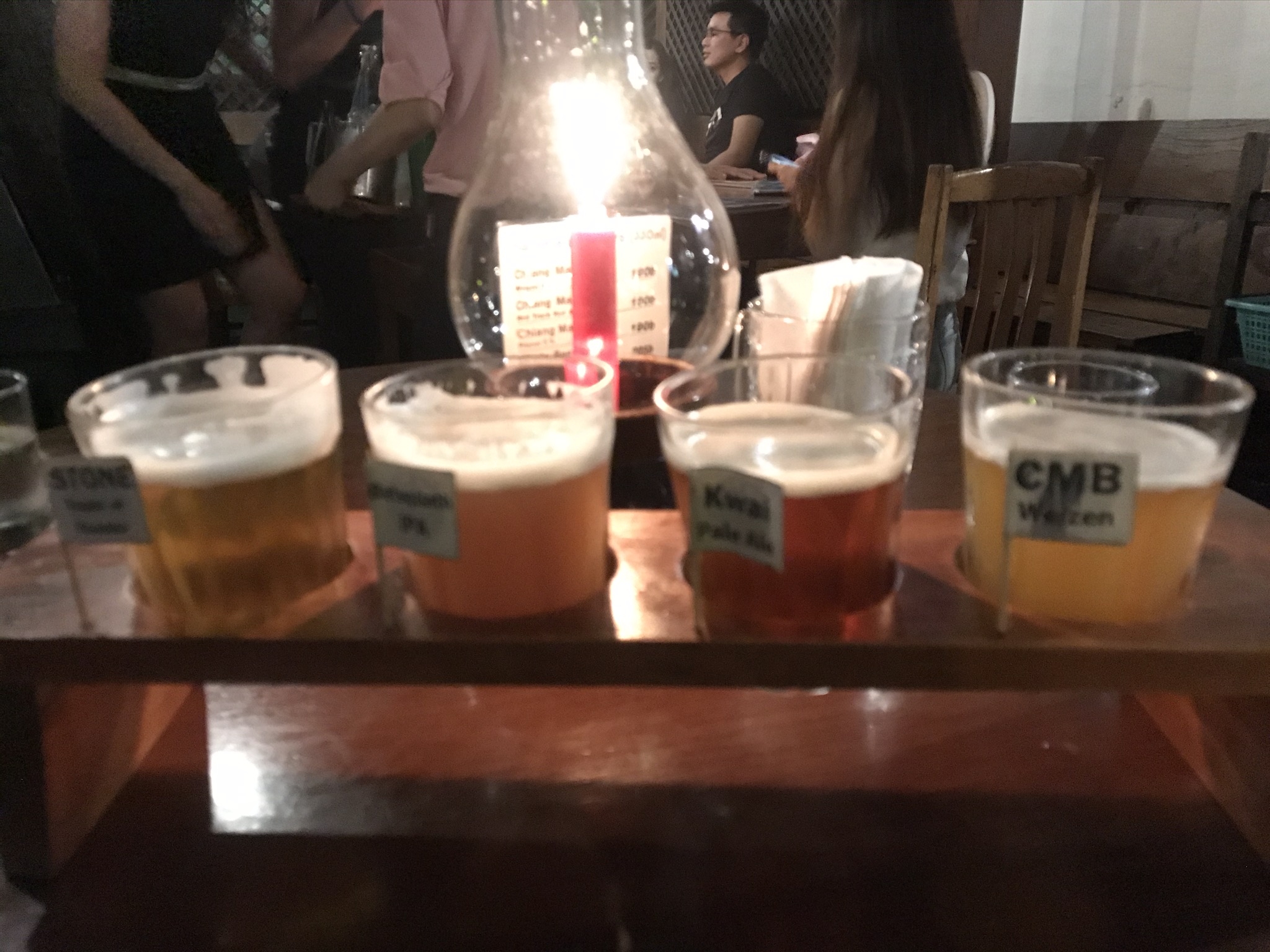
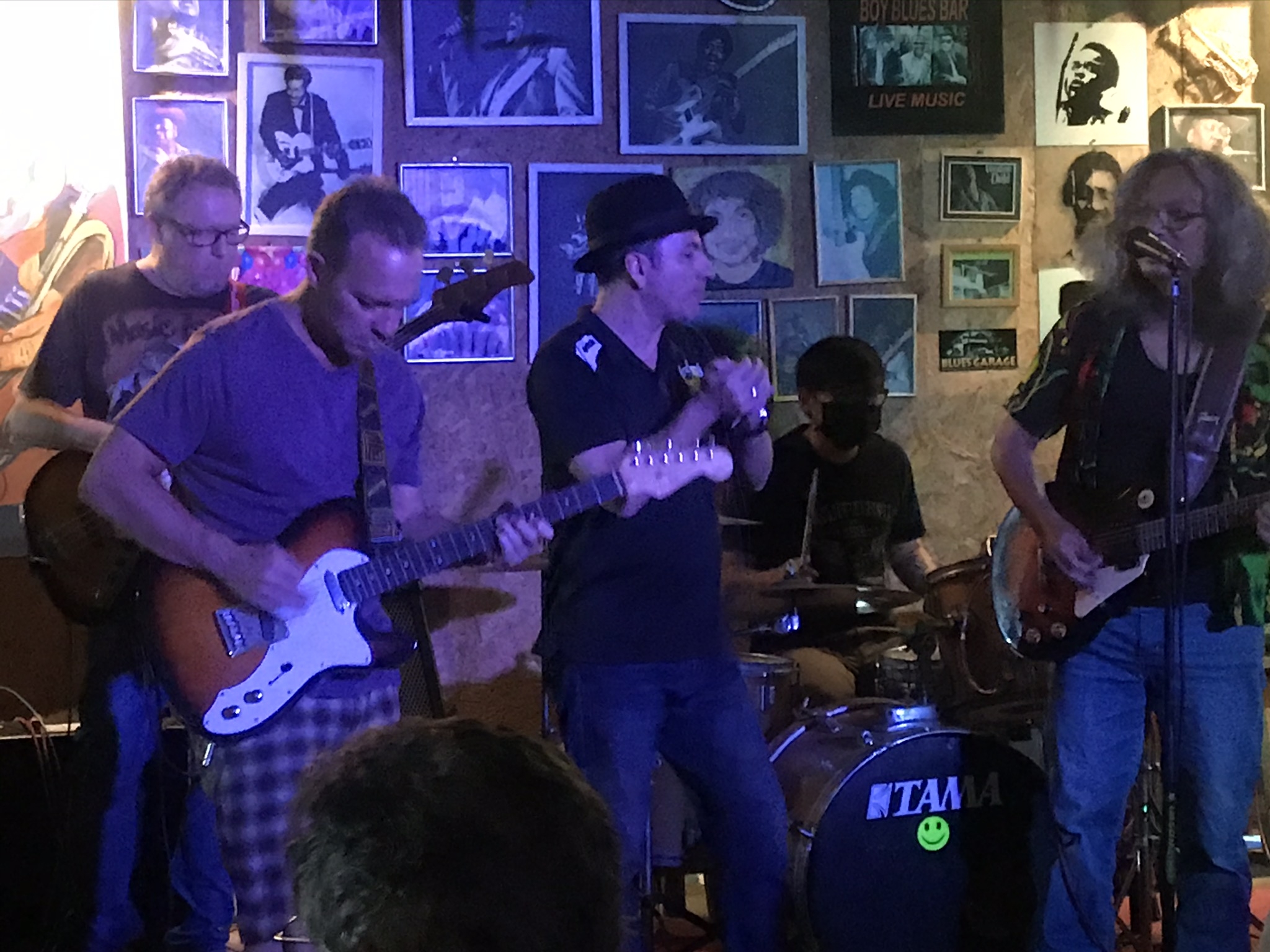
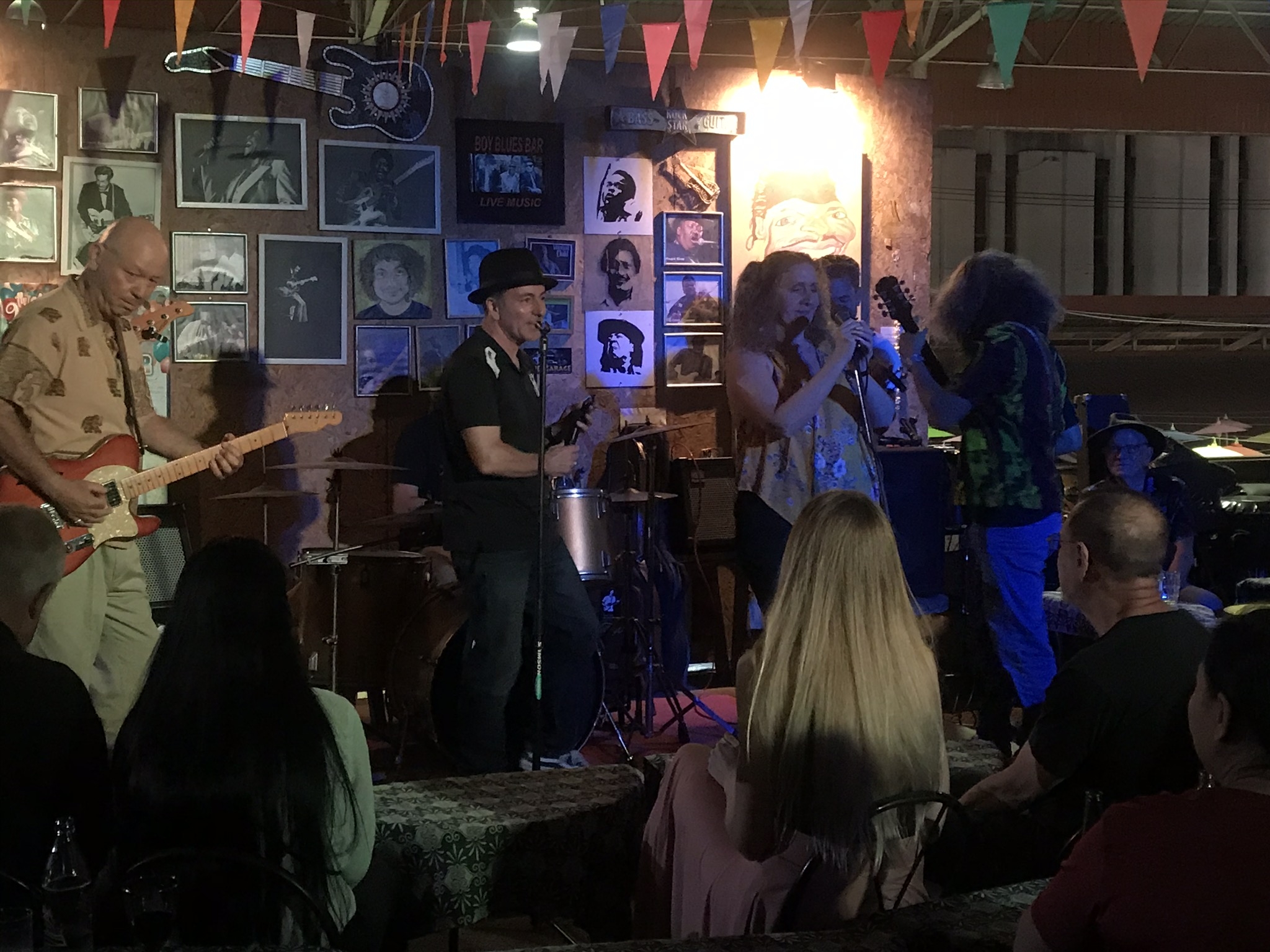
One of the demographics Chiang Mai appeals to is backpackers, so there has to be a reggae bar and, in fact, there are several and we end up at “Roots Rock Reggae” where there are a couple of decent bands and, thankfully, little of the Bangkok hustle. 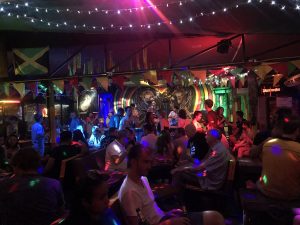 It’s not a very late night though as, the next day, we are trekking in the Doi Inthanon National Park with a pickup at 7 am. I guess I should have read the tour description a little more closely as the trekking turns out to be moderately hard-core: Base elevation 3500′ with many steep inclines, rough and narrow trails and, of course, high temperature and humidity. The other factor is that all of rest of the tourists hiking with us are 30 or younger, so the pace is brisk. The tour is run by a couple of locals who come from the Karen hill tribe that adjoins the park and, as we walk, they show us how to use the plants in the forest for medicine and food and point out wildlife.
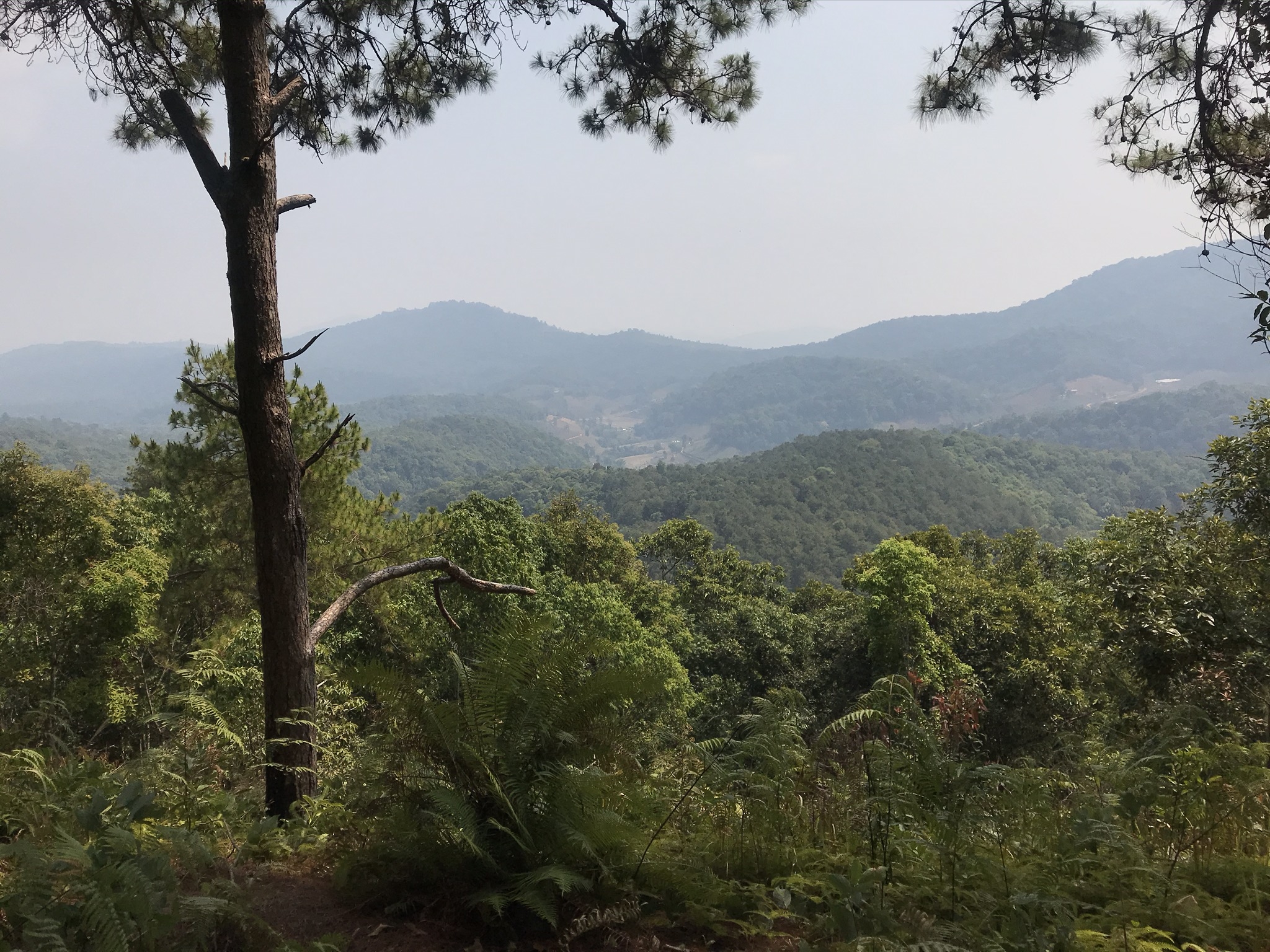
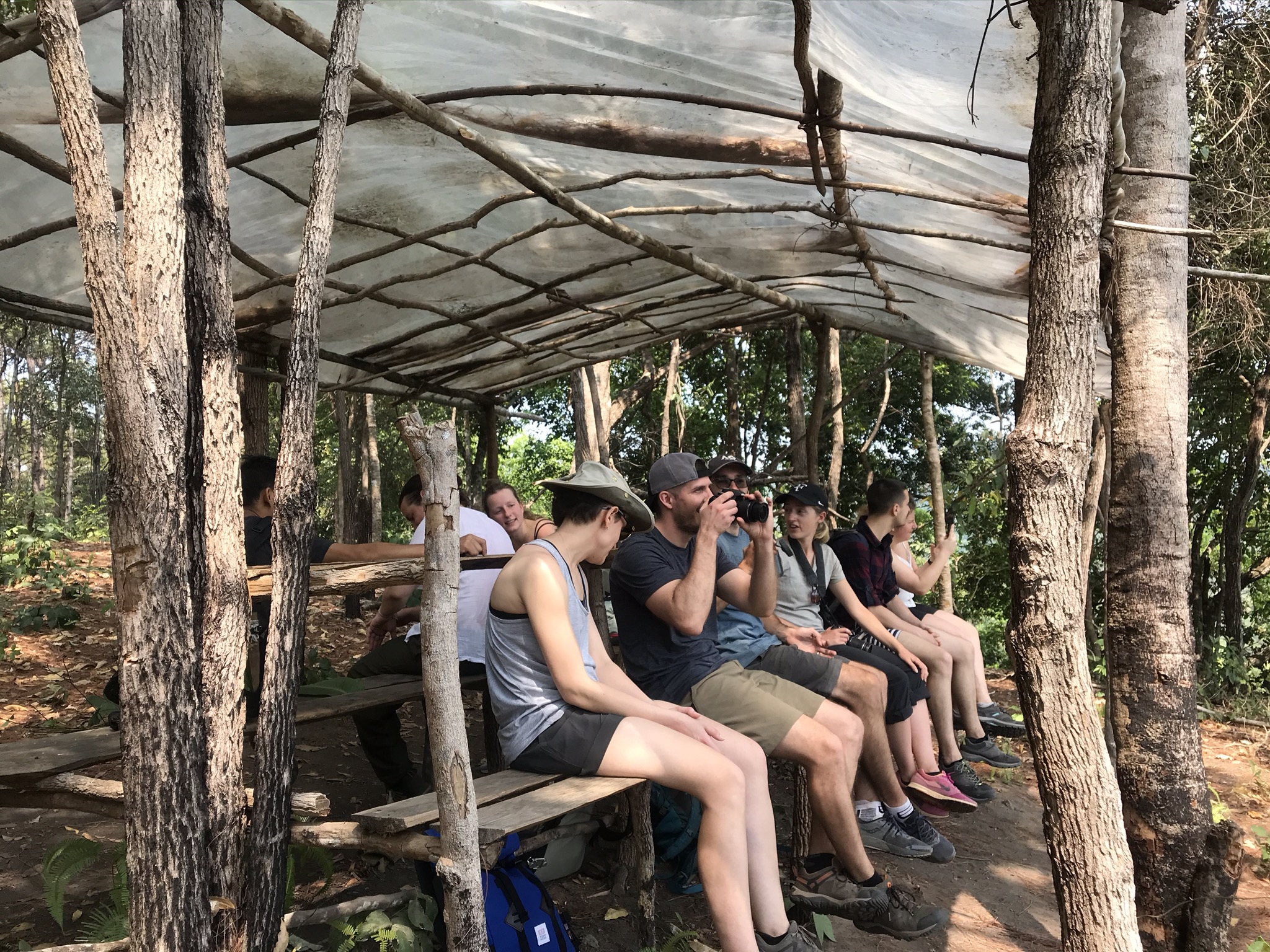
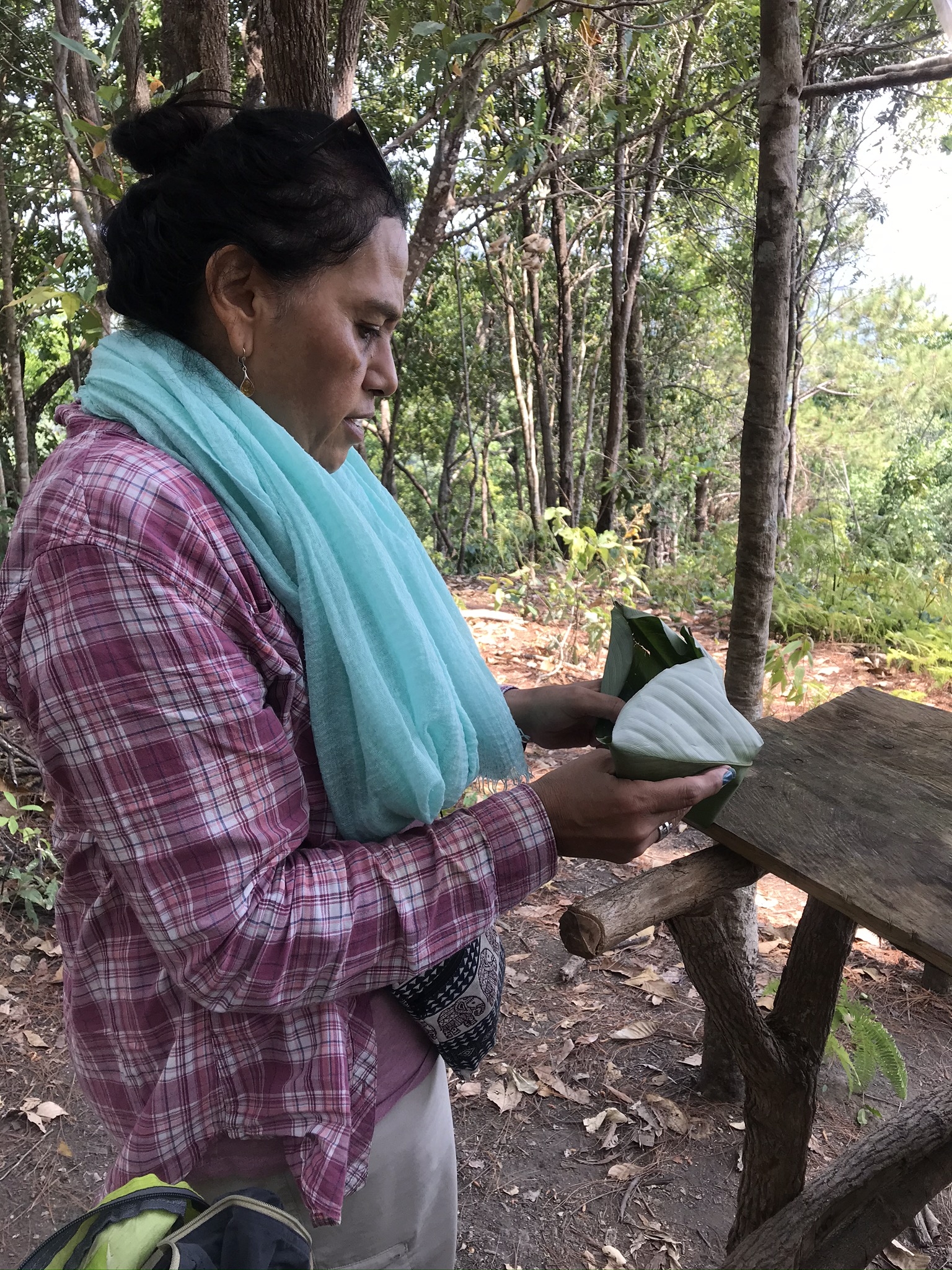
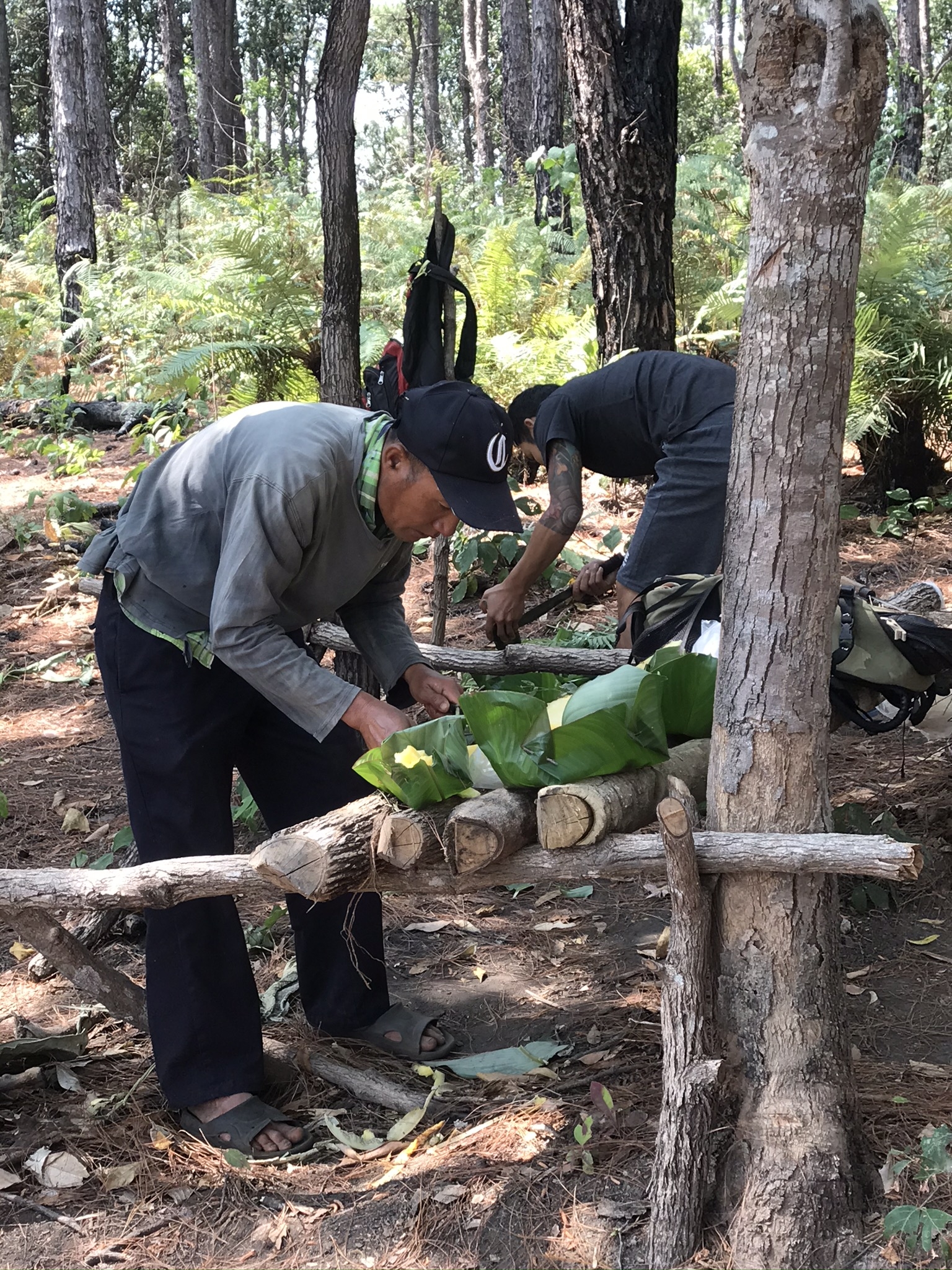
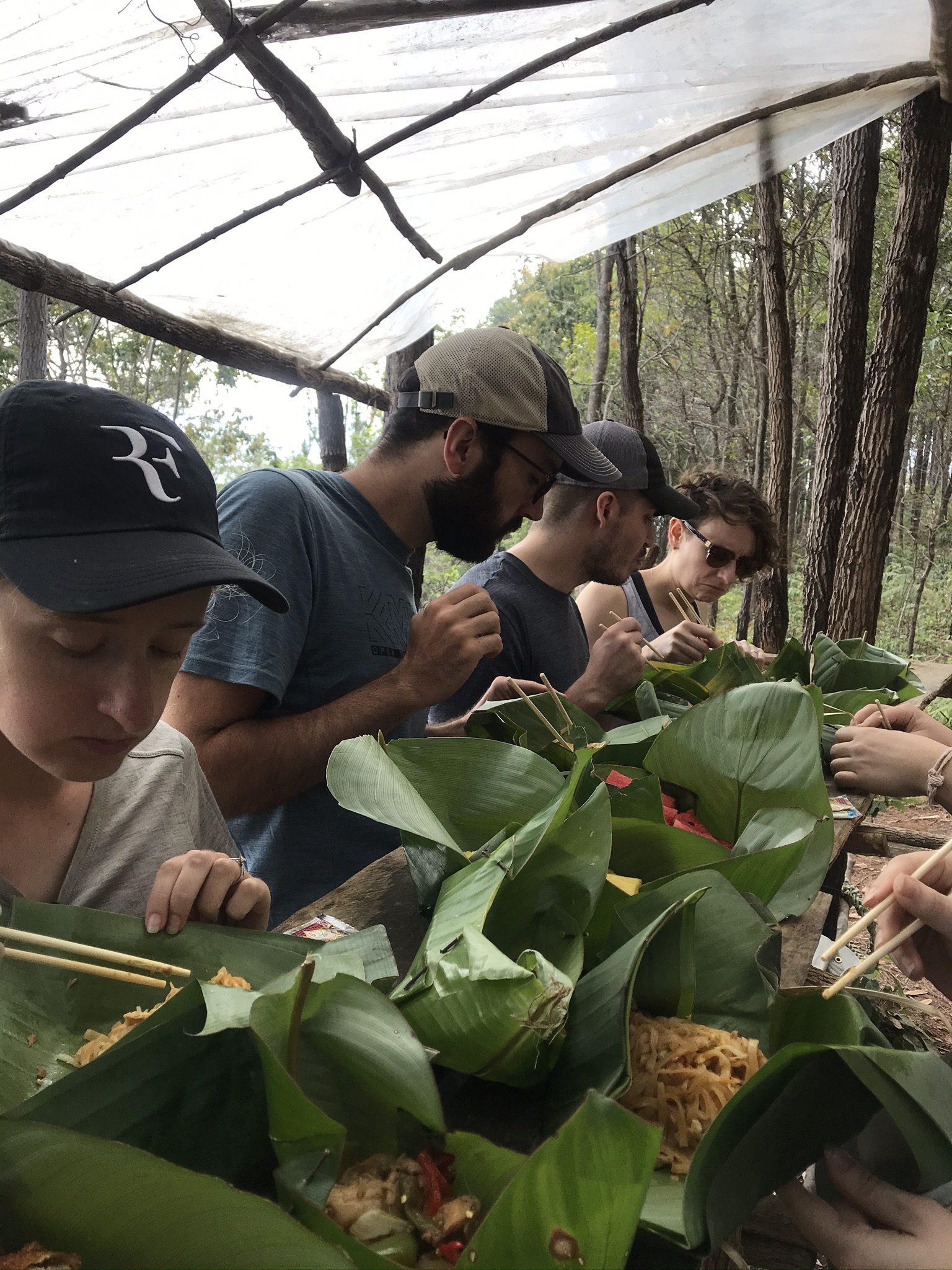
 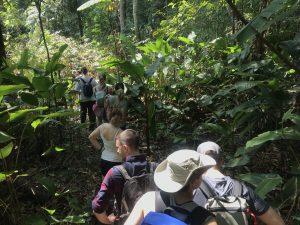 Unfortunately, the wildlife is minimal as the guide tells us that the locals have hunted the larger fauna so much that what is remaining hides deep in the national park. There is a great picnic lunch that was packed in by the guides that we eat on banana leaves at an improvised shelter at a viewpoint and then, only a little more climbing, before we begin the long descent to their village.
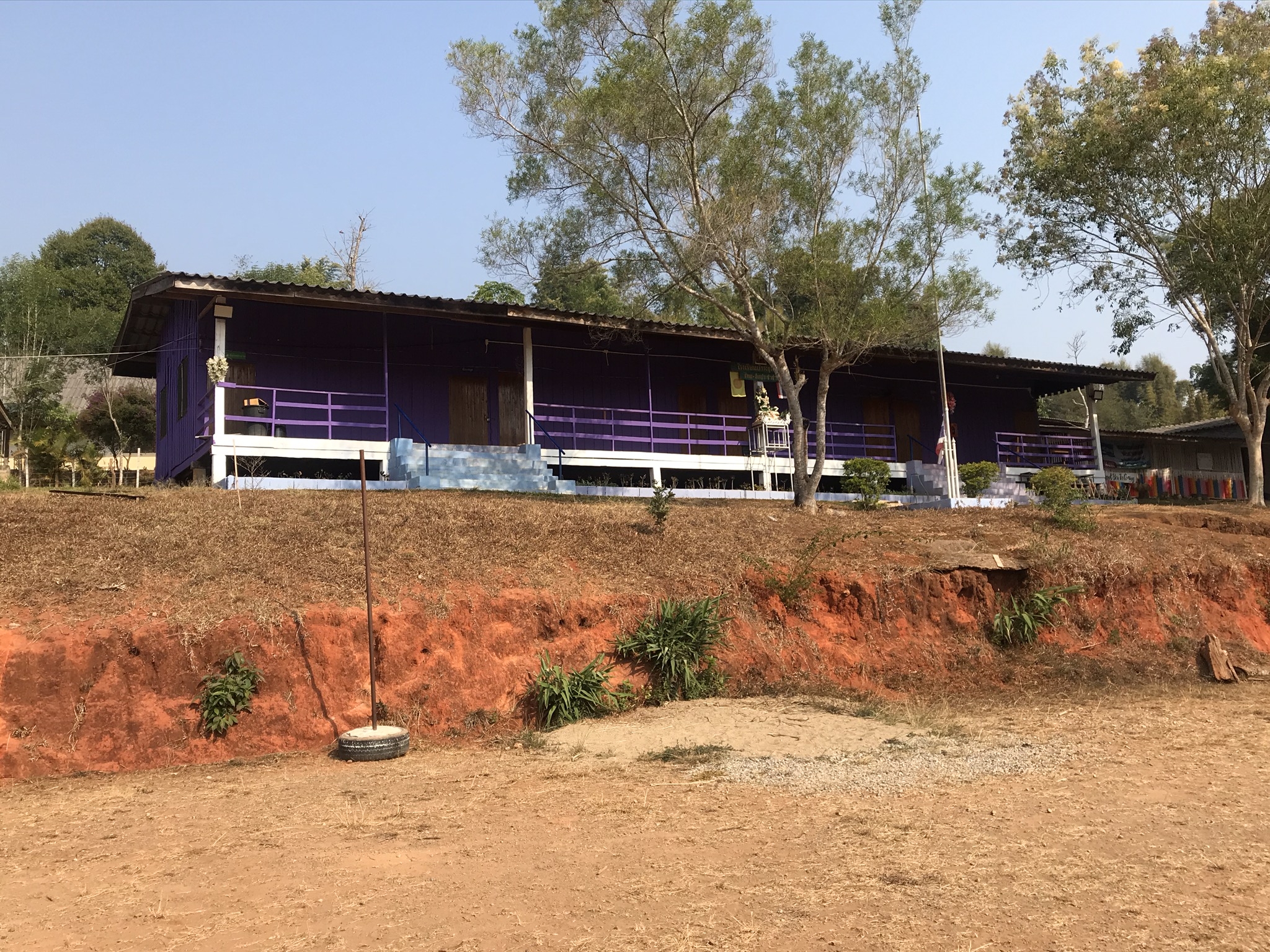
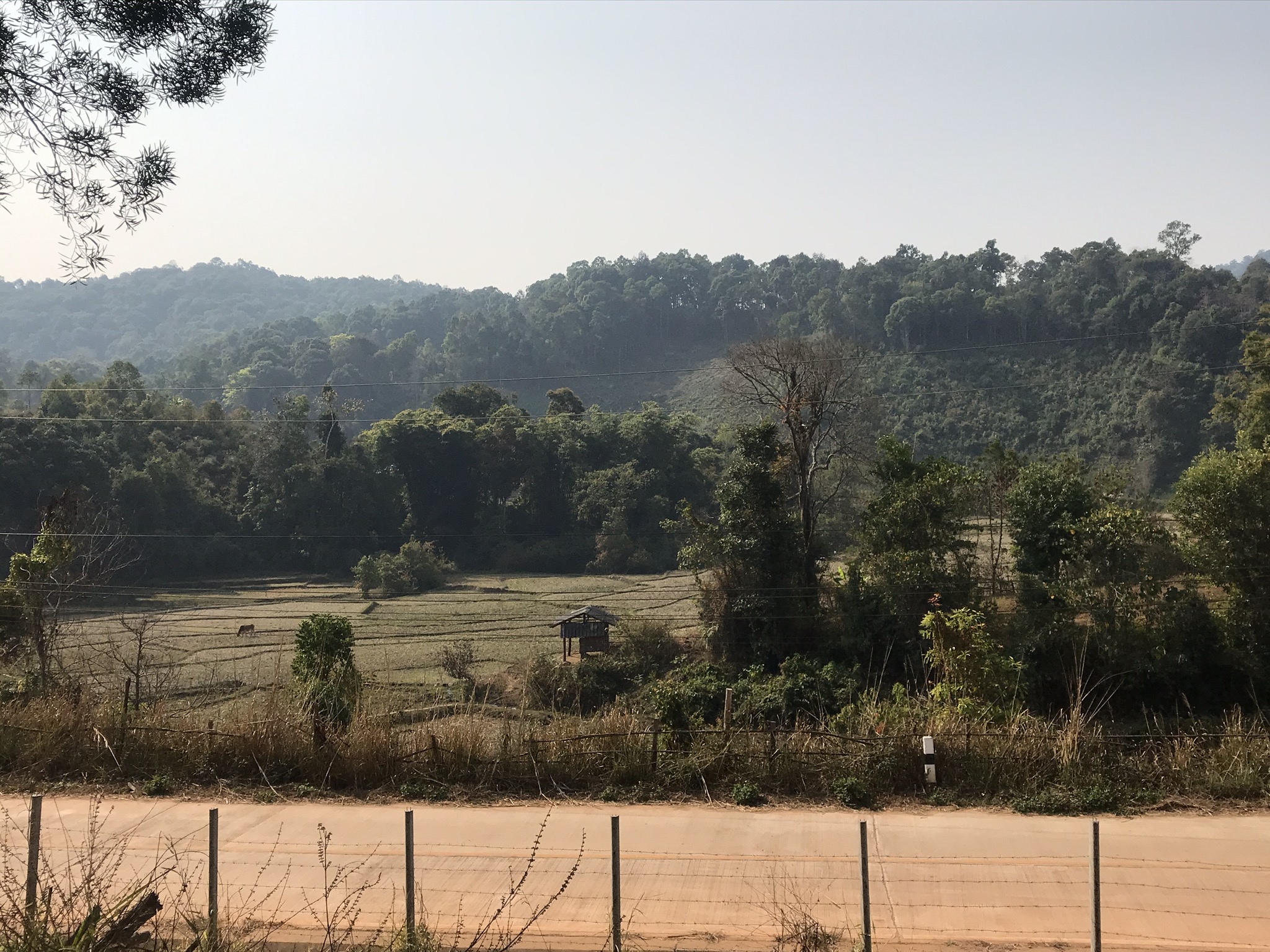
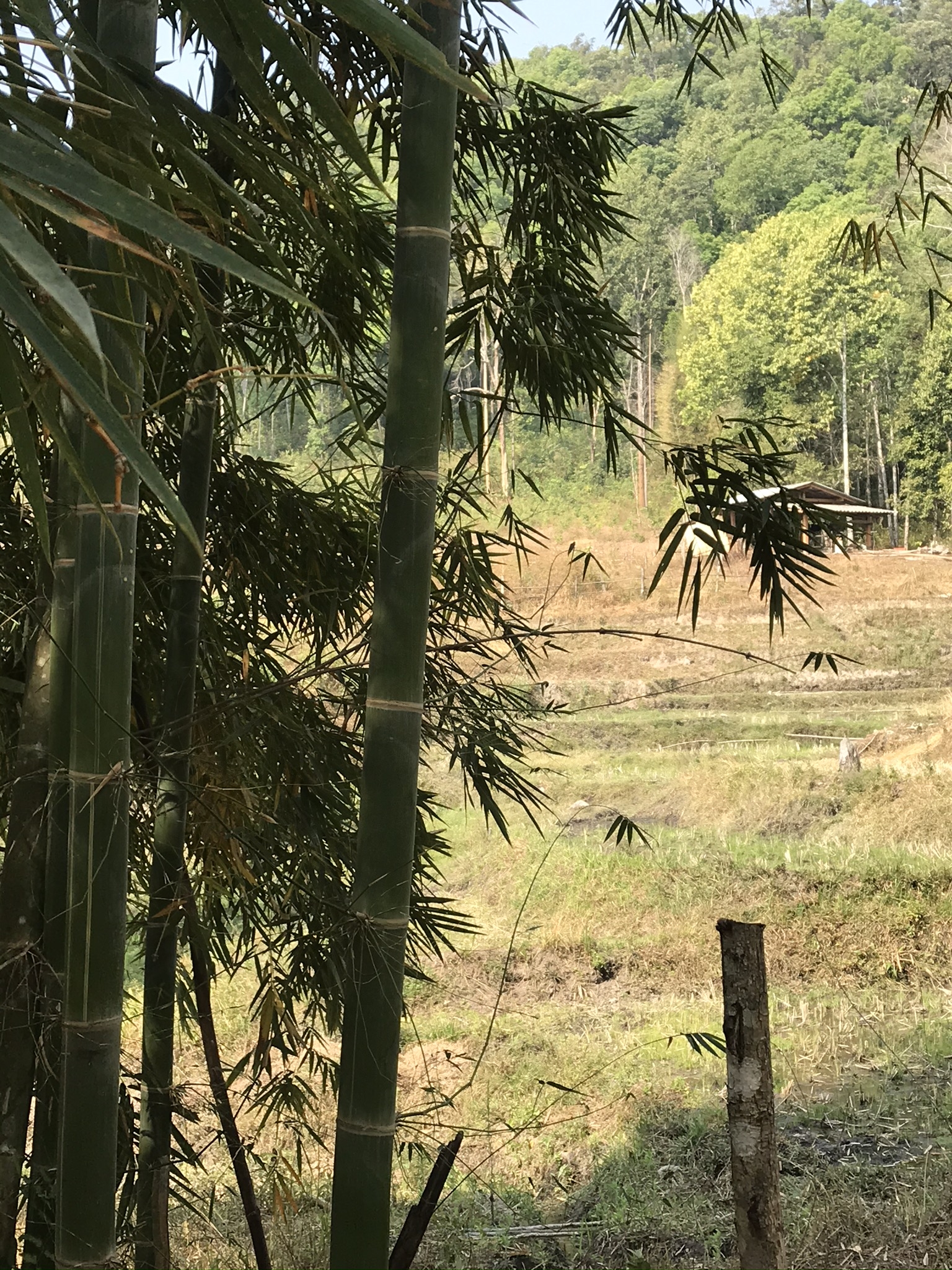
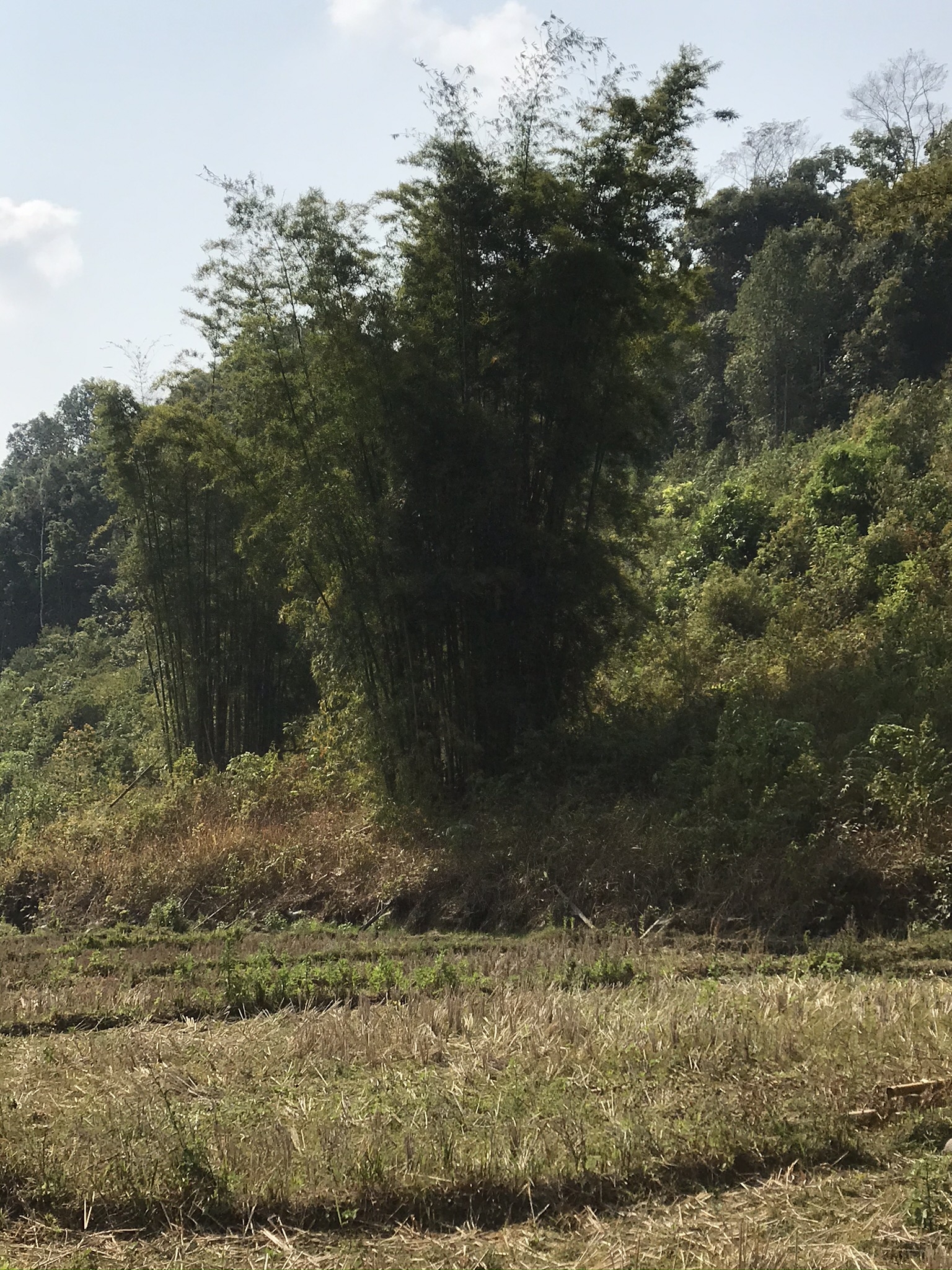
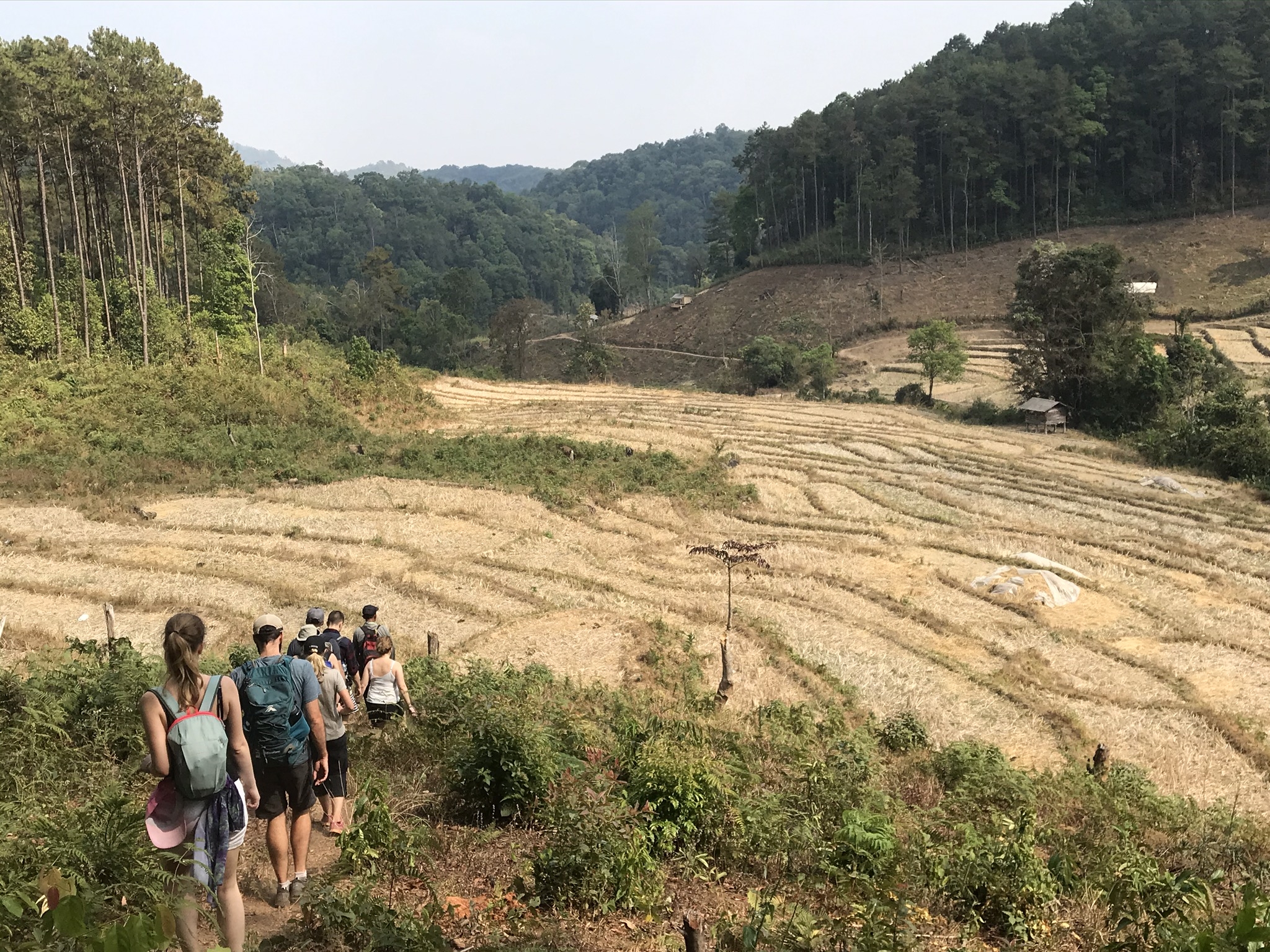
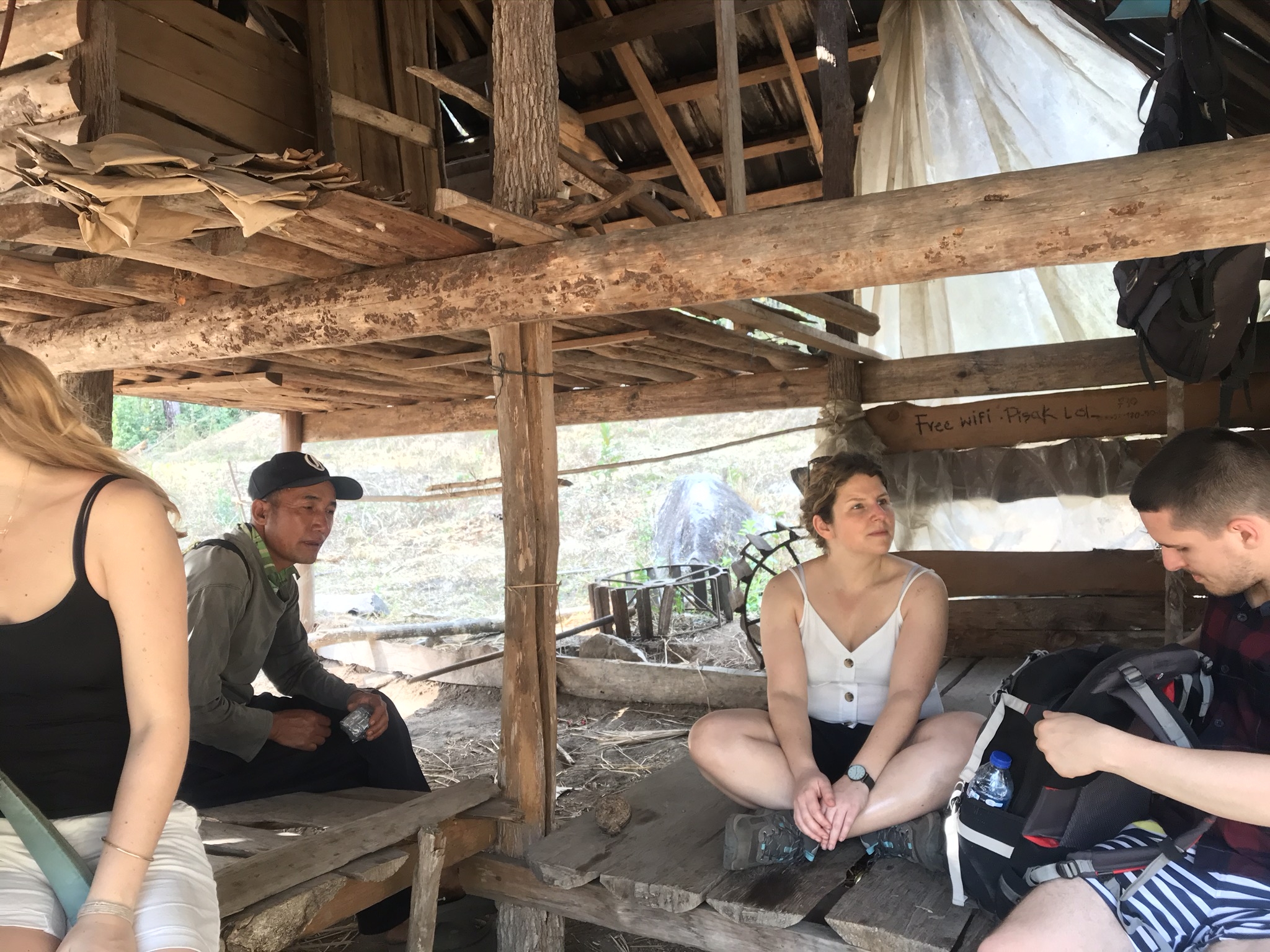
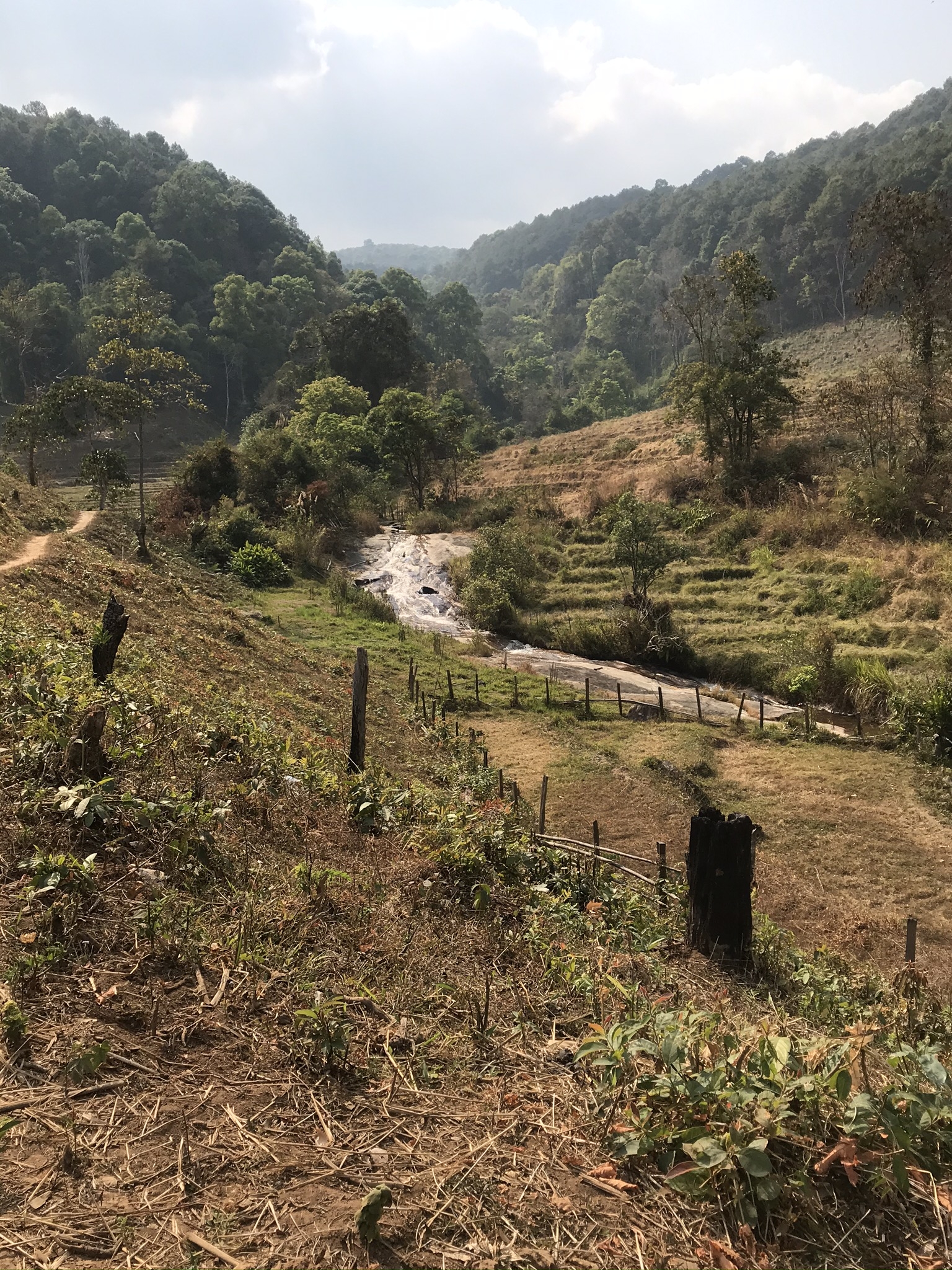
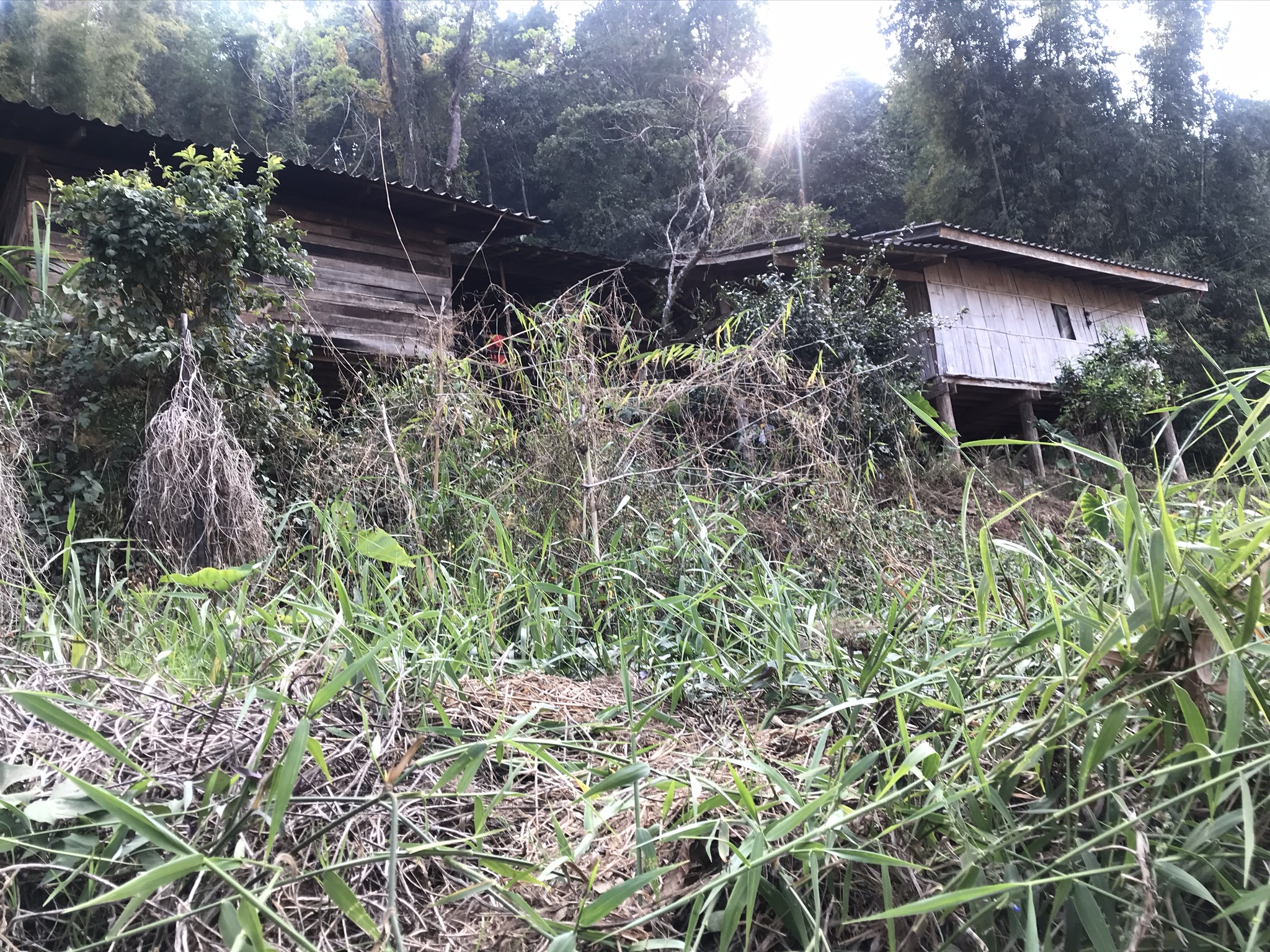
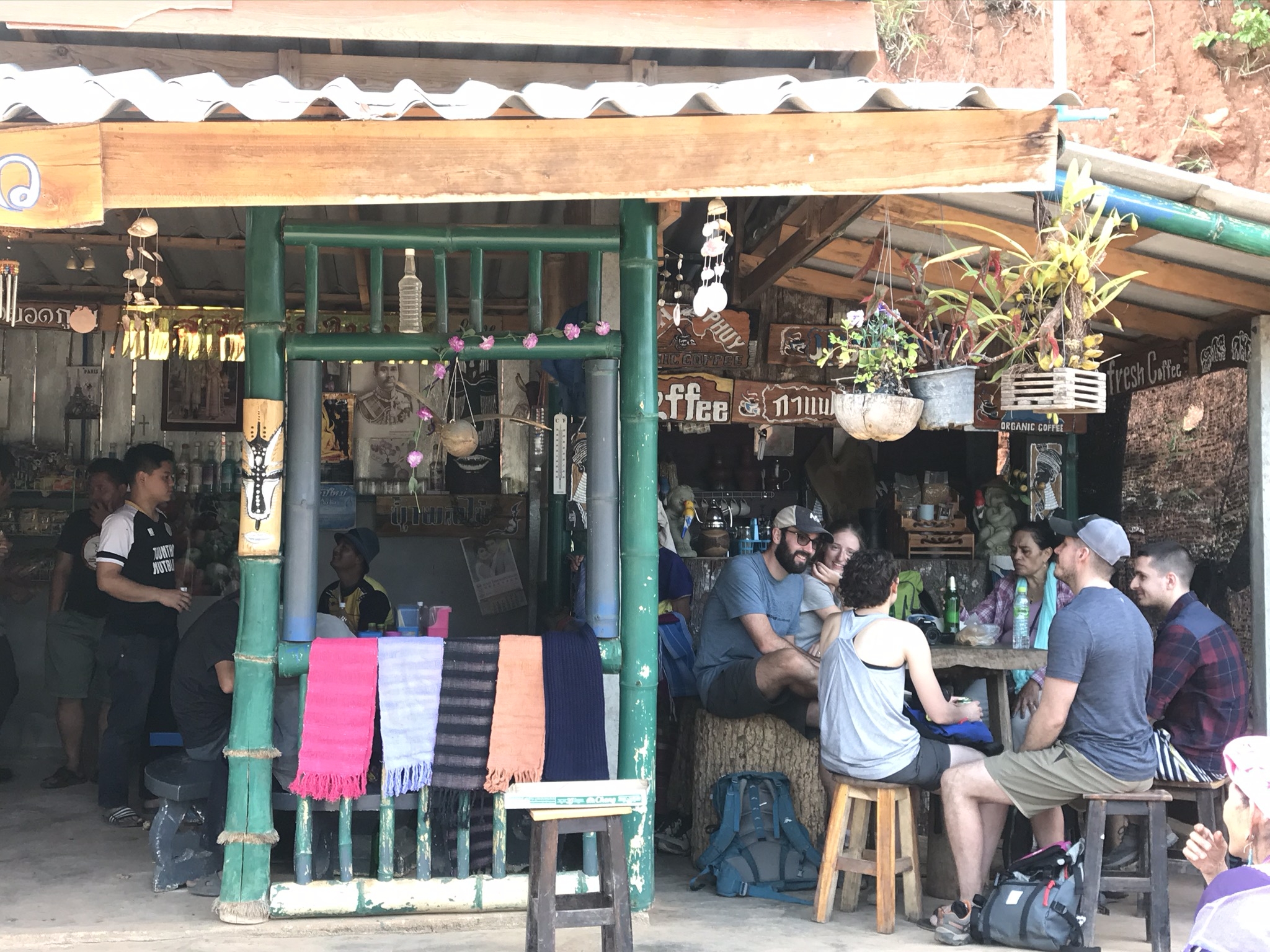
We pass through fallow rice fields where one of our guides farms in the rainy season, and rest briefly at an extremely rustic hut where he lives most of the time during the growing season. Eventually, we make it down to the village and have a beer at the tiny cafe/bar/shop that seems to be the entirety of the commercial sector there. Nearly all the buildings are on stilts for ventilation and to avoid seasonal flooding, virtually all the plants in the vicinity of the village provide fruit or other useful materials and there are the usual chickens and dogs wandering freely. 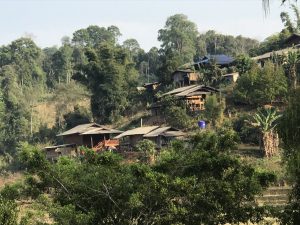 Dogs are a problem in Thailand in rural areas in that, domestic dogs roam the streets and they have many feral cousins so, at night, it definitely becomes “dog town” and ad hoc packs can get aggressive. In fact, we sometimes get woken up by the sounds of them fighting during the night.
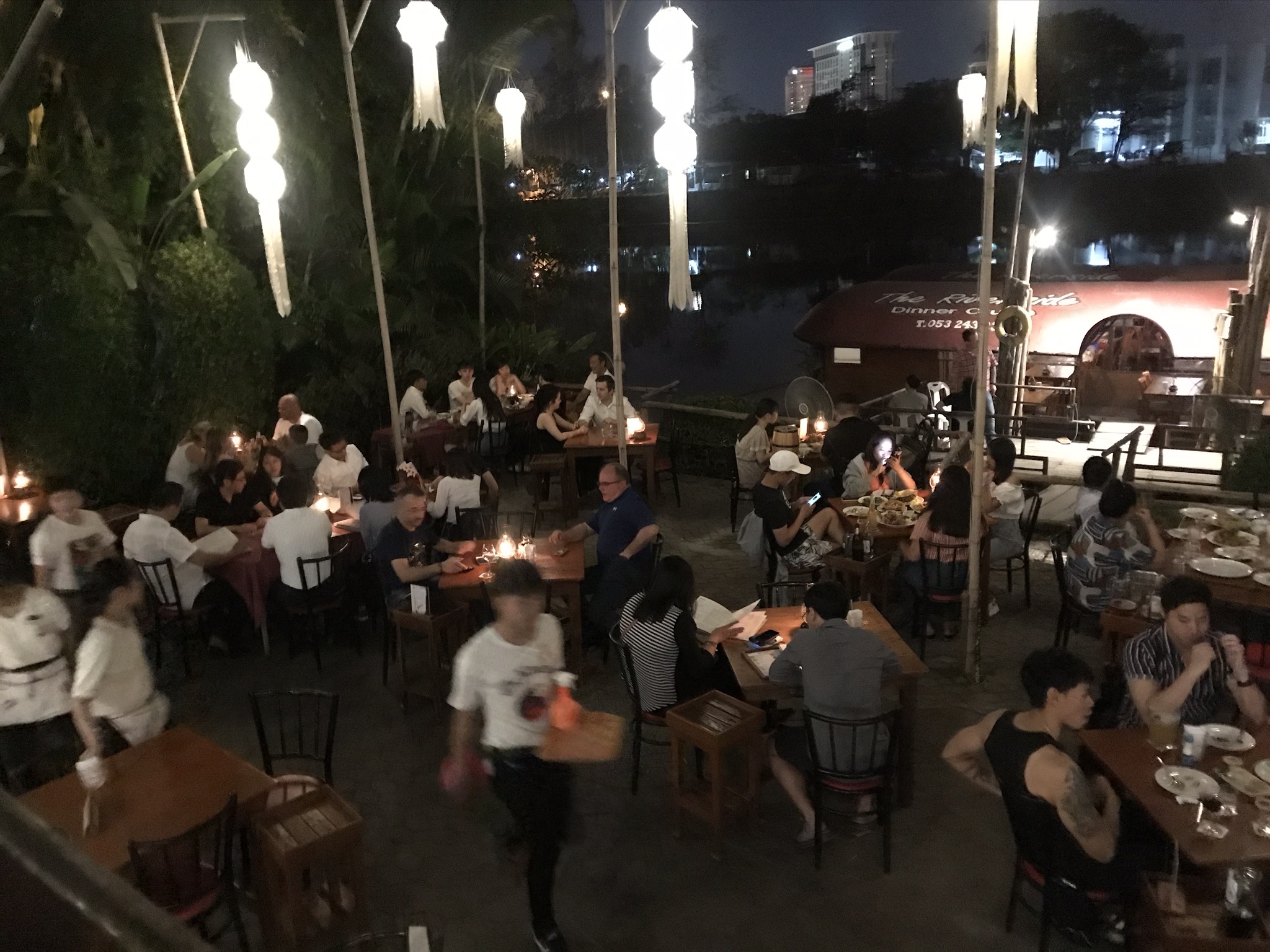
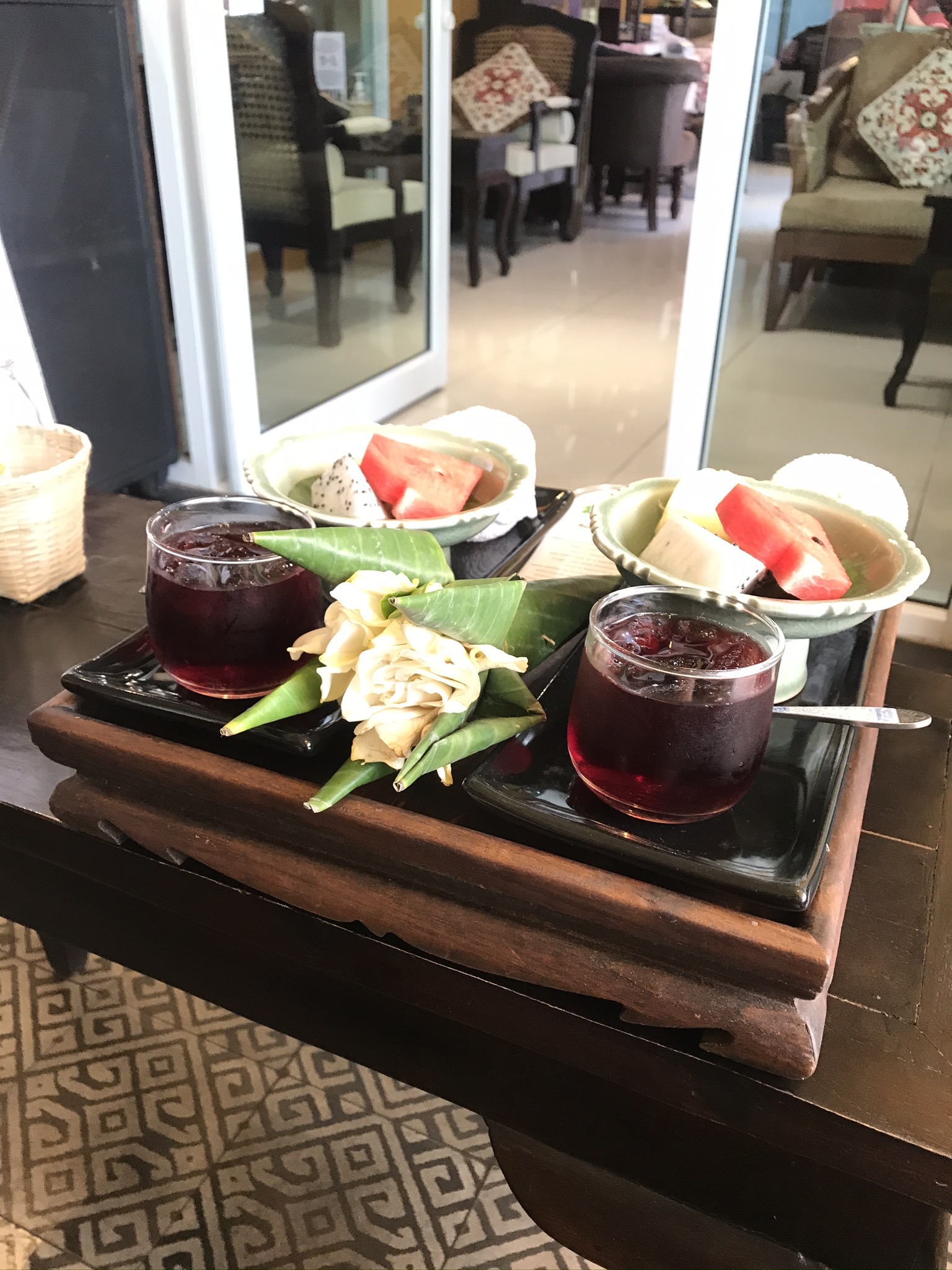
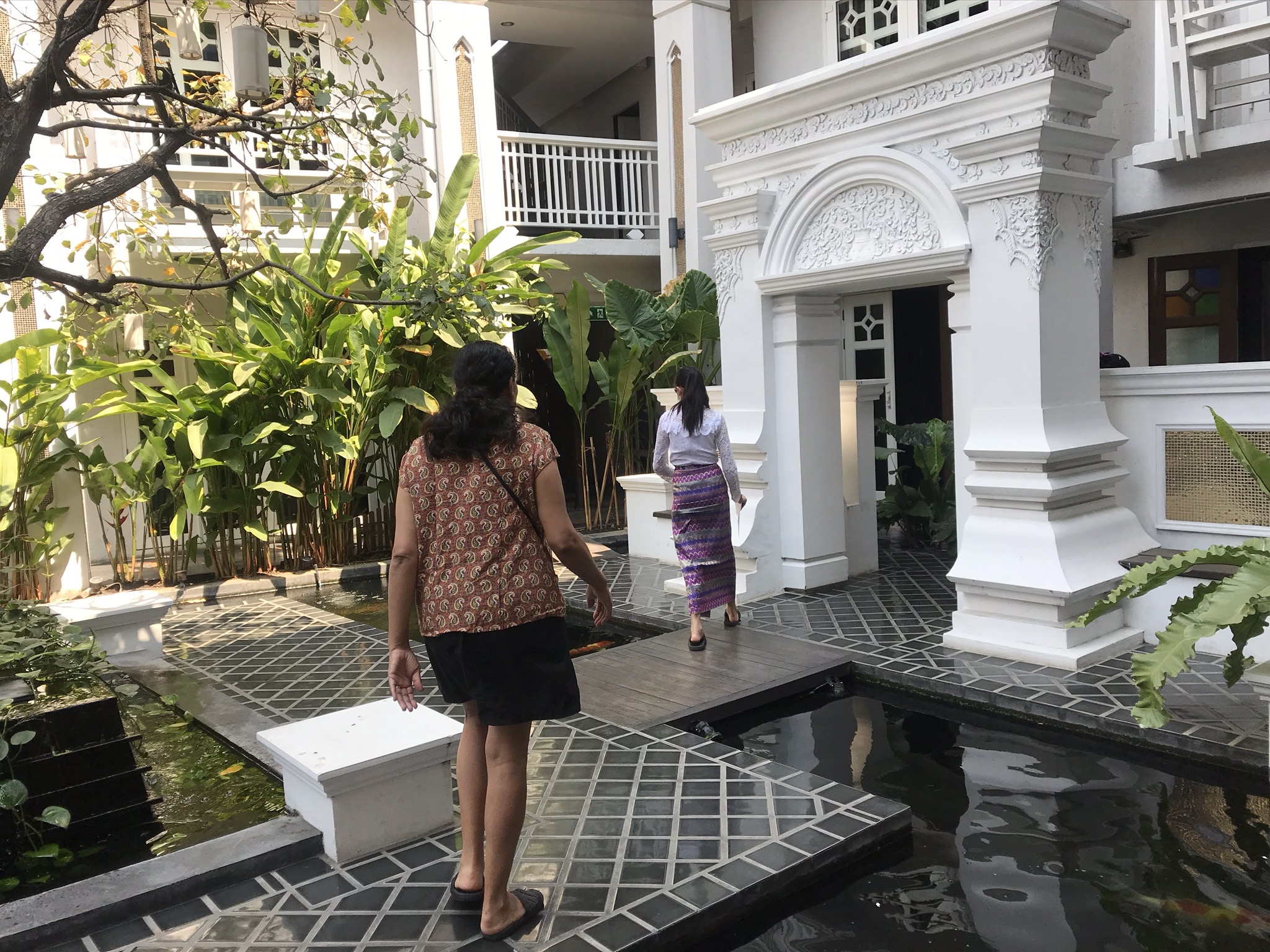
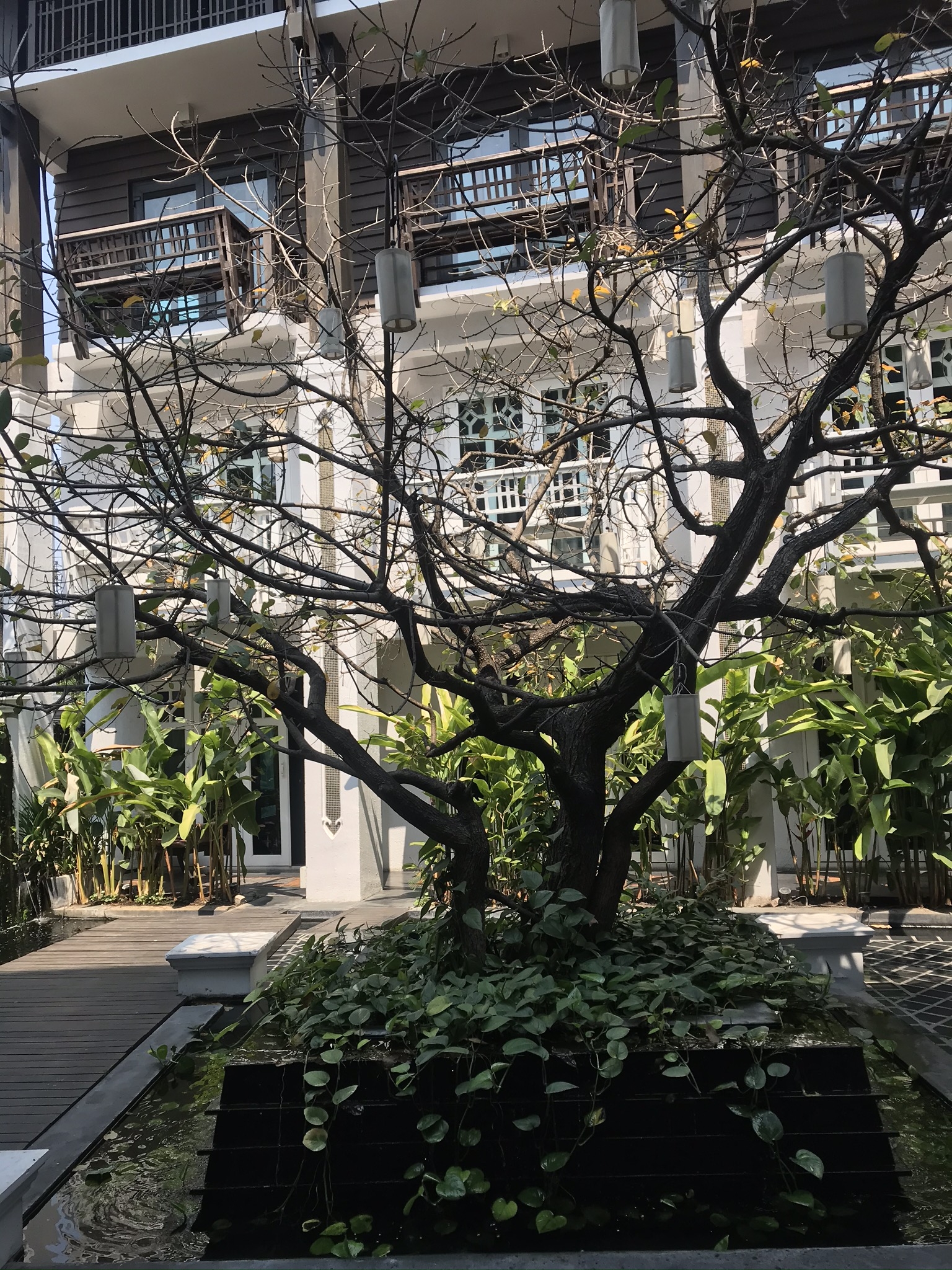
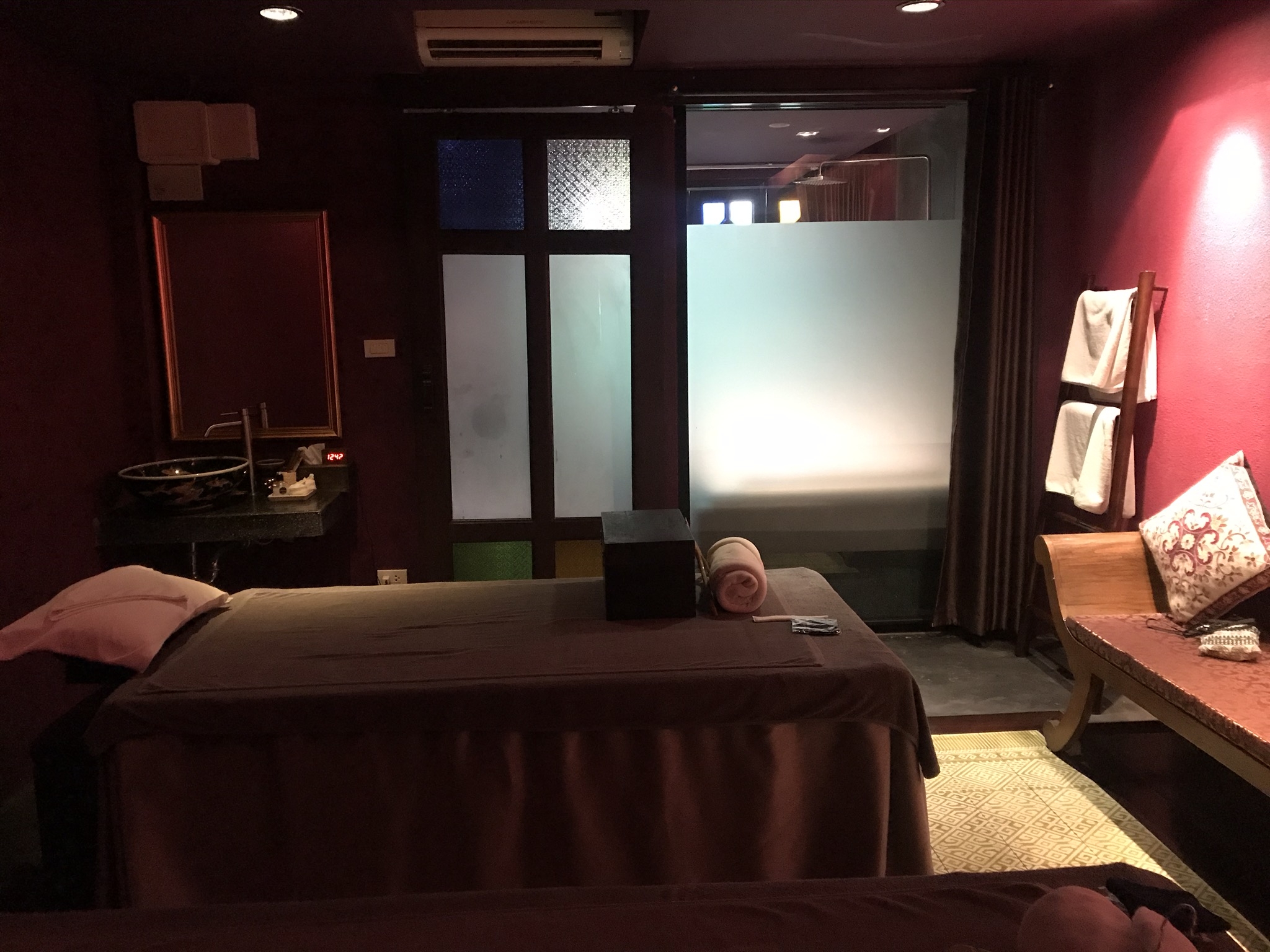
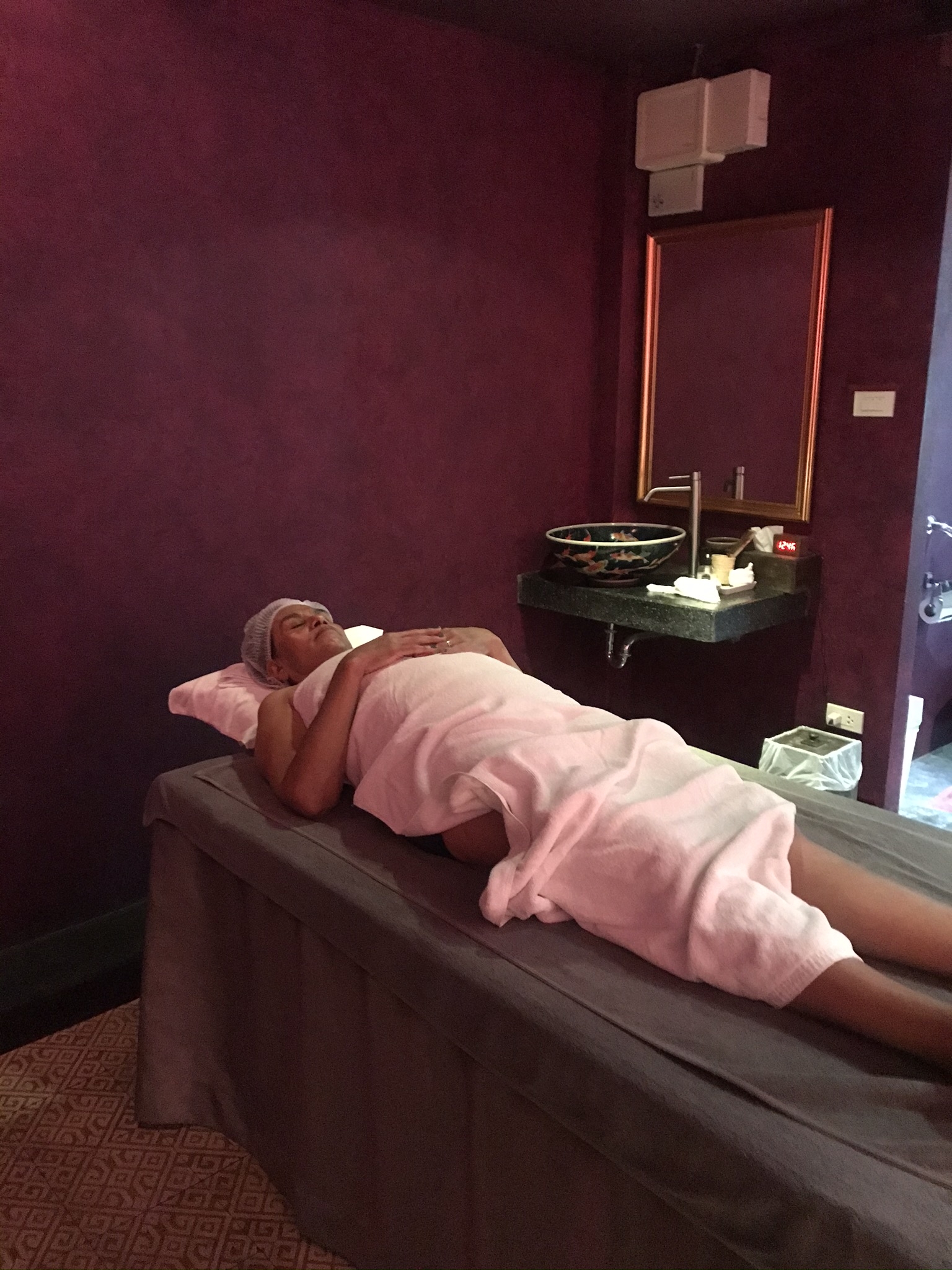
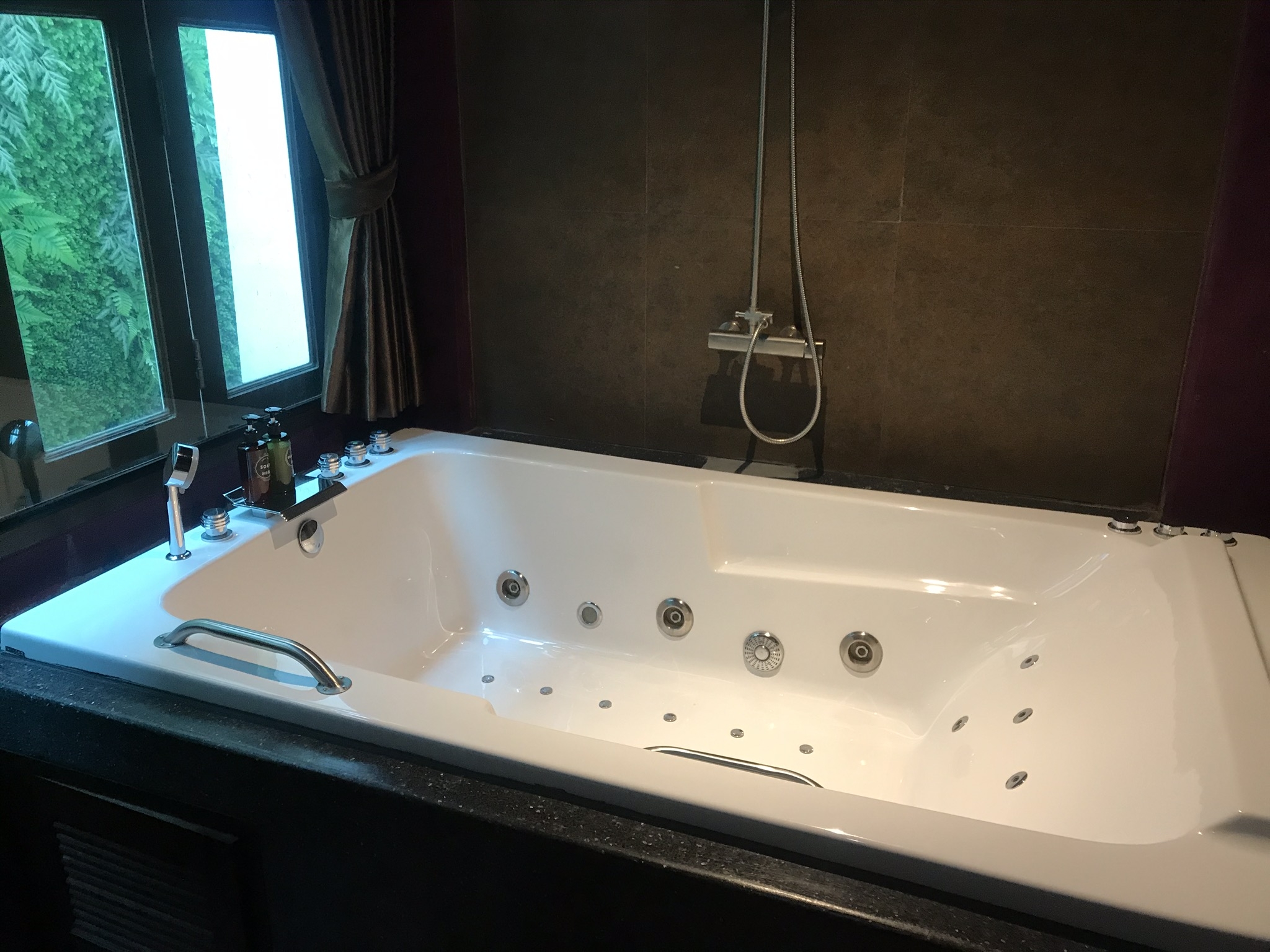
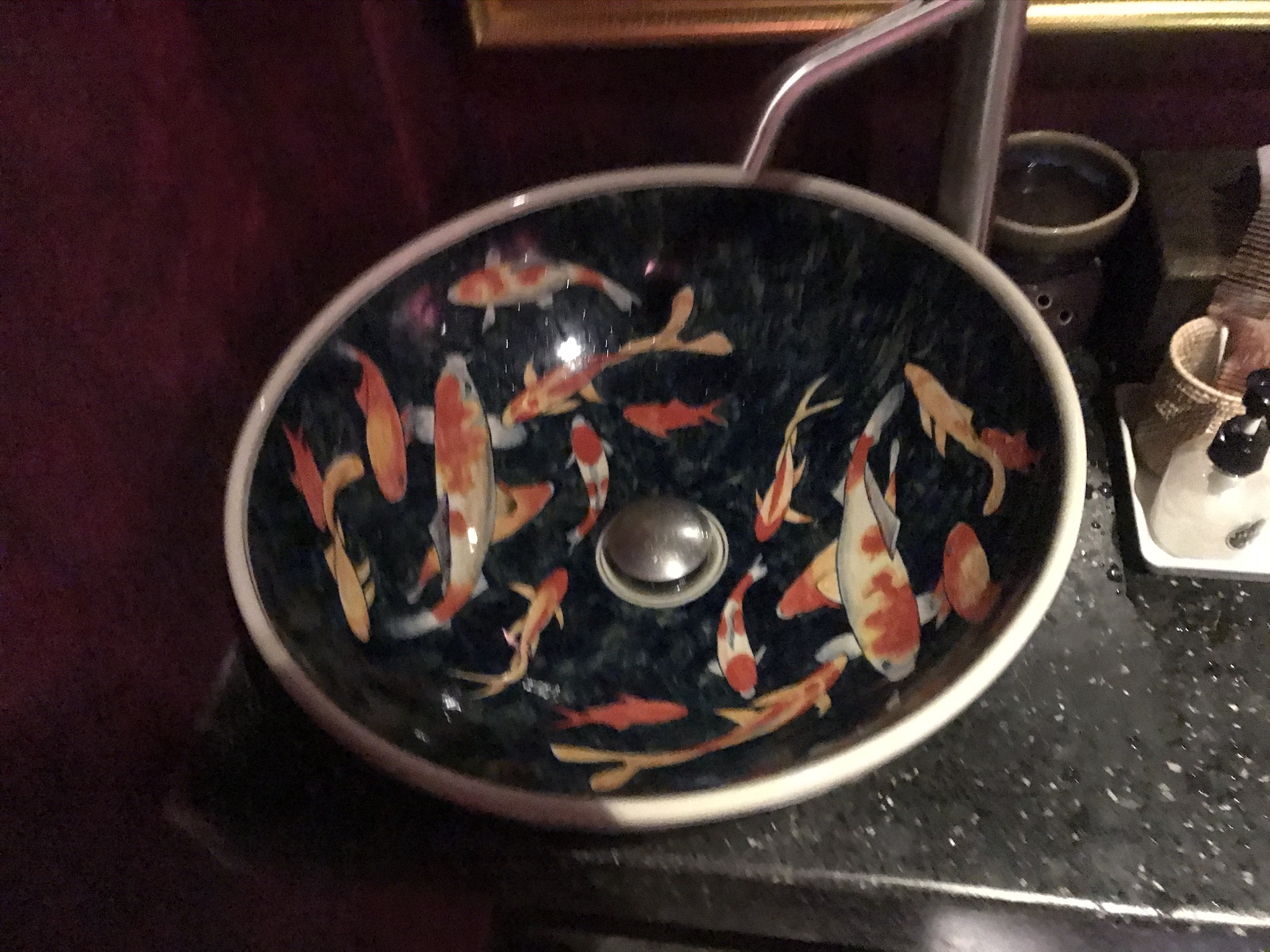
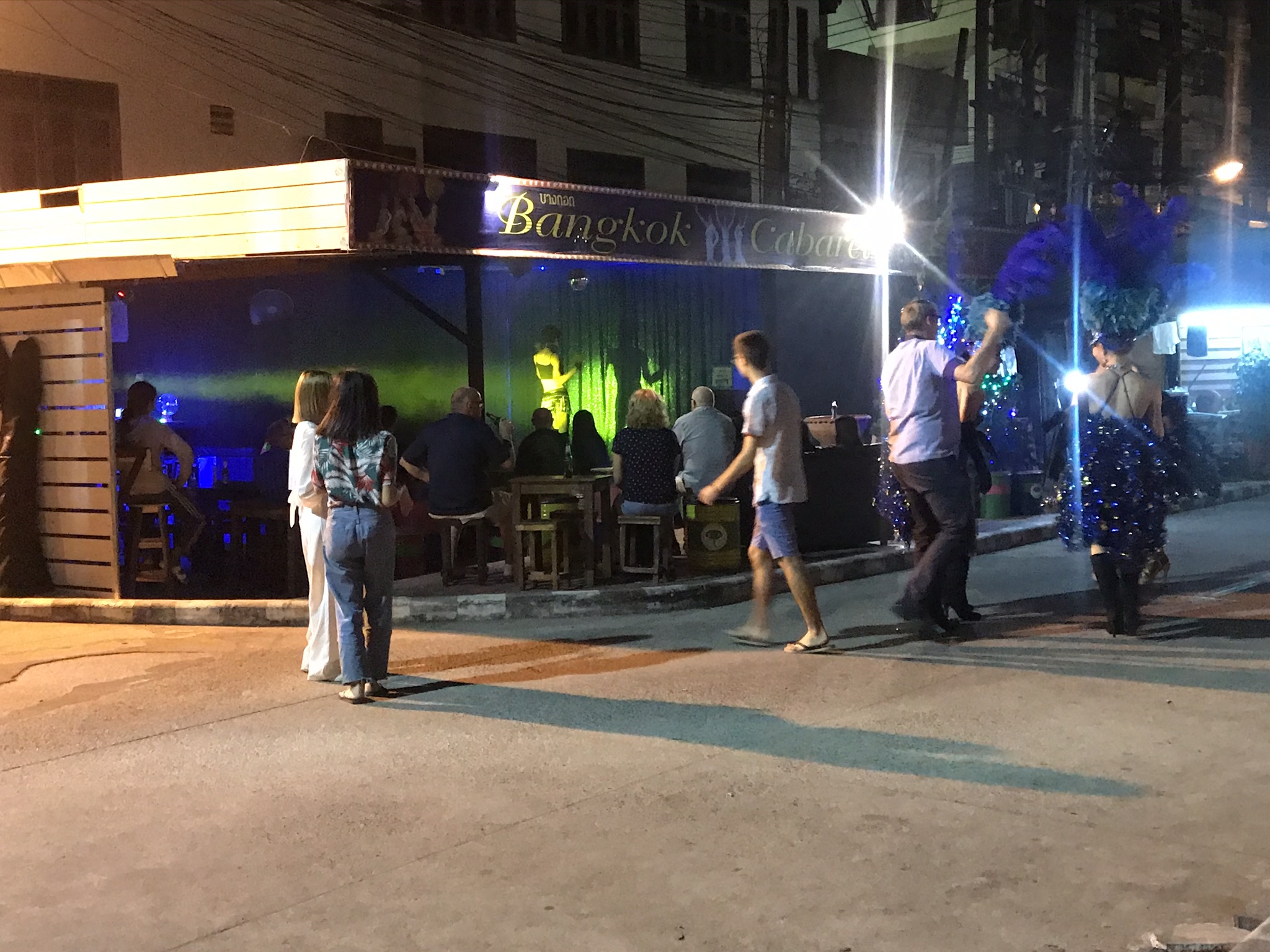
By the time we finish the trek Abby and I are the worse for wear, with Abby’s feet suffering the most, so we book a, somewhat extravagant, massage session the next day at Zira Spa, which does the trick. 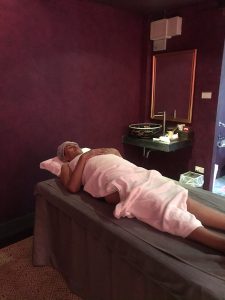 Aside from the gorgeous surroundings, and gentile service, Abby finally gets a masseuse who can dish out sufficient punishment to meet her needs. At night we hit up the long running Riverside restaurant which is the traditional “big night out” for the locals, featuring a soul-funk band. We do try and go to joints where the locals go as, otherwise, you can easily fall into an ex-pat mode and travel 9,000 miles to hang out with 60 year olds from Luton or East Grinstead. Not sure why there are so many Brit couples that fit this demographic in Thailand, though the reason for the single, 50+ white males is glaringly obvious as they pass by with their new, young Thai girlfriends.
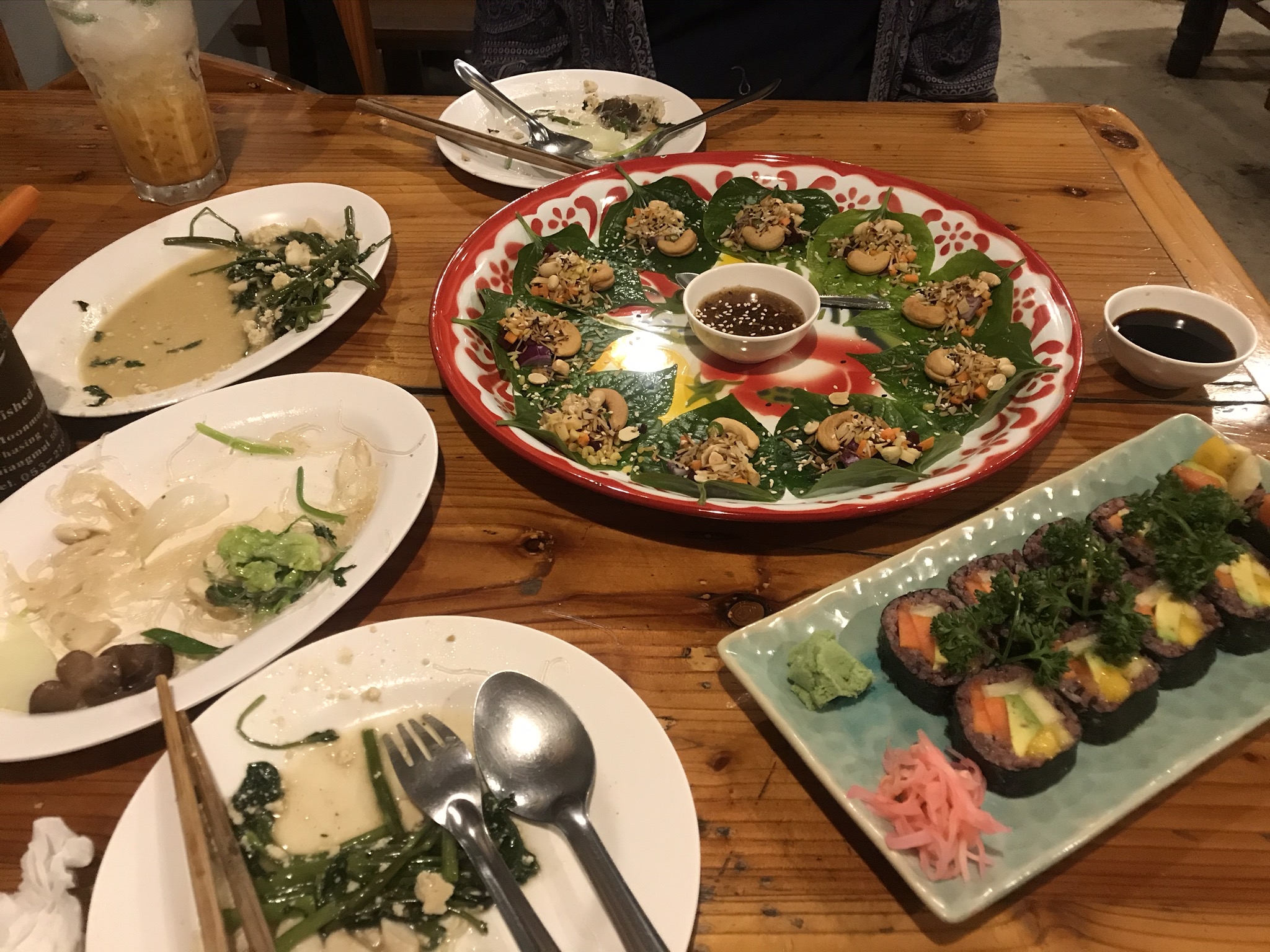
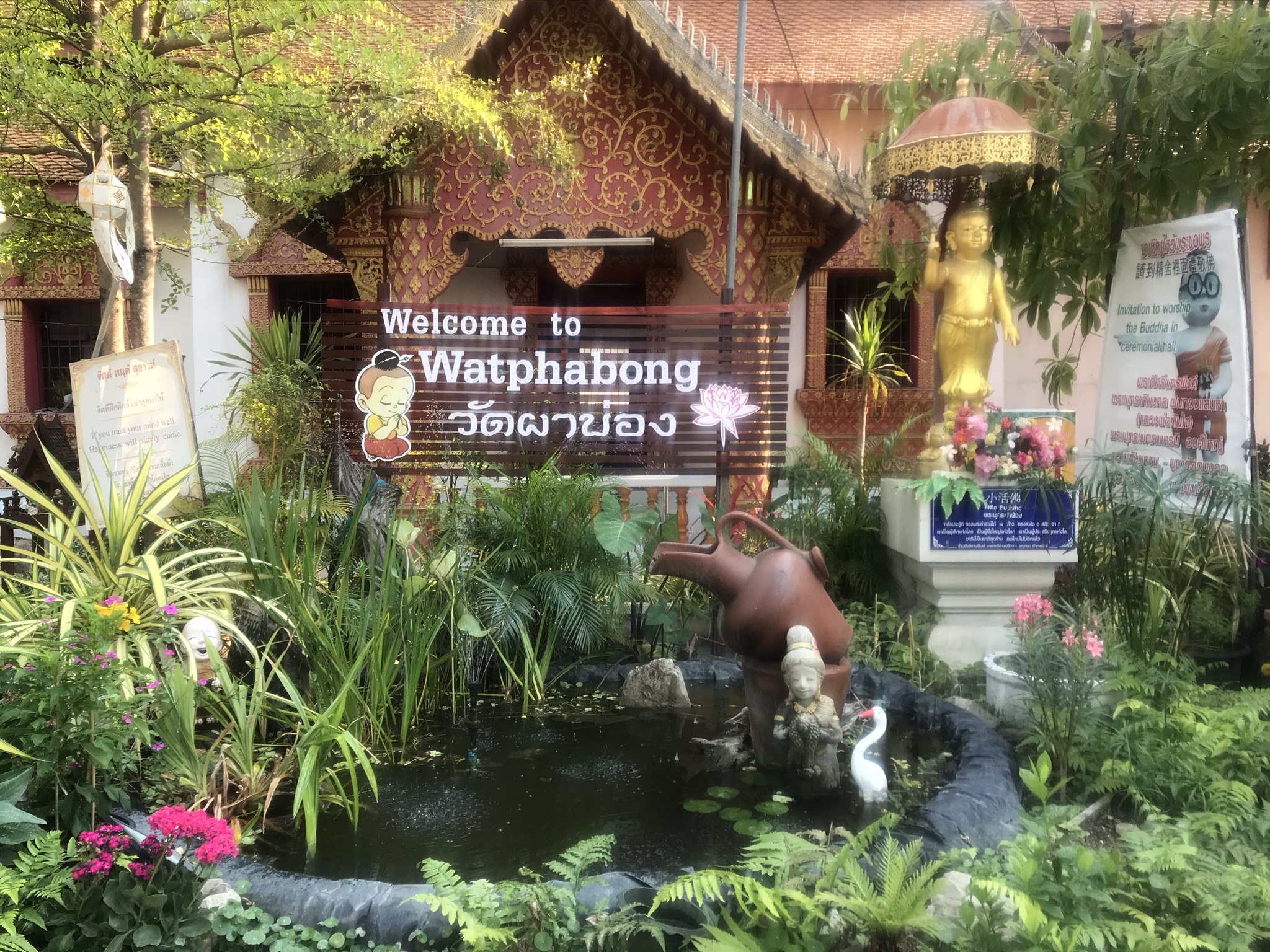
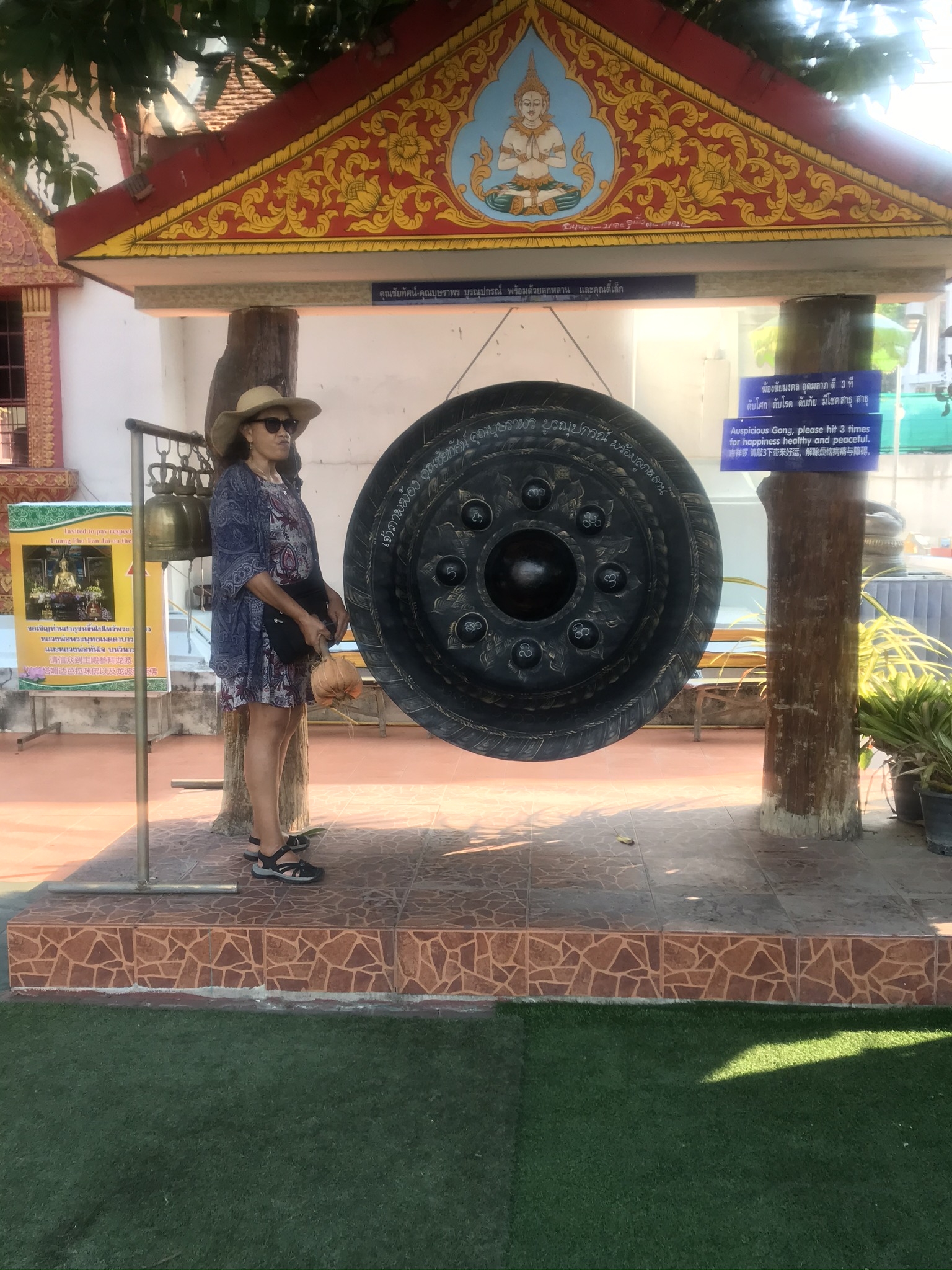
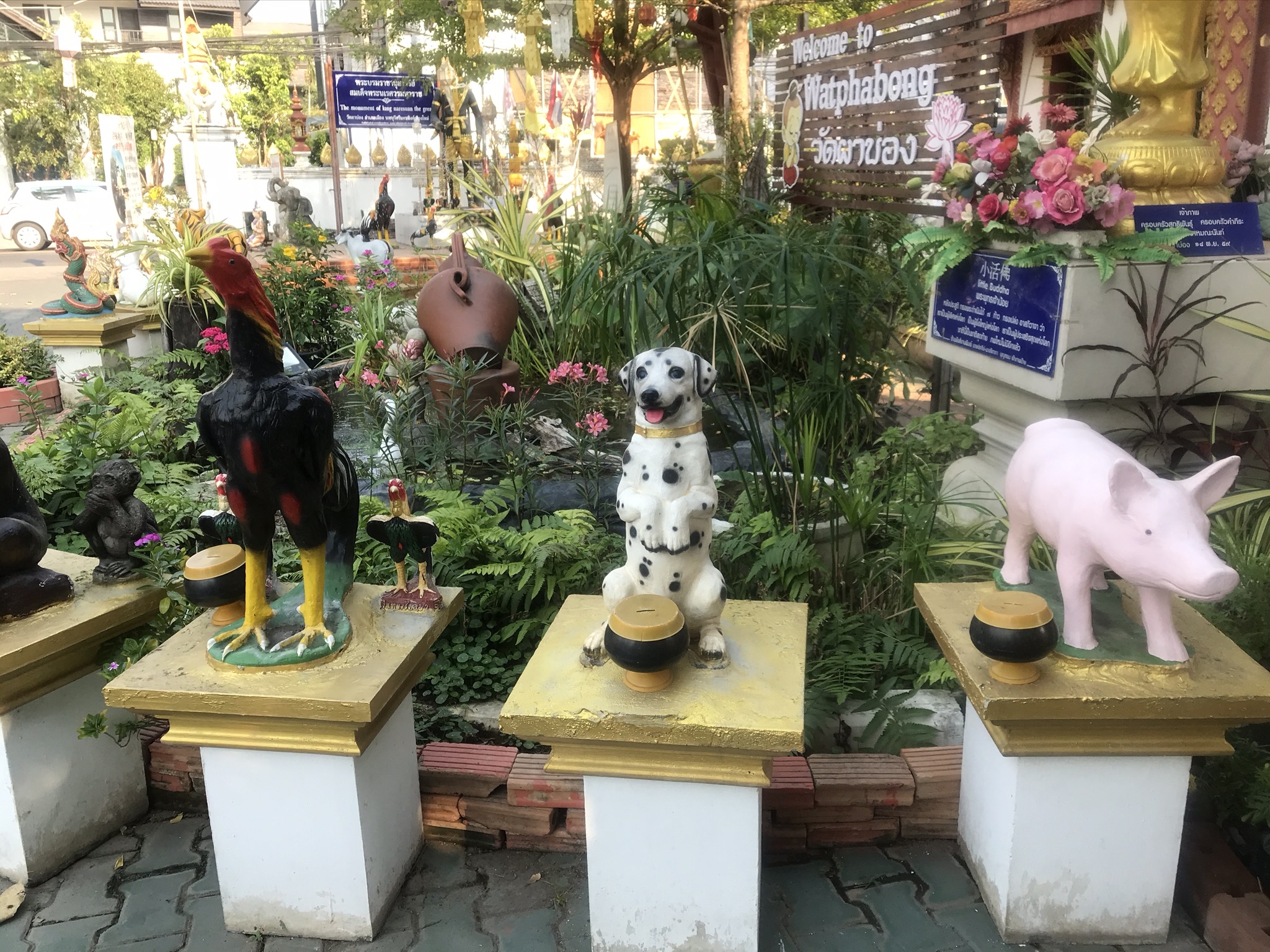
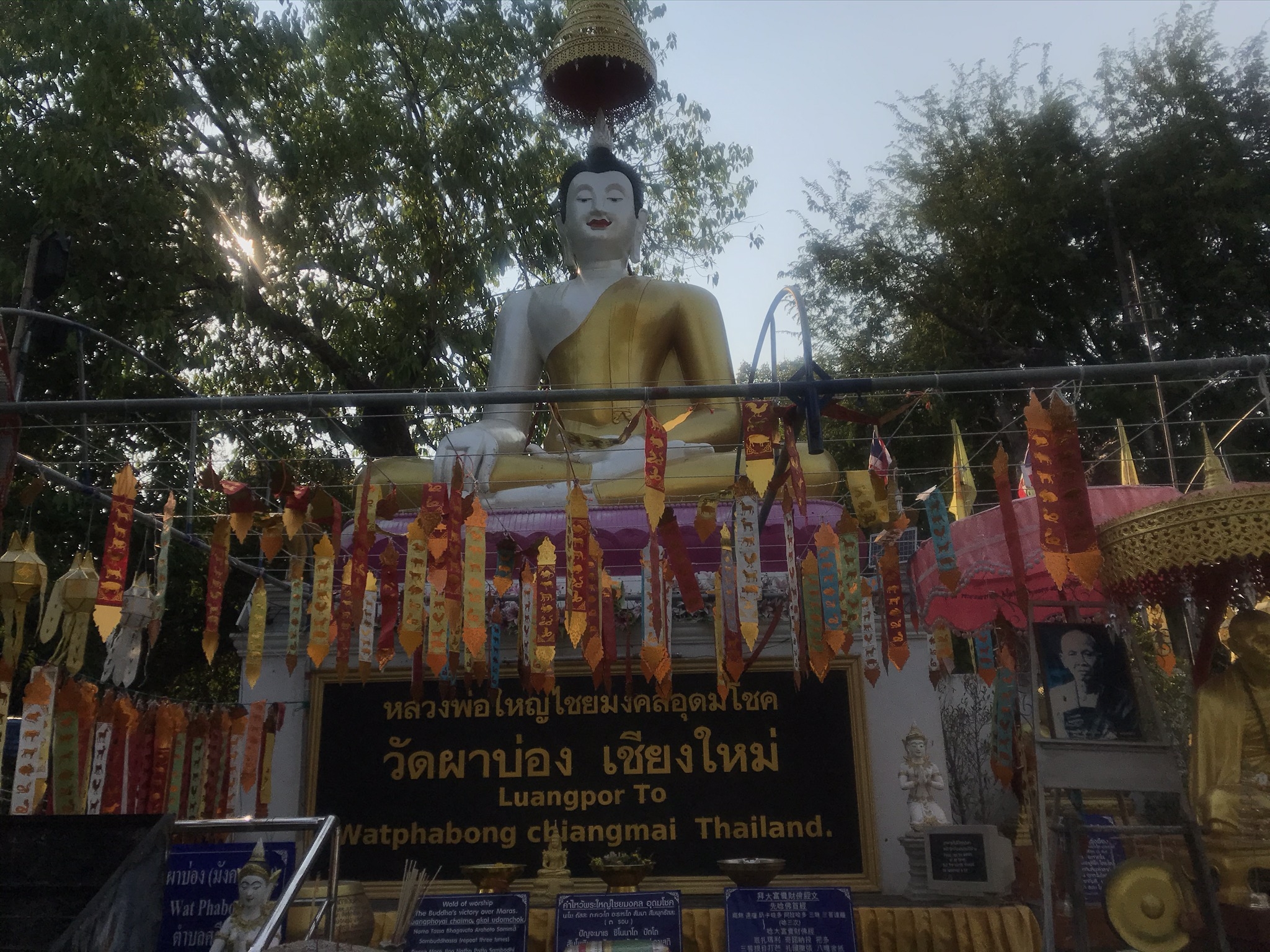
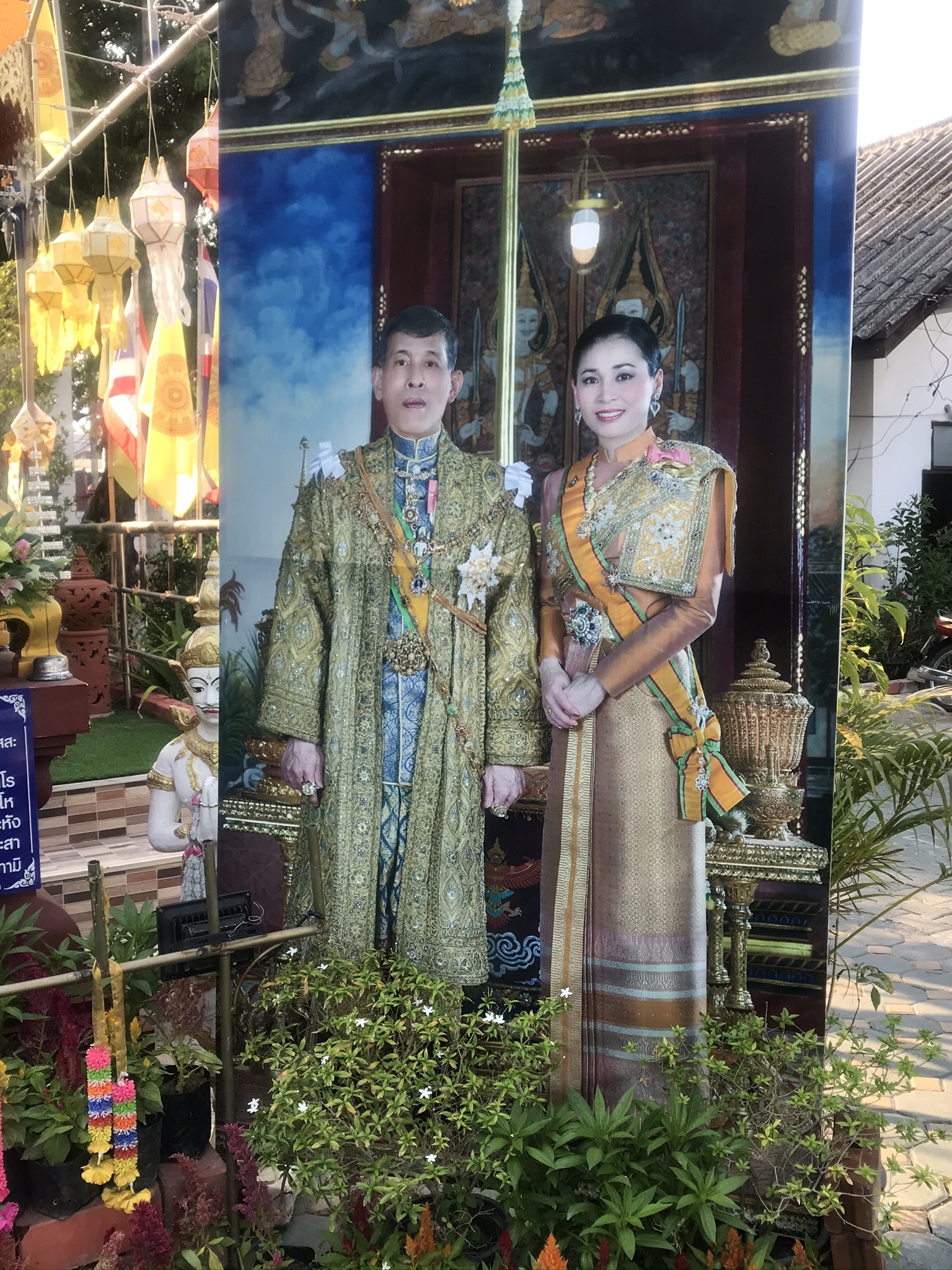
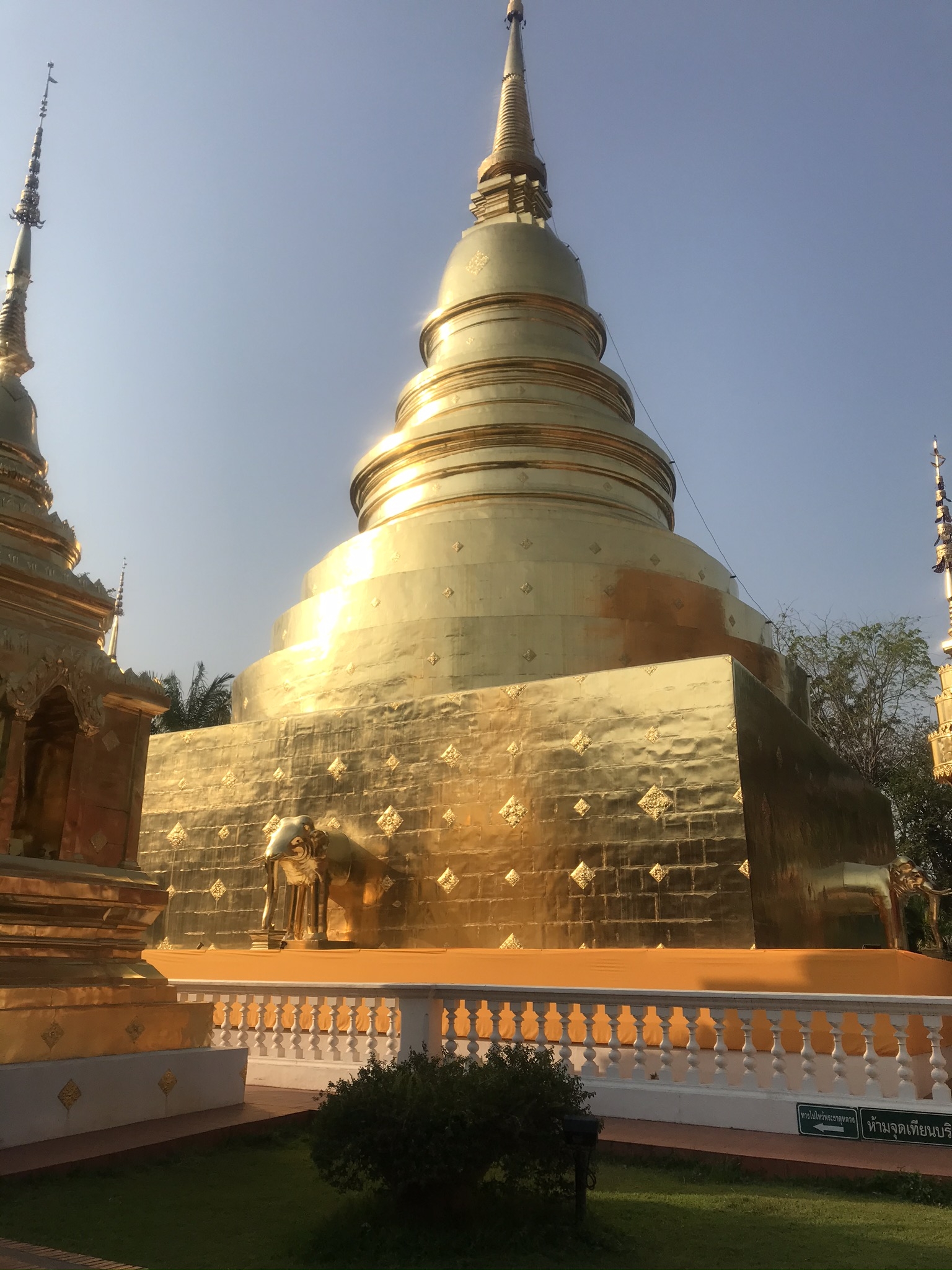
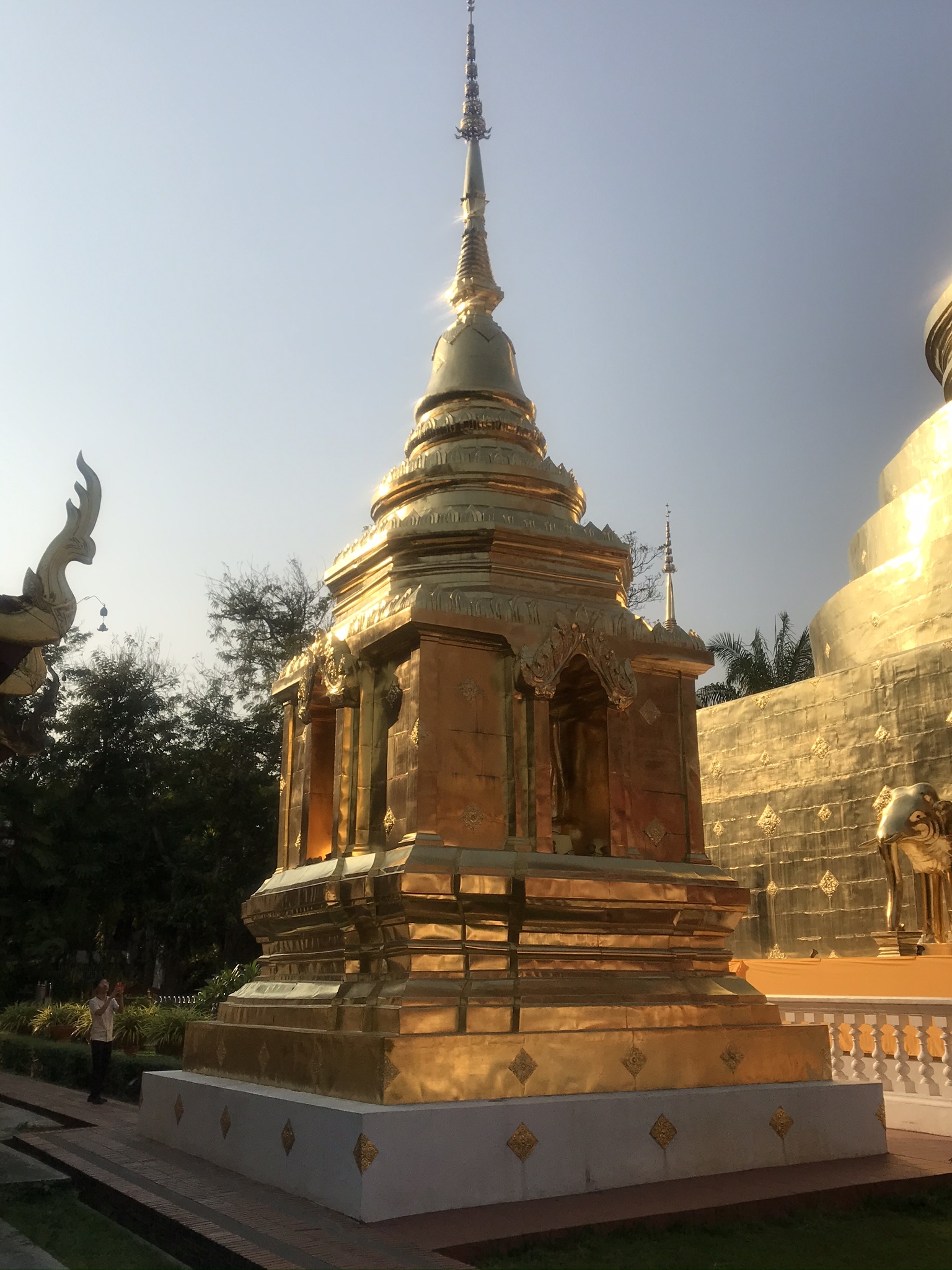
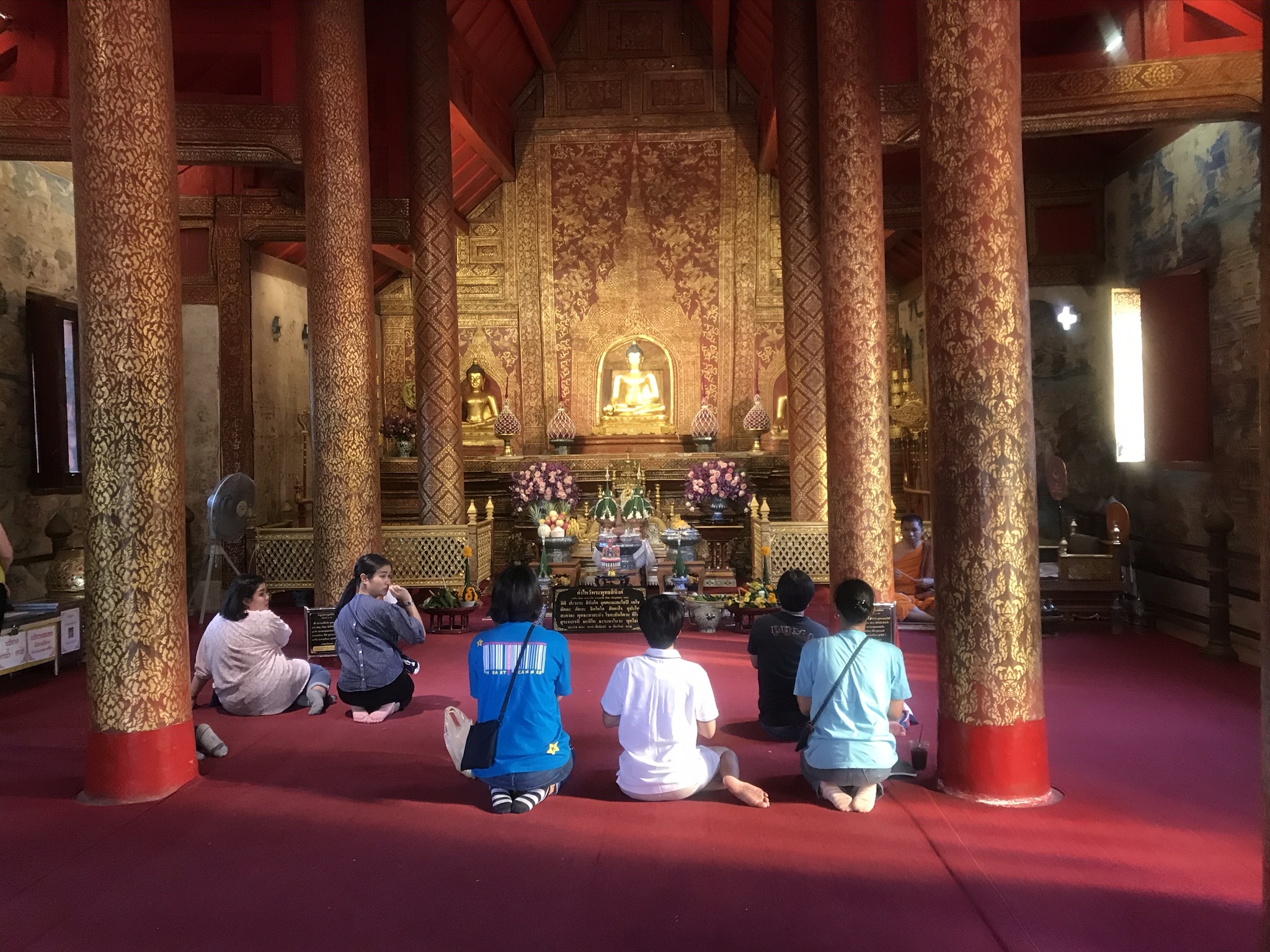
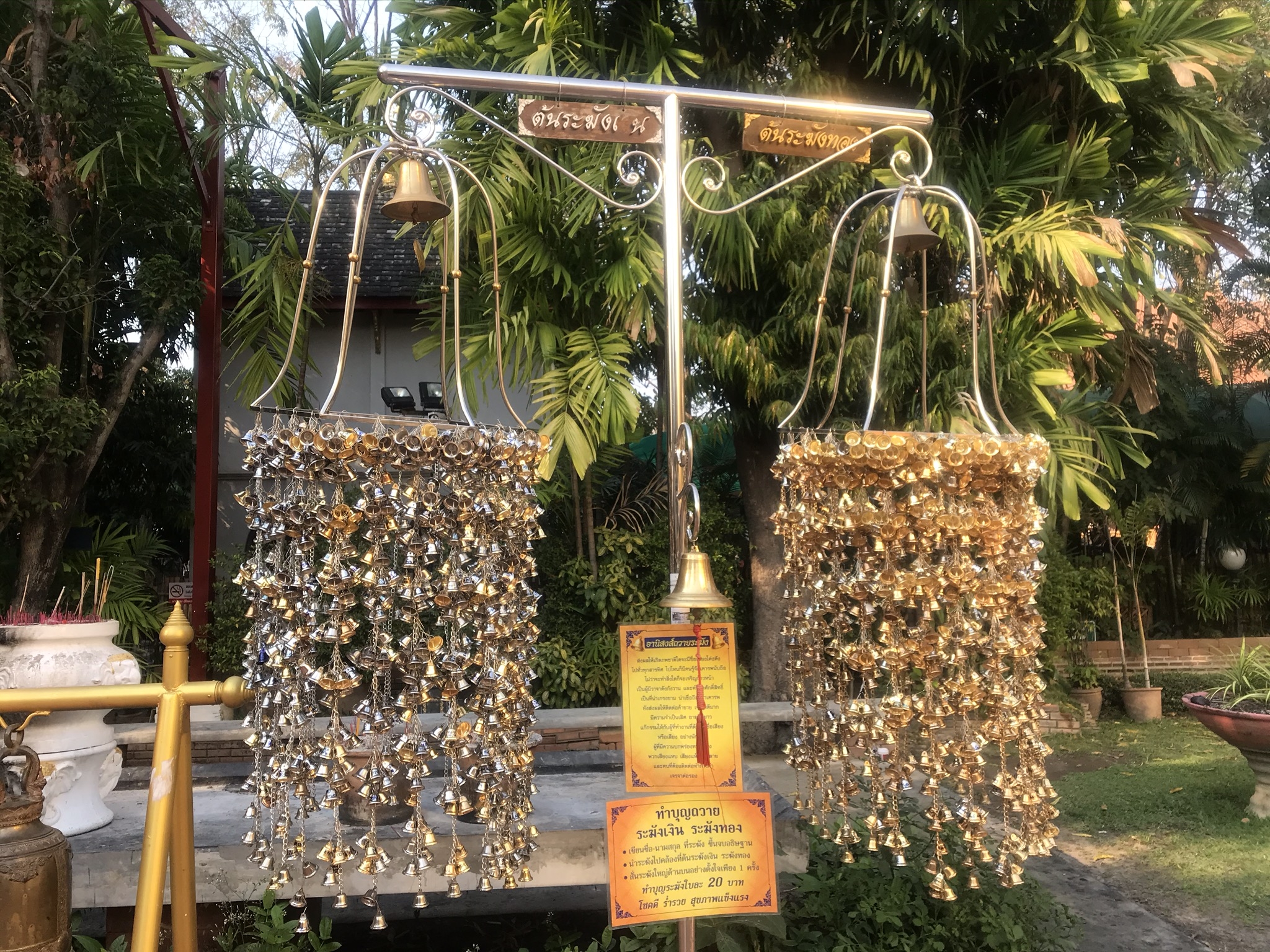
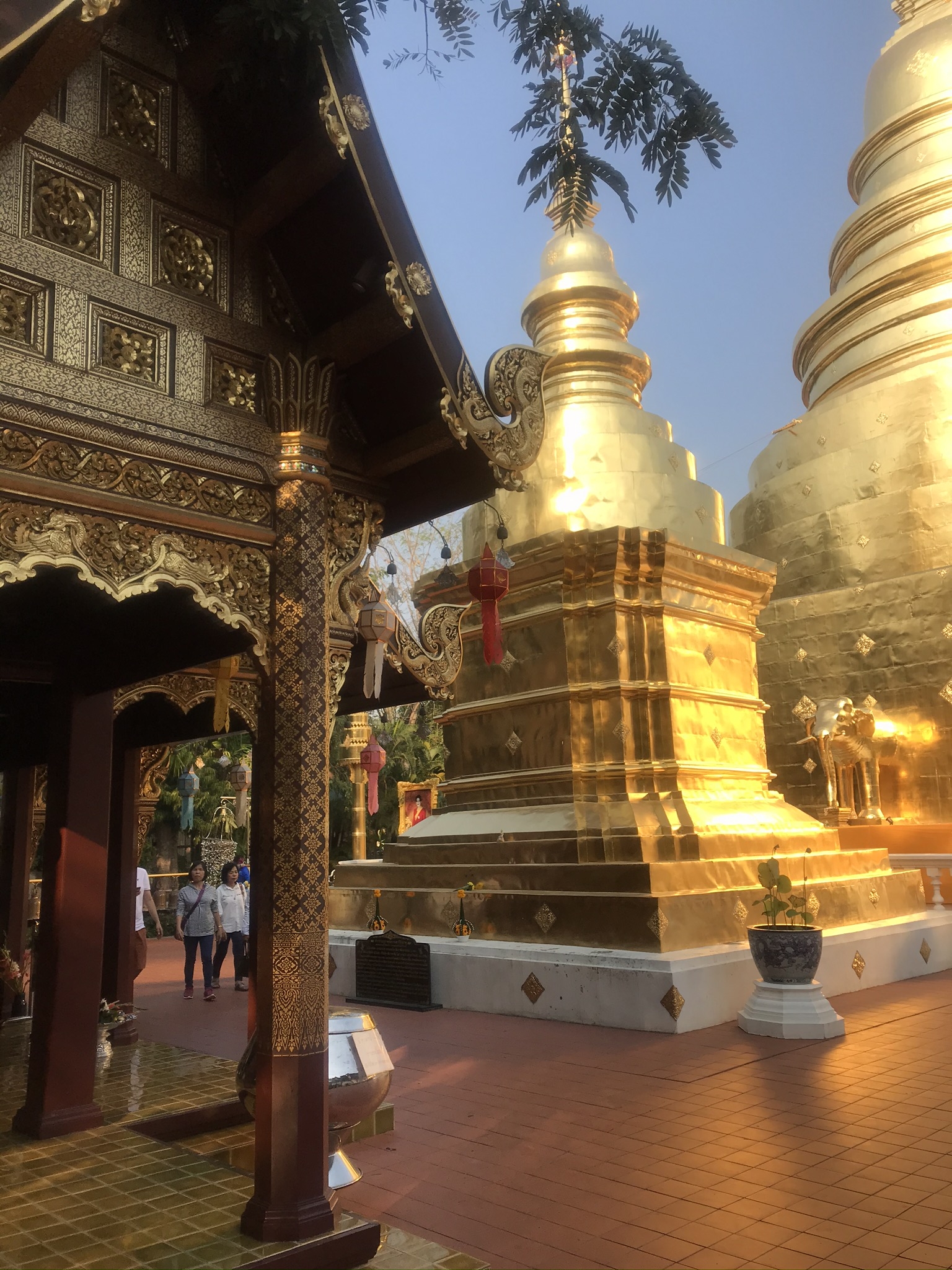
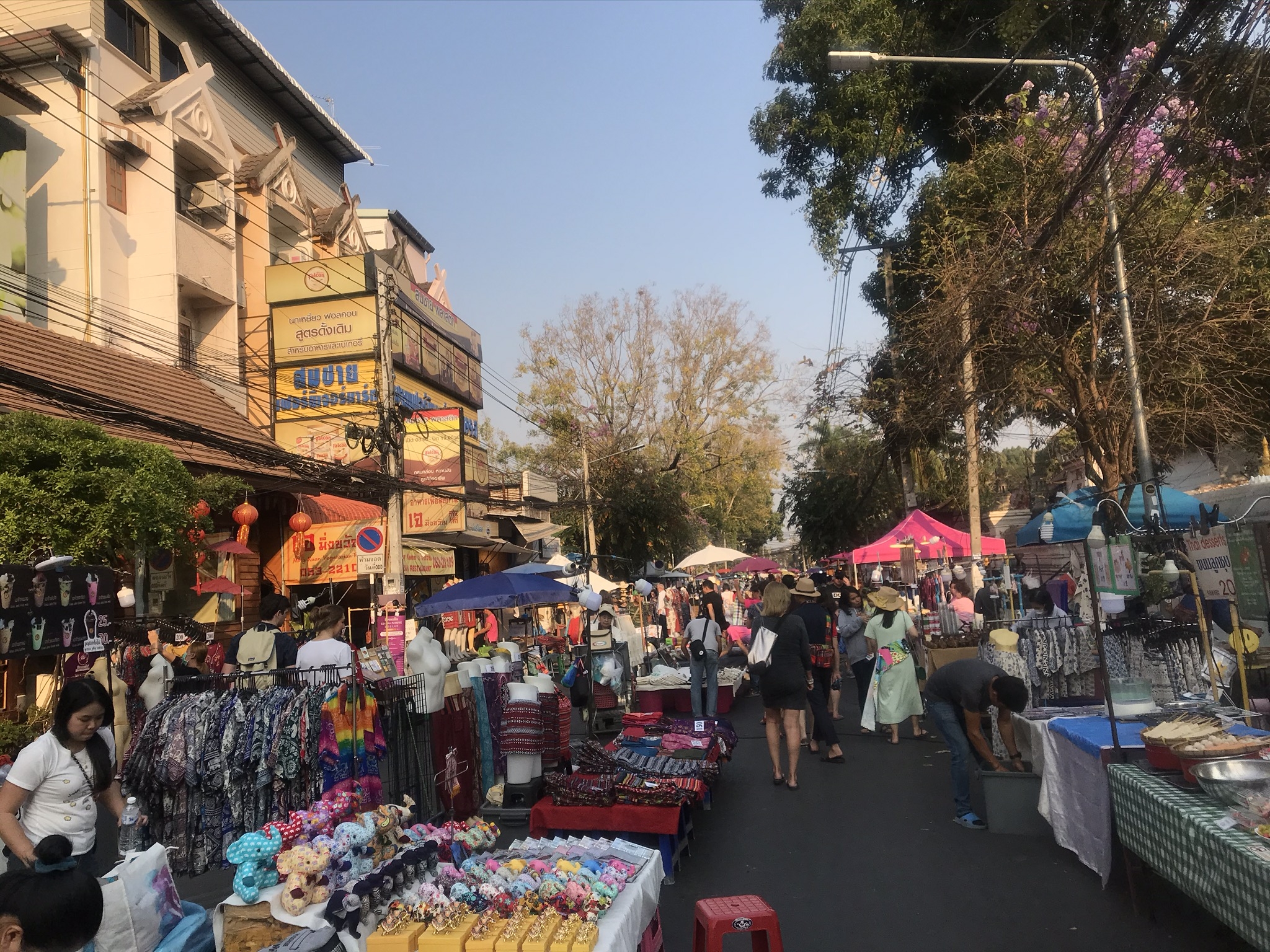
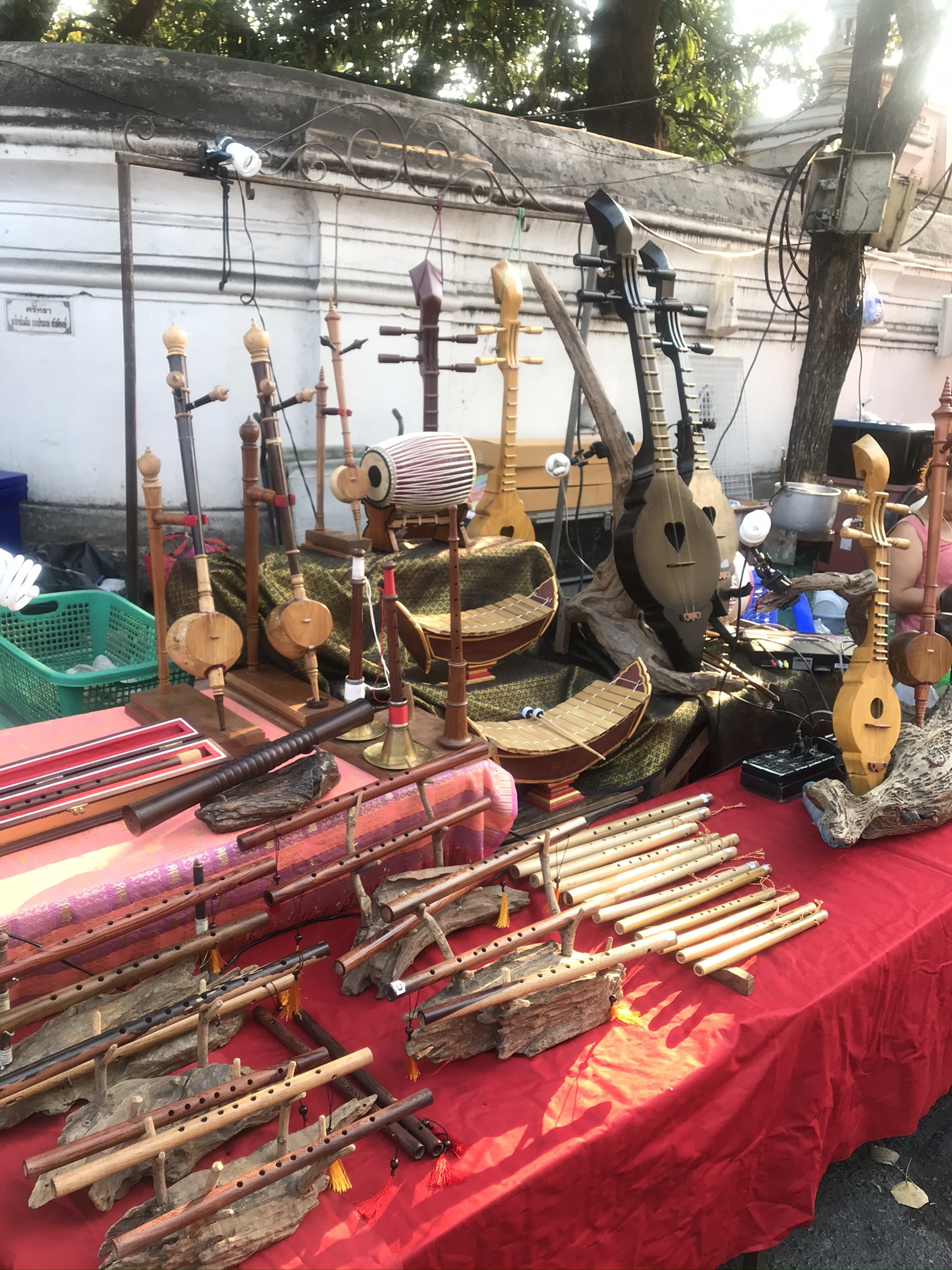
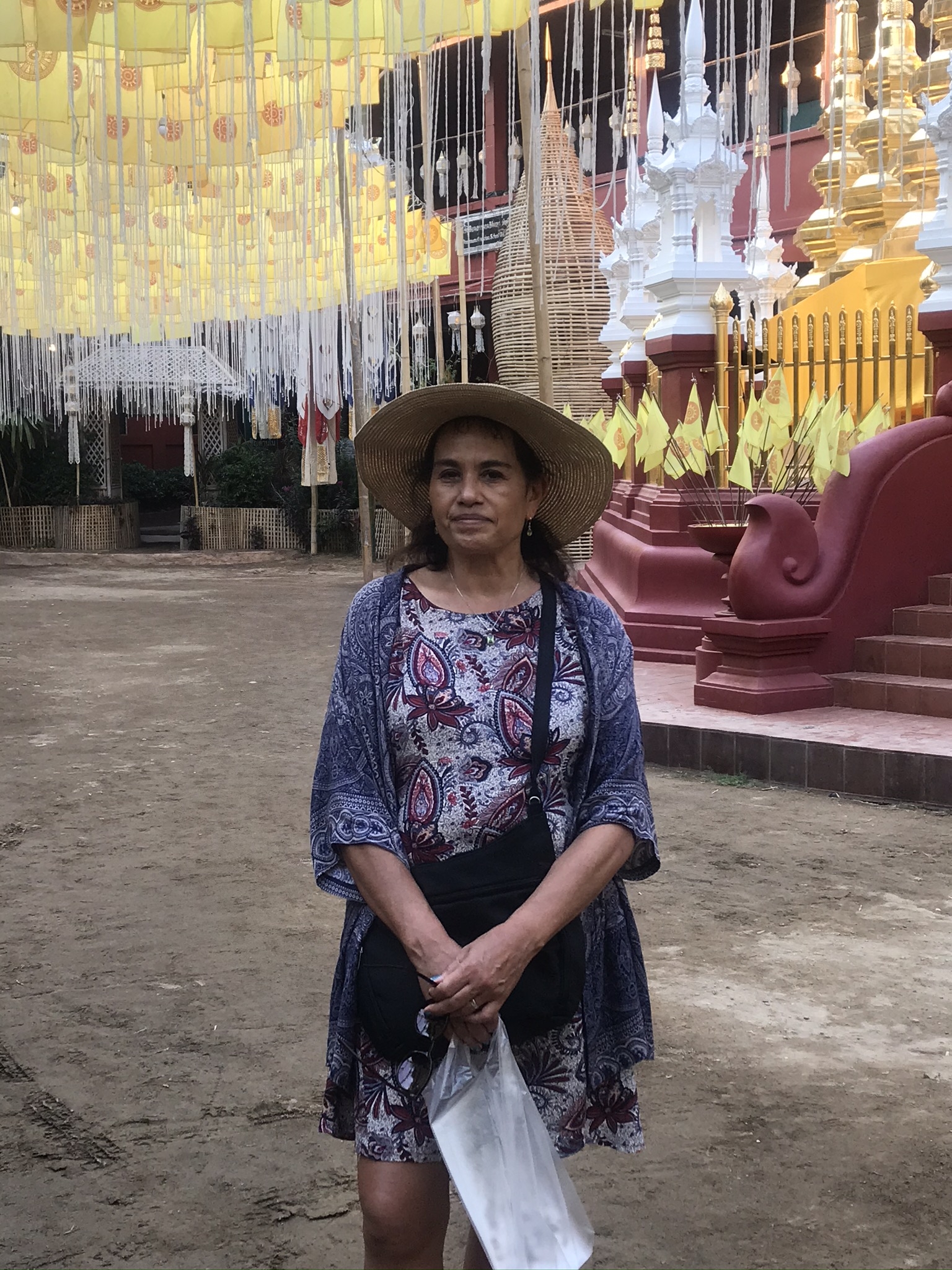
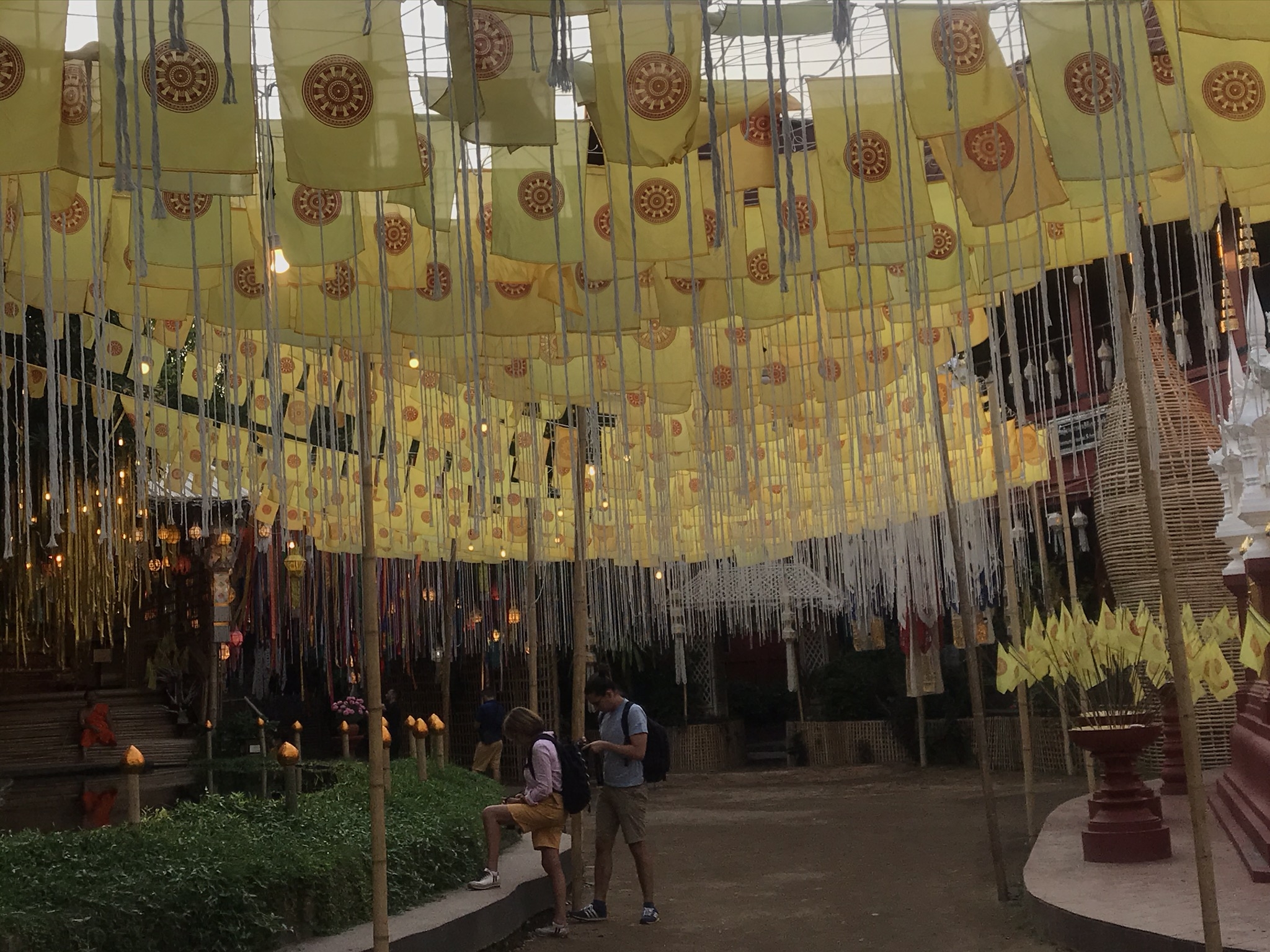
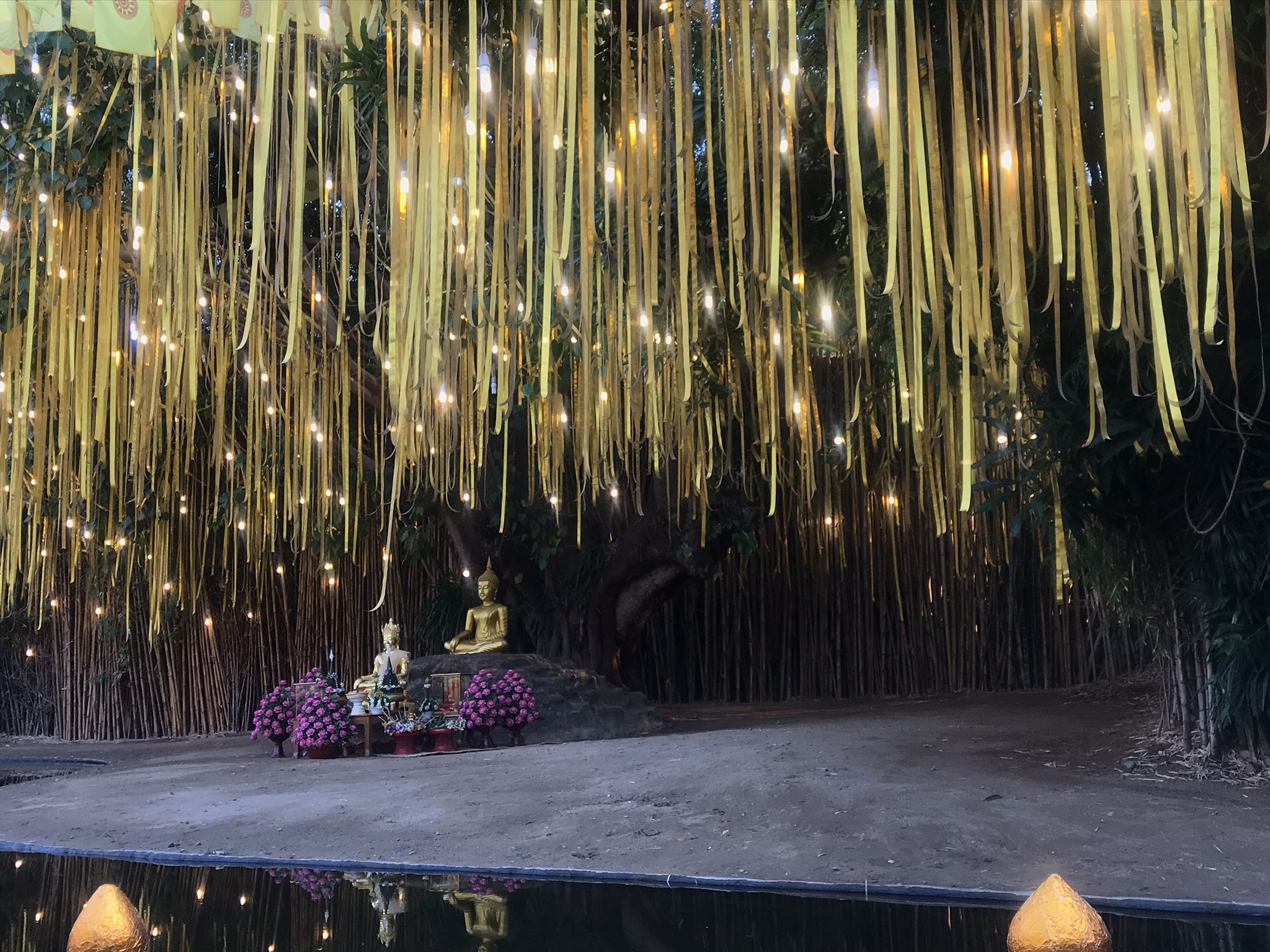
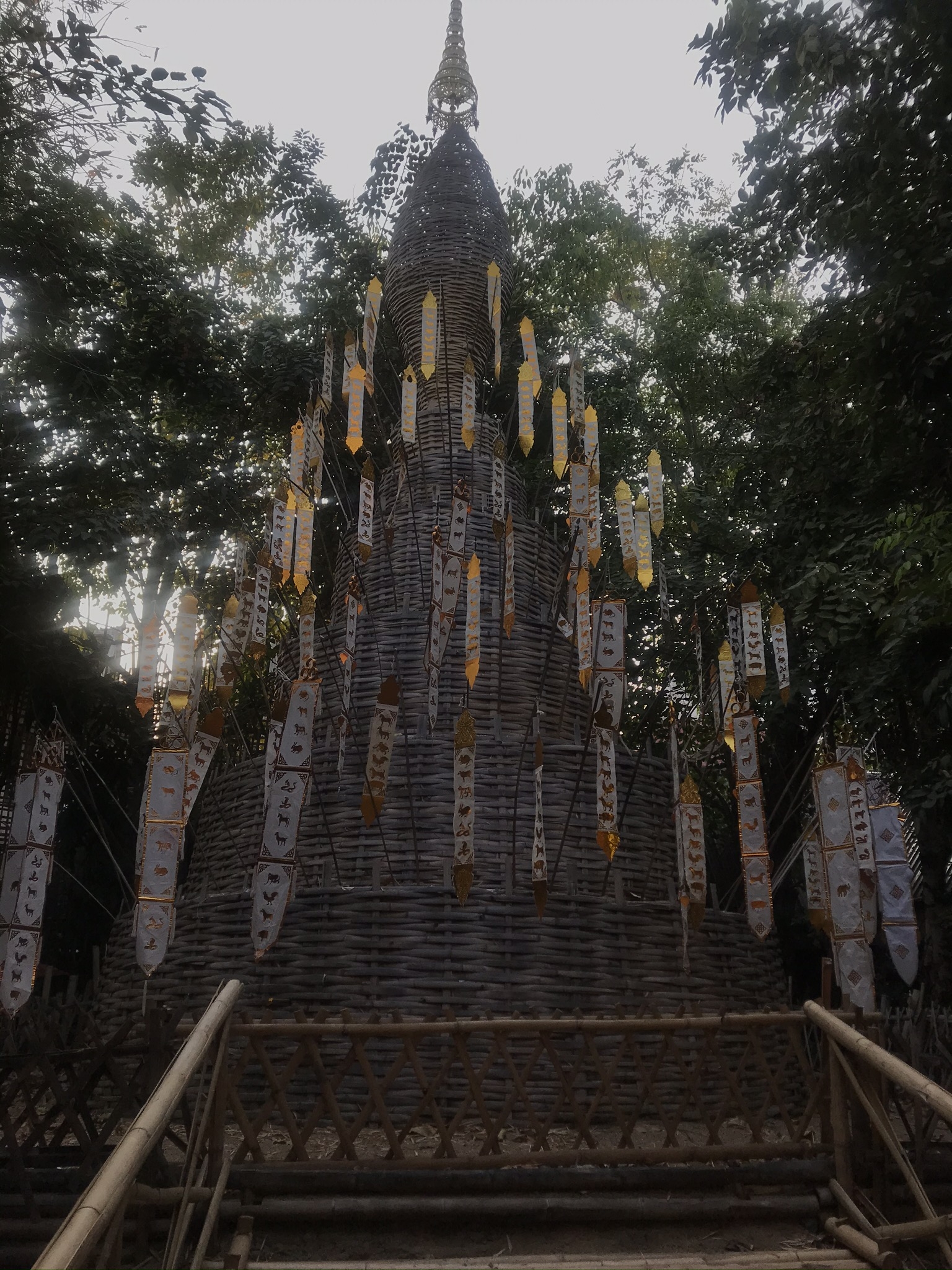
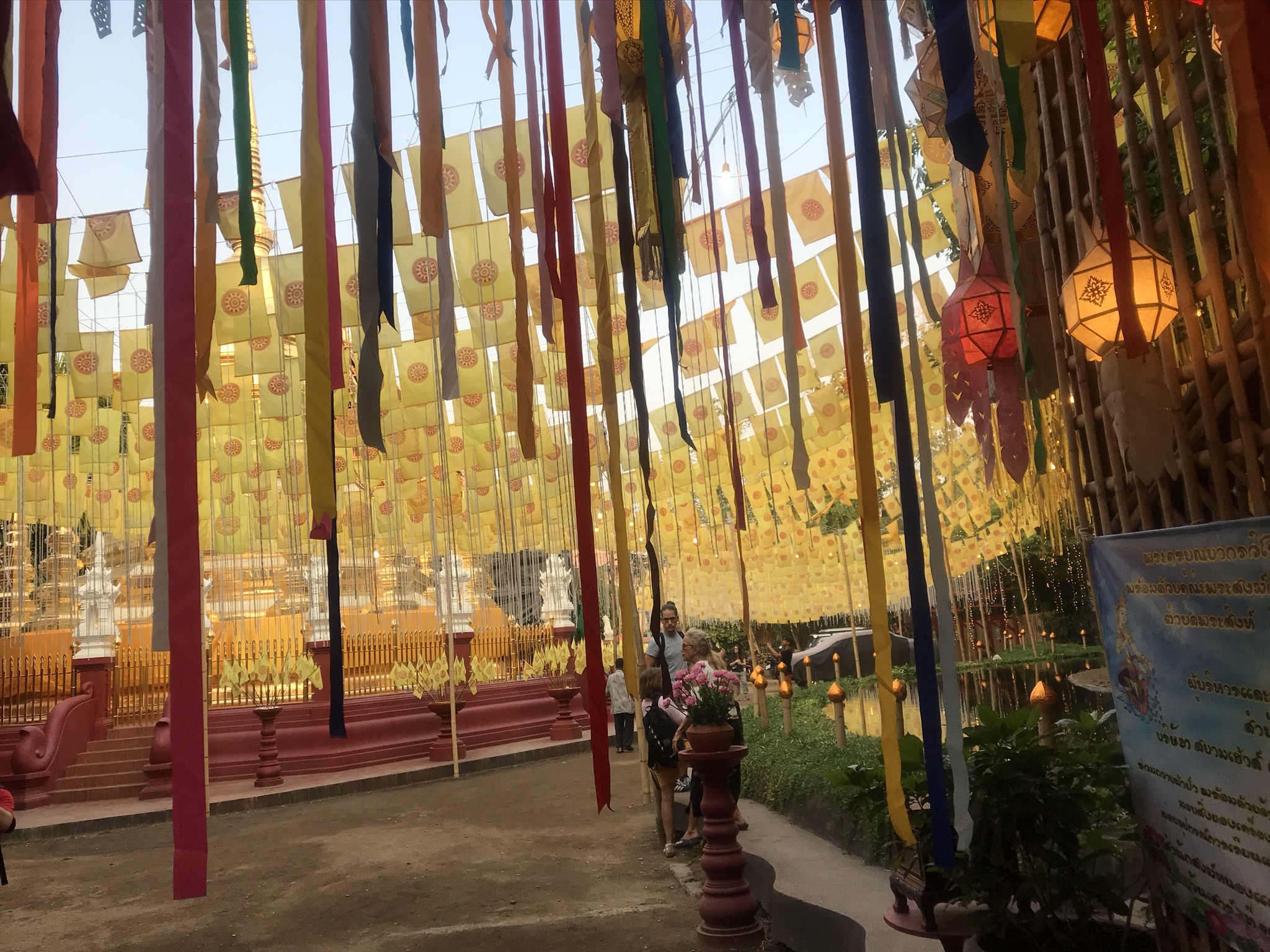
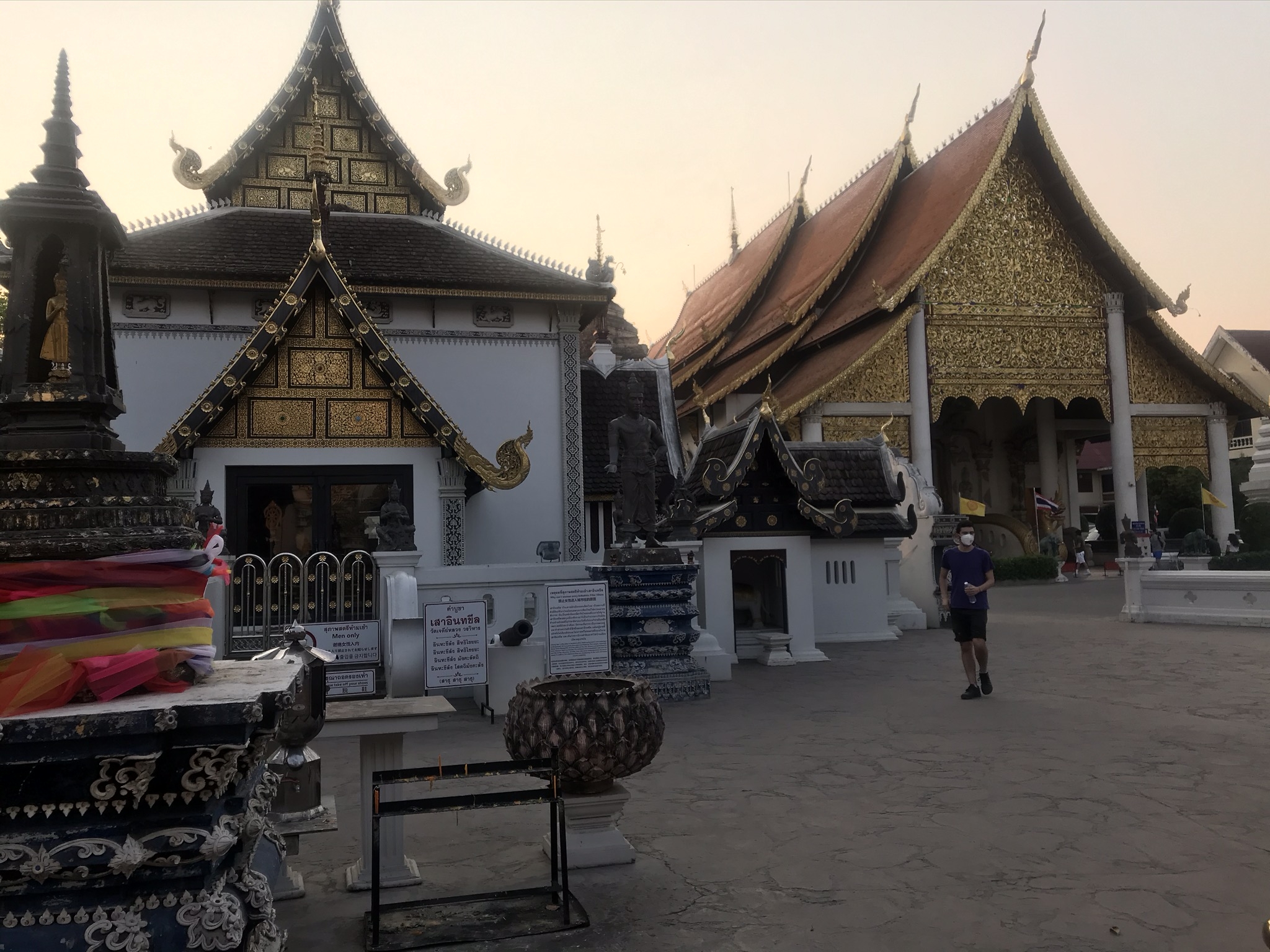
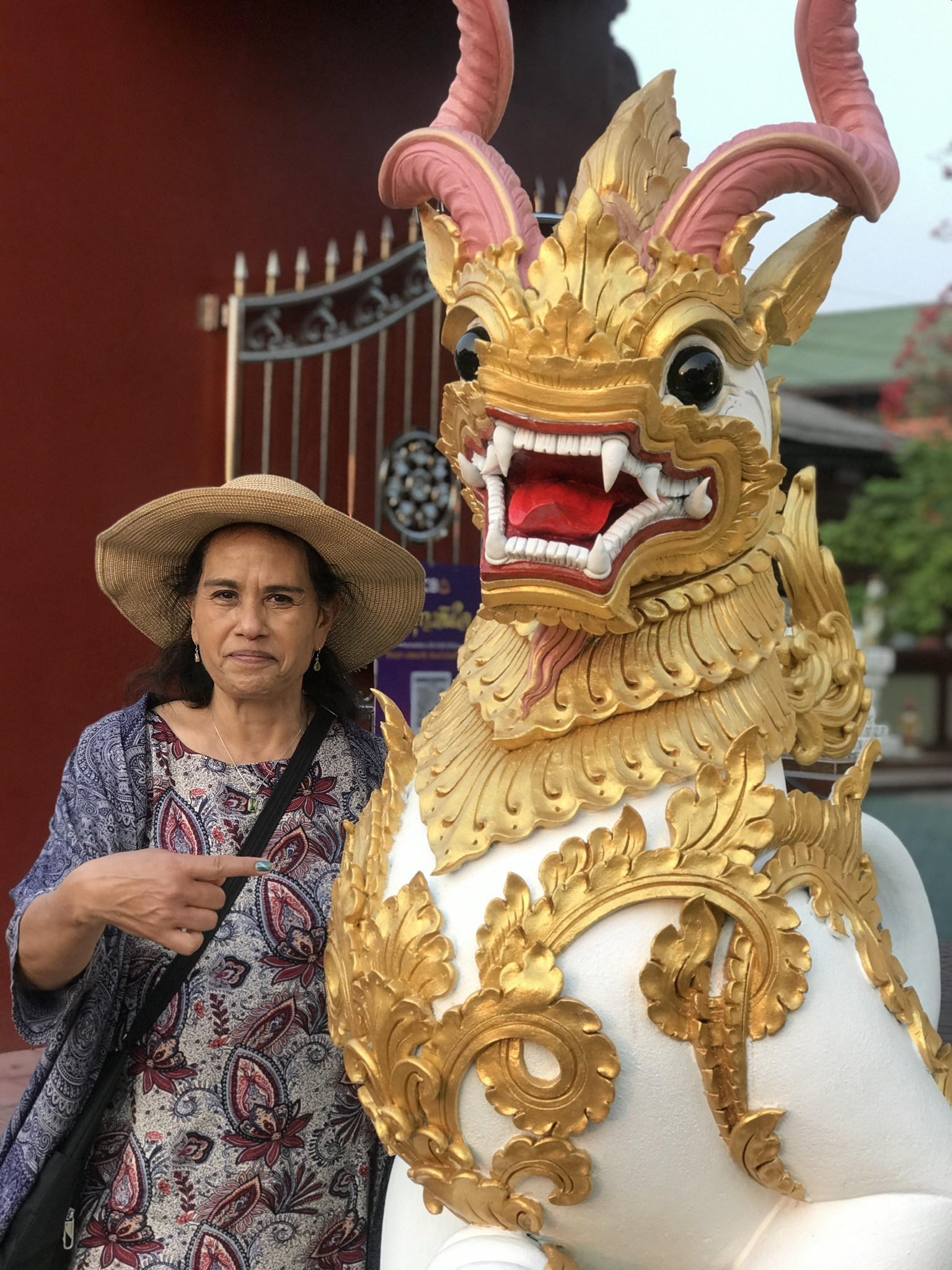
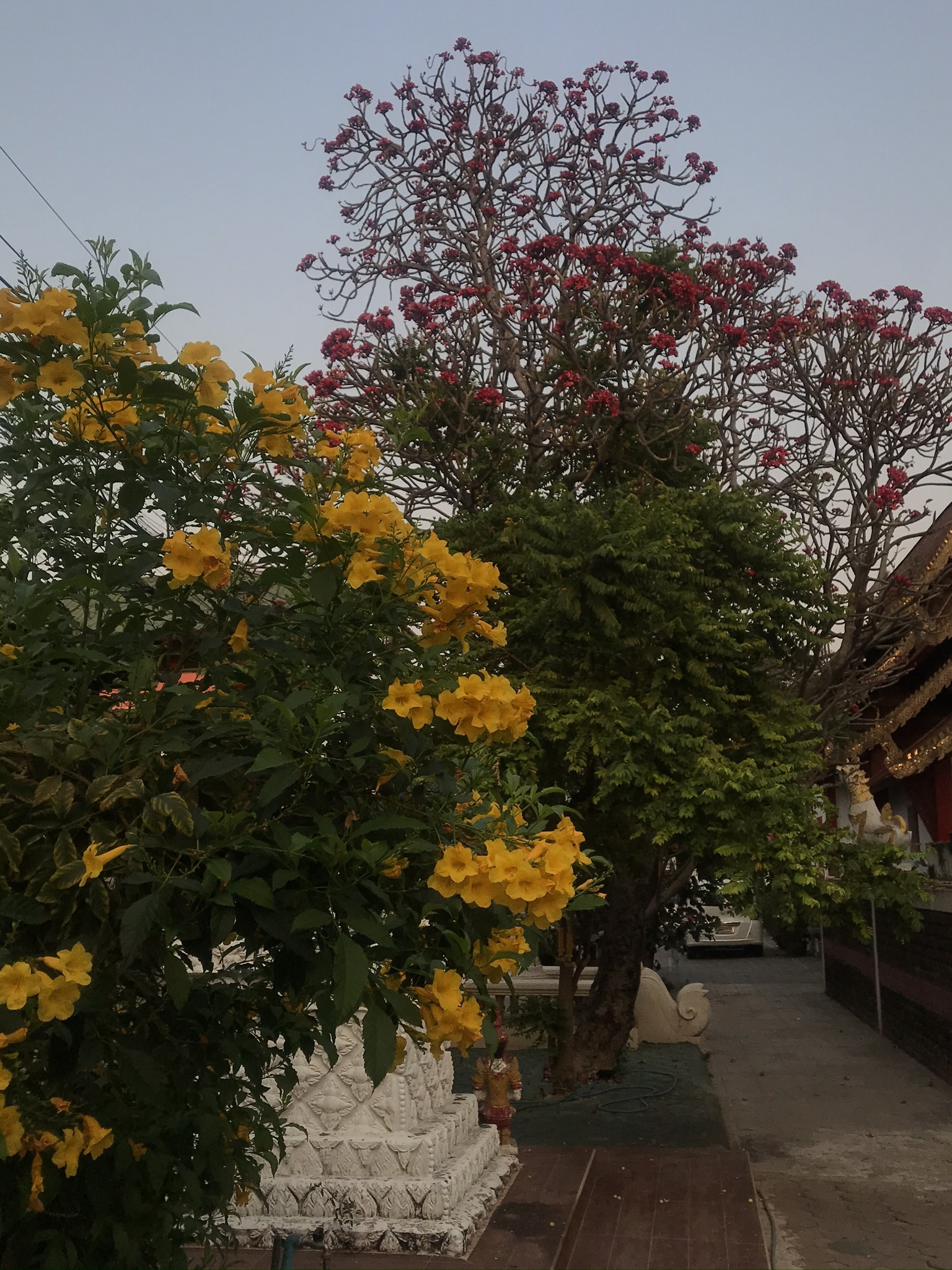
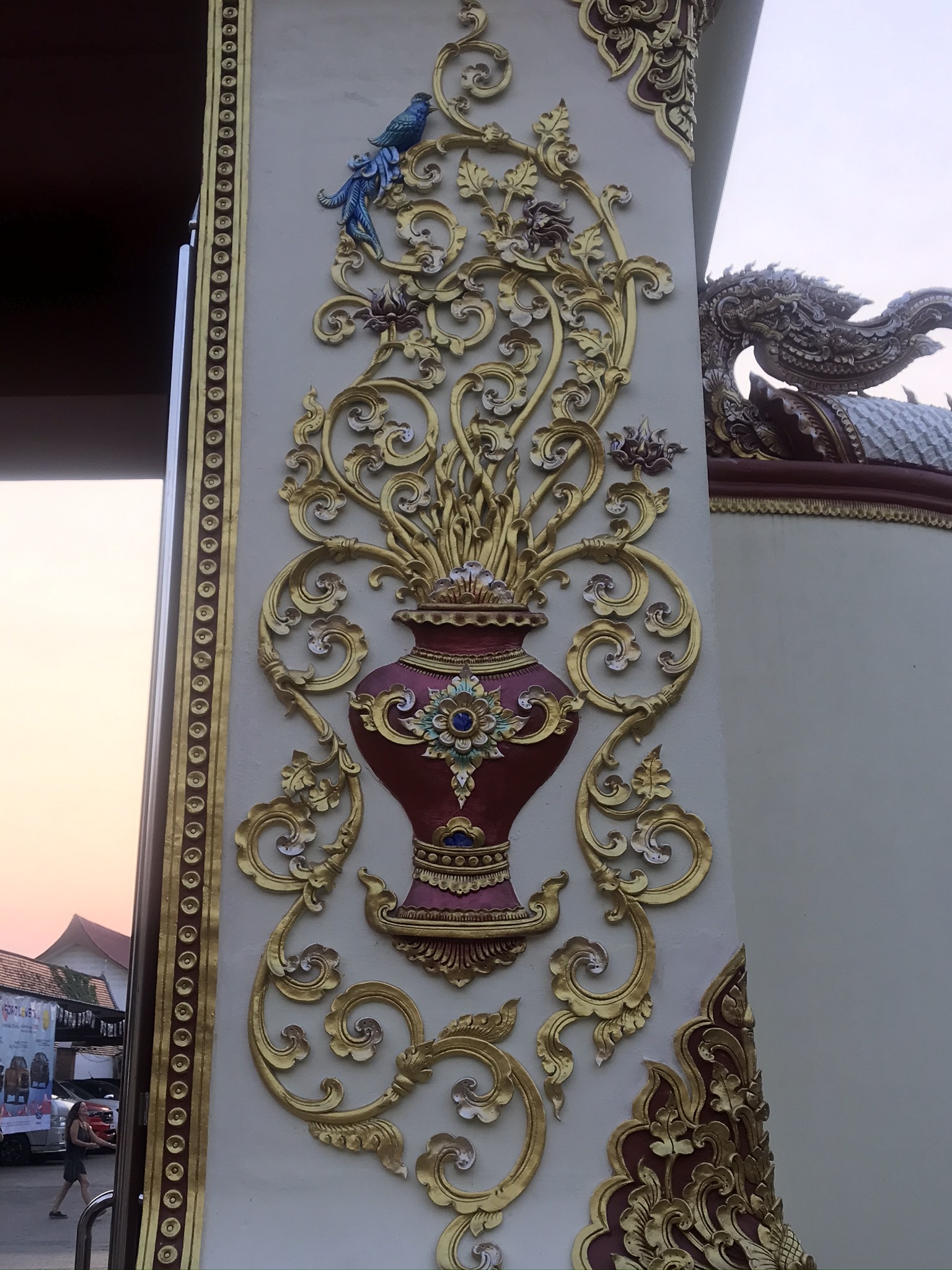
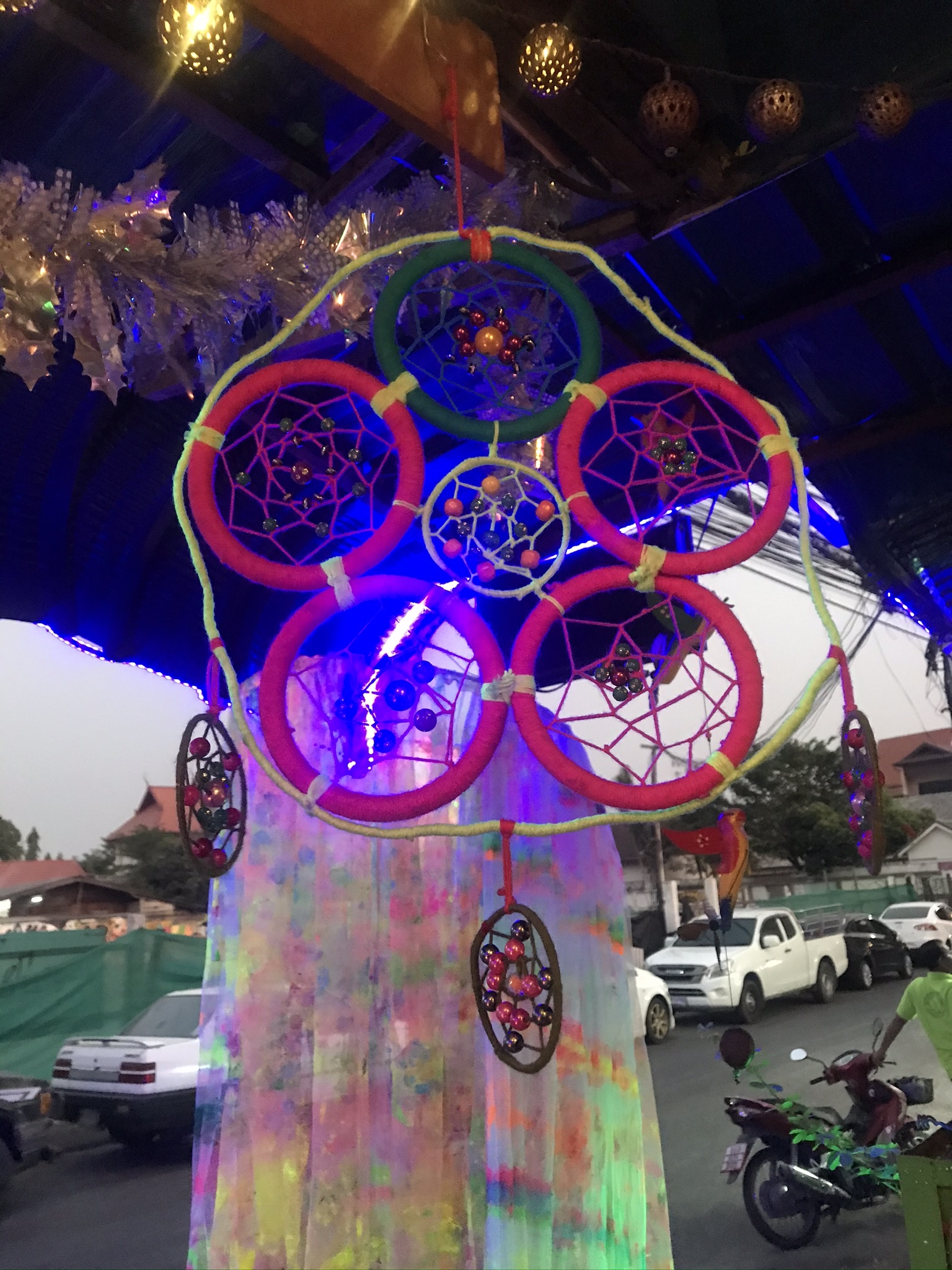
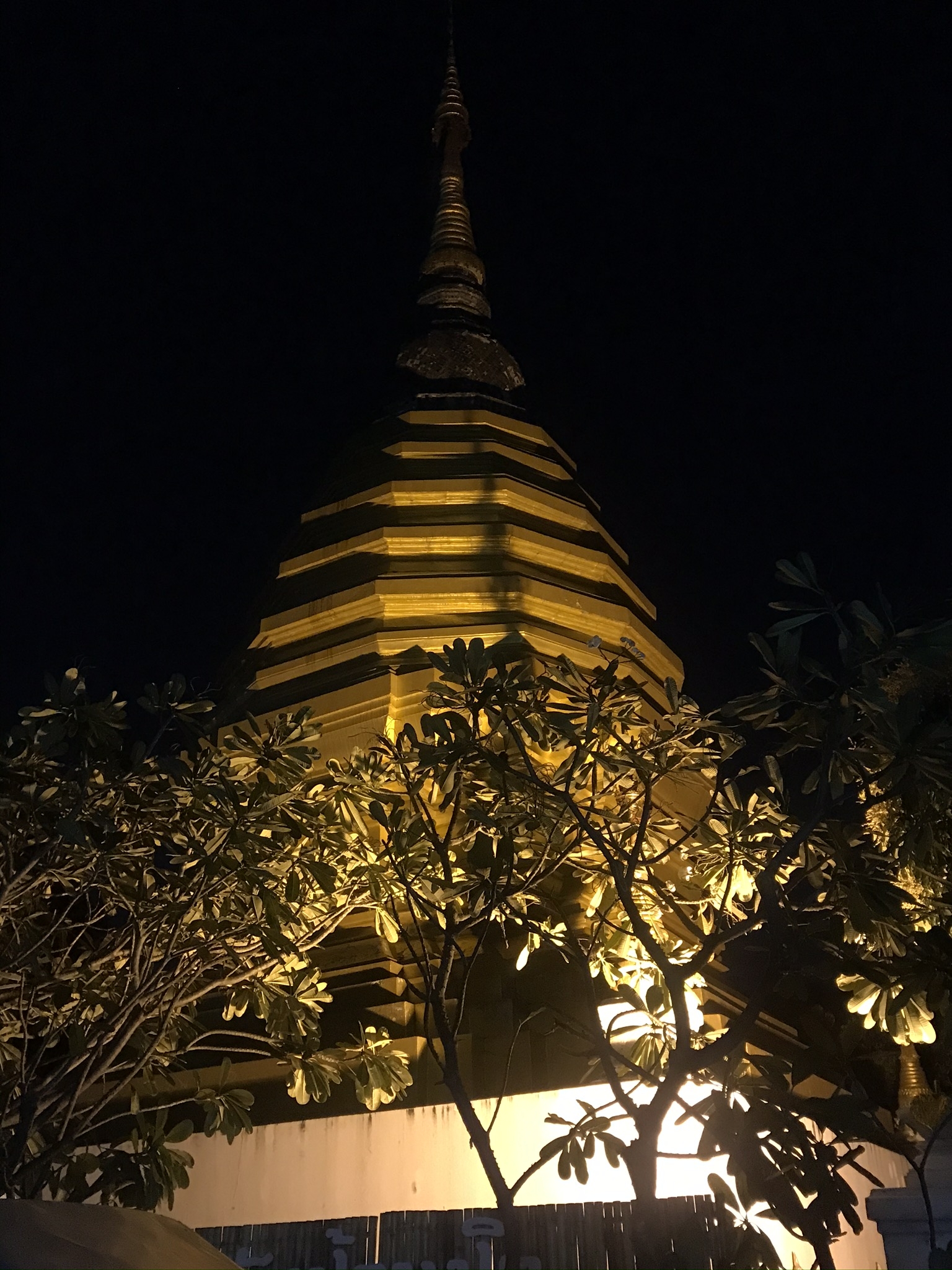
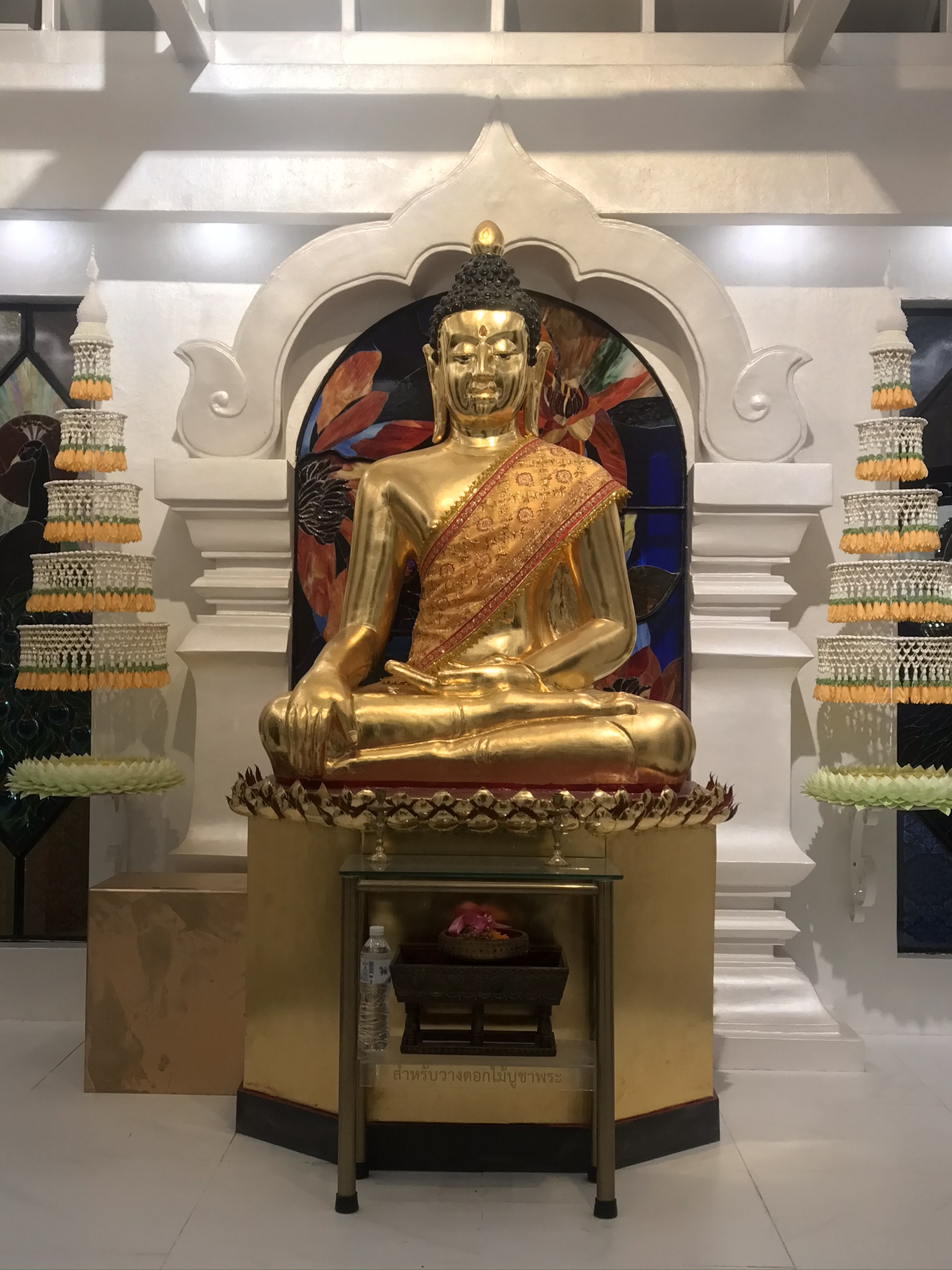
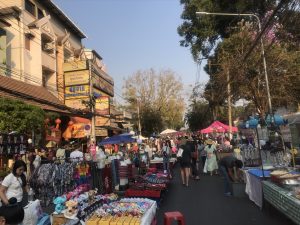 Its now Sunday so we can combine some temple watching with experiencing Chiang Mai’s famous “Sunday walking street” fair and both are recommended. It’s fun to visit the smaller, neighborhood temples as they’re not crowded, don’t charge admission for foreigners and, usually, have some particular style or theme that distinguishes them from the rest of the pack. The street fair has an enormous variety of street foods for sale and the working environment looks relatively clean and tidy. It’s hard to get the most out of it though as you would end up eating all day, every day. Will have to come back and investigate more thoroughly in future. While on this subject, neither Abby or I had any significant stomach issues while in either Vietnam or Thailand, and we ate street food often. We did stay away from meat so that may have been a factor or, perhaps. our corona-virus hand washing and use of sanitizer helped.
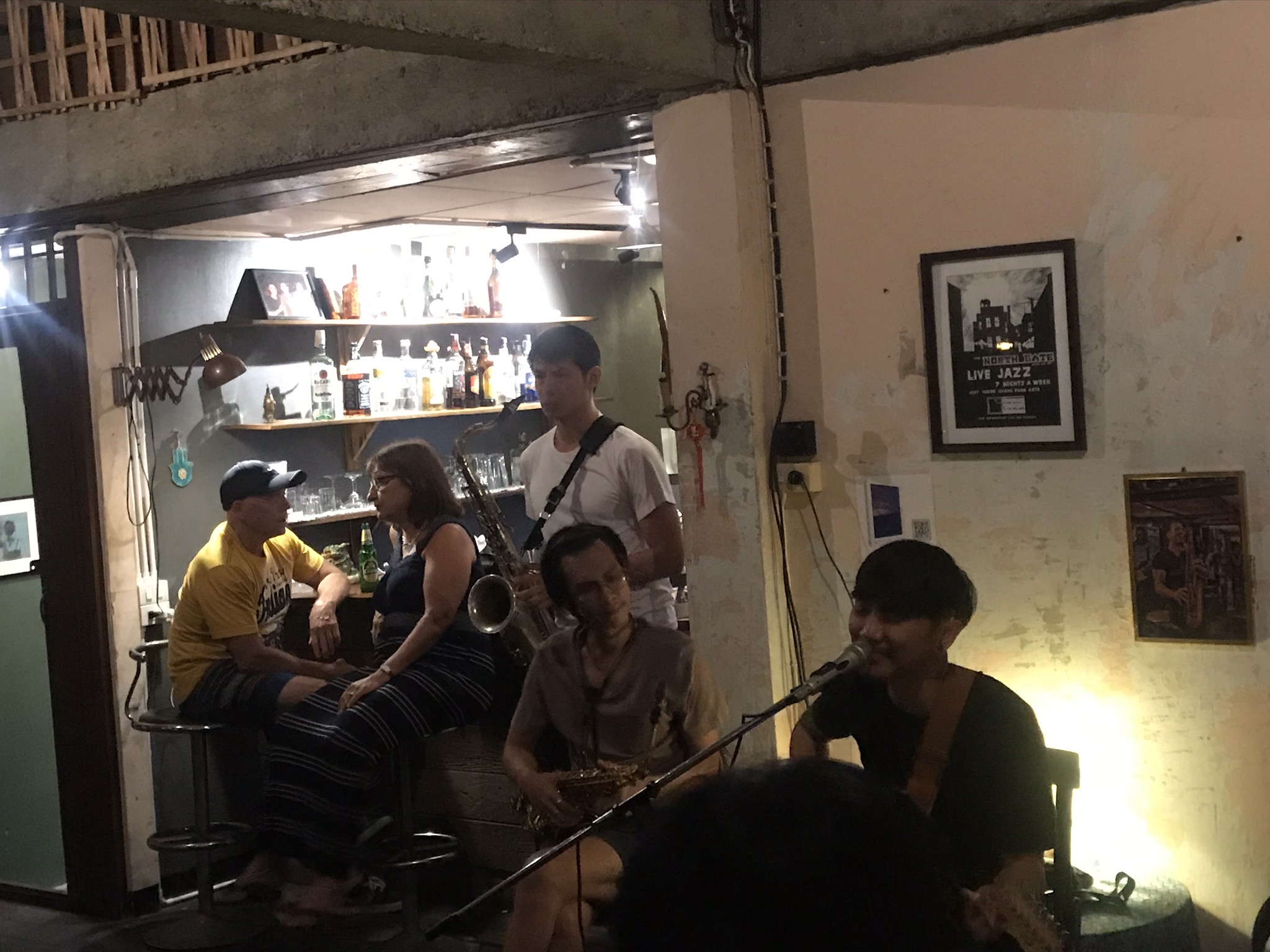
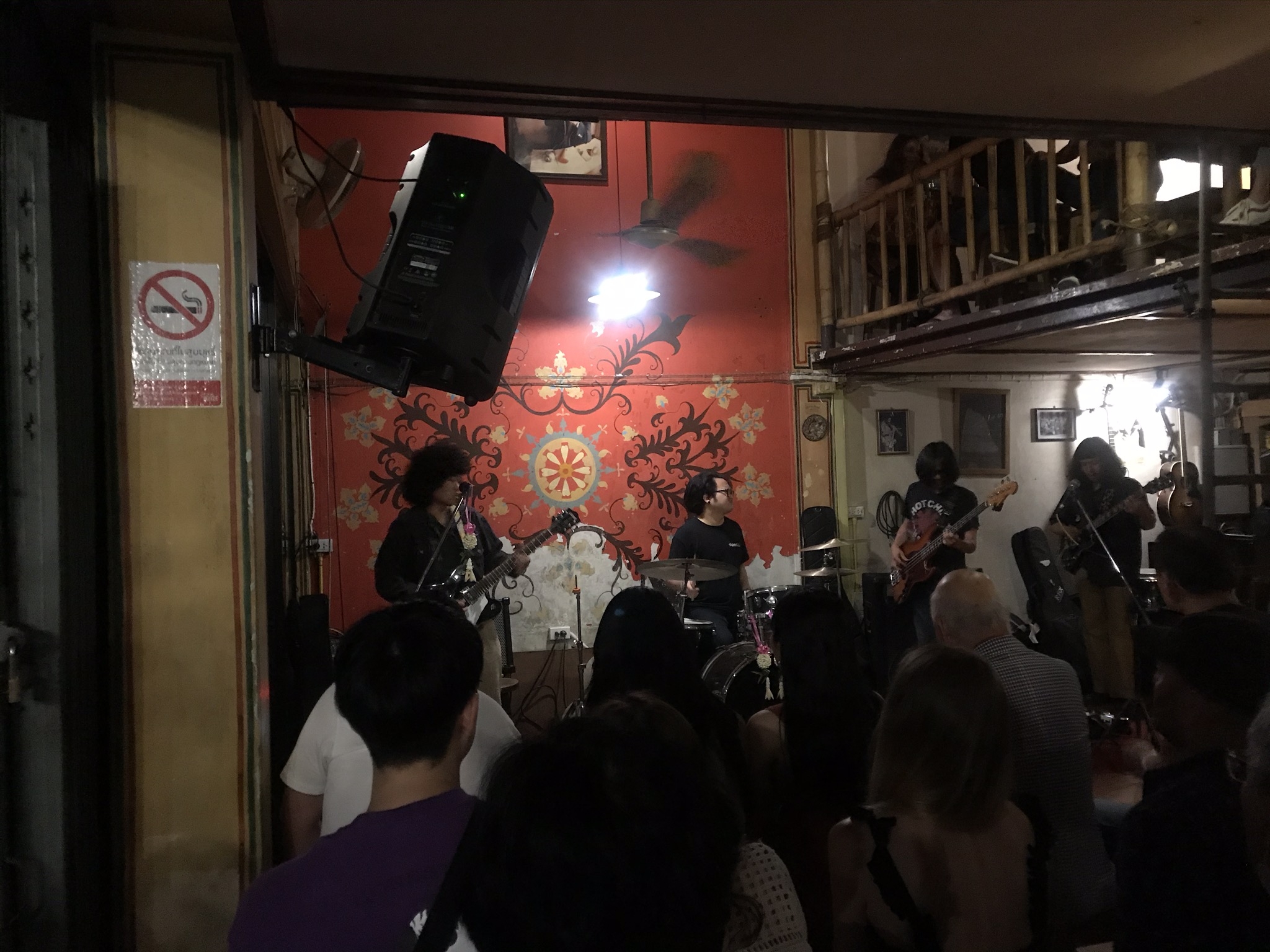
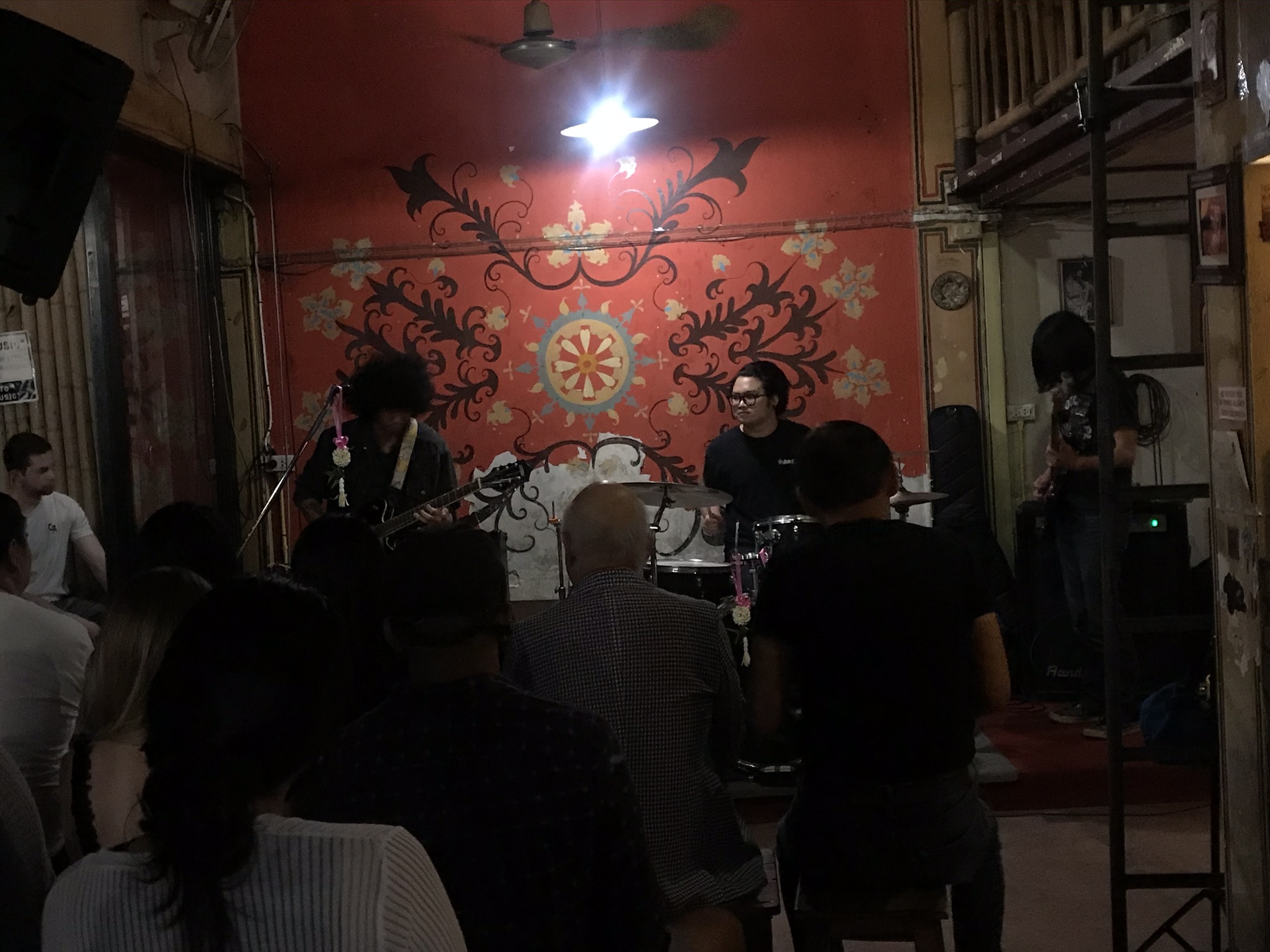
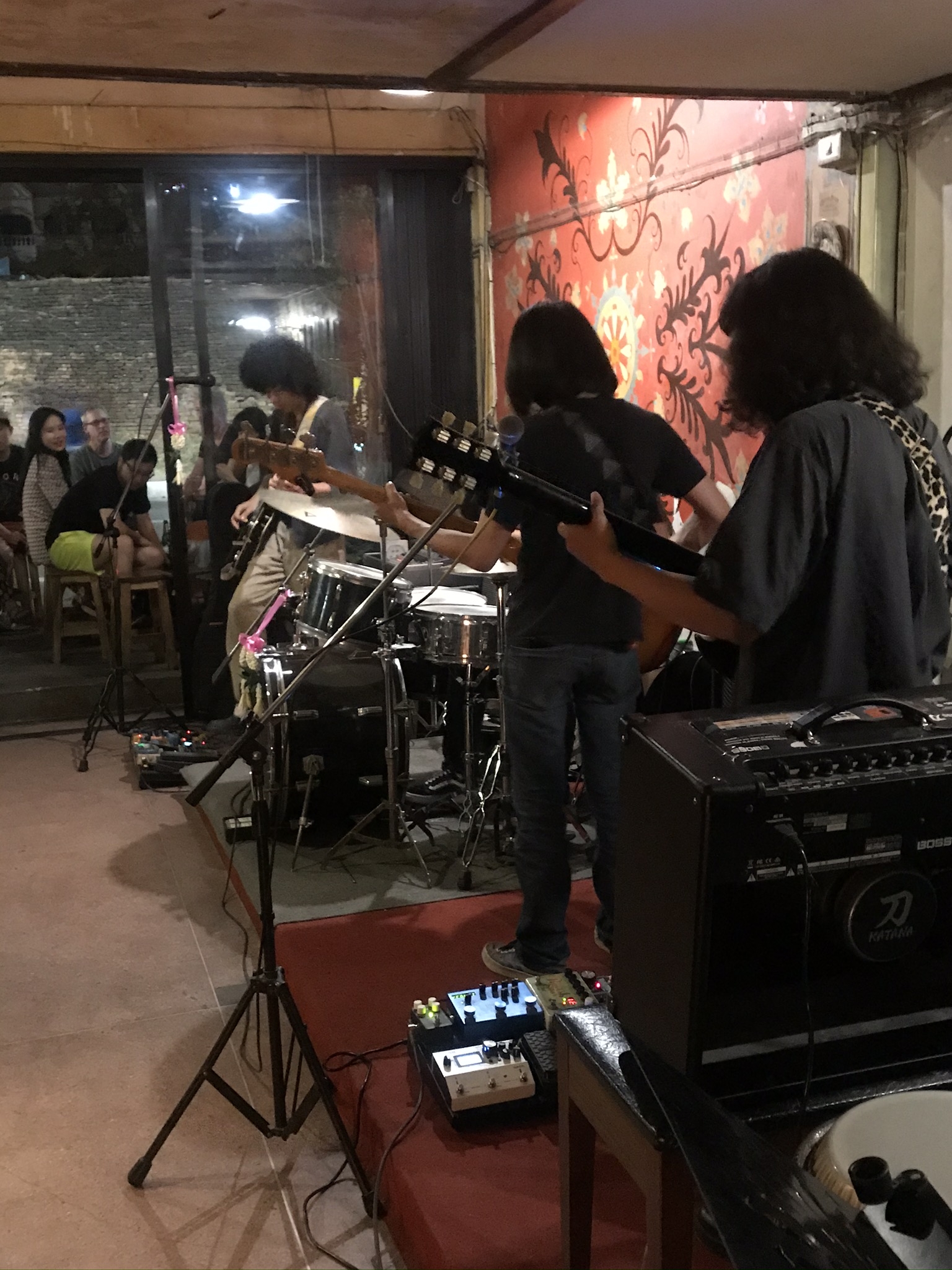
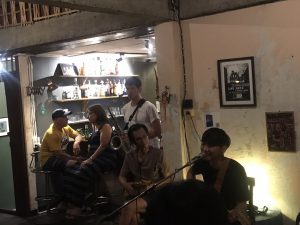 In the evening, The North Gate Jazz Co-op was our destination. A bohemian spot with a couple of performances areas, first up is a vaguely jazzy trio riffing on pop standards then, downstairs, some full-on local rock bands with a good mix of Thais and, ahem, hip tourists. The folks up North, the Lanna people, definitely see themselves as separate from what’s happening in Bangkok and down South and one of the bands finishes up their set with a rousing local autonomy anthem, with key phrases helpfully translated into English.
One downside in Chiang Mai is the poor air quality, primarily from December to April which we were told was due to crop field burning but, according to the Bangkok Post is, actually, caused by clear-cutting forests in order to plant corn. Corn is not a staple of the SE Asian diet and most of this is being planted by corporations for industrial corn applications such as animal feed, corn syrup and bio-plastics. We can report that bad air is a reality in Thailand and, to be clear, Vietnam also. It might be different out on the beaches in the South but most of the country lies under a polluted haze for 3-4 months a year. Something to be aware of if you’re planning to synchronize your visit with the dry season. On the positive side, we didn’t need to worry about malaria, mosquitoes or leeches!
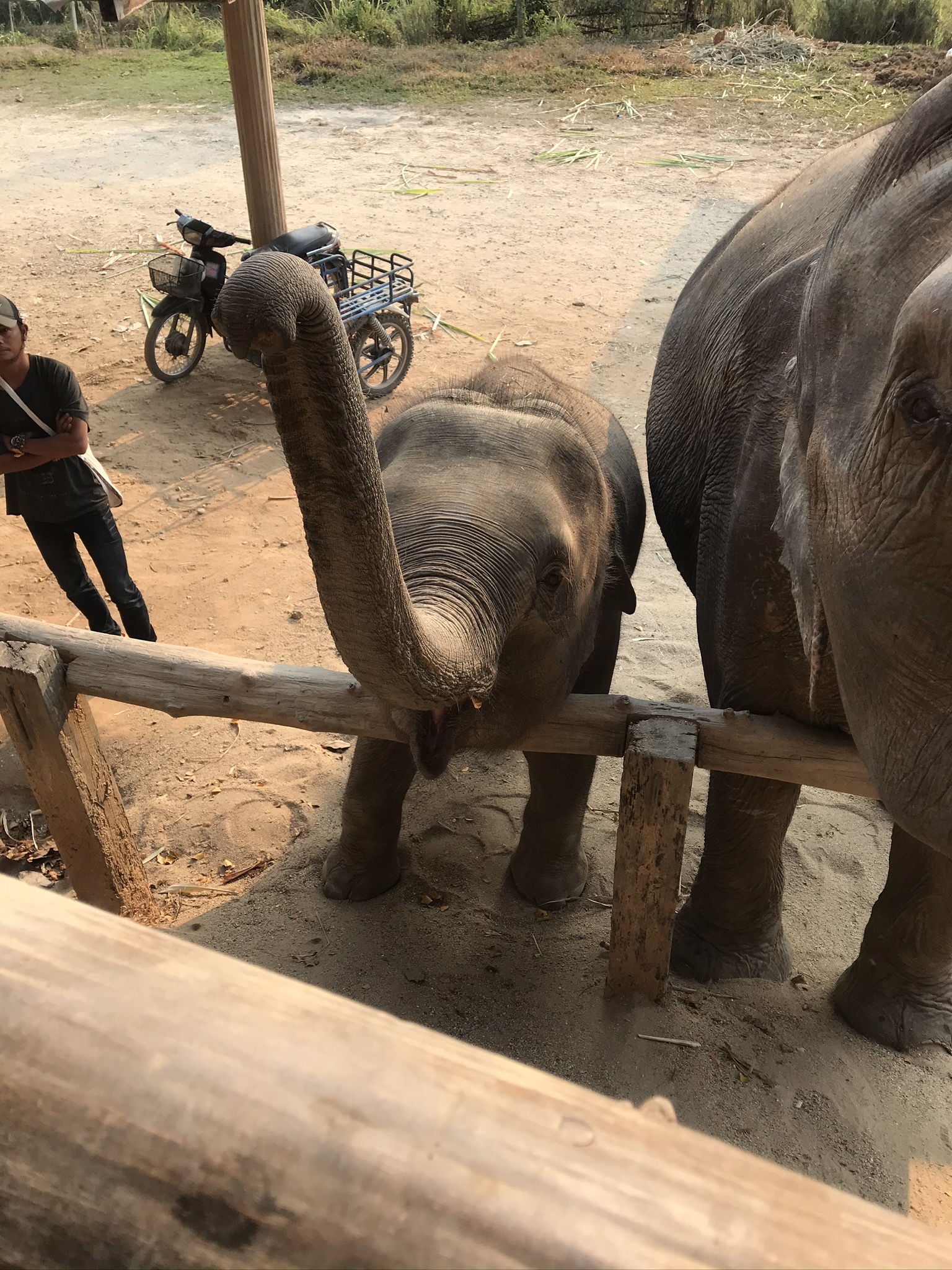
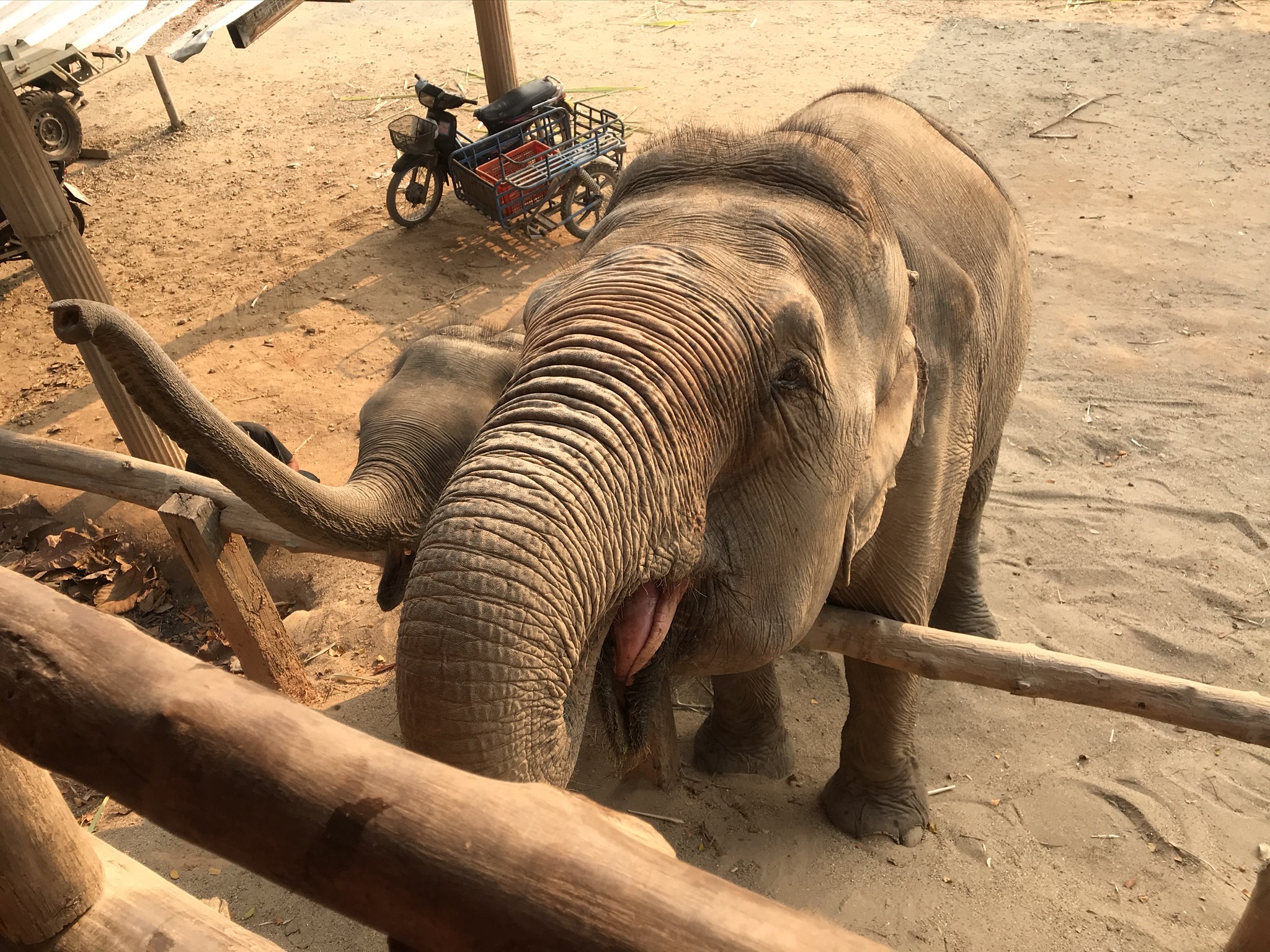
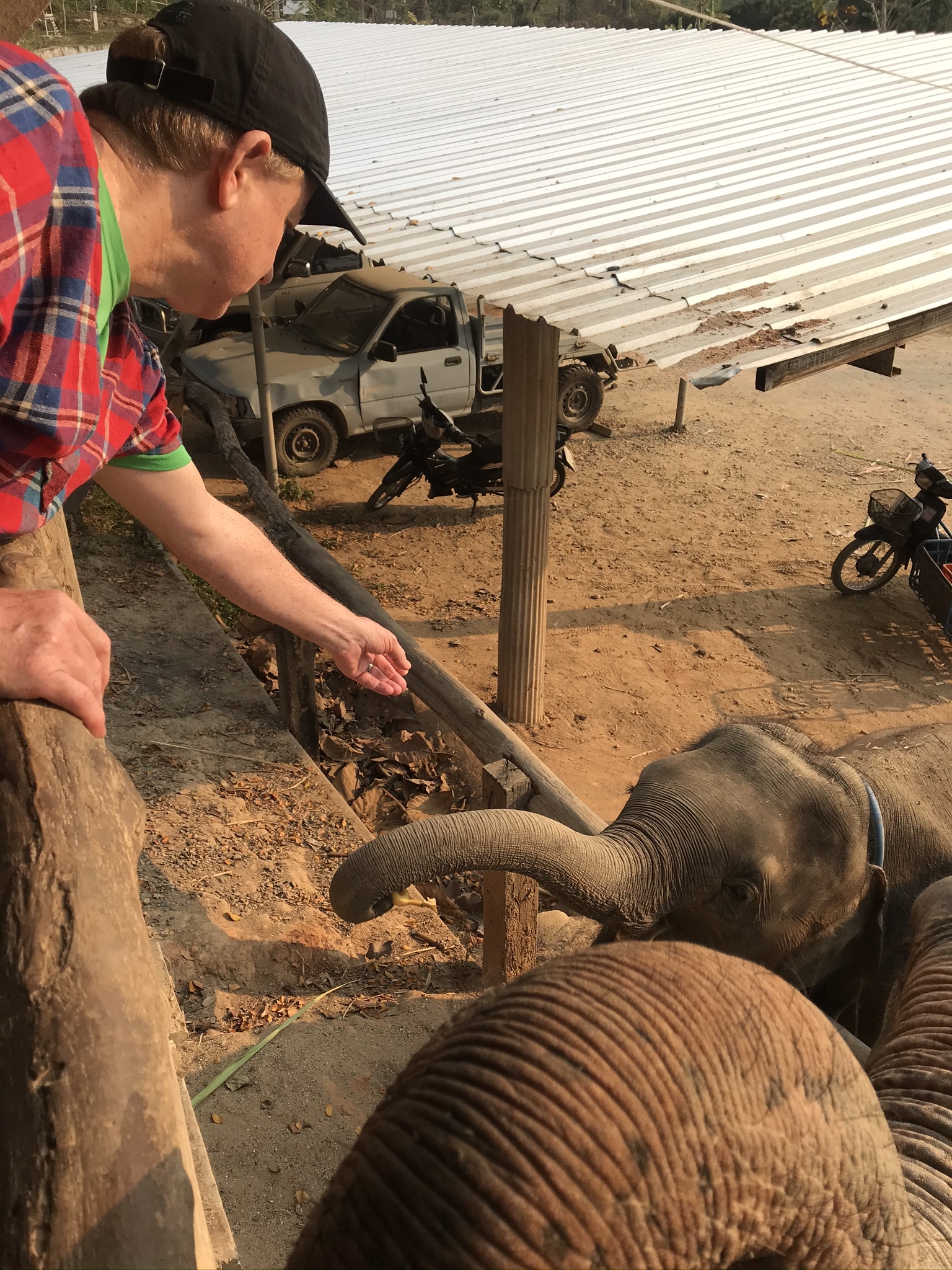
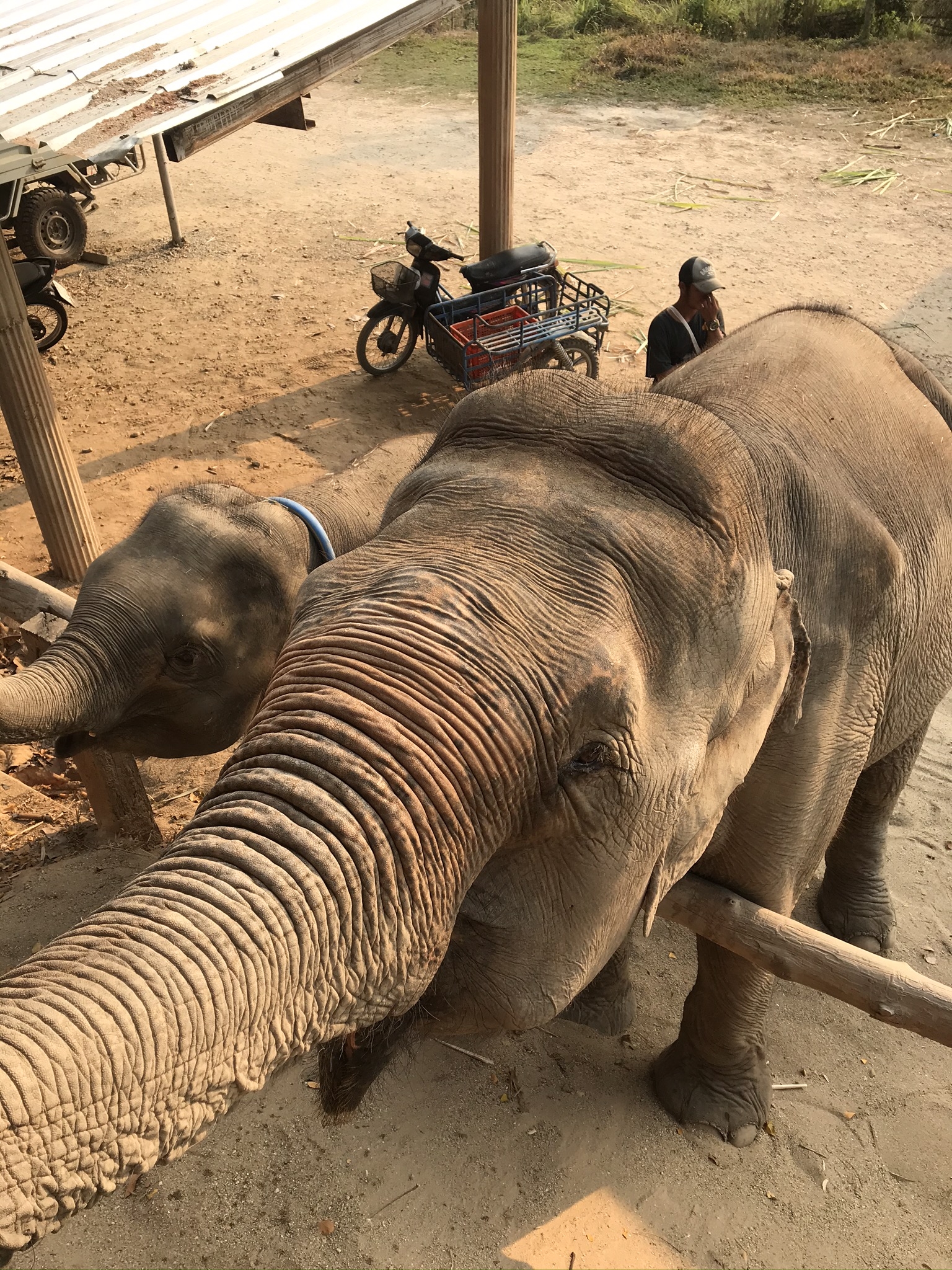
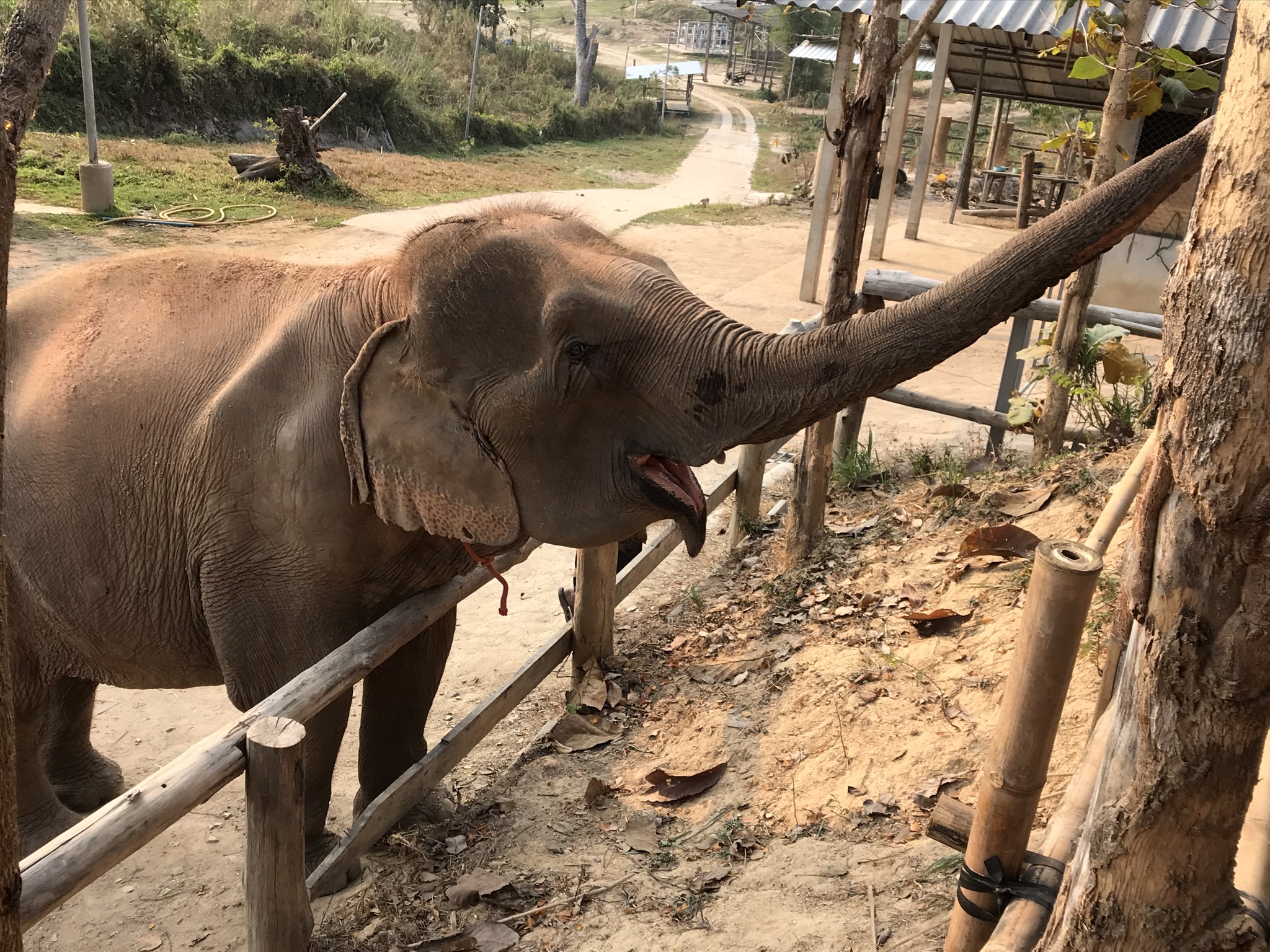
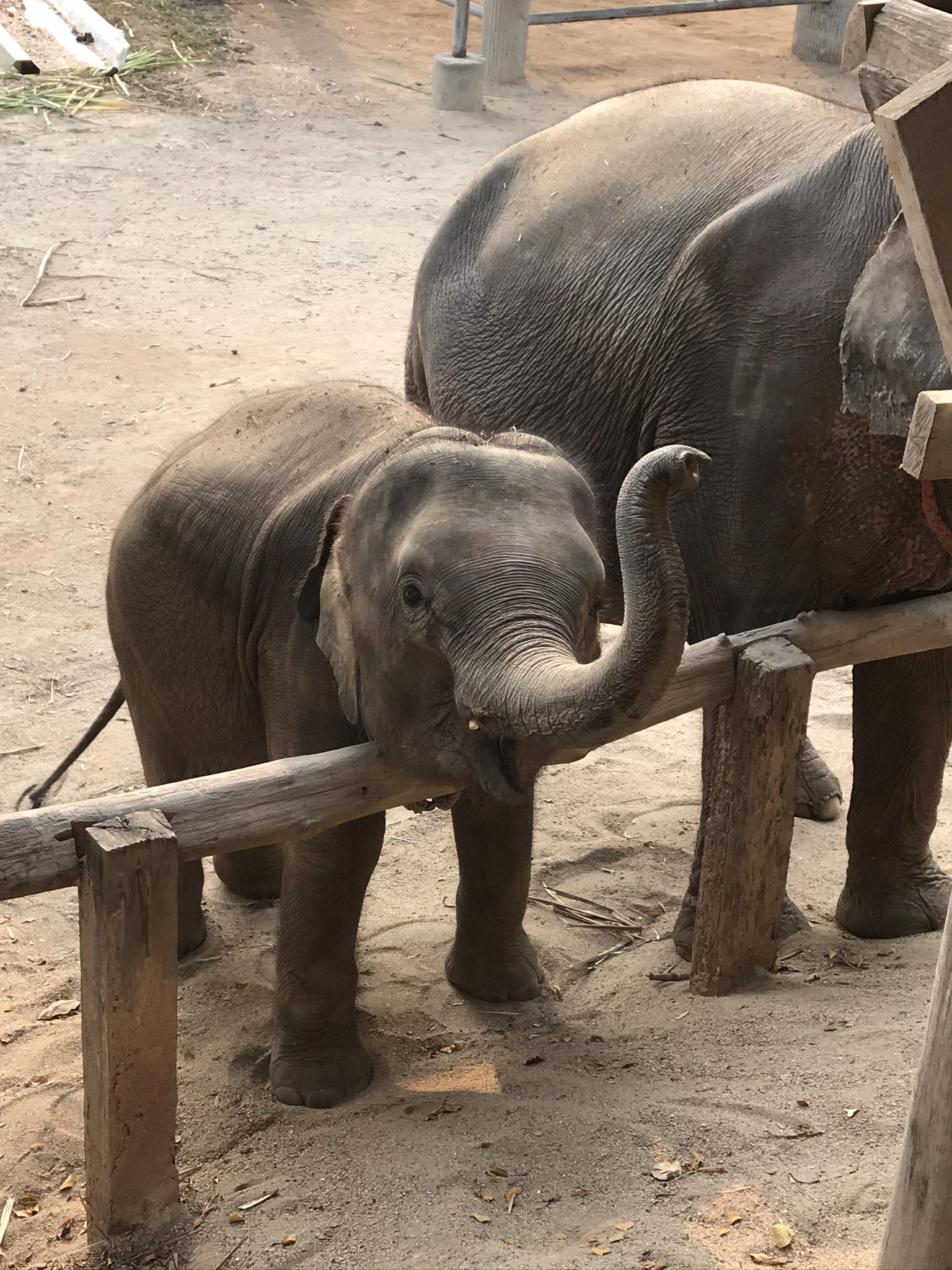
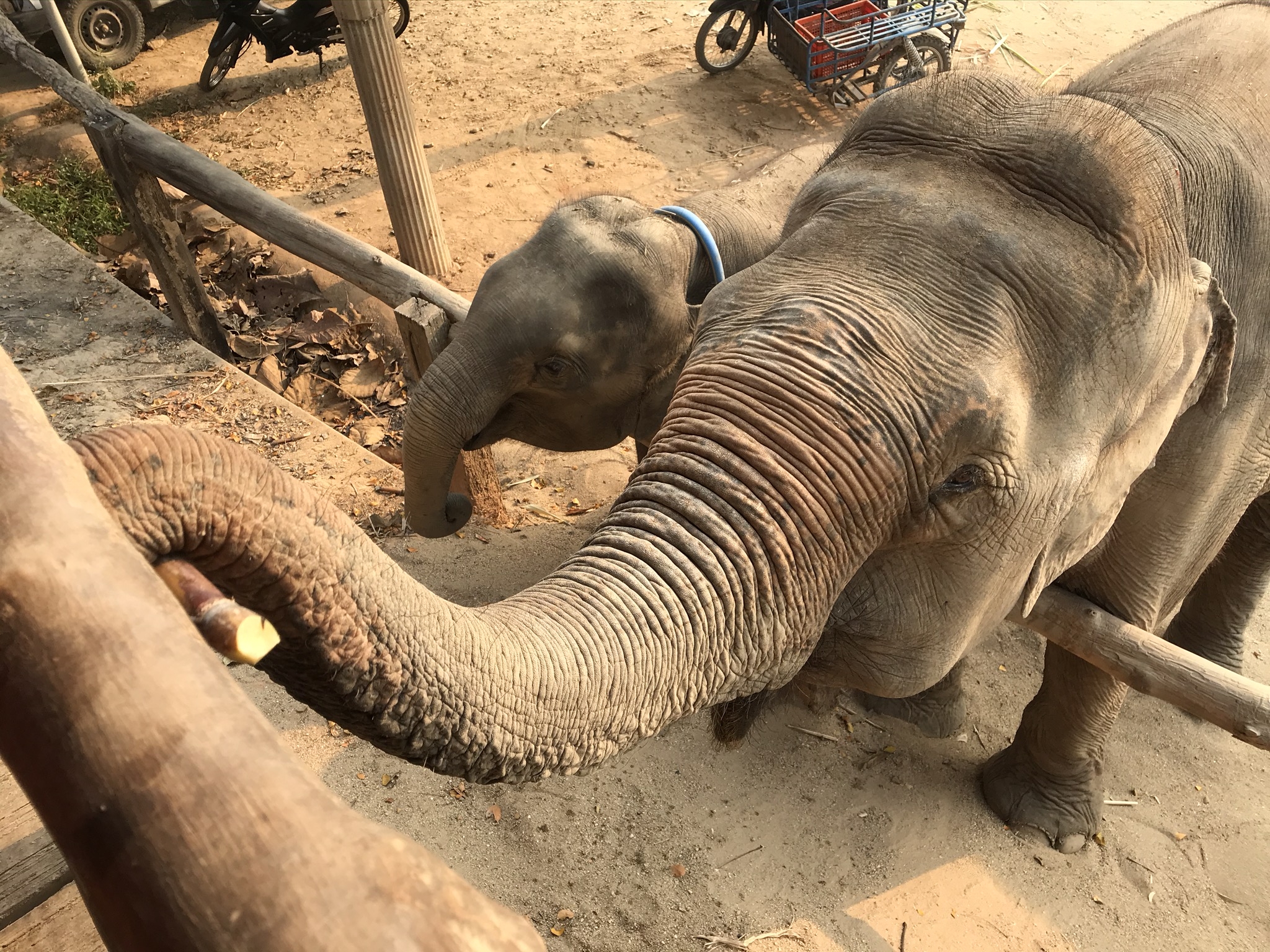
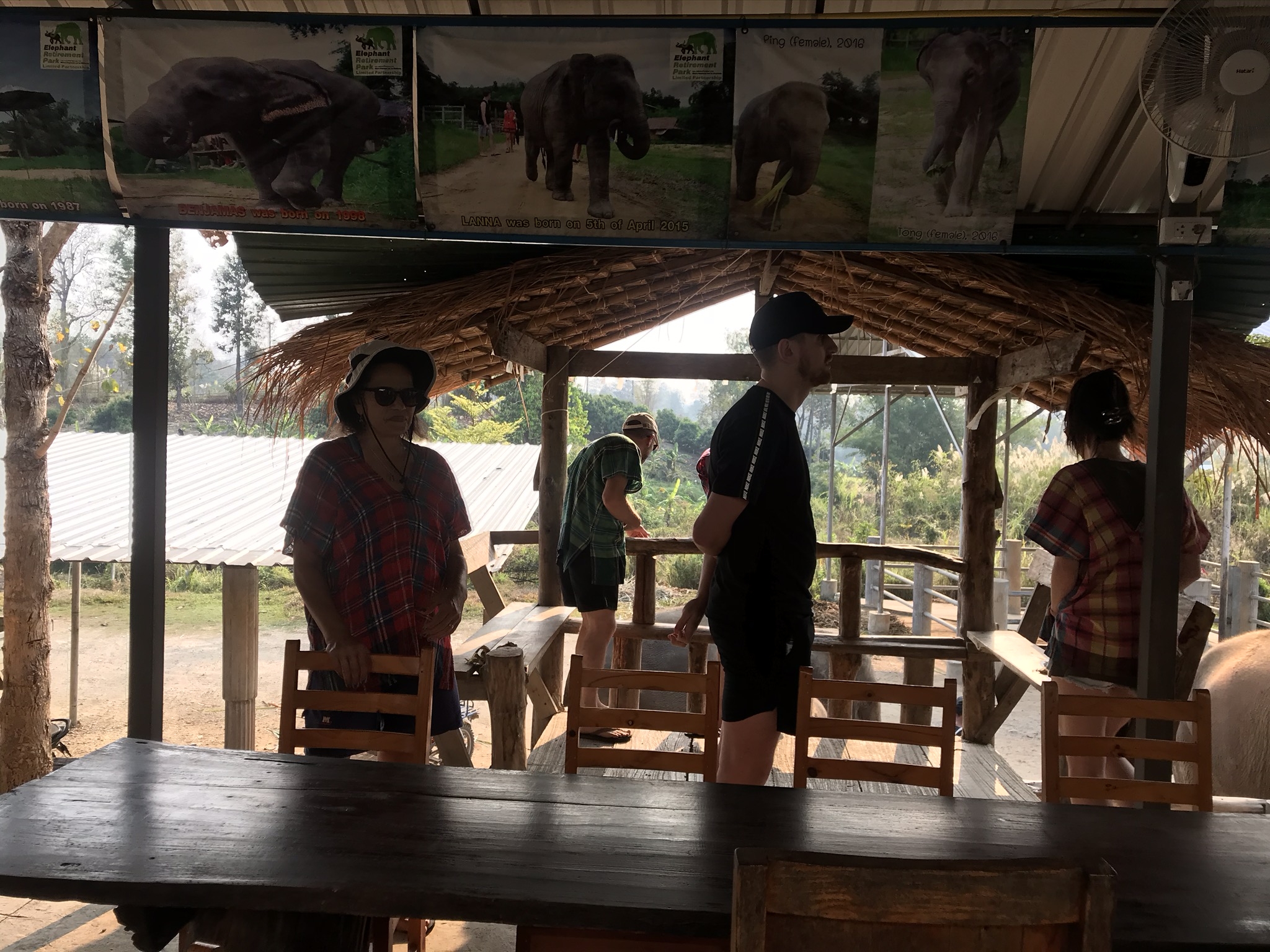
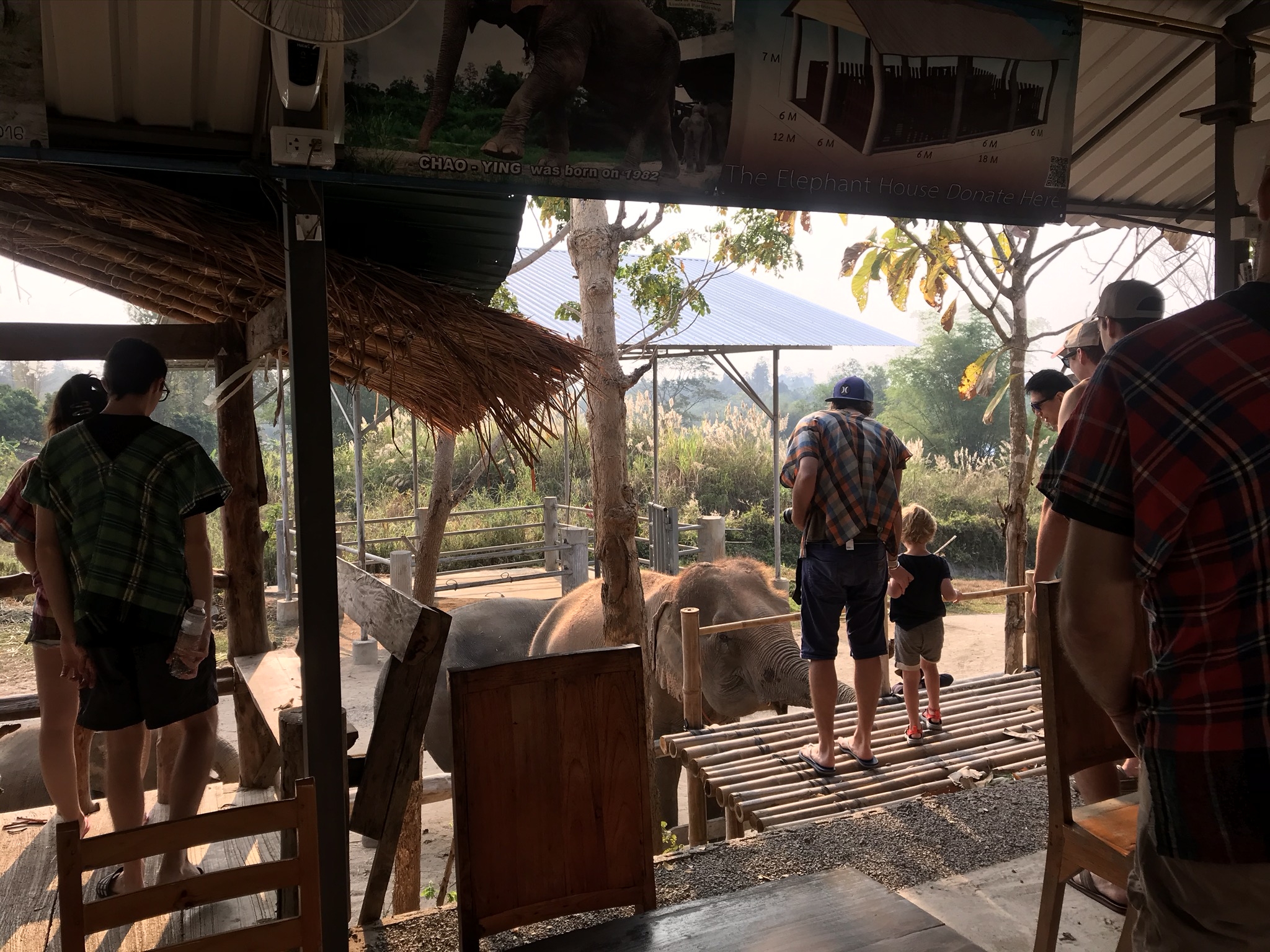
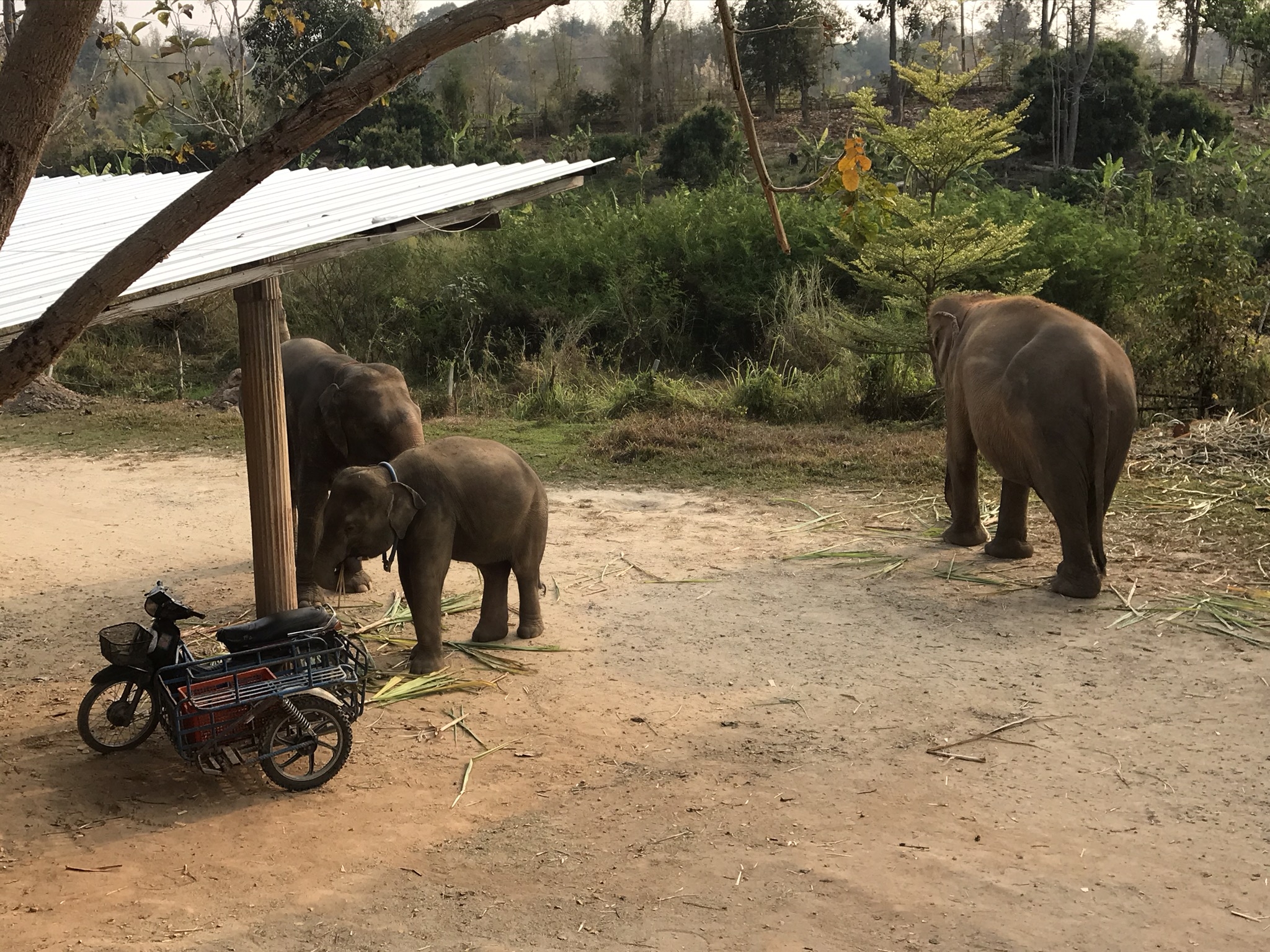
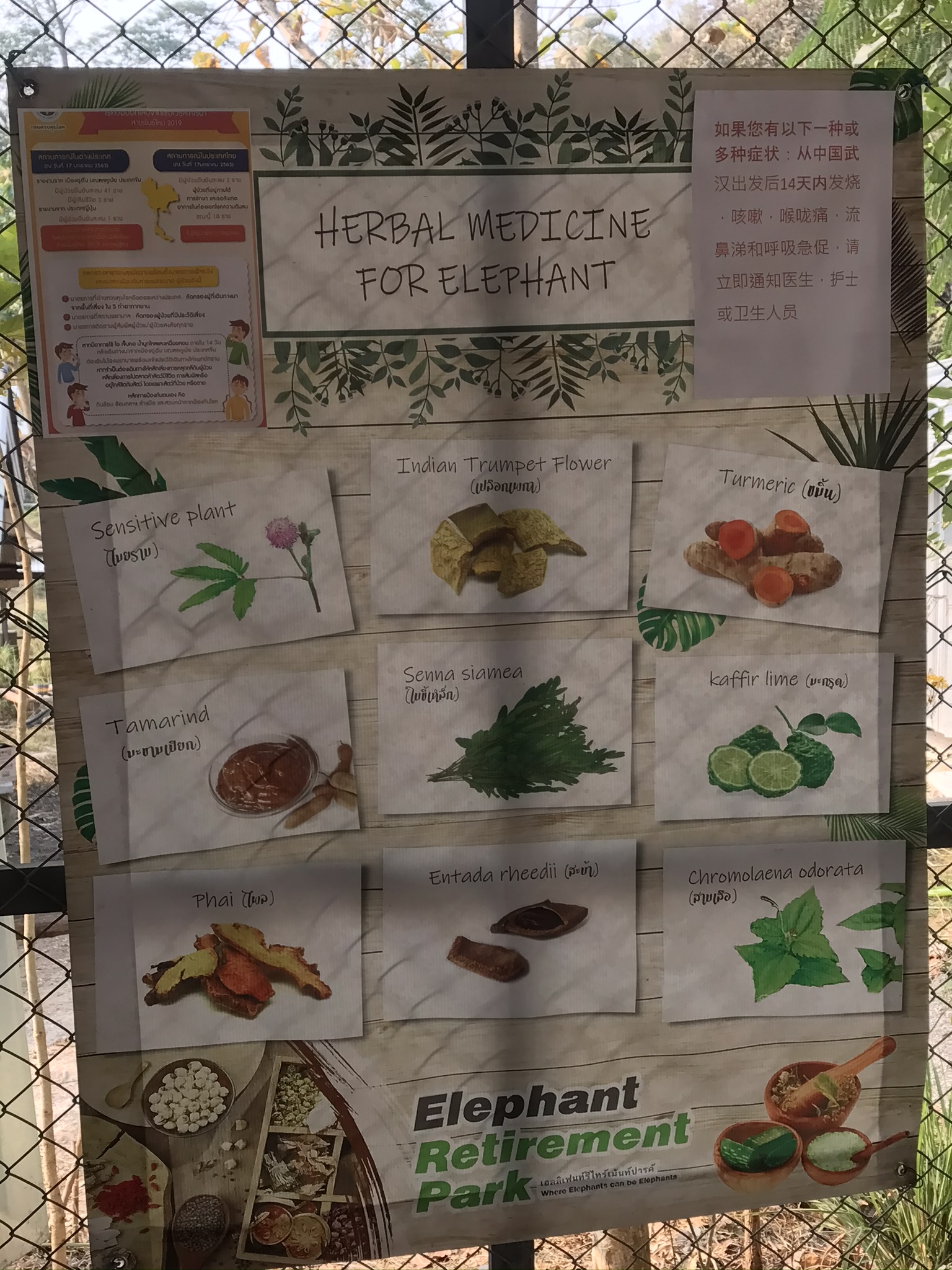
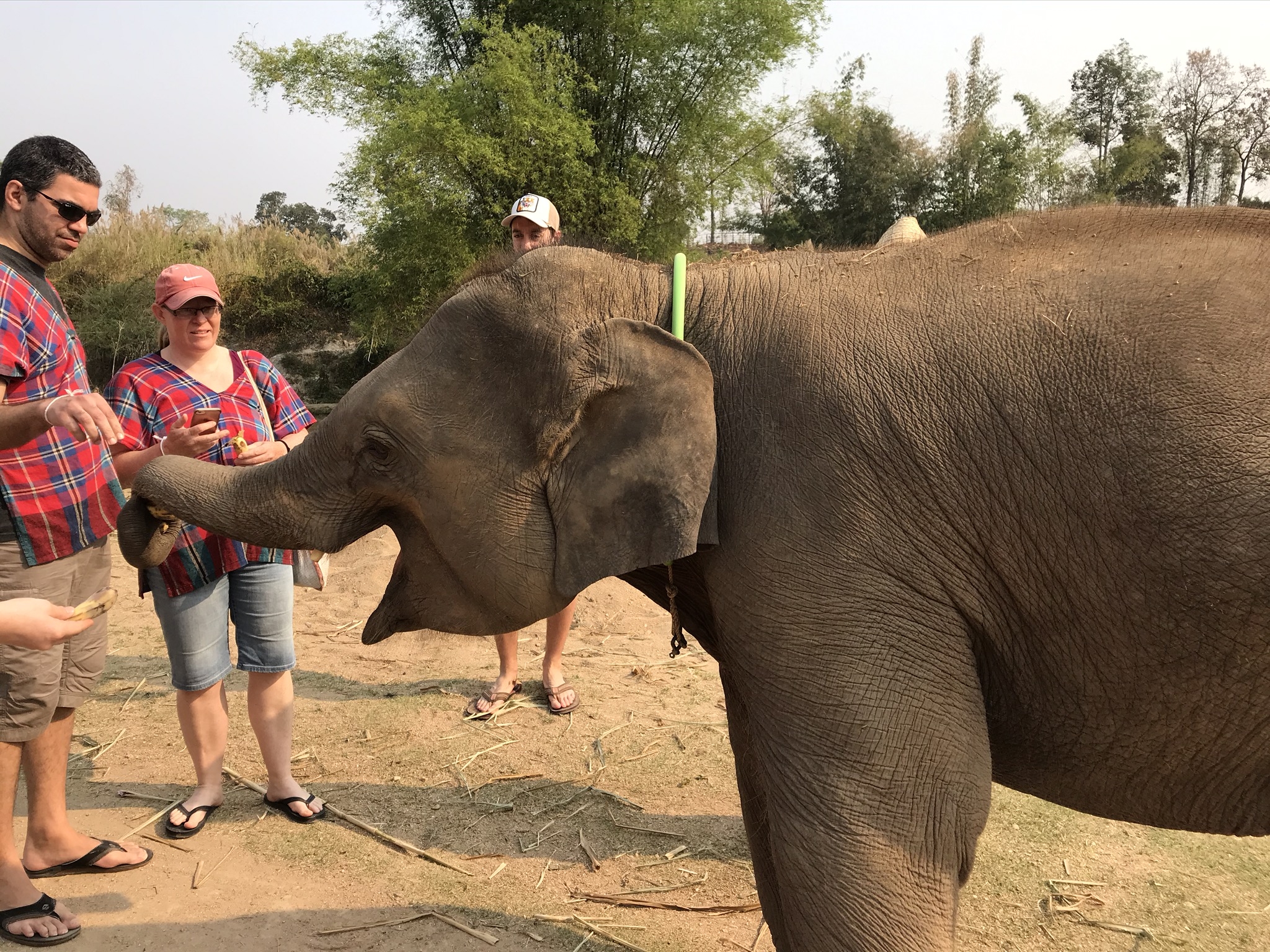
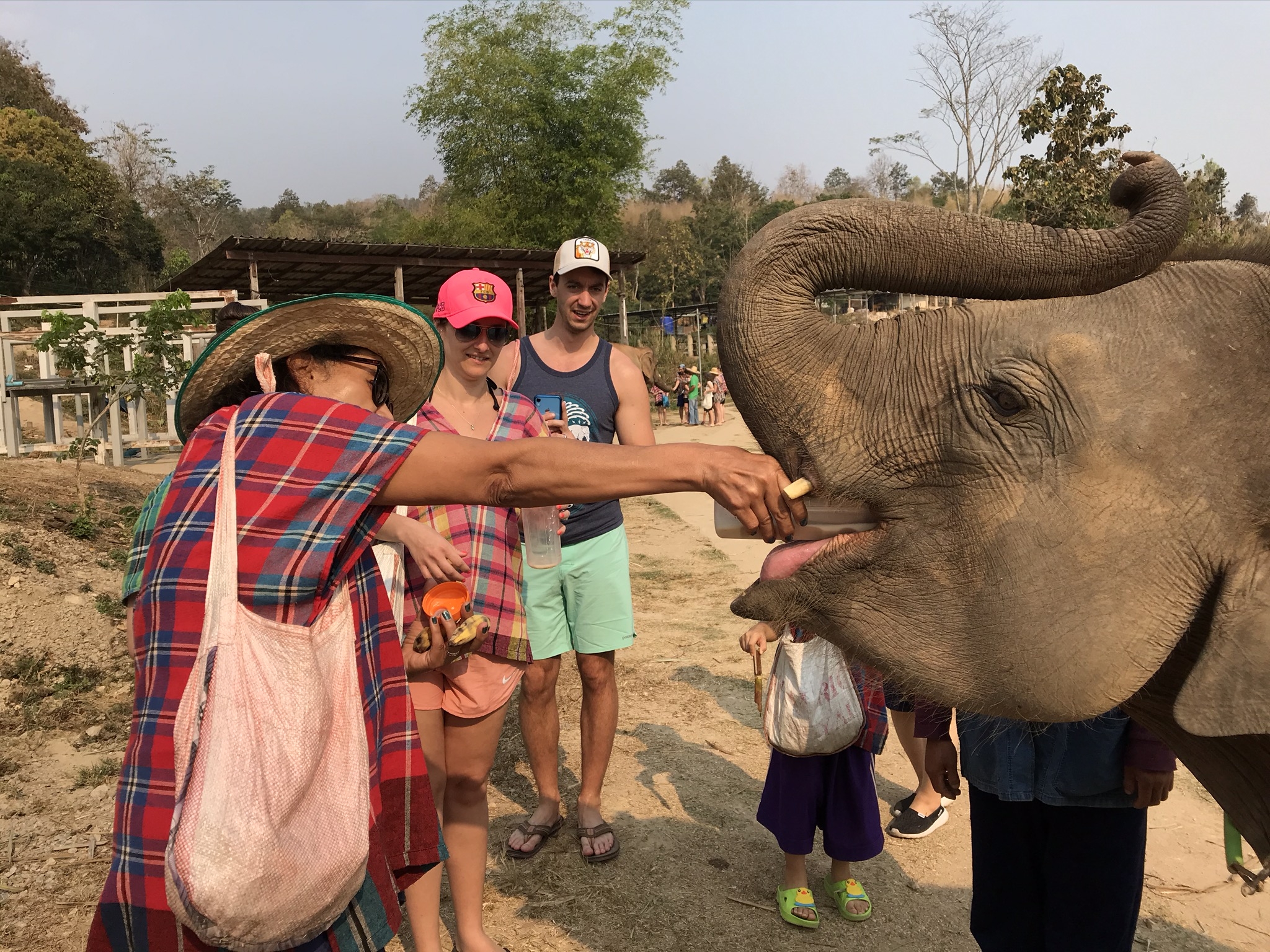
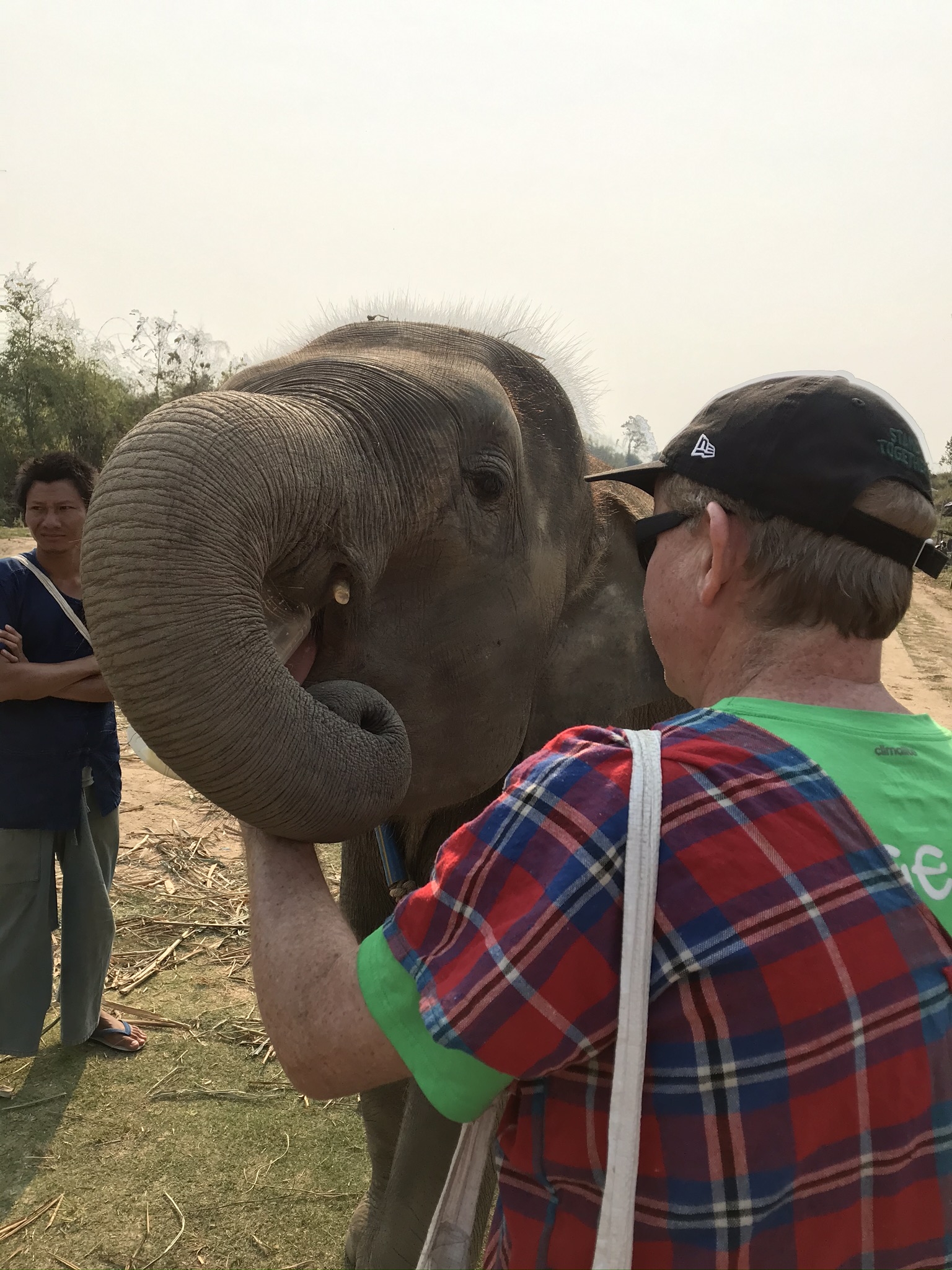
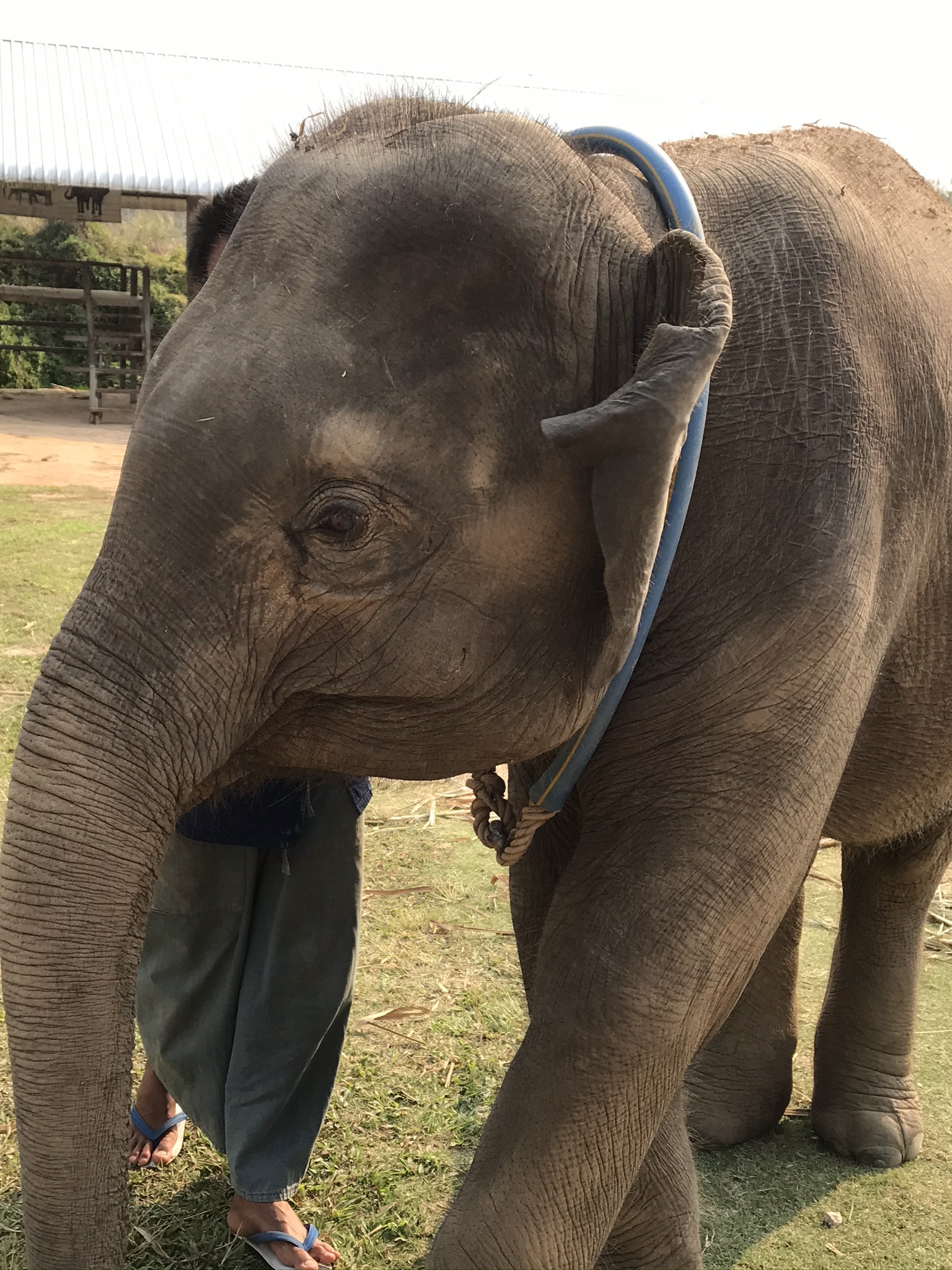
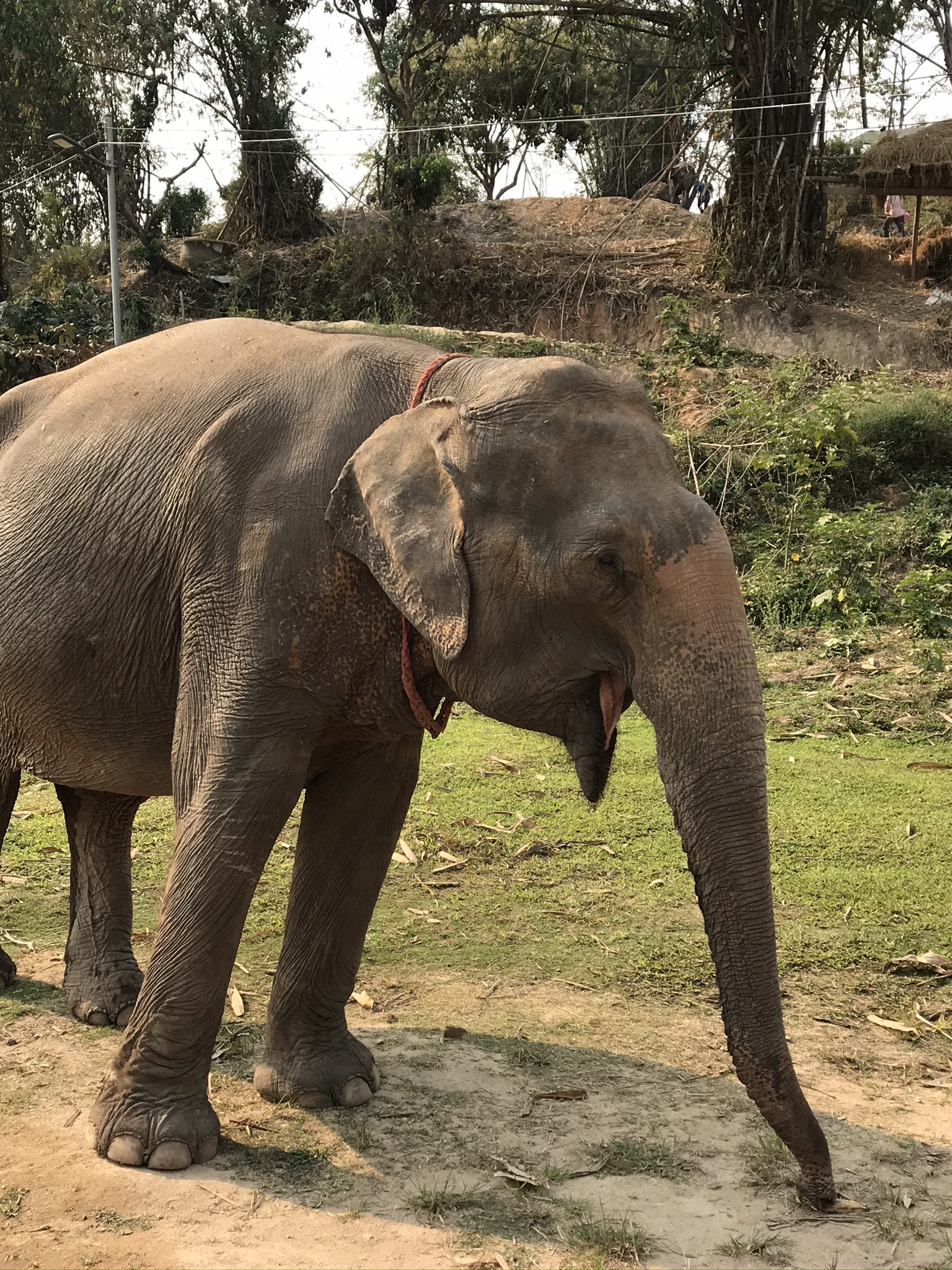
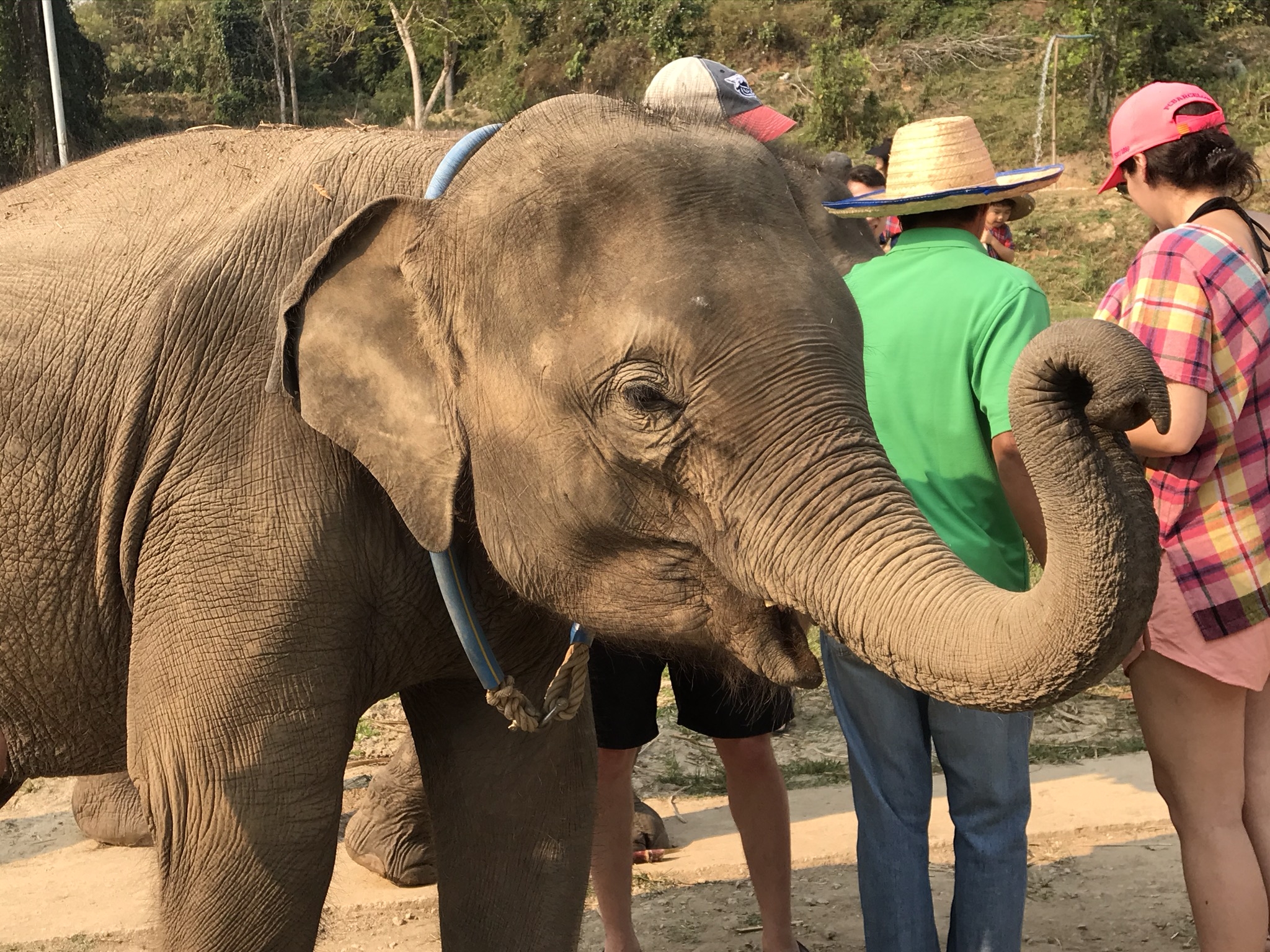
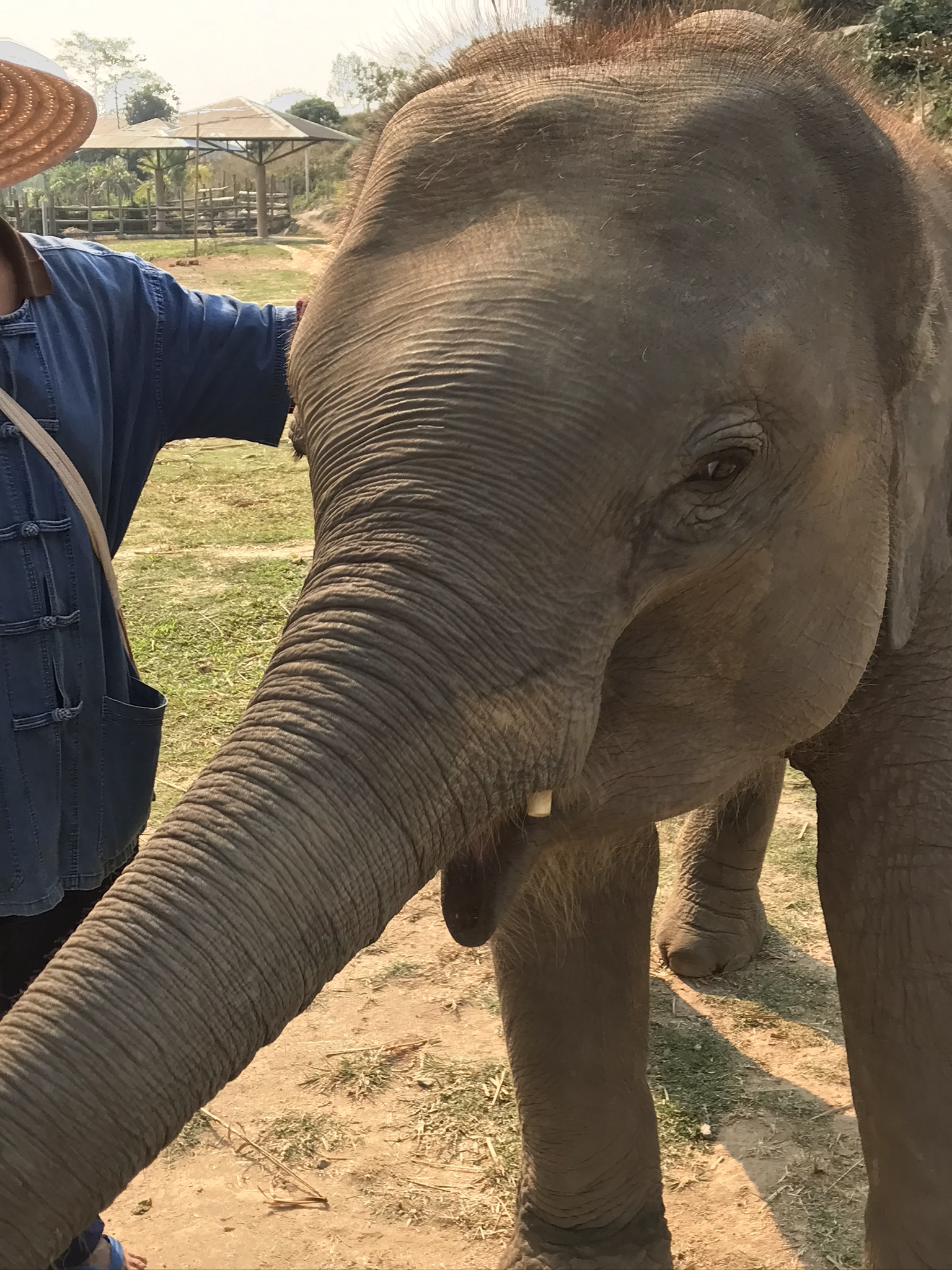
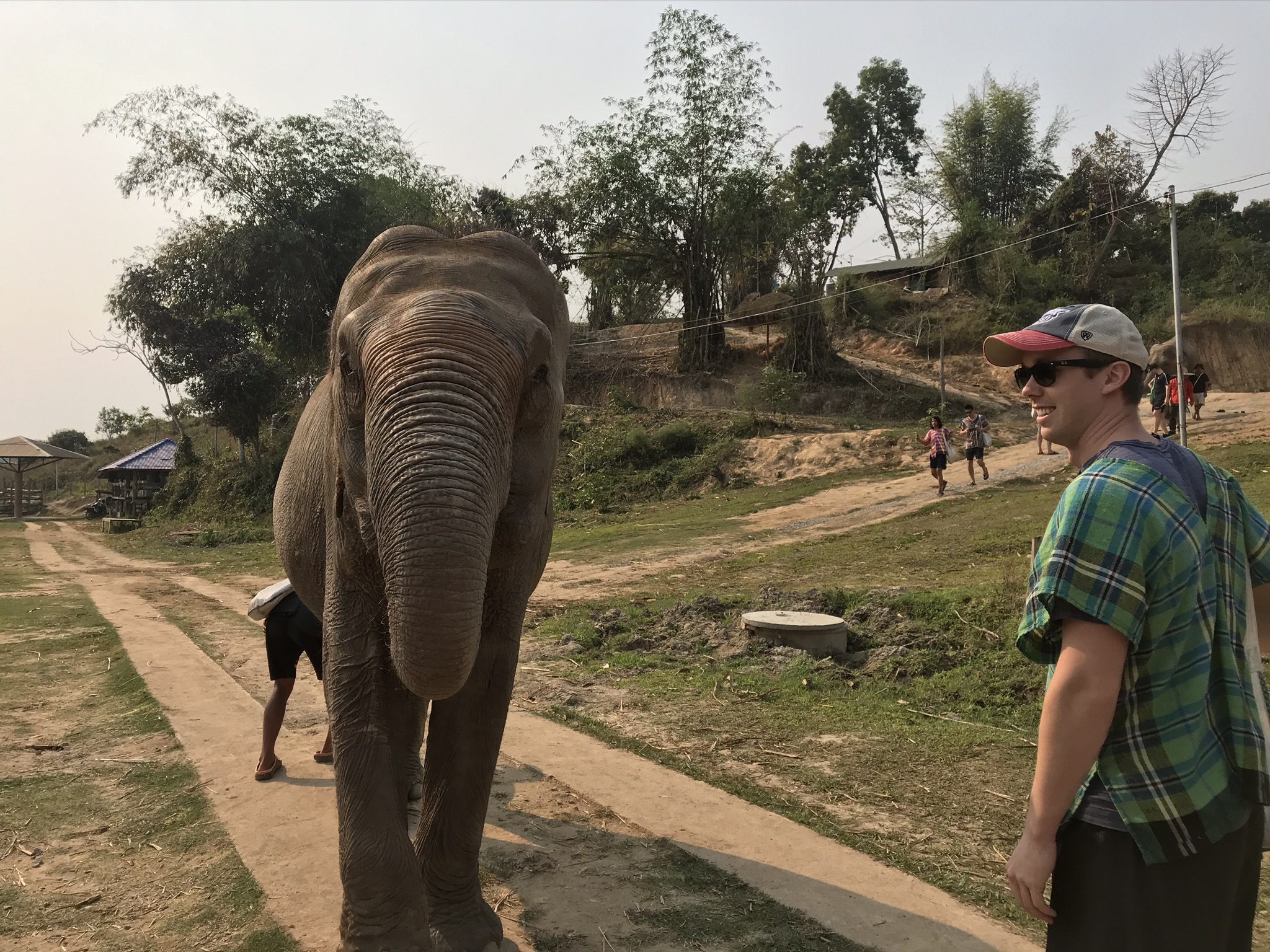
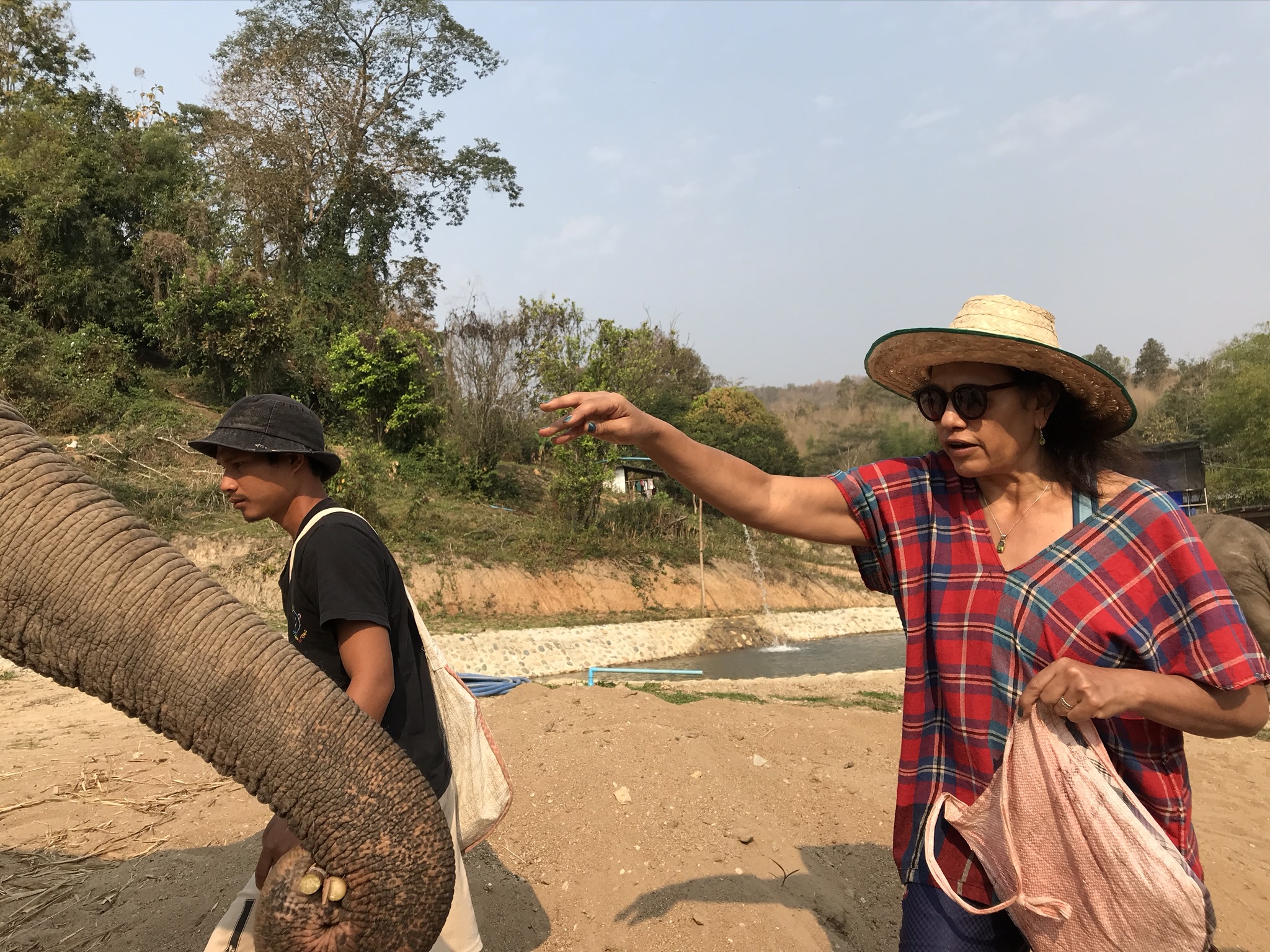
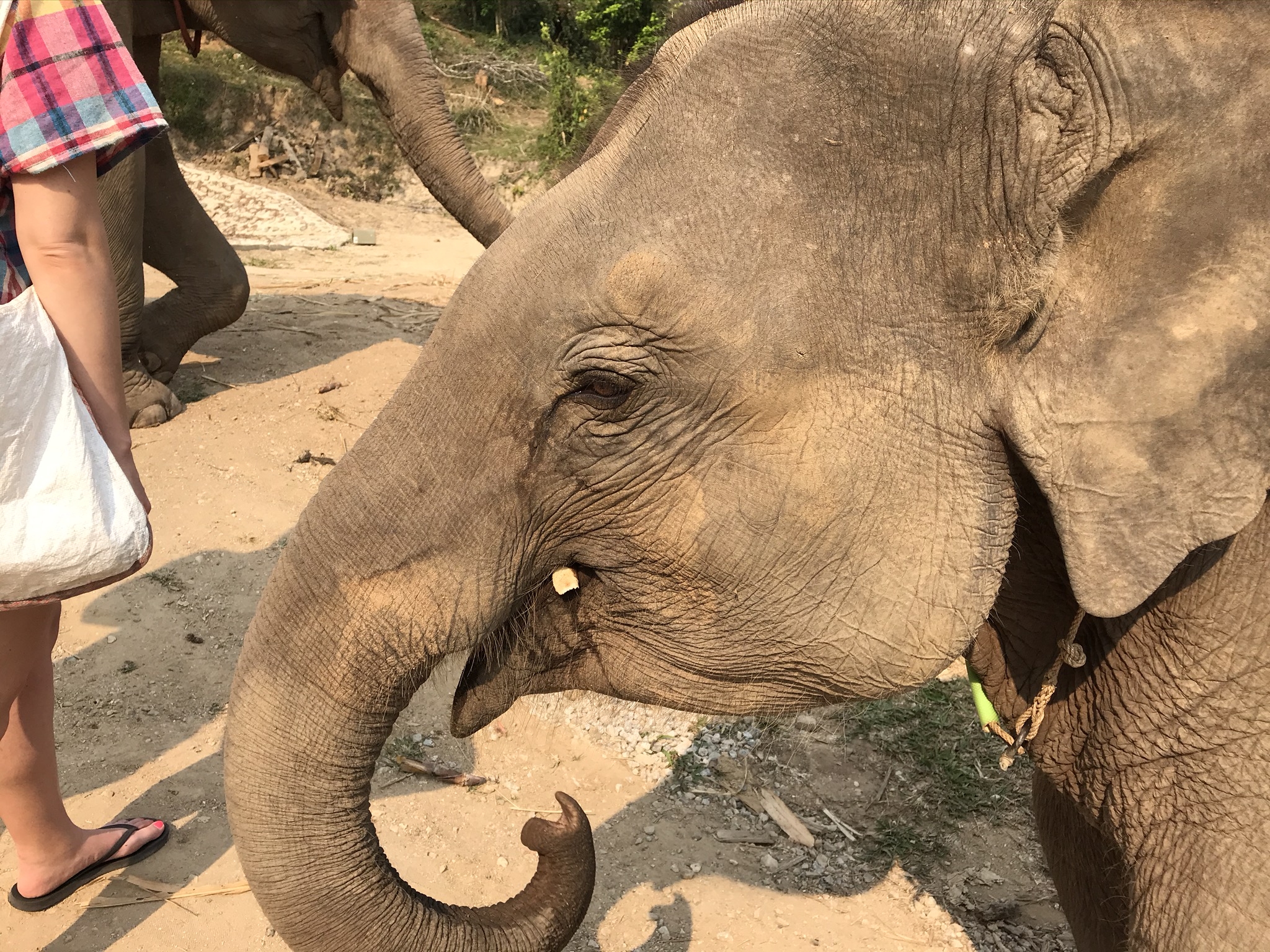
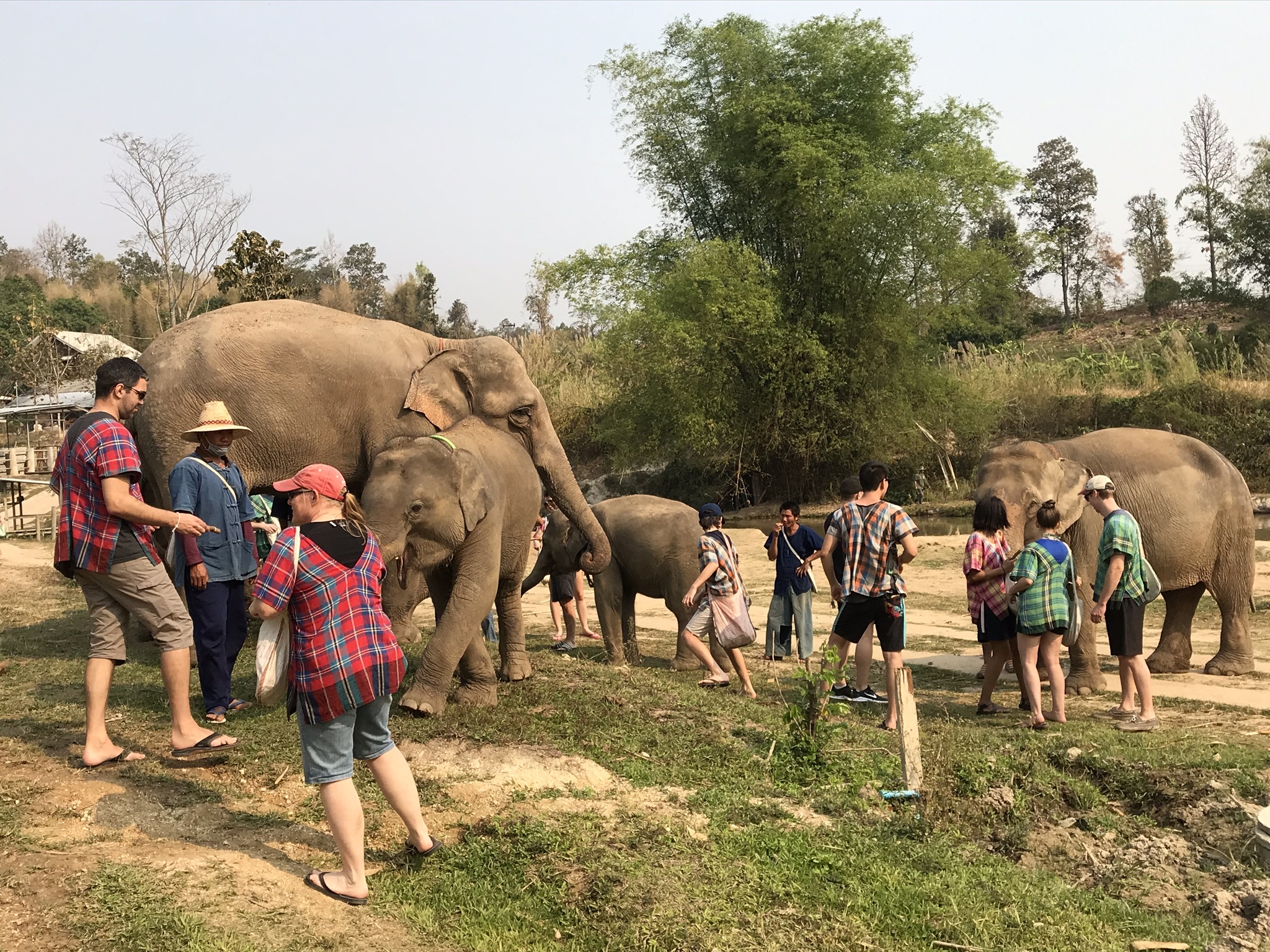
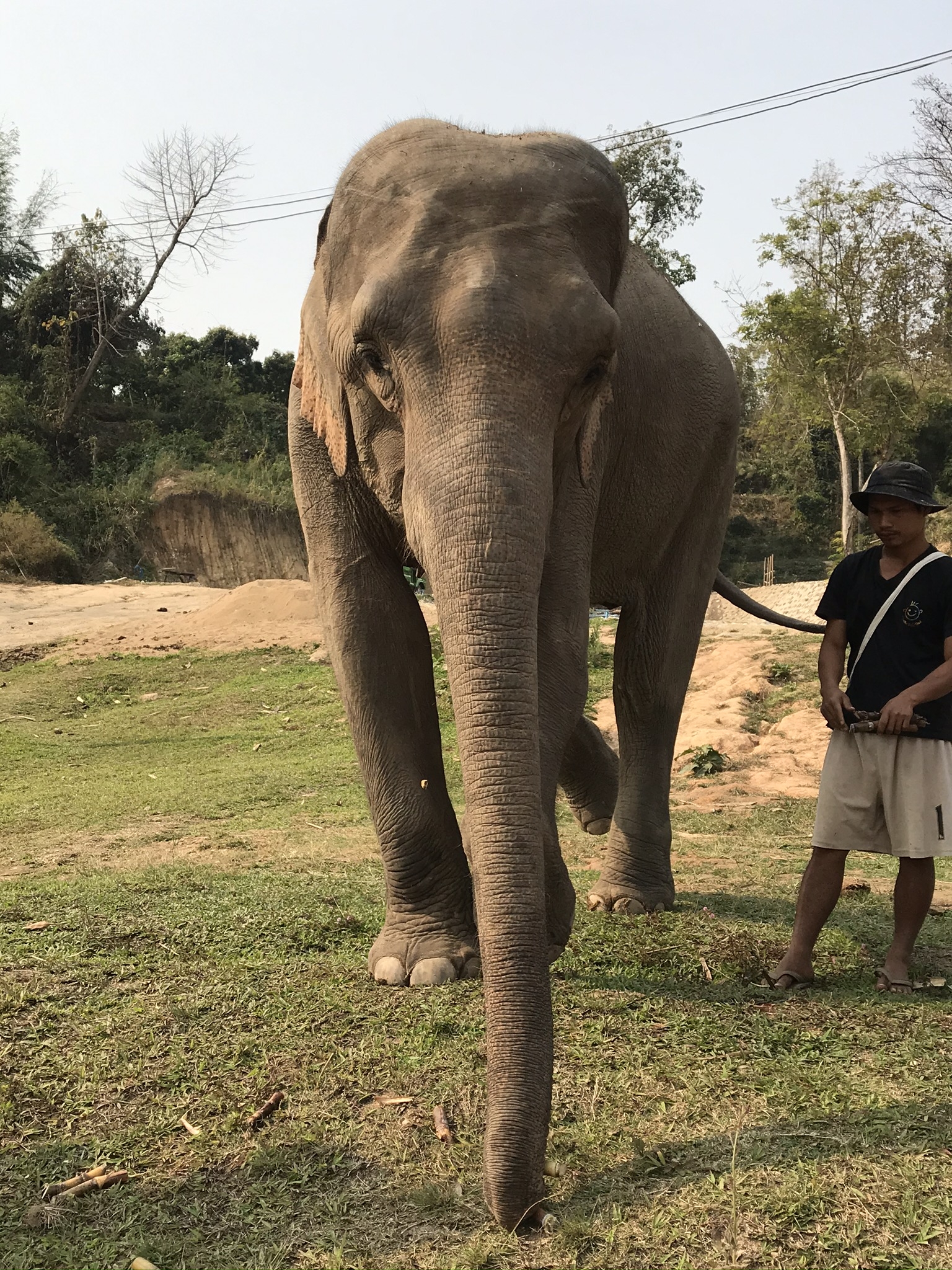
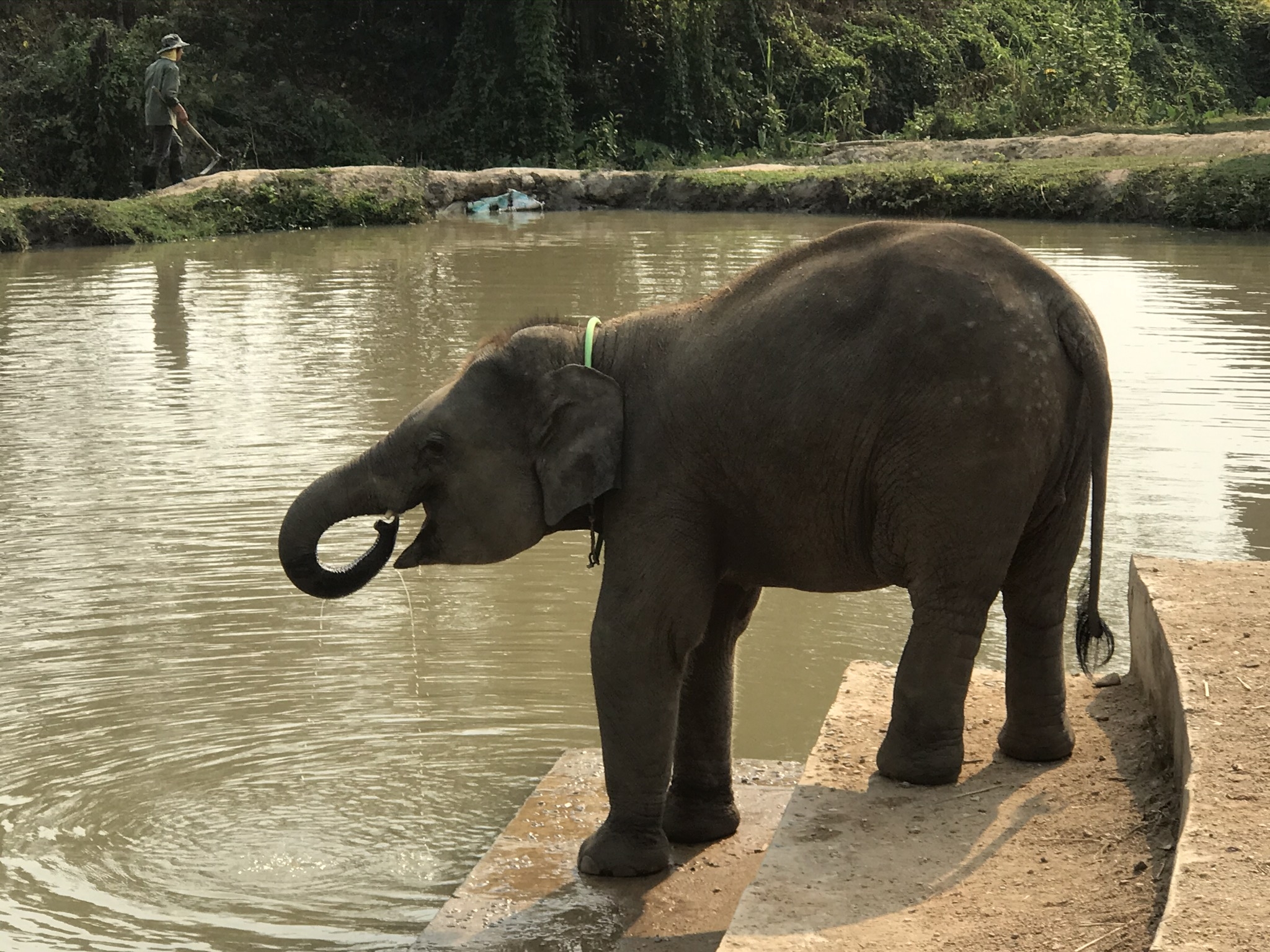
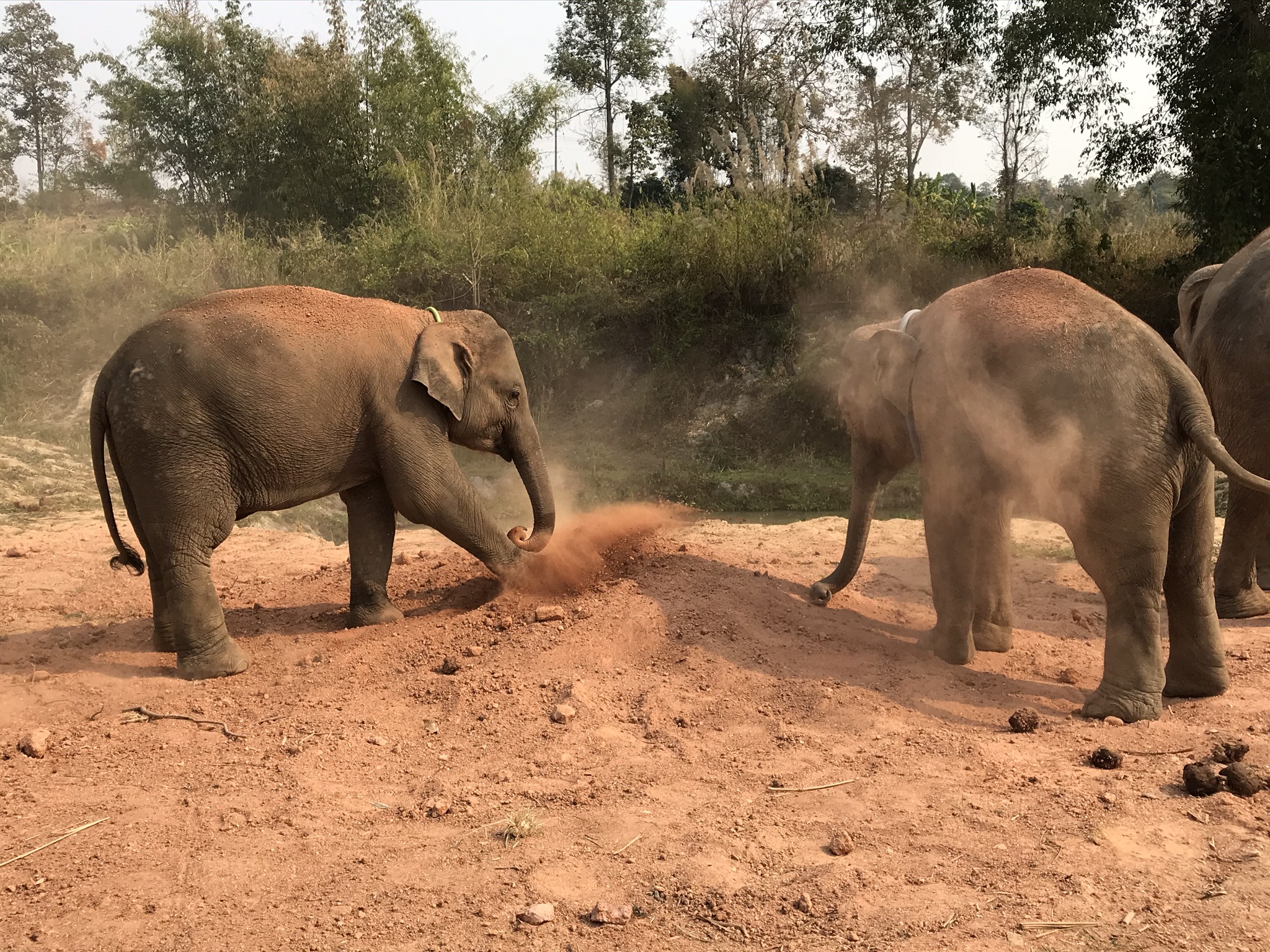
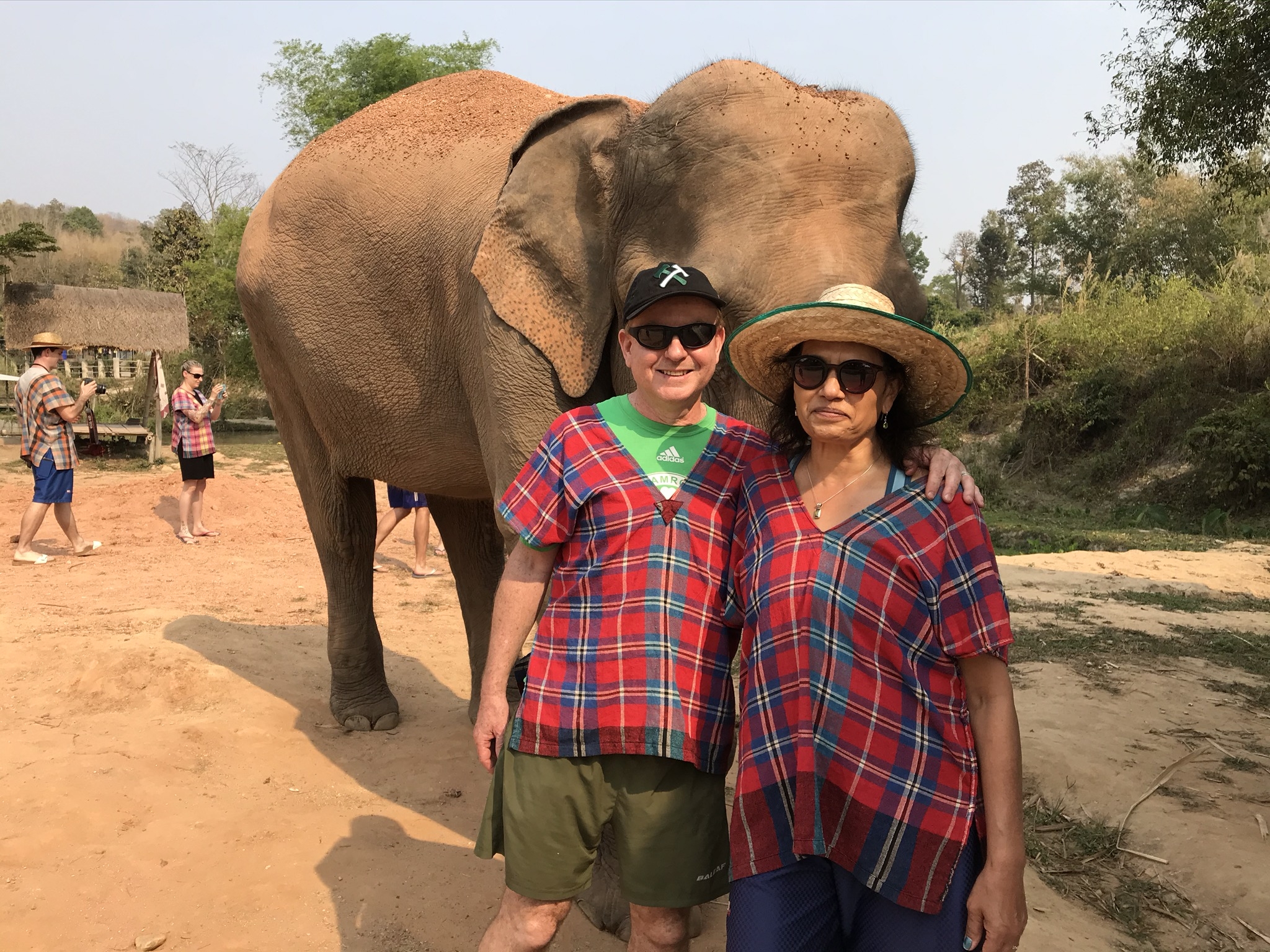
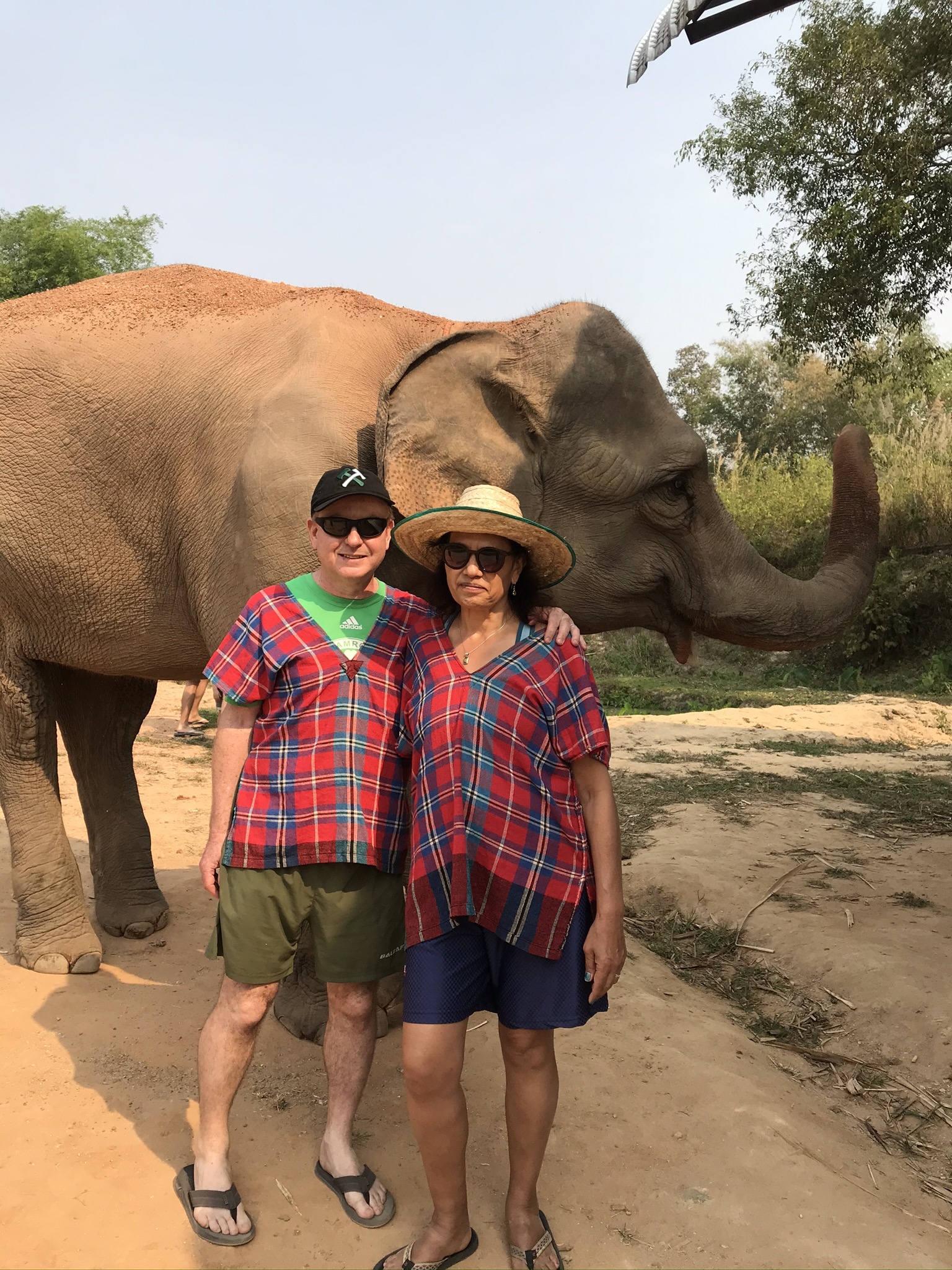
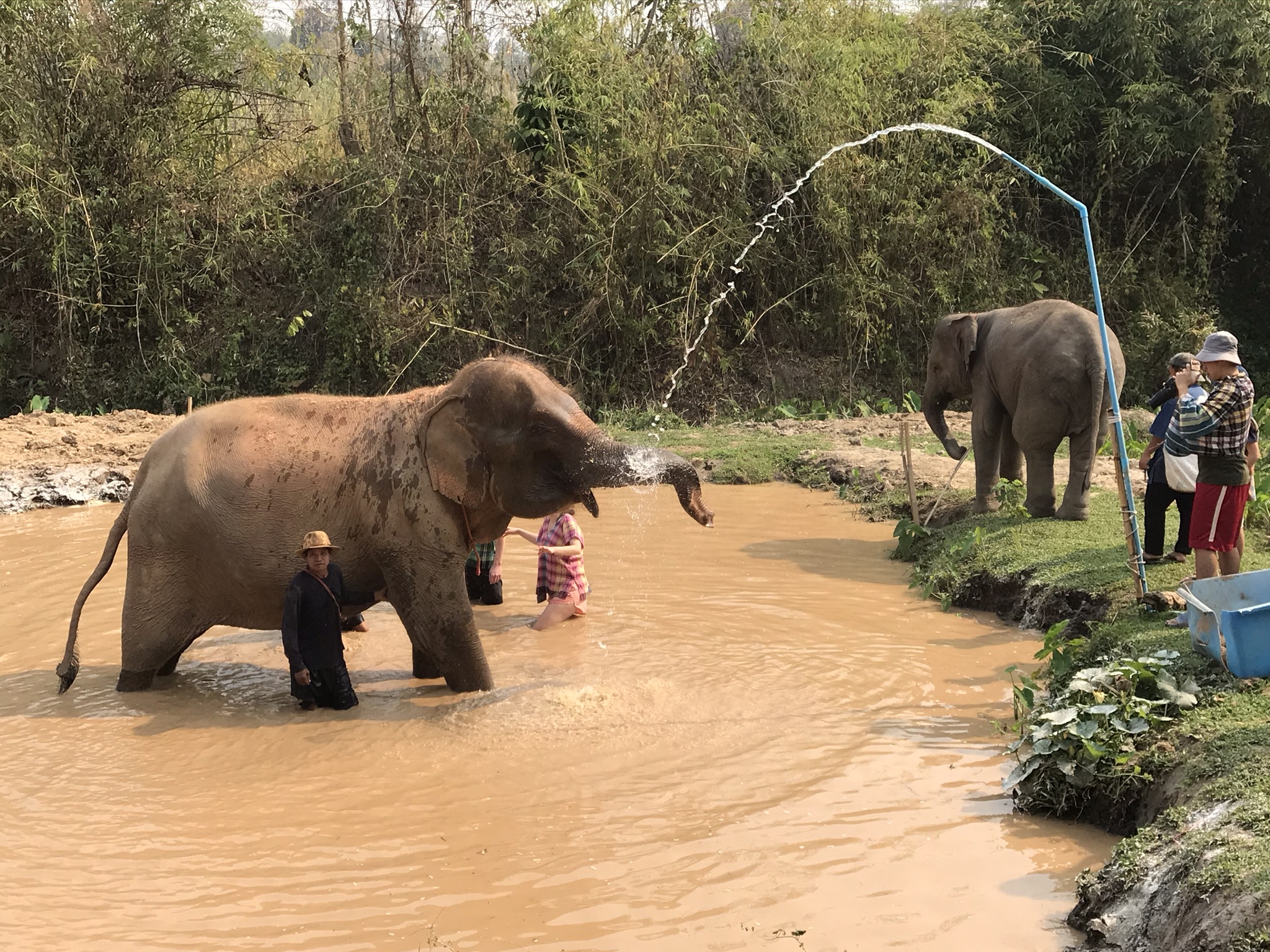
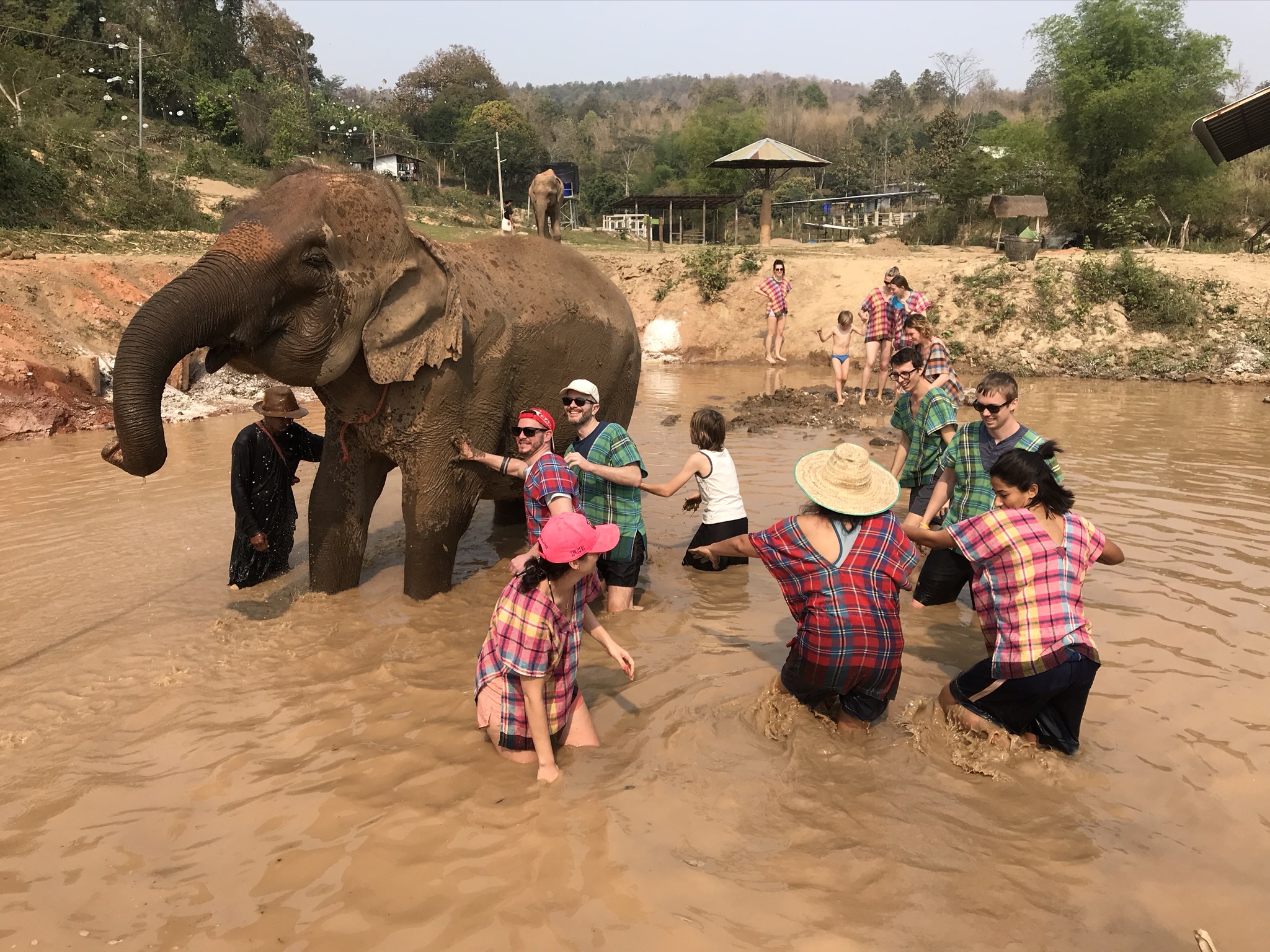
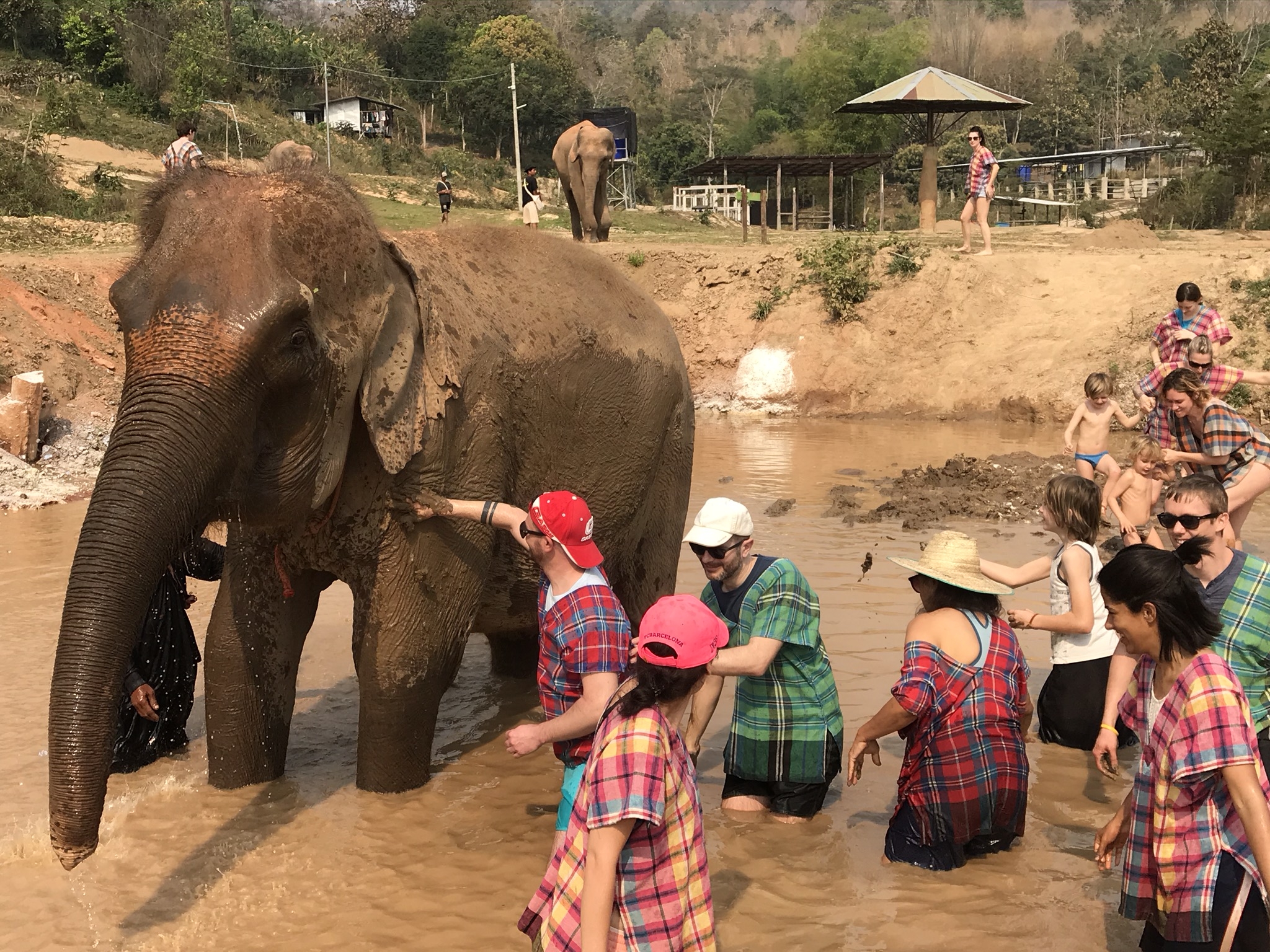
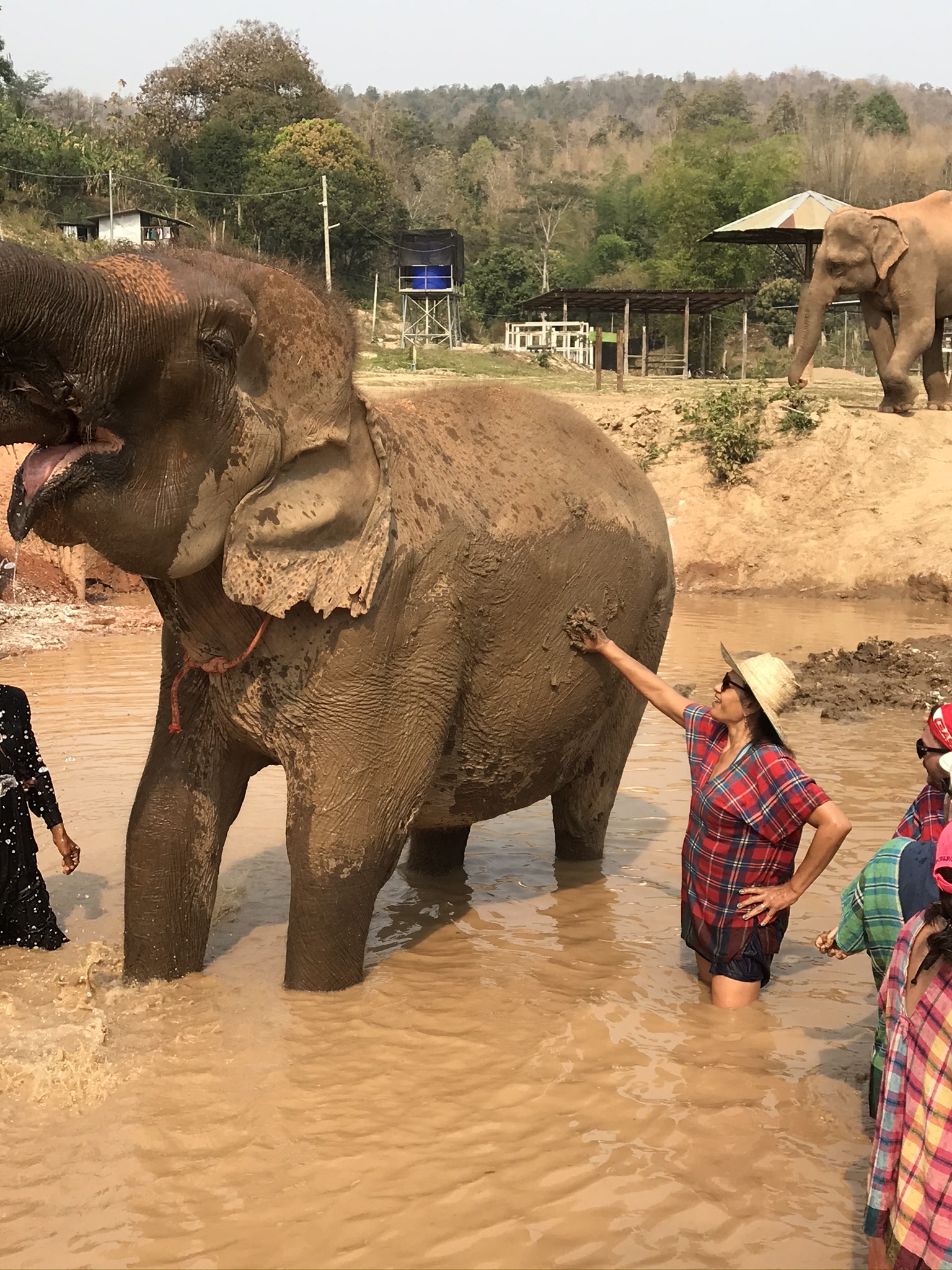
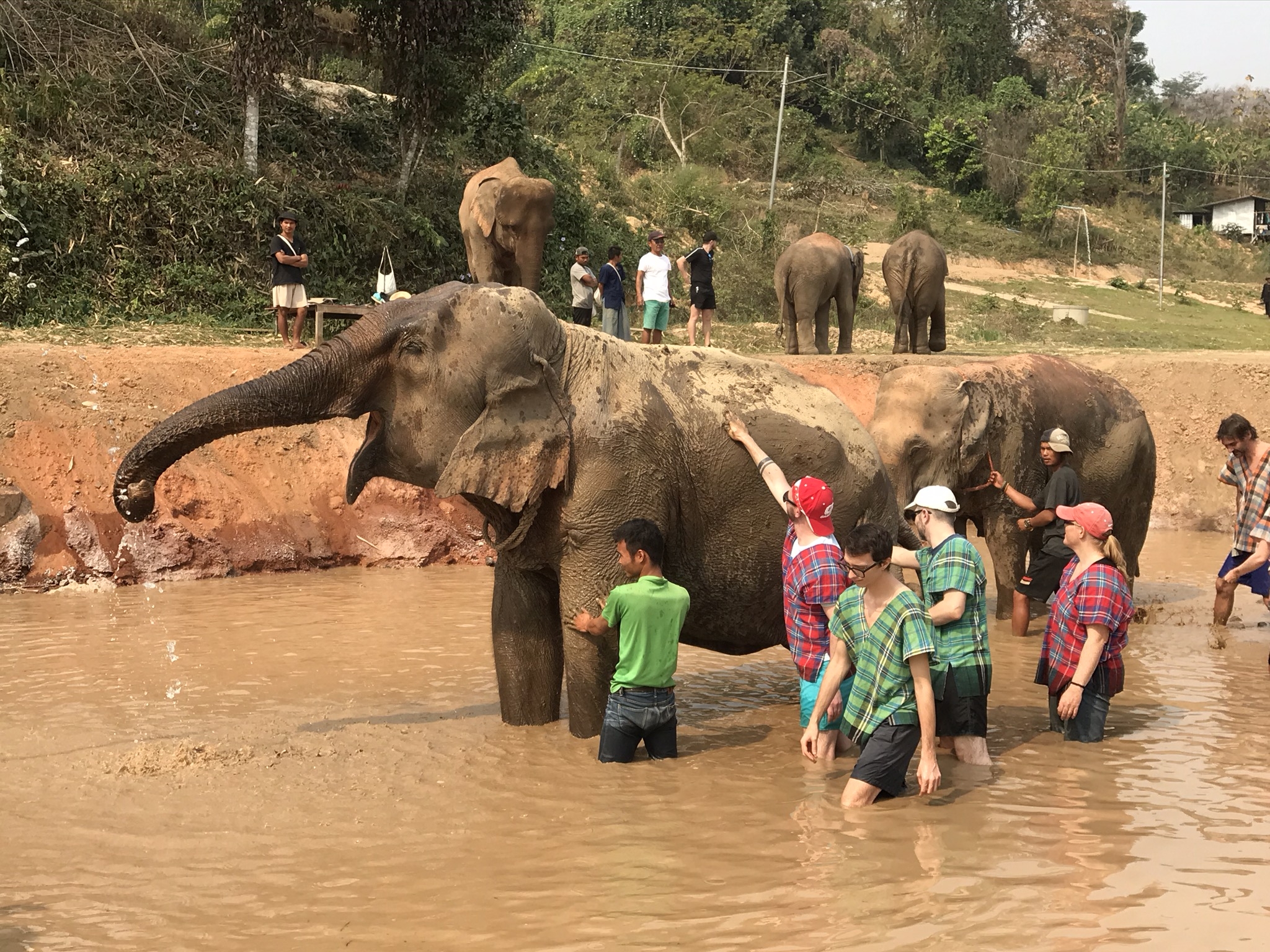
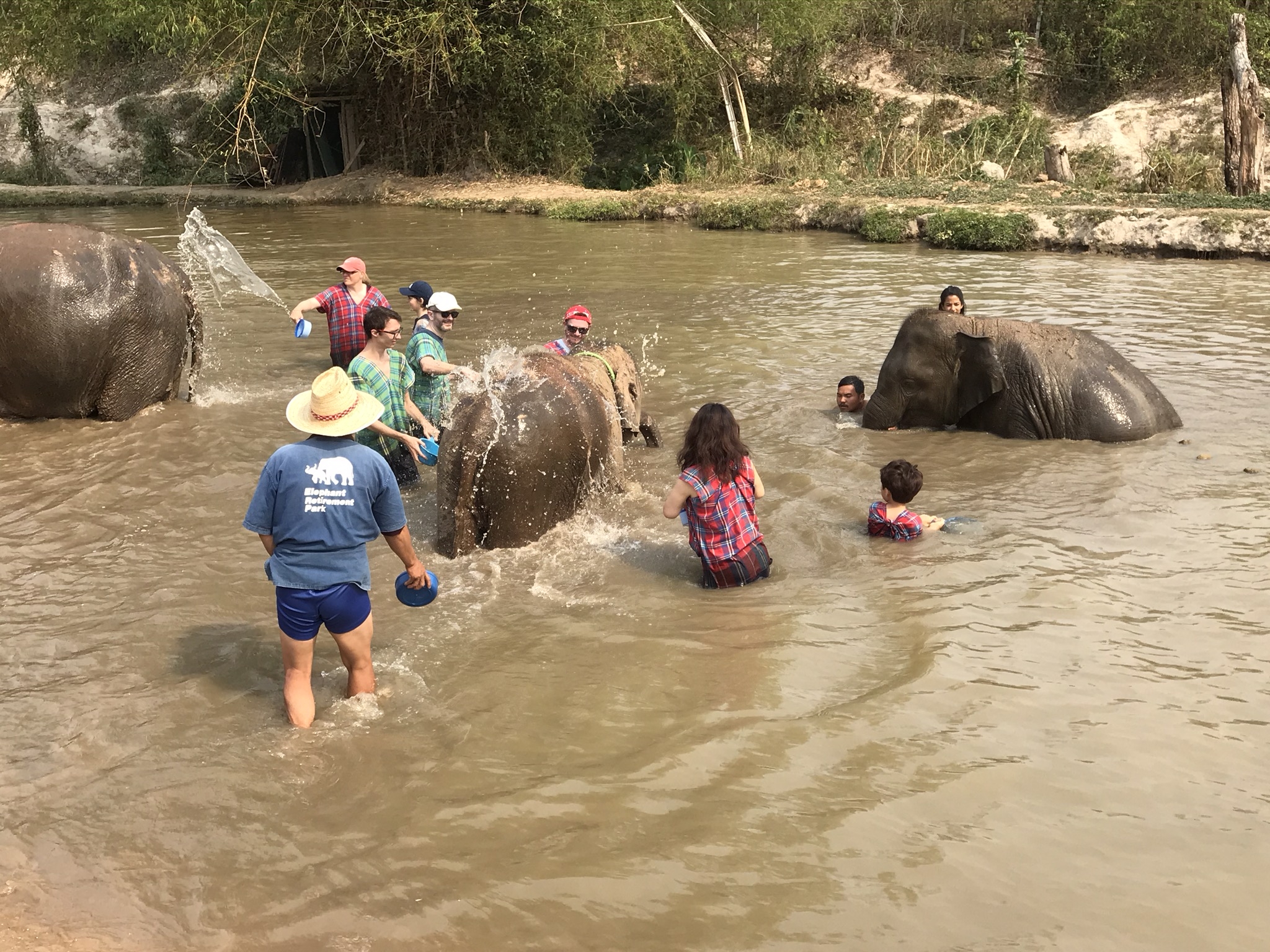
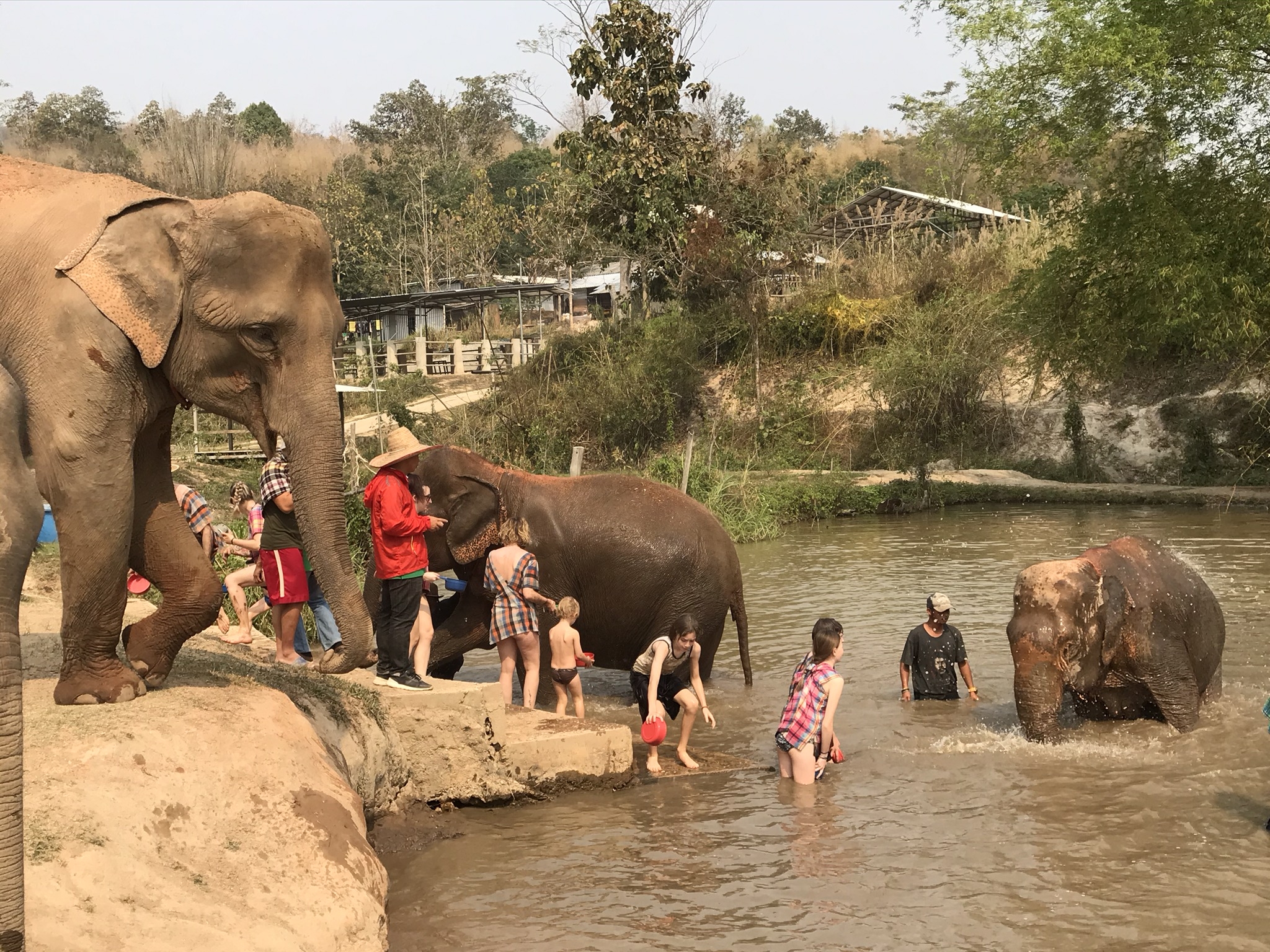
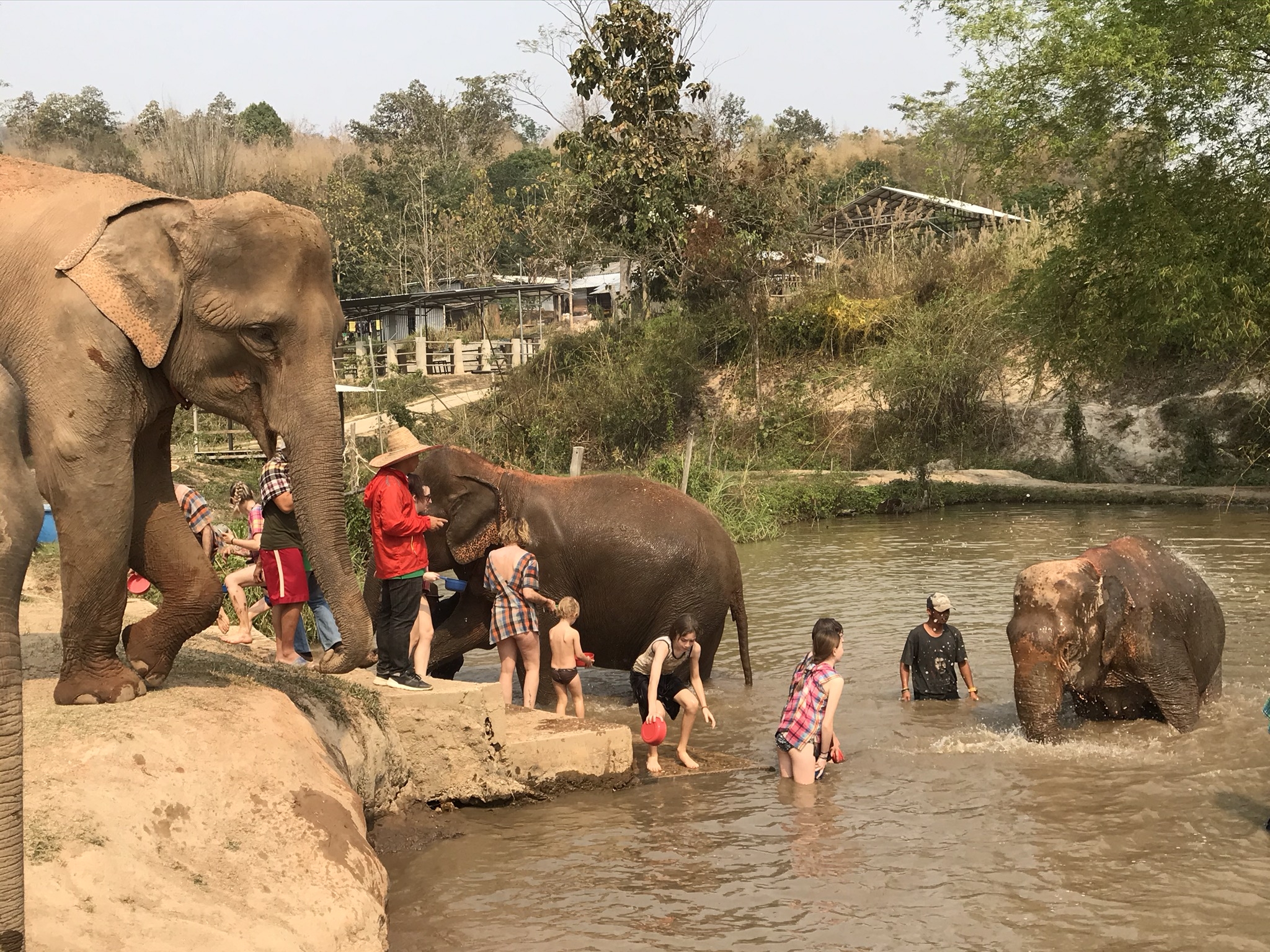
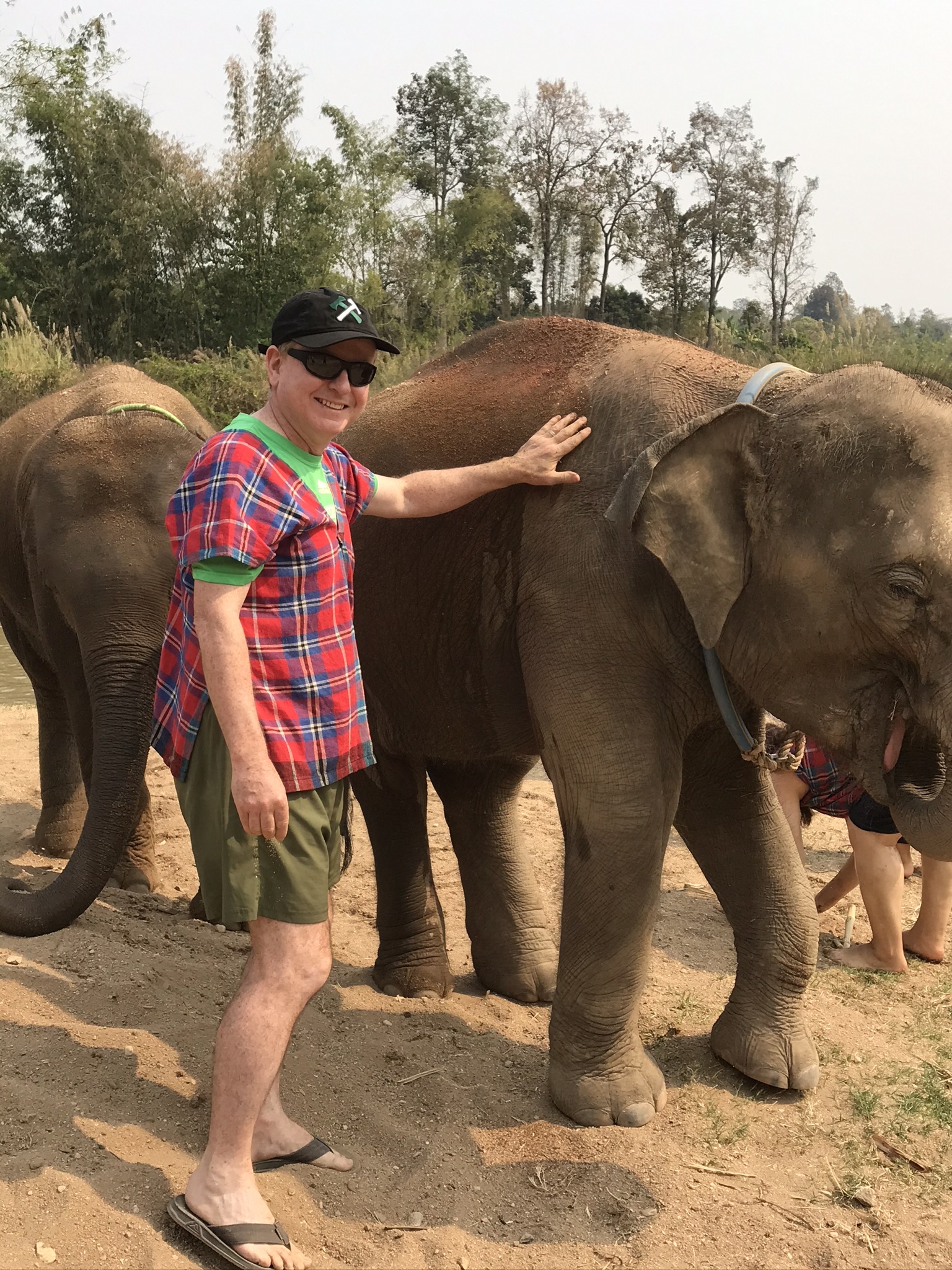
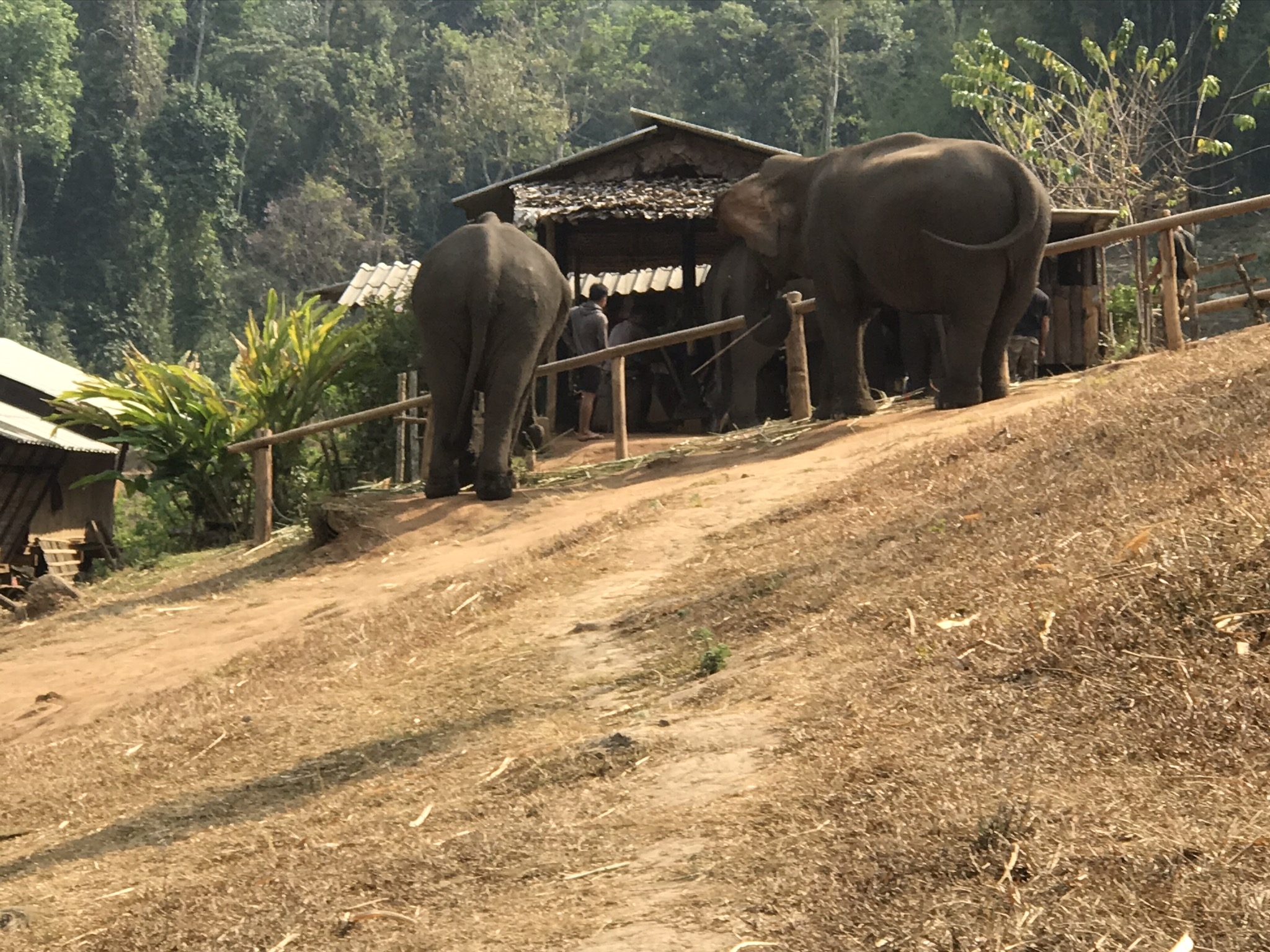
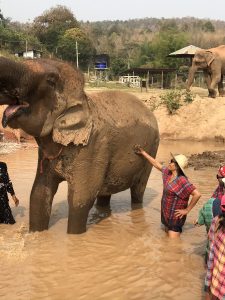 Our last full day in Chiang Mai is also our opportunity to hang out with elephants: Elephants have not been allowed to work in logging in Thailand since 1989 but, since then, they’ve been employed in various tourist related businesses some of which require them to be ridden and to perform tricks. That’s not OK so we do our best to find an operation that treats them well and end up at the Elephant Retirement Home where we get to feed and bathe them. Its still, definitely, a tourist attraction, and not wholly a sanctuary, as there are young elephants also living there that were born in captivity. Still, its a nice set-up with plenty of space for them and the “visiting hours” are limited so they don’t have to deal with tourists all day.
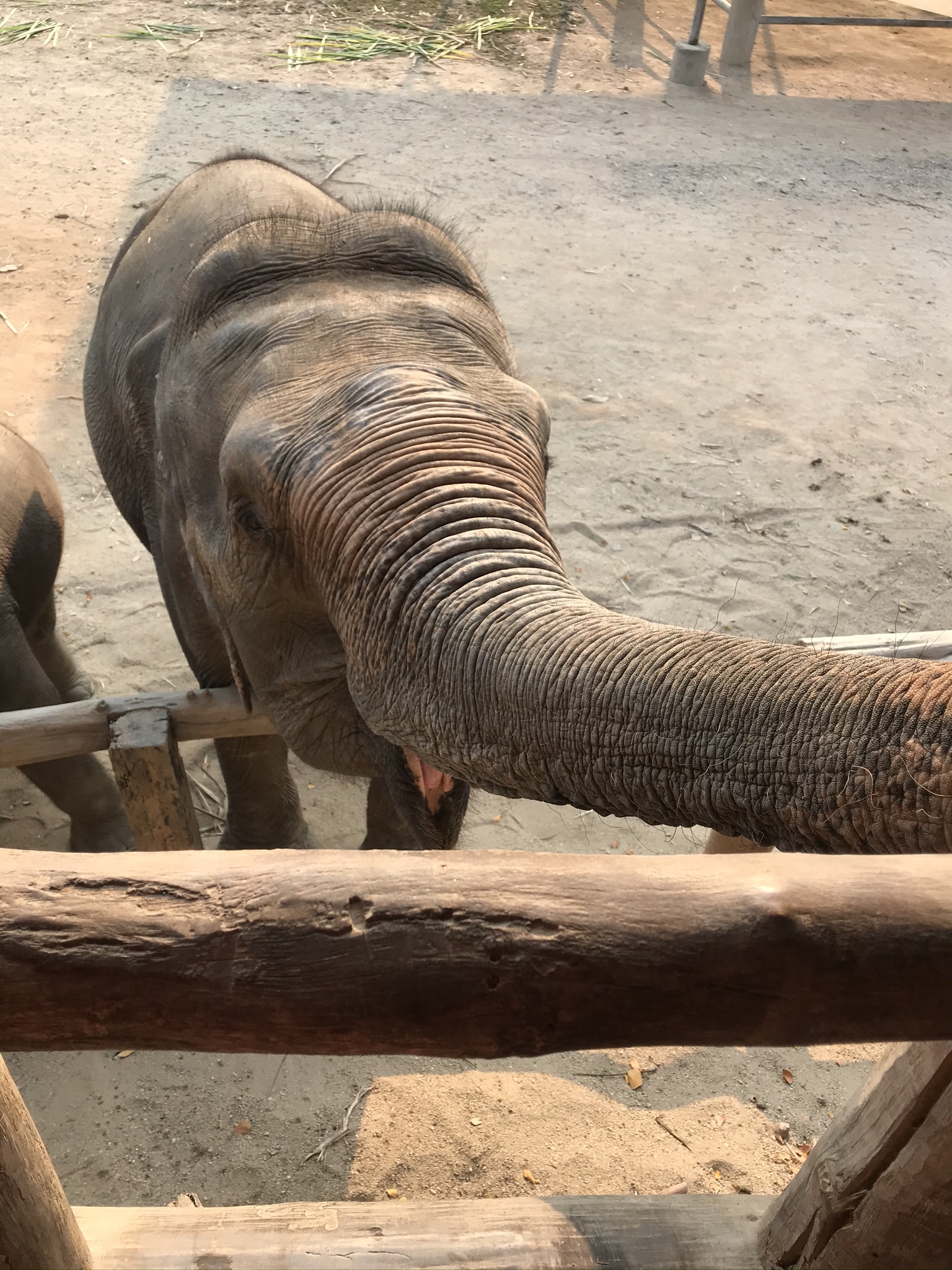
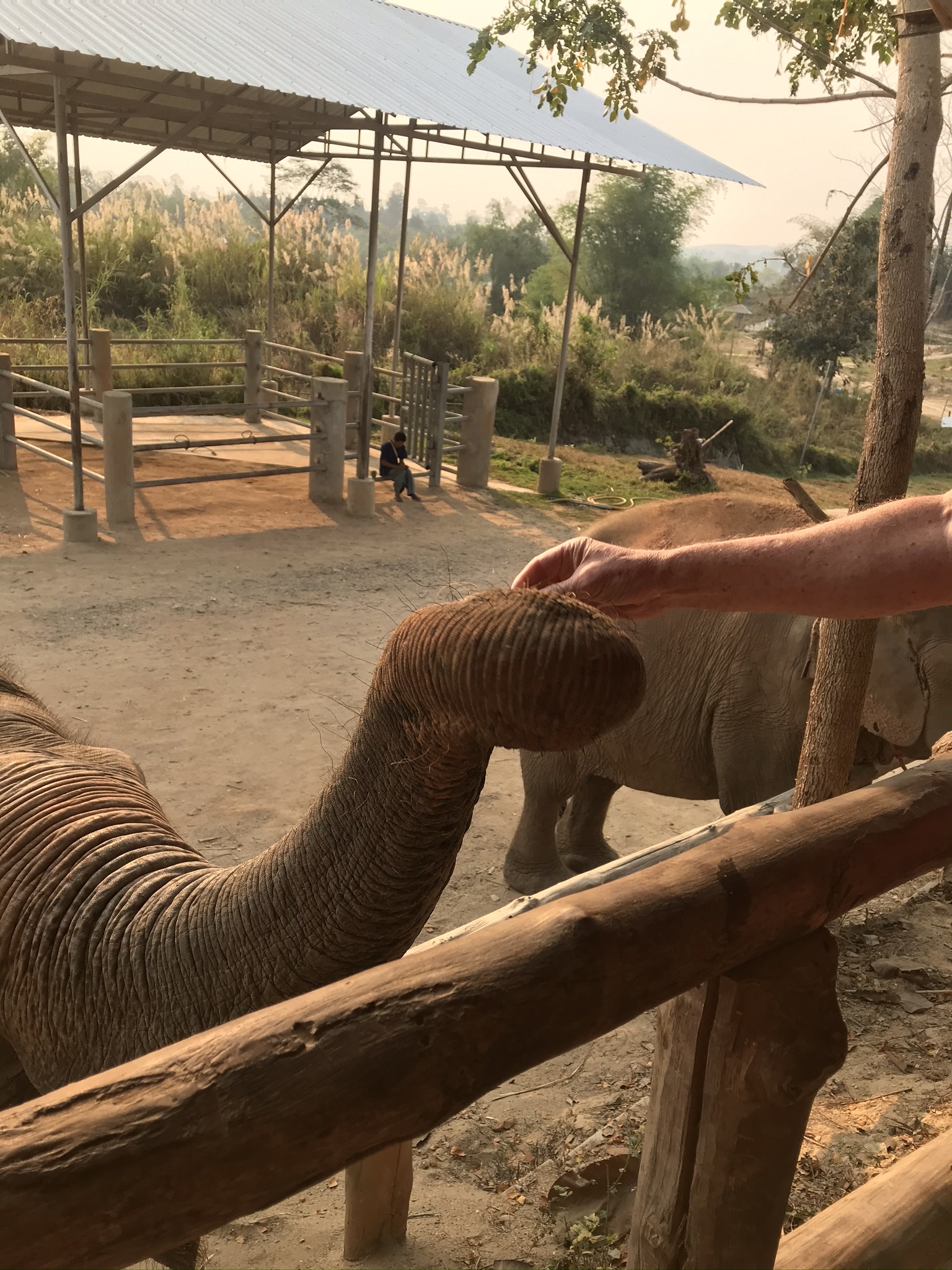
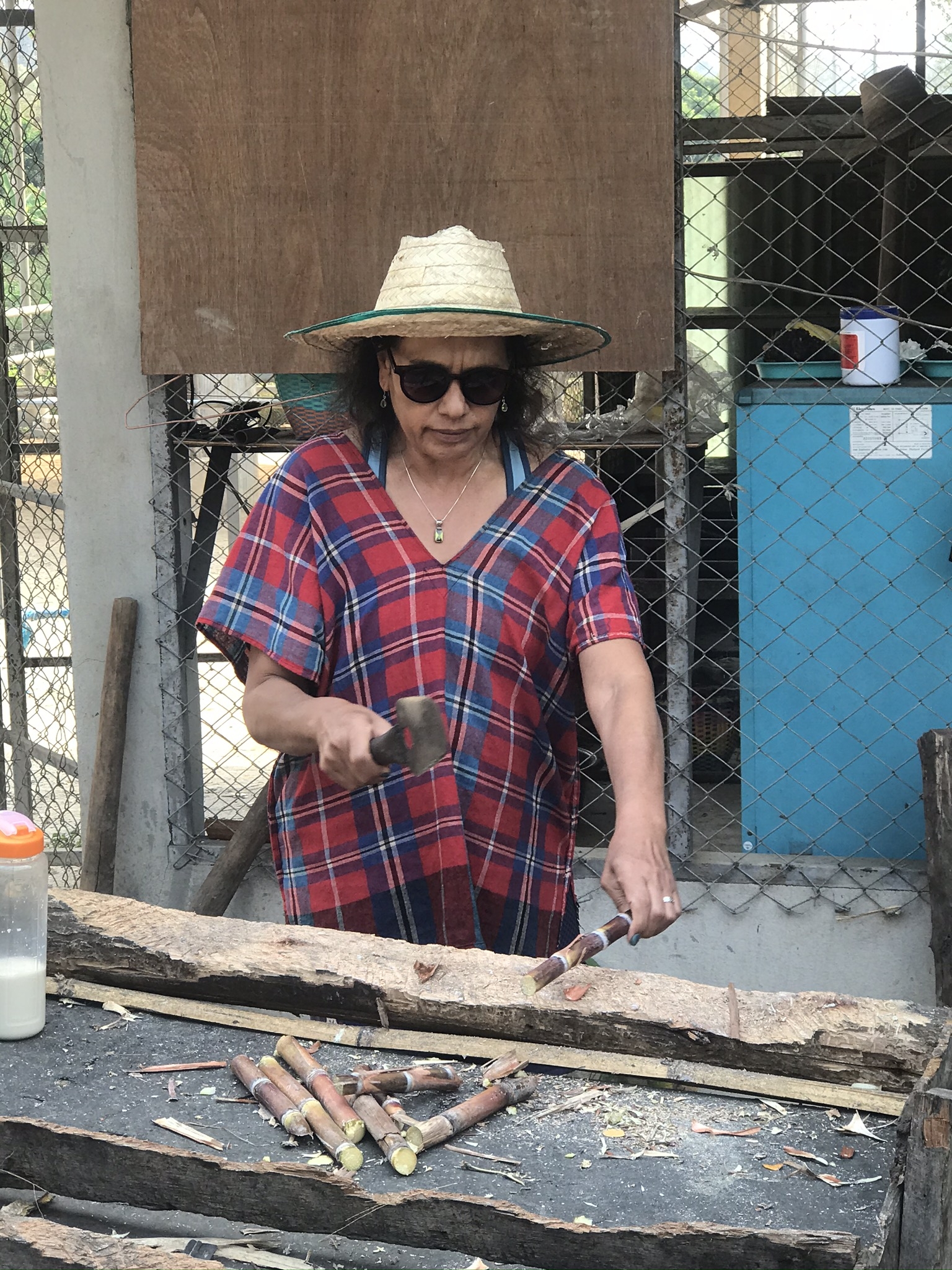
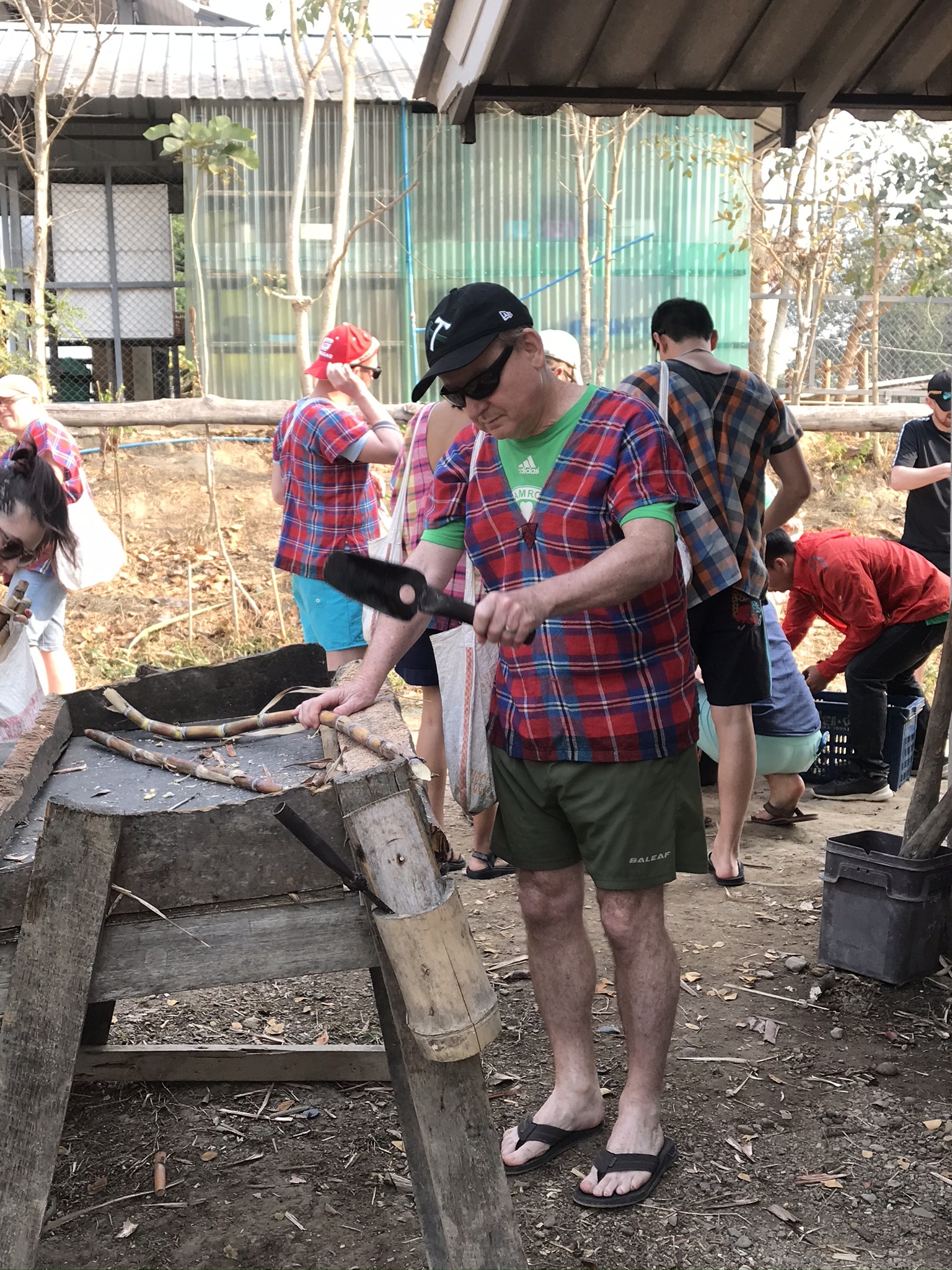
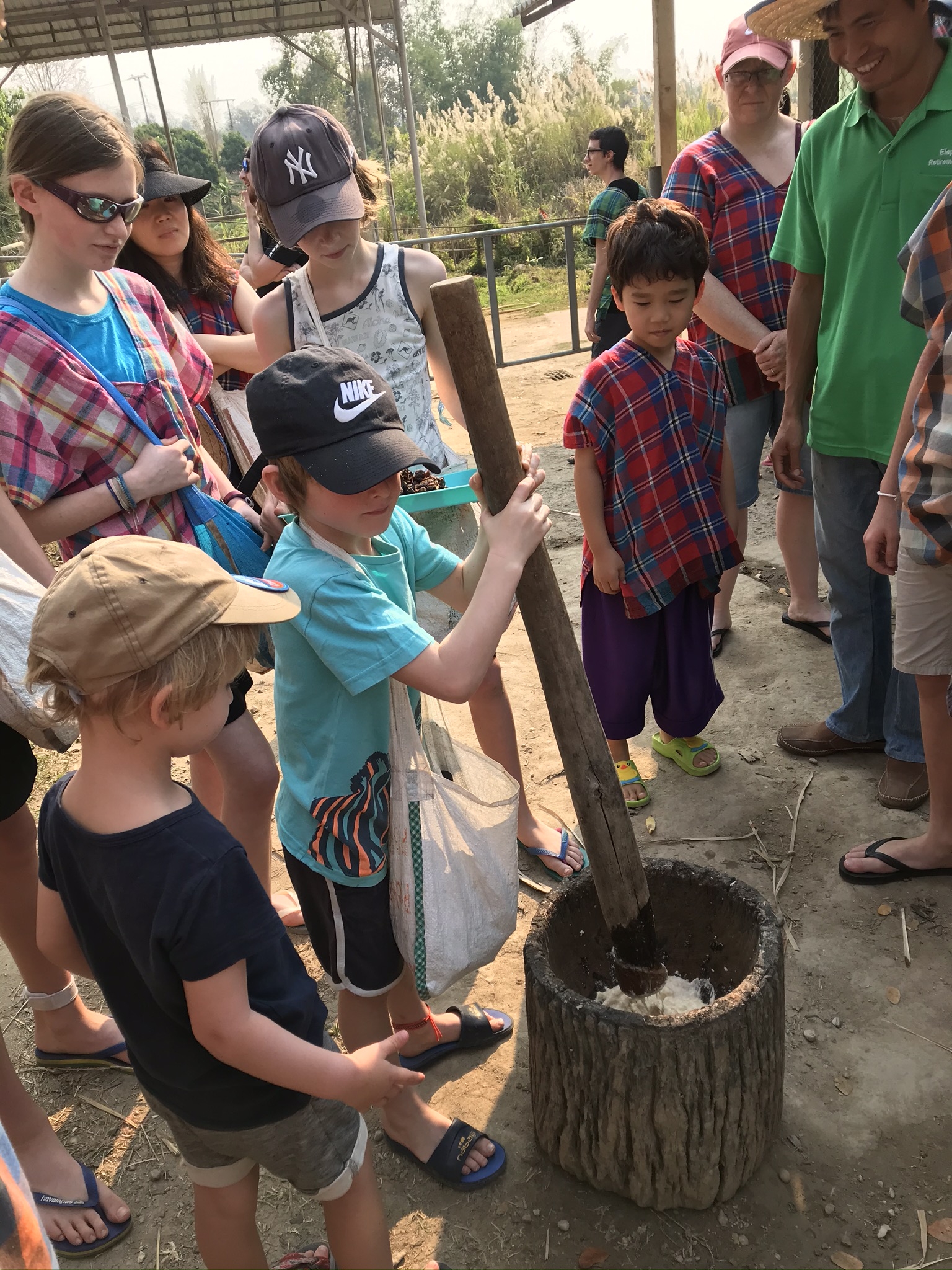
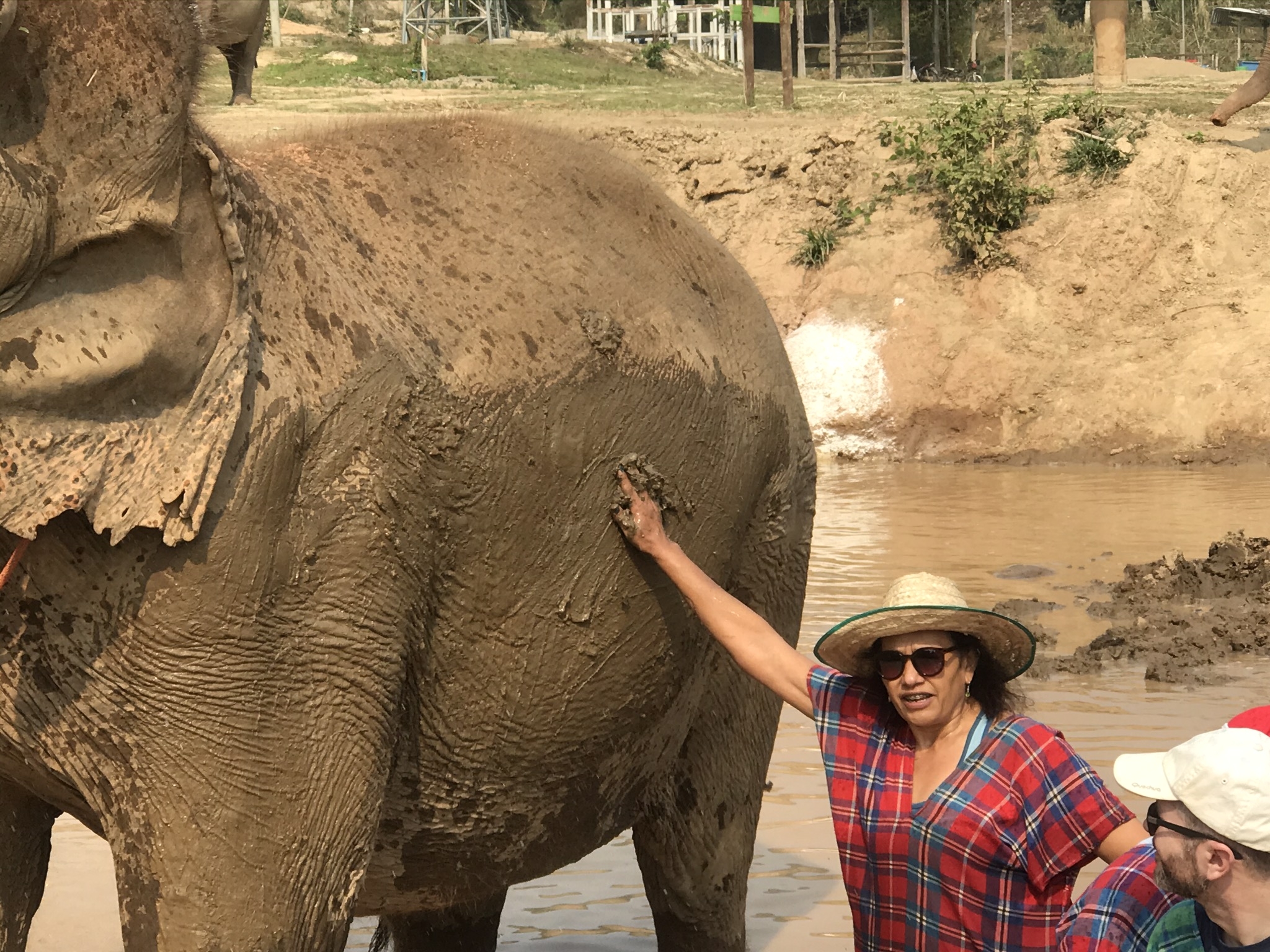
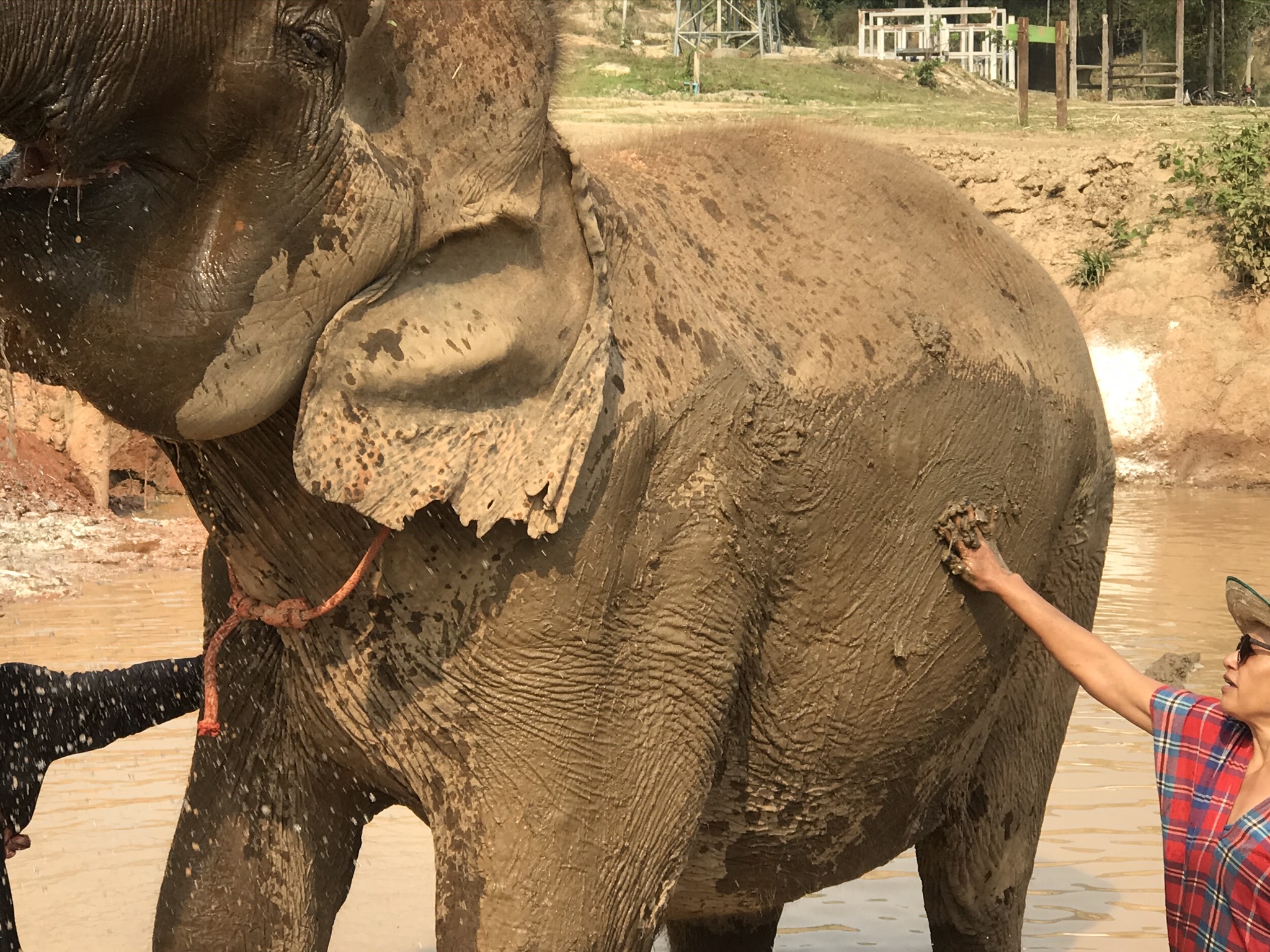
 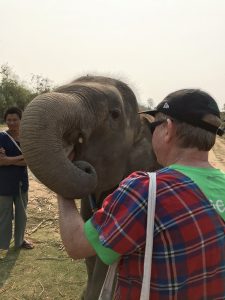 We feed them the sweet stuff they like such as bananas, cane sugar and soy milk so we get popular in a hurry. It’s a bit disconcerting when a baby elephant runs full-tilt at you trumpeting all the way, but she just wants the goodies. We find ourselves in close proximity to a number of elephants and, even though there are handlers, the elephants can, and do, go most wherever they want so you have to pay attention. Abby takes the plunge and gets in the mud pool and her scrubbing an elephant with mud is recorded for posterity. The young elephants seem to be having a great time, though some of the older ones are more ambivalent. but put up with it to get the food. Overall, they seem happy enough and its a unique chance for us to interact with such large and intelligent mammals.
The next day we’re heading back to Bangkok to stay near the airport, then onto Singapore, and the day after that to San Francisco and back to Portland: Not looking forward to that odyssey. We’ve just scratched the surface of Thailand, and would come again, but would heavily research it so that we could avoid being in places that are overrun with tourists like us(!), and maybe visit in November at the end of the rainy season for cleaner air and greener jungle and forest.
Hope you’ve enjoyed the posts on this trip – Given the situation with COVID-19 it may be quite a while before we head out on an overseas expedition again. Time to explore the wilds of the American West.
Leave a Reply