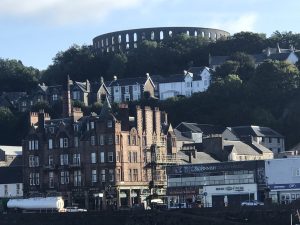
 Scottish dance music is quite distinct from its Irish cousin in that there are jigs and reels, but the two step rhythm is dominant (polkas!) and the instrumentation usually includes accordions, highland bagpipes, piano and marching band drums. We’re in Oban and get out first taste of this in live performance at the Royal Hotel – Bagpipes, two accordions and drums. Very old school but a lot of fun, ending up with the nostalgic “Isle of Skye” and the unofficial national anthem “Flower of Scotland”.
 Jimmy Shand was the undisputed King of Scottish dance music, polka and the accordion so I get a chance to whip out the great Richard Thompson’s “Don’t sit on my Jimmy Shands”, a cautionary tale about protecting treasured 78s from drunken party goers.
More driving fun dodging caravans (travel trailers) and lorries (trucks) as we make our way from Fort Williams to Oban where a package deal of ferry/bus/ferry takes us to the Isles of Mull and Iona.
 Aside from limited time, the insanity of tour buses and oblivious tourists navigating the sheep tracks that pass for roads makes the package tour essential. The buses are tall and narrow and the verges of the road soft so, one error and the bus will be on its side in a bog, but our driver is highly skilled and we survive intact. Mull is large, wild, bleak and beautiful with only one town, Tobermory, of any size.
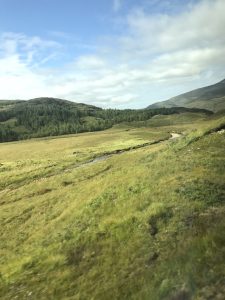 Lots of sheep, mussel aquaculture and tree farms but few humans. The second ferry gets us to Iona, a tiny place famous for its monastery, founded by Saint Columba in the 6th(!) century. Columba and his posse were on the lam from Ireland after the battle of Cúl Dreimhne, which was the first armed alteration about copyright. Columba had gotten into it with (Saint) Finnian about a copy of a manuscript he had made and, unfortunately, in the subsequent dispute, there were 3,000 casualties.
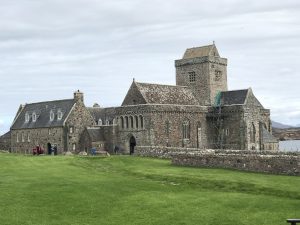 Somewhat chagrined, Columba and cronies left Ireland and sailed until they could no longer see his homeland, and that place was Iona. Also rumored to be the place where the Book of Kells was produced and where the first “Celtic Crosses” were erected. Scottish kings are buried all over the shop, you get the idea. Now owned by the National Trust, it is still a spiritual retreat, eco-tourism aside, and a cool place to hike around. There’s time for a pint in the pub overlooking the tiny harbor before the trek back to Oban on the mainland.
 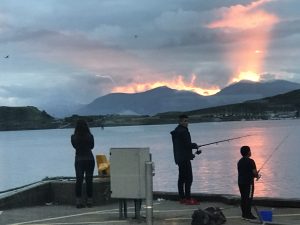 This has been just the briefest glimpse of the Western Isles and we plan to return later. Meanwhile, it’s on to Edinburgh.

Leave a Reply